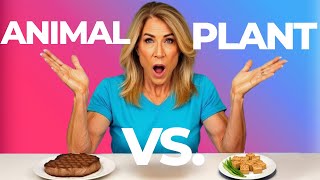
In this solo instructional video, JJ Virgin explains why protein—rather than carbs or fat—is the most critical macronutrient for adults, especially those over 40. She describes protein’s role as a functional building material that supports muscle protein synthesis, thermogenesis, satiety, and the protein‑leverage hypothesis. After outlining age‑related anabolic resistance, she argues that mid‑life adults need 30‑40 g of high‑quality protein per meal, spaced evenly throughout the day, and that digestion factors (stress, gut health, stomach acid) become crucial. Virgin then compares animal and plant proteins: animal sources (grass‑fed beef, pastured eggs, wild‑caught salmon, liver) provide complete essential amino acid profiles, high leucine, and bioavailable micronutrients (choline, creatine, B12, heme iron, carnitine, EPA/DHA, zinc, selenium, taurine). Plant sources (beans, lentils, nuts, seeds, grains) offer fiber, polyphenols, and minerals but can be low in lysine or methionine and have lower digestibility. She recommends a “yes‑and” approach—combining both to achieve a diverse amino‑acid profile, adequate micronutrients, and gut‑friendly fiber. Practical meal ideas (pasture‑egg omelet with veggies, cauliflower‑rice lentil bowl with salmon, seasoned chicken thighs with quinoa and greens, steak with onions‑mushrooms‑broccolini, Greek yogurt with bone‑broth protein powder, chia, collagen) each deliver 30‑50 g protein. She warns against relying solely on high‑fat plant foods (e.g., almonds) for protein due to calorie inefficiency and fiber binding. Supplement suggestions include bone‑broth protein powder, essential amino acid powders, and collagen. The overarching message is that a balanced omnivore diet, rich in high‑quality protein and micronutrients, restores metabolism, preserves muscle, supports energy and cognition, and enables powerful aging.
Chapters
There's a battle raging in the health world, and it's not over carbs this time. It's animal versus plant protein. Team tofu versus team steak. And both sides are shouting, "We're better!" But here's the truth. They're both right. And they're both missing the point. Because this isn't an either-or game. It's a yes-and. So today I'm going to be breaking down how to use both plant and animal proteins to hit your macros, burn fat, build muscle, boost energy, and heal your metabolism, all while aging powerfully and more importantly, eating delicious, satisfying meals. So let's talk first about the most underappreciated, misunderstood, and misprioritized macronutrient out there. Yes, I'm talking about protein. And here's the deal. It's not just good for your muscles. It's good for Everything. So let's clear something up. Protein is a functional macronutrient, not a fuel source like carbs or fat. Yes, your body can break it down for energy in a pinch, but it does that at a cost, often by cannibalizing your own muscle tissue. So let's not let it get to that point, okay? Instead, think of protein as your body's construction material, your internal repair crew. Your skin, bones, hair, enzymes, neurotransmitters, immune cells, They're all made from amino acids. These are the building blocks of protein. And here's something else most people don't realize. You don't store amino acids like you do carbohydrates as glycogen or fat. There's no protein pantry in your body. So when you're not getting in enough protein, your body has one place to go look for them, your muscle. And once you start losing muscle, your metabolism slows, your insulin sensitivity drops, and body fat starts accumulating. That is not aging powerfully. That is aging poorly. So here is how protein keeps you lean, strong, and energized. First of all, protein is what triggers muscle protein synthesis. This is that process of repairing and rebuilding muscle. Now, you've probably heard me talk about this, that after the age of 30, we can lose up to 3 to 8% of our muscle mass per decade, even as much as 1% a year. And protein is your first line of defense. Plus, protein is very thermic. Protein takes more energy to digest and assimilate than fat or carbs. That means your body burns more calories just breaking it down. Up to 25 to 30% of protein calories go towards digesting that protein. It's literally a metabolism booster. Also, it's amazing for satiety and craving control because protein is the most satiating macronutrient. It turns on fullness hormones like peptide YY and GLP-1. You've heard about that one and keeps ghrelin, your hunger hormone, in check. What does that mean for you? Fewer cravings, better appetite regulation, and way less snacking. And there's one more big one, and this is the protein leverage hypothesis. So it turns out your body has a built-in drive to meet its protein needs. If your body is too low, or your diet rather, is too low in protein, it's going to keep you eating until you hit that threshold, even if it means overeating calories from carbs and fat. If you get your protein right, guess what? You naturally eat less, period. Now, especially after 40, you need more protein, not less. So if you're over 40, listen up, because as we age or as we become more insulin resistant or more sedentary, we develop something called anabolic resistance. This is where our bodies become less efficient at building and maintaining muscle from the same amount of protein. So while your younger self may have been fine with 20 grams per meal, your midlife body needs more like 30 to 40 grams per meal and ideally spaced evenly throughout the day. Although overall protein is still the most important. You also gotta factor in stress, gut health, and lowered stomach acid because all of these can impair protein digestion and absorption. This means that the quality of your protein, the digestibility of it, and the frequency you eat it become non-negotiable if you wanna age powerfully. So yes, protein helps you drop fat, but even more, it helps you preserve muscle, stabilize blood sugar, and feel full and satisfied while doing it. And that's what we're after, right? Fat loss without muscle loss, because that's the real needle mover when it comes to long-term health energy, and great body composition. All right, let's break it down between animals versus plants and talk about what the science says. So there are 9 essential amino acids. These are the ones that your body has to get from food. You can't make them. Now, animal protein, let's talk about grass-fed beef, pastured eggs, wild-caught salmon. They're considered complete protein. They have all 9 essential amino acids in the right ratios. And they're very bioavailable. They're easier to digest. They've got a great essential amino acid profile, and especially they're rich in something called leucine, an essential amino acid that's key for muscle protein synthesis. But there is a trade-off. Animal protein often comes with fat, and not all fat is created equal. You are what you eat ate. So if your animal is eating garbage, toxins, et cetera, guess what? So Did you? This is why I'm a stickler for grass-fed, pasture-raised, and wild-caught sources. This is also going to improve your omega-3 to 6 ratio, which is going to help control inflammation too. All right, now plant proteins—beans, lentils, nuts, seeds, and grains—they're often out of balance. They might be lowering key essential amino acids like lysine or methionine. Plus, they're wrapped in fiber, which is great for your gut, but it can make amino acids harder to access. However, plants bring things that animals don't beyond that fiber. They bring polyphenols and they bring phytonutrients, and they also have some amazing micronutrients. They have magnesium, potassium, quercetin, EGCG. I could go on and on. So what's the smart play? Eat 'em both. Combine plant and animal sources to get a diverse amino acid profile, plus all the fiber, those beautiful colors that signify different phytonutrients and compounds that protect your mitochondria and your metabolism. Now, before we jump into some killer protein meal ideas, some great blends, there's one more thing I wanna call out. Animal protein isn't just about those essential amino acids. They're also loaded with micronutrients that are either missing or harder to absorb or less bioavailable in plant-based foods. So I'm going to break some down that you may not have thought about. First of all, cognitive performance. Choline is super important. It's vital for brain health. It's vital for neurotransmitter production. And you know those beautiful bright orange yolks that you get from eggs? Choline. Creatine. You've heard me talk about creatine time and time again. Well, creatine is rich in meat and in fish, and it's so important for that energy in your brain and in your muscles. Vitamin B12, of course, you know, you get that from meat, essential for nerve function and mood. So brain is important. Of course, energy is super duper important as well. And one of the key things here is iron. Now, yes, you'll get some iron from plants, but you get non-heme. It's not as well absorbed. Heme iron. This is the form your body absorbs best. Hint: does even better when you do it with vitamin C-rich foods. And that, of course, is found in red meat. Also carnitine. This is a nutrient that transports fatty acids into mitochondria to be burned for fuel. And carnitine comes from meat, carni, right? And then what about protecting yourselves and longevity? I take astaxanthin, but I also make sure I eat wild salmon a couple days a week because this is a powerful antioxidant. It's what keeps that wild salmon pink. And then zinc and calcium and selenium, which are so important for your immunity, your bone health, and your metabolism. And And then of course there's muscle performance and muscle repair. And one of the things I think here is taurine. You find this in shellfish that can be so good for muscle function and muscle recovery. And let's not forget omega-3s like EPA and DHA. Of course, we always think of these in wild fish. They're great for controlling inflammation and cellular health and resensitizing, um, your hormone receptors. You can also get them in some grass-fed meat. And here's what's wild, a single serving of grass-fed liver or a few ounces of wild salmon delivers more of these amazing nutrients than you get in a whole shelf of supplements. Now, don't get me wrong here. Plants, of course, bring their own treasure trove of polyphenols and antioxidants and fiber to the table, but animal foods bring critical nutrients in forms your body can use immediately without having to convert them or combine them with anything else. So I say that because it is not about picking sides. It's about stacking the advantages. All right, let's get practical. I'm gonna give you a little insight into some of my favorite dishes that I do at home. These are omnivore deals that give you like 30 to 40 or 50 grams of protein per meal, and they're easy and you don't have to overthink it. So what I love to do are pasture-raised eggs, 2 or 3 pasture-raised eggs, and then I also have caged free egg whites in a box, and I put those together. I add in sautéed spinach and mushrooms, and I will throw a little feta or goat cheese on top. That is just an easy one that's delicious. Quite often for dinner, I will take cauliflower rice and lentils, mix it together, and put some wild salmon over the top. So that's an easy one. What about chicken? Okay, I'm obsessed with Our Place Wonder Oven. Holy smokes, it's fantastic. And what I do is I take the, um, plucked organ meat seasoning, we put it on chicken thighs, we cook it in the Wonder Oven, and then you could take some quinoa and some green, deep green leafies like chard and sauté them up with, throw a little pumpkin seeds on top. That's an easy one that is delicious. And then of course we love our grass-fed, grass-finished steak. Shout out ButcherBox. And what we love to do with it is a sauté of onions and mushrooms. And then of course some broccolini that we roast right alongside it with some extra virgin olive oil. I mean, does any of this sound like you are, uh, suffering or deprived? No, I didn't think so. Another one that I love is just taking some Greek-style yogurt. I stir in my Reignite Wellness Bone Broth protein powder into it to add to it, and then I'll throw in there some chia seeds or some freshly ground flaxseed meal. So that is one of the ways that I bump that up. Of course, I also throw in there my collagen. So here's the theme: protein plus fiber plus colors. We're layering in different complete proteins, all these gut-friendly plants, and then of course those longevity-boosting compounds. And I'm keeping it delicious, doable, so it's totally dialed for you who wants to eat well, age strong, but not spend hours in the kitchen. 'Cause like, yeah, who wants to? And don't get me wrong, I love plants, but I gotta do a little quick note on plant-based pitfalls because if you're trying to hit your protein needs just with nuts, seeds, or avocados, you are gonna hit your calorie ceiling long before you ever get close to your protein minimum. Why? Because these protein-rich foods are not, they're fat-rich with a little protein. Literally, you'd need over 700 calories of almonds just to get 25 grams of protein. That is not a great return on your calorie investment. And keep in mind, fiber can bind protein and reduce absorption. So if you are relying heavily on plant protein, you gotta diversify and consider pairing things like one of my bone broth shakes or my pea shake Or you can add in my Amino Acid Power powder, my essential amino acids. Here's the bottom line. Your metabolism isn't broken, it's underfed, undernourished. And protein is the most powerful tool you have to heal, rebuild, and thrive, especially as you age. When you take an Eat Protein First plant-powered muscle-focused approach, you can burn fat more efficiently, you can build and preserve metabolically active muscle, you can age powerfully with fewer cravings, better energy and a focused, sharp mind. All those things are possible. Again, this is not about picking sides. It's about strategically combining the best of both worlds to support your body from the inside out. So go ahead and go grab that grass-fed steak and the broccolini. Blend that protein shake and toss in some chia seeds because when you give your body what it needs, you don't just survive. You thrive. Now, if this video has helped you rethink your plate, be sure to like, subscribe, and share it with a friend who's still arguing with you over tofu versus steak. Let's start fueling our futures, right? With food that actually works.