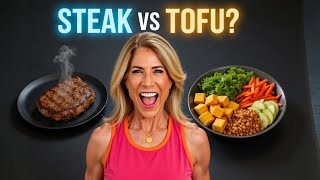
In this solo presentation, JJ Virgin compares animal and plant proteins, focusing on their roles in muscle building, metabolism, cognitive performance, and overall health for adults over 40. She explains that animal proteins from grass‑fed beef, pastured eggs, and wild‑caught salmon are complete proteins containing all nine essential amino acids in optimal ratios, especially leucine, which drives muscle protein synthesis. She stresses the importance of sourcing animal foods from clean, pasture‑raised or wild environments to avoid toxins and to improve the omega‑3 to omega‑6 ratio, which helps control inflammation. Plant proteins (beans, lentils, nuts, seeds, grains) often lack certain essential amino acids and are encased in fiber, making amino acid absorption harder, but they provide fiber, polyphenols, phytonutrients, and minerals such as magnesium, potassium, quercetin, and EGCG. Virgin advocates a combined approach—pairing animal and plant sources—to achieve a diverse amino acid profile while gaining the gut benefits and antioxidant compounds of plants. She then details animal‑derived micronutrients that are either absent or less bioavailable in plants: choline and creatine for brain energy, vitamin B12 for nerve function, heme iron (enhanced with vitamin C) for iron status, carnitine for mitochondrial fatty‑acid transport, astaxanthin, zinc, calcium, selenium for immunity and longevity, taurine for muscle function, and EPA/DHA omega‑3s for inflammation control. She argues that a single serving of grass‑fed liver or wild salmon supplies more of these nutrients than many supplement regimens. The overall message is not to choose sides but to stack the advantages of both animal and plant proteins for muscle growth, metabolic health, cognitive performance, and longevity.
Chapters
All right, let's break it down between animals versus plants and talk about what the science says. So there are 9 essential amino acids. These are the ones that your body has to get from food. You can't make them. Now, animal protein, let's talk about grass-fed beef, pastured eggs, wild-caught salmon. They're considered complete protein. They have all 9 essential amino acids in the right ratios, and they're very bioavailable. They're easier to digest. They've got a great essential amino acid profile, and especially they're are rich in something called leucine, an essential amino acid that's key for muscle protein synthesis. But there is a trade-off. Animal protein often comes with fat, and not all fat is created equal. You are what you eat, ate. So if your animal is eating garbage, toxins, etc., guess what? So did you. This is why I'm a stickler for grass-fed, pasture-raised, and wild-caught sources. This is also going to improve your omega-3 to 6 ratio, which is going to help control inflammation too. All right, now plant proteins, beans, lentils, nuts, seeds, and grains, they're often out of balance. They might be lower in key essential amino acids like lysine or methionine. Plus they're wrapped in fiber, which is great for your gut, but it can make amino acids harder to access. However, plants bring things that animals don't beyond that fiber. They bring polyphenols and they bring phytonutrients. And they also have some amazing micronutrients. They have magnesium, potassium, quercetin, EGCG. I could go on and on. So what's the smart play? Eat 'em both. Combine plant and animal sources to get a diverse amino acid profile, plus all the fiber, those beautiful colors that signify different phytonutrients and compounds that protect your mitochondria and your metabolism. Animal protein isn't just about those essential amino acids. They're also loaded with micronutrients that are either missing or harder to absorb or less bioavailable in plant-based foods. So I'm gonna break some down that you may not have thought about. First of all, cognitive performance. Choline is super important. It's vital for brain health. It's vital for neurotransmitter production. And you know those beautiful bright orange yolks that you get from eggs? Choline. Creatine. You've heard me talk about creatine time and time again. Well, creatine is rich in meat and in fish, and it's so important for that energy in your brain and in your muscles. Vitamin B12, of course, you know, you get that from meat, essential for nerve function and mood. So brain is important. Of course, energy is super duper important as well. And one of the key things here is iron. Now, yes, you'll get some iron from plants, but you get non-heme, it's not as well absorbed. Heme iron, this is the form your body absorbs best. Hint, does even better when you do it with vitamin C-rich foods. And that of course is found in red meat. Also carnitine. This is a nutrient that transports fatty acids into mitochondria to be burned for fuel. And carnitine comes from meat, carni, right? And then what about protecting your cells and longevity? I take astaxanthin, but I also make sure I eat wild salmon a couple days a week because this is a powerful antioxidant. It's what keeps that wild salmon pink. And then zinc and calcium and selenium, which are so important for your immunity, your bone health, and your metabolism. And then of course there's muscle performance and muscle repair. And one of the things I think here is taurine. You find this in shellfish that can be so good for muscle function and muscle recovery. And let's not forget omega-3s like EPA and DHA. Of course, we always think of these in wild fish. They're great for controlling inflammation and cellular health and resensitizing, um, your hormone receptors. You can also get them in some grass-fed meat. And here's what's wild. A single serving of grass-fed liver or a few ounces of wild salmon delivers more of these amazing nutrients than you get in a whole shelf of supplements. Now, don't get me wrong here. Plants, of course, bring their own treasure trove of polyphenols and antioxidants and fiber to the table. But animal foods bring critical nutrients in forms your body can use immediately without having to convert them or combine them with anything else. So I say that because it is not about picking sides. It's about stacking the advantages.