Best HIGH PROTEIN Foods for Fat Loss for Over 40 (EAT DAILY!)
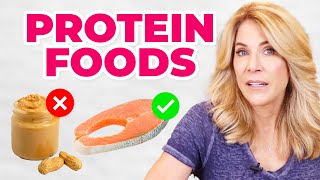
In this instructional video, JJ Virgin explains why higher protein intake is essential for women over 40, especially during caloric restriction, to preserve lean mass and promote fat loss. She cites research showing that consuming at least 30 g of protein per meal (ideally 40 g) and a total of 100 g+ daily improves leg strength, lean body mass, satiety, thermogenesis, blood‑sugar stability, and toxin detoxification. Virgin emphasizes protein quality, arguing that animal‑based sources provide a complete essential amino‑acid profile, higher bioavailability, and beneficial compounds such as leucine, omega‑3s, creatine, taurine, vitamin D, and CLA. She highlights five staple foods she eats daily—wild salmon, grass‑fed Greek yogurt, bone broth/collagen, grass‑fed beef, and chicken breast—detailing each food’s specific nutrients and how they support muscle maintenance, metabolism, and fat loss. Practical tools include a free 7‑day protein challenge, a printable protein cheat sheet (jjvirgin.com/proteincheatsheet), and a follow‑up video on high‑protein lunches. The overall message is that meeting targeted protein goals with high‑quality animal foods is a simple, evidence‑based strategy for women over 40 to lose fat while preserving muscle.
Chapters
My buddy, Dr. Bill Campbell, who runs the only physique and performance lab in the country, it's over at University of South Florida, and is doing a bunch of research on women and not just women, menopausal women. Oh my gosh. Thank you, Bill. Well, Dr. Bill Campbell says that the common factor he sees among lean women is a higher protein intake, but not all protein is created equal. Here are some of my favorites that I incorporate into my daily routine. Now, if you wanna lose fat, you gotta be in a caloric deficit so that your body will burn off body fat. And you wanna make sure that it's fat you're burning, not lean tissue. So protein is key here for a couple of reasons. Number one, it's gonna help you hold onto lean mass. There was a study that looked at whether older adults who eat meals containing at least 30 grams of protein more often have stronger leg muscles and lean body mass. So they used data from adults age 50 to 85. And found that those who had 1 or 2 meals with 30 grams or more of protein each day had better leg strength and lean body mass than those who didn't. So this study suggests that having 1 to 2 protein-rich meals daily can help maintain muscle strength and lean body mass as you age. I'm going to say 3. So our minimum is 30 grams of protein at a meal, ideally 40. 30 is like the minimum there, and at least 100 grams overall. And it's pretty clear when you start to look at all of the research that people who eat higher higher protein when they are in caloric restriction are able to hold on to more lean mass when they do this. The next reason I do is because they are more thermic. They burn more calories than fat or carbs do. They require 20 to 30% of the calories get dissipated in the metabolism and assimilation of the protein. The next one is that protein improves satiety and satisfaction. You won't have the cravings and you won't be as hungry. So I have this 7-Day Protein Challenge.. And one of the big things that we do is look at before someone starts, like, how's your hunger? How's your energy? How are your cravings? And the number one thing that we hear from people as they go through just 7 days is at the end of that, they go, I didn't have cravings. And that's amazing. That just turns off that food noise that you hear from a lot of these GLP-1 drugs. They have the food noise. Well, protein can help do that as well. Another thing protein can do is help with blood sugar stabilization. So that's why I like people to eat protein first. And we know that when you eat protein first, you tend to make better food choices overall. So when you eat a meal that's high in protein, can make you eat less in the next meal compared to having a meal high in carbs or fats. In other words, when you eat a high protein meal, it makes you feel fuller and eat less in your next meal. And then of course, we need protein to help us detoxify well. We need to be detoxifying every single day cuz every single day we are being bombarded by toxins in the air, in the water, in skincare. Even if we have our best laid plans, if you are in this world, you're getting bombarded with toxins and protein helps you get a hold of these toxins and transform them so you can excrete them. Okay. I hope I've built the case for why we want to eat protein daily. I've got a protein cheat sheet as a little reference guide for you that you can print out and put on your fridge for easy meal planning. And that is at jjvirgin.com/proteincheatsheet. Protein cheat sheet. Now, as I go through these foods, you're going to see that I have really focused on animal-based products here, and that's— there's a very specific reason for this. When you look at protein quality, you're looking at a couple things. You're looking at the basic essential amino acid balance. And I heard someone say this, I wish I could remember who it was to give them credit, but they said, you know, the amino acid profile of plants is amazing, it's great, for growing plants, but we are humans and we are growing muscle. So the amino acid profile of an animal is going to be a better one for us, and it's got all the essential amino acids. It's also more bioavailable or more digestible. A lot of times in plant proteins, that the proteins will also be bound up with fiber, which makes it less digestible. One of the things I like to say is you are what you eat— ate. Meaning that if you are eating a, say, a little factory chicken, a battery cage chicken that's been shoved into a little cage and sprayed with all sorts of stuff, you are going to get all of that as well. When you're eating wild fish, wild salmon, grass-fed, grass-finished beef, pasture pork and chicken, totally different because they have a better profile of nutrients. They have better fatty acid profile. And tend to have better amino acids and phytonutrients and antioxidants. So that's the first thing, is we want to eat animals that, first of all, have been, have been raised humanely, but have been raised in their natural habitat. And then we're also looking beyond just essential amino acids. We're looking specifically at one amino acid to help us age powerfully, and that is leucine. And this was research from Dr. Donald Layman in his lab where he discovered that leucine is the trigger for muscle protein synthesis, but it turns out that leucine might also affect how much food a person eats. It can change how specific pathways in the brain's hypothalamus work. Now, the hypothalamus is responsible for controlling your appetite and the feeling of being full after eating. Leucine could make you eat less by affecting these pathways in the brain. There's a couple other things that I'm looking at, and I'm going to share as I walk through these foods with you. That I'm also looking at as bonus points is if that food has vitamin D or CLA. That's a type of fat that can help you burn fat off your waist. Omega-3s and creatine. All right, so here we go. Here are the 5 foods that I incorporate into my diet, and the first one is wild salmon. I absolutely love this. Now here's what's cool about wild salmon. Not only you're getting that, that beautiful clean protein from the fish, but you're also getting those omega-3s. And what we now know about omega-3s is that they can be metabolic. They can enhance muscle protein synthesis. They can reduce muscle protein breakdown, which of course, that means you're preserving muscle mass, can enhance fat burning. They can decrease appetite, can reduce muscle soreness after workouts, and they can lower triglycerides and improve metabolic health. Wow. And omega-3s are also anti-inflammatory. So first off, omega-3s for the win. And depending on which type of, of fish you're getting and how much you're eating, you can get 2 to 3 grams of omega-3s in that fish serving. The next thing you can get in that fish serving is creatine. You probably wouldn't think of creatine as being high in fish, but it is. You can get 1 to 2 grams of creatine in fish per serving. And the other one, and something that I've been adding into my diet every day to make sure that I get enough in, is taurine. So taurine is rich in fish. I've been also adding it in to my pre-workout, about 1 to 3 grams a day, um, is what they say to dose it at. I've been doing 2 to 3 because I'm 140 pounds. But what taurine is great for is muscular endurance. It helps you work out harder and recover faster. And just like women have less creatine, we also have less tissue stores of taurine. Now another cool thing that salmon, wild salmon has is vitamin D. And of course we know vitamin D helps with the absorption of calcium. It can help promote bone strength. It's crucial for building muscle and maintaining a higher metabolic rate for fat loss. Next one. Now if you've healed your gut and you're not dairy intolerant, I love grass-fed Greek style yogurt for a couple different reasons. Number one, it's a great source of calcium, which of course we know, again, strong bones and plays a role in regulating body fat. And it can also reduce the absorption of dietary fat in the intestines and increase fat excretion. In fact, diet high in calcium can help reduce the amount of fat stored in the cells and may help you lose weight faster, especially when you're in caloric restriction. You've also got probiotics, and we know gut health improves digestion and also helps the absorption of nutrients. And Greek-style yogurt has B12, which helps convert food into energy. So that's gonna support a healthy metabolism and provide energy for workouts. And also help maintain muscle mass. And Greek-style yogurt also has taurine. Now, one of the things I love here with Greek-style yogurt is it is really high in protein for very low calories. I will tell you, I do the Greek-style yogurt, the fat-free one, because I would rather add in some fat from something like freshly ground flaxseed meal. But what I find is like, it is super high in protein. I can stir in a little bit of one of my protein shakes in there as well. I love especially to use my bone broth protein shake in there and do like give a little vanilla hint to it, but it's just an amazing way to get a lot of protein with very low calories. Plus you could use it where you're going to use mayonnaise or sour cream or some of these other things. The other thing we know about Greek-style yogurt, it is a great source of leucine. And it's very low in lactose. So again, if this is one— if you're dairy intolerant, this may not be a win for you. But if you're dairy intolerant, quite often I see that it's not the dairy itself, it's actually the casein. And you'll get casein in Greek-style yogurt, so that's not an option. But you might be able to pull off whey protein isolate because whey protein isolate has almost no casein, so that one might work for you instead. Now I mentioned bone broth, and I love to mix in bone broth protein into Greek-style yogurt. But if you cannot do Greek-style yogurt, bone broth protein is a great thing that you can use, um, as a shake mix. So bone broth and bone broth protein are definitely something you want to incorporate into your daily diet. And these are ones I get in every single day. I get them because I want the collagen and the amino acids, the glycine and proline, to support my joints, to support my muscle recovery, to help with satiety, to help boost BMR, to preserve my lean body mass, and stabilize blood sugar. Plus, bone broth and bone broth protein powders are rich in minerals like calcium and magnesium and phosphorus, which of course supports overall bone health. And calcium can influence the way fat cells store and break down fat. Magnesium is vital for energy production and activates ATP, and phosphorus intake is associated with improved satiety and helps maintain a healthy metabolic rate. Plus that gelatin in the bone broth, which again, whether you're doing straight bone broth, which I love, is something that you can just have as a great hot drink. And that might be something you want to do 30 minutes before a meal to help like tame your appetite if you're getting a little hungry. But that gelatin in there is amazing for gut healing. And you also get that in the Bone Broth Protein as well, or straight collagen. It's so amazing for healing and sealing the gut, which of course You gotta have a healthy gut to have good nutrient absorption and good overall health. And if we're talking just the bone broth itself, so first of all, great for hydration, but you may not have realized this. It supports, it has natural electrolytes. And of course we know those are important for muscle function and recovery. Now, the big thing about collagen that you hear all the time, which bone broth is providing collagen, bone broth protein is basically 80% collagen. So the big thing you'll see is it's, it's not complete with essential amino amino acids. And that is true. I, I actually feel the best when I'm eating more grass-fed, grass-finished beef. I probably eat it 4 times a week, and I always go for the lean cuts. I used to be the ribeye girl. I'm like, nope, not anymore. Now I stick with filets, tenderloins, and a very lean grass-fed beef. And why do I like them? For a couple different reasons. Number 1, for the CLA. Now, CLA is a type of fat that's been linked to reduce body fat and improve lean muscle mass. In fact, there's been studies Studies have shown that people who are eating a CLA-rich diet tend to lose more fat around their belly. Plus, grass-fed beef has creatine and carnosine, and these are both important for muscle energy metabolism and performance enhancement. And like we talked about before with the fish, grass-fed beef is also a source of omega-3s. And this is when you compare grass-fed to grain-fed. So grass-fed beef's got omega-3s. Grain-fed beef tends to be more of the the AAs, the omega-6s, the inflammatory fats. So you've got anti-inflammatory fats that help you with muscle recovery and muscle growth and reducing inflammation. Plus, as compared to grain-fed beef, this type of— this beef is so much more nutrient-dense. It's got antioxidants, it's got phytonutrients, got B vitamins, zinc, and iron. So it's just a powerhouse for you to get. I think the final one, and the one that tends to get the, like, boring rap, is chicken breast. But here's the thing with chicken breast, it's like super super lean, so it's a great low-calorie protein source. So it's like perfect for a little fat loss diet. It's easy to cook a bunch and keep it in the fridge. It's got B6 and niacin, which are crucial for energy metabolism and, you know, helps your body use fuel— food for fuel. Plus it's a great source of leucine. 30 grams of chicken protein, which is basically 4 ounces of chicken breasts, is 2 to 5, 2.5 grams of leucine. Eating protein first and especially incorporating these 5 things that I talked about into your diet, it's really a no-brainer when you know all of its amazing benefits for your body composition and your overall health. But if you are overwhelmed wondering how you're going to get all that protein in every day, you're going to want to join my free 7-day challenge that's designed to show you how easy it can be. And I'm going to send you that if you go to jjvirgin.com/7day. Then you'll want to watch this next video where I show you my favorite quick and easy lunches that help me get over 140 grams of protein each day.








