Dr. Deanna Minich Tells Us Why Timing Trumps Your Diet Plan
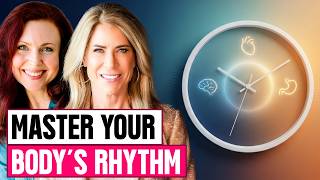
In this interview, JJ Virgin and Dr. Deanna Minich discuss how circadian timing overrides diet composition in determining hormonal balance, mitochondrial function, and overall health, especially for women in midlife. They explain that the body’s internal "conductor" (the suprachiasmatic nucleus) is driven primarily by light exposure; artificial light at night disrupts melatonin release and leads to a "circadian syndrome" characterized by metabolic, lipid, blood‑pressure, and mood disturbances. Dr. Minich introduces concepts such as the photometabolome, melatonopause, and darkness deficiency, and she outlines practical bio‑hacks: measuring ambient lux, using full‑spectrum morning light, blue‑blocking glasses, red‑light evenings, and smart‑bulb lighting. They cover chrononutrition—eating when it’s bright (midday) and avoiding large meals after dark—and how meal timing influences cortisol, insulin, and melatonin. The conversation also touches on age‑related metabolic “gates” (around 44 and 60 years), endocrine decline during perimenopause, the role of the gut microbiome’s own clock, and strategies for jet lag, social jet lag, and shift‑work (pre‑travel sleep shifts, fasting, light therapy). Exercise timing is discussed, with an afternoon window (2–3:30 pm) being optimal for cardiovascular efficiency, while emphasizing consistency and intermittent activity throughout the day. Dr. Minich also shares her online resources, including her website, a new Science & Spirituality podcast, her work with Symphony Natural Health and the plant‑based melatonin Erbitonin, and her book "The Rainbow Diet" (with an ebook giveaway). She describes her creative approach to social media—using Instagram for emerging ideas with a visual flair and Facebook for more scientific nutrition posts. Finally, they stress that the single most impactful action is to get morning light right, which sets the cascade for proper hormone secretion and nighttime darkness, and that aligning circadian rhythm is the missing piece for women’s hormonal health during life transitions.
Chapters
When I started to get into circadian rhythm, I realized circadian rhythm trumps everything else. It's not just what you are eating, it's when you are eating, and it's when you're doing everything else. The sequence is time, hormones, and the mitochondria or metabolism. We are run by the sun. Look at the light. So whenever the light is brightest is when we should eat the most. That would be around the noontime hour, like a full-on lunch. I notice when I'm in healthy rhythm, I'm just naturally hungry great when I actually should be. When we get that morning light, we help with our cortisol levels, and then we help to set the stage for healthy melatonin production and secretion at night. Get your light right.
Even when you're doing all the right things—your strength training, staying active, prioritizing protein—keeping the muscle you built over a lifetime gets harder with age. Now, our parents were told to accept that it's just getting older. I don't buy that. And that's why I use Timeline powered by MagnaPure. Here's the real story. Muscle isn't just about strength or looking good. Muscle runs your metabolism, protects your balance, preserves your independence, and determines how powerfully you age. And what most people don't realize is that muscle loss isn't only about hormones or workouts. It's about cellular energy. As we age, our mitochondria, those energy engines inside our muscle cells, become less efficient. Now, when your muscles can't produce energy well, it's harder to maintain strength, function, and resilience. That's where Mitopure comes in. It's the only clinically studied form of Urolithin A, a postbiotic shown in human clinical trials to support muscle strength and function by helping renew mitochondrial health at the cellular level. I love this because it works with your training, not instead of it. Now, strength training is the signal, protein is the building block, and Mitopure supports the cellular energy that allows your muscles to actually respond and adapt. Mitopure gummies make it simple. 2 a day, sugar-free, vegan, non-GMO, and independently certified for quality. And let's not forget, absolutely delicious. So if staying strong is part of your longevity strategy, and I sure hope it is, visit timeline.com/JJVirgin and get 20% off your order. What if I told you that there's a clock inside your body that's more powerful than your genes, more influential than your workouts, and more more dangerous than your diet if you ignore it. Because this clock doesn't just decide when you feel tired. It decides how fast you age, how well you burn fat, how clearly you think, and how resilient your hormones really are. And here's the wild part. Most of us are walking around with permanent jet lag without ever getting on a plane. Screens at night, coffee at sunrise, Late dinner, indoor lighting that never changes. We've basically erased the signals our biology has used for thousands of years to stay young, lean, and energized. Well, today we're pulling back the curtain on the hidden clock controlling your metabolism, your hormones, your skin, and your longevity, and what you can do this week right now to bring your body back into rhythm. My guest today is someone who doesn't just study nutrition. She studies time, light, and the biology of how we age. Dr. Deanna Minich is a nutrition scientist, educator, and internationally recognized expert in nutrigenomics, circadian biology, and functional medicine. She's spent decades helping practitioners and patients understand how food, light, hormones, and daily rhythms shape everything from metabolism to mood to skin health. She's also the mind behind concepts like photometabolome, the idea that light doesn't just affect your sleep, it can literally influence your metabolism and cellular function at a molecular level. Today we're diving into why your body is actually a symphony of clocks, how modern life is throwing your hormones completely out of rhythm, why melatonin may be one of the most overlooked longevity molecules in the body, and how women in midlife can reclaim their metabolic and hormonal timing instead of fighting it. Because when you fix the rhythm, you don't just feel better, you age differently. Let's get into it. Dr. Deanna Minich, welcome to the studio.
Great to be here with you, JJ Virgin.
Well, I love having you here in person, and I'm really excited about this topic because I haven't heard anyone talk about circadian rhythm and women. So let's get into it. And I'd love to start first with, you say our bodies are a symphony of clocks. Now, what happens if the conductor goes missing? Are most of us living out of rhythm without even realizing it?
Most of us are definitely living out of rhythm. So we wake up tired, we're going to bed late, we're eating at off times, we're stressed. I mean, basically, you would look at our culture and say, gosh, nobody is really living in rhythm. And the biggest thing that is throwing our conductor off rhythm them is artificial light at night. So having that electric around us when it should be dark is really disrupting our eyes, which is sending the wrong signal to the conductor, which actually lives in the brain. So within the brain, we have this cluster of 10,000 to 20,000 neurons. And when the light comes into the eyes, then signals what you're calling the conductor in the brain, then we get the release ultimately of melatonin from the pineal gland, which then goes to all of the different cells in the our body and synchronizes all of our clocks. So every night we are essentially being pulled back into that natural rhythm. But like you said, the conductor can go missing or it can be disrupted in some way.
Or it has to go to a party.
Things happen. Yes, there's social jet lag, all kinds of things. Yeah.
I would also assume that natural light is very different than artificial light. Yes. Or is your brain going to interpret them differently or what happens there? You know, how would you hack this? Like I was just in Ecuador for 11, 12 days with the Amazon indigenous tribes. I kid you not. That's amazing. And as we're going through this, I'm realizing that was actually a really interesting experiment about circadian rhythm. Because they, it's Ecuador, it's right at the equator, their days don't change. And so it becomes light every morning at 6, it gets dark every night at 6. Because of that, they go to bed at 6 o'clock at night and they get up around 2 in the morning. Right. Which is wild to me. The women get up around 2. Because they do all this work for the men. That was also wild for me. I was like, this is interesting. And the men kind of start around 3 or 4 o'clock in the morning. Everything is dictated by natural light, you know? So what happens when things get disrupted with this light is, can we do it if we, let's say, are living in Iceland and it's winter? We can.
I think the bottom line is we just have to follow nature's rhythms. So when you were in the Amazon and it gets dark at 6:00 PM, that's the proper signal to go to bed. And then you just need 7 to 9 hours of sleep. So waking up at 2 to 3 AM makes sense. Mm-hmm. So there is what is called the, a different phase of that circadian rhythm. And we do that all the time. We do it seasonally. So even now it's winter. You live in Florida, I live in the Pacific Northwest. We have different phases and circadian rhythm just by nature of the different amounts of light and darkness that we have. So if we just If we just follow that, whether we're in the Amazon, in Iceland, wherever we are at different times of year, that will bring us back into rhythm.
But then I look at places like Iceland. Well, what happens during the summer or Alaska? You know, these places where they have daylight most of the time. Are you just getting a whole lot less sleep? What's, what's going on? Is that following the natural circadian rhythm of living in a place like that?
Well, there are ways to essentially move into a better rhythm if that isn't suiting the individual. But if you are living there, not just visiting there, but actually living there, I would think that, you know, after some time the body acclimates. It's the same in the north part of like Scandinavia, like Sweden. I have Swedish relatives. I went to go visit them up in the north. They don't even have curtains because they move with the sun. So they wake up with the sun, they go to bed when it's dark. So I think that we are missing out on something that traditional cultures have long adhered to, which is You go to bed when it's dark and you wake when it's light. Now, if we are forcing a different type of environment where we are artificially creating the light at night, mm-hmm, I think that's where it becomes disruptive. And the reason why is because when we are in Alaska at certain times of the year, our hormones are tethered to that rhythm. Then the hormones are actually connected to the metabolism, right? So we may need a little bit more in the way of certain hormones. Certain metabolic changes to get us through those periods of excessive light. Everything is tethered. The way I think about it is in 3 parts. Time is first and foremost. There's an access to think about. So time, hormones, and metabolism in that order. So when we are just thinking about hormones and we don't think about time, it's an incomplete flow because time will set the stage for the entire clock. So there are certain times to do certain things and certain times that certain hormones are released. So if we adhere to the time, then we have the proper secretion of hormones, which will then move us through certain metabolic pathways in the order that they need to be unpacked in the body.
How many, I mean, looking at our metabolic health right now and, you know, the latest stats, which I don't even think are the latest stats of the 7% of us, less than 7% of us are metabolically healthy. Saying that very provocative statement, of time first, then hormones, then metabolism. How much of our poor metabolic health do you think is because we're living out of sync?
I think it's probably the majority. I mean, of course it's ultra-processed food, it's being sedentary, but a huge portion of that is also sleep disturbance. So in fact, when we think of circadian syndrome, where we have issues with lipids and body weight and blood pressure, there is the circadian syndrome now, which has an overlay of sleep disturbance. And also mood disorders. So even if we think of the pandemic where people were off their sleeping rhythm or they were eating at different times, because when we think of that conductor, the conductor, its first signal is truly light and darkness. The second round of conductors through would be eating, activity, and even social activity. All of that makes up kind of like a second tier. So when you throw one of those throws signals off, it throws the entire circadian rhythm off. And then we start to see which would be called in the literature chronobiological diseases. So things like sleep apnea can be connected to this whole array, this whole metabolic dysfunction, right? In fact, so many different diseases I could probably trace back to circadian dysmetabolism.
And so, you know, we've always thought that things like obesity cause sleep disturbance, but it could be that the sleep disturbance is causing the obesity. And we got it all wrong. Really looking at light as this really powerful drug. In fact, if you put it first, I would argue that maybe it's the most powerful drug. What about sunlight? How could— I mean, seems that sunlight, you know, when we think about getting up in the morning and waking up, that sunlight could be the most powerful drug out there. And then on the flip side of that, we would also need darkness, but yet we don't get darkness. I mean, when I was in the Amazon, we did, right? Because we were finally in a place we were sleeping under thatched roofs outside with a lot of mosquito netting and DEET. But I know, I was like, they're like, "Use natural." I go, "Do you know where I am?" Right, right.
Well, at least you had certain other things that were more in balance than living in the United States. You know, when I think about light as a powerful signal, it is. And I think most people recognize that. Most people think in their minds, "Oh, sunlight, good, connects to my mood, connects to vitamin D." but we don't actually honor it. We still spend a lot of time indoors. And in fact, I think that one of the most important things is to actually biohack your light and darkness. If you don't measure your light, you don't actually know what you're getting. So I use an app called Light Meter Lux.
I didn't know there was such a thing.
There is. It is so simple. You open it up on your phone, you put it at eye level, and it measures luminosity. So 1 lux is equal to a candle flame 3 feet away. So ideally what you want at night is 0 lux in your sleeping room. So no luminosity. But, you know, if you have a little, you know, smoke alarm, I mean, that's not going to have an impact. But something like this room with a lot of lights, I mean, we would be probably a couple thousand. So that starts to change things. But during the day, that's a healthy signal. So if we were to go outside at noontime and it's a sunny day, we would probably get 15,000 to 25,000 lux. So thousands, right? But as we move through the day, we are going to see a reduction in the lux or the luminosity. And also the colors of the light are changing. So we're waking with that full spectrum blue light. Mm-hmm. And a little bit of red, and then it gets more blue, blue, blue. And then we start to move back into that reddish orangish, orangish light. So it's not just the luminosity, it's the colors of the light. And so I, I do think light is, is huge and it's important for the skin. It's important for the eyes. There is so much changing even with eye health. Here we are with our glasses. I know. I mean, but essentially with people on so much tech and devices, what is happening as we get older is that the lens of the eye starts to get a little bit more cloudy. So we are better able to filter out blue light as we get older, just naturally through our eyes. But because it's more cloudy, and the lens of the eye is something that it's very difficult to reverse its aging. As we get older, we need more light, more luminosity in the morning. So we really need to set that morning signal even more. So if we just walk through the circadian clock of the day, maybe everybody can kind of see like what to do when ultimately. But that's really important because eye health is really declining. People are having issues with their retina, and that's where a lot of that signal back to the conductor of the brain to set the circadian rhythm is. So when you tend to your eyes, you're actually tending to that conductor that sets your rhythm. So getting your eyes examined, making sure that you have enough lutein, zeaxanthin— these are plant compounds in the diet— to protect the macula from the blue light. And again, the body just has this intelligence where lutein travels. Once you've eaten it in plant foods, it'll go into the back of the eye and protect the macula from that blue light. And will also protect the eyes from things like age-related macular degeneration.
Interesting. Do you know, you know Ronnie Bonick, right? Dr. Ronnie Bonick in New York? I think so. So she is an eye doctor specializing in menopause. Oh, in menopause. No, then maybe I'm— You must know her. You gotta meet her. She's fantastic. I was thinking about that 'cause I went in and did an exam with her that was totally different than anything I've ever done before because of her focus and all of the weird things that happen. Yeah. As you start to have your hormones shift.
Well, and you have estrogen receptors in your eye. Yes.
So she was even doing estradiol. Like, there was estrogen eye drops and all sorts of different approaches. I was like, I've never heard of this. As far as that goes, and I would love to walk through the whole day. I think that would be entirely useful. It's just another thing to think of. I think of like when you should eat in the morning and when you should do your workouts. But this is like, tying this in is gonna be amazing. Before we get there, I'd love to just kind of look in the evening because it seems to me if your room does have any kind of a light in it, and one of the things that I travel with is an eye mask. I even used it in the Amazon because we had a couple nights of full moon. So I'm like, okay, using the eye mask here, using the earplugs because the frogs are so loud you can't sleep. It's wild. But one of the other things that's pretty common for people to take, although I feel like there's a lot of misinformation about it, is melatonin. Now, I know that a lot of this is also based on light that your body will produce it. But what is your thought on melatonin?
Melatonin is a multitasking molecule. That's what I have learned. I mean, I have interviewed experts in melatonin research like Dr. Russell Reiter, Dr. Tan, Dr. Paolo Lissoni in Italy, who is an oncologist who started using it in the '90s. I have learned so much about melatonin over these past years, and it's so much more than what people think it is. People think it's a sleep hormone and they're actually afraid of it. I mean, if I look at the press releases that come out, you know, so much fear around taking melatonin.
You should not take it consistently.
No, because your body will stop making it, which is not true, which is not true. And I've had Dr. Ryder and others confirm that. And there is no research to suggest that you actually stop the production of melatonin by your, by your body, by the pineal gland. If you're taking melatonin. But melatonin has like 6 different functions. We think of it as it relates to the circadian signal. So it's not really about sleep. Sleep is the byproduct of the circadian signal that is set when the melatonin is released from the pineal gland and then goes out to the peripheral clocks, the liver, the gut, the kidneys, the muscle, all these different body parts in order to synchronize the rhythm. So that's why it's so important that we sleep. It's not just, you know, restoration, growth hormone. We need that time to set the rhythm. We also do a lot of brain detoxification at night. So it has the circadian rhythm setting, which is essential. It's also a really potent antioxidant. In fact, if you look at vitamin C, vitamin C quenches certain free radicals, but usually 1 to 2 radicals. With melatonin, 1 molecule of melatonin can quench up to 10 free radicals. Wow. It's powerful. And not only does it have a lot of free radical scavenging activity. It works in different parts of the body because it is what is referred to as amphiphilic. It's water-soluble and fat-soluble. So that's why it can go into your brain. That's why it can traverse through your bloodstream, because it can flex to all of these different body compartments. Whereas certain other antioxidants like vitamin E stays in the fat, vitamin A stays in the fat, right? But melatonin can flex. It can move throughout the body. It's also a potent anti-inflammatory. It is produced in high amounts in the mitochondria. So it regulates the mitochondria and therefore metabolism. Why wouldn't people be taking this? I don't know.
Oh my gosh. I mean, I've been taking it for years and years. Like I saw that—
Well, you're smart. I mean, it's, to me it just makes good sense. But I think where the problem is, is when people start thinking, oh, melatonin is good. If a little is good, more is better. Melatonin doesn't work like that. You know, much like other antioxidants.
I was gonna say, most things don't work like that. No, most things don't.
I mean, even water, if you drink too much water, you're gonna be overhydrated. So with melatonin, there's a sweet spot. So one of the things that we know, and the amount of melatonin that is made by the pineal gland has been measured. So when we are a child, that's when we produce the most. So it's upwards of about 0.8 to 1 milligram. So just teeny tiny. As we go through puberty, that starts to decline. So by the time we hit middle age, we're producing about a third of what we had as a teenager. And then further on, I remember I was doing a podcast with Dr. Dick and Weatherby, and I was talking about this decline, like a rollercoaster of melatonin, just naturally. So by the time we hit our 50s, we're at like a 10th of what we had. And so Dr. Weatherby said, "That sounds like melatonopause." And it is another pause because we give so much focus to menopause, andropause, but who's talking about melatonopause? So I give credit to him for, Very astutely bringing out that term because we are crashing in our melatonin. And if we are crashing earlier, if we are disrupting our circadian rhythm by, again, exposing the eyes to artificial light at night, which inhibits the production and secretion of melatonin by the pineal gland. So we're actually flattening our circadian curve and we're accelerating our aging process by doing that. If people knew that they were aging themselves through artificial blue light, they may actually take it a little bit differently. Wow. Yes.
That, that changes So as you age, your melatonin production goes down, but then seeing artificial light in the evening is gonna block melatonin production and make you age. So it's a roundabout. And the screens make you age.
I mean, that blue light we know is not very good for the skin. And we know about skin cancer rates changing, people's just overall skin health. I mean, that's another window into so much, right? We talked about the eyes. I mean, equally, we can say something about the skin and what we're taking in there.
So how would someone know how much melatonin they need? Because you started talking about the amounts we made as children, but we also were not the size we are as adults. And it's— Correct. I would assume size has something to do with it.
Size may have something to do with it. In general, if we look at the physiologic levels, we're looking at about 0.3 to 0.5 milligrams, you know, kind of replenishing. We're not overshooting or going into supra physiologic doses. Like we don't wanna get into what we would use pharmacologically, right? Like we're talking double-digit doses. And I've been on so many podcasts talking about melatonin, and I could tell that the person interviewing me is very excited about it. And then they tell me they're taking like 20 milligrams or 300 milligrams. What? I've never heard the triple-digit intake.
I have. Yeah. I've seen double, like when Grant, my son, got first initially was coming out of his brain injury. Hmm. He was on 10 milligrams of melatonin. I don't remember, one of my brain doctors put him on that.
But there was an indication for it.
Yeah, there was an indication, but I've never even heard of doing double digits. Oh yeah. For anything.
Well, actually in oncology, so what I learned from Dr. Paolo Lissoni, he had patients with cancer where he would amplify the chemotherapy by giving them 20 to 40 milligrams of melatonin. And it was just for the duration of the chemo. What it seemed to do was, make the chemo target the cancer cells and protect the healthy cells. Wow. Now that's his work. Now that was in the 1990s. He's now in his late 70s, 80s, I think. And, you know, he's done a lot of work in that area.
Wow. Amazing. Okay. I thought this whole idea of, first I heard it called social jet lag, then you call it self-inflicted jet lag, but it's the late nights and the screens, eating at different times. Yeah. That are just causing like kind of what was it that you called this circadian, circadian syndrome, I think. If you've gotten this, and I would imagine most people listening have a little bit of this because we're not aware. Yeah. Right. And so how do you fix this? And what exactly is this self-inflicted jet lag? And what are some of the signs that you're doing this? And what are some of the things it does to you because of this?
This is going to be a difficult thing for people to hear because people don't want to be told to kind of corral their schedule to go to sleep consistently every night. Even on the weekends. Social jet lag is when we move out of that day-to-day routine and we start doing things differently. So we start going out later at night, drinking more alcohol, watching a movie really late, and we think, oh, it's the weekend. But actually, that's probably one of the worst things we can be doing, right? I mean, I think that when we travel, we know that we're gonna be subject to jet lag, and that's kind of temporary. But when we keep repeatedly having this social jet lag where we override our normal routines, this is very disruptive to the body. The body actually likes routine. It likes the conductor sending that message at the same time every night. Not to say that you have to be like on the minute, but when you are forgoing that by a few hours, that can really disrupt everything. And in fact, you're going to feel like you have a hangover the next morning. So when you ask like, what are the symptoms? I mean, most people know when they've slept too little. If you've slept too little, chances are you are completely off in your circadian rhythm. You're off in your time signal, which means that the next day you're going to be craving more. You're going to want more carbohydrates in order to keep your energy up, and your mitochondria won't be as fit in processing that energy because it didn't get the correct signal at night in terms of getting that melatonin and then setting those peripheral clocks. So everything, you know, JJ, it's so interesting because I've studied nutrition for years. Your world is more physical activity and exercise, and you might look look through that lens. I've always looked through the nutrition lens. But when I started to get into circadian rhythm, I realized, no, circadian rhythm trumps everything else. It really does. Time is what we are held within. So if we think of aging, there's so much talk right now about longevity and aging, and I feel like one of the missed pieces there is looking at circadian rhythm. Because when women go through puberty, that's the first change, right? Our melatonin starts to decline, and we start to go through perimenopause, and now we further have issues. If she has disrupted circadian rhythm going into perimenopause, she will actually have worse perimenopausal symptoms. She's going to sleep more poorly. She's going to have worse hot flashes. So that's why whenever I'm talking with women about menopause, perimenopause, I always want to know, what should I be eating? I say, let's back it on up. It's not just what you are eating, it's when you are eating, and it's when you're doing everything else. And if you can get your circadian rhythm right, you probably have taken care of, I would say, up to 70% of your biology, setting the stage for now everything else to come in.
You're blowing my mind because I've always focused— in fact, yesterday I was doing a talk and someone said, what is the most important thing? And the fastest way to change things is to change what's at the end of your fork. But I said the most important thing to change is to prioritize sleep. Which isn't what they were expecting, right? However, now I'm realizing that sleep is just the tip of the circadian rhythm iceberg. I mean, if you are getting the good night's sleep every night, but you're not getting that sunlight in the morning. So there's so much more to it that I just hadn't thought about at all.
That's right. And so if we, again, align to light and darkness, and let's just touch on darkness a little bit, because I know we talked about light and I talked about artificial light at night. In a paper that myself and a team of people wrote back in 2017, 2022, was published in Nutrients, asking, is melatonin the next vitamin D? Which I truly think it is. It's— they're kind of brother and sister, yin and yang. But I do think that people have what we can refer to as a darkness deficiency. If we were to think of light as a nutrient, darkness as a nutrient, you could say that these are circadian nutrients. Those are setting the stage for all the other nutrients to be properly metabolized and assimilated into the body and to work at the level of the mitochondria. But most people have a darkness deficiency. And to me, that's even probably more concerning because during the dark time of the night when we should be sleeping and not engaging in shift work, if we can avoid it, we have certain hormones that are released for rest and rejuvenation and restoration. So growth hormone, thyroid hormone, of course, melatonin. Between 2 and 4 AM is when our antioxidant defense system is basically active. Glutathione goes up, superoxide dismutase, is increased. All of our systems of repair are peaking at that nighttime window. So if we don't get proper darkness, which will facilitate sleep, we don't get to the circadian signal that we need to get into rest, rejuvenation, and repair, which is really concerning. Now, you talked about full moons. Let me just get into that for a second because some people talk about, you know, through the month I notice I don't sleep as well on certain days. During the full moon days, 4 days before and 4 days after, we actually see that melatonin goes down. We may need to tend to our sleep and our circadian rhythm and our darkness level, like you did where you wore a sleep mask. That was very, you know, wise. That was astute. I never leave home without one. You just never know what you're gonna get. So I do think we have darkness deficiency even through the month, even where you live, you might have nightlights. And, you know, I was talking with Dr. Terry Walls separately about all this melatonin work, and she said, "But Deanna, you know, I'm unstable at night, and if I have to get up and use the restroom, I need a little bit of light." If you need that nightlight, keep it very low so that the eyes aren't immediately making connection with the light. You don't want it up above or where your eyes are going to catch it. Keep those nightlights low and keep them reddish or, you know, a more soft color, a warm hue.
I discovered many things in the Amazon. The biggest thing I discovered is that I am not a camper.
I'd be in that camp with you.
I was like, oh my gosh, what did I say yes to? Wow. But the other thing I discovered is that I actually don't need to get up in the middle of the night to go to the bathroom. Because when you are in a camp where if you pull out your earplugs, and I was wearing the Oslo Sleepbuds with the babbling brook. Oh, nice. I had to turn them way up to drown out. I mean, the amount of noise that all of these animals make at night is unbelievable between howler monkeys and frogs. And I was like, oh my gosh, sekeidas, because it's the most biodiverse place on Earth. But my biggest thing was like, "Oh gosh, and I'm gonna have to get up and go to the bathroom. I'm gonna have to wake Tim up in the bed next to me, and we're all on one big platform, and go through the mud and put on mud boots." So I was like, "I'm not gonna do that." I never had to get up and go to the bathroom in the middle of the night. Amazing. So I went, "All right, at home, clearly it's just because I know I can." Right. So I think maybe we should really think about trying not to do that.
Oh, if at all possible. And I think that men find that very challenging as they get older, right? Prostate health starts to change and they're even more susceptible. For women too, going through menopause and postmenopausally, there can be the changes in the lining of the bladder. And so, yeah.
Yes, you love the vaginal estrogen for that.
That's right. You can do all kinds of things.
But I think I was just doing it 'cause I could.
And all of a sudden I was like, when faced— You mentally told yourself.
When faced with the who knows what's out there card, I was like, I don't need to do that. Let's go back over to menopause because you talked about if you can go into perimenopause this way. And I think about how most women go into perimenopause. It's the most stressful time of their life before perimenopause, 'cause they're, you know, they are working and have kids and probably their parents are going sideways and everything is up in the air. But then they get into menopause and everything feels unpredictable. And if they did feel like they had some kind of rhythm, that rhythm now gone and the rhythm that they're used to, it's all over the place. So what's happening? How much is circadian clock, like, is your menstrual cycle tied to this at all? Yes. You know, when you start to go through menopause, what's happening here and how much is it disrupting your circadian rhythm? Because, you know, hot flashes, for example, are definitely messing up things, but how much does that play a role?
Well, according to the literature, that's around and available. And keep in mind, there isn't a lot of literature published on women. Shocking. So I'm just going to give that as a disclaimer.
And circadian clocks, we're looking at you, Deanna.
This is what we need. Oh goodness. It's all of us. So what I can see is that women are very impacted by the circadian rhythm throughout the menstrual cycle. We're gonna be more susceptible to dysregulation of circadian rhythm and doing things like social jet lag and not eating well, like during the luteal phase. Right? So we don't have the support of estrogen in the same way. As we start going through perimenopause, what the literature definitely suggests is that if you are circadian dysregulated, you will have issues. Already what is happening is the circadian curve is starting to flatten. You become less sensitive to light and a lot of those cues. It's almost like you have to work harder to ensure that you are getting the light that you need. And it's not just through the eyes, but also through the skin. You know, there was a very interesting study on what is called the photometabolome, which is when women— and in this particular study I'm thinking about, it was in postmenopausal women— they gave them vitamin D, high-dose vitamin D. In the other group, they gave them high-dose vitamin D, but then also subjected them to ultraviolet B light, and they had a certain duration for that. And what they found was that these women had much more improvements in bone health markers when they had the UVB. Wow. Plus the vitamin D. So I wish we could take sunlight and just put it into a supplement because what we're missing from the sun and the skin connection is that it's not just about making vitamin D. There is a spray of different metabolites that we make when that sunlight hits the skin. And even though there are small amounts of those metabolites, they're anti-inflammatory, they play into nitric oxide pathways. So we're missing the complexity. I liken it to food. When we just take one nutrient and not the complex that we have in food, we just hammer on this one pathway and we don't get all of the many different functions that are connected to that food. So it's similar with the sun and the skin.
Can those lights that mimic sunlight, like the 10,000 lux lights, and I know Tim actually has one downstairs that's a vitamin D production light. Can those do it or are they, you know, obviously they're not the sun, but is it a good substitute? Would that be something if you live in, say, a very overcast place or you live in Iceland that you could be using this?
Yes, I think that getting one of those happy lights, it depends on the light. It has to be a full spectrum light so that you're getting the broad array of different wavelengths and colors. But what we can't mimic perfectly through that is how the sun changes the relative ratios of wavelengths throughout the day.
This is like a new biohacking tool, which of course, I will tell you something funny. I was at a biohacking center and I'm in a room that mimics the ionic, the ions of the beach and the sand and the waves and all this. And I'm looking outside the window to right outside their place. It's built right on the beach. I'm like, why don't we just go? Why don't we go to the beach? So I'm sure someone's going to build this full spectrum light and you're just like, why don't I just go Well, we need to just get outside. Right. Stop eating animals.
Bryan Johnson might do that.
And then on the other side, what about red lights? I mean, would there be an application then to start turning on red lights in the evening? And I mean, I've been using them for collagen production and anti-inflammation, but would there be other applications for them?
So many different applications of red lights. We'll talk about a couple different practical things. First of all, you can change the light bulbs in your home. So Terri Wahls, I've actually been to her home and she has done this. I've done it in my own home.
Yes, we did it. Well, we did it in our bedroom where we now can program them, so we changed the lighting to Philips.
Yes, yes. Those Philips Hue bulbs. They are amazing. Yes, they are. I have those as well. And you can even make them different colors like purple light, you know, kind of a golden light. So if you want to evoke a different mood state, because color really informs our psychology. So red is taking us into that warm hue. And if you can't get those bulbs, dim the lights or just turn off some of the lights. You can actually save money by falling into circadian rhythm in the proper way, right? So you're talking about the infrared lights and red lights more for collagen production and skin health, which is good. That can also infuse the mitochondria and create a lot of metabolic activity, which is helpful. And I think at the right time of day, we have to think about that. So obviously we want to have the red when it's starting to become dim. So I always get the question, you know, when do I start my darkness? Well, just look outside. If it's 5:00 PM and it's already starting to get dark, you need to mirror that external environment on the inside of the house. So start to dim the lights, wear blue light blocking glasses if you must.
The latest thing, they were like, they're a scam.
I'm like, there's some research on them. So even wearing them at night, I remember one study wearing them 2 to 3 hours at night helped with blood sugar response even. Because if you think about it, again, Everything is all connected. Melatonin and insulin work like a seesaw. So if you're wearing the blue light blocking glasses, you would think you'd have better glycemic control. There was one study I saw that did help that. I do think, you know, it's not perfect. You know, it's not right on the eye. And a lot of those glasses leave a lot of room so that you can still get peripheral light. But it's better, I think, than not having it. But back to the app, make sure that you measure the luminosity. The Light Meter Lux app and you'll know exactly where you're at. So you can create hacks depending on where you are in your home, right? Because a sleeping room should be very different than the other rooms. The sleeping room needs to be at zero lux. But as you're trying to wind down, trying to hover between 1 and 10 lux. I know it sounds like that would be like in the dark. It's not.
We do it here because my husband's like a mole. He has very light eyes. So he does not, and it drives me nuts in the morning because he doesn't want the lights up. And I'm in the morning, I'm like everything on, like, let's like get everything, especially if it's still dark in the morning when we wake up, I'm like turning everything on and he doesn't want anything on. He wants to stay, he'll, he would be happily in the dark.
So let's talk about that for a second. Two things about your situation with, with your husband. So first of all, there are differences between men and women in their chronotype or their natural circadian rhythm. Women tend to be more morning people. So that's actually been documented. Like, women tend to have an earlier setting of their circadian rhythm and like when they fall asleep compared to men. The second thing is eye color. There was a very interesting study showing that people that had light-colored eyes, meaning light green, light blue, even light brown, were more subject to melatonin suppression when they were exposed to artificial light at night compared to people with dark eyes. Wow. And conversely, if you have really light eyes, you're gonna be more sensitive to the light, like in the morning, it'll be more jarring. It's like you don't actually need as much. Just like people with more fair skin need less sun in order to get to their vitamin D compared to people with dark skin. So think of the eyes like a reflection of the skin, like wherever you are on that spectrum, you may need to gauge that.
Now— So does he wear sunglasses in the morning when I turn all the lights on?
What do you do? Well, just, he may need to wear the sleep mask. Slowly take it off. But now somebody like that, people like Tim will be less subject to seasonal affective disorder in the winter.
Oh, that used to take me out when I lived in California.
Well, people with light eyes tend to fare better with SAD or seasonal affective disorder than people with darker eyes, just because their eyes just take in the light faster. They don't need as much, but then they're gonna be more sensitive to not getting the darkness at night if they're not careful. So eye color plays in.
Interesting. Okay. About these aging gates. Yes. What are they? And then how do we manipulate them to our benefit?
Yes. Well, okay. So there was a publication in, I believe it was Nature Aging, a journal in which they studied people living in California and they looked at their metabolites in different areas of the body. So they looked at the gut microbiome, looked at skin, you know, a number of the different metabolites. And essentially what they found when they monitored them over time, the longest time that I think they tracked somebody was like close to 7 years, but on average they tracked people for a couple of years. And they found that there were 2 time points at which there was a bit of a dip in terms of cellular metabolism. And it looked like the, the body was experiencing a little bit of a dip. And those were the ages of 44 and 60. You know, a friend of mine, as I was explaining to her the research, she said, "Those sounds like aging gates." Like we go through a place of like where we don't come back. So the first one, the 44, to me that speaks of mitochondrial efficiency, metabolic flexibility, which is your world of making sure that we have enough protein and we're exercising. We, we have that metabolic fitness.
I just wonder with that one, if you are active, if you would not notice that one.
As much. Well, sure. Yeah, you know, I don't think everybody is created equal in the way that they move into that 44 timeframe.
Or if you know what's coming, you can kind of double down to offset it, just like, you know, what's happening as estrogen goes down. Like, if you know the ramifications and like you could just do more. Yeah. That would offset it. So the big thing that's really happening there is, so you're becoming more metabolically fixed. Yes. Inflexible. Maybe more insulin resistant, maybe you're losing more muscle. I mean, your muscle starts to go down at age 30, and you're heading into perimenopause. Is this both men and women?
Yes. Okay. Yes, in this study it was. We think of that middle age, 44, but, you know, let me just insert something in here before we get to the 61, because I also want to mention something that most women don't think about until they hit menopause or perimenopause, and that is that The speed at which we reach menopause and the severity of symptoms that we have is determined by the decline in our endocrine system. So we're really looking at the whole, just like that study looked at all these different metabolites. What they're actually capturing is the health of the endocrine system. And when I think of that, I think of the hypothalamus, the pituitary, pineal gland, the thyroid, the ovaries, the adrenals. How are they all working together because most people, most women, when they hit the perimenopause time, they're just thinking of their ovaries. But the ovaries are connected to the adrenals, are connected to the thyroid. And if you think of women who have grown up with a lot of stress and trauma, okay, now we start to see a change in the adrenals, right? And so we start taxing— I'm still looking for the woman who's not stressed.
Where is the unicorn?
Well, and how did she turn stress into resilience? Because ultimately that's what we need to do. We need to transform it, right? But all that while her endocrine system is on the decline, and that's reflected in those metabolites. Metabolites, that's just like the endgame. That's the end goal. That's the product. Mm-hmm. But what we really need to be looking at as a result of looking at circadian rhythm as it connects to the endocrine system. And if I think about the psychoneuroendocrine immune system, how all these body systems are connected through this superhighway of glands in our body. And of course now we know that muscle acts as an endocrine organ with myokines. We know that the liver has its own clocks. Yes. The gut microbiome even has its own circadian rhythm. So actually the gut bugs have a rhythm within us. If you think about it, I mean, that is mind-blowing.
It is mind-blowing. And then it's like, okay, well, do they have their own rhythm and they change our rhythm or do they start going along with our rhythm?
I'd assume that. Well, they outnumber us.
Yes, I know.
So what if they have no light-dark? What they are mostly addressing, and we didn't we didn't really get into it, but chrononutrition, which is the when of eating. And so based on when we are eating, we'll determine what metabolites those microorganisms are producing, which will then go into the body and start to change the clocks that way and start to ripple through the mitochondria. Wow.
Well, I know we're going to talk optimal day and that. Yes. So before that, our bodies love a great steady schedule. They I travel 70% of the time. I jump jet, you know, time zones all the time. It almost would be better if I was a shift worker because at least I had a schedule, right? Like the schedule is crazy all over now when I'm— Yeah. And I try to take my schedule with me wherever I am and wherever I'm going. I shift my time zones when I get on the plane to the new thing and operate as if on the same schedule. How would you recommend navigating jet lag if time is the, like, the biggest factor here, kind of the conductor overseeing everything else? And you have something like this that would seem to be a big risk factor, what would you do?
So you start before you've even traveled. So 3 days before you're about to get on the plane, you would be changing your sleep pattern a little bit to go to bed 15 minutes earlier. For some people, they say as much as possible when you're traveling, try to fast. And the reason they may say that is because when you eat, it's acting as a circadian signal. So if you're eating at the off time, you kind of want to like reserve it and reset it so that when you land, you kind of move into the flow of that new schedule with the proper eating time of wherever you're going to be.
So it really is, it's not so much fasting as it is shifting your meal timing to fit with the new circadian rhythm. Correct. I hate fasting.
Well, whatever you need.
Fasting makes me, when we were in the Amazon, we had to fast one day and go on a 5-hour hike. Hike. And that was the hardest experience. In the middle of the day, 90 degrees, 90-degree humidity, in mud boots, in the mud, in the rainforest, going to a waterfall.
JJ, I am having a hard time seeing this. I am.
This, I go, this is good. I can do hard things. I kept like, I was mentally like talking myself through this the whole time going, why didn't I bring a snack? I should have brought a snack.
But everybody, so to honor that, that is true. Everybody is very different. And I don't want to say the fasting word because that has a certain connotation, and that means a lot of different things to different people, right? All I mean is, as much as possible, trying to keep the eating in the rhythm of wherever you're going to land.
So, chrononutrition. When should someone be eating? And, you know, I've made some shifts. You remember the whole thing. You have to eat within an hour of waking up. Right. Then the intermittent fasting came. It was like, don't eat for till midday. Well, that was always a fail for me. But then I heard Satchin Panda say, eat, and it made so much sense. Well, that's what I'm gonna tell you. Okay, good.
So let's talk about that. Yeah. So first of all, I wanna emphasize that everybody has a personalized chronotype. Even when you ask me, you know, when should I take melatonin? Could be a little bit individualized. Some people are slower metabolizers and all of that. So just please take this, everybody listening, within the context of, you know, generalities. So chrononutrition, you can have a healthy meal at the wrong time and be sending in the wrong metabolic cues. So timing again, trumps the actual contents of the meal.
And I wanna emphasize here because, you know, the people who purely focus on weight loss, which I can't stand anyway, because we should only look at body composition and then metabolic health. We have to look at those, right? And getting healthy to lose weight, not losing weight to get healthy. But the person who's just focused on weight loss and caloric restriction will tell you it doesn't matter when you eat, that you can eat at night. It hasn't changed anything. You just know that couldn't possibly be correct.
That's not true.
Like you just know that couldn't possibly be correct.
Okay. I mean, basically a good guideline is eat when it's light. Eat when it's light outside because that's when the body is metabolically active. So just to kind of think of the hormones that we're producing throughout the day, we've got cortisol and testosterone at the start of the day. Cortisol is a metabolic hormone. So starting your day with some kind of, you know, if you're not a breakfast eater, maybe it takes an hour. So what you were referring to is Dr. Satchin Panda, JJ Virgin, who's at the Salk Institute, he's done a lot of research on circadian rhythm. When I talked with him, and he's written a book called "The Circadian Code," he said, "Wait an hour after rising and then eat," right? So that would be kind of like the first foray into eating. Now you can drink water, but when you're actually having something with metabolic energy or fuel, you know, wait about an hour. And if you'll notice for yourself, like once you're in rhythm, I notice when I'm in healthy rhythm, I'm just naturally hungry when I actually should be. Yeah. Yeah. So I am really hungry in the morning and then kind of moving through the day, having another meal around noon, 1, but then eating less as it starts to get dark. Because here's why biologically, as it becomes dim, you are producing little bits of melatonin from your pineal gland. Melatonin kind of shuts down metabolism and it's getting the body ready for the circadian signal and it starts to conflict with insulin. So that could be a problem. Now you're going to be changing insulin activity and not really metabolizing that meal properly. So to the point that you just said about doesn't really matter when you eat, if you wait until the end of the day to just bring in all of those calories, you don't actually have the proper hormones and the metabolic efficiency you would need to burn all of that, irrespective of the total caloric amount. So it's so much better just to eat when it's light, right? So even seasonally, I know we're focused on circadian rhythm, but there's another rhythm and it's the seasonal rhythm. So with the seasonal rhythm, we need to honor that as well. So as it's, now you live in Florida, so you get a little bit more leeway in terms of when you're eating.
Yeah, but remember, I travel 70% of the time. That's true, that's true.
So yes, but essentially depending on where you live, like really adhering to that seasonal rhythm. So if it's darker when it's winter, and it's dark by 5:00 PM, you really wanna be curtailing and reducing that amount. It's all based on light, darkness, and hormones. Again, the sequence is time, hormones, and the mitochondria or metabolism. It doesn't go metabolism first. It's time. We are run by the sun, right? And so never to forget that because we can never override those signals no matter what we do. I mean, we do the best we can when we're traveling with melatonin and priming the, the sleep pattern and changing our eating. But quite honestly, it's just not ideal. And this is why with people that do shift work, they have increased rates of so many different chronic diseases, especially things like cancer, right? Like when we start to really change that long-term, not travel and not, you know, we're working in a situation. So for those people, it's really important to keep some kind of consistent sleeping pattern. So, you know, making sure that you have a block of time, even on your off days, that you're still sleeping, even if there are some daylight hours there. The body again needs that consistency. And they can work with melatonin to prime, just like we did, like before travel, they can do the same with their shift.
I used to have a bunch of— I had two sets of clients, rock stars. I kid you not, like the rock stars in Broadway, Broadway actors and actresses. So late night stuff. And then the anchor people. Yes. Early morning. What I told both of them is, you just need to stay on this all the time. You have to fake the light. So, you know, we'll bring up the sunlight in the morning when you're getting up at 3:00 and pretend. And then we're going to make it dark early. And we just have to fake it and stay on it.
That's the right advice. And that's what we would see in sleep protocols. And, We do, we just have to fake what nature would normally be giving us. It's the second best. It's not the best, but it's the best that we can do in that situation. And when people are doing shift work even more, they need to tend to their eating. You know, I mean, just really staying on the straight and narrow because things will be compromised.
In terms of things like intermittent fasting where now people are not eating till noon, like I do not like the late, late intermittent fasting or that one meal a day where they're like eating an enormous amount at dinner. This could not possibly be good. What would you say about that? And what do you think the optimal— understanding that everyone's an N of 1, but like for most people, what would the optimal eating schedule look like?
I would say look at the light. So whenever the light is brightest is when we should eat the most. So that would be around the noontime hour, like a full-on lunch. And if you look at certain cultures, probably in the Amazon, they kind of did this too. Like you go and you rest and you kind of like let that food kind of assimilate But a moderate breakfast, a hearty lunch, and the popper was the dinner part, right? Like when you're hardly eating anything. And also go with, again, you can tell if you are in rhythm just by when you get hungry, when you have that appetite. In terms of working out, I wanna insert this too. Oh yes, I was gonna ask you this. Because the food and the workout, you know, how do people structure that? And you can speak to the workout. But if you look at circadian rhythm in terms of efficiency of when your muscle your cardiovascular system are most efficient, it's between 2 and 5 o'clock, you know, really 2 to 3:30 PM. So it's in the afternoon. Not to say you can't exercise in the morning or you can't exercise after 3:30 or later, but there's something about that afternoon time, right? So blood pressure looks to be more optimal. It's not too high, too low. Something about that afternoon time window that speaks of cardiovascular efficiency.
Well, the nice thing is it also gives your metabolism a boost. However, the other research shows that people who work out first thing in the morning are the ones who are consistent. So the biggest thing with exercise is consistency. Yeah. Although I believe that the most effective way to work out is all throughout the day. Well, that's true. Because, I mean, if you look at the literature, doing these short bursts throughout the day is so much better for blood sugar control. And metabolism, you can work harder doing less. So if I was gonna design it, I mean, the most important thing is they'll do it. And the problem is it's harder to comply with any of these other things. Although right now we're doing this 10 Minutes to Win It Challenge where you have to do 10 minutes of different types of exercises throughout the day in 1 to 2 minute increments. I like that. It's doable. And people are like, you know what's great? You can do it in your clothes and you can do it anywhere and you're not gonna get sweaty, but you got it done. And the research really backs it up. So I've just gotten to this point where like, "We just need you to do it." When I lived in Japan, I had to teach an aerobics class at 8 o'clock at night. I went to bed at 2. I could not go to sleep. Like, I was like, "This is terrible," because it was bright lights, blaring music. It was like going to a nightclub, and I'm leading a class. So, you know, and then I spoke for Tony Robbins at Unleash the Power Within, and I spoke late in the afternoon. I think I spoke at 5. 5 on a Sunday.
That must have been hard as hell.
I just went to— You were wound up. I was wound up. I'm like, I get what all of my rockstar clients are feeling like now. And they go and do that, you know, at 9 o'clock at night. And they're like, I went to bed at 4. I'm like, you know, you just, you get it.
It just winds you up. You're raising a really good point about being in the gym too late at night with the fluorescent lights. Right. You think you're doing a good thing. And the music, right? And where people go grocery shopping late at night, big fluorescent lights. I mean, even that short timeframe, even if you're just in the store for 10 to 15 minutes, you're still changing the eye exposure. If you really have to do that, wear the blue light blocking glasses as an example. Even if you don't like the high, you know, orange or red ones, like the super saturated ones, just even a tint, something just to protect the eyes. It's really all about the eyes. That makes sense.
And so with exercise, if you can do it, which used to be when I lived in California, it was perfect. I would work out in the afternoon. Yeah. I live now on the East Coast. All the work's in the afternoon, you know, because California. So it shifted everything. Now I work out in the mid-morning. So everything shifted and I liked the afternoon better for a variety of reasons. But, you know, again.
Well, we're just more limber, right? Like our circulation is flowing. Like everything is like, we've just eaten a meal and now we're postprandial.
And now we're gonna be able to suck that blood sugar into our muscles. But I, again, And again, the most important time that someone should work out is when someone will work out.
Yeah, yeah, I was thinking that as well. But I really like what you're saying about, it's almost like intermittent activity.
Intermittent exercise. Yes. I love it. That's so good. That's a good one. I'm writing that down. The biggest modifiable thing that we have isn't this, like most people will go to the gym and then sit more throughout the day. They compensate. Yes. You know, and I was like, if we start to just teach you to move throughout the day and gamify it and win it, it is, it's like intermittent fasting. But put into exercise.
Well, and research even shows that when people are moving like every 45 minutes to an hour, they have better metabolic outcomes than if they did exactly what you said, just like were sedentary and then exercise. So there's something, I mean, the body needs to move. Yes. That's just the nature of who we are, much like circadian rhythm. So coupling those two together is really essential as best we can.
I have one last question here. All right. Right. For you. So someone's listening to this and they're like, uh-oh, my body clock is completely out of sync, which I think would be most people because this isn't talked about, not in the depth that you're talking about it. So what's one thing they could do this week that would make the biggest impact? What's the biggest needle mover? Get your light right.
So what I mean by that is when you first wake up in the morning, expose your eyes to light, whether that's through a happy light, a full spectrum light, you go outside for just even a couple of minutes. When we get that morning light, we help with our cortisol levels, and then we help to set the stage for healthy melatonin production and secretion at night. Would have to be either light or darkness, but get your light right. Yeah. That's like, if I imagine everything that we just talked about as a triangle, the base of the pyramid, if you will, is get your light right. And when you get your light right, you're going to get your darkness right too.
I want you to address one thing because I feel like there is some crazy misinformation and fearmongering around cortisol online, as if we don't want to do things to raise our cortisol, you know. And it's like, well, it's making me a little nuts. Like, everyone's afraid of exercise now because they don't want to raise their cortisol. So could Can you just address that?
Well, everybody's at different places with their cortisol, and it's never just one hormone in isolation. It's cortisol as it connects to insulin, cortisol as it connects to melatonin, cortisol and sex steroids like estradiol and progesterone, right? So we can't just imbalance that hormone web just by focusing on one. So, but do I think people can over-exercise? Sure, but most people are under-exercising. So that, that I see is, is the problem. It's really about moving back into resilience. Right? Because it's not about creating stress in the body. It's to enable the body to have metabolic flexibility. And that's why we exercise. And that's why we diversify exercise as well. So if somebody is just kind of doing the same thing excessively, that's where I could see, you know, that puts strain on the body. But when we treat exercise like food, where we have diversification of activity, we are adhering to the certain times that work well for us and for our body. You know, it's all about the context. I think actually we have lower cortisol after we exercise, right?
Right, we do.
We kind of move into— It takes the cortisol down. It takes the cortisol, and it helps to create that resilience. It helps the mitochondria. So initially we may have a little bit of a spike, but then, you know, just like eating a little bit of carbohydrates, you know, eventually we kind of come down. We create fitness from a glycemic point of view. And the same thing with exercise. We create more cortisol fitness when we are doing it. In that rhythm. Great explanation.
It's just blood sugar is another one where people have gotten so afraid of a spike. I'm like, but if you eat some of these things, your blood sugar will go up and then it will come down.
It'll come down. You'll be efficient. You will not be insulin resistant. You'll be sensitive to insulin. It's like, ugh.
Where are some of the best places for people to find you? What all do you do? I know you're on Instagram. What else? Where should people find you?
And we'll put it all in the show notes. Sure. My website, deannaminick.com, is where you can find resources. Is I started a new podcast actually, Science and Spirituality Podcast, where I'm talking with people about the science and, and spirit. I also work with Symphony Natural Health, so I lead their science and medical team. They actually have a great plant melatonin, which is called Erbitonin, and it has greater activity than synthetic melatonin, which is 99% of the melatonin on the market. So that's actually what I take, and it's in the that is physiologic. Excellent.
We'll put, link that in the show notes as well. And then of course your book, Your Rainbow Diet.
Yeah, I have some books. One is called The Rainbow Diet. I know you're encouraging me to put this information together. Absolutely. I think that would be interesting as well. Well, we'll see where that goes. Yeah.
And we are— Instagram, Facebook. Instagram, Facebook as Deanna Minich, Dr. Deanna.
Yeah, just my name. Just my name. Yeah. Easy peasy. On Facebook, I like to do a little bit more of the nutrition science-y posts. And on Instagram, I think I play a little bit more where it's more emerging things that I'm thinking about, but aren't necessarily available to everybody. And I like to do it with a more creative touch.
Very cool. Well, you're clearly very creative from looking at your books and the way that you did everything around the Rainbow Diet. And you have an ebook, an ebook of the Rainbow Diet that we are going to be gifting everybody as well. Absolutely. All right. Well, thank you so much for all of this. And yes, I'm going to harass you about creating the book because again, if this is as important as you're saying it is, which I believe is true, then this is the missing piece.
Yeah. And it's the missing piece for women going through the changes of life. They don't realize that they needed to tend to their circadian rhythm in order to be effective in having proper hormone levels.
Levels, right? Yeah, I always look at hormone replacement therapy and I say get your diet and lifestyle right because you can't balance hormones in a vacuum. But the piece I would talk about sleep, but I never looked at the entire picture. So we need you to put the entire picture right, ladies.
Get your light right.
Thank you, Dr. Deanna Minich. Thanks, JJ Virgin.








