Essential Skincare Routines for Women Over Forty with Dr. Mamina Turegano
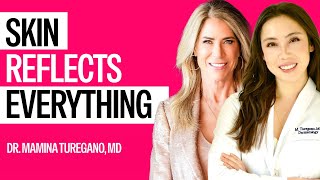
In this Well Beyond 40 interview, host JJ Virgin talks with triple‑board‑certified dermatologist‑internist Dr. Mamina Turegano about how skin reflects internal health and how women can combat age‑related changes after 40. The discussion covers hormonal shifts of perimenopause (estrogen and progesterone decline) and the role of hormone‑replacement therapy (systemic and topical estradiol) in preserving collagen, hydration, and barrier function. They link mental stress, gut dysbiosis, and autoimmune conditions (psoriasis, eczema, rosacea) to visible skin changes and cardiovascular/metabolic risk. A step‑by‑step skincare foundation (cleanser, moisturizer, sunscreen) is outlined, followed by evidence‑based actives—retinoids, vitamin C, chemical exfoliants, peptides, growth factors, and tinted sunscreens that block visible light. Dr. Turegano explains why retinoids are night‑only, how to layer products (actives first vs thin‑to‑thick), and which combinations to avoid (glycolic + retinoid, benzoyl peroxide + retinoid). They review topical and oral supplements (collagen, Polypodium leucotomos/Heliocare, astaxanthin, niacinamide, creatine, Mitopure (urolithin A), NAD precursors NMN/NR) and their evidence for skin protection, autophagy, and anti‑aging. Light‑therapy (red for anti‑inflammation, blue for acne) and device safety are covered. The episode also touches on hydrocolloid acne patches, makeup considerations for mature skin, handling post‑weight‑loss sagging (collagen‑supporting actives, filler options), and hyperpigmentation treatment pathways (sunscreen with zinc/iron‑oxide, hydroquinone + tretinoin, thiamidol, kojic/azelaic/alpha‑arbutin, chemical peels, IPL, microneedling with PRP or exosomes). Throughout, Dr. Turegano emphasizes a holistic, inside‑out approach, debunking myths (retinoids thicken skin, hydroquinone safety) and encouraging personalized, evidence‑based regimens for women over 40.
Chapters
Any kind of stressor, mental stressor, even how we think can manifest on the skin. We see it all the time. We see hives when people get stressed, we see dandruff, we see acne.
Speaking of acne, I found those little spot things.
The hydrocolloid patches.
Oh my gosh, this is the greatest thing.
Huge fan of those. It works. It helps the acne heal faster. It's pulling fluid out, but also providing a healing environment by keeping it occluded.
As someone's starting to go into perimenopause, What is happening to your skin?
There's a pretty drastic decline in estrogen. Thinning skin, wrinkles, hydration, more hair loss.
I would assume that HRT could be a great frontline here.
HRT can be such a game changer. It's so unfortunate that people were misinformed.
If your skin could talk, what would it be saying about how you're aging? Well, today's guest, Dr. Mamina Turegano, is a triple board-certified dermatologist, internal med doc, and derma-to-pathologist. She is amazing at really going inside and outside to help you have your skin be its very best. And she says your skin isn't just a beauty metric, it's a mirror of your hormones, your inflammation, and even your mitochondrial health. Today we are going to dive into how your skin really ages, what you can do about it from the inside out, and the longevity hacks that go way beyond serums and sunscreen. If you want to figure out like which products really do work, which are hype and which are worth the money, what about red lights? What about lasers? What about what you put on? What about what you take in? All of that stuff we are going to be going deep into. And literally, I had you all send in questions and I got pages and pages of questions. So We are digging into everything around aging, dark marks, acne, hormones, skincare, what supplements you can take. So stay tuned. I'll be right back with Dr. Mamina. And also we talked about a ton of different things during the episode, so we will have all of that with links in the show notes at jjvirgin.com/dr-mamina. That is spelled D-R and then M-A-M-I-N-A, Dr. Mamina. Stay with me. Dr. Mamina Turegano, welcome to Well Beyond 40.
Thank you so much for having me. I'm so excited to be here.
Well, I love your background. It seems like such a perfect combination to be board certified in internal medicine and in dermatology.
Yeah, I think that having that background in internal medicine only makes you a better dermatologist. I pursued that route, that double residency route, because I was super drawn to autoimmune skin diseases and I was really interested in rheumatology, though I thought I was maybe going to pursue that further. But I just became in love with all things dermatology when I was going that route.
And now you're like a TikTok sensation.
Yeah, that was not in— I did not expect that at all.
It seems like the perfect blend though. And I still remember going to a dermatologist in my teens you know, with the typical teenage acne and them telling me that diet had nothing to do with it.
Oh, yeah, that was the, that was the mindset back, back then. And even still, still persistent somewhat today, too.
What's your merger between what's going on internally and what's going on externally, especially as we talk aging, since this podcast is Well Beyond 40?
Yeah. One of the things that really drew me to dermatology was the fact that I think your skin is a window to what's happening inside. So inflammation that's happening internally, and so much is coming out with gut microbiome dysbiosis, inflammation in the gut manifesting on the skin, hormonal imbalances internally, and that's a huge part of acne, both hormones and gut, and just your immune system kind of going awry. And we see that too with a variety of inflammatory skin issues, whether it's eczema and psoriasis. And we're just seeing so much more connected to the gut, same all these other inflammatory issues— eczema, psoriasis, rosacea.
Is that why you call the skin our external nervous system?
Yeah. I forgot to mention stress and just even how we think, just the downstream effects, the cortisol, the inflammatory markers from any kind of stressor, mental stressor, can manifest on the skin. We see it all the time. We see hives when people get stressed, we see dandruff, we see acne. It's so funny. I'm just thinking about when I took my boards, which were the hardest— that was the hardest exam I've ever taken in my life. My dermatology boards and we had to fly to Tampa, just random, to take it because a third of it was at the microscope. And we were all dermatology residents and we all had acne because we were all stressed out. And it was hilarious because like we got out of the exam and we all looked terrible with acne.
We could have just done like tests on each other. Yeah, yeah, yeah. It was interesting last, I guess, 2 years ago, I'm on HRT, and I had— because of surgery, I had to go off my estrogen. They're like, you need to do a lot more progesterone right now. Cystic acne.
Oh my gosh, for sure. When there's that imbalance, or like, if— yeah, if you have more progesterone compared to estrogen, if there's more testosterone compared to estrogen and progesterone, that can definitely throw things off.
How early do you start to see any types of these metabolic changes or inflammatory changes? Like, is this like a early marker of things going awry that you could see on the skin? And if so, what do you notice?
Yeah, I think a great example of this is psoriasis. I, I look at psoriasis almost like a canary in the coal mine condition. It has such a strong correlation with increased risk for cardiovascular disease.
Why is that? And what exactly is psoriasis?
So psoriasis is considered to be an autoimmune disease. Your immune system's going a little haywire. There are certain inflammatory markers that your immune system spits out more than the average person, and that manifests on the skin as these red scaly plaques. They can occur anywhere on the body, but it does tend to prefer the elbows, knees, scalp. There's also inversorisis, where it can occur in the armpits and the groin area. And then you could also get psoriatic arthritis. But these same inflammatory markers can also play a role with the smoldering development of metabolic diseases like the cardiovascular disease, increased risk for diabetes and obesity and just the comorbidities that come along with that. In terms of a time difference, it can occur at the same time or it can be decades. So it's kind of person dependent too. But I almost tell people like, so having psoriasis is kind of a blessing because you can be proactive now. You can actually do blood test markers, do what you can to look for anything that could be indicative of an underlying, metabolic or cardiovascular issue.
Well, I mentioned a little bit about getting on progesterone, and it's so interesting to me because progesterone's, of the hormones, is kind of like, take progesterone. And I remember early on I took it and gained 12 pounds in a week and was crying. I go, I've never been able to tolerate that well.
Progesterone can, yeah, it does different things in different people, but that's definitely something that we can see.
Well, what else happens? Like as someone's starting to go into perimenopause, You know, what is happening to your skin as we're getting to perimenopause?
There's a pretty drastic decline in estrogen, progesterone as well, but estrogen is what we see playing a really big role with all the kind of aging markers that we pay attention to, like thinning skin, wrinkles, hydration. So when the estrogen plummets, the epidermis becomes thinner, so then we start to notice more of that crepey skin. We have less hyaluronic acid in our dermis and our collagen, so there's like less plumpness, more dehydration, and there's less collagen production, which results in wrinkles, sagging. Also, with just the decline of hormones in general, we'll see more hair loss. And then as hormones are sort of doing a weird thing during perimenopause. Like, estrogen decreases, testosterone may still be like kind of normal, or progesterone may be kind of normal. So sometimes we'll see breakouts, acne breakouts happening, you know, even during the perimenopause.
Well, let's talk about some good news. Yeah, so someone's going through that, I would assume that HRT could be a great frontline here for—
yeah. Totally. And I'm so happy that it's just getting such a more— getting more positive attention. It's so unfortunate that people weren't misinformed. Yeah, misinformed. But yes, so HRT can be such a game changer with estrogen and progesterone to really help maintain that collagen and the hydration in your skin.
What about topical estradiol?
Yeah, I am a fan of topical estradiol creams based on the studies out there, it is considered to be pretty safe. It's still kind of controversial amongst some physicians, some dermatologists as well. I am on team topical estradiol, especially if you are, you know, in the perimenopausal, postmenopausal stage. I think that it makes a huge difference in your skin.
Well, what's the controversy then?
The controversy is like, are you going to be absorbing it systemically and will that be impactful or hurtful. And I mean, I think everyone would benefit from a little extra estrogen. If you are in the perimenopause or postmenopause stage, I think that it's harder to kind of keep track of how much is actually going in the system. But to my understanding and experience, it's, it's pretty minimal.
I would imagine it's kind of like doing the vaginal estradiol. It's not going to get us out there.
Yeah, even less so, um, on the face.
Although I will tell you, I found this amazing estradiol face cream and I was so excited about it. I got it for all my girlfriends who were all like, this is great, except for one who went crazy. Like, it— I was like, wow.
Was it a prescription?
It is not a prescription, which I still don't understand how you can sell an estradiol face cream and it not be a prescription. But it wasn't.
Yeah. Okay.
Interesting. I'm still head scratching on that. Yeah. Now it is from Canada, so maybe that's how they're—
Oh, okay. Yeah, maybe that, that might be why.
Yeah. So you just never know. Okay. What other things then? So let's say someone's going through perimenopause. They may or may not be doing HRT. Let's assume for the most part, we've done a lot of really good conversations on this podcast about HRT so people can make informed decisions, not based on someone misinterpreting data. What other things can be helpful here? Because I would assume that what you do, like, I think of what I did in my 20s, for my skin, it's not what I'm doing now.
Yes. So yes, there's definitely things to talk about both, both topically and internally. Could start with the topical ingredients. So the basic foundation of a skincare routine is a cleanser and a moisturizer and sun protection, sunscreen. The next two are the ones that have the most science behind them. Ingredients are retinoids. So like over-the-counter retinol or prescription retinoids like Retin-A generic is tretinoin that people typically use in the evening and then some type of antioxidant product like vitamin C, vitamin C serum to use in the morning.
Why are retinols always supposed to be in the evening?
Yeah. And, you know, there are some that can totally be used in the morning, but there's two reasons. One is that retinoic acid, specifically tretinoin and some retinols, it depends on if it's encapsulated or not, can break down with sun exposure. So they're just going to become inert. The other is, oh, like, it could potentially make your skin more sensitive to the sun, but it's, it's not like an immediate effect. It's— it, it can because it's what it's doing. Oh yeah, I just want to just say this real quick because there's a lot of misinformation around this. People think retinoids can thin your skin. It does the opposite. It makes your skin thicker. It makes your collagen thicker. It makes your epidermis thicker. But that top, top layer of your epidermis, the stratum corneum, becomes a little bit thinner. And so sometimes people can experience increased sensitivity, which can make them more sensitive to the sun. So anyways, we're always advising, if you're wearing, you know, to, to wear sunscreen. And you could still go out in the sun with using a retinoid. So that's the reason why we tell people to use it at night. And the reason why we recommend vitamin C in the morning, which you could also use at night, but it works alongside sunscreen to protect, to further protect the DNA. As an antioxidant, it prevents the oxidizing effects of the UV rays.
That's why I've been using One Skin, and they put vitamin C in their sunscreen. So I was like, aha, that's why they did it.
Yeah. Yeah. I love a good multipurpose sunscreen.
Well, plus it's tinted. It's like a triple.
Yes. Yes. So a little bit of coverage too. And dermatologists do like tinted sunscreens also to help combat— it also blocks visible light, which, which contribute to hyperpigmentation. And that's something that we see too, as we, as we age, more sunspots. And yeah, unwanted hyperpigmentation. Another thing that happens too as we age, and this happens like even starting in our 30s, is the cell turnover rate starts to slow down. So we're not exfoliating naturally as we used to. Normally it's supposed to be like every 28 days, but it kind of becomes more sluggish as we become older and that results in like dull, uneven skin tone. So a regular exfoliating product in your regimen, it doesn't have to be every day. Usually, yeah, I usually don't recommend an exfoliating product every day, So many people ask, how often should you use it? And it depends on your skin type and it depends on the exfoliant. I'm a fan of chemical exfoliants, which include things like glycolic acid or lactic acid or mandelic acid. And they come in a variety of different strengths. So it depends on the strength as well. Like if it's a 10% glycolic acid, probably once, maybe twice a week.
But how do you do that, not look like a reptile all the time?
Yeah, I mean, I typically recommend to just go gentle, like 5% or less. And do not use it the same night as a retinoid. Make sure you moisturize after you use a chemical exfoliant. If you are prone to dryness, look for a different class. So I, I listed alpha hydroxy acids, but look for polyhydroxy acids. These are actually moisturizing and very gentle. Gluconolactone is one example. Yeah. So just look for PHAs.
So are these chemical exfoliants preferable to the scrubs?
They are, they are preferable. Now, I think there's some wonderful gentle scrubs out there, but there are some that aren't. So it's like we just say, just stay away to be safe because you don't know which ones could be causing micro tears in your skin barrier. I think the body is a little bit more resilient if you like using like a physical, like sponge or, you know, a physical body scrub, body wash. But the face, We, we think that even though chemical exfoliants seem scarier, we actually think that they're safer and you will get more benefits too. You also, with alpha hydroxy acids like glycolic acid, long-term use can also build collagen.
So of all of those acids, would glycolic be the best one, do you think?
Yeah, I think that's the most popular one. And there are many out there that are like the lower range.
Well, that scrubbed thing is sad because—
Yeah, don't get me wrong, there's something that's, that's like a sensorial fulfillment with, with doing a scrub. And if that's something you enjoy and like, you're not— your, your skin's not sensitized by it or irritated, then, you know, go for it. It's fine.
Oh, I think my skin is irritated. I will tell you, like during COVID when we couldn't go and get facials or anything, I made such a mess of things just digging into all the products that I've— like, I have a hoarding situation of skincare products.
I can relate.
Yeah, it's just— oh, I bet you must get sent all sorts of stuff and it's like, you know, layering things on. If you were going to design a, like, the routine, the most basic what you need, you mentioned the skin cleanser, which seems like the least exciting piece of this whole thing, but it's so underrated.
Like, it's such an important part of an anti-aging skincare routine as we go throughout our day. I mean, we live in a toxic world. There's pollutants everywhere. We wear makeup, we wear sunscreen, oil builds up throughout the day. All of those things, as they build up in your skin, they're— those are stressors on your skin cells. It's so important to make sure that you're washing all of that off by the end of the day, because those things like can cause background inflammation, can accelerate aging in the skin, can of course like increase risk of acne and other skin issues. But It's such an underrated, unsexy step, but cleansing is definitely very important.
I was just thinking of my husband because I finally got him on skincare. And the funniest thing is we went to Korea 2 summers ago and got all this great stuff. But then one of our Korean friends sent him all the skincare and he was just— I'm like, honey, this is not for your skin. Like, he was bright red all the time.
Oh my gosh. No.
Yeah, yeah, yeah. But I think he's like, I don't think he uses cleanser at all. I think he just splashes water on his face. So he's going to get a talking to about this. Skin cell turnover.
What about autophagy?
And senescent cells and, and all of that on your skin and how much that are things we're putting on versus things we might need to take.
So I think antioxidants can help with that process. Anything— I think just even having a healthy skin barrier with cleansing and moisturizing will optimize cellular function, whether it is like autophagy and mitophagy. But it's interesting that you say that because there are definitely more products that are coming out that are targeting those aspects of the cell. You mentioned OneSkin. I'm a fan of them and they have their proprietary peptide that really targets cellular senescence and aids with autophagy. Speaking of, there's so many different types of topical peptides. I know there's like the whole systemic peptide realm, which I can't speak so much on that, but with topical peptides, that's a good one by OneSkin. And there's also just a lot that that will hydrate and firm the skin. So another thing I wanted to add as well in an anti-aging regimen, especially as you're getting into your perimenopausal, postmenopausal stages, is to use a moisturizer that has peptides in it just for added benefit with collagen production. The other product, you know, Timeline, as you're probably familiar with—
I use that too.
Yeah, yeah, they— I, I do think that their skincare line is lovely. I mean, I think their oral supplementation If I had to pick one, I would probably do oral versus the topical to help with just overall, like, mitophagy with their ingredient, urolithin A. But the data seems really promising. And I've, like, I use Timeline, like, just during my pregnancies, even though it hasn't been studied. So.
Oh, but it's— but think about what it is. It would make— I mean, it's a postbiotic. It's not like you're taking some bizarre thing. Well, that brings up a point, too, since I would assume most women don't have one thing sitting on their counter. Right. We are collectors. And so, you know, something like One Skin and Timeline or using a glycolic and retinol, like, how do you know what shouldn't go together, how to layer things? I had a makeup artist come over and she's like, you put the serum on, then she had a whole, like, way to do this. And I'm like, okay, what, what do you do?
There were two kind of big parts to your question. One is like, what can't you use together? And I'll answer that later, but I'll first address the How do you layer your skincare? And there are two ways to think about it or to approach it. One way, and this is the dermatologist way, is to do what is, I guess, quote, most important, or what are considered the actives. Try to layer that as early as you can in your skincare routine. So if it's nighttime, try to do your retinoids as early as possible. And then, you know, typically if you're just doing a retinoid and moisturizer, it's gonna be your retinoid first, followed by a moisturizer. Side note, if you are, if you are sensitive or yeah, if you're sensitive to your retinoid, you could do a moisturizer first as a buffer to your retinoid. But theoretically, the retinoid would be more effective, even though studies show that actually it doesn't matter if you do your moisturizer first. But anyway, same thing. Vitamin C in the morning should be the first thing on your skin that is an active product. So do that before your moisturizer and sunscreen. But the other way to look at how to layer products too, and So it's like I take a combination of both of these approaches with the actives first. But the other way to look at it is to layer your products from thinnest to thickest.
That's how I've been doing it.
Yeah.
And I don't have to figure out what the actives are and how it works.
Yeah. And a lot of these products contain different actives in them. So, so I think the thinnest to thickest is probably the easiest route to take. I mean, we didn't touch on growth factors. Growth factors is another lovely anti-aging ingredient. And but those are very large molecules, so those should go on really early in your routine, even if it is like a thicker serum, just because it's not going to work as well.
Give me an example of like a growth factors product.
Growth factor serum, SkinMedica. So one of the most sought-after ones or one of the most viral ones is the SkinMedica TNS Advanced Serum. That one's very popular and people definitely see a difference in their skin when they use that. It's just very expensive.
I was going to say, what's your favorite? What do you use? Growth factor serum.
I think I still come back to the SkinMedica TNS. It's like $320 or something, just FYI. Everyone I know, like every patient I recommend it to, any friend I know who use it, they're like, I see a difference. I definitely see a difference.
Oh, that's good to know. I definitely see a difference with OneSkin. Plus I love those scientist women. They're so amazing.
Yeah, boss women. Yeah, the founders. Yeah, very great. Yeah.
Okay, so we've got the, vitamin C, sunscreen, a moisturizer, glycolic—
That was— sorry, because you were asking what should you not mix. Yeah, typically we recommend not mixing glycolic acid and your retinol or retinoid. Retinols technically aren't exfoliants, but you are increasing your cell turnover rate. So, so your skin is becoming a little bit more sensitive with that. And especially if you're starting out with these products, you don't want to do them on the same night. Now, There are definitely exceptions to the rule. It depends on your skin type. It depends on how strong your retinoid is. It depends on how strong your glycolic acid is, where it could be completely fine. There's these gentle glycolic acid toners that are like, you know, under 1% that you can use with your retinoid if your skin has been fine with the retinoid. But typically we say to not mix anything that could be irritating like a glycolic acid with your retinoid. Vitamin C can be irritating for some people, so we also say to not use it with your retinoid. And that's why we just say it's easier to just separate and use it in the morning and use your retinoid at night. And then if you have acne, another acne product that's popular over the counter is benzoyl peroxide, and that could potentially be irritating to the skin. But the other thing that it can do is that it can inactivate retinol or tretinoin. So, um, we just say if you're going to use a benzoyl peroxide to spot treat your acne or whatever, do it separate times of the day.
Well, speaking of acne, since it can get wonky during perimenopause. When I was in Korea, I found those little spot things.
Yeah, the hydrocolloid patches.
Oh my gosh, those are the greatest things.
Huge fan of those.
When I was in Korea was right when the whole progesterone breakout was going on. Oh, I found those and I'm like, these are the greatest things because even now, every once in a while I'll get some weird thing. I'm like, what is that? So those— how do those things work?
Yeah, it's interesting. Hydrocolloid came out initially, like way back when, as material for wound healing dressings. And it works by absorbing fluid from the wound, but also creating like a moisture environment because of— a moisture environment helps with wound healing while also drawing it out of the wound at the same time. So that's what it's sort of doing with the acne bumps. It's, it's pulling fluid out, but also providing a healing environment by keeping it occluded. And I love it so much because it's not irritating to the skin. Some people can get like chemical burns from benzoyl peroxide or salicylic acid.
You know that little pink stuff?
Oh, the Mario Badescu. Yeah, yeah, yeah.
I have burnt my skin so many times using that stuff.
Be careful. I know there's something— I don't know, like it smells like toothpaste. Like there's some, some other— or is maybe it's camphor or something, but I was like, this doesn't seem right. But that does— that stuff does work in people. But yeah, so, so I just love how hydrocolloid— those acne patches are gentle on the skin. It works. It helps the acne heal faster. And what another thing that we see often, people like to pick their acne bumps. They like to squeeze. They like to just—
Who doesn't like to?
I understand. Yeah, it's, it's very fulfilling.
I always wanted to be a dermatologist so I could pick other people's skin. I thought that would be super fun.
Oh my gosh. No, I get it. I totally get it. The problem with that And I think people do realize this, but you just get worse scarring. The trauma from picking causes more inflammation and whatever acne bump you had is going to just—
it never gets better doing that.
No, it's either going to get worse and then the scar is going to last longer. So the patch prevents people from picking as well, which I personally really like that aspect too.
Well, what about some of the other things like, you know, red lights especially? That's one that I've been doing more of.
Are you talking about just in general or like for acne?
Isn't blue light more for acne, or is it—
blue light is more for acne. Red light can actually be somewhat helpful because of its anti-inflammatory effects. But yeah, blue light is what we typically see more benefit from.
I just got a Bon Charge— my, my dogs— scares my dogs— black face, you know, red face mask.
They can be so crazy looking. But I'm a fan. I'm definitely on team red light as well. I think that dermatologists are coming around, you know, derms, it's like we just want to see all the data. We want like as much scientific evidence as possible. But there are a lot of compelling studies to show that it does decrease inflammation and increases circulation. It increases like ATP production in the skin. So it just helps with overall rejuvenation. The annoying part is that they're expensive. They're really expensive. And you have to be cautious because I think it's tempting to buy like the cheap ones on Amazon. But I do think that they're expensive for a reason. I can't remember what the reason is.
We have a big Juve platform, we have a Sunlighten platform, and then we have these two Bond Charge ones. And what I've noticed is all the ones that are really good are all around the same price. And then there's these cheap things that can just be like red lights because it has to be a certain spectrum in order to do this.
You're exactly right. It has to be a certain nanometer. And the other thing I will also want to caution or just warn people about when using red light because people are like, wait, does it increase your risk for hyperpigmentation? And it should not. It could potentially even help with hyperpigmentation like melasma, which is, you know, there's inflammation involved with that. What you have to be careful about is using a red light mask, which I think this is usually the cheaper masks that can emit heat. So heat is what can also be problematic to the skin.
All right. Mine does not— is not hot. Good. Just makes me look a little scary. So therefore, yeah, when you buy a good one, it's not, it's not hot. So good. So we have the basic routine. Is, are there any things we need to look out for, especially in terms of makeup? And I'll tell you, part of my thought process was, do men have better skin than women? Because number one, they shave, and number two, they don't wear makeup. Like, how much do we mess our skin up with makeup? I know when I'm doing a lot of like stage work or TV, I feel like my pores are just disastrous.
There are definitely some makeup brands that can be very pore-clogging, and it's a common question that I get, um, like, what makeup should I use? Yeah, especially like stage makeup, that's probably the worst. Things like Neutrogena, like things that— brands that also make skincare do a good job with makeup too.
I didn't even know Neutrogena made makeup.
They do. Yeah, there's a brand that specifically makes foundations for acne-prone skin. It's called OxyGenetics with that ends with TIX, OxyGenetics. That seems to be a popular brand.
And what about just for 40-plus-year-old skin?
It's so important to, to like prep your skin before using makeup as well. Moisturizing, putting on your sunscreen, trying to keep your foundation as light as possible. It's like the heavier foundations that can like cake and crease a little bit more. Another brand foundation that I really do like though is Giorgio Armani. That one's pretty lightweight. With minimal creasing.
They also have amazing liquid eyeshadows. Oh, okay. Oh my gosh, they are incredible. Okay, so you talked about Mitopure, taking Mitopure for mitophagy. What about— I mean, obvious things like collagen. Is— does it do anything for your skin? Tell us all.
Yes, I know. Once again, it's another hot topic. A lot of derms kind of fight over it. There are a lot of robust studies to support the use of collagen. Most of them are from industry, so they could be a little bit biased, so you have to take that with a grain of salt. I am also on team collagen myself. I do think it makes a difference. Collagen will break down into smaller peptides, and the peptides can send signals to build collagen. It could do other things. It can help with joints, ligaments. It depends on the collagen as well. I mean, I think we've seen benefits from bovine and marine There is a specific brand of collagen that I think the studies are really, are done well.
The Verisol one?
The Verisol collagens.
Yeah, I use Verisol and FortiGel, and I just figure I'm hedging my bets, 'cause I mean, if you look back ancestrally, we used to get a lot more collagen in our diet and we don't.
Yeah, right? 'Cause we'd eat like the whole animal.
I mean, you look at what we used to do in terms of fermented foods and fibers and collagen that we just don't really get as much anymore. So it just makes sense.
I think so. So collagen is a supplement, and then there's two other supplements that have decent evidence, that we have decent evidence for when it comes to protecting your skin from the sun. One of them is called Polypodium leucotomos, which is the—
I've never heard of this.
It's most famously known as Heliocare. The supplement's called Heliocare, but it uses this ingredient Polypodium leucotomos, which sounds like a Harry Potter spelled. It's the name of this fern extract, this wonderful antioxidant that actually helps protect your skin from the sun, minimizes sunburns. It's been also shown to help with aging and hyperpigmentation. The studies aren't as big with, with those, but so kind of like sunscreen in a pill. So you'll see that in a lot of like sun protective supplements out there. Polypodium leucotomosum.
Does astaxanthin do that too?
Astaxanthin does do that. I am definitely an astaxanthin fan. For sure. And other wonderful benefits were—
I just realized that fell out of my supplement stack because I was taking that and it disappeared. So astaxanthin, that was my understanding, is that it could be like, you know, internal sunscreen.
Exactly. Yeah. So that you'll see that ingredient as well in— I mean, I think there's other benefits besides even just sun protection for overall health, but you'll see astaxanthin in like sun protective supplements out there. And the other ingredient that we also recommend is niacinamide. And niacinamide is a lovely topical ingredient, but orally it has been shown to reduce skin cancers by 20 to 30%. We typically will recommend it to people who have a lot of sun damage, a lot of history of precancers, or a history of skin cancers. Yeah, we could use more studies in it. There was a really nice study in the New England Journal of Medicine, but I'm personally a supplement junkie, so I think that there's there's a lot of fun things out there to do, but we could safely recommend as a dermatologist, those would be my top. Yeah, but I mean, you know, I think glutathione has a lot of, there's a lot of promise with that. Would love to see more studies with it. And of course you wanna make sure that you have one that's like more easily absorbable. Yeah. Well, I think there's a lot of benefits with creatine. I feel like you're the creatine queen.
My new thing, 'cause as I dug into creatine, I'm so obsessed with creatine. Did I give you any creatine?
No, I would love some.
And it is good for pregnancy too.
That is like something. Oh my gosh. Anyway. Okay. I need some.
I am going to send you some.
Thank you.
But as I was discovering this, I am like, first of all, I am kind of mortified that it took me till, what, my late 50s to wake up to creatine. And when I used to work out at Gold's Gym in Venice and everyone was taking creatine, but that is honestly why I did not take it because I thought all these big dudes, You know, it just was like, I'm not touching that. Years ago I was like, oh, what if, what am I thinking here? 'Cause when you really look at it, it's something most of us are deficient in, especially women. Yeah. Because of our diets. But it's not only helping you exercise harder, recover better, good for cognition, good for bone, it's also good for skin. Yes. I'm making a topical and that was a whole thing because— Love it. You know, to get one that absorbed well. Yeah, that's the next thing I'm coming out with is my Creatine Sculpt Cream.
Oh, I love that.
Very excited about that.
Yeah, so definitely a fan, definitely a fan of creatine. I mean, I'm also fans of supplements like we mentioned, Timeline, just things that could help with cellular senescence, things that help with autophagy. I know Qualia is—
I was gonna say, do you take Synalytix?
I mean, not while pregnant, but, but yes, pre-pregnancy. And it's, it's one of those things where I personally think that there's a lot of benefits to it, but I'm not like widely recommending it as a dermatologist just yet, but I am definitely personally a fan of those two.
I literally just had Dan Pardi here yesterday and talking about Sinalytics and their stem cell product.
Oh yeah, yeah. I'm very intrigued by that. I can't wait to take that once I have the baby.
Absolutely. It's the next one. Yeah. And a very specific way to take the two of them and to manipulate your diet a little bit, which it was interesting. I went to Arizona to do Regenecide, with Dr. Ashu Goyal for my foot. And he was telling me how he has his patients do a low protein, more vegan-based diet for a couple days, and that he may even work in some HIIT training before they do this to really pump up their stem cell production. I'm like, oh, so that's what Dan Pardi was talking about, was how to manipulate these things so that you could get the biggest effect. So that's actually all in that podcast coming out.
Okay, I have to check that out.
So they make a ton of sense to do together. You know, I think of so many, like my mom at 93, and, and she just didn't have the options. Like, we have so much stuff now that we can do. So much.
Yeah, the whole NAD precursor. I take that too, whether it's NMN or NR.
Well, I take the NAD+ from Qualia that's got— okay, all of them, because they actually did the research on it and showed that bumped up NAD levels 67%, which is pretty crazy. So it was funny because he was talking about which supplements you should and shouldn't take with Sinalytics and that we have to go off NAD. And I'm like, really? Because that's when you can feel. I was like, I don't want to go off that.
Yeah. Okay. So you have to go off that one whenever you're taking it?
Well, yeah. He's like, which I never thought about. So he's like, yeah, just go off that for 2 days. I'm like, okay. All right, how can I prevent or reverse the dryness and dullness that comes with menopause?
So a lot of that is related to your drop in estrogen, drop in hormones in general, even like lower testosterone. If you have the luxury of going on HRT, which I feel like is very accessible these days, that'll make a huge difference. Yeah, yeah, that is a big thing. When I talked about, you know, skincare products too that are beneficial for when you are in menopausal stage, hydration and not overdoing it with the actives actually is important. You know, people want to be on the strongest retinoid, like the highest strength Retin-A. I mean, it's okay if you're on just a gentle retinol. When it comes to just applying your skincare regimen, you want to make sure that you're using a gentle cleanser. If you're going to use exfoliating product, always make sure you're moisturizing. Make sure that it's not too harsh. Just on a sample day, if you are washing your face, use a hydrating toner or hydrating essence, which I think are the same thing, by the way. I feel like K-beauty brought the, the whole essence craze. Essence, I think, is kind of in between a toner and a serum. But I think that they're very similar.
What's a good brand of a toner essence thing?
I am a fan of Laneige, which you can get at like Sephora. L-A-N-E-I-G-E. It's a K-beauty brand and they have like a ceramide toner. Lovely hydrating toner. There's another K-beauty brand called Tirtir, T-I-R-T-I-R, that has a lovely hydrating toner. You're just giving your skin that extra juice before you're applying your other products. People love hyaluronic acid. I kind of think it's overhyped, but I do think that if you are dealing with dryness, a hydrating serum with hyaluronic acid— I mean, polyglutamic acid is another wonderful hydrating ingredient— but doing that as well after you cleansed and potentially before you put on your retinoid, exfoliating, but doing it gently. You might want to look into PHAs, polyhydroxy acids, which are hydrating and gentle exfoliating agents. So that's going to brighten and hydrate at the same time. A good antioxidant serum, vitamin C to, to also brighten.
I just had James Hill on the show and he was talking about— he's a weight maintenance researcher and he said what's been interesting is that for the first time ever, people are actually getting to their goal weight. He goes, we didn't have many people to research because no one's getting their goal weight. Now with the GLP-1s, they are. But yeah, you know, you see all over the internet the Ozempic face situation.
Ah, yes.
So if someone does lose weight or like, what can you do about that sagging skin and the loss of fat in the face?
Yeah, we definitely have been seeing that a lot. So it's tough because there's not a lot of skincare that will lift your face. I think that if you have good skin integrity, which you can get if you have good collagen with vitamin— vitamin C builds collagen, peptides build collagen, retinoids build collagen, growth factors build collagen. So making sure that you have healthy collagen in your skin, that is so important. Oftentimes these patients who come in with drastic weight loss they are candidates for filler injections to, to kind of revolumize the areas that were lost. I mean, I'm a huge SkinCeuticals fan, but they specifically have a line that has been studied in people who have had rapid weight loss that has been shown to help somewhat with the sagging and with lifting. So something to look into too, because that was specifically studied in people who were taking GLP-1s.
How smart they were to do that.
Oh yeah, very smart. Ahead of the curve.
Here I was like telling myself last week, like, you are not getting anything new until you use up all these things. And of course, I'm sitting here scribbling down.
There's so much fun stuff. I know you have to restrain yourself, but there are so many fun things out there.
Oh, there are. My gosh. One more that we actually mentioned, but we didn't really address how you could do it. Is how to fade those dark spots or melasma or acne scars.
Ah, yes, such a popular question. So acne, hyperpigmentation, and hair loss are, I think, the 3 most popular topics. So hyperpigmentation, whether it is melasma or post-inflammatory hyperpigmentation from acne or literal sunspots, they can vary in how they respond to different treatments. But basically, I want to just preface by saying that if you're not wearing sunscreen, then it kind of defeats the whole purpose of doing anything else. So number one thing, just make sure you're wearing sun protection because you're just going to undo all the hard and expensive work that you're going to do on all these spots.
And before we go to the next, is there specifically something you should be looking for in your sunscreen? I will link to that. I think the, the One Skin sunscreen is like the greatest thing ever.
I'm obsessed with it. Yeah, I think that one's a great example because when people ask what's the best sunscreen, the short answer we say is the one that you're willing to wear every day. But when it comes to hyperpigmentation, there's a few things that you want to make sure your sunscreen has. For all sunscreens, we do recommend a minimum of SPF 30. Zinc— if you want to look for zinc as well in your sunscreen— But then you look weird. Then you look weird. But that's where the tinted helps to sort of offset it. But I completely agree, zinc can make you look weird. But the tinted sunscreen, if you— and you have to find one that matches your tone. So Did I mention tinted? So tinted is the third thing you want to look for if you're dealing with hyperpigmentation, because what causes the tint in your sunscreen is iron oxide, and iron oxide helps block against visible light, blue light, things that— and those can accentuate hyperpigmentation. So yes, definitely so important to have daily sun protection. When it comes to ingredients, there's a lot of ingredients out there. The two that I have found to work the best, but but, and then there's controversy with one of them, but they're both prescriptions. So just letting you all know this, and we'll go into my favorite non-prescription ones, but it's hydroquinone along with tretinoin, or like prescription Retin-A. The tretinoin increases your cell turnover, which gets rid of like the older dark cells and replenishes your skin with newer healthy cells. And then the hydroquinone is, I think, one of the most effective skin lightening agents out there. There's a decent systemic absorption with hydroquinone. There's some safety issues have been coming up with that, but that's still a huge workhorse in the dermatologist toolbox.
Well, what's the safety like? What, what safety issues?
Well, there was concern that it could potentially increase skin cancer. I think it still needs to be teased out a little bit more. There isn't anything else that's like super blatant. You know, they say to avoid it in pregnancy because there's a high systemic absorption, but they said we don't know if it really does anything. We just say because it's in your bloodstream, you just want to minimize it.
I went and did IPL for acne scars. And so what about that?
When it comes to treating hyperpigmentation, having a foundational skincare regimen is super important. There's a lot of wonderful procedures out there that can get rid of dark marks. But if you just do a procedure, your dark marks can come back if you're not maintaining with a good skincare regimen. So IPL is great for like sun damage. It can help with post-inflammatory hyperpigmentation. Cautious about lasers for people with melasma because melasma is very heat-driven. There are lasers that can help melasma, but like I said, I'm just cautious. I am a bigger fan of chemical peels that can, you know, help sort of resurface the skin in a non-heated way. Even like microneedling gives your skin an opportunity to take in certain topical ingredients more effectively to, to really help with the hyperpigmentation.
So microneedling is a good thing.
We love microneedling.
Yes. And microneedling with things like exosomes or PRP.
I personally am a fan. Yeah. Oh, I love PRP and microneedling.
It just smells so, so, you know, you get it done and you smell so weird.
You smell like your own plasma.
Yeah. Yeah. It's, it's just, I find it's such a disgusting smell.
It's weird, but it does work.
And how often should you do microneedling?
It depends on what you're trying to address, but typically for somebody starting out, we do recommend 3 sessions minimum, spread about 4 to 6 weeks apart. When it comes to topical skincare, because there's a lot out there, there are some promising ingredients. There's a newer one that's pretty comparable to hydroquinone called thiamidol, and it's in a really affordable drugstore product line, Eucerin, their Radiant Tone collection. Yeah, they have this amazing proprietary skin lightening ingredient that's been around in Europe for a number of years, but now it's just now in the United States. But their dual serum is, is, I think, the most concentrated version that has thiamidol. And then there's a bunch of other skin lightening ingredients out there like kojic acid, tranexamic acid, azelaic acid, alpha arbutin, cysteamine, like Sespara is a good example of it. Sespara is another one of my favorite skin lightening products out there if you're dealing with melasma.
People get melasma just— is it just kind of a hereditary thing?
It's actually very hormonally driven. So melasma is the bane of so many derms' existences because if the underlying systemic cause is not addressed, then the melasma can come right back. There's so much to unpack with melasma as well. I think it's also like how well your antioxidant reserve is in your body too.
Well, what's very exciting about how you approach all this is having the internal med and derm together is, is so fantastic. So the way you think through everything is very different and I really appreciate it. It's fantastic.
Oh yeah. No, thank you. It's, it's a passion.
Yes. Yeah, it, it shows.
It's clear.
All right. Well, I appreciate you. I will put into the show notes. I'm going to put this all at jjvirgin.com/dr-mamina, M-A-M-I-N-A. And I will put a link to your site. You have your skin tips that people can sign up for, all your social platforms where you're doing all the fun stuff. And, and I know you have more things ahead, so you'll want to get on her list to be able to keep up on all of that. And I definitely, please, would love to have you come back.
Most definitely.
Get through more of these questions. And I'm afraid to even ask people for questions at this point.
Bring them on. I'll, I'll answer them all.
All right. Awesome. Thank you. Thank you. I appreciate you.
Thank you so much.
If you take one thing from this episode, it's that your skin is a reflection of what's happening inside. Feed it, move it, Rest it, protect it, and it will show you that return on investment every single day. And boy, do we go through a lot of different products that you can be using. I promised myself I was not buying anything else, and then I'm literally scribbling notes as I'm going through this. So I'm making a lot of notes that I will have in the show notes, but I'm also going to grab special links from some of my pals over at OneSkin and Timeline and Boncharge. So that you can get all of these different things as well. And remember, you can follow Dr. Mamina. She's got great stuff going on on Instagram and YouTube and TikTok. And be sure to jump on her list for skin tips. And you can do that at jjvirgin.com/drmina. That's Dr. Mamina. And I will see you next time.








