From Baywatch to Breakthrough: Surviving Breast Cancer and Finding Self-Love with Nicole Eggert
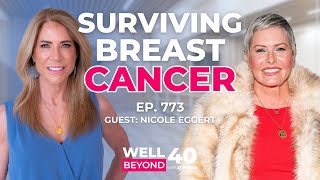
Nicole Eggert discusses her breast cancer diagnosis missed by routine mammograms due to dense breast tissue, discovered when her bra fit changed. She details her treatment journey from chemotherapy through mastectomy and radiation, plus her holistic approach including vegan eating, Eastern medicine, and stress management through meditation and breathwork.
Chapters
Nicole, welcome to the show.
Thanks for having me.
Well, this is so— it's, it's so— it's like surreal and strange because I— the last time I saw you was— I was trying to think about— it was like 13 years ago. It feels like a lifetime ago.
Well, yes, it has been a lifetime. Um, yeah, 13 years. I didn't even have my youngest daughter. I have a teenager.
Wow. Amazing. I mean, at the time, so I was getting— I was launching the Virgin Diet and my son was in the hospital, like, coming out of a traumatic brain injury in a coma and everything else. So for me, I feel like I don't even— can't even tell you what all was going on. It was just such a crazy, crazy time. Um, and I know we were working on some weight loss stuff, which seems like the least important thing at this point now, doesn't it?
I know.
Of life.
Yes. Yeah, yeah, life can put things into perspective for sure.
No kidding, that's an understatement. Well, what was interesting at the time is I still remember, and this is a good lead into where we're going, is, you know, here I was launching a diet book, but I'd realized walking into that hospital, having to be at the hospital all day every day and launch this book that was going to ultimately be able to allow me to do all the things I was going to need to bring my son back to, you know, functioning, that it was so much bigger than the diet. And so it's interesting that you say that because we met for that reason. But, you know, your journey now— now you're very, very focused on health, but your journey kind of has been convoluted to get there. So I'd love to kind of start with, because I think you've been pretty vocal about your breast cancer journey, is, you know, how did you discover this? What was like the lead-in to all of this?
Well, um, you know, there— I was getting my mammograms. I was getting my yearly mammograms. I would also get ultrasound, and I was— had— I was cleared each and every time.
And when did you start doing that? How old were you?
Um, I've been doing them probably since about 4— since I was 40, I want to say. I'm 53 now. In my 40s, somewhere in my early 40s. And, um, everything was fine, fine, fine, fine. And all of a sudden, one day— well, if I— if after thinking about it, and you know, obviously we think about these things non-stop, mind is on like a loop, um, my bra started fitting differently. And every time I would look down at my bra, it was a little bit crooked, and one side looked a little fuller. And I really just chalked it up to, um, one breast was larger than the other. And my breasts have been these, um, ever-changing, um, girls on my body anyways. They— I didn't really start creating breast tissue till later in life. Um, I had a reduction, they grew right back. So I really— yeah, so I, I just had this funny relationship with them, and I was like, okay, one's a little bigger than the other. In hindsight now, looking back, and for how long I was seeing that. But I didn't know that I had breast cancer until I had a throbbing one day. It was really throbbing. So, um, I started feeling around and I felt it, and, you know, my heart dropped. I, I, and I felt so stupid, to be honest, because I thought, how was I living with that right there and I didn't even feel it? I wasn't doing my self-exams.
And who does their— okay, I really want to know. I mean, it's, you know, you go to the doctor and they're like, okay, make sure you do this. And I'm thinking, okay, I was reading, reading, prepping for this. I went, does anyone really religiously do their breast self-exams? Really?
I, you know, I want to say that people do, but they don't. Listen, only 50— less than 50% of women are even still going to get mammograms these days. So every time preaching mammograms and getting tested and early detection, I feel like I'm being repetitive all the time, but the fact is women are not doing it. And had I been doing those self-exams, I would have found it much earlier and it would have been a much easier process to deal with. Early detection—
How big was it when you found it?
Very big. We're talking over 10, um, it measured out over 10 millimeters. So that's quite large.
Was that like— what's that feel like?
Like a little, um, it feels like maybe like a golf ball.
Oh my gosh.
Yeah. And it— I had my main tumor and then I had satellite tumors around it, which I wasn't feeling. If I had felt it, I could have— I could have had a, um, you know, a lumpectomy or something and been done with this. So early detection really is so huge with breast cancer. It's, it's such a game changer. If you, you know, and you hear that all the time, but I don't think women realize what a game changer it's. The difference between chemotherapy, it's the difference between life and death. It's the difference between amputating your breast. It is a huge difference. This early detection, it's a big, big, big deal. So the discomfort of a mammogram, I gotta tell you, is nothing compared to a mastectomy. It is nothing compared to chemotherapy. It is nothing compared to the fear of going through all of that.
Well, I'm gonna introduce you to Dr. Jen Simmons, who we were talking about offline too, because she actually has a new technology that's not uncomfortable, that's like better than a mammogram. So that— right, I know. So QT imaging. So it's, it's the new— it's It's the new thing that she's— her whole goal is to completely transform this so we're not sitting there going, oh great, I'm going to have to go smash my boobs again.
Right. Which again, listen, it's no fun. It's no fun for anybody, but it is nothing compared to the consequences of not doing it. So it's huge. And I really hope there's a better way to test. I don't have to worry about that anymore, but I hope there is a better way to test so that more women get in there and are on top of their testing. I had really dense breast tissue. So the mammogram wasn't picking mine up. Self-exam would. So it's all of these things.
So you'd had a mammogram and it hadn't picked it up?
Yeah, they still didn't really pick it up after I knew, we knew it was there and I had biopsy. It still was only showing a little thing. So the first team of doctors I had, they said, oh, you, um, you're, you're just gonna have a lumpectomy. Then we did the MRIs, then we did the CT scans, we did all of the things. The test results came back and they were like, ah, it's in the lymphatic system. It's so big we can't even operate. I did do chemo first, um, and luckily I responded to the chemo. It shrunk it to a place where they could then go in and remove the breast. It was a mess. And yeah, it's still not—
and you were how old at the time?
This was, um, I was— so I was 52, 51, 51. This is just— I'm still going through it. Um, yeah, this was the just the tail end of 2023.
Oh boy. Yeah, I didn't realize it was so fresh.
So fresh. Yeah, so I'm on targeted therapy and, um, I do all the hormone blockers and I've had to medically put myself through menopause, which I think chemo kind of did that for me already, so my, my symptoms aren't that— my side effects aren't so horrible. But I'm on a lot of stuff for the next 10 years and getting tested every 3 months. So it's a lot.
Wow. How was your mindset going? I mean, and still going through all of this stuff.
So, well, at first it was devastating and I was frozen in fear and horrified and I couldn't even read the paperwork. I couldn't read the results. I couldn't go online. I couldn't do any of it. I was just really frozen in, in in the fear and I was horrified. And I knew that a negative body was not gonna heal properly. I knew I had to find a way to put my big girl pants on and fight for this. And so for me, it was diving into, I decided I was gonna do the chemotherapy and I also am a big believer in Eastern medicine, holistic. I also am really big on all the juju and, you know, um, scientifically backed things and some that are not. Like, I eat apricot seeds and I, I drink the soursop tea because why not? Um, so I really started just diving into how I could help my body along with the chemo. So what was I eating, um, that I should stop? What was going to— and it started with helping the chemo. And then it really started shifting towards what foods are, you know, adding and contributing to cancer, the growth of cancer, which foods are fighting cancer, you know. And I just really started getting, um, into that side of it so that it took the focus a little bit off of my body right here, right now, and more of like, okay, let's just do all the things. Let's be proactive. Let's control the controllables and um, do what we can because you can feel very, very helpless and very, very scared. And for me, doing things made me feel like I was moving in the right direction. Here we were going somewhere. So it was actually kind of hard when I stopped chemo. I had a bit of, um, some down moments too because it was like I'm not doing something right. I was like excited to do the chemo. I wanted to be doing all these things because it's proactive. And when that stopped, it was scary. It was really very scary.
And how long ago was that?
I, um, finished chemo in the end of July 2024, and then I, um, did radiation for 30 days straight at the end of— just, I just finished, um, at the end of 2025. I had, um, my first mastectomy in September Um, of 2024. And, um, oh wait, I said 2025. We're in 2025. 2024, I had my radiation and my mastectomy, and I will at the end of this month have my other mastectomy, the other side. So because I, you know, they say I have one healthy breast. Um, so I've been sleeping on it, so to speak, for a year, and my decision is to remove them both.
And were you like, in terms of risk for breast cancer, was this— and I know that genetics plays a small role. It's not the bigger role, but was that part of it? Because I've had girlfriends who've literally done a mastectomy, a prophylactic one, because of their genetics, like their sisters all had breast cancer, etc. Like, do you have those BRCA genes or any of that kind of thing?
I don't. I tested negative for all the genes. But both of my parents did have cancer. My mother, although she didn't pass from it, she had colon cancer that was attached to the liver. They were able to remove that in one surgery. She didn't have to do chemo or anything. My father passed from skin cancer. God, how times have changed.
Yeah. And especially you being on the beach so much as a—
Well, I just had to have, I just took, things had to be removed and they came back abnormal. Precancerous. So I just had something cut out of my back, just had 6 stitches removed a couple days ago. So yes, it's like, it's everywhere. It's everything.
It's wild. Yeah. Well, here's what's crazy. Um, and I have, I, I'd love to hear your thoughts cuz I definitely have my thoughts as to why this is happening, but I was just talking to an amazing holistic vet I had on the show and she was telling me how 1 in 1.25 dogs have cancer now and die. And I'm like, oh my gosh. And, you know, and it was all toxins and so much of the stuff in our environment that we are being bombarded with, you know. So you look at and go, clearly it's way more than genetics, otherwise we wouldn't have the rise in cancers that we do.
Well, that's right.
But let's like, let's go way back because how old were you when you were, you know, a Baywatch gal?
20, like 20 years old, something like that. Very young, very young. Yeah.
How long was that show on for?
Oh, I don't know. I mean, 10 years or more. Uh, I, I did it for 2. I did it for 2 seasons and, um, bowed out gracefully, so to speak.
Um, these shows— I remember I was on one show and I was like, please cancel the show, cancel the show, like, cancel, like, please do not make me have to do any more of this. Yeah, like, yeah, I'm complete, you know. Um, but you've been really like someone with a lot of the shows you've been on, it's like it's been very body-focused.
Yes. Well, you know, I, I produced a documentary, um, called After Baywatch and worked on it for 5 years. I got my diagnosis during, uh, the, the filming, and when we finished and wrapped and sold it and went out to promote it, I was in the middle of treatment. So here I was promoting Baywatch, um, with a mastectomy on my books and in the middle of chemo, completely bloated from all of the, um, the medications that came along with chemo. The steroids just made me just blow up. And, um, and there I was, bald bald, bloated, and boobless promoting Baywatch. The irony was not lost on me. I was— I, I just— and then it was weird because it also took a pressure off because I was like, you know, I'm in my 50s and then they're gonna be comparing me to when I was in my 20s anyway. So at least this way it takes some of that pressure off of like, what does she look like now? Well, she looks like hell, but she's also fighting for her life. So, um, it, it took a little pressure off of that part of it.
But, um, I feel like we're kind of getting into some— just a good place. Like, I love the fact that Pamela Anderson's walking around with no makeup on and looks fabulous, and it's like, this is so great. Like, go you, you know?
Yeah, be you. And I think then that's when people are their most beautiful, right? When they feel the most beautiful and when they feel good and they're doing what's organically them, then that's when you shine.
I mean, you've been in the middle of like the pressure cooker of, you know, I mean, the red, the red swimsuit and crazy unrealistic body image stuff. Like, what, what would you say? Because it does— maybe it's just what I'm looking at now. I'm like, I'm feeling like it's a little different than it was, but is it or is it not? Like, are we kind of relaxing some of that craziness or not?
Well, I love the fact that curvier bodies have been trending, for a lack of a better word. Um, I love that smaller breasts are back in. Um, I think that yes, I think that we're, we're more open. Like in the '90s with Baywatch, it was like you had to be super thin with huge boobs. That was like the ideal body type. And I wasn't that. I was considered curvy. And I look back and I laugh and I thought, if that's curvy, I will take that all day long. I will take that back. But I'll tell you, the one thing that cancer taught me was to really love my body because it was showing up for me every day, no matter what it looked like. I gained 50 pounds in treatment. Normally I would have been horrified, like I would have— I would have been devastated, horrified, feeling terrible because I'm 5'2". 50 pounds is a lot of weight. I was not. I was so happy with my body and I was loving on it. And appreciating it and, um, all that it does. It shows up for us, and so many times we sit there and pick it apart. And it's this— it's what's getting you there. It's what's allowing you to live your life, to even care what you look like. You, you wouldn't even have that if your body didn't show up for you. So we have to be more gentle. We have to have more grace with ourselves. And, um, and I think in turn, when you, when you do love on yourself like that, you also eat better and are more aware of the products you're using on your skin and the foods that you're digesting. And it makes you kind of more aware of this country that we live in. And like, it's really hard to be healthy here.
Yeah, I know. Understatement. It is funny though, when you think about like, and I feel like it's something that happens more in our 20s and 30s where we approach our body from like the self-loathing. It's never small enough. It's never fit enough. It's never like, never, never, never, never. And all of a sudden you turn 50 and you're like, oh, who cares? Like, yeah, who cares? Like, I just want to be able to lift this heavy stuff over here. But, you know, when you start to unpack how do you really live a healthy lifestyle, and then you start to look at all of the things, everything from all the toxins, the microplastics, the air, just the stress, it's like, ugh. Looking at all this stuff, what have you done? How have you refigured your life now? What's it look like? How do you live? And we'd love to know everything from the beauty products on down, so.
Well, at first I went really hard. I mean, I was completely vegan, clean. I was making everything myself. And then I started to relax a little bit because for me, maybe some people would thrive that way. For me, I think I was making myself a little bit more sick being that way. I have to have grace with myself that sometimes we can't do anything about it. But, you know, the word sulfates and parabens have such a different meaning to me now. I always heard that, but I thought, what does that mean? That means there's some chemical in there that's maybe not that great for your hair, for your skin. Like, I didn't dive into that, and I don't think it's ever really fully explained. So I went around the house, threw everything out. My teenager was horrified at some of the things I was taking out of her bathroom. And I'm like, I'm sorry, I will take you shopping, but— Thank you later. Yeah, yes. When you're able to have babies and all of your friends cannot, because this is something, an epidemic that's happening with our young women and men. It's horrifying. And it's on our, it's in our counters. It's everywhere. We're doing it to ourselves and we're not even realizing it. So for me, it's, you know, learning to read ingredients, which is just mind, it was so hard for me to wrap my head around having to do that. Um, but I really feel like buying the whole foods and eating at home, I feel the safest and I feel the best. I make my concoctions. I do a lot of fasting. Um, I do, you know, spiritually, I mean, I threw myself into healers, you know, a shaman healer. I, I have to do all of the things. I, in, um, and I slip. I'm not perfect, obviously. And there's days I can't— I just can't be perfect. And I have to work really hard to keep my white blood cell count up, which means cardio and a ton of greens. And sometimes I'm too tired to do the cardio, and sometimes the green drink makes me want to throw up. Okay, there's days I am just not gonna drink it. I've been doing it for 2 years every day now, and there's just days I'm not gonna do it. And then I go in, and then I have to get blood infusions because I haven't been doing those things that week. And it's, you know, so I see where it's effective and I see, but I also know that I can't keep up all of it all the time. And that's been a big part of it for me too, to say, don't give up, just do the best you can when you can, you know? And that tends to make it more often than not, because sometimes I would feel like I need to do all this right. And when I did something wrong, then I would go, oh, well, you know, F it. I already messed up and, and would get maybe lazy or, you know, just not keep doing it. But I, I've really learned that it's, you know, you have to be well-rounded. And I don't give up. I get right back at it. So one day, maybe I don't want to drink the juice, but every morning I'm going to get up and see, like, can you do it today?
And yeah, you come back around, you know, you have to get, get a B plus, A minus, you know, that, that whole setup of like, I have to do this perfectly. Or I'm not doing it, it's like, you know what that means?
You're not doing it.
You're not doing it, right? Like, if you just go, if 90% or even 89% of the time I'm gonna do it and give myself a little grace on the other, then you can do it.
It's manageable, much more manageable, and becomes so much more, um, natural. Like, or you can just do that organically because you're not putting— you're taking a pressure off, right? There's not that little—
yeah. Well, you mentioned a shaman. Like, what are the things— had you been doing things like meditation or, you know, going to healers or any of that kind of stuff prior to this, or was this a new finding? And what are you doing there?
Well, I was very much into a lot of spirituality when I was younger, and I felt like I had really not— I had sort of given up. Here we go back to that. I had not been practicing a lot of that, and this is sort of what I'm delving into now with the cancer as we talk about like how, what we can do for ourselves now, what can we do for ourselves in the future. But I'm really looking at like, what did I do that caused this? Um, and not to blame myself for having it, but, um, with so many different kinds of cancers, um, mine was estrogen-driven, it was a hormonal cancer. And what did I do that contribute to it? And I can pinpoint a lot of things. And so, um, and not being spiritual, I think, was a big one, because I believe, um, stress and trauma that I had left undealt with Is it— was a huge contributing factor, can raise our estrogen levels exponentially. And, and along with a lot of diet, drinking alcohol— I will never look at drinking alcohol the same. The whole joke of like, oh, you know, the, like, the wino house mom— it's not funny anymore because they are looking to put black labels on alcohol now because it's horrible, especially for women. It's It's so damaging. So if you're a little stressed out and you think having a little wine is good with your stress, you are shooting your estrogen levels through the roof. And what caused my cancer? Estrogen. Um, you know, using all these products that have hormones in it and all the things that mess with your hormones, shooting your, your estrogen up there. So the shaman— I was so freaked out that I needed to just escape. I needed to get out of my own head. So, you know, I went and sat with this man for 3 hours or so. I mean, we, we did it all, you know, drums, he was singing, blowing the stuff up my nose, meditating, all of it. And I just find it really works for me. It's something that I really, really benefit from. And then I continue to do guided visualization a lot, a lot of guided meditation, because I also feel like if I leave it up to my own devices, the day will get away from me. So I make it a point to do it. And I do online ones. And so I turn it, you know, I turn that on and I escape for 45 minutes to an hour. And just a couple days a week. And I think it makes all the difference in the world.
I totally agree. I think I found Dr. Joe Dispenza during the pandemic, because literally I was like, what else am I going to do? You know? And, and I was jokingly going to a breathwork meditation retreat for 7 days in the middle of the pandemic with 1,500 people breathing heavy in a room and no one getting sick because the vibration was so high. Um, but what a difference. And I— what you just said there was so powerful. I really love the fact that we are starting to focus on trauma because it's been this kind of like thing out there that's so amorphous But when you really look at it, it's like if you aren't actively working on peeling that onion of it, we all have it. How could you not? How could you be a human and not have some trauma in you? And it will just like— I think trauma and toxins are like the history book of your body that will just take you out if you don't address them. And then you put the lightning, you know, the little, the lighter fluid of wine on top of it, and you've got the trifecta.
Sure do. Yep. And all the refined sugar, the desserts with the— yes, you, you are just adding to it. And it's, it's, it's so scary. And a lot of people get it from church. You can get it in so many different ways as long as you get your peace. And it's funny because I did therapy for many years and I, I felt like, um, I unpacked a lot. And then for some reason there's a couple things I just left there and was like, oh, I can deal with But those I just could deal with those, you know, later. Those aren't causing me problems. So they sat away and they manifest into negativity in your body.
Sounds like you've like, this has been actually reframed as a really amazing experience.
It's really weird. You'll meet a lot of people who say, I didn't want to be here, but I wouldn't trade it. I wouldn't trade it. It's been a huge— I think it's a wake-up call for me. I think it was my wake-up call. Um, I don't find it to be like my doom or my death sentence. I, I feel like it was, um, the universe's way of shaking me up and making me change direction. And I'll never be the same person, and I'm, I'm good with that.
Yeah, and maybe kind of showing where you're going next.
Yeah, and maybe not trying to control where I'm going next. Maybe living in the moment and appreciating the days and realizing that that is where my success is, is just enjoying the day instead of always having something that I need to do, you know, always climbing, climbing, climbing, achieving, achieving, achieving. Sometimes that's not where the success is. It's, it's just that you had a good day and like you enjoyed it and, and not thinking about the next.
So yeah, yeah. Well, you, you like work in Hollywood where it's much more of the doing than being. And I think in any career it's so easy to fall in the trap of achievement. Yes. And miss, miss the actual—
the achievement is actually just being, that you forget Yeah, I think the corporate world is full of it too. I mean, um, yeah, it's always, you know, you— the next job, the next— doing the best. Yeah, and if that's not where it's at—
well, I found very— like, it was interesting when I was working with a lot of actors and actresses in Hollywood. I remember doing a lot of adrenal testing with people and realizing that the most stressful time for them wasn't when they were taping for a movie or doing their press junkets after, the most stressful time was after that because they didn't know what was coming next or if anything ever would and if that was the best thing that would ever be for them. And it kind of made me realize, oh, like in life we're always, we're always kind of there. And what if we were just happy with where we're at and everything else would be frosting, right?
That's right. Yeah, yeah. Acting is one of those jobs where, um, you don't get to just show up at work every and you have— there's this stability. It's, you know, and it's also not a job where you can send out resumes and go on job interviews and convince somebody that you belong in this position. It doesn't really work like that. And it's the most unstable, you know. Yeah, being any kind of artist is just so unstable. So you have to find where that happiness is.
Otherwise, on a female— a female, like, to be a woman in acting where you literally have a clock where there's like hot, hot guys can be in their 70s and 80s. I mean, look at Harrison Ford still playing action characters, but you don't see it with the women. I hope it's starting to shift some, but I believe it is.
Not enough. Not enough.
We all want to see that, man. We all want like— we— you look at how many women are 50-plus that want to see those powerful badass. I think there's nothing sexier than a strong, powerful woman in her 50s, 60s, 70s. Like, they're amazing.
I couldn't agree more.
Yeah, right. And the little flip that gets switched at 50 where you go, what were all those things that I was so freaked out about? You know, yours just got amplified with the cancer diagnosis.
Yes, yes, yeah. The fearlessness that I have now is funny because it It's— yeah, it makes you go, wait, you were scared to make that phone call, or you were scared to, you know, walk into that room? Oh my God, like, I'll show you what fear is. Fear, you know, I looked at fear in its eyes and I had to live with that. So, and still live with that. So yeah, normal things anymore, they don't, they don't scare me. You can't scare me anymore.
That's what— when, when I nearly lost my son, I mean, that was the same thing. I go, oh, the things that you get freaked out about, they don't even— it doesn't even appear on my screen. Like, I don't even think about it, you know. Let's talk about the real things that matter. So, you know, it sounds like you've made a lot of lemonade out of this one.
I have, I have. I'm grateful for that side of it. I really am. And it's funny because when you get diagnosed, they say to you, oh, a year from now this will all be behind you and you won't even— you won't even think about it. It'll be behind you. It's the biggest lie. Yes, it's— and so many people would say that and I I, I really kind of had to come to terms with afterwards that no, this is something that, you know, I am, I, I'm in, I'm surrounded by, will always be involved with, and it's not going anywhere, right?
But what if that was a blessing and not a curse? You know, I think that maybe they need a reframe there. Yes. Speaking of which, so what are you doing with all this? Like, what's, what's next for Nicole?
Well, um, Next is my— to do my mastectomy and my reconstruction surgeries. And then, you know, it's— I have to— and just continuing to learn. I share, I share as I go along, but I don't really claim to, you know, have too much to share yet until I have a success story in my hands and until I reach a certain place. Then I'm, you know, really thinking about what, what do I do next. To share. Right now, I, you know, I do have my podcast and I share a little bit, but it's not around cancer or breast cancer. And, you know, I do work with the American Cancer Society. I do work with Susan G. Komen. I'm working with a company, Plastico, when they help women with reconstruction. So, you know, there's just a lot of things in the works. I'm working on a product, a skin product that, um, will be healthy and that is very well needed, very much needed in the space. And, um, just going— I'm just moving forward. Everything is a forward momentum right now, and I don't know what really exactly what that looks like. I don't know if that's a book, I don't know if it's a show, I don't know if it's a documentary or a movie, I don't know. Um, but I think it will show itself to me as I unfold here.
Yeah, and it sounds like you're giving yourself the space so that it can.
Yeah, I don't want to push anything. Yeah, I'm still— each step in this is like this whole new learning, you know. It's a whole new rabbit hole every time I move on to something else, you know. Radiation was a whole thing in itself, um, you know, and, and then how do I feel better after the radiation and just, yeah, every step of it is this whole learning curve. So, um, I'm still there. I'm still learning.
Still dodging. Me too. I hope we all are.
Well, yeah. Yes.
Right.
Yes.
Forever. Your attitude's fabulous and you are fabulous. And, uh, what's the name of your podcast that we can send everybody to?
It's called Perfectly Twisted. Um, I have a bit of a twisted sense of humor and, uh, it's about everything and everything and all things, and it's just a good time. You can find it perfectlytwisted.com. You can also listen anywhere you podcast, but if you want to watch, it's on YouTube and the website. Um, it's just a good time. It's just a good all-encompassed talking, reminiscing. We talk old school, new school, what's happening now, what happened in the '90s. Um, I have callers— huh?
Uh, the '90s.
Yeah, the '80s and '90s. Um, I have callers or viewers write in questions. So I, I answer questions. It's, it's fun. It's just a— it's, it's just a good time. It's a perfectly twisted good time.
There you go. Well, thank you so much. It's so good catching up with you.
You too. Thank you for having me.








