Hormone Balance - Fix Your Hormones with These Foods!
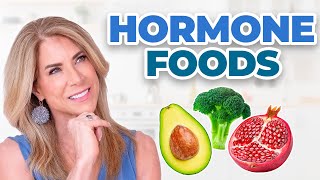
JJ Virgin walks through a three-week food-first approach to rebalance hormones. Eliminate sugar, gluten, dairy, corn, soy, eggs, peanuts, and ultra-processed foods, then reintroduce them to find what triggers problems. Build meals around protein, 5-10 servings of non-starchy vegetables, healthy fats, and a 12-14 hour overnight fast.
Chapters
If your hormones are out of balance, it can impact everything to do with your health, your mood, your weight, your sleep and your stress. But getting them to work for you instead of against you doesn't have to be extreme or complicated. Make sure to watch this video until the end, because I'm going to share with you some simple hacks. I and thousands of women in my community have used to stay healthy and lean and sane at every age. And it's way easier than you think. But before we get into it, make sure to subscribe to this channel so you can stay up to date with the latest nutrition and fitness tips to get healthy and to lose weight and actually keep it off. Hey, it's jj. And now it is crazy how much life throws at us and we're expected to handle it all without falling apart and take care of ourselves and stay healthy at the same time. Well, that's impossible if your hormones are out of balance. In fact, it can actually add anxiety and depression on top of everything else. Believe me, I know. I've been there and I can help you navigate it so you don't have to wade through the mountain of overwhelming and conflicting information online. Hormones like estrogen, progesterone and testosterone, which are also called your sex hormones, well, they're all chemical messengers that move through your bloodstream and send signals to every single one of your systems. So they impact reproduction, of course, but also immunity, metabolism, mood, everything. The statistics are pretty mind blowing. According to new research, 80% of women suffer from hormonal imbalance. Now, some women live without without even knowing they have it. But probably not you and not me either. 43% of women say hormones have negatively affected their overall well being. Now, after working with thousands of women, I realize that we all have similar stories. Now, you may be dealing with PMS or pcos, or maybe you're pregnant or you're going through menopause. Whatever is causing it, hormone imbalance can wreak havoc on your mood, your patience, your energy, your weight, your blood sugar, even your brain function. And infertility. It can feel like an assault and it's hard to know where it's coming from. And it feels like you're never going to get your life back. So don't give up. You're not alone. And at some point, some point or another, we are all going to have to deal with this if you're not dealing with it right now. I talked with my friend Marcel Pick, who's an ob gyn, nurse practitioner and educator for the Institute of Functional Medicine about This. Well, we were talking about the impact of stress on hormones. Now everybody's stressed, right? We're all stressed. It could be because of your job, the economy, the pandemic, but no one ever thinks, hey, I'm making my stress worse with the nutritionally bankrupt foods I'm eating, especially the sugar. Stress sends the hormone cortisol into orbit. And when cortisol is constantly elevated, it can create an adrenal situation that causes other things. Now, it may be fluid retention, you may have GI upset or you just can't fall asleep because you're wired. And then you can't get up in the morning because you're tired. And sleep deprivation becomes a vicious cycle. Getting off inflammatory, reactive foods will help calm your system. Foods like sugar and ultra processed carbs create cravings and are just putting more stress on your system and hurting you. But the good news is that stress can be healed with food, too. So I came up with a solution that works almost 100% of the time with all of the people I worked with, no matter what their age, weight or specific hormone issue. And it all starts with food. Your diet is the most powerful, powerful drug you have. Balancing your hormones is a lot easier if you know what to eat, when to eat, and why, to keep them as stable as possible. So you're going to add before you take away. But first let me tell you what you're going to take away and why. You're going to want to eliminate foods that are sending your hormones all over the place and hurting you rather than healing you. So inflammatory foods like sugar, sugar, gluten, dairy, corn, soy, they can really throw your system into turmoil, especially if you're sensitive to them. And of course, it's the same with those highly processed foods. I call them dirty processed foods. And the original biohacking that works for most people is to pull out these potentially inflammatory foods, I call them hi fi foods, so that you can reset and heal and swap them for foods that are nutritionally dense and, and delicious and that your body loves as much as your taste buds do. Then, when you're feeling better, you can reintroduce the foods you cut to help you connect the dots between what you eat and how you feel and see if those foods truly work for you or not. And I guarantee if you feel like crap when you reintroduce a food, you're not going to want to eat it. Not if you know it's going to take you out for days, right? But I've noticed that when I tell people to swap out some of the more hi fi inflammatory foods for a little while to let your system come back into balance. The reaction is fierce. It's almost like, no way, I can't live without it. And if that's you, I want to tell you something. Those foods that you're feeling like you can't live without, I'm guessing they're your kryptonite. I am almost willing to bet that they are your problem. And this is exactly what my book, the Virgin Diet walks you through. It's a three week program to swap gluten, dairy, soy, corn, eggs, peanuts and sugar and artificial sweeteners for healing foods that are going to help you feel better fast. It's going to help stabilize your blood sugar and balance your hormones. And did you hear me say it's only three weeks? Now can we agree that you can do anything for three weeks? And if your hormones are holding you hostage, you should absolutely start. Start right there. After all, your body is not a bank account, it is a chemistry lab. And this approach will help you really tune into your own body chemistry to see what works best for you. If you discover you can tolerate dairy and eggs, you may do great on keto. Or maybe genetically you don't do well with saturated fats. There's a lot of bio individuality to this. But until you connect the dots and swap out foods that are hurting you, you're trying to put the fire out while you're still throwing gas on it. What sense does that make? So let's talk about what you'll swap in to help you heal. You're going to load up on these foods so you have them on hands before you pull out those reactive foods, right? Because you got to have something to eat and then you're going to use them to build your plate. Now eating by the plate is going to help you lower your sugar impact to balance your blood sugar and and speed heal your gut. Because a healthy microbiome helps you balance your hormones, especially your insulin and cortisol. So here's the overview of how to fill your plate. First of all, you're going to start with protein first. And those are things like grass fed and finished beef, pasture raised chicken and pork, wild seafood. And what you really want to look for here is a floor of a half a gram of protein per pound of ideal body weight. That is your floor. That's your absolute minimum. Why is this so important? Well, you need protein for the amino acids to build and carry hormones to have great strong hair, skin and nails. And most importantly to have satiety. So you're not hungry, because if you're hungry, there's no way you're making great choices. So a half gram is the floor, but probably you're going to be eating more than that. You're going to go for 3, 4 of a gram per pound of ideal body weight. Notice I said ideal body weight. Up to a gram per pound of ideal body weight. So if you're eating three meals a day and you weigh 150 pounds, that means that you're going to be eating somewhere in the 120 to 150 grams of protein a day divided between three meals. When do you go up to the higher 1 gram per pound of ideal body weight? Well, that's if you're really working out hard, you're under a lot of stress, or you're healing from something. All right, so you start there, and the next thing you pull in after you do that is you add in those non starchy vegetables. Now, non starchy vegetables are key here. You're going to want to pile on the cruciferous vegetables like broccoli and brussels sprouts because they're loaded with fiber and nutrition and they support hormone balance because they contain a compound called diindolmethane, also known as dim. Dim is this powerhouse phytonutrient that supports your liver during detoxification to remove excess excess estrogen. And if you're getting off the birth control pill, it can also help clear out any of those artificial estrogens left over so your body can start making its own natural estrogen again. Broccoli also contains something called sulforaphane and especially, by the way, broccolini and broccoli sprouts. Sulforaphane kills cancer cells and helps regulate estrogen in your body. So these veggies you want to pile on your plate, and here's the deal. You want to be eating 5 to 10 servings of non starchy vegetables a day. So it's super important. The non starchy ones, 5 to 10 servings, you're eating from the rainbow. What's a serving? It's a half a cup of cooked or a cup raw. So that's the next thing you're adding to your plate. After that, you're adding in some healthy fats. And healthy fats are key here because you're getting the fiber from the vegetables, you're getting the protein and you're getting the fat to really create great blood sugar balance. Remember, fiber is going to lower the blood sugar response to the Meal and fiber plus protein slow down stomach emptying so you have better satiety, while fat triggers the release of some chemicals to the brain to say you're full. And you want all of this because you don't want to be hungry. It's hard to be rational when you're starving. Right? So I'm going to make a big shout out to one fat in particular, and that's flaxseed. And I especially love golden flaxseed. Now, if you're making a smoothie, throw in some flax flaxseed too. And if you're not using a Nutribullet or a Vitamix, you're going to want to have to freshly grind it beforehand. Why do I love flaxseed? Because it contains phytoestrogens. And these phytoestrogens may act like estrogen in the body, so it's great for hormone balancing. Plus, you're going to get omega 3 fats and soluble, insoluble fiber, too. Other fats that I love, extra virgin olive oil, avocados and avocado oil, along with extra virgin olive oil, actual olives and then nuts and seeds, not peanuts. It's a legume and coconut. And then of course, the Omega 3s you're going to get from wild fish. So those are some of the fats that I love. And then one more thing, you can add in slow, low carbs, a little bit of those. So you're going to eat slow, low carbs from little bits of fruit like berries or slightly green bananas and things like quinoa or legumes. All right, let's go back to your liver, shall we? It's important to support your liver to balance estrogen. You need enough estrogen or everything starts to sag, dry up, drop, your skin starts going, your memory starts going. You know, you go to the kitchen and no idea why you just walked in there. You get dry everywhere. So you kind of want to stay on top of this. Now, speaking of which, if you're in menopause, you may have heard about people who had great results using soy supplements to deal with hot flashes. Because the isoflavones in soy have some estrogen like effects. But you have to be really careful here because in the United States, they've turned soy into a total junk food. It's what I call one of those dirty processed foods. You've got so many different things they do. Soy ice cream, soy hot dogs, soy burgers. And honestly, it's so overdone. And bigger problem is 95% of this is genetically modified soy, which means then it's coming along with a lot of pesticides too. So if you are going the route of soy, and again, you can get some of these phytoestrogens from things like flax, which I prefer. Just make sure that you're getting non GMO organic, it has been minimally processed and it's got to be very well fermented and make sure that you don't have a sensitivity to it. That's one of the things you uncover in the virgin diet. There's much better alternatives, though. I've created a formula called Menopause Support with four targeted ingredients that are going to help you get relief from symptoms like hot flashes, fatigue, insomnia and that, hello, that disappearing sex drive. It's great. There's an herb called red clover too that has isoflavones like soy does. And some researchers think it might help reduce the symptoms of menopause. Not only the hot flashes, but, but also the hot flashes at night, those brutal night sweats. But generally, and this is important because I want you to think of the name Supplement it Supplements what you're eating. It's unfair to expect supplements to create magical results if you're undermining what they do with what you eat. So eating foods that work for you, right? Uncovering your hidden food intolerances, lowering your sugar impact and healing your gut. Do that and then you can see what you still might need to work with and supplement with. Deal now as to when to eat. For hormonal balance, first and foremost, it's important to make sure you're eating actual meals. Remember that protein, fat and fiber trifecta. No snacking. When you eat by the plate and lead with protein first, you should have that great satiety and blood sugar balance so you won't have to snack. But let's talk about that timing of your meals and specifically, something I'm sure you've heard about, intermittent fasting. Now, intermittent fasting can be a total miracle worker for gut healing and balancing hormones. But it comes with a few caveats, too. If you are under a ton of stress, this is not going to be good for you. Especially because you don't want to put more stress on a body that's under stress. And one of the things that can happen when you're under stress is you get hypoglycemic, which can of course make this worse for you too. So be careful if you are under stress. And I think you really need to test here, you know, what works for one person doesn't necessarily work for the next test if it works for you. And be respectful of how your body responds. And one of the great ways you can tell this is by journaling. Journaling is such a great one because it's going to help you keep track and really connect the dots. Not just what you eat right, but when you eat. Now, my buddy Marcel Pick recommends that if you can do intermittent fasting with at least 12 hours without food, you might do well on lower carbs because she's seen low carb or keto. Help a lot of people who are insulin resistant get back into balance now. And I'll tell you one thing about the 12 hour. I really believe that for all of us. I don't even think it should be called intermittent fasting. A 12 hour overnight fast is what we should be doing. Meaning shut the kitchen after dinner, stop eating at least three to four hours before bed and then, you know, wake up. Do your meditation, move a little bit before you have your loaded smoothie. Okay, now if you are moving into keto, could we just say a little word about dirty keto? Make sure that it's not bacon wrap bacon. What is it? Pork rinds and diet soda. Eat clean foods. If you're doing that, look at what my girlfriend, Dr. Anna Kubeca does with their Keto Green program. Lowering your carbs and shortening your feeding window are also two of the best tools you can use to break through the weight loss resistance that can be caused by hormonal issues. So test it out. I personally love it. I love intermittent fasting and I love to customize it. I don't do the same thing every single day. Kind of one of my hard and fast rules is that 12 hours is stopping eating three to four hours before bed. But I'll do most days a 14 hour because I'll eat dinner between six and seven and I wake up and have breakfast a little later, like 10 o'. Clock. But during the weekends a lot of times I'll drive it down a little bit and I'll have a little bit later brunch at 11 and a little bit earlier dinner. But I rotate it. It really depends on how I feel. Sometimes I'm going to go into the gym early with a heavy workout and I know that if I want to really push it, I'm going to need a little bit of something something before I do. What I found is it's great to have a loaded smoothie. Like this is my favorite way to break a fast is A loaded smoothie. And then when I do that, it really sets me up because of the second meal phenomenon. My loaded smoothie has my all in one protein powder. It's got some healthy fats from freshly ground flaxseed meal, a little bit of flax milk, I add in a little bit of a slightly green banana and. And I find that that helps me keep full for hours. I even put a dollop of Kite Hill almond yogurt in because I'm really working on getting some fermented foods in every day. But again, that protein, fat and fiber is going to set me up so I have great blood sugar balance throughout the day and then I'm not as hungry for lunch and dinner. Again, make sure you stop eating at least three hours to four hours before bed because it is going to trash your hormones and your sleep if you eat too late at night. In fact, if you're wearing one of those trackers, you'll see it in your tracker the next day. My tracker even said to me, looks like you ate late last night. I'm like, oh my gosh, are you spying on me? But that's the kind of impact it makes right now. Here's the bottom line. You cannot be truly healthy if your hormones are out of whack. You can't. And you can't really count on a great quality of life either. Fighting hormone imbalance makes everything you do harder. So it's really important, your health and quality of life to get those hormones back in balance to make them a priority if you're struggling. The really critical thing here is we all need to connect the dots between what we're eating, when we're eating, and how we're feeling. Like how's the joint pain, how's the moodiness, how's our energy, the things that you may be able to change and control. All there if you just one by one start to connect those dots. Because your biochemistry is unique and you really have to be your own nutritionist here to figure out what works best for you. When you do, you can totally swing that pendulum from fatigue and moodiness and weight gain and brain fog to having more energy, sleeping better and feeling less stress. Good luck with that. And please, I want to hear about your progress. And just to say a quick hi for those of you who don't know me, I'm JJ Virgin, a four times New York Times best best selling author and Fitness hall of famer. And I have lots more I can share with you to help get your hormones balanced and make sure that you're truly healthy. Which, by the way, when you get healthy, guess what? You lose weight. It's kind of the difference of what we thought. You don't get lose weight to get healthy. You get healthy. And weight loss is a byproduct. So be sure to check out the rest of my what to Eat, when to Eat and why series for more great tips. Tips. Thanks so much for being with me, and I'll see you next time.








