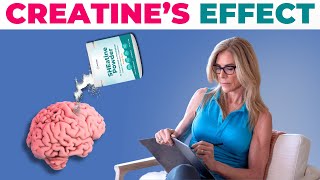
JJ Virgin explains how creatine HCl, at higher doses, may improve brain function, stress resilience, and sleep. Unlike creatine monohydrate, the HCl form reaches the brain at lower doses. Early research is exploring its potential for Alzheimer's, Parkinson's, and long COVID.
Chapters
So creatine has been studied now for its effect on the brain, but what we know is that it can have a dramatic effect on stress, on sleep deprivation, on neurodegeneration. It's now being studied for all sorts of cognitive issues, mood issues, brain function, but at higher doses. So here's a challenge. What we know is when you take the monohydrate form, you have to take a lot of it in order to start to get to those higher doses, but you have all the side effects as you do it. Well, with HCL, since it's so much better absorbed, you need way less doses to get to those higher doses of creatine in the brain. Creatine, when you start to take it, it is one that you will actually feel. I used to sneak in a little coffee in the afternoons, I admit it, and I don't do that anymore. I just take a little creatine hit. I might be a little bit of a junkie here, but man, do I love this, because you can totally feel it when you start to get this up to those doses. Creatine at a higher dose, you'll start to feel it in the brain. A lot of this is hypothesis right now. This is new research where they're looking out for Alzheimer's, for Parkinson's, for neurocognitive decline, for mood depression. But some of the thought processes, like, you need to have enough in your body in order to get enough into your brain so that that first dosing that you're doing is just filling your stores, your tissue stores, your muscle tissue stores. Then to get more, you really got to push it. So that's what I think is probably happening here, is we're all so low in our creatine that even if we take a little extra, we're, we're not even getting close to what we need for it to get into the brain. So that's the other piece of it. And that's where if you're using it for brain, push it, push it a little bit. One of the other interesting places that's been studied is in long COVID and in cancer. Creatine HCL actually helping activate these natural killer cells that go after the cancers. So all of this is preliminary early research, but here's the reality. This is something that we already have in our body. We just don't have enough of it and we're not getting enough from our diet. And when you start to give your body what it needs, you will actually feel this one. You'll be able to work out harder, you'll be able to deal with like a poor night's sleep better, you'll be able to have a better mood. So this is one that you will literally notice, and you'll kind of be able to tell how much you need as well. Make sure that you're using this alongside a bioimpedance scale so you can see that increase in total body water that will happen as you start to pull a little bit of water into your muscles. And again, the difference between monohydrate and HCl is you will pull a little into your muscles, but you won't have the extracellular fluid retention. So you might see a little change if you're lucky. I always say, if you get— if you're lucky enough to get a half pound of total body water increase, which will look like you just put on more muscle mass, good on you. You're so fortunate. Some people won't see it, but you might. So fingers crossed for you.