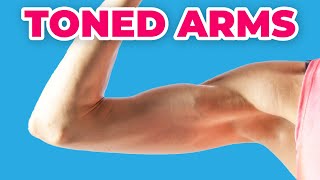
JJ Virgin outlines a three-part system for toned arms after 40: compound upper-body exercises 2-3 times weekly, 0.7-1g protein per pound of target body weight, and a calorie-cycling protocol (5 days at 25% deficit, 2 days at maintenance) combined with 8-12k daily steps.
Chapters
How did you get those arms? So I get asked this all the time, and you may be surprised to learn that it's actually not that hard to get ripped, lean, toned arms. It's actually the easiest body part to transform if you follow the strategies I'm going to share in this video. Now, there are 3 parts to building great arms, and the last one is super critical, and I find it's usually the one that gets ignored. So first, obviously, You have to work them. The thing that's critical for hypertrophy, building muscle, is volume. In order for you to build muscle, we've got to look at a couple different things. We need to look at the exercises you're going to do, the sets of those exercises, the reps within the sets, and how much per week. That's a lot to unpack. First of all, you have an exercise like, let's call it a push-up, and you are going to do a set of push-ups. A set is how many times you do it. That's your repetitions. And then that you're going to do multiple times a week, and we're going to divide it into upper body pushing and upper body pulling. I want you to do that at least twice a week, but ideally it's going to be better off if you do them 3 times a week. Now, your repetitions— you can actually work within a pretty broad range of repetitions to build muscle, anywhere from as low as 6 repetitions per set all the way up to 30 repetitions per set. So it's really where you feel more comfortable, but there is something important here. You have to get to a point at the end of the set where you feel like you could maybe only squeeze out 1 or 2 more. So when you're looking at building these great arms, now this was— might surprise you. I'm going to focus on compound movements first rather than just my arms. So I focus on upper body pushing and upper body pulling. When I think of upper body pushing, this is going to involve my chest, my shoulders, and my triceps. And these are exercises like a pushup or a chest press. That's chest, shoulders, triceps, an overhead press, and a dip. On the other side, we're gonna look at upper body pulling. Anytime you're pulling, you're gonna involve your bicep. But when I'm doing pulling, I'm also using my lats, shoulders, and the back of my shoulders. So I'll start with something like a lat pulldown or a pull-up, bent-over row, or a seated cable row, and maybe an upright row. The next thing you have to do is make sure that you can feed those muscles. You have to have the right fuel on board. This is really twofold. Number one, obviously, is protein. And I've got a protein cheat sheet for you at jjvirgin.com/proteincheatsheet. But basically, you're gonna eat 0.7 to 1 gram per pound of target body weight of protein. And that's about 30 grams to 40 grams at each meal minimum. 30 grams animal, 40 grams plant, 100 grams overall. That's minimum. But we want that 30 to 40 grams because we wanna have enough of an amino acid called leucine to trigger muscle protein synthesis. Remember, as we age, we have a phenomenon called anabolic resistance that starts to hit where it's harder for us to build muscle. We need more protein, not less, to be able to have that trigger. And so in, when we're younger, a lot of what we can do with building muscle is hormonal. 30+, not so anymore. We've gotta make sure that we've got the protein that we need on board along with that resistance training. A little hack is also taking some essential amino acids. And there's some pretty interesting research around essential amino acids, helping with sarcopenia as we age. So I think this is a great thing to add in if you're not quite hitting your protein needs at breakfast or dinner as well. A couple other things I like to do, I especially love fish protein, but I also think fish oil can be something important to add into. It's anti-inflammatory, which is really important because if you're inflamed, you actually can block muscle protein synthesis. And fish oil helps with insulin sensitivity. And again, the things that can get in the way of you building muscle are being insulin resistant and inflamed. Another thing that I think is super important, especially especially for women, is taking creatine. I think there's a lot of misinformation around creatine out there. So if you are concerned about creatine and fluid retention in the muscle, which is good, and if you're using a bioimpedance machine to monitor your body composition, you'll actually see this as increased total body water and increased muscle. What you can do, start with 1 gram and just bring it up every couple days until you get to 3 to 5 grams overall. The big thing that's going to help you do is work out harder. And if you can work out harder, Then it's going to improve the quality of your workout, which is gonna help you build muscle. The other one that I take every day is something called Mitopure. So one of the things that happens as we age is our mitochondria, we are constantly in a state of breaking down and building up. The cool thing is there's a product called Mitopure. It's urolithin A. It helps your mitochondria repair and regenerate better. And then the other part of it is you have to be able to to show them. You got to get lean. Now, what do you need to do to drop your body fat? Well, there's two things that matter here. One of them is caloric restriction. And what I like to have you do to get yourself lean, to get your body fat down, is number one, just take a week and track how much you eat. And I like to do formula I learned from Dr. Bill Campbell: 5 days of caloric restriction, 25% lower than what you need. So if you're a 2,000-calorie-a-day average person, go to 1,500 for 5 days. Then go back to 2,000 for 2 and cycle that until you get to where you want to be. Alongside that, I want you to also track your overall activity. You can go work out 3 days a week, hit that upper body hard, but if you sit the rest of the time, it's not going to help you. So what we want to make sure is that you've also increased your overall activity. And there's 2 things that are going to help you get lean here. Number 1, just moving more all throughout the day. So that's where you want to get your 8,000 to 12,000 steps a day in and high-intensity interval training. So we talked about what you need to build them. We talked about what you need to do to feed them. And then we talked about how to drop your body fat so that you will show them because you gotta have your arms lean so you can see that muscle. All those things matter. Now, if you found this video helpful, and I hope that you did, there's plenty more where this came from. Head to my playlist on weight loss for women over 40 for everything you need to know about losing fat, building muscle, and fueling your fat loss journey so that you can age powerfully, not just gracefully.