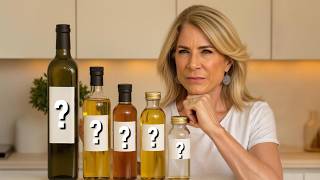
In this solo YouTube monologue, JJ Virgin examines a 2025 pre‑clinical study published in Cell Reports by a Yale lab that showed oleic acid (the main fatty acid in olive oil and many high‑oleic seed oils) can trigger adipocyte precursor proliferation, leading to new fat cells (hyperplasia) when it makes up a large portion of a high‑fat (≈45% of calories) diet. Virgin clarifies that the study modeled a Western ultra‑processed diet rich in blended high‑oleic seed oils (soybean, canola, sunflower, safflower, etc.), not the modest use of extra‑virgin olive oil (EVOO) typical of the Mediterranean diet. She contrasts hypertrophy (fat cells getting larger) with hyperplasia (more fat cells), explains the molecular pathway (AKT2 activation, LXR‑α inhibition), and notes supporting epidemiology linking blood oleic acid to obesity risk. While acknowledging EVOO is high in oleic acid, she argues its polyphenols, antioxidants, and vitamin E offset the risk, especially when consumed in moderation (2‑4 Tbsp/day) within a whole‑food, active lifestyle. Virgin recommends eliminating industrial seed oils, choosing high‑quality EVOO (e.g., Fresh Pressed Olive Oil Club), and diversifying fat sources (avocado, nuts, wild fish, coconut/MCT, ghee) while emphasizing movement, resistance training, protein‑first meals, and sleep. She also presents a nuanced view from Dr. Ben Bikman that having more, but not over‑filled, fat cells is not inherently harmful, and that metabolic health depends more on fat cell fullness and visceral fat. The overall takeaway: olive oil is not the villain; the problem is excess oleic acid from processed oils combined with caloric surplus and sedentary behavior. Practical tips for sourcing, storing, and using oils are provided, along with a warning against sensational headlines.
Chapters
New research is making headlines. Olive oil. Yes, our beloved EVOO could actually make you create new fat cells. Not just bigger fat cells, but more fat cells. So does that mean that you should toss your extra virgin olive oil and ditch the Mediterranean diet? Well, not so fast. I'm going to break down what the study really found, what this means for your health, and how to use olive oil in a smart way. And spoiler alert, while hyperplasia may sound like a bad thing, Just wait till the end. There's a plot twist. So let's talk first about hypertrophy versus hyperplasia. And I'm going to break down the study, which, you know, exposes the dark side of too much EVLO because it causes both the increase in size and number of fat cells. So this was in 2025, published in Cell Reports, study done by Yale, and it found that the fatty acid composition of oils influences whether fat cells simply grow— hypertrophy, get bigger— or multiply. Hyperplasia, create more of them. Oleic acid was the only fatty acid tested that could drive new fat cell creation at physiological levels. The study found that this occurred when diets were designed with about a 45% total caloric load from fat, with oleic acid as the main fat source. And the reason they did it this way is they were going to reproduce the high-fat, high-oleic-load diet that you see in the ultra-processed Western diet, not of course the Mediterranean diet. So we're not talking a drizzle of authentic EVOO on a salad. This study was modeling the kind of fat you'd get from a Western diet that's like 70% processed foods with a load of different OA-rich seed oils stacked together. So what they did was they conducted an unbiased dietary screen in mice and they tested multiple fats: coconut oil, peanut oil, lard, soybean oil. And again, they found oleic acid was the only dietary fat that caused significant adipocyte precursor cell proliferation, leading to more fat cells. The oils that were found to be problematic were soybean oil, sunflower oil, safflower oil, and peanut oil. By the way, soybean oil is the number one oil that we eat here in the United States. They cited olive oil in the study as it has OA in it, but it really was these other oils that were used to mimic that 45% of fat in the standard American diet due to the high intake again of ultra-processed foods. And they also shared their concerns for high oleic canola and soybean minerals. All right, so why is OA an issue? Well, most of the time fat gain happens by increasing the size of existing fat cells. OA can also make your body create brand new fat cells. The study showed that oleic acid acts like a signaling molecule. It triggers the growth switch AKT2 that tells fat cells to multiply and releases the brake LXR-alpha that normally keeps fat cell growth under control. Okay, you got the gas pressed and the break-off, and your body ends up making new fat cells, which can make fat loss more challenging long-term. Now, this was no small study. It was led by Dr. Rodeheffer's— hope I got that right— Yale's lab with NIH funding and published in Cell Reports, which is of course a top peer-reviewed journal. It's highly credible. Now, it's still early days in preclinical research, but it lines up with the UK Biobank data showing higher blood oleic acid linked to greater obesity risk. So the oils they used, again, these were heavily processed, but the common thread throughout, high OA content. And EVOO is high in oleic acid. So what's that mean? Is it off the menu? Here's the reality. Yes, EVOO is high in oleic acid, but so are other common oils. Canola, sunflower, safflower oil are major sources of oleic acid, especially giveaway when the label says high oleic. These seed oils often show up in all these different processed foods and dressings and of course restaurant meals because they're cheap. If it says high oleic on the label, guess what it is? It's high oleic like EVOO is, but without all the good stuff that EVOO has because EVOO has all these other things which I'll talk to you about in a bit. The issue isn't olive oil. It's piling multiple OA-rich ultra-processed oils on top of each other with a bunch of starchy processed carbs. We were meant to eat a variety of clean, minimally processed fats to achieve a balance of mono, polyunsat, and 3,6,9s. Driving any one of these too high can lead to problems, but especially with these OAs. Oleic acid excess is mainly a problem though in caloric surplus and a sedentary lifestyle. So overeat, Don't move, you got a problem. I mean, on my last trip to Italy, I felt like I was kind of drinking EVOO. I was pouring so much on my rocket salad and dredging my bread through it, and I wasn't worried. Why? Because I was walking my butt off everywhere, and I was not in a caloric surplus. The Mediterranean diet includes EVOO somewhere like 2 to 4 tablespoons a day in moderation. And of course, the Mediterranean diet isn't just about olive oil. It has whole unprocessed foods that are rich in fiber, polyphenols, omega-3s, and a whole bunch of plant diversity. And what it doesn't have are things like canola oil and sunflower oil and soybean oil and safflower oil. And unlike other high OA oils, extra virgin olive oil is unique. It doesn't just deliver oleic acid, it's also packed with some amazing polyphenols along with antioxidants and vitamin E. And altogether, these compounds support heart health, they calm inflammation, and they protect your cells. In fact, olive oil is one of the most studied fats for cardiovascular health. Randomized clinical trials, large cohort studies, and meta-analysis all support its role in lowering cardiovascular disease, improving lipid profiles, and reducing mortality. There was a study in the New England Journal of Medicine that found that a Mediterranean diet rich in extra virgin olive oil lowered the risk of major heart events by about 30%. Now, in this study, participants had about 4 tablespoons of EVOO per day. That's about 20 to 25% of their calories in a 2,000-calorie diet. And a review in Nutrients showed that EVOO polyphenols can reduce inflammation and oxidative damage, and all you needed there was like 1 to 2 tablespoons per day. Here's my take on how to get the benefits of extra virgin olive oil without those high oleic downsides. First of all, get rid of the crappy oils. Again, In the United States, like, our number one consumed oil is soybean oil. And so we've got canola, sunflower, safflower, soybean, grapeseed, rice bran. So lose those, and especially the ones that are industrial processed, right? Instead, swap them out for really high-quality extra virgin olive oil. Now, here's a big cautionary tale. There's a lot of posers out there. Ask at the restaurant, "Oh, is this olive oil?" They go, "Oh, it's a blend." A blend means we cut your fabulous extra virgin olive oil with some cheap canola oil, and it's mainly canola. And that is what you don't want to do. You also don't want to just only do extra virgin olive oil. You want a mix of healthy fats. You want to be getting some omega-3s from wild salmon. You want to get some medium-chain triglycerides from coconut. You want to get some monounsaturated from avocado. So get a whole bunch of different types because your body needs the balance. And especially whenever you can, go food first. Again, nuts, seeds, uh, grass-fed beef, wild fish, right? And then the saturated that you go for— I go for ghee, I go for coconut, grass-fed butter. By the way, none of those triggered fat cell hyperplasia in the Cell Reports study. My favorite monounsaturated are avocado and olive. And then the polyunsats, 3s and 6s, these are things that we have to have. These are essential fatty acids. My favorite omega-3s, of course, wild fish, salmon. I wish I loved sardines. If you do, A+ for you. You're going to get some in grass-fed beef, a little bit in your flax, your hemp, your chia. Those are good too. And then omega-6, those are things like nuts and seeds. And again, we're going to make sure we balance there because in the Western diet where we tend to go high oleic acid processed, we get a little overload of that. And then of course, a shout out to the medium-chain triglycerides that are in coconut oil and your MCT oils because these are an easy fat to burn that great for your brain. So olive oil, yeah, if you're doing too much of it and you're eating too much food and you're sitting on your butt and you're eating processed foods, it can be problematic. We gotta do it in balance. But I'm not worried about that if you're eating it in a moderate amount and you're eating high quality, consuming high quality olive oil. I personally, for the last, I think, 10 years, I've been getting my olive oil from this company called Fresh Pressed Olive Oil Club. And there's this guy, TJ, he's known as the Olive Oil Hunter. And he literally goes around the world getting the best-sourced small farm olive oil. It's fabulous. I like to put it in a spritzer where I can spray my vegetables to make— to roast up my vegetables. It's incredible. And I use it to make my dressings. By the way, this study does not invalidate the Mediterranean diet at all. Keep all those plants, keep the fish, keep the fiber, get rid of the seed oils, especially the industrialized one. Use the extra virgin olive oil, especially the high-quality stuff like that stuff I just talked to you about from Fresh Pressed Olive Oil Club, right? And of course, prioritize metabolic health by doing your resistance training, by moving a bunch, by eating protein first, getting good sleep, all the important things. Olive oil is not the villain here, right? So super important. Now, I told you I had a spoiler alert, and I do want to share that because this sounds like it's really bad to have more fat cells. And at first blush, you would go, "Oh my gosh, I don't want to build more fat But I'm going to throw a curveball at you to consider, and I'm going to do a shout out to Dr. Ben Bikman, who is an amazing scientist out in Utah who studies insulin and mitochondria. And here's the thing. The actual danger isn't having more fat cells. When you look at people's metabolic health, it's not problematic when you have more fat cells. It's problematic when your fat cells get too full. That's actually the issue. One of the issues with visceral adipose tissue, and if you've been listening to anything on my channel, you know, I'm always railing on visceral adipose tissue and telling you I want you to do a really good waist measurement weekly, a waist to hip and a waist to height, because that's how we can monitor that you're losing that visceral adipose tissue. That's that fat around your organs. The reason that fat's problematic is because it's in a very small contained space. So your body's not going to be able to make more fat cells there. There's no room. So instead they get swollen. And when they get too big, they spill out, and that's where you start to get problems. When you have fat cells that are not overfull, it's actually not problematic. So if you have more fat cells, it's not a bad thing. It can be hard when you're trying to lose weight, right? But it— this study show that when people have liposuction, their metabolic health doesn't improve because now they have less fat cells. And if they go back to their old ways and those fat cells they have get swollen up, now they have worse metabolic health. So I just want you to consider that because I think we tend to think, oh, more fat fat cells bad. But it's not that simple of a statement. It is more nuanced. Okay? So, and I think the biggest takeaway here is eat a balanced of oils, eat high-quality oils. I always say you are what you eat. It is really important in your fats because we store toxins in our fat, and dietary fats can have toxins in them too. Toxins tend to love fat. So get clean fats, get them as close to nature as possible. If you're getting oils, first pressed. Make sure they're organic and make sure that you're getting them in small dark bottles so they stay clean. And again, eat a balance of different fats. I do my grass-fed ghee and I get it in glass. I do my olive oil from Fresh Pressed Olive Oil Club and I get small dark bottles of that. I use a little sesame oil sometimes when I'm cooking, organic small bottles. I might use a little bit of avocado oil. Usually I'll do Primal Kitchen's dressings if I'm not making my own, but generally I make my own.. And I might use a little coconut oil or MCT oil. And it's that simple. Doesn't have to be complicated. So that is the easy way to think about all of this. Don't let the headlines freak you out is the real takeaway. I love that the headlines all over were like, "Olive oil is making you fat." It's like, that's not even— the study didn't even look at olive oil. It was looking at oleic acid from processed oils that have been processed in a way to drive up the oleic acid. So Caution with what you're reading because everyone loves to make these inflammatory headlines. So as you can see, olive oil isn't the villain. It's still one of the healthiest fats you can have. And again, the problem is too much oleic acid from all these other sources and then eating too much food and not moving enough. So we're gonna eat high-quality extra virgin olive oil. We're gonna have other healthy fats from different sources like nuts, seeds, avocados, wild fish, and then keep moving. That way you're gonna get all the benefits of all of these healthy fats without creating extra fat cells that you don't want. And if you want more info on this, check out this podcast episode on the truth about seed oils and learn if they're really sabotaging your health.