Keto & Menopause With Dr. Anna Cabeca | JJ Virgin
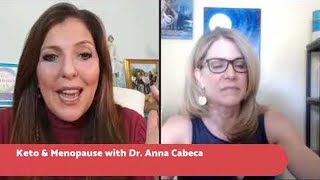
Dr. Anna Cabeca discusses her Keto Green approach to menopause, which combines ketosis with alkalizing foods. She shares her own early menopause experience and explains why urinary pH testing reveals metabolic health, plus how cycling ketosis and intermittent fasting can ease symptoms.
Chapters
Hang in there. Instagram did a boo boo.
All right, all right.
Okay. All right. Are we on? Yes. All right. Okay. Pause. Due to poor connection, we're reconnecting on Instagram. We should be good everywhere. We are. Perfect. Okay, this is super exciting because what you don't know, Anna, is we were. I was on this Morning Live and there were questions about menopause, and then I got some instant messages about menopause. So everybody listening, you are in for a massive treat because I have with me Dr. Anna Kabeca a long time. What, 15 years friend.
Yes, ma'.
Am.
Yep. It's been a while.
We have been together a long time. She's one of my lifers. And what's really exciting, she's a gynecologist. She went to Emory. She's a southern gal, and she is brilliant in hormone balancing. And she did something super duper cool, which is she figured out how to use a cycling ketogenic but alkalizing diet to help with menopause. So this is going to be very interesting because today we're going to be talking about menopause, how you can handle it naturally. We have a super awesome treat for you from Dr. Anna. She has a new book and the new book I don't even like. I'm looking for. I have a. I have a thing here, the breeze through menopause masterclass class. So you're going to be able to get that and then. I don't have the book there. You've got the book to hold up. I was like going, I don't have the book. I'm in the middle of a move. It's the other house. So the hormone book, when is that out? Tuesday.
It is out Tuesday. It is out Tuesday. Yeah, we're.
There's Dr. Partha. Hi, honey. Hope you're coming to mind this year. We missed you last time. So anyway, so the hormone fix comes out Tuesday. You can pre order it now. And we have a breath through menopause masterclass that she's going to gift you if you go to jjvirgin.com breathemenopause I need someone to do me a favor. Maybe Jackie. You can do this since I see you there typing. Oh, there it is. Someone put it in. Jjvirgin.com breathes menopause. Can someone put that in on my Instagram too? Pretty please? Pretty please. Maybe Debbie or Aspirant Phillips or Sean. So someone, if you could put in there breeze. Jjvirgin.com, breathes menopause, you will get Dr. Anna's awesome. Breeze through menopause masterclass. And we are going to be going through and talking about the hormone fix today. Talking about what you can do with menopause. Super excited about this. And what is really exciting in that book is she has the Keto Green way in that book too. I was like, you should just named the book Keto Greenway. I was like, this is.
That's for the cookbook.
That's the cookbook. The cookbook that you're gonna get. Debbie says, I need this. And Phyllis says, thank you. Oh, my God. And Patricia said, I need this. I told you, Anna. All right.
We all need this. Yes, yes.
Emily, if you could poach. Poach. I see Emily just joined on Instagram. Emily, if you could put jjvirgin.com forward/breezemenopause, that'd be awesome. Okay, so here's what. And you can see I'm pointing the camera Instagrammers at the Facebook thing. So we don't have an echo, but we will be taking questions live on both. I'd love to know if you are starting to go into menopause. Obviously you men there answer for your spouses or significant others. How about that? Are you starting to get any of those symptoms? Say yes if you are. You can post in there what they are if you want to go further. And Dr. Anna, welcome, welcome. Wish you were here with me. Live.
Me too. Me too. I wish I was there with you.
So you've been working in hormone balance for years. How did you come up with this program? Where did it all come from?
So. So decades, honestly. Decades. Right. And, you know, the. The journey stemmed from, you know, my entire journey. Right. At age 38, I was diagnosed with early menopause. And what we know, we just did a survey, jj, which you'll be interested. It was just posted in the New York Post today. And it was on 2000 women age 30 to 60. And over 47% of women have a difficult time with menopause. Over 40%. One in two women have a difficult time in menopause. And 71% over 70% say their symptoms started in their 30s.
Wow. Huge.
That blew my mind. I was like, wow. And what happens in our 30s and our 40s? We're willing to work on it, but by the time we get to our 50s, the. The women are giving up into our mid-50s. They're like, I've tried everything. I've asked the question. Exhausted, exhausted, exhausted. This should be over. I don't want to talk about it anymore. Please don't Say that word.
They're just going to go have some wine.
Exactly. Well, in my book, I give a taquito cocktail. That's probably even better.
There you go. I've had a lot of tequila with my girlfriend, Dr. Anna Kabeca, over the years, we will admit.
Oh, my God, I love that. And, you know, it's funny, you introduced me to Sherry and Nancy, and I just did their podcast, and they call me the girlfriend doctor. And you just said that. I'm like, yes, I love that.
All right, so, well, we got sidetracked with the tequila situation. You've been working on this. You had your own issues with early menopause. Turns out that this is an issue for over 50% of us, which isn't surprising. I know. At one point, I just felt like I wanted to unzip my body and leave. Leave, Right. Like, I just was like, I got to crawl out of my skin. Worst feeling ever. So how did you come up with the hormone fix, which everyone's going to want to get this book? How did you come up with it and start to give us a like, first of all, is there hope, Doctor?
Oh, my God, there's so much hope. And menopause needs to be. Look at a transformative period that leads us to a higher quality of life, a higher quality of peace and joy and satisfaction and reaping the rewards that we have worked hard for. It is not meant to be this tumultuous, like, sign of early demise that we can take it to be. We really need to look at it just like when we started our periods, this transformation that is occurring. And we need to do it helpfully because, you know, jj, you know, you have been with me this whole journey. So age 38, early menopause and premature ovarian failure and OB. There's no reversing menopause. You're menopausal. That's it, Right? Especially at age 38. Well, I reversed it for a decade. Age 41, I became pregnant with my daughter, Ava Marie. And so the child I was told I would never have. And then at age 48, those symptoms started occurring again. The hot flashes, the brain fog, the anxiety, the isolation, the, you know, the symptoms that were starting to creep up. And I'm like, wait, I'm doing what my patients would always tell me. They would always come in and say, I'm doing everything I was doing, but now I'm gaining weight. What's going on? I'm like, yeah, sure you are. Sure you are. Really, really. You're not Just more sedentary. You're not having that extra bite of dessert or extra glass of wine.
Other patients, any of those old patients. She's sorry.
I'm so sorry. I am. I don't know. It's like God has a sense of humor. Because at age 48, that happened to me. Right? 48. Here I am gaining 5, 10, 20 pounds and I wasn't doing anything different. Exactly. Wasn't doing it. I totally get it now. Right. And I was like, what's going on? My body's changing. Our bodies change. We go through rewiring period, which is necessary, and get into this metabolic stall. So how do you pull yourself up? Essentially by the bootstraps to get yourself out, you really need to start using ketones for fuel versus glucose. And this was fascinating to me because as I started adding the key alkalinizing components, because when I wasn't alkaline, I was literally keto crazy, jj, irritable, anxious, stop.
So people are going to wonder what the heck alkaline is. So I'm going to be interpreting everything. So first off, Lori wants to know, is this streamed class widest title book. So the book is called the Hormone Fix. You can get the free masterclass@jjvirgin.com breathes menopause. Now you started to realize that there was a better way and that a ketogenic diet could actually help here. And I do want to kind of get deeper into that. However, one of the problems with a ketogenic diet is it can make you very acidic because of the reliance on more of some of the animal proteins. And so you started to do alkaline. So like, let's explain that what you mean by that, because I think some people might be in. Is that alkaline water? What are you talking about?
Yeah, yeah, that's a great point. You know, one thing that we know in chemistry, our blood ph never changes. It's stable. As a physician someone, and that there has been in the news, old literature, but some influencers saying there's this alkaline myth. There's no myth about it. Our blood ph is always alkaline. And when we check as a physician to see if you're stable coming in, crashing in the emergency room, we're putting a needle into your artery for an arterial blood gas as fresh from the heart as we can get it right. The body will rob Peter to pay Paul to keep that blood ph absolutely stable. And that's critical. But what we need. So we need these minerals in our body to keep our body's blood ph, slightly alkaline, but a marker of healthy nutrient status, healthy cellular function. Right. And so it's important that cells communicate well with cells. And so a marker of this is urinary ph. And so what I have clients do and what I've always had clients do is check your urinary ph. And our urinary ph is a marker of our health. Research has shown that more alkaline above 7 urinary pH is associated with decreased diabetes, decreased hypertension, decreased metabolic syndrome. And those are really powerful. I mean, that's really powerful. So alkalinity. Think of alkalinity being in the Amazon nature, lots of greens, vegetables, you know, really in our keto alkaline plan, it's low carbohydrate vegetables. And then think of a city, a city acidity like a city like New York City. Inflammatory, you know, not much green.
New Yorkers mad at you now.
I know, I know.
But I love them.
I give them a lot of green. So, yeah, so that's good.
You got to be taking antioxidants and doing greens when you're in New York. Doesn't say we don't love it.
Yes.
So you talked about checking urinary ph. Super interesting concept. How often would you do that?
So initially, starting out, I recommend checking it several times a day. Honestly, like at least three to four times a day because you'll see how your body's fluctuating. Maybe you're eating your keto green smoothie or you're vegetarian. I have my vegetarians come back with acidic urine all the time. Are you stressed? Other things can affect our urinary ph. Cortisol will create an acidic urinary ph. So we can have a great meal, but we're fighting at the table. We're arguing with our kids, we're not talking with our husband. And we're going to be stressed. That's stressful. We really need to counterbalance those stress factors. And that's what I found out for myself. It wasn't just about what I was eating. It was also about what I was doing. And I always say, JJ, you know this 99. What's the research? 99% of diets fail. Something like that, right?
Not quite as high. It's more like 93%. But I also think it's because we're using diets wrong. This is what I like about what you're doing. I believe that we've got to look at diets totally different. We need to use them therapeutically to achieve an outcome. So if you're struggling with these symptoms, which of course means your hormones are all out of whack, you're going through menopause. This is kind of one of those natural things in life. But we're looking for how do you feel better as you go through this? How do you breeze through it rather than, like, fight your way through? And so that's why I was so excited about this is you've got a great plan to help you get through it. You know, when I look at the stats on all, you know, 93%, I think it is, of all diets fail, well, it's because we're not using them the way we should, which is, let's figure out, what are you dealing with right now? What's the optimal thing to help you deal with that? And then let's put that into place. So if you are struggling with all these things. I wrote the forward for the book the Hormone Fix, and I really loved what you did here because one of the big challenges with a ketogenic diet is low fiber and very acidic. Not enough vegetables, not enough fiber. And you counteracted that and then did it in a way that you cycled it in. So this isn't like you're now going to be on a ketogenic diet forever. You'll stay low carb, which is. We know a better way for everyone to be. But you cycle this in with lots of vegetables and also getting in your fiber, of course, from the vegetables, and it's just brilliant. Like, why hasn't anyone done this before?
I tell you, you know, it's been a journey. It's been fun exploring it. Oh, my gosh. Y' all have got to read the forward JJ wrote for my book. I am so grateful. Jj, you just yelled everybody, too.
There you go. And you know, y', all, everybody. Yeah, her Southern came out. The other important thing about this and putting all the deep green leapies in is that one of the things that happens, of course, when you're doing this diet is you start to lose body fat, which is awesome, but you free up toxins, and if you don't have enough of those deep green leafies on board to get the toxins out, you got a problem. So there's a lot of genius behind this plan, and I'd love to hear. And I think what I'll do first, I'm going to pull up. Julie over here says I'm postmenopausal hypothyroid on armor and bioidentical, and haven't been Able to lose weight for five years, tried keto, intermittent fasting, did doctor. So, Dr. Sarah Gottfried, by the way, my 50th birthday party was Anna, Dr. Anna, Dr. Sarah, Dr. Jen Landa. It was hilarious.
All down in best memories ever. Oh my gosh, best memories, right.
One of the most fun things ever. All under her naturopathic doctor's care. Nothing works except keto and that was £11 in four months, which I don't feel is that good. But it's all that worked. I'm afraid doing keto and cutting out all the ton of vegetables that I have to give up due to cutting carbs will affect my liver and then affect my thyroid. What is your opinion? Ah, well, you came to the right place to ask this question, Julie. My doctor says she can't really be sure. She's a toss up as to whether keto is best for me. What's your thought? I also have high cortisol levels on and off. And I just would like to say, as you answer this question, one of my concerns always has been with keto done the traditional way, besides, you know, is some of the elevated stress hormone stuff. So what do you say to this woman here with thyroid issues, hormone issues, cortisol issues, et cetera?
Right, right. Yeah. Because the concern about keto is the acidity is the higher cortisol. Right. So the key factors that go back into that alkalinity, keep up those alkaline greens. Use keto in a way that really helps your circadian rhythm, resetting your body's natural rhythm to improve your metabolism. So what I mean by that is using intermitt fasting, not snacking and check. Very simple. It's so easy to do. I've coached thousands of women into this. But one of the things that really helps them discover what is working for them versus what is not working for them is that urine PH testing, very simple, easy to do. Check your urine rph.
Phyllis just asked about. Hi Phyllis, by the way. She said, how do you test it so frequently? Is there an over the counter test to buy? Assume that someone has never done a urinary PH test before. They don't know. So walk them through where they get the strips, how they do it. You don't have to demonstrate it, but.
Everything short of that, go ahead. That's so funny. I've lectured and I've given out urine test strips and I've been like, guys, you can go to the balcony. Women wait in line. This is not fair. So very, very easy. There's ph paper it's called Hydrien paper. H Y D R I O N inexpensive. It has a wide range of ph on it. And you can get that from any pharmacy, any health food store. And then I created urine PH test strip that has the PH pad and the ketones on it as well. So that's a keto ph test strip. So very easy. And whichever ones you get.
Where do you get that one?
Oh, Dranna.com. dranna.com and Amazon.
All right, awesome.
Yeah. So easy. You can get both of them there and then just pee on the strip. And let me tell you, jj, it's funny because I interview my clients in Magic Menopause Weekly. I'm like, well, because I love checking my urinary pH. It just gives me so. And ketones. Like, am I doing it? Am I there? Am I not there? Oh, did it throw me out? Did I, you know, bump out, bump in? I think that's important to bump out and bump in. Like you mentioned, you know, the cycling, that metabolic flexibility is so important. Plus we, you know, there's times for feasting and there's time for fasting. So metabolic flexibility is really important.
Yeah. And that's important. This is not about staying in ketosis, it's about cycling it. This is what I did not like before, where I'd see people go into a ketogenic diet and stay on it, which can impact your thyroid, your cortisol adversely. And then we gotta address this here because Jamie said, I thought your MPH not accurate. She uses a blood test. But, Jamie, I want you to go back and listen to the beginning of this. Explain why the blood test isn't going to give you what you're looking for because of your body's control mechanisms.
Yeah, we can look at. Blood is the gold standard for ketones. Right. If we're looking at that. But you can still look at urinary ketones for ph. We're looking at urinary ph. So many parts of our body have different ph. That's like in the cosmetic world, we have more of an acidic skin. We have an acidic stomach.
Right.
That has to be acidic to break down to nourish. It better be. Yes. And lo and behold, the vaginal PH is acidic. Right. Your bladder, urinary urine should be slightly alkaline. And think of amniotic fluid. What our babies thrive in, that is very super alkaline. Super alkaline. And we live and thrive in this alkaline environment. So never forget that. I will say we can't beat Mother Nature. Urinary ph is a great marker of what's going on in your body, how you're reacting to life and how you're reacting to the nourishment that you're getting. And in my clients that I've had, test urinary ph. Many, like, maybe 50% starting out, love testing their urine pH. 50% don't, but over 90% by week two, love testing it because they're getting that information. This is working for me. This isn't working for me.
All right, so let's go through that. And by the way, I just wanted to say hi to Donna, my favorite librarian in Santa Cruz. And, James, I haven't seen you forever. So good to see you over here on Instagram. I'm trying not to do a Blair Witch project and shake the camera too much here, but good to see you. So Annette asks a great question over here on Facebook, and Annette says, so doing this, what are we looking for? Let's go through some of the numbers that you'd want to see when you're testing on your urine ph and then what you're doing on the ketone strips.
Yeah. So one thing is urine ph. We want to get 7 or above. If we wake up with 7 or above, and if we exercise, the urine ph is going to go down. That's normal. Acids going in through our system. We know it was stressing our body out. We're going to see lower urinary ph. Okay, that's good. But in general, if we wake up with an alkaline urinary ph and go to bed with an alkaline 7 or higher. 7 to 8. 7 to 8.5. That's really good because we're just like, kind of just think creating a healthy border for a healthy fertilizer for ourselves to be nourished in. I like to think of it in that way. And it's a guide. Okay. So managing my stress. And jj, this is really important. I mention this in the book, right? We always say it's not just about what we eat, it's about how we live. So, like, we can eat the same meal, this great, nourishing keto green meal, and still be acidic. If we're stressed, we can eat that same meal, go out, have a glass of wine, be with friends, laugh our heads off, and be tremendously alkaline the next morning. The power of oxytocin. Right? And so that is so healing. And seeing that being able to test and use the urine ph, kind of like you use the scale, you know, how Am I doing? Or, you know, a thermostat for our body to keep us in check. That's the best way. That's the best way to use urinary ph as a guide.
I love this, too, because it's so important to measure things. And whatever you're working on, you want to measure it and monitor it and write it down in your journal. Now, we're going to address a couple things because you said something earlier, which of course, I had to, like, throw it out. I have to bring this up because you said, and stop snacking. And of course, you know, I'm always anyone who's going to back me on the stop snacking stuff. I mean, the other one that just someone just asked about was intermittent fasting. And I. Let's talk intermittent fasting. Going to share something, kind of my reverse intermittent fasting plan. So let's talk about intermittent fasting. What it is, why you want to do it, how to trigger autophagy. This is a really important thing here, especially because the other thing you want to put together with menopause is reversing aging, right?
Yes, absolutely right. And it's really. And it's not just about, you know, the number on the scale. Right. It's how we feel, how we're thinking, our brain health, our energy levels, our focus, our drive, our passion. And that's more about what it's about. And again, I've been on the downside of all of that. Struggle, depression, fatigue. It hurt to put my feet on the floor. I mean, I was spiraling down.
Let's fill them in on what happened, because we both had really serious life events, and Anna was, like, one of the very first people that reached out when this all happened with me. But prior to that, Anna lost her baby boy when he was, what, two years old, I think, right?
That's right.
Oh, my gosh. Tragic accident. And that was what threw her into all of this early menopause stuff. And then my son nearly died when he was crossing the street and got hit by a car. Was in the. The ICU for four and a half months. And, you know, that. That I was like. And there went all of my hormones, like, bam. Like thyroid, my cortisol, my way into menopause. Everything just went poof. So that is why, you know, I mean, actually it's why you're so great at all this stuff as you've been there, done that, and were able to turn it around and actually come back out of it, which just shows how important all the diet and Lifestyle stuff is you want to make sure when you're, when you're treating menopause, I'm on bioidentical hormones, but I'm on the least amount I need because I've done everything else and I'm 55. You know, it's like they're, they're done. But you want to do, if you do need to use those, you want the least amount because you've done everything else. Manage stress, gotten great sleep, diets dialed exercise, right. All those things. Super important.
Well, jj, you don't need much because you're doing all those things right. And like, you and I both know it takes more than hormones to fix our hormones. Wouldn't it be nice if it was just in a pill?
So Robin says, thoughts on intermittent intermittent fasting and carb cycling, which is exactly honestly what this program is. It is cycling ketogenic diet using greens in there. Because at first when she said, oh, I'm doing this ketogenic diet, I'm like, but I don't believe in long term ketogenic diets. She goes, that's not what this is. It's a cycling ketogenic diet so that your body becomes very metabolically flexible. Flexible, which is so important. I want to remind you, obviously we can't go through all of it right now. So jjvirchin.com breathe menopause to get the masterclass on all of it. And then the other part of that, and we kind of keep talking about then getting off track is intermittent fasting. So intermittent fasting is when you eat during a time restricted window. I have a very specific take on it. I'd love to hear your take on intermittent fasting. Then I'll tell you my next, my next TV segment. What's it, what it's going to be?
Oh, I can't wait. You know, for me, it's not so much the eating window because people take it to graze that entire time. Yeah, fasting window.
That's a no no too, right?
But it's so. I hear that so often. Well, I eat for the, you know, this, during this four hours, I'm like, well, when at the beginning and the end, like, no, I'll join before. I'm like, well, okay, how do you feel? What's your discernment over this? You know, how's your testing, etc. And so for me, intermittent fasting is really crucial because as I transformed my health, right? Went to transform and help and pour out into others that concept of, okay, well, what's the research Say always, always, always, always. I was a researcher before I went to medical school. So what's the research say? So the research showed like there was a study in early 2016, 2017, now published in the Journal of the American Medical Association, I believe, that looked at intermittent fasting in women who have had breast cancer. If they had at least 12.5 hours between dinner and breakfast, they had a significantly decreased risk of recurrence. Huge, huge.
And here's the cool thing with that, because I'm actually going to go on and do a segment on why on the whole breakfast controversy because intermittent fasting came out and all of a sudden everyone was skipping breakfast.
No, no, no, no research.
No way. There is absolutely. You should not. Especially women, women. It can raise your blood pressure, raise cortisol. So you know, I still go with the eat breakfast, I've relaxed a little bit. I used to be like, eat within an hour of waking up. Now I say eat within two hours of waking up. And we want to make sure that you have at least a 12 hour overnight fast and you stop eating three to four hours before bed. But what I like to do on the weekends is I'll have a little later breakfast, say, you know, maybe 9 o' clock and then we'll have an early dinner, like 5 o' clock and we shut it down. So we'll do, we'll do a. But we are not eating between nine and five. We have breakfast, maybe lunch and dinner. We're not. This is not an eight hour grace and I'm glad you brought that up because you should be able to go four to six hours between meals because your body is able to access stored fat for fuel. Remember, if you're eating, your body is not needing to burn off stored body fat. You've got insulin up. That's not where you want to be.
And it takes time to get there. So for like there's this, you know, keto muscle, we have to exercise. It took me four, I think four days of near like fasting to initially get into ketosis the first time around. I mean it can be a challenge for many of us, especially if we yo yo diet. It can take time, but now it can just be, you know, easy 12, 15 hours. It's that, that muscle. So if you're not getting the results you want right away, stick with it. It's like anything else, like exercise, start, go slow, take your time, figure out what's working for you, be patient and persevere with it because that makes a difference.
I used to work early On. Did you ever meet Dr. Diana Schwartzbein?
Never met her in person, no.
So that actually was the first person I started doing conferences with. It was me, Dan Kalish and Diana way back when. Isn't that funny? I used to always stay at her house. She was like a sister. But she said something really interesting and she'd say, you know, she always talked about healing your metabolism. You didn't lose weight to get to get healthy. You got healthy to be able to lose weight. And that's a concept that isn't popular, but really important to understand is that you have to get your metabolism healed first in order to be metabolically flexible. You don't go, okay, I'm going to start fasting. No, you know, what you need to do first is start to improve your food composition. You know, get those vegetables up, make sure you're getting lots of healthy fats, get the processed carbs gone, drink more water, deal with stress. You do those things and it takes time, but you're completely shifting your metabolism. And then all of a sudden these things get easy. But, you know, you didn't get here overnight. You're not going to get fixed overnight.
Right, right, right. I agree 100% and I like that. You know, you get think about, okay, we're restoring health, we're creating energy, we're re energizing. So it's like we need this time to charge ourselves. And it was really fascinating as I got into more and more of the keto green components about what keeps us out of it. We can be doing everything by the, you know, by our checklist. Right? Everything. Correct, but still not get the results we want. Because if our mindset's not there, if we're stressed, if we're like running on empty, you know, those are all things that affect us. And I agree. Just back to the breaking fast. It's so important to break fast. And I really do believe for women, the earlier, like 10am is probably my window of time. Like, you know, get that workout in, break fast after. And if you can do that, if you can make that work into your schedules, I really think by 10am for sure. Like that's my latest.
Right. You know what?
Women get up early.
Yeah, I get up, I get up between five and six, I don't know, seven o' clock now in the, on the east coast, six on the West Coast. But I don't think it's an if you can do it, it's decide to do this, make this work in your life. So, you know, let's Make a deal that we're going to eat within two hours of waking up and close the kitchen. If all you did today was say, all right, gals, I am going to say stop eating three to four hours before bed. I'm not staying up later. I'm going to go to bed at a good, normal time during the normal circadian rhythm. But I'm going to shut it down. I wish that we could have a, you know, if I could figure out how to do some kind of, like, kitchen lockdown, right. An app, and there'd be like some big, like, there'd be like a, you know, big alarm sounding. They post your photo on Instagram and Facebook, you know.
Anyway, I see it coming.
You know, Anyway. All right, so we are up against the time. I actually have some friends now are stopping by for dinner, kind of impromptu, but I want to.
That's a good time for dinner that you're having, you know, and talk about that.
We're having early dinner.
Perfect. Perfect. Because, you know, one of the studies, actually, two of the studies that I read looked at the percent of increase in insulin after 7pm 50 to 70% increase in insulin because we've just eaten after 7pm same meal, different timing. So that means more storage, that means more fat mode, that means more hibernation mode. So I'm going to enjoy that meal, but I'm going to enjoy it early. Early, early bird special.
We're not bears. We're not hibernating. And, you know, this is so important because you know how I like to say, your body's not a bank account, it's a chemistry lab. It's not just what you're eating, it's when you're eating. We've realized that those two things are critical for a while. When we started to look at mealtime and people were like, oh, as long as you eat during this time period, you can eat whatever you want. It's like, no, eat correctly during the right times, and then you really nail it. So that's super critical. So I want to remind everybody. Hold that book up again. Hold it up, Anna.
Oh. Oh, I love it. Thank you.
All right, the hormone fix, you can pre order it right now. It's out on Tuesday. Pre order it now. You'll want to jump over to jjvirgin.com breezemenopause get into that masterclass. You want to be in it. You're going to love everything that Dr. Anna teaches. She's amazing. As you can tell, she's one of my close, close pals. I love her to pieces. She's the real deal and you'll want to get connected up with her and learn from her. She's amazing.
Likewise. Likewise. Thank you. Thank you so much. Thanks for your support in all of this, every step of the way. I really appreciate it.
I'm just out to the world. She's been see, she's been teaching all the other doctors, so it's high time she went and got some out to the public too. So that's the cool thing is now it's coming out to the public too. By the way, I did an amazing podcast with her. Is it published yet or is it coming out this week? Do you know?
I think it's coming out Monday. That's not tomorrow. I think it's tomorrow.
Tomorrow I've got podcast JJ Virgin Lifestyle show. You'll want to check that out too because that is going to be amazing as well. So you will not.
That was a great one.
I think our buddy Dr. Elisa Song just jumped on too. Hi, Elisa.
Oh, Lisa. Love you.
All right, so we are diving off. Remember to grab that jjvirgin.com breezemenopause get the book pre order it now on Amazon. And thank you, Dr. Anna Kabeca for your time today. I adore you, I love you and hopefully I'll see you soon somewhere.
I look forward to it. All right, thank you.
See ya. It.








