Lifting Heavy Won’t Make You Bulky
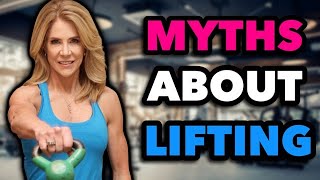
JJ Virgin explains why heavy lifting won't make women bulky: low-rep strength training builds minimal muscle size, while growth requires higher volume. Women's lower testosterone and slow-twitch fiber dominance naturally limit bulk. She also covers metabolism myths, showing that muscle mass and daily movement (NEAT) matter far more than age.
Chapters
Okay, here's a myth that just will not die, that lifting heavy makes you big. Now here's what's really funny about this. Lifting really heavy, you know, we have muscle size, we have muscle strength, and we have muscle power. They're actually trained a little bit differently. And if you purely want to train for strength, you would be doing sets of 1 to 5 reps to failure and giving yourself long break in between, like 5 minutes, and doing it again and doing like 5 or more sets of those. And you can actually get a lot stronger with minimal increase in muscle size. Now, generally, as you get— as you get your muscles get bigger, they're also stronger, but it's not a straight line. So it's funny because the heavier lift with the shorter sets are going to make you stronger without as much size. What you really want for size is volume. It's time under tension. It's doing more sets of exercises. And generally that can be anywhere from 6 reps to 30 reps and combinations of it. I like to tell people to do somewhere in the 8 to 15 rep range, multiple sets, and get that volume in. 20 sets a week for each body part. And here's the thing, even doing that, even going for size, we are lucky if we can do— put on 1 to 2 pounds of muscle a month. And as we do it, generally what's going to happen is your metabolism is going to get better. You're going to get more insulin sensitive. You're going to get better at burning fat. The muscle is going to hold everything in tighter. So you might be staying the same weight or even getting a little heavier as you're getting smaller. Now let's talk men versus women too, because women have 15 to 20 times lower testosterone levels. And we, you know, we need testosterone. We also need estrogen, but we need testosterone for muscle growth. Growth and development. So we're never going to get as big as men, right? Even though testosterone is our dominant hormone, by the way. And we also have a difference in muscle fiber types. We women tend to have a higher proportion of, of the slow-twitch muscle fibers compared to men who tend to have more of the fast-twitch muscle fibers. And fast-twitch have a greater capacity for hypertrophy, for getting big. But I really want to emphasize lifting heavier for women, to really, when you're lifting weights, to try to get to within what we call a 1 to 2 reps in reserve. That means that if you're doing, let's say, 10 squats, that you feel like you could maybe eke out 1 or 2 more of those squats with the weight that you're handling, that you want to really lift heavy. It's going to improve your strength, it's going to improve your muscle size, it's going to improve your bone density, and again, your overall metabolism. And it's interesting because I hear so often from women, I don't want to get big, I just want to get toned. Well, toned is building muscle so that you have high-quality muscle, right? And that muscle can hold everything in tighter and burn more fat. So when I think of tone, it's really having quality muscle that's hold everything in. I think when we think of bulky, we think of big muscle size, but really getting you to a point where you're really bulky, unless you wanna start cranking some testosterone, anabolic steroids, it's probably not gonna happen. And I will tell you, in 40 years of doing this, I've never seen it happen. And I've worked with thousands of women. So let's just put that myth to rest. The next one is my metabolism is slow. So I think that this is actually really a misnomer. Number one, in looking at all of the different research out there, our metabolisms really don't slow down much, and they don't tend to really slow down much until about 60 or 70 years old. Now, your metabolism is dictated in 3 different areas. We have your resting metabolic rate, and I think when people talk about their metabolism slowing down, they're really looking at that. Well, the way that your metabolism would slow down— your resting metabolic rate would slow down— is twofold. Number 1, a little bit lower estrogen level will contribute to that. So yes, as we start to notice that we're starting to gain weight during menopause, some of that is that decline in estrogen slightly slowing down your metabolism. But probably more of it's the fact that that estrogen drop is contributing to insulin resistance, and that's creating the problem. But the other thing that's going slow down that metabolism is the fact that you are not holding on to your muscle. Starting around the age of 30, we start to lose muscle, as you know, anywhere from up to 1% a year, but basically 3 to 8% each decade, which starts to double at age 60. Well, basal metabolic rate, the biggest thing that we can do to improve it is to have more muscle mass, is to have more skeletal muscle. So that's the first thing. The other two ways that you can impact your metabolism, one is the thermic effect of food. And so if you focus on eating protein first and getting in optimum protein, that's the best way to affect that thermic effect. And then the other one is activity. Now here's what's interesting. When you look at the contributors, you would think exercise would be the big contributor there, but it turns out that exercise is only maybe 5% of your metabolic rate. That the one that really changes there is non-exercise. So that would be simply standing rather than sitting, moving more. And what you want to do there is really track your steps. So I become kind of obsessive, I admit, on tracking my steps each day and ensuring bare minimum. So let's say that I'm traveling and I've been traveling a lot on long flights. Bare minimum, I make sure I get in 8,000 steps that day, even if I'm having to pace the flight aisle, the plane aisles, which they love. But make sure you're getting in 8,000 as your bare minimum. And really, I'm trying to get 12,000, 15,000 when I'm places where I can walk, 20,000 or more. Anytime you can add some intensity with something like throwing a rucking vest in, better. But for a lot of this, you're doing exercise to create the metabolic aftereffect that you get from HIIT or to create the— add in the muscle from resistance training. And then you're trying to move more all throughout the day, whether it's fidgeting, standing, moving, et cetera. They make a big difference. I'm gonna share a study that was a 1986 study, and it was published in the International Journal of Obesity. And it found that exercise significantly affects resting metabolic rate. Remember what I said here? It wasn't so much the regular metabolic rate throughout the day. It was resting. Metabolic rate that trained individuals had, are a resting metabolic rate that was 11% higher than non-trained individuals. Again, when you have muscle, this is the way you can push that resting metabolic rate. Now exercise is a minimal amount, but that non-exercise can account for 15 to 20% of your metabolism. There was a study in 2015, it was published in the Mayo Clinic Proceedings, and it found that if you focused on non-exercise activity thermogenesis, this could be the game changer. This includes things like walking, standing, and fidgeting. You can burn up to an extra 2,000 calories a day. I think that one of the challenges that happened during the pandemic that led to weight gain is we just weren't going anywhere or moving at all. So again, look at how you can incorporate NEAT into your daily routine. How many more times can you take the stairs? When I was on vacation, I never took the elevator. I always took the stairs. And when you can incorporate that into your your daily life, into your leisure time, that can help you burn those extra calories. And those extra calorie burn can make the difference of, you know, reducing your metabolic syndrome risk, improving your cardiovascular health, and reducing your risk of all-cause mortality. So there you go. Now you know the facts versus fiction when it comes to fitness.








