My Facelift Story: What Went Wrong, What Helped, and What I’d Do Differently
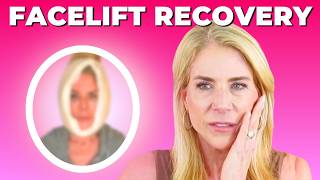
In this candid, first‑person video JJ Virgin recounts her journey toward a deep‑plane facelift, neck lift, and brow lift performed by Dr. Abby McEwen in Tampa. She begins by describing a lifelong struggle with acne, scarring, and the escalating reliance on Botox, fillers, and laser treatments, which eventually led her to decide on surgical rejuvenation. JJ explains how she selected her surgeon—valuing expertise, a head‑and‑neck background, and personal rapport—and how logistical constraints (travel, scheduling) shaped the timing of the procedure. She details an extensive pre‑operative regimen: an anti‑inflammatory diet, cessation of blood‑thinning supplements, and a suite of recovery‑enhancing tools she assembled after consulting Dave Asprey, including specific peptides (ipamorelin, CJC‑1295, BPC‑157, TB‑500), copper‑peptide topicals, essential amino acids, collagen, Fortetropin, hyperbaric oxygen therapy (HBOT), red‑light therapy, and IPL. During surgery, JJ describes the anesthesia protocol (local lidocaine with minimal sedation) and the critical mistake of accepting oxycodone, which triggered vomiting and a postoperative hematoma—a complication that required urgent drainage. She narrates the immediate aftermath, the swelling, bruising, and the emotional challenge of appearing on camera shortly after. The recovery phase is chronicled with daily HBOT sessions, twice‑daily red‑light mask use, multiple IPL treatments, diligent icing, and continued supplementation. Over roughly eight weeks, the hematoma resolves, and JJ is able to present on stage, illustrating the effectiveness of her multimodal protocol. Reflecting on the experience, she highlights key lessons: avoid opioids that induce nausea, monitor omega‑3 index to prevent overly thin blood, ice aggressively in the first 24 hours, and maintain a calm mindset. She emphasizes the importance of choosing a trusted surgeon, thorough pre‑op preparation, and being prepared for unexpected setbacks. The video concludes with practical advice for anyone considering similar facial surgery.
Chapters
Before we get into what went wrong, but more importantly, what went right, none of this is going to make sense without a little context. Before the complications, before the recovery tools, before the mindset work, there was a decision. And that decision first, of course, was that I was going to do this. And then how I chose my surgeon, the prep behind it, this all set the stage for everything that followed. So this is where the story really begins. My skin's always been my kryptonite. I had really bad acne growing up. I mean, and the biggest challenge with that was I was also an athlete, so it was impossible to keep makeup on it. I just was really, really self-conscious about my skin. In my 30s, like, I still had acne going on. I mean, I still get some breakouts now. It's like, come on, I'm 62, still getting breakouts? What the heck? They've gotten a lot better. One of the things that really helped my skin a lot was discovering the Virgin Diet and what was going on with dairy in my skin. But I still had a lot of acne scars. And in my 30s, I found IPL and it got rid of all of my acne scars. It was like, it was amazing. And then I started doing more lasers. Around that same time, one of my clients was a plastic surgeon. And I remember I was editing video. I was doing these little TV commercials and helping to edit them. And I saw these lines in between my eyes and I was like, what's that. So started doing Botox way back then. Fast forward another decade, found out about filler. So I've just been doing things all along that I thought would keep me from ever having to do the actual thing, the plastic surgery. And what I started to notice was I was having to do more and more of these things more often. It's kind of like when you're— I'm— I used to be blonde, and I remember the first time I dyed my hair, and it was like once or twice a year you'd highlight it. Then all of a sudden it's more often and it's more than highlights and now it's covering gray. And it's like, it feels the same way with your skin where I was doing some things that was working well and then I had to do them more often, Botox more often, filler, doing these lasers in series. And I'm like going, this is taking an awful lot of time and costing a lot of money, let's be honest. And I'm not really thrilled with the results. And so I started looking around at plastic surgeons, and I have a lot of friends who are plastic surgeons, amazing surgeons. So, you know, of course they always love this too. What do you think? You know, so asking them, looking at different surgeons, and I just wasn't finding anyone that I was really comfortable with. I've had friends who've gone to some of these amazing surgeons. I interviewed them. I just wasn't— it just, I don't know, I don't know what I was looking for, but I wasn't getting it. But it was starting to bother me more and more. And to be honest, I was feeling really self-conscious. I was starting to feel like maybe things are passing me by because of my age. Like, I felt like my body and my face didn't match, and it was frustrating. And that's just self-conscious, really, around the lower part of my face. You know, when you get in the mirror and you start messing with your face going, what would happen if you pull this up? That's what I was doing. And then Kris Jenner happened. When I saw Kris Jenner's, I was like, oh my gosh. But something else happened. I was reading an article, and the article said that one of the reasons she had such great outcome was because this was her second facelift and that when you do these earlier, that you actually have better outcomes. I had thought it was the opposite. I thought that you want to put this off as long as possible, that this wasn't something you did more than once, that it could make you look older. Like, I had all this narrative going on that turns out were actually not true. So shame on me. I should know better than to— I don't know where I got all this misinformation from. But if you've heard any of those things As I started to unpack, it's like, no, that's actually not the case. You're actually better off doing it a little bit earlier, not waiting as long. But I, who knew? Once I made that decision, it's funny, all these things fell into place. One of my girlfriends from San Diego called and said, hey, my, I met a girl in Miami and another gal in LA, and they both went to a surgeon in Tampa. And I go, Tampa? Because Let's be honest, it is so much nicer to do these things near your house. A year ago, Tim needed to have a hip replacement, and I love my surgeon in LA, so I convinced him he should do it there. And then we were in a hotel room in LA. It was really hard. And so I kind of made that decision, we're not going to do that again. That was just too hard to do. So I really wanted to do something near home. And as luck would have it, it's amazing how these things all seem to happen exactly perfectly. I get introduced to this doctor who people are traveling to Tampa to see, and I meet her and absolutely love her. She has incredible training. She's a head and neck surgeon, trained as a head and neck surgeon, only does facial and neck. Is really normal. Yes, some of these plastic surgeons— okay, between you and me— look a little weird, like, look like they're have gone overboard and the whole office looks like it's gone overboard. Um, it's so much so not like this with this, uh, gal. So really someone you just want to go to lunch with, like very good, knows what she's doing. And as she walked through the procedures both with me and my husband, I was like, oh, she— and how she would do us differently and what needed to happen and what were issues and what our choices were. I was like, okay, this is my person. And the minute I felt that, like, I felt completely confident. I Didn't freak out, wasn't concerned. I felt very, very confident about the whole thing. Then the next thing was, well, when the heck can I fit this in? And here's the reality. I travel about 70% of the time. There's about 2 weeks where you have to be prepared for downtime, and I'm rarely ever home 2 weeks in a row. And so we had this one time in our calendar right before Thanksgiving that we knew we'd be home for 2 weeks before I had to go to Las Vegas to speak at an event. We did have a team meeting that was supposed to be happening at our house, but I was like, oh, who cares? They don't care. So we— luckily she has that time in her calendar. We schedule the time and then I go, all right, I need to do everything possible to get, you know, great outcomes from the start. And a lot of this is, of course, the diet is super important. Now my diet, I was already dialed, like anti-inflammatory diet, good protein sources, all that. So diet was good, but I wanted to make sure I was also doing peptides and to support all this. So what I did was I I pinged my buddy Dave Asprey because Dave had a facelift. I'm like, what did you do to get yourself dialed in and recover better from your surgery? Now we already have a hyperbaric chamber at our house because I got one for my son Grant, um, to help him with his traumatic brain injury. So I have a hyperbaric, I have a lot of red lights, and these are two very important things to help you heal. And then I wanted to put that together with, um, peptides, and topicals. So from Dave, he told me to do ipomoralin and CJC and BPC-157 and TB500 and, um, copper peptides. So I put those together for my process, and I had like morning and evenings that I was doing. Then I had a topical from Aura Wellness, this amazing copper peptide topical, incredible. So I got that. And then to help me with healing, of course, I doubled up on my essential amino acids. I doubled up on my yoked fortetropin because I knew I wasn't going to be able to lift weights for a couple weeks, and you really can't, and I'll explain that in a moment. And I doubled up on my collagen. So I had my essential aminos, my collagen, and my yoked fortetropin, and then those peptides, and then that topical copper peptide, and then along with my OneSkin. Oh my gosh, my obsession. So that's all the stuff that I had. I am a big mindset person, so I just I never thought anything but this was gonna be easy and perfect. And of course, right before I'm going in, I see that my buddy Shalene Johnson has just done it a week before and she looks great. Everything looks great. And I'm like, okay, no problem. I got this. My husband goes in the day before because I was getting all my last minute recordings done before I went in, cuz I'd have to be off camera for 2 weeks. He goes in, I take him there, I pick him up. He's doing great. Seems fine. I'm like, okay, this is a piece of cake. I got this. So I get up, I go in in the morning. Now here's what's interesting about this surgery. I was doing a neck lift, a deep plane facelift, and brow lift. My husband actually did more than me. He also did an upper and lower bleph. So he did all those things, an upper, lower, and bleph. This will get funny in a moment. I go in and they have you take a halcyon before you start. They really want your blood pressure low, you calm. You don't go under anesthesia. You have locals put into your face. I think it's like lidocaine in your face. You numb your face, but they don't want you going under anesthesia because they do not want you to get nauseous, come out of anesthesia and throw up. That is the number one risk in plastic surgery for having trouble with outcomes is throwing up. I didn't pay attention to that enough. All right, so we go in and I have an old injury in my mid-spine because my first husband thought I should help him carry a very heavy coffee table up a flight of stairs. It pulled out a rib, rotated, and it's never been the same since. And so lying back on something for— on my back for more than like 20, 30 minutes gets really problematic for me. Now I'm lying back on this chair, which will be for 4 hours, but I'm not thinking about that. So I lie back I'm on— I have this halcyon, I'm relaxing, you know, you're basically kind of semi-sleeping and she's doing all this. I can't feel anything, it feels fine. But about 3 hours in, I get— they give me another halcyon because I guess my blood pressure was going up. And that's the thing they have to really control for, is that your blood pressure doesn't go up. I have low blood pressure, but I think what happened was I started to hurt so much in my upper back that it started to create a little anxiety. That's my take, that's my clinical diagnosis anyway. That happened. And then at the end of all of that, I'm all wrapped up now, ready to go. I'll show you a picture. I looked amazing. Like, had all this stuff done and I had like a little bit of redness under my eyes. Like, nothing. Looked perfect. Darn it. Um, and they gave me an oxycodone and I should have known better. They had told me about this and I shouldn't have— I should have said something before because I hate those. They always make me throw up. And I should have just said, nope, those always make me throw up. Anyhow, I took some anti-nausea stuff, uh, when I got home, but still I felt like I was going to throw up. And I just— I guess I was too out of it to go, do not throw up. So I threw up, and when I did, it caused a hematoma. And that's like the big no-no. And you will see a picture. Oh my gosh, like I went from 'You look fine' to 'What the heck?' Like a scary monster in an hour. Like my whole side of my face swelled up. I got this— everything turned black and blue. Like I was black and blue inside my mouth, in my ears. It was unbelievable. Meanwhile, I'm looking over at my hubby Tim, who had more done than me with that upper and lower blepharoplasty where they go inside your eye. Like, I mean, inside your eye, right? Like in there. And he looks fine. And I'm like, what the heck? He's got like a tiny little bruise. I am black and blue and swollen, puffed out. And we go back to see her and she's like, has to go in there. She has to, you know, drain this hematoma, whole bit. Okay. I go back home. I'm like, all right, just breathe, stay calm. You know, fortunately I've done a lot of lasers and things over the years that you'll be like, all right, You look scary, you know. So I've had things go on where like, you know, you're going to look scary from this chemical peel, from this laser, but it always comes. You always recover. The next day is Thanksgiving. I wake up, the hematoma's back. I have to go back in. She has to not just open it up, she has to open it up, kind of undo the sutures, go back in. And my family's coming over for dinner. Now they've seen me do some things, so They're like, okay, well, you'll be fine. Like, none of them are at all freaked out. Tim's a little freaked out, my husband. And we are supposed to— this is now Thursday. We are on Monday having all these people coming over Monday night that are having a team meeting Tuesday, Wednesday. He's like, we can't do it. I go, well, he says we should do Zoom. I go, oh, we'll be fine. I go, I'll just hide in the bedroom or, you know, whatever. Like, it's fine. He goes, no, no, no, no. He was freaked out about what I look like. I was like, eh, you know. So I'm bruised. Anyhow, we ended up doing the meeting by Zoom, probably smarter. But now the clock is ticking because I am going to be standing on a stage in 10 days, and right now I've got— I'm black and blue. So I start going in, and, and this doctor who's amazing, completely calm during all this, explaining what's going on, explaining how it's going to get better, you know, okay, we've got 10 days, we can get through this. I was at home, I was doing those peptides I talked about, I was doing the topicals, I was doing red light. I was using this Bon Charge red light mask twice a day. And I was also in the HBOT. I have a home HBOT from OxyHealth and I was in there 90 minutes a day. So I'm doing all of that along with the dietary stuff. And now she starts doing IPL on me. Now I love IPL. I've had great experiences with IPL in the past. So I'm like, all right, let's go. Anyway, first day I do it, it's, it's a little better. I can tell it's getting a little better. It takes about a day, but I'm like, it's starting to get a little better. So I literally do it 5 times before I'm going off to Vegas. And by time, like, I do it on a Friday, then I do it on a Monday, Wednesday, Friday, and I'm now looking at over the weekend. I'm leaving that following, I think, Wednesday. And I'm like, okay, this is actually going to work out. Like, I had 5 of these IPL treatments done, and, you know, I still have a teeny bit of puffiness and a little bruise here. It's been, what, 8 weeks, um, where the hematoma was. Like, I can notice it. You probably wouldn't notice it unless I said, hey, look at this thing right here, which is— don't we all tend to do that? Like, look at this! But I can feel it, and I notice it's a tad, tad, teensy teeny bit of black and blue, which I should have gone back and done more IPL, but I just got busy. However, you're going to see these photos and go, how did you go from this to that that quickly? And I think it's all the stuff. So I think first of all was not freaking out when all this is going on. I was like, okay, this is gonna be fine, just breathe. I have so many friends in the plastic surgery world who are like, it's so challenging when you, you know, the day after someone has surgery because they're freaking out. I just was pretty confident. Now, in retrospect, a couple things I realized coming into this, and when I told the surgeon about— I was like going, you know, this strikes me that this could be a problem for other people, and this may or may not have anything to do with this, but when you're going in to have a surgery, generally you go off of all the Gs— the ginkgos, the garlics, the ginsengs. Okay, I was off all that. And you also go off, um, fish oil. So you go off things that are, are blood thinners. Well, I did all of that and usually do that for 1 to 2 weeks. I was off of all of it for 2 weeks. However, 2 days before the surgery, I had my Function Health annual— like, well, you actually get your lab test done twice a year. So I just done a Function Health test and they did my omega-3 index. And what that looks at are your— my omega-6 to 3 ratio. It looks at your balance of omega-6s, which are your pro-inflammatory, and your omega-3, anti-inflammatory. And you want those to be about 4:1. Like, you want to be able to clot, to be able to reduce inflammation, and to be able to increase inflammation. You need to have that balance. And my omega-3 ratio, the 6:3, was 3:1, where 4:1 is where it wanted to be. You know, is if it gets higher, it's more pro-inflammatory. Like, Apparently the typical standard American diet, someone's like 20:1, very pro-inflammatory. But I was too much the other way, which means thinner blood, easier to bleed, which I don't think caused the hematoma, but it did not help matters when this happened. And here's the problem: 2 days before my surgery, I got that test back. The reality is, if you want to shift that ratio, it can take months. Now, generally my ratio is spot on, but I had been eating a lot more fish than normal and still taking fish oil, which was my— not, not smart. You don't need to take a bunch of fish oil if you're eating a bunch of fish. Like, if you're eating fish 4 or 5 times a week, you're probably good. Um, and I just started eating more fish. I don't know why. Anyhow, I think that contributed to the issue, along with know yourself. If something makes you throw up, don't do it. Here's the Funniest part about the surgery, it really wasn't that painful. I could have totally managed it with Tylenol. Um, I took like a couple Tylenol over the whole time, and I think one Tramadol, and that was it. Like, it just wasn't that big of a deal, which is wild. The other thing I would say is I could have iced a lot more in the first 24 hours, but I was so out of it and not feeling good and freaked out that I kind of like didn't do as much as I should have. So if you're going to go do this Absolutely do what I did in terms of the collagen and the yolked fortetropin and the essential aminos. Absolutely do what I did with all those peptides that I talked about, the BPC-157 and TB-500. Um, and again, this is not medical advice. This is what I did. If it was me, this is what I would do. That's all I'm saying. But check these out. Check out the copper peptides. Check out epimorlin. These things— and CJC— these things seem to help a lot. You know, if you can get into a hyperbaric, and especially if you go into a hard shell every day— huge. It's probably the single biggest thing that will make a difference is hyperbaric and a red light. Boncharge has this great red light mask, amazing and easy thing to add into the mix. So all that stuff helped, and of course the copper peptides in the OneSkin. All these things help tremendously, but I think the biggest thing that made the difference was me not freaking out, which there were times there I was like, uh-oh. But I just, having gone through, say, different types of lasers and no-cut facelift and peels, I was like, you've done this stuff before, you can get through this. So that's what I would say. I think the most important thing is to really find someone that you trust. The doctor I went to, her name is Dr. Abby McEwen, and I'll put her information in the notes, but just great bedside manner, very talented. Like, her before and afters are insane. And I just felt super duper comfortable with her. And I think the reality for me, because again, this was something I thought I would never do, but then I realized I'm doing all this other stuff. What is really different? So you're doing like all this laser, no-cut facelifts, which is this Ellacor, like, like all these other things, filler, Botox. I'd rather not have to do any of that stuff and just do this. You know, and be done with it. So I actually think in the long run this is going to be way less, way less costly and way more time efficient and actually move the needle more again. And I feel totally comfortable in what I've done and in sharing the story. So only thing I would redo if I had to do it all over again was not take that darn oxycodone and check my omega-3 index back down off of that probably 2 months. However, I don't know that it would have mattered if I hadn't thrown up. So there's what we have. And iced a lot more in that first 24 hours. But again, I think if this is something you're considering, do your due diligence. Find someone you super trust. Do all the prep work. Understand that things could happen. My husband rubbed his stitches out of his eyes, rubbed them out, and had to go get restitched, resutured. I'm like, oh my gosh. So things are going to happen. Which is why it's great to have someone, you know, make sure you're either staying nearby or you've got a surgeon nearby. And again, if you're doing any of these types of things, hyperbaric for the win is what I have to say. All right, hope that gave you, um, some insight and didn't scare you. And hopefully these pictures, just when you see the transformation, can help you go, wow, okay, you know, if she would be that black and blue and be out and at an event and on a stage, um, you know, 14 days later, this is like, this is, that's pretty amazing. So if that's something you're interested in, hey, uh, do your due diligence, do your research, and I wish you the best of luck. And if you've got a friend who's, who's thinking about doing some stuff, be sure to share this with them too so they can know what types of things to prepare for. All right.








