My Husband Lost 20 Lbs & Got Ripped in 6 Months Doing This...
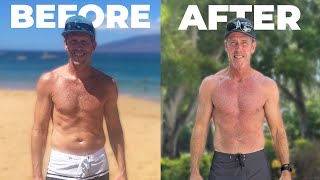
JJ Virgin's husband lost 20 pounds of fat and gained 19 pounds of muscle in six months by tracking macros at 180g protein daily, fixing food sensitivities, doing serious resistance training, and using creatine and urolithin A. His body fat dropped from 25.4% to 14.3% and his waist went from 35 to 32 inches.
Questions this video answers
Lost 20 pounds of fat and gained 19 pounds of muscle (six months).
Nov 2022: 25.4% body fat; Apr 2023: 18.9% body fat; Jun 2023: 14.3% body fat.
0.7 to 1 gram per pound of target body weight (example target ~175–180 lb → ~180 g/day).
About 100–120 grams per day (reported).
Approximately 2.5 grams of leucine or more per meal.
Chapters
My husband lost 20 pounds of fat and gained 19 pounds of muscle. And get this. In just six months. And I'm going to share exactly what he did. And you're going to want to share this with your husband or your partner or your best guy friend, too. Now, here's the deal. He's always been healthy, right? Yeah. You know, when I met him, he had, you know, some family heart disease, risk factors. His dad had open heart surgery in his 40s, died in his 50s. But when I met him, we had a couple issues. He was only sleeping five to six hours a night. He might have had a little bit of a sugar problem. Just a little bit. Maybe just a little. And he was doing a lot of cardio, wasn't really doing that much weight. And when he was doing weight training, it was what I would refer to as more wimpy weight training. You weren't getting in quite as much protein.
I was not.
No, not at all. More of a carb guy. He looked good. He looked healthy. He looked fit. He might, you know, maybe we'll show pictures. A little soft around the middle, but, I mean, you wouldn't have been like, oh, whoa. You know, you looked great. And that is why it is so important to use dexas and biompedance. Now, here's the thing, is biompedance scale at home said he was 18%. And I have a good one. It's a Teneda segmental, but it's not the gold standard. The gold standard is DEXA, and this is his DEXA report. And in his DCSA report, we both went and did this. And his DCSA, what was the first thing that it said?
25%.
And what did you think when you saw that?
This is wrong.
I know we did. We're like, this has got to be wrong. It's got to be wrong. Mine was how much I forget.
I blocked. All right, 14. Right.
All right. Mine was 13.9%, but who's counting?
Who's rounding up?
His was 25%. And once we got over the fact that, no, the machine's not wrong, he got inspired. Right. And finally was willing to do the things I'd been just letting him know you should do. And so one of the first things that you did was started to do macro tracking was to use an app, which you wouldn't do before.
I wouldn't do before.
No, you wouldn't. So. So what happened when you did that?
I started realizing what I was eating was not good for me. Like, I was blowing out my. My. My numbers.
So so let's get a little, like, what. What were you doing?
I was eating a lot of nuts, like almonds and cashews, like siete chips. I love that. Little afternoon. Late afternoon. 4:00', clock, 4:30. Yeah, just. And then in the evening, it was zero sugar coconut ice cream, which I'm like, this is like free food.
Yeah. And this is important because too much healthy food is unhealthy. So it was the first thing of just kind of doing that macro audit where you're like, oh, let's check this out. Where are things happening? But along with that, the next thing you made sure you did on the app was you increased your protein. Now we have you do 0.7 to 1 gram per pound of target body weight. His target body weight, we're still kind of figuring out, but it's somewhere in the 175 to 180. So now he's going to eat 180 grams of protein a day. So how much do you think you were eating prior to this?
Probably maybe most. 100, 120.
Okay. And what about in the morning? How much were you getting in?
Hardly any.
Okay. Which.
It was a car boost. There was a lot of granolas and things like that.
That's really a problem in the morning. Because remember, in the morning you've got to have that bolus of protein so that you get the leucine 2.5 grams or more. This is Dr. Donald Layman's work. So that you can trigger mtor to trigger muscle protein synthesis. Otherwise you're just in that muscle protein breakdown. You're still in turnover, and you got to shut that off. So that was a big deal. Yes. And you've been eating four meals.
Been eating four meals.
Yeah. Because think about it. He needs to get in a lot of protein. So that's a lot to get in in three meals. The other thing that we did was we did a gut test, and this was very funny because we did a GI Maps stool test and a food sensitivity test, and we happened to get the results back when we were on a cruise.
Yes, we did. Which I was not too happy about, but realized that I needed to stop after the cruise.
Yeah. So what happened was he decided what happens on the cruise stays on the cruise. I'm like, all right, you know what? I'm not going to fight this battle. However, what we discovered was that he had leaky gut and he was still sneaking in a little bit of dairy and gluten. It was really more gluten. And so that showed up on the test. And after the cruise, he pulled out dairy, gluten and eggs. He doesn't eat soy or corn or peanuts. And he's really gotten low sugar impact. As long as I'm around, do not cheat on me. I have not. And so there was that. The other thing that we did was start to shift up exercise. So let's talk about that because we need to get rid of some of that vat fat. So what'd you do with the exercise?
I started playing volleyball again because I grew up, you know, my entire life playing beach volleyball. And I just stopped it and wasn't getting enough cardio in. So that was a great way for me to really work the. Work the cardio side as well as increase my weight training and the frequency.
And so here's what's cool about the volleyball is he was not doing much in the way of cardio cardio at all. Like he kind of went from doing loads of cardio to only doing weight training, but doing moderate weight training. So he started doing high intensity interval training on the beach, in the sand. He was doing one on one lessons. And then we also started going to hit classes where we were the old cute couple in the class getting our butts kicked. The other thing was that you'd been kind of phoning it in at the gym with the weight training.
Absolutely, yeah.
And so what did you do?
You know, I really got serious. I mean, I was checking in with you as well, but I was there lifting, you know, more free weights versus the machines and really trying new things every time I was in the gym and really mixing things up, which, you know, you were making mention. That's really cool.
And he did, he checked in with me. Cause I used to go in and kind of give him some advice and he was like, stop it. So then he's like, hey, can I, can you help me? I'm like, okay. So. And then we also have some supplements. You take creatine, you've been religious about. You've always been good with supplements.
Yes.
Yeah. So creatine GG and timelines might appear they're urolithin A. But there's another thing that you added because you're working with Dr. Tracy Gapton. And so he added in some testosterone. Maybe talk a little on that.
Yeah. So the testosterone, when I tested, I thought, you know, I'd always see the low T commercials. Like that's not me. Until I get my testosterone levels checked, I'm like, that's me. So he got me on a really Nice dose. That really. It really just supercharged.
And what did you notice from that?
More energy, more focus. My body, the body weight started to fall off. Like, I really felt like, you know, I was back. And that's one of the reasons why I was able to go, go out and train so hard in the heat here in Florida for volleyball. Yeah, because I had that energy.
And this is important where estrogen is important for women, for building muscle and having great mood testosterone for men. So if it's low, and that does not mean that it looks normal on the lab test, normal on the lab test is low. So that was one big thing. Now, we'd already fixed the sleep situation and we'd started with Dr. Joe Dispenza a couple years earlier. So we've been doing the meditation, so all that stuff was happening. So we went and did this one. And I'm just going to get my glasses on so I can actually read these results. So, and the other interesting thing on this Dexa is it does something called an Android gynoid ratio. Now, obviously, women will have more gynoid fat, that's hips and thighs. But what was crazy is this actually showed that he had a low T because he had high gynoid fat, which shouldn't be if you are a male with good testosterone levels. So it was another indicator when he started, which he's lost significantly. But we went in November of 2022, and that was when he was 25.4% body fat. Then we went back the next year in April, and he had gone down to 18.9% body fat. And then we went back again in June, two months later, and he was down to 14.3% body fat. And I. I'm guessing now you're more like 12%. Now, here's. Here's the deal. Some of this, of course, is testosterone. So I want to be really clear. Testosterone is going to play a role, but it's not all testosterone. Like, normally you'd gain maybe a pound of muscle a month. And this is him putting on 19 pounds of muscle. So, you know, you've got probably 10 pounds of that is testosterone driven, hormone driven. But, like, what a dramatic shift. And his waist, his waist had been measuring at 35. And guys, if you're measuring your waist, if you're. If you're going to say to me, oh, you know, my waist is 32, because that's what my pants are, that is BS. It's about, usually 2 inches bigger than that because you're bringing that down underneath your Belly button and pulling it tight. So add 2 inches. His waist was 35 at the time. Now it's down to 32. What have you noticed about, you know, just your strength?
20 to 30%, like, more efficient in the gym. So. And it's amazing that, you know, I would go back a week later if I'm serious on that, and I'd put more plates on that I didn't think I could put on and. And lifting those.
Okay, so what. What would you say to other guys at this point who are, like, looking at that going, huh? Because they're not going to listen to me.
I would say, number one, go get your testosterone checked. That is most importantly, secondly, increase that protein, you know, 0.7 to 1 gram per ideal body weight.
Do have the protein calculator. We'll link it below.
Yep. And start to track your macros. I think that was the big differentiator. I was. I was fighting that until I finally got into it and realized what I was eating was. Was the wrong things.
Yeah. Your wife is always right.
She is always right. Almost always right. But that really, like, became, like, the catalyst for me to really start to check in. And. And now it's, like, so easy for me. And I'm tracking the protein, I'm tracking the fats and the carbs, and. And it's just. It's now a lifestyle.
Okay. Yeah. And, you know, can't eat like you did in your 30s and 40s. All right, like, there's the deal. Now, all you gals watching, I know you want the same results for yourself, but, of course, the approach has got to be a little different. Right. So this next video is for you. It's all about my best tips for losing that menopausal belly fat so that you can both age powerfully and feel great for, like, you know, till you're 100. Right. I want you to be built to last. So check out the next video.








