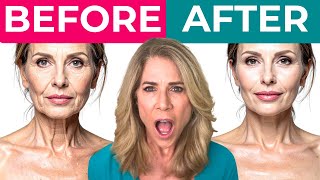
In this interview, JJ Virgin talks with a OneSkin researcher (Speaker B) about the company’s approach to skin aging. The researcher explains how they use ex‑vivo skin samples from plastic‑surgery leftovers to measure the skin’s biological age—a functional metric that can differ from chronological age. Their proprietary molecule reduces cellular senescence, which in lab conditions can actually reverse the biological age of the skin. When applied topically, the treatment primarily offers preventive benefits: it strengthens the skin, improves repair capacity, and can make the skin appear younger than it was a few years ago, but it does not fully restore a 60‑year‑old’s skin to that of an 18‑year‑old. The conversation covers the current scientific limits, the expectation that future research may extend the effect, and the practical outcomes users might see, such as better barrier function and visible reduction in fine lines over weeks to months.
This is an entirely different way to approach this. Yes. It's amazing. So I know you've done research. Can you unfry the egg? So you've got someone who's 60, speaking for, speaking for a friend here. Is it just going to slow down the aging process moving forward, or can I actually turn back the clock?
So from our research, when we, we tested on skins in our lab, so we are able here in our lab to cultivate skin samples that are leftover of plastic surgery outside the body. And that give us a tool to see how the skin would respond to different molecules. So we are able to measure what we call the biological age of the skin, meaning that's how that skin is functioning. So even if you're 60 years old chronologically, your skin could be 58 or 64. So that's a biological age that depends on how it's functioning, right? And what we see is that when we treat with our molecule and reduce cellular senescence, the biological age is actually reversed. But it's not a process because also when you— this is done in the lab in a very controlled environment. When you apply this topically on your skin, the most benefit, it's on the prevention side of like start to have this stronger skin. You can repair and we see that there is an improvement on repair, but that repair, it does not go down. I would not say that you are able to repair all the way to an 18-year-old skin when you are already 60+. So there is still a limitation there.
How far can you go?
How far you can go. And, and the science is evolving. I think like later on we'll be able to go more further. But there is, there is a lot of still some biological limitations to really slow down and reverse completely, to reverse completely. But slowing down from today to later, it's already like a huge benefit. Sometimes we don't think that much, but if you put yourself and think 5 years ago and now, the goal is that your skin now it's better than was 5 years old, especially 5 years ago, especially if you were having like big concerns with your skin.
So you can get back a little bit of time. You're not going to get back like— and so what are the types of things that someone using this would see? What types of results and in what timeframe?
Yeah. So for all our products, we run clinical studies that goes to 12 weeks. And we start seeing on the first days of use, you already start feeling like a little bit of the skin being more hydrated. And after, after 6 weeks, what we measured— this, I would say, first what we measured on clinical studies. So when we measure in clinical studies, after 6 weeks, we already see an improvement above 10% on the skin barrier function, meaning that the skin is really becoming stronger. We start to see improvements on the smoothness of the skin and on the radiance of the skin. And after 12 weeks, we see also an improvement on fine lines and wrinkles and the overall appearance of the skin. So in a period of 3 months, you are even— you are able to see improvements in mainly all the aspects of your skin. And this will all depend on the person, on other things that they are doing in their lives. Some people see faster results, some people take a little bit longer to see more pronounced results. But the results, what's interesting is that it keeps adding, and with time it gets— you're, you're seeing your skin getting better and better. It's not a huge dramatic change overnight, but it's a consistent change of like slowing down that pace of aging.