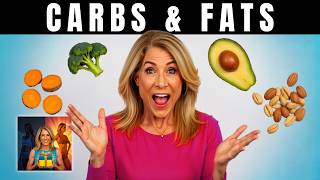
In this instructional monologue, JJ Virgin outlines a whole‑food plate‑building strategy that starts with protein, adds a large portion of non‑starchy vegetables, includes a modest amount of fruit, incorporates slow‑digest starchy carbs, and finishes with healthy fats primarily sourced from the protein foods themselves. She emphasizes serving sizes (5‑10 servings of vegetables per day), the importance of diverse fiber types (soluble, insoluble, resistant starch, prebiotics) for gut microbiome health, and the role of phytonutrients and polyphenols. Virgin critiques ultra‑processed foods, citing a Cell Metabolism study led by Dr. Kevin Hall (NIH) where participants consumed ~500 extra calories per day on an ultra‑processed diet despite matched macronutrients, leading to rapid weight gain, while the same participants lost weight on a minimally processed diet. She advises avoiding processed seed oils and trans fats, favoring extra‑virgin olive oil, avocado oil, ghee, coconut oil, and whole‑food sources of omega‑3s, CLA, and arachidonic acid. The talk also references the American Gut Health Project’s recommendation of 30+ diverse plant foods weekly and Dr. Donald Layman’s guidance on carbohydrate intake for muscle fuel, suggesting a flexible approach based on individual insulin resistance and activity levels.
Chapters
Okay, so you eat protein first, and then what comes next? Carbs and healthy fats. Now, where I like to start here are with non-starchy vegetables. I really look at these as the foundation. My goal is for you to get 5 to 10 servings of these a day, and a serving is a half a cup of cooked or a cup raw. You're eating this for the fiber and for the phytonutrients. They're gonna help fill you up. They're great for supporting detox, and they feed your gut microbiome. I subscribe to what the American Gut Health Project talks about. They say 30 or more 4 diverse plants a week. So this, by the way, includes herbs too. Otherwise herbs and spices, you'd be like, are you kidding? But things like Brussels and broccoli and red pepper, red onion, all these things are gonna help you get a big diversity of all sorts of polyphenols. Now we're also gonna count in there, um, fruit and other carbs, but right now I'm focusing on non-starchy vegetables. Both non-starchy vegetables and fruit and carbs are gonna give you fiber. And I want you to get a bunch of different types of fiber, resistant starch, things from cooled potatoes, barely ripe bananas. And then you're going to get prebiotics and you're going to get soluble fiber and insoluble fiber. They all play different roles in supporting your gut microbiome. So you want all the different ones. Now you're getting those from really whole carbohydrates. You know where you're not getting them from? Ultra-processed food, right? From processed carbs. They're processing the fiber right on out of it. So this is where you want to focus on again, non-starchy vegetables, rainbow of them first, then add in some fruit. I especially love berries, especially raspberries. They're like a fiber powerhouse, but we're getting in the different colors for all the different antioxidants. And then think about some of the slow low carbs as close to nature as possible. I'm really into Japanese purple potatoes right now. Like that's been my big one. They are a form of a sweet potato that are pumped with antioxidants and fiber. You might want some wild rice, some lentils. Those are all my favorites in the starchy carb thing. But basically I build it with protein, then I add my non-starchy vegetables, then I'll have a little bit of fruit each day. Then I look at my healthy fats. I'm gonna get a lot of my healthy fats, by the way, from my protein first. So if you are eating wild fish, guess what? I got some omega-3s. If I'm eating grass-fed beef, I've got some omega-3s. I've got some arachidonic acid, I've got some CLA. So I'm getting it from my food first, and then I might cook with a little bit of extra virgin olive oil. So protein, lots of non-starchy veggies, a little bit of fruit, and then add in some healthy fats, what you did for cooking, and then play around and see how you feel. Do you feel better with a little more carbs or a little bit more healthy fat? If you are trying to fix your insulin resistance, your blood sugar, you're probably going to feel a little better with lower carb, a little higher fat. So just play around with it and see where you do best. For me, I love what Dr. Donald Layman talks about. He says, you know, um, Fuel your carbs for your muscle needs. So I do start with about 100 grams of carbohydrates a day, and then I'll push more depending on my workouts. So basically, healthy fats— let me just dig into them a little bit more, because again, I always go with whole foods first, you know, fish, meat, nuts, avocado seeds. And then if I'm using anything for cooking, it's either extra virgin olive oil or avocado oil or ghee or coconut oil. And sometimes I'll use a little sesame oil in my Asian cooking. What I avoid are the processed oils, the trans fats. And my issue there with seed oils really is that they're processed. They're like the junk food. So that's what you wanna avoid because a lot of the processing that they've done to get these oils has brought in some toxic byproducts that we do not want in our food and we definitely don't want them in our body. And if we're eating them, guess where they're going? There was a study in Cell Metabolism that found that people who ate ultra-processed foods consumed about 500 more calories per day and gained weight compared to when people ate minimally processed foods. This was a study by the NIH, it was led by Dr. Kevin Hall. He is like one of the top scientists in this area. And what they did was they had 20 healthy adults that they put into a controlled setting and they fed them two different diets. One was made up mostly ultra-processed foods, think packaged snacks and ready-to-eat meals. And another one was made of whole unprocessed foods. Now, both of the diets were matched for calories, for protein, for sugar, for fiber, even for fat. The only difference was how processed they were. So here's what happened. This is crazy. On the ultra-processed diet, 'cause they were allowed to, you know, get what they were gonna get, people ate about 500 extra calories a day without even realizing it. And guess what they got it from? Carbs and fat. And guess what? They gained nearly 2 pounds in just 2 weeks. Then they switched them over to the unprocessed diet, and they lost that same amount of weight in 2 weeks. So what's the takeaway? It's not just about calories or macros. Ultra-processed foods, those refined carbs and damaged fats, make you overeat, gain weight, right? And then eating whole, real foods that Eat protein first, non-starchy vegetables, slow, low carbs, healthy fats. They make you eat less and feel better while you're doing it. And that's why cutting out the processed junk, that's one of the most powerful things that you can do both for your metabolism and of course what's gonna happen next. It's gonna be better for your waistline.