The Hidden Link Between Stress, Gut Health, and Your Nervous System with Dr. Will Cole
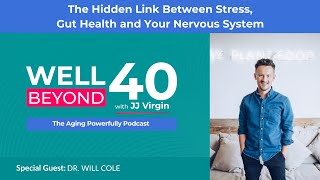
In this extensive interview, JJ Virgin talks with functional‑medicine physician Dr. Will Cole about the interconnectedness of stress, gut health, and the nervous system and how policy, lifestyle, and clinical practice shape health outcomes. They begin with Cole’s recent activism against artificial food dyes in Kellogg’s cereals, describing a massive petition, the GRAS loophole, and the need for reform of food‑additive regulations, agricultural subsidies, and the SNAP program. The conversation shifts to personal well‑being, where Cole explains the “Joy of Missing Out” (JOMO) and how setting boundaries supports the parasympathetic nervous system. Practical gut‑brain‑axis tools are shared – nutrient‑dense soups, bone broths, breathwork, meditation, hygge‑style coziness, weighted blankets, and seasonal fasting. They explore orthorexia, the risk of obsessive healthy‑eating, and how trauma‑related food fears can exacerbate autoimmune flare‑ups, emphasizing a balanced “gut‑feelings” protocol that pairs gut‑supportive nutrition with mental‑body practices. Cole reflects on his 16‑year telehealth practice, noting a rise in post‑viral autoimmune conditions such as POTS, especially after COVID‑19 and vaccination mandates, and discusses the broader impact of environmental toxins like mold in new homes. The duo outlines optimal metabolic‑health labs (fasting glucose < 90 mg/dL, HDL > 59 mg/dL, triglycerides < 100 mg/dL, A1c ≈ 5.4‑5.6%, hs‑CRP < 1 mg/L, homocysteine < 7 µmol/L, NMR‑derived LDL particle patterns, ApoB, Lp‑(a), magnesium, vitamin D) and suggests adding functional fitness tests (grip strength, VO2 max, balance, DEXA). They debate protein intake, mTOR modulation, and seasonal fasting, arguing for a “both‑and” approach that blends Western, Chinese, and Ayurvedic insights. The interview also touches on the polarizing diet wars on X, referencing figures like Paul Saladino, Brian Johnson, and the broader health‑community coalition that unites across political lines. Finally, Cole shares his online presence (drwillcole.com, Instagram) and invites listeners to his telehealth services.
Chapters
Dr. Will Cole, I could not be happier to be sitting here with you.
Thank you so much. Thanks for joining me and like coming out when I was in town.
I know. Well, I actually changed a bunch of things because I'm like, Will Cole is in my neighborhood. I'm here.
Thank you so much. That means a lot.
Thank you. Well, especially since you just came back from Washington, DC. You went to the Maha Inaugural Ball. So you got 5 hours of sleep last night because I was like going, oh my gosh. But you were at the Maha Inaugural Ball. You just came back from D.C. You were in D.C. just a little while ago too. Yeah. Which I'd love to talk about because you were there taking on Kellogg's.
Yeah, well, we actually flew out to— for Kellogg's, we flew out to Battle Creek, Michigan. We went to Kellogg's headquarters.
Oh, you did? Yes.
Tell me about it. So that was— Really surreal. So Vani Hari, Food Babe. Do you know Vani? Yeah, she's great. I mean, she's been in our space for a long time and been a food activist for years. And she and Jason Karp, he was another food activist, head of HumanCo, now major owner at True Food Kitchen, and Hugh Chocolate, for people that don't know him, he's a great guy. So these are people that I've known for a long time, and Callie Means and Josh. So anyways, they said come out. So I went to Battle Creek, Michigan, and we were really raising awareness around artificial food dyes in Froot Loops, which they said in, I think it was 2018 or something like that, that they were going to remove it by a certain date years ago. The date came and went, no such removal. So we gave them hundreds of thousands. It was the largest food petition in American Food History, saying— these are parents, people around the country that said, "We demand— follow through with your word. You said you're gonna remove this." These artificial food dyes are highly regulated, outlawed, require warning labels in other countries, in the EU, in Canada, in Australia, New Zealand, India, and they didn't accept the food petitions. They did— they kind of ignored us. One of the employees put a sign out the window and said, "Get off our lawn." This is all highly publicized. The media was all there. And it was, you know, I thought of the 18th century, like, parallels of Marie Antoinette and Louis XVI, of, you know, "Let them eat their toxic food." It was kind of like that. Wow. The American elite monarchs, basically, you know, these largely these people, because some of these people probably are, I see a lot of people in mainstream industries like that as telehealth patients, then personally don't eat these foods. They don't feed their family Froot Loops. The people that are working—
I don't understand the hypocrisy of that. Like, I couldn't imagine working for Coca-Cola and not allowing my kids to have Coca-Cola.
Yeah, yeah. Well, and that's what really the mission was, at least for me, is to A, raise awareness. And I thought, okay, we're in this little bubble, this little health bubble, but there were people when I did that, friends of ours, friends of ours that know what I do, told my wife, they said, "I didn't know about artificial food dyes. I didn't know that these cereals had the Red Dye 40 and the different artificial food dyes. We're gonna make our household artificial food dye free." So these are just, and these are people that you'd think tangentially, they know what I do, they would have heard me talk, but it was their aha moment. So there's a lot of people that don't know in middle America that aren't wellness aficionados that need to be informed, to have informed consent about this. And the second reason that I think this is so important is that this disproportionately hurts poor people and people of color, because a lot of kids aren't fed well at home and they require— they— depend on the public school system for their food. And these are the foods that are completely— humans should not be consuming them, but yet they're being fed these foods in school. So it was really about that and saying, well, look, there's always gonna be customers for Kellogg's, there's always gonna be customers for junk food industries, but can we make it at least equal playing field as other countries? And instead of artificial food dyes like it is here, In other countries, they color the cereals with fruit and vegetable extracts. So yeah, that's—
is it just a lot more expensive to do it?
That's what it is, right? I don't know if it's a lot more expensive, but it hurts the bottom line. That's why it's not done, is that Kellogg's in those other countries do the fruit and vegetable extract.
They don't have a choice, right?
Yeah, they don't have a choice. And that is their position, is that until it's the law of the land which recently with Red Dye 3, which isn't Froot Loops, but Red Dye 3 is in other junk food, packaged food. Now that it's a law of the land with Red Dye 3, companies are gonna have to shift in a few years, right, as this rolls out. But with Red Dye 40, Kellogg's position is until it's a law of the land for these artificial food dyes, we're gonna follow the law of the land. And in these other countries it is, so we follow the rule. But in America, their reason is profits and kids They said from a color testing standpoint, the bright colors of the artificial food dyes tests better and they prefer it. So that means making forever customers.
Kids would prefer, like my nickname growing up was Poppy, not because I lived in California and it was the flower, it was because that was my favorite food. I mean, if you did this based on what kids prefer, could you imagine?
Right. Well, and it's like, it doesn't actually change the taste. It's not like that. It's purely marketing. But we know it causes behavioral problems in kids. I mean, you look at a significant number of kids have a diagnosable mental, emotional, behavioral problem. Mental health issues and behavioral issues are about epidemic proportions. So this is criminal, really, what we know. And this isn't a woo-woo person on the fringe. This is the FDA's equivalence in the EU, Australia, Canada. This is their position. And we're just saying, yeah, let's take that cautionary position that even in these small doses, because that's the argument. I thought, well, food dyes would bring people together, right? Because who's going to argue for food dyes? There are people that will die on the artificial food dye hill because they just are contrarians by nature, and they— if we say it, they have to be against it. And there's people that say, well, the dose makes the poison, and it's a small amount, and just have it. And I say to that, well, Well, why did the FDA at this point, why are they outlawing Red Dye 3? If, you know, they are not doing this off of woo-woo, they're doing this off of the science that's there. And when you look at the epidemic rates of these chronic diseases and behavioral problems, there's a reason for it. And it's multifaceted, it's not just the food dyes. Yeah, so that's what happened in Battle Creek, Michigan. And then we celebrated, we celebrated at the Maha Inauguration Ball in DC, just with where our community has gone. And TBD, time will tell, but who would have thought that people in our community now are going to be in key positions in determining food policy for the United States?
What do you hope is gonna happen in the next couple of years with this?
I talked to Marty, who's incoming.
That is so exciting that I can't.
I mean, he's in functional medicine. I mean, Marty is in functional medicine. He's the incoming potential candidate for the FDA at the time of recording this. Has to be nominated and all of that with Congress. But they are hopeful. They are hopeful that if they can get even half— because they know there's some dark, disturbing, corrupt systems at play. That really don't want this to happen, but they're hopeful and they, they're on the inside. I'm not, but I'm hearing from them that they are very hopeful of what they can achieve. So if they're hopeful, I'm hopeful from what all signals that I'm hearing. Um, what can we get done in 4 years? And as we, you and I said before we started recording this, this isn't political. It shouldn't be political.
It shouldn't be. It's been made political.
This is a bipartisan human thing.
Yeah.
And people on the right and left are coming together on this. Bernie Sanders recently had a forum about these convers— the chronic disease epidemic and agrees with all of these things that's talk— that's be talking, uh, being talked about with Bobby and Marty and—
Well, I mean, da Oz. Bobby Kennedy is a longstanding Democrat from a longstanding Democratic family who's now—
And I would assume most of the people at— in the Maha community are independent, center-left, libertarian. We're not ideologue Republicans. We're not. We— or conservatives, I should say. We're not super conservative people, at least socially, right? I'd say most of us are probably socially liberal, fiscally maybe responsible and conservative. But I think we're most of America, that we just want— we want health, we want prosperity, we want freedom, We want diversity of thought and opinion. These things are essential to human health.
So if you were the benevolent dictator of the world and you could change 3 things about the way we approach health, what would they be?
From a policy standpoint?
It can be anything. It could be anything.
Yeah, well, I think the grass— laws generally recognized as safe is problematic when it comes to— there's thousands of ingredients. I've seen some statistics like 10,000 additives in the American food, um, food supply versus in the EU it's 400 different additives. So we have a significant amount, thousands of thousands of additives that are generally recognized as safe that are We are seeing the, that's why we have such an epidemic rise of autism, autoimmune problems, and all the comorbidities.
How do those get passed through those grass, you know, something being considered as grass?
What's the loophole? It's a loophole in the law. So hopefully these are things that these politicians, these doctors that are now in politics and politicians and food lawyers, and I talked to a lot of them last night, food lawyers and food policy experts that are really gonna close these loopholes and make our food safer for our families.
Yeah, wow. They need to go revisit every single one of those.
Yeah, yeah, 10,000. Let's go through all of it.
Yeah, and make a tighter thing for new ones coming in.
Yeah, exactly. So I would say really reform GRASS. I would say, I mean, if we're talking pure policy, I think that we should quit, start reforming the subsidies towards these monocrops, like the wheat and the sort of soy and these genetically modified glyphosate-sprayed crops. I think that removing subsidies for these crops would do tremendous good for the American food supply. I think that looking at the food stamp program, they don't call it now, the stamp program.
Yeah, whatever it is. SNAP.
SNAP. Sorry, the SNAP program is sort of the rebranded version of it. But the food assistance program, I think that taking junk food, processed foods out of that, I mean, you are preying on people that there's no informed consent to go for these foods that we feed chronic disease for these people, and then we pay for their chronic disease management. So those are some big policy things that, I don't know if I would say if I was a dictator, but if I was—
I say oy si benevolent.
Benevolent. If I was a benevolent dictator that could just wave a magic wand and change American food policy, those are some ways that we would start. But then look, I think that getting special interests, this is a major one, is getting special interests out of food research, health research, food research, pharmaceutical research, and really having You know, like diversity of thought as far as the research is concerned, having an ability for innovative out-of-the-box ideas to come forward and not subjugate or suppress information when it's inconvenient. So things like peptides and alternative therapies and psychedelics and nutrient density when it comes to food really can run wild and free. And people can have true informed consent, because to have true informed consent when it comes to somebody's health, we need to know the real evidence-based benefits, what are the relative side effects, if you talk about pharmaceuticals, for example, and the choice to make what's right for you. But we don't have any of that right now. We have cherry-picked data, we have propaganda, we have suppressed information, and then we— how are we supposed to make good information as a citizen on our food and drugs and choices that we make in our life. So those are some things, big things, but I think important things.
Big things. Let's cross our fingers. So last night, I will say, when I was not out at the Maha Inaugural Ball, I was suffering a little bit from FOMO, but literally the person who represents the other side of that and having great boundaries and the whole JOMO, joy of missing out movement, is you.
Yeah, I talk a lot about it.
Yes, so just, I've always had big mad respect for you on that. A lot of your Instagram posts do that. And I'm like, okay, reminder, JJ, reminder. 'Cause it's been a little bit of an internal struggle.
Yeah, hey, it's, JOMO comes easy for someone like me 'cause I'm more of an introverted homebody type of guy where I have to check myself and go, push myself out there a little bit because it was very much easy for— like, I was telling my wife as I was ready to fly to DC, I really just want to stay home. I don't really want to go. Um, and I pushed myself to go. But you're right, most of the culture is not like me where we're hyper-connected, we're super involved, and we're struggling with burnout. And it's that hyper-connectivity on social media and It's always go, go, go. And I— yeah, cult— all in our own way cultivating some joy of missing out. The antithesis, the antidote of FOMO is good for our nervous system, right? It's supportive of that parasympathetic, which I can tell you clinically, and you know this, but like a lot of people are dealing with dysregulation of their neuro-immuno-endocrine axis, their nervous system, their immune system, their hormones, their endocrine system. So JOMO is a I call it a metaphysical meal. Like, we look at food as medicine, we look at biohacks and supplementation on the physiological side, but that psychological side, these mind-body meals, if you will, that bringing some acts of stillness, some healthy boundaries with ourselves is sometimes the best medicine. Like, saying no, making no your multivitamin, is some of the best things you can do. So I applaud you, 'cause you're busy and you're between two trips and you're like, I'm gonna make this maha ball work. But you're like, no, I'm gonna rest and sleep 'cause I have a trip coming up. I applaud you. And you know what? Social media always makes things look better.
That's why I wasn't even gonna look at it 'cause I was like, this will just make you more upset. I ordered an extra gown just in case I changed my mind.
I love that you came that far.
But I did.
You went that far to see.
And then, but it's funny, I was in, Preparing for this, I saw a statement you said, "Boundaries are medicine," and I was like, "Hmm, calm down." And here's the irony. This mastermind retreat that I was putting on with all of these amazing practitioners this past weekend, it was a release ceremony, what you need to say no to. It was all of that. I'm like, "Listen." You know?
Yeah, that's good. Yeah, I mean, social media, it's a blessing, but it's a double-edged sword, and it's a highlight reel. So you were missed. You were missed. We wish you were there, but no, I'm glad that you had some self-care instead.
Well, you talked about the nervous system, and I think I've interviewed you for most of your books.
Yeah, thank you so much.
I don't know if I did all 4.
I think that you did.
Maybe all 4.
Wow. So thank you so much for that. Honestly, your years of support, I thought about this on my drive over here. I'm like, it does not go unnoticed. So thank you, because as you know, having a book isn't easy. So when you do have a book coming out, I don't have a book. I'm just here for fun and to talk, but it's— your support meant a lot over the years.
It's fun when you don't have a book, 'cause then I can totally dial into my ADHD and go all over the place. Yeah, there's no agenda. But I would love to go back over to "Gut Feelings," 'cause you just mentioned the nervous system and parasympathetic, and how would someone know that they are sitting in that place? Of being, you know, of anxiety, of nervous system dysregulation, what would it look like? And then, you know, what should they do?
Yeah, the sort of cliché, but it's deeply true, is that feeling wired and tired, anxious and exhausted. So I would check in with your whole body. I think that a lot of times it is that the mental symptoms of anxiety, exhaustion, trouble falling asleep, trouble staying asleep. It could be digestive problems to the gut-brain axis. And the vagus nerve is the largest cranial nerve in the body. It's responsible for that resting, digesting. So both the anxiety calming, resting, but also your gut health. So peop— a lot of people that have this dysregulation of the nervous system, the immune system, the endocrine system have digestive problems. Chronic constipation, bloating, irritable bowel syndrome, IBS. So those are some problems, but because when the body's under that sort of frenetic fight or flight freeze state and the sympathetic tone is overactive, that can manifest in many different ways. There's a cascade, a ripple effect that can happen. So then it could be, you know, hair thinning, hair loss, the thyroid's highly sensitive to stress, so it can— Thyroid issues can happen, which can cause a whole host of different problems, and weak nails, the outer third of your eyebrows thinning, fertility issues can happen here because you're talking about a cornerstone system, connection highway of the body that everything— when that's dysregulated, it's gonna cause a lot of cascades throughout the body. So that neuro-aminoendocrine axis is really what I'm talking about. The gut-brain-brain-hormonal axis. So those are some telltale signs that your body's giving you some proverbial check engine lights, and our job in functional medicine is to figure out, hey, what is it? And then why is it going on? So we can start to bring function back.
So someone listening, because so much of what you described is kind of every person everywhere right now, What are some things you could bring into your everyday life to start to shift that, to start to regulate your nervous system? What are your favorites?
Well, and that's why I called that book "Gut Feelings," 'cause it was both a both/and, not either/or approach. So a gut and a feelings, a physical and then a mental, emotional, spiritual. So there's a protocol in that book that each day there's a gut and a feelings tool. So for on the gut side, it could be, bringing in more soups and stews, like broths, something that is like a proverbial siesta for your gut where you're not working on digesting lots of raw things like salads or something like that, which have their place. Even you can have a salad, it could be a steamed salad or something that is a little bit— when you're using sort of traditional Chinese medicine, Ayurvedic principles of when the body is stressed out like this, you want to have these hearty, nourishing, grounding easy-to-digest things. So think soups and stews and broths. So that's definitely something that I would predominantly make your food as medicine in those sort of forms and do some brothing and souping. And then on the feeling side, it could be cultivating JOMO into your life. Bring some joy of missing out. And what do you do? It's not just about not going to that inaugural ball. It's about what are you doing in that time? So maybe it's some breathwork. Releasing ceremony. It's how do you kind of nourish that parasympathetic? But some of my favorites are like breathwork, meditation. I talk about like the Scandinavian practice of hygge, which is like getting cozy and, you know, curling under that weighted blanket, which is also great for the parasympathetic, lighting that non-toxic candle, um, you know, just sipping some, you know, green tea or whatever you want to have there. So some cozy thing, because not enough people do that.
I love the— I got this cozy weighted blanket from Sunday Citizen that's got crystals in it. Wow, it is the greatest. That sounds fun. And the dogs love it too.
I want to meet your dogs.
Yeah, Jim does not love it. The dogs are like, yeah, well, next time you come, you have to come over for dinner.
What's the name of the brand?
It's called Sunday Citizen. They have a meditation pillow that's got the crystals in it. They've got the weighted— it's funny, I got one for Dr. Joe Dispenza, and he always makes fun of all the crystals, so I got him a crystal weighted blanket.
He'll like it.
He'll like it. So I love that. So you've talked about orthorexia. Let's kind of get into that a little bit.
Yeah, so there are— I mean, for people that don't know, it's disordered eating around healthy foods, and, um, It's a complex topic, right? It's— I'll say this, there is— it's human nature, especially in our culture with social media and tribalism and all of that, to overcorrect. So we have a history as a culture to focus on purely on the outward, on vanity, on thinness, and the conversation, the context can be lost there. Where it could be just about that, just the superficial looks, and not about true health and your outer looks being a ripple effect of that. So when it's— when that context is lost and it's just sort of the vapid, superficial vanity, it can create a lot of problems. And diet culture has hurt a lot of people over the years. It's messed up a lot of people's relationship with their bodies, messed up a lot of people's relationship with food. So we as society can overcorrect and really, it can look at different ways, right? It can look like the body positivity movement. It could look like the Health at Every Size. There's no such thing as bad food. And we have this sort of toxic tribalism, as we do in many different spaces within our world, where it's this either-or, right? It's like we have our culture today. I think a lot of the conversations, you look at body positivity, Health at Every Size, they will say any food change, you'll say they'll call it toxic diet culture. And that context and nuance is lost, right? And we know the truth is oftentimes somewhere in the middle. Yes, toxic diet cultures may mess people up, but it's also hurting people to say there's no such thing as a bad food. Like, a food that doesn't love your body back isn't good. It doesn't make you a bad person, but it doesn't make you healthy either if you eat it on a daily basis. So orthorexia is in this sort of conversation because health and wellness— the people in our community, it's the best of intentions, but sometimes the context and nuance is lost there when we're talking about protein and intermittent fasting. And you have very real things like autoimmune problems and gut health issues because of our environment. And we have 24/7 health information on podcasts and books and all these amazing things, but sometimes the vessel, the person, the consumer, can't contain the amount of information that they have at their fingertips in this weird world that we live on in, and it can create this sort of hyperfocus obsession around health. And stressing and having shame and obsession around health isn't good for your health, and it can become sort of that sort of toxic diet culture but within health and wellness. So I think there's that aspect of it. So a lot of my job with telehealth patients is checking that is like, yeah, you can't ignore the fact that, yeah, there's some things that don't love the human body back. Yes, there is such things as environmental toxins and things that we need to have conversations about, but how can we have healthy boundaries within this information? And in the most real sense, like, is it, is it bringing you— is it actually improving your health and edifying you, or is it just really stressing an already stressed-out person? So sometimes doing less is way more effective if something do— if doing less is more sustainable and practical for you. So sometimes it's about simplifying your life. But then there's another aspect of orthorexia that I see within our telehealth patients that have autoimmunity, because there are real— and not just autoimmunity, let me say this— digestive problems, food sensitivity issues. I see this among this population a lot because food has created flare-ups in them digestive problems, food sensitivities, autoimmune flares, where their relationship with food and their bodies becomes very fearful and anxiety-ridden, 'cause they never wanna have that flare-up again. So I get that. So that's a little bit different because it's not just diet culture within wellness creating this disordered eating around healthy foods or orthorexia. This is like, yeah, I do have flare-ups from food. Now I have fear around foods and it's orthorexia that way because it's— yes, it's real symptoms, but the stress and anxiety around the food will also be a contributing factor to these flare-ups around food. So we need to heal not just their body so they can improve resilience, but heal their actual relationship with food again as their gut improves, as their body's improved resilience, because I will find that that sort of orthorexic mindset around the food will make reintroduction once the gut is healthier, once the body is healthier, it will make reintroduction nearly impossible because there's such this sort of negativity and inner resistance around the food. So it's complex, but it's something that when I post about on social media, it's because I see it clinically with telehealth patients on both camps, you know, people that listen to all the podcasts and they're just becoming obsessive or people have food issues and that trauma around the food flare-ups really creating a problem. They're eating 5 foods and they're afraid of all the other ones.
Yeah, I don't know if you know, I was a co-host of a show called Freaky Eaters.
I didn't know that.
Just another, yet another weird one.
You have a colorful life, that's for sure.
It was kind of Hoarders meets My Strange Addiction. It was me and a therapist, a psychotherapist, Dr. Mike Dow. And it was people who were addicted to one food. And that was basically, for a lot of them, that's the only food they would eat. And it was at the expense of their health, their life, everything else. A common one was french fries. Um, we had the cheesy potatoes girl. We had the person who had to put tartar sauce on everything. The person had to put maple syrup on everything. A couple of them would only eat French fries. And literally if they tried to eat anything else, they would get sick. They would have that exact response.
Yeah. Well, that's interesting. 'Cause that's almost a—
You should have been on that with me.
I know. See, I could have told this story. You would have been a great co-host. Yeah, I would have been. But yeah, it's not pretty when someone's in that state because look, food sensitivities, digestive problems, autoimmunities, autoimmune conditions are very real. And so the trauma around that food, and them never wanting to have that flare-up again, is very real. But at a certain point, especially when we're in functional medicine and we're improving gut health, we're decreasing the frequency and the intensity of the flare-ups, and the goal is to put these things in remission. The body can recover from these physiological flare-ups, but the mind is still in the past. And on this sort of loop, ruminating loop, where it's keeping their body stuck. So we have to deal with the feeling side of that gut feelings crosstalk because it'll— so things like breathwork meditation, EMDR, DNRS, I mean, there's different things that we can do, um, to start to metabolize that stored trauma, to let the body know it's safe now, and we can reintroduce those foods that maybe flared you up in the past, but we we can explore appropriately. We're not talking about every, you know, thing under the sun, but whatever makes sense on that person's health history, what is possible for their body. And I don't want them, nor should they want for themselves, and they don't, most people don't. They want to have variety and flexibility and not this sort of constant hyperfocus. So let's get them there, but then we need to allow the nervous system to know, yeah, you are there now. We can work on reintroduction.
You have been doing telehealth. We were talking about this. I think you're like, you're definitely one of the early adopters, if not one of the first pioneers in telehealth. How long have you been doing it?
16+ years. That's what I mean. When I was at the Maha Ball, I'm normally in this one room talking to people online. So it was, yeah, I don't get out much. I don't get out much. So yeah, it's been a long time.
But when you go out, get out, you go big. Yeah. It's like I'm either in my little room or I'm at a big ball.
Yeah, yeah, exactly.
Nowhere in between. What have you seen over the last 10 years? Have you seen like an increase? Are you getting more people coming in with say autoimmune disease? What have you been seeing shift in health?
Yeah, a few things. One is over 16 years, the, and I'm sure you've seen this too, is that our community has expanded a lot. And there's more awareness, I think, on health information. And I honestly, to be honest with you, I think it's one of the reasons why the whole Maha thing has happened the way that it did, because there is this growing informed populace that's voting with their dollars when it comes to the foods and the products that they want. You think of, I mean, you've been, I think I've seen you there, but Expo West every year at the Anaheim Convention Center. I remember Expo West 20 years ago. It's like a sh— It's massive now. And these sort of massive conglomerate, like, you know, massive—
By the way, Expo West is like now to me, fake health food.
Well, yeah. Well, there's a lot of greenwashing.
Yeah.
But there's a lot of good brands too, right?
You just have to find it, but it's not—
You have discerning eyes.
You know, it's just like going to Whole Foods. Yeah.
So it's a large natural— Careful. Health food expo in the world. And the point saying this is that that is as big as it is, the health and wellness industry is as big as it is, is because people have voted with their dollars. So, but, and people also voted in the election because in large part, I think if you look at the percentage of people that are voting for health in this country, it's because people are waking up that what we're doing is unsustainable. So I see that there's a larger diverse a coalition of people that maybe have a lot of differences in other areas, but this health area is one way that we can come together. So I think that I see that also clinically, is that people of all different backgrounds are really wanting agency on their health. And the old age of, because a guy said it in a white coat, take this pill, see you in 6 months, isn't gonna fly anymore. That people really want to be educated. They want to have informed consent when it comes to all health choices in their life and food choices. So I think that's a big shift over the past 16 years. But specifically, types of cases, I would say something since 2020 is a specific type of autoimmune condition called POTS, postural orthostatic tachycardia syndrome. So this is sort of a dysregulation of that neuro-immunoendocrine axis that I talked about earlier. So some signs, common symptoms of POTS are things like vertigo, dizziness, heart palpitations, anxiety, brain fog, fatigue. Um, now just because you have those symptoms doesn't mean it's for sure POTS, but there has to be tests and health history and context to determine what it is. But there's research now that shows like a lot of these long hauler Long COVID symptom, uh, people that don't recover from COVID uh, it— the COVID virus triggers POTS in a certain percentage of people and other inflammatory problems. So that's something that I would say over the past 5 years I've seen more of. Now, you and I both know that other viruses can trigger autoimmune problems. It's no news to us. Like, we've been looking at this for a long time, 16 years, of things like Epstein-Barr virus triggering chronic fatigue syndrome. Nothing new. So the mechanism of action actually wasn't surprising when it started happening in 2020, but obviously at the time it was a novel virus. So it was, how is this going to treat— how is this going to impact people long term? What we're seeing that there's a certain percentage of people that it does trigger some sort of inflammatory problem impacting their nervous system, their heart, and their, their brain. So, um, we have great success in addressing these issues and calming down that inflammatory response, and both the virus and the vaccine, not to get a little controversial, both can—
Okay, we're coming out of the closet of being controversial at this point.
So both the virus and the vaccine can trigger it. So people, and you talk about, we talk about this on social media, the comment section goes, you know, ablaze because people that didn't get the vaccine people that just had COVID and that triggered the autoimmune issue, and then people that didn't get COVID, but the vaccine triggered this. It's a both and, not either or. So I have no doubt that there will be studies that show the vaccine exponentially is more likely to trigger it over the virus. Time will tell on more studies when it comes to that. But I think the early data, anecdotally, I will say that I would agree to that as well, but it doesn't really matter because they both have inherent risk. Getting a virus has inherent risk. Getting a vaccine has inherent risk. The problem that I had from 2020 and on, those early days of COVID 2021, really 2022, is the mandates, because that was the real problem. It's like, okay, they didn't have a choice. If you're going to lose your job or you can't go into a building because you don't have a card, and you have an autoimmune condition and you're just afraid and you want to do the right thing, and then that triggered POTS, that's the problem. Um, but you can't control if you get a virus or not. You didn't choose that, but you have to— like, you're being forced to have something that could cause problems. So I think that was criminal. The mandates are criminal. But those are some things that I've seen over the past 5 years, is this rate of autoimmunity. Now, it's not just one thing, right? It's environmental toxins, it's poor gut health, it's trauma. It's a confluence of different factors that are at play. So it's never just one thing, but what do we have choice on and what don't we have choice on? And let's start emptying the bucket as much as we can.
Yeah, and as far as like environmental toxins, I was listening to a podcast you were on. I think it was with the Skinny Confidential.
Yeah.
Michael and Lauren, and you were talking about something that I was like, oh, I didn't think it was that way, where I was figuring, especially being here in Florida, that the old houses would be the mole houses and that the new houses would not be. And you actually said the opposite. And I was like, so no, yes you did.
Yes. Oh, I, I, I know. I'm glad I said that because I don't remember saying that in front of the world, but I, I, that's what I see clinically. Because I— a lot of our patients have new homes, right? Especially in Florida where it's— there's a lot of new builds, a lot of new developments here. And they think, well, my home was just built, that's, that's not an issue. But it's in their HVAC system, it's in their air conditioning system, or it's behind the walls. And it was damp lumber when they built the house and it never fully dried out. And these are microscopic mycotoxins that can easily be circulated around the house. Yeah. So it's not just the old buildings. If anything, I've had people in the construction and the remediation space tell me that a lot of the older homes— this is generalizing— but a lot of the older homes are built— they were built better where the home could breathe and actually could limit the amount of mold because there was more oxygen going through. Versus these new homes that sort of maybe craftsmanship or design or techniques are different, where there's— the home is not breathing and it can fester a lot of these mold toxins and other environmental toxins.
Yikes. So looking at metabolic health again, because you do a lot of labs at your clinic, if someone wanted to go just look at the most important markers for metabolic health which would they be and which numbers are the ideal ranges that you love?
So you and I were talking about this before, but there— a lot of this is pre-pandemic data, but I think it's a UNC report study that's cited around only 93% of participants— let me say it this other, other way— only 7% of participants hit the criteria for optimal metabolic health. 93% of the sort of 93% of people don't have good metabolic health. And I think when you look at the conventional standards, they're a little bit loose. They're looking at statistical bell curve averages of just general population. So they're not even the functional ranges, the optimal, they're just average ranges. So I would have even tighter, more optimal ranges.
So it's probably— You'd have like 3%.
Yeah, probably 3% of people would fit check all the boxes for optimal metabolic health. So this is where I want the numbers to be. Uh, glucose, your fasting blood sugar to be under 90. HDL, or good cholesterol, to be above 59. Triglycerides are—
men and women, doesn't matter.
It doesn't matter.
Why do they always have the men and women different on that?
Yeah, I don't know. I, I want it to be the 60s and 70s for both men and women. Yeah, so are you— I'm sure they're probably— there could be different reasons between men and women, but as long as we're above 59, I see great outcomes and people feel great. Yeah, so I don't have to have it significantly different. So HDL above 59, triglycerides under 100, um, the A1c to be under 5.6, you could say 5.7, that's your 3-month average of your blood sugar.
Where would you really love that to be?
5.4 would be beautiful. That'd be beautiful. I mean, you could run— you could— we do this, but when it's needed, wearing like a continuous glucose monitor for a month and looking at their glucose spikes and dips throughout the month and seeing how food, stress, and sleep impact their blood sugar, but having optimal blood balance throughout the— blood sugar balance throughout the month. And inflammation markers, high sensitivity C-reactive protein to be under 1. Homocysteine to be under 7. We would run what's called a nuclear magnetic resonance test, NMR test. We'd want small dense LDL particles, which are specific— they're the particles that carry LDL around, the oxidized sort of inflamed particles that carry cholesterol around. We want this to be under 950. We want to be in pattern A, which is the fluffy buoyant, large buoyant LDL particles. And yeah, so those are— when you look at that, the NMR test, the cardiometabolic testing and the comprehensive metabolic test, LabCorp will also assess insulin resistance score. So if I can get that test with LabCorp, if they're not going through Quest, I could look at their IR score as well. I want that to be as low as possible. So when you're looking at just metabolic health, those are what I would pick. Um, there'd be a few other ones. ApoB would be one. Lp would be another one. Um, and these are all conventional tests. Like, none of these are like, right, functional medicine fringe tests. They're just not typically all ran. Some of them are ran, obviously, but not all together. Um, and if they could be super picky, like looking at magnesium, vitamin D would be super helpful for metabolic health.
Still blows my mind that we do not regularly do vitamin D.
Yeah, and it's difficult for coverage for some people with their insurance. It shouldn't stop them. I mean, we'll find a way to get it for them because this should be paramount that everybody's running magnesium, RBC, and vitamin D.
And the critical thing here is those numbers you just said, like if you look at the labs, the ranges are not that. And so that's the biggest challenge with this whole metabolic health thing is the ranges are too high. And so if you get to this, because it's a process over time, like you don't wake up with poor metabolic health, right? It's a process.
Yeah, by the time somebody's diagnosed, it's about 4 to 10 years prior to that diagnosis that things are brewing on that sort of dysregulation continuum.
Now, if I was benevolent dictator—
Yeah, what would you do? I'm going to know.
I would add in a grip strength test and a VO2 max test and a balance test. Like, I would look like, you know, if a VO2 max— exercise fixes a lot of stuff. They used to always say you can't out-exercise a bad diet. I go, well, it can actually make a big dent.
Well, yeah, and food is not going to be directly correlated to grip strength. I mean, there's going to be some things that exercise is going to move the needle. Needle for longevity and healthspan.
So, I mean, it would be fabulous if you went to your healthcare provider, they did a DEXA scan, they did a grip strength, they did like a jump test, they did a VO2 max, then they did all of those ones as well. Then you'd really have some direction to go.
Should be standard. I mean, hey, you should be part of these, um, the incoming initiatives.
I should have gone to that ball. Well, let's talk, let's, before we wrap up, since it is Well Beyond 40, I do want to jump into the aging conversation. Conversation a bit. And what I would love to do is I want to connect the dots between inflammation and aging, but I also want to connect the dots in this whole controversy out there of low protein versus optimal protein with aging, because there's still a whole camp out there that thinks that you should not eat much protein, that it will age you.
Yeah, well, I mean, that's centered around a lot of mTOR, right? It's mTOR and the research around— mTOR and longevity. Yeah, so I just think we lose the context of real life. We become so hyper-focused on the pathway and don't look at the larger context of it. So I think it's oftentimes a both-and approach. Even there, there's a time when we want mTOR to be low, right? I think that there's cyclical times of fasting to upregulate these deep mitochondrial, like, mitophagy pathways and decrease mTOR to allow stem cells to be activated and AMPK to be upregulated and all these amazing pro-antioxidant, pro-healthspan pathways. But it's human nature to say, well, if it's cyclical times, it's good to clean house, right? Time for cellular renewal. Let's, let's always be in that state. And we're going to have diminishing returns of that. And then you have these people that just look completely translucent and pale and feeble. It's like they don't look like a picture of health at all, and they've kind of lost sight on it because they sort of worship the pathway versus looking at the larger context of how to be a vibrant human. And, um, yeah, so I think that we have to be mindful of protein optimization. But yes, have times of fasting as well. So I think that's the art part of science, or science is an art, right? But we become, you know, more is better, and it's just one thing. But I think diversity is the spice of life, if you will, when it comes to so many different things, but specifically health. That I think finding times of seasonal pulsed fasting could be hugely beneficial to clean out dead dysfunctional cells and do protein-sparing protocols and limit protein for a time. But long-term, I think the data is clear that one of the best things you can do for longevity is maintaining lean muscle mass and making sure we have adequate protein is a significant part of that, not the only part of that, but it's a significant part of it. So yeah, I think that— I don't know. What are people saying? What are people saying? I know that when you look at Valter Longo's research and fasting mimicking approach, and especially a lot of vegans out there, they don't really like— they think we go overboard on protein.
Well, I think it's the— oh yeah, there's definitely two schools of thought, and I think it follows the whole orthorexia thing. It's like hardcore that way, hardcore this way. It's like, what if both are right? Both are right. You know, I think, was it Sashin Panda that said we are actually eating now like 15 hours a day? Like we just literally wake up and eat until we pass out. So that's not the right way to go. But it's also, if you go on this OMAD, one meal a day for an extended period of time, that's not the right. So it's really what, how do you use all of this? To me, it looks like, Western medicine and say combining Chinese medicine, Ayurvedic, they all have great things in them. If I threw out Western medicine, I would not have— my son would be dead. So how do you take the best of all these things and use the right tool for what you're doing? And so yes, sometimes we want mTOR low and sometimes we want it high. And it's not either/or, it's all of this. But if for some reason, I remember back when I was in exercise science, the resistance trainers had to fight with the yoga people. I'm like, what if we need both of these? So I was like, let's all get along. I know it. We need all of it.
We do need all of it.
We need to run and lift weights and do some yoga.
I mean, look at the people that are, this is a generality, but the people that are the most vibrant, the most healthy, and I would say also be great if we could have their labs too, but because of the brilliance of social media, many people will share their labs of what they're doing. I think that it's easy to get on a soapbox and say, well, this is the way and everybody should do this. But when everybody— when somebody is so myopic that they kind of lose sight of real life, I think that we create the overcorrection like we were talking about earlier. You're absolutely right. It's sort of hyperfocused overcorrection, and it becomes sort of a cult of this idea versus the sort of art of life.
Okay. So you said showing labs on social media. So Brian Johnson.
That's kind of what I was thinking about. I was actually thinking of him.
I'm fascinated by Brian Johnson. Yeah, me too. Right? And I just like, thank you, Brian, for sharing everything you're doing and the way you live your life does not seem fun whatsoever to me. But for those of you who don't know who he is, he is the guy who wants, who's running the Don't Die movement. And have you heard his daily lifestyle?
I've seen— I don't know if it's changed over the years, but yes, I've seen him talk about it. It's very complex. Tons of supplements, right?
Um, plant-based, completely plant-based, plant-based.
So I know he was kind of in that camp with protein.
Like, goes to bed, I think, at like 8 every night, gets up at 5 or 4, eats within a very small window, goes— stops eating at 2.
Yeah, like, yeah, but he gets a lot of attention, right? He gets a lot of attention. It's very, uh, people are curious about it because it is so unrealistic. Um, I, you know, I think that— I don't know him. I, I, we've talked a little bit. I want to have him on my podcast. I want to, want to talk to him about this. But I could— look, people do these things with good intentions, and I know he wants to help people, right?
He's just wondering, doesn't he want to break out every once in a while and like Maybe he does. That'd be one of the coolest things. Dance on the beach at midnight.
But I was last night when I was at the ball, Paul Saladino was behind me and we were actually talking about him because apparently they were going at it on X.
Oh boy. And what is it with X and the guys fighting the diet wars and stuff on X?
Well, see, that's what I mean. When you told me, you asked me that question, I'm like, I don't even know all the things that are at play here because I'm not really paying attention to it. I'm just seeing patients. But I do.
I'm just in my little box. I am really in a bubble.
Cool, man. But someone else brought it up and I was like, Paul, what did you say to him? Like, what did you say? And he was gonna get— it's funny that you asked that question because that's what it was centered around was protein and these sort of high protein and no protein wars on X. But it's like, yeah, well, first is like all the debating on social media isn't good for our health either. So how about we just lay off?
It's like Paul, Dave, they love to drop one in there.
Just to dopamine hit.
Like oatmeal with the peasant food, and then they pass off the broccoli, and you're like, oh, here we go, here we go.
The smart guys that are just like, it's a pissing contest. But it's, it's not for me.
All right, well, so you said something on a podcast, something, or someone I think was introducing you saying he was biohacking in his teens.
Um, yeah, and well, yeah, well, the story behind that was I didn't call it biohacking. My first job was at the Finish Line and at the mall. I was like 16 years old.
Mine was at Swenson's Ice Cream Parlor.
Oh, okay.
Same but different.
Yeah, same, like totally, because mine was probably filled with forever chemicals and PFAS, all those tennis shoes and breathing in those fumes. But I'd use my paycheck to go to the health food store and buy raw milk and the latest herbs and botanicals, and I really just loved human optimization and studying the science that was available at the time. Um, so yeah, I was tinkering with my health at a young age.
Yeah, isn't that funny? So this tinkering, like, you know, that, that was me saving my allowance to go to the health food store, is considered biohacking. I'm like, isn't— I, I like the health optimization.
Yeah, thing. No, no. Yeah, I don't, I don't call myself— I don't even think of myself like a biohacking I was— if I said that on a podcast, it was just me trying to give—
I think they were introducing you that way. That's what they said. Interesting, because I don't see you as a shortcut guy.
No, I'm not. No, no, no. Human optimization, feeling good, which a lot of the biohackers want to, right? It's like that.
Well, that's ultimately their goal. Exactly. Um, I'm just like, when I hear it, I'm like, no, don't try to shortcut your exercise.
No.
Yeah, yeah, yeah.
So even when I say that word, I'm not even thinking of the shortcut. But you're right, that's how Dave historically, right? No, I just mean like tools to optimize.
Yes, that makes sense with what I know about you. So for people listening who would love to follow you, maybe come to your telehealth clinic, etc., we'll put this all at jjvirgin.com/willcole. Where, where all can they find you?
Thank you. Uh, drwillcole.com, @drwillcole on all the handles.
Where are you— where's your one that you're most active?
Instagram.
That's what I thought. Yeah, Instagram is where I'm at the most.
Most. Um, but we do stuff on X, we do TikTok when it's available. Um, and, uh, but mainly Instagram. And my podcast is called The Art of Being Well. So yeah, those are all the places.
Awesome. So jjvirgin.com/willcole. And I'm excited to have you over for dinner with the doggies. So you just let me know when you're going to be around.
Yes, I'll be back.
Let's hook it up.
I'd love that. All right, thanks for having me.
Thank you.








