The Link Between the Gut Microbiome and Our Immune System with Dr. Jeffrey Bland
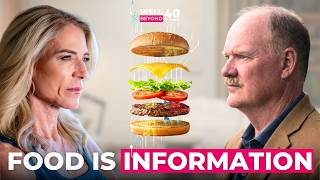
Dr. Jeffrey Bland explains how ultra-processed foods send harmful signals to your genes and gut bacteria, removing 139,000 bioactive compounds while adding synthetic additives that drive chronic disease. Bitter compounds and fermented foods naturally trigger satiety hormones that processed diets have stripped away, which is why GLP-1 drugs are just a patch for a broken food system.
Chapters
What's one ultra-processed food category you would just ban tomorrow if you could?
I think it starts with sweetened beverages. These beautiful trucks that are animated to be traveling down snow-covered streets in America to deliver the holiday cheer of sweetened beverages so you can have the proper celebration with your family. For perfect refreshment every time. I mean, the subliminal messaging is so powerful. Do you have a moment of reflection before you put that bite of food in your mouth? Did this food look like it once came from the earth? And the farther you get away from the earth, the more likely that is going to not have a good effect on your body's immune and health systems. I was asked to be one of the speakers at the National Food Processing Association meeting. I said, "I especially want to thank you on behalf of the American Pharmaceutical Association," because they are so appreciative of all the hard work that this industry does in producing low-profit margin products that make the availability a necessity for high-profit margin drugs that come out of the pharmaceutical industry. And of course that didn't go down too well.
Even when you're doing all the right things, your strength training, staying active, prioritizing protein, keeping the muscle you built over a lifetime gets harder with age. Now, our parents were told to accept that it's just getting older. I don't buy that. And that's why I use Timeline powered by MagnaPure. Here's the real story. Muscle isn't just about strength or looking good. Muscle runs your metabolism, protects your balance, preserves your independence. And determines how powerfully you age. And what most people don't realize is that muscle loss isn't only about hormones or workouts, it's about cellular energy. As we age, our mitochondria, those energy engines inside our muscle cells, become less efficient. Now, when your muscles can't produce energy well, it's harder to maintain strength, function, and resilience. That's where Mitopure comes in. It's the only clinically studied form of Urolithin A. A postbiotic shown in human clinical trials to support muscle strength and function by helping renew mitochondrial health at the cellular level. I love this because it works with your training, not instead of it. Now, strength training is the signal, protein is the building block, and Mitopure supports the cellular energy that allows your muscles to actually respond and adapt. Mitopure gummies make it simple. 2 a day, sugar-free, vegan, non-GMO, and independently certified for quality. And let's not forget, absolutely delicious. Delicious. So if staying strong is part of your longevity strategy, and I sure hope it is, visit timeline.com/JJVirgin and get 20% off your order.
We spent decades arguing about carbs versus fat versus protein, and I'm gonna argue today that we have been looking in the wrong direction. And the best evidence for this are the Blue Zones. When you look at the Blue Zones and you look at all the different things that they say are the reason they're so healthy, when you look at the food, The reality is there's one thing in common amongst all the Blue Zones, and it is that they're not eating ultra-processed foods. When I think about every major diet trend, from gluten-free to keto to low-carb to now protein, the minute we get a diet trend, we get the food companies jumping in and doing ultra-processed versions of them. Now, I have an amazing guest to unpack this today, 'cause we're not gonna just talk about ultra-processed foods. We all know that they're not good for us, Turns out there's something really beyond that that's problematic. And that's what we're gonna be unpacking today. And I've got the perfect guest. And this is the person who I first learned the idea, the concept of food is information. So we're gonna be talking about how ultra-processed food is giving your body horrific information. And I've got Dr. Jeff Bland with me today, my buddy, longtime pal, and really a true pioneer in modern health. He is called the father of functional medicine and Gosh, really over 50 years. Yes, over 50 years.
That's right, right, scary.
He has really shaped like how we think about nutrition, systems biology, and the root cause of disease. He co-founded the Institute for Functional Medicine, Metagenics. He's founded Personalized Lifestyle Medicine Institute, and he has multiple books. Like he's just been all over the place. He's been my mentor for years and years and years. And when I thought about what could we talk about here today, ultra-processed food and really the type of information this is sending to our body, I think is going to be amazing. And I love this line, and this is where I'd love to kind of start unpacking this, is: "Ultra-processed foods are not foods. They are biological instructions." What if this info that ultra-processed foods is giving our bodies, like, the worst metabolic experiment on humans of all time, really done without our consent? So what do you see as these ultra-processed foods as this biological signaling problem.
Yeah, well, thank you, JJ. First of all, it's such a privilege to have this chance to sit down and rap with you here for a while on a topic that I think is an existential challenge to the human population, not just the United States, worldwide. The rising tide of chronic diseases is directly related to these— this experiment you talked about, which started post-World War II, uh, in the United States to reconstruct or deconstruct food into these principles and then reconstruct them into some other shelf-stable, grocery store-friendly conflagration of nutrients that would then be high profit margin and keep consumers addicted. And that is an existential crisis to our health. Every possible condition that we can think of that steals productive years of living from people is associated in part with that transition. So it's very interesting when we think, uh, just theoretically for a second about how do we prove things that have public implications across all ages, genders, and time before we implement them. And this experiment of partitioned foods was never studied ahead of time. The study group is all of us. Uh, I grew up recalling, uh, my 1946 birthday, and I recall my mother going to a supermarket for the first time, because before that, there were the— you buy fresh stuff on a daily basis, or weekly basis.
And with the milk delivery guy.
That's exactly right. And so the construct that there were these thin array of things you could find on the shelves were all brilliantly packaged and uniformly geometrically presented was so enchanting. So you could reconstruct the American family based upon this transition. But we never asked the question, what actually is the implication of that when you start feeding that preconceptually, during a woman's pregnancy, postpartum, and throughout the course of living of that child for the rest of their life? What are the implications on outcomes that relate to their physiology? And now we can say with a degree of assurity, based upon all the epidemiological that has been assembled over the multiple decades that we've been engaged in this uncontrolled experiment with no placebo group, I might say, that the results are not so good. In fact, that we learned from the New England Journal of Medicine about 5 years ago that the, the, the ever-increasing life expectancy that we, we learned to believe would happen was now going the other direction, that children born from that time on appear to be on a declining life expectancy. With all the major things that we're pouring into healthcare, how can it be that we're seeing a reduction in life expectancy coupled with a rising tide of illnesses in children? Things like fatty liver disease that when I was in medical school in the '60s, The concept that we'd have pediatric fatty liver disease was kind of never even thought of as possible. Now it's a major concern as we start looking at liver function in adolescents and children. So I think all these things go together as to what is it that leads us to make decisions that have implication upon the whole of the society. And it's not always the rational, well-formed decisions. It may be the expedient decisions of the moment that make some groups very, very successful financially. At the expense of many that do not. And that's how we have built this infrastructure that's our food supply system.
And I just wonder, when you said there are no control groups, I wonder if we have a couple control groups. Like, you look at the Hadza.
Yeah.
The Hadza. And do you know Eric Edmeades?
Mm-hmm.
So I had him on the podcast, and, you know, he's been with the Hadza multiple times. He keeps trying to get me to go, and I'm like, a little scary to me to be out in the bush. But who knows? Maybe I'll go.
Maybe you'll—
Maybe you'll come. If you go, I'll go. Okay. How's that? But, you know, you look at those ones and their life expectancy isn't decreasing. And then I also wonder if you do look at some of these Blue Zones, like, there are some places, not very many left, because the minute that we start infiltrating with our food supply, everything starts to go sideways and haywire. Yeah. And the other piece that I think is really important is it's not just what's happening with the current generation. Like, I was raised on Pop-Tarts. Literally, my nickname growing up was Poppy.
Oh, wow.
And not because I was in California, not because of the flower. And it was because I literally had Pop-Tarts or Captain Crunch every morning for breakfast. And then you think, okay, well, because you think, well, I did okay, I was raised on that. But then you gave birth, you know, so fortunately my kids were not raised on Pop-Tarts until they went to visit Grandma and they were like, Mom, these are great. I'm like, you're not having those.
Yeah.
How are these foods making your body basically nutritionally illiterate. Like, what are they doing to your body? What are they doing to your gut microbiome? Oh, yes. Unpack that.
Well, you know, you said something there that I wanna just emphasize and underscore, and that is these historic regions around the world that have been associated with good health in the absence of, you know, sophisticated modern medicine. Dan Buettner called them the Blue Zones. But prior to that, if you think of Weston Price's work, And a lot of people have kind of forgotten about Weston Price, who was considered the Charles Darwin of nutrition. So he was a dentist in Canada, actually, who started to look at the oral health of his patients. And he was in that time where processed foods were just starting to be introduced into the Western diet. And, you know, he was familiar with the dentition of his patients throughout most of his career. And then suddenly he started to see the children of his patients, their dentition being much, much less good than those of their parents. And he started to wonder, why would this be? And why was their dental caries not only, but the crowning of their teeth and their oral myofascial structure changing? And so he and his wife, because they were successful enough to be able to travel the world back to the turn of the 19th to the 20th century, they started to travel to areas of the world and record the dentition, because he was a dentist, of these cultures all around the world in their global travels. And do very rigorous evaluation of their oral health. Then they came back to these same regions some 20 years later and tried to find the same families and the children of those families and recorded in film, in record by taking the same measurements. And lo and behold, his presumption was held true that you could see in one generation a degeneration. That's why he called it, you know, nutrition and physical degeneration, because there was actually a morphological, a whole body deterioration of these people in one generation by eating self-stable, high-sugar, high-white-flour foods.
And they weren't even eating the percentages that we eat now.
Exactly right. You know, he published this book, which was a record of all these observational trials. They weren't done at a university, but they were real. They were definite things that he categorized. That then became kind of a marching orders in the early part of the 20th century for people to hold on to the natural foods concept. And it really was an underpinning, undergirding of the whole kind of fight back against processed foods that birthed the natural products industry and the natural foods industry. I think a lot of people have forgotten about that. So now we are relearning this, even now, years, decades later, that it didn't go away. We then got to this interesting point where we said, well, what's the culprit this age? Well, the culprit must be fat. Maybe it's all because of too much fat. So we're gonna cut all the fat out of food and we're gonna have the dietary goals of the McGovern Committee come out and we're going to then translate into the food processing industry. So we will replace fat to make calorie deficit up by giving them carbohydrate in the form of—
Yeah, well, the sucrose.
Snack bars for the win. And so now what did we do? We produced an epidemic of metabolic syndrome and insulin resistance. This was the unintended consequences of making bad decisions based on no science. So when we put all this together, we have to be very cautious who we're taking our information from because now going back to your central point, we now have learned post-2000 with the deciphering of the human genome, that the genes pick up information from the environment in which they are embedded, and that is how the person is living, their environment, of which one of the major things that influences on a daily basis how our genes are gonna be expressed is the diet. There are only few principles that everyone shares. We all eat, we all breathe, we all move, we all poop. There is something about those principles that give rise to the translation into our health over time.. And so we've learned that food, as it relates to not only calories, but as it relates to the composites of biologically active ingredients, becomes information for our genes. And I started talking about this, and I didn't think it was that revolutionary a concept back in the 1990s, but it turns out it really was. I wrote the first book actually for consumers about nutrition and its relationship to gene expression. It was called Genetic Nutritioneering. I find now, that was 1998, that that was well ahead of its time, and people did a duh. You know, you mean somehow that food has the ability to change the way our genes pick up information and change the way they perform? And the answer is yes. It's not changing the genes in and of themselves, it's changing how they're expressing their function. And now, since 1998, that's become a dominant theme as we start to recognize that nutrition has signals that reside within those nutrients that are picked up as either signals that the body has a bliss response saying, "Oh, I'm so happy to be involved with the life that you're leading me down," or saying, oh, you're exposing me to hostile things that I need to fight back against because my design is here to protect you from killing yourself. And therefore I will activate those processes to defend against a toxic exposure, which happens to be the highly processed, nutrient-depleted diet that we're consuming.
Yeah, I mean, if you think about this toxic exposure, our number one toxic exposure is our food. Yeah, which is absolutely frightening.
That is the existential crisis of our age. And the challenge, of course, is that we built up such a huge infrastructure to support the economics and the political support and the, the whole reimbursement structure for this model that it requires a tremendous change from the individuals who are the constituents of our culture to move back against this. It's not gonna happen from the inside out. It happens from the outside in. So how is that going to occur? And I think we're just starting to see the witnessing of the architecture that could create the necessity for change so that we start sending friendly information from our food to our genes rather than the information of hostility becoming— you know, it's interesting, the metaphor is it produces the response of an alarmed immune system, which is inflammation. Inflammation is associated with the color red. The color red is associated with the god of war, Mars. All of this kind of talks together about the state that we're in. And then you say, does that mean we were becoming intolerant to our environment? And as a consequence, are we becoming intolerant to one another? As a consequence, because this concept of tolerance goes beyond just how your immune system is acting. It's how your immune system talks to your nervous system, how that talks to your gut microbiome, how that talks to every organ of your body to create either harmony or a dysfunction.
And getting into the gut microbiome, because this is now a big discussion. Yeah. Finally. But if we've got people eating a high ultra-processed food diet, How do you really know what an optimal gut microbiome looks like?
Yeah, well, I think that that's obviously still, uh, being extensively explored. You know, we, we just kind of have seen this revolution of understanding that the microbiome has a really big impact upon our health only within the past maybe 20 years at the most, right? Probably even the intensity to be more the last 10 years. And so we're still early on in using the tools like, uh, metagenomics where we can analyze the genes of all these critters that live in our gut and ask questions about how do they respond to the body, how do they respond to the diet, how do they influence then the body. We started to understand things like the toll-like receptors. These are receptors that sit on the surface of cells that line our gastrointestinal tract that pick up information from the microbiome, the gut bacteria that send their personality to these receptors. And the receptors pick up this information saying, "Oh, it's friendly, no problem." Or, "No, this is a hostile bit of information. I'm gonna connect now you into a process of alarm. And so all these processes are now just being explored. We won the Nobel Prize for the— or not we, the investigator won the Nobel Prize for the discovery of the toll-like receptors back about 15 years ago. And now we're starting to see how the genes respond to that in our gut. And now we're seeing certain bacteria that appear to be favorable, like Akkermansia muciniphila, that is involved with the mucous lining of our intestinal tract that defends us from the hostility of what goes on in our gut and keeps our other side of our body healthy. So all these are a part of this new emerging information. But the takeaway today is that when you start looking at the bacterial speciation of our microbiome, they fall into 3 broad categories. They can be friendly bacteria, which we call symbiotic. They do work on our behalf. They make amino acids, they make immune-stimulating substances. Those are really good for us. Then we have commensals. Commensals are, uh, those that are not necessarily doing a lot of beneficial things, but they're not doing bad things. They're taking up real estate that is kind of holding the territory. Then the last category are parasitic bacteria, and those are the ones that are not so good. They're producing toxic secondary metabolites. They're releasing bacterial lipopolysaccharides that are inflaming our gut. And so if you look at 1 gram of stool, that's a fairly small amount. That's 1/454th of a pound. So it's a very small amount. So 1 gram of stool will have more bacteria in it than you have stars in the known universe. Wow. Let that set in for a second. Meaning over 10 to the 14th, that's 1 with 14 zeros after it. How many are your commensals and how many of your parasites? So in a healthy individual, if you go to the Hadza, you go to the Tarahumara Indians—
There's a few left somewhere.
That's right. And you study their microbiome, you'll find that they'll have about 10 to the 4th to 10 to the 5th of their symbiotes. And then they'll have like 10 to the, 1/8 or 10 to the 9th, that's 1 with 9 zeros, of the commensals, and they'll have less than 10 to the 3rd or 1,000 in per gram of stool of the parasites. Now we go to a highly developed culture eating a processed diet, and we see the distribution, and what we find is the parasitic number comes up. It can be 10 to the 5th or 10 to the 6th, and the level of symbiotic, the really friendly ones, goes down, and the commensals change their disposition, and they're not so friendly anymore. So now we actually see the architecture changing. So it's more than just one bacterium, it's a whole community that's changing. The whole ecology changes, and it's individualized to that person's genetics, their diet, their stress patterns, their lifestyle, their environment. And so now we're starting to be able to assemble using artificial intelligence and informatic software, because this is a very complex story, lots of variables going on here. But we're starting to tease out individual information about what is that individual's microbiome and how does it interrelate to their immune system and how does that relate to their nervous system and how then does that relate to their health outcomes? And that's where we are today.
Is it that the ultra-processed foods are fueling them and they're not having the fuel they need for the good guys? Is that the kind of high-level problem?
Well, I think it's a two-way street. I think it's both what we've taken out of food, but it's also what we've added into food to make them processed. So, you know, a lot of people say that, um, this is way more than— and you alluded to this in your introduction— it's way more than just a fat, protein, and carbohydrate issue. It's related to the structure and the composition of each of those particular macronutrients and the matrix in which they're found, presence or absence of soluble fiber and the polyphenols and all the other what are called dark matter nutrients. I love this new title because It's very geeky. Molecular genetics, which I'm a student of, we've had this term called dark matter, which are the regions of our DNA that are not coding, but are in our DNA that somehow have messages to play in structuring our body. So that's the non-coding DNA that we call the dark matter. Now we find in nutrition that there is this similar dark matter, things that we now have only recently discovered with food chemistry. There are 139,000 other nutrients that have been discovered in foods over the last 10 to 15 years. That all have biological activities for which we are now just exploring how they at work. That we assume that we could just take 'em out of food 'cause we didn't think they would produce a vitamin or mineral deficiency, and we could then make this food that was very heavily processed into sugar, fat, and coloring and flavoring, and it would be the same as when they were in there. And now we're saying, well, hold on just a minute. These 139,000 things we just took out, they all have some influence on biology, and maybe we need to go back and review those that are in this complex natural foods diet. So I think when you ask the question, it's both what we took out, But it's also what we added back. We added humectants and flavorings and emulsifiers and preservatives and all sorts of enhancers of texture that then gave rise to this new chemical soup that our body was not designed really to know what to do with.
Like, I think of just some of the most obvious things, like, you know, Sally Fallon's Nourishing Traditions, like, which just should be a foundational book, but things like fermented foods.
Yes.
That I wasn't raised with. I can't stand the taste of them. I just hate them because I wasn't raised with them. Exactly. And you look at fermented foods and all the different types of fibers, and now we're trying to like take one fiber and solve the problem. It's like, no, it was that you were getting all of these different things in your food along with polyphenols. And then you couple it with— we have fearmongering around food that food's got lectin in it. I'm like, that's not our problem. Our problem is not a food with lectin in it. It's all the other stuff.
There's two general classes that we think of fiber: soluble and insoluble. And soluble is fiber you can stir into a liquid and it dissolves, and insoluble, it doesn't get dissolved. And so both of these kinds of fiber have different physiological effects, and they're both beneficial. One of those fibers, the soluble fiber, which has received a tremendous amount of attention, was actually derived out of the sugar beet. That fiber, inulin, is a soluble fiber and has really, really beneficial effects on gut bacteria. So people who ate tuberous foods that might have had sugar in them, but also contained these soluble fibers, had an amelioration of the adverse effects of sugar. That's nature smart. That's right, exactly. So, but then you say, okay, well, I'm gonna make sure I just get a lot of inulin in my diet. But inulin is only one of many fibers. And so if you, only took inulin in your diet, you were not getting the full complement of benefit from some of the other benefits you have on other bacteria from insoluble fiber. The magic that natural foods possess is the, uh, the longest clinical trial that's ever been done about the composition of food and its effect on health, which is called Natural Selection. That study that has gone on for millions of years to produce foods with these compositions that then when we have consumed them historically for the last several million years, as hominids give rise to certain patterns of our gene expression are only now being understood from this level of how it works physiologically at this detailed cellular level. Before, we had a very broad brush understanding of nutrition, which was built on a community health patterns, not individual personalized relationships.
Even when you're doing all the right things—your strength training, staying active, prioritizing protein—keeping the muscle you built over a lifetime gets harder with age. Now, our parents were told to accept that it's just getting older. I don't buy that. And that's why I use Timeline powered by MagnaPure. Here's the real story. Muscle isn't just about strength or looking good. Muscle runs your metabolism, protects your balance, preserves your independence, and determines how powerfully you age. And what most people don't realize is that muscle loss isn't only about hormones or workouts. It's about cellular energy. As we age, our mitochondria, those energy engines inside our muscle cells, become less efficient. Now, when your muscles can't produce energy well, it's harder to maintain strength, function, and resilience. That's where Mitopure comes in. It's the only clinically studied form of Urolithin A, a postbiotic shown in human clinical trials to support muscle strength and function by helping renew mitochondrial health at the cellular level. I love this because it works with your training, not instead of it. Now, strength training is the signal, protein is the building block, and Mitopure supports the cellular energy that allows your muscles to actually respond and adapt. Mitopure gummies make it simple. 2 a day, sugar-free, vegan, non-GMO, and independently certified for quality. And let's not forget, absolutely delicious. So if staying strong is part of your longevity strategy, and I sure hope it is, Visit timeline.com/JJVirgin and get 20% off your order.
So we've moved now to precision nutrition and personalized health that relates to a whole different launching of how diet can play a role, both prevention and more importantly, improving the precision outcome of good health for a century of good living.
Okay, so with that, I have to bring one up because when I think of modern nutrition and modern diet, I've got to think of GLP-1s because they're such a huge thing. And when you look at what's happened with our food, I think one of the biggest effects of ultra-processed food is poor satiety. So then you look at it and go, okay, you know, I remember early on we, we were living in Rancho Santa Fe and we have a little chihuahua. So we got these things to get the hawks to not come down. So we had these like flipping around, I forget what they were, like these these silver things to scare the hawks away. Well, we scared the hawks away, so we started getting rats. And, you know, so I mean, it's like you start to look and go, okay, well, we don't have the hawks now, we have the rats, then we have the coyotes. You look and go, you solve one problem, you create another. So they create these foods that have poor satiety, and so people are gaining weight. So then they created GLP-1 to create the satiety. Is this like this patch for the industrial, like this food problem is to now just create GLP-1s to stop the overeating that's caused by the ultra-processed foods from the food companies. 'Cause I mean, I can't think in 40 years of helping people with their diet, there's never been a time where someone said, "JJ, I binged last night on broccoli and salmon." Like, never has happened ever. Like, you look at most of our normal, if we were eating a non-ultra-processed diet, people don't pig out on steak, they don't pig out on chicken, they don't pig out on broccoli, they pig out on ultra-processed food.
Yeah. Yeah. I think you're hitting on such an incredibly important part of this whole story. So 20 years ago, I know that sounds like ancient history, I was the head of a research group that was involved with doing research on formulating diets and foods that would have positive benefit on health outcomes. We did a variety of clinical trials, and I had a whole medical research team and a product development team and a product safety team. And I hit on, as a consequence of a conversation I had with an endocrinologist, I hit on the fact that there were these receptors within our gastrointestinal tract, which I was unaware of. I thought I knew a reasonable amount about GI physiology, but I was unaware of them called the enteroendocrine system, enteroendocrine system. I knew about the endocrine system hormones that are produced by hormonal glands or our adrenal glands, but I was unaware of the fact that the intestinal tract had the ability to produce its own types of hormones, these so-called enteroendocrine hormones. And this really comes out a little bit from the— the book was published, and we actually had the author of this book speak at our IFM meeting some 25 years ago, called The Second Brain, in which it talked about the fact that our gut produces neurotransmitters and our brain produces neurotransmitters, and they cross-talk one with the other. But what I didn't recognize until about 20 years ago was that there were these cell types within the gastrointestinal tract on the mucosa of the lining of the gastrointestinal tract that produced their series of other hormones called enteroendocrine hormones. And one of those hormones of that family was called a glucagon-like peptide 1, GLP-1. And that when we started studying that, and I'm kind of proud of this because we were, I think, early on in this, we found out that that series of receptors could be activated by dietary principles that had bittering activity. Because it turned out, as we did more studies on this, and we did collaborative work with Wolfgang Meyerhoff, who is considered the world's expert in bitter taste receptors in, in Frankfurt, Germany, we found that these GLP-1 receptors in the intestinal tract were activated by specific constituents that had bitter taste in the diet. And those receptors have the same chemical structure as the bitter receptors have in the, in the tip of our tongue. So our food is speaking not just to our tongue, these tastants, but they're speaking also to our GI receptors that regulate not only GLP-1, but GIP and oxomodulin. And there's a whole family of these enteroendocrine hormones that are naturally regulated when you eat a diet that is containing the nutrients that then send the signal to the L-cells of the distal ileum, the intestinal tract, to produce these hormones. In the blood. And interestingly enough, these hormones last in the blood after they're produced only a matter of minutes. They don't last for hours or days. And so it, it, you scratch your head and you say, why do they last in the body for such a short period of time if they have such beneficial effects? Because the body wisdom knows that it just needs to be present during that first phase of the glycemic response to our diet, where it's sending signals to the brain about how it's gonna manage that new load of calories. To get those nutrients in the cells properly and to sensitize insulin. And so it has the intelligence to know the circadian rhythms and the chronobiology. So now what we have done now, 20 years later, meaning in the last few years, we've been able to find how to exploit that physiology by producing synthetic agonists of the GLP-1 receptors that last not just for minutes or hours, but last for days, weeks, and even months in our body. So you get a orchestration of that model like it's never been seen in the human body before. And it really works because it takes over your physiology. It doesn't have the natural orchestration that would occur by eating the foods and allowing the tides to come up and down. Now we have said, no, we're going to own the body. We're not going to give it a chance to have its own intelligence. The question really is what happens over the long term? And there is no human being, no human being. I don't care what research they've done. I don't care what their level of sophistication of knowledge is. That can tell you what high-dose GLP-1 agonists will do over long years of—
It doesn't even sound like it needs to be high dose from what you've just described. If I don't know at what dose you're going to keep that, you know, GLP-1 present, but it probably doesn't need to be that much. And I just think as you were describing that, going, gosh, think back to cultures where you would have bitters before you ate. Yes, exactly. And you did bitters to prep. Your gut so that you would raise your insulin and you would be ready and you'd be able to digest your food well and then absorb your nutrients. Bitter melon, right?
So bitter melon has now been extensively studied and it is a GLP-1 agonist, and it's been used in traditional Chinese medicine for decades— oh, well, centuries actually— as an anti-diabetic.
And I would assume you don't need to taste it specifically on your tongue to have the release, because when I was on TLC's Freaky Eaters, we had, you know, The people eating the weird stuff. Like, I don't know if you never saw the show, I'm sure, but it was people who couldn't stop eating a specific thing. And most of them, it seemed like it was French fries. French fries was like one of the classic ones, or cheesy potatoes. It was never broccoli. But I remember one gal, she would only eat French fries. And I thought, you know what, let's take her to one of those places where they do the— what is it called when they put things in oil and they boil them? Okay. I was like, I blocked it out of my consciousness, but I thought, you know, we'll just take her there. We'll do other things and we'll introduce her to other foods, but in a way that she's used to eating them, deep fried. Anyway, it was interesting 'cause she got sick all, like, it wasn't just in her mouth taste. We tried to get her to just like, and I was like, oh, this is something that, you know, you've got taste buds all the way down. So it could be even you're taking a supplement. Like, I know that you mentioned, doesn't Himalayan tartare buckwheat have those bitter properties that can raise GLP-1?
Yeah, it's been shown to be a GLP-1 agonist. And it's been consumed for 3,500 years as a part of diets and people that live in hostile areas of the world in which their immune systems are benefited by that principles of flavonoids that create the bitter response to the GLP-1.
But you look at anything we have in life, it's the balance and the pulse. That's right. Like if you had muscle protein synthesis on all the time, if you had mTOR triggering all the time, you have a problem. But if you can get it on and get it off. You know, you go to sleep, you wake up, you have insulin up, you have insulin down. You have cortisol up, you have cortisol down. Every single thing has to have its yin and yang.
And now we've taken the yang out. I said this kind of flippantly once in a talk I gave. This is probably, again, about 20 years ago. I was asked to be one of the speakers at the National Food Processing Association meeting. And I knew they had chosen me because they felt they had to have one heretic on their program to look balanced. And so I, I felt I had nothing to lose because I'd probably never be invited back again. So they put me on the program at 8 o'clock in the morning after their big banquet, probably assuming no one would be awake at that time. And, uh, there were some people awake that did attend. And so I, I thanked them when I came on stage and I said, I wanna thank the organizers for this conference for the opportunity to, to share some of my thoughts. And I said, I especially wanna thank you on behalf of the American Pharmaceutical Association because they are so appreciative of all the hard work that this industry does in producing low profit margin products. That make the availability a necessity for high-profit market drugs that come out of the pharmaceutical industry. And of course, that didn't go down too well, but, but I, I was, I was making a point which is not too far from reality, because what we try to do is we try to find the antidote to the thing that happened as a consequence of a change in our diet that has a public health gross effect, by then finding the series of drugs that are going to block that persistent particular adverse biological response. So now we have 17 different drugs that can treat type 2 diabetes.
Right, and then we have the GLP-1s to deal with the satiety problem. And now we're gonna approve, I just saw that they have a couple different drugs they're working on for muscle. That's true. So that they can deal with the fact that they just shut off your eating and now you're losing muscle. So then they'll give you the drug for the muscle.
And I'm like, what are we doing?
And the muscle, you know, we have these myokines, is a class of compounds that your muscle cells make that are part of the signaling process that relates to the immune system activity in the muscle. So we know that people that are heavy exercisers, and the next day they may have some soreness, well, what they've done is they've stimulated the body's immune system to regenerate that tissue because you're— you've damaged some cells. Now you've turned on the immune system, it goes through an inflammatory process that then stimulates the synthesis of new muscle cells. And then the key, of course, is that your body should have a way of attenuating or reducing the inflammation after that so you get back to the more healthy outcome. But the problem is a lot of people don't have the ability to attenuate, so they get into a chronic state of inflammation, this kind of inflammaging process, and now it's just some kind of a simmer, like a pot boiling, and they never get the benefit of the pulsing that you're talking about, going up and down, which is the body's rhythm that creates this healthy outcome of a decade of good living.
It's the other thing that, like, I literally heard this last night at one of the dinners here at A4M. Someone was talking about how they kind of had hacked exercise, that they weren't they didn't need to exercise anymore. I guess it was one, they were using polystatin or something. I go, but you've missed the muscle contractions. The muscle contractions, what you want, that's what's sending out these amazing messages that are telling you to reduce your inflammation and improve your immune system and boost your mood and make new neurons and make new mitochondria. And like, you missed that. You can't hack that.
That was beautifully stated. I think that was a drop the mic comment you just made. I wanna emphasize that. And you know, it also mechanically moves the lymphatic system because the lymph doesn't have a heart like the blood system does to pump it around. So it's pumped by mechanical forces. And if you're sedentary, anybody knows it is in hospitalist situations with people that have been bedridden that you start getting lymphostasis. And once that happens, that's one of your part of your body's getting rid of bad stuff and re-nourishing tissues with good stuff. And so all of this works together. It's the grand design of the mechanical as well as the biochemical and the cell biological functions all working in harmony.
Yeah, it's, uh, I was just reading a study about one week of bedrest where, and these were young men who had lost like 3 pounds of muscle in one week and dropped their total body insulin sensitivity by 48%. Wow. And that was like a week in 20-year-olds. They'll be able to get it back. When my son was in the hospital and I'm watching him go down and I'm giving him aminos and I'm moving him as much as possible, but I was like, we have got to get him. I got yelled at actually by the hospital staff, but I'm like, get Get him up, get him moving. I mean, he lost 50 pounds fairly quickly. It was frightening. All right, let's tie a bow on ultra-processed foods. I'm gonna just give you a couple rapid fires.
You ready? Good, okay, ready.
Okay, what's one ultra-processed food category you would just ban tomorrow if you could?
I think it starts with the sweetened beverages.
I can't believe people still drink these.
Yeah, well, if you look at the advertisements that we're now experiencing during the holiday season, it's overwhelming the number of these beautiful trucks that are animated to be traveling down snow-covered streets in America to deliver the holiday cheer of sweetened beverages so you can have the proper celebration with your family. I mean, the subliminal messaging is so powerful. And now I think we have to even go into a lot of the fruit-derived beverages. Oh, like apple juice? Yes, very powerful.
Come on, it's got more fructose than a Coke. But the other one too, so I love that you brought that up because I think where people get get duped with misinformation is they think that green drink, like Evolution— is Evolution one of them? Has the Green Machine.
It's got 46 grams of sugar.
It's got— and they said it's full of greens. It's like, no, it's full of pineapple and apple juice. And then you look at, you know, we're here at A4M, we're walking by Starbucks, and they have their pumpkin spice latte and their eggnog latte and all of these things. People think they're having a coffee. Yeah. And they're having 40 grams of sugar. So I think one great rule is just don't drink your sugar. Yeah. Just don't drink it.
I think that you have been such a great advocate and, and leader in this field. And you know what you've done around kind of getting people to understand sugar's deleterious effect. It's not that one can have no sugar, it's that we have exaggerated everything to the place where our physiological resiliency is overcome. It relates to the immune system, it relates to cell repair. I'm amazed when I think of, you know, this whole seed oil controversy. There's really nothing wrong with linoleic acid-rich oils in moderation. It's when we start forcing it into every food in which now it forces our genes to do work it would normally never do because we're now giving pharmacological doses of these products, which is a whole different physiology. So if we use those things in natural foods as they were gifted to us, we wouldn't be talking about seed oil problems. Right.
Just had a little, little sesame and sunflower seeds, you'd be be fine. That's right. What could someone do listening today? What's one thing they could do today to start undoing some of the damage that ultra-processed foods have done to our microbiome, our mitochondria? Like, one thing.
Well, I think it's, um, every time you eat, having a conscious moment of reflection on, did this food look like it once came from the earth? There's an interesting mental model I find when I talk to people about this, like Do you have a moment of reflection before you put that bite of food in your mouth about how close it was to the earth? And the farther you get away from the earth, the more likely that is going to not have a good effect on your body's immune and health systems. And so just connecting yourself to the, the food. Now it doesn't mean that you will never eat something that doesn't come directly from the earth, but what it means, you're consciously making a decision about how you want to partition your choice about the calories you're gonna consume as it relates to your health, but also your stewardship in the planet. Did that relate to a food that was grown in such a way that the plant is well off because of its being grown and processed? Or was it at the expense of the planet in terms of energy, in terms of secondary byproducts of pollutants, in terms of the nature of how it handled the lives of people who are involved with food processing? All of those things are part of the cultural experience of eating. If you just have a reflection of the moment and you train yourself to do that every meal, you will change your diet even without thinking, about, well, what diet am I gonna be on? What food choices? It will pattern how you're actually conscious eating will govern your outcome.
Where can people learn more? I'm gonna put everything in the show notes, but about Big Bold Health and Himalayan tartare buckwheat and PLMI, all your stuff.
There's really 3 places. One is JeffreyBlan.com. Like all of us, I have my own website that has encoded a lot of my stuff over the last 4 decades. And then there's the Personalized Lifestyle Medicine Institute, which now has a virtual Jeff, which is really kind of— You got cloned. Yeah, it's kind of interesting actually, because the virtual Jeff remembers better than does Jeff. And my clone has been, you know, trained off all my stuff over the last 40 years. So my family's gotten kind of a kick. They're a little bit apprehensive about this, but they have to admit, why, Jeff clone comes up with a lot of stuff that I bet if— I wonder if he even remembers. But then the third place obviously is, is kind of my love right now that I'm putting, pouring a lot of my energy in, which is Big Bold Health, which is longevity through immune health. I think the immune system has been misunderstood. I think that we now are recognizing immune system is much more than the defense against colds and flu and SARS-CoV-2, that the immune system is restructuring the function of every cell and every tissue of every organ of our body. And therefore, we need to pay more attention as to how we nourish our immune system, because the healthy immune system will deliver a healthy 100 years of living. So bigboldhealth.com is probably the third place they would— could go to find out what I'm doing.
We'll put them all at jjvirgin.com/bold. How's that? All right, more bold. Thank you so much.
Thank you, JJ Virgin. What fun.








