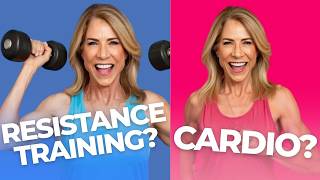
In this conversational interview, JJ Virgin and Doctor Fit and Fabulous discuss why women—especially those over 40—have been steered toward cardio‑focused workouts and away from resistance training. Virgin shares her personal history of moving from 1980s aerobics to weightlifting at age 16, rejecting the industry’s skinny‑model ideal and discovering that lifting can reshape metabolism more efficiently than endless cardio. Doctor Fit highlights how the fitness market markets pink dumbbells and other aesthetic cues to keep women out of the free‑weight area, noting that only about 20% of women nationwide engage in resistance training compared with 30‑40% who stick to cardio machines. They debunk the myth that women will become “bulky” like the Hulk, explaining that realistic muscle gain is slow (roughly a pound per month) and that extreme physiques seen on Instagram often involve genetics, years of training, or performance‑enhancing drugs. Both emphasize that resistance training builds lean muscle, improves body composition, and provides a defined, strong look that many women desire, while also being adjustable—if a woman feels she’s gaining too much, she can simply reduce load or volume. The dialogue critiques the lack of female role models in gyms, the commercial push for cardio‑only routines, and encourages women to incorporate weightlifting for long‑term health and aesthetics.
Chapters
Don't you feel like it? Because again, I was, I was an aerobics instructor in the '80s. However, someone asked me to come to their house to teach aerobics and I morphed over to resistance training. Cause I've always, I started lifting weights when I was 16 and then wanted to be a model and I was told I was too big and I just went, screw it. I'm going to be strong, not skinny. But, um, I kind of recognized early on in exercise phys that like you could do a lot of cardio or you could just change your whole metabolism by lifting weights and that would be easier. Here. So let's do that, you know. But it's been really— I feel like women have had such a disservice that's impacted so many areas of their life because of just what you talked about, where it was always emphasized to do cardio or Pilates or barre and be skinny. And now all of a sudden they're 40s and 50s and 60s and screwed. Can you talk about that a little bit?
Well, and you know, when you look at the, you know, commercialization of of exercise. Like if you go to the Target workout section, right, it's like pink dumbbells. Like they're really trying to make it this aesthetic for women. And part of it too is that we don't have good role models in the gym. So when you— a study has shown when you go into the gym and you go into the free weights section of the gym, so we've got dumbbells, barbells, but the scary things that women don't want to touch usually. For every woman that's in that section of the gym, there's about 27 men. Now somebody listening's like, no, there's women at my gym. Okay, that's fine. But across the nation, on average, less than 20% of women are doing any kind of resistance training, but 30 to 40% are doing cardio. They're on the treadmills, they're on the ellipticals. And it's just because that's, that's what we've seen. That's the story that we've been sold is you just can maintain your body if you do your jazzercise or if you do your running. And I was a victim of that too. When I, um, after I had my girls, I decided to start signing up for half marathons cuz I thought, well, if I I'll sign up for the half marathon. I'll have to start running. And I was running like an hour, 2 hours a day on like long training sessions. But my body, if you look at a picture, my body composition was not what I was really actually desiring. And so women have this idea that if they pick up like one weight, they're going to look like The Incredible Hulk, right? And I will tell you right now, I wish the, the— whatever you're visualizing in your brain that probably came from Instagram, I mean, these women are training. They probably have some genetic potential. They're training years and years and years. Some of them are probably using testosterone or steroids. I dare you to try to look like that. I mean, I train really hard, and I mean, you're not going to look like a man.
And guess what? It's not overdrive muscle either. Like, it's not like you wake up one morning and go, whoa, you know, it's like you put on a pound a month. If you don't like it, back off. This is not a hard thing.
Yeah. It's incredible how quickly you can lose lean tissue, but it takes years of dedicated resistance training to carve a really lean muscular physique that honestly most women love. I mean, come on, who doesn't like defined arms and defined legs and, you know, women want to be strong and powerful, but they still say it in that way of defined or toned.
And they literally, cause they'll come to me and they go, I want to have your arms. I don't want to get big. Yeah, you know, and they think that I must be spending hours in the gym lifting little dumbbells 50,000 times. I'm like, you know, it's not the way it works.