What Your Plate Should Look Like for Fat Loss
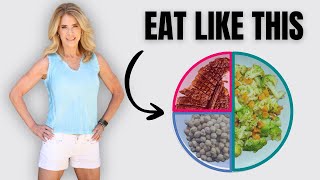
In this instructional video, JJ Virgin explains that sustainable fat loss requires a non‑negotiable caloric deficit, but the quality and composition of those calories determine how easy the deficit is to maintain, how well muscle is preserved, and how hormones stay balanced. She critiques ultra‑processed foods for their low thermic effect, higher calorie intake, and negative impact on blood sugar and insulin. She advocates a "protein‑first" strategy, citing the protein leverage hypothesis and the high thermic effect of protein, and recommends 0.7–1 g of protein per pound of target body weight, spread across meals (at least 30 g per meal). She lists preferred animal and plant protein sources and emphasizes lean, wild‑caught or grass‑fed options. Fiber is highlighted for satiety, blood‑sugar control, gut health, and detoxification of released toxins during fat loss; she suggests 5+ servings of non‑starchy vegetables daily, at least 10 g of fiber per meal, and 30–40 g total per day. Healthy fats are necessary for hormone production, brain health, and satiety; she recommends obtaining fats from whole foods (wild fish, grass‑fed meat) and using extra‑virgin olive oil, ghee, sesame or avocado oil, aiming for 60–100 g of fat daily. Slow‑digesting carbs are included in modest amounts (≈100–130 g daily) to replenish muscle glycogen. She visualizes an ideal plate: ~¼ protein, ~½ non‑starchy vegetables, ~¼ slow carbs, with a modest amount of healthy fat. Tracking tools (food scale, Cronometer, bio‑impedance scale) are advised to monitor portions, macro intake, and body composition. She introduces a cycling caloric‑restriction method (5 days at a 25 % deficit, 2 days at maintenance) to protect metabolism and preserve lean mass. Overall, the video provides a practical, evidence‑backed framework for constructing meals that support a calorie deficit while maintaining muscle, hormone balance, and long‑term adherence.
Chapters
If you want to lose fat, there is one non-negotiable, something I've changed my mind on. You gotta be in a caloric deficit. Now, whether you're carnivore, plant-based, you're doing intermittent fasting, or you're on a detox, if your body has enough energy coming in, guess what? There's no reason to tap into stored fat. But I've got good news. You can create that deficit in a way that supports your hormones, keeps you feeling satisfied, and most importantly, preserves muscle. Today, I'm going to show you exactly what your plate should look like so you can hit those macro targets stay in a deficit, and actually enjoy your meals, all while supporting hormone balance and preserving lean muscle. I'm also going to share a little secret trick that I learned from a top physique scientist that's going to make this super doable. All right, let's get started. Why calories and food quality matter. And what I like to say here is calories count, but you got to think about where they come from. Now, I used to say calories count, but where they come from counts more. But there have been some, like, crazy examples of people losing weight while living on Twinkies. But I'm betting your goal is to lose fat, build muscle, and get healthier. So in our case, where those calories come from matters a lot. First off, you know, ultra-processed food wreaks havoc on your metabolism, but you might not know how it does it. There's a couple different ways. First off, makes you overeat. There's actually a study in Cell Metabolism that found that people who were eating ultra-processed diets consumed about 500 more calories a day compared to people who ate Whole Foods diet without even realizing it because of the differences in satiety and hunger hormones. These foods are manufactured to make you eat more and more and more and more. The next thing about these ultra-processed foods, they actually have a lower thermic effect of food. And I'm gonna explain that one in a minute. But first, this study that was in the Food and Nutrition Research, Here's what they found. They looked at 2 sandwiches, a Whole Foods sandwich with real cheddar cheese or a processed food sandwich. So think whole grain bread and real cheddar cheese versus, you know, Wonder Bread and American cheese, kind of the lunch I always had growing up. These sandwiches both had the same calories, same nutrients, but what was crazy is the processed one had a lower thermic energy effect. So why does that matter? Well, this is subtle, but it matters over time. So you have your total daily energy expenditure, and that is comprised of 3 things. It's your resting metabolic rate, it's your thermic effect of food, and it is your activity, whether your activity is from exercise or non-exercise. So for thermic effect of food, TEF, it is a anywhere from 5 to 15% of your total daily energy expenditure comes from this. So if you're eating things that are lower in this TEF, this T-E-F, then it'll be in the 5%. If you do some of the things we're gonna talk about here on this video, you'll push it to 15%. You might go, yeah, it's not that much. Makes a difference over time. So that's what we're really looking at is what happens over time if you do the right things. Now, next thing with ultra-processed food, it is more likely to wreak havoc on your blood sugar and your insulin. And you know that if your blood sugar's all over the place, you're gonna jump in and grab food. And if you keep pushing your blood sugar up, it's gonna push you into higher insulin. And if your insulin's up, it makes it really hard to burn off fat, especially that visceral adipose tissue. That's that fat around your gut. So what we wanna do instead is shift off of the ultra-processed food. This is not a newsflash, obviously, But by improving our food quality, improving where your calories come from, it's going to help. And way we do that, have more clean protein, have more fiber, right? Eat more whole foods-based diet. And why is this important? Number one, more thermic. We also know, you know, when you're eating more whole foods, you're eating more protein, you're gonna have more satiety, more satisfaction, and a little bump in your GLP-1. And then fiber, of course, we know is gonna fuel your microbiome. It's going to slow down the blood sugar rise. It's gonna help you feel fuller longer, and it's gonna also bump up the GLP-1s. So I mentioned a deficit, and since we know deficit's important here, how do you eat so that you're not hungry, right? Because that's the big thing. If you're hungry and feel unsatisfied, I don't know about you, but I'm gonna go sniffing in the fridge. Next thing we need to do is figure out how to avoid that. And you know what the answer is? Eat protein first. You've heard me say this before, and I know what you're hearing all over the internet. So you're going, but JJ, I am hearing all over the internet that I should be eating non-starchy vegetables first. But there's a reason that I'm going to tell you to eat protein first. When you eat protein first, the research shows that you actually make better food choices overall. Now, beyond that, protein is the most thermic of the three macronutrients. I already talked about the thermic effect of food, the TEF. We know that when you eat protein, somewhere between 20 and 30% of those calories are used just in the digestion and assimilation of protein. Contrast that with about 5% for carbs and pretty much no percent for fat, right? That's why you'll look at and go, oh, ultra-processed foods, have a very low thermic effect, and protein has a very high thermic effect. So that's the first part. But also, we know that protein is more satiating. It's the most satiating of the macronutrients. It's the most satisfying because you're getting those amino acids that help you make the great brain chemicals, things like dopamine and serotonin, to help shut down cravings. It's also important for detoxification. There's two things that are important for detox: protein and fiber. And I'm gonna talk a little bit about that more when we get into fiber, because there might be something you haven't thought about before that is really important when you're losing fat. Wait for it, I'll tell you in a bit. But more important than that, I want you to eat protein first because I wanna make sure you get it in. And here's why. There's this phenomenon called the protein leverage hypothesis. Now it's been called this forever. It shouldn't be a hypothesis anymore because while it started out and they were looking at it in terms of, I think insects, it's now been proven in primates, has been proven in rodents, and here's what it is. It is this hypothesis that has now shown that if you don't get enough protein in your diet, because you're eating protein to get amino acids, you'll keep eating more to get to the point where you've had enough protein. What does that mean? That means that if you ate a low protein meal, you might overeat in an effort to get enough of those amino acids that your body really needs. And again, this has been shown over and over and over again. And here's what the evil ultra-processed food manufacturers do. They create things that are umami flavoring so that you'll think, your brain will go, oh my gosh, that's protein, and you will overeat. I still, I can actually remember where I was, the chair I was sitting in when I ate an entire 2-pounder bag of Nacho Cheese Doritos in college. So it happens to the best of us. So remember, if we're gonna do caloric restriction, the focus on this video is burning fat, right? We wanna make sure that you're holding onto fat-free mass, you're preserving lean muscle. And how you do that is with making sure you're getting in that protein, eating protein first. There was a meta-analysis by the American Journal of Clinical Nutrition that found that higher protein diets preserve lean mass and increase satiety during caloric restriction. And really, we should be focused on making sure that you are preserving that lean mass because as you lose weight, if you are losing lean mass, you are going to drop your resting metabolic rate more. And you do not wanna have that. In fact, that's what they call metabolic adaptation. When your resting metabolic rate is lower than it should be predicted based on your weight. So we gotta keep that lean tissue, that fat-free mass, up. Think of protein like this anchor that keeps your metabolism and muscle strong in a caloric deficit. Let's talk about how much protein that you really need. Now, here's the reality. You've heard that after about the age of 30, you start to lose muscle and it gets harder to put it on. The biggest stimulus for, for building muscle is doing hard things. That's it. You know, doing resistance training. But the other thing that you need is protein. As we age, we become more anabolically resistant. Now, why does this happen? This means that we need more protein and more, more resistance training to stimulate that muscle. But the reality is it's probably not as much age as it is not using it. Use it or lose it. And there's a couple other things that happen. If you're stressed, if you're aging, your stomach acids can lower. It's harder for you to break down protein. That's the first part. And if you've got more insulin resistance, more fat in your muscles, that can create more of that anabolic resistance too. The bottom line is likely if you're 30+, you need more protein, not less, especially if you're 40 or 50+. And so the range that I give people— and I have a protein calculator if you don't love math, that's at jjvirgin.com/proteinfirst. It also has a great protein list that will help you get started on your eat protein first journey. But here's the thing, I like people to go 0.7 to 1 gram per pound of target body weight. There's a great researcher who's shown out of Canada, I believe that it was Dr. Stu Phillips that found that really 0.7 grams per pound of target body weight probably is, you know, is saturating your tissues with what you need to build muscle. I go 0.7 to 1. I would rather you err on the high side than not get enough. And this is based on your target body weight, the weight that if you were at your perfect weight for you, your best body composition, you'd be, right? So whatever that number is, we all know the number. Go with that number. And if you're not totally sure, guesstimate. This is not where you think you wanna be. Let's say you're 200 pounds and you say, you know, I should be 140, but I'm gonna settle for 160. You still base the protein on the 140. I go a little higher rather than lower. And the reason I do that is I'd rather you eat a little more protein, not less, because it's so satiating and it's really hard to overdo it on protein. So my favorite protein sources and And I like you to take that, by the way, before I go into favorite protein sources, I like you to divide that into your meals throughout the day. So if we decide, oh, you should probably be having 120 grams of protein a day. So, you know, 40, 40, 40, or maybe go a little heavier breakfast and dinner, a little lighter at lunch, but basically divide it throughout the day. Get at least 30 grams per meal, especially at your breakfast and dinner. And if it's plant-based, go to 40. And I really like an omnivore approach, but I just consider this. How many times have you pigged out on salmon? Ever? Never? Or eggs? You know, it just doesn't happen. You get full before you, you overload it. So my favorite things, and I like to say you are what you eat ate, because you want to be super careful with animal-based proteins because proteins, we store toxins in fat. So get lean sources so you have less likelihood and know where they came from. So you also have less likelihood. So that's why it's wild fish. My favorite choices there are salmon, halibut, and Chilean sea bass. I also will do some scallops and shrimp. Next thing is grass-fed, grass-finished beef, bison, lamb. I get the leanest cuts that I can. And then next up after that, things like nonfat organic Greek-style yogurt or cottage cheese. I do low-fat cottage cheese. I'll do an egg and egg white combo with pastured eggs and pastured chicken. Chicken can be a pretty dirty protein source, so lean pastured chicken, pastured turkey, pastured pork, and then protein powders. Of course, I've created both a pea-based and a bone broth-based protein powder. And what I did, because when I wrote The Virgin Diet, I had a lot of people get off dairy because they just found it was not working well for them— if that is you, I created protein powders where I mimicked the protein powder, the essential amino acid profile of whey, because it's is considered to be the gold standard for protein powders with its essential amino acid profile. So I just mimic that in my, my bone broth protein powder and my pea. I spiked up the aminos a bit so that they're the same as whey, just to make it easy for you if you're someone who does not do well with dairy. Quite often you might do well with whey because you— it's the casein that's a problem. But if not, this is a way to do it. So there you are. Um, and again, remember, you are what you eat. Now those are animal sources. Um, the plant-based sources, organic fermented tofu, make sure it's organic. Other things like legumes can be a great source too. Just make sure you're putting it into your Cronometer app or whatever food tracking app you're doing, cuz quite often it can be easy to kind of overload on the carbs or overload on the fat in an effort to get protein. And that's why I really love an omnivore approach to this where I might have salmon and lentils and cauliflower rice as a thing, like mix my cauliflower rice and lentils, maybe throw some mushrooms in. That's a bed that I put the salmon on top of. Top of. Super delicious. So once you've got that protein dialed in, the next thing we're going to do is bring in the fiber. And I love fiber for a couple different reasons, which I will share. But of course, the, the big one for caloric restriction is it's a way to help you feel fuller longer without going crazy on the calories. We're going to be doing your plate in a minute. And what you'll find is when we walk through the plate, I want a lot of your plate, like half or more of your plate is just going to be like non-starchy vegetables and a rainbow of them. Now, this is a great way to get some fiber with low calories. And there was a study by Frontiers in Nutrition that found that higher dietary fiber intake is associated with, dun dun dun, improved weight control and lower total calorie consumption. Why? Because of fiber's ability to improve satiety and slow digestion. It helps you feel fuller longer. So this is super duper important, obviously, because if you're hungry, I would say if you're hungry, man, I don't know about you, but for me, all bets are off. So love me some fiber because it's filling. It's good for blood sugar balance, but also it's great for your gut microbiome. Just consider resistant starch. That's— I have a fiber product, extra fiber that's really rich in resistant starch. This is what you get from like cooled potatoes or slightly green bananas. And this resistant starch is called that because it resists digestion and goes into the large intestine and makes something called butyrate that helps you burn fat. Another thing about fiber is it's super important for detox. Now here's the thing, as you are losing fat, as you're starting to burn fat, you know what happens? You actually free up toxins. I think people do not think about this. In fact, one of the key things I've focused on is having a protein-powered detox before people go and start on a fat loss program, because if you are not detoxifying well and you're freeing up these toxins but not getting them out, This is a major problem. So we want to make sure that you can get these, these toxins out, and fibers help you do that. Fibers help you kind of, you know, depending on the type of fiber, they're soluble, insoluble. Soluble can soak them up, insoluble helps get them out. And this is super important, it also gives you poops you can be proud of. Another really great thing. The other thing that I love about fiber is that often the type we're doing is coming with some really great phytonutrients, whether they're non-starchy vegetables. Think of things like sulforaphane from broccoli, or red onions got quercetin. Or maybe you're getting into the, the fruits. You're getting strawberries have fisetin. Like, every single one of these plants has amazing phytonutrients based on its colors. That's why people will tell you to eat from the rainbow. That's the reason why. Or you've heard from the American Gut Health Project, we need to be eating a wide variety of different plants each week. That's the reason why. So my rule for non-starchy vegetables is 5 or more servings a day. What's a serving? It is at least a half a cup cooked or 1 cup raw. And I always make sure that within that I'm getting at least 1 sulfur-rich vegetable. That would be like Brussels, broccoli, cauliflower. It's the stinkies. Right? And then also at least one deep green leafy, so chard, kale, spinach. But here's the thing I like to do with those. I like to cook them whenever possible. I will throw them into things. I'll throw them into my cauliflower rice. That's a great place to put 'em. You can throw 'em into sauces because you're gonna lower the oxalate load when you do that. Another great source of fiber here is fruit. And for me, I eat 2 servings of berries a day. I generally will pop between blueberries, raspberries, and blackberries. If you're super active, you can pump it to 3 fruit servings a day, but that's another one. And of course, what else is high in fiber? Well, roots, tubers, legumes, and grains. So things like Japanese sweet potato, legumes, lentils. I love those, especially lentils, because they've got a great protein hit. And what I'm always looking for is at least 10 grams of fiber per meal. We'll talk a little bit more about how much of those slow low carbs in the next section, but I'm looking at how do I get 10 grams of fiber or more per meal. So my goal is 30 grams or more overall per day. If you're a guy, let's go to 40. All right, let's talk fat and carbs, because this is where people seem to get in trouble, is the fat and the carbs. And you know what's crazy is it depends on the day or the week, I guess, but it seems like it's either we're supposed to go high fat, we're supposed to go low fat, we're supposed to go high carb, we're supposed to go low carb. It's like one's always being villainized. But yet if you look at the diet research over and over again, what they found over and over again is like, it doesn't really matter. It's the overall calories that make a difference. What I like to look at is where do you feel best? And it might be different for you right now. You might be using a diet to heal, and so maybe you're on a FODMAP-free diet. So you're doing— you're getting rid of FODMAPs for it to heal your gut, or you're doing some kind of elimination diet, maybe even gone to carnivore for gut healing, or you're doing keto. Maybe you've had a TBI or you're doing something to help with bipolar. So there might be something you're doing for a healing process with your diet for the short term, but not necessarily for the long term. What I want to really talk about here is that we need fat. In fact, I love Dr. Ben Bikman's— has some great information out about insulin sensitivity and fat. He goes, don't fear fats. That's a great little simple quote to remember because we need fat, by the way. There are essential fatty acids that we need. But unless you're doing a keto diet for a specific reason, cancer or brain injuries, be careful with that because it's also a source of a lot of calories. And quite often we're eating it in things like, you know, that French fry that's just basically a potato oil sponge. So it's got a lot of calories and it's got basically no thermic effect of food, but it's also satiating and essential. And when you're using them correctly and you make an oil change, it can help reduce inflammation as well. There was a study published in the Cambridge University Press that found that participants on a moderate fat diet rather than a very low one lost more weight, saw better metabolic improvements, and were more likely to keep the weight off, largely because it was easier to stick with. This highlights the importance of healthy fats for long-term adherence. And also think of healthy fats as something for good inflammatory balance, and you need them essentially. Remember, your brain, 70% fat, mainly DHA. You gotta have it for hormone production, for satiety, and especially for some of those hormones that regulate appetite. And of course, you also need it to absorb your fat-soluble vitamins. So here's what I do with fat. The first thing that I do is I try to get the majority of my fat within the food. What do I mean by that? I'm eating wild salmon, I'm getting some omega-3s. I eat some grass-fed beef, I'm getting CLA and some omega-3s. And that's what's important. Remember, you are what you eat, ate. So grass-fed meat, you'll still have some omega-6, arachidonic acid, but you'll get some omega-3s too that you wouldn't normally get if you were eating just a more grain-based. So you're going to get it in your animal protein. All animal protein, unless it's been defatted like Greek-style yogurt, is going to come with fat. And then I also look at like nuts and seeds and avocados and coconut, like where could— would I naturally get fat? And that's the first place I go. And then when I'm cooking, or maybe I'm dressing a salad, I'm using extra virgin olive oil for most of my stuff. I might use a little avocado oil. Sometimes I will sauté in a little sesame oil or ghee or coconut oil, and that's pretty much it. Those are my oils. I don't really use anything else. And I would say that most, most, most of the time it's extra virgin olive oil, and then that's usually ghee and a touch of sesame oil. And so for each serving, I generally look at like 1 or 2 servings of fat, so kind of a thumb size of fat. I try not to go overloading here on my daily intake I'm doing, um, probably about trying to think of what I end up where I end up with fat somewhere. I think 60 is kind of our low end for fat, you know, and depending on what else you're eating, it might go up to 100. Same with like, I think carbohydrates, the low end should be 100. And then it goes up, probably you'll sit more around 130 and move from exercise activity level and stress level up to more. So. Which segues me beautifully to slow, low carbs. And again, this is where whole foods come in. I already talked about thermic effect of foods and that when you're processing it, it goes down. You want that fiber in there. And again, you know, when I think of carbs, I'm thinking about things to help refuel the glycogen stores in my muscles. Remember, muscles are your sugar sponge. They will soak up those carbohydrates. And the more muscle you have, the more area you have to put carbohydrates in, little, little carb suitcases in your muscles. You'll hear it called a metabolic sink. I like the kind of visual of a sponge absorbing all that sugar, giving it a better place to land than turning it into fat and storing it on your gut. Right. But again, I'm looking at generally I'll eat a load of non-starchy vegetables, like 2 servings of fruit, and then a little bit of slow low carbs. See how you feel there. I find if I eat a little bit at night, helps me sleep. Just see where you're at. For some men, it can help push their testosterone up a little bit too. So I kind of put 100 grams as baseline for most people, up to 130. And then more goes with exercise, or if you've got some adrenal stuff, you might feel better with a little more. My faves, talked about already, lentils and legumes. I think we should be eating a little bit of this every single day. I fall short, I will admit, but that's my, always my food of choice at restaurants or at home is incorporating those in. Other things can be great. Love Japanese sweet potato, the purple ones. Again, colors are really your friend here. Things like wild rice. I'm not a lover of quinoa, but that can be another one. Some squashes. So think about what things you love, incorporate those things on in, because what's the most important thing with the diet? Liking it so you can be consistent. And I really love thinking about— when I think about protein and fiber, I think about it from an omnivore perspective. Like, you know, again, Could I create cauliflower rice, throw in some mushrooms, throw in maybe some chard, throw in some lentils. Now I've got this amazing pilaf and then putting some wild salmon on top. Now I've got everything I need for protein, for fiber, for phytonutrients and great blood sugar balance and satiety and like super like low calorie. And for my starchy carbs, I'm thinking about a serving, you know, 0 to 2 servings at a meal and a serving's about half a cup. All right, let's look at your plate, shall we? And talk just visually how it all gets together. Like when you're looking at your plate, about a fourth of it's gonna be that protein, could be more, depends on your total body weight. And then a lot of it, at least two-fourths, you know, half that plate, like load that sucker up with lots of non-starchy vegetables. I want you getting 5 to 10 servings a day. Then quarter of it, those slow burning carbs, the slow low carbs. And then you're putting a little bit of those healthy fats on. Now, you might have gotten everything you needed just from your fish, but likely you're cooking with a little bit too. I talked about the ones I loved. And play around with this. This is where tracking— and of course, not only are you tracking using a scale and a food scale and your Cronometer app, but you're also tracking on your bioimpedance machine. You don't have to do this forever, the tracking on the food app, but it's good to know so you really understand what portions look like, because we completely underestimate our portions here in the United States. It's been proven over and over and over. And so tracking can help you really get an idea, because if you were in Europe, this wouldn't be a big deal. But we— here we have like these crazy portions when you go out that completely throw you for a loop. And so you start to think that is normal, and then you go to someplace like Europe and you go, where's the meal? Because they served you something that in the US would be an appetizer. And so you're doing that. You want to think about losing fat, that you really don't want to lose more than 0.5 to 1% of your weight each week, that's about how much you'll lose in body fat. And so you're tracking that on a bioimpedance machine so you can ensure that you're holding on to fat-free mass, or better yet, increasing it while you're losing fat. That's called recomping. And I learned this little trick from Dr. Bill Campbell, who runs the only physique lab in the country, I think maybe in the world. And he does this thing called cycling caloric restriction, which I think is super cool. And what you do is you do a little bit of a caloric deficit 5 days a week. So 25%. So this again, you got to be tracking your macros so you know how much you're actually eating. Then what you do next is you take 25% of that. So whatever it was to maintain your weight, then maybe you did for a week or two. Like, let's say that you go, oh, you know what, 2,400 calories a day, I maintain my weight. Well, now you're going to take 25% of that. Which means I'm doing math on the fly, but that's basically 600 calories off. Now you're doing 1,800 calories for 5 days and then go back to 2 days of regular calories and rotate it. One of the things you have to watch is as you lose weight, you will start to drop the amount of calories you need to maintain your weight. This is why we really want to focus on holding on to our building muscle so that's minimal, and that we're really monitoring all this using a bioimpedance scale, not a traditional scale. I want you to ditch that traditional scale. And also, I love it if you're once a week— you're doing that daily, it's reporting to your phone, you're monitoring it over a week, never day by day. Day by day will make you crazy. But then once a week, you also do a waist and a hip so you can look at your waist compared to your height and your waist compared to your hip to ensure that you are losing fat and you're losing your waist. If you're losing your weight without losing your waist, you might just be losing some muscle, making yourself Worse off, not better, and not on my watch. Now, remember, fat loss starts with a caloric deficit, but the way you build your plate determines how easy it is to stick with it. And if you keep that fat-free mass on, when you lead with protein, you load up on fiber, and you choose the right fats and carbs, you're going to feel satisfied. You are going to preserve muscle and you're going to make that deficit sustainable. And that's the most important thing. You've seen the terrible statistics on diets. And that's what we want to avoid at all costs. If you want to see exactly how to hit your protein goals at breakfast, watch my video on high protein meals. It's the perfect place to start.








