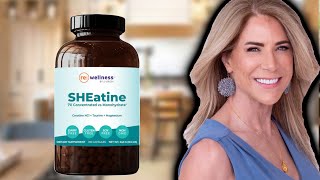
JJ Virgin argues that women over 40 should take 5g of creatine daily. Meta-analyses show it boosts muscle mass and bone density when paired with resistance training. A 2021 study found women with depression who added creatine to antidepressants achieved remission at double the rate.
Chapters
I'm literally stronger now at 60 than I've ever been in my life, and I credit that with finally getting on creatine. And I don't want you to wait like I did. Now, speaking of strength and muscle mass, besides improving performance and delaying fatigue, creatine can improve muscle mass and bone in menopausal women. There was a meta-analysis done of 13 studies that examined the effects of creatine supplementation and resistance exercise on muscle mass and other health indicators in adults over the age of 50 years old, and it found that creatine supplementation— now important— in combination with resistance exercise, right, no magic bullets, promotes muscle accretion and builds strength in older adults more effectively than just doing the resistance training. Their analysis also revealed that creatine supplementation benefits bone health by increasing bone mineral density and improving the markers of bone biology. A recent analysis of 357 elderly individuals And I love that they say elderly is 64 years old. I'm sorry, that is not elderly study. So these people were participating in an average of 12.5 weeks of resistance training, and they found that participants supplementing their diet with creatine experienced greater gains in muscle mass, strength, and functional capacity. These findings were corroborated in another meta-analysis of 405 elderly participants, again 64 years old, shame on them, who experienced greater gains in muscle mass and upper body strength with creatine supplementation during resistance training compared to just the training alone. So what does all this mean? This means that creatine supplementation can help you build muscle more than just if you just did the resistance training. Why wouldn't you want to do that? No downside, all positive. You know, as you age, you can lose muscle mass, and creatine supplementation can help prevent that sarcopenia and bone loss that happens as we age. Doesn't have to. Now, hopefully at this point You're already convinced that this is something you'll want to add to your anti-aging arsenal. And if I haven't even gotten to the brain benefits yet, and when you hear these, you're going to be like, okay, now I'm all in. I'm always looking at things to help with brain. I started researching creatine for my son Grant because he suffered a severe traumatic brain injury at 16, and we've done so many things. He's 27 now, he's doing well, but I always want the edge for him, and I'm always looking for anything that can help support his brain function. Now, I always thought of creatine, I'll be honest, for body composition and sports performance. Then I started digging into the research, and I found that it also improves cognitive function. And when I saw that, you can guess what I did. I immediately put him on it. Now, as I dug deeper into this, I realized that this is another reason it's the perfect supplement for peri- and postmenopausal women. Women have been reported to have lower levels of creatine in the brain, not just our tissues, right, but also in the brain, particularly in the frontal lobe. And that frontal lobe controls your mood, your cognition, your memory, and your emotions. As As a result of these sex differences in brain creatine concentrations, supplementation may be even more effective for women for supporting a pro-energetic environment in the brain. Now, along with lower creatine levels in the brain, women have double the depression that men do. And one review in 2021 on brain health in women found that women with a major depressive disorder who supplemented their daily antidepressant with 5 grams of creatine responded twice as fast and experienced remission of depression at twice the rate of women who only took the antidepressant. And of course, we're not even talking about the body count benefits, right? So creatine can also help the brain function better under times of stress— who doesn't have that— and sleep deprivation. Now, brain activity results in a rapid reduction in that, in those phosphocreatine levels that I talked about earlier that you need to maintain ATP levels to make brain energy. Therefore, when you're under times of high mental stress, those require higher phosphocreatine demand. Higher ATP turnover could be impaired during those times, and creatine supplementation can support greater neural ATP resynthesis, which means you got a cognitive advantage for tasks that rely on all those frontal cortex tasks, things like cognition and attention and memory. Creatine supplementation in humans has consistently demonstrated improved cognitive performance and improved brain function and reduced mental fatigue during stressful times.