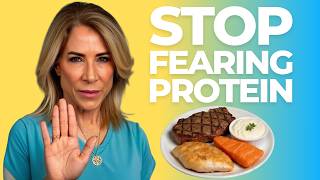
In this conversational video, JJ Virgin and a co‑speaker explore why many women over 40 avoid protein despite its importance. They identify three main barriers: (1) the modern food environment offers few protein‑rich options and emphasizes carb‑heavy meals, leading to a habit of low‑protein eating and mis‑interpreted satiety signals; (2) protein sources are often more expensive than processed, nutrient‑poor foods, making budget‑conscious shoppers choose cheaper, low‑protein options; (3) hormonal shifts after age 40—including declines in estrogen, progesterone, growth hormone, and IGF‑1—reduce the body’s anabolic drive, increasing loss of lean and bone mass and raising risks for diabetes, heart disease, osteoporosis, and certain cancers. The speakers argue that recognizing these factors and proactively incorporating adequate protein, resistance training, and hormone‑supportive strategies can mitigate health risks for women in this age group.
Chapters
Why are we so weirdly protein-phobic? I mean, I still hear it all the time. I can't eat that much. I'm like, gosh, I can. Why? Just eat it first. Why is this?
Well, I, I, I can't speak for every individual, but I think our food environment is low in protein. I mean, when you look at, you know, what's— you go to a restaurant or what, they put bread on the table first. You fill up with bread, then they give you salad, then they serve you your protein with 2 starches on the side. And of course, everybody likes dessert. I mean, when you think about the foods that everybody is loving and is addicted to, they're all low in protein. They've either got a bunch of carbs or a bunch of fats or both. So I think it's— I personally know it's hard to find protein unless you're looking for it, right? Unless you're like, no, I'm going to cook up some beef and chicken and salmon and eggs for the week. But if you're looking at packaged convenience foods, I mean, outside of protein shakes and bars, it's hard to find protein. Yeah. Also protein is so satiating that women have trouble eating enough because they've never actually felt what satiety feels like because they've been eating carbs and they've been on these blood sugar roller coasters. And when they finally eat the amount of protein that their body was actually asking for the whole time, because protein is a major driver of appetite. When you're not getting enough protein, your body's like, go find something else. And then people can't figure out why they're constantly snacking or constantly hungry. That was something that I lived with. I mean, I was, when you said hangry. Hungry. Like that was, I know what the definition of hangry is like. And when you don't give your body what it's asking for, it will continue to tell you to go search for more. Protein is expensive when we look at how cheap processed foods are. Right. But when you look about nutrient density of foods, the most nutrient-dense foods are going to be your protein and fat sources. These are animal foods. These are beef, chicken, fish, eggs. And, and they have more nutrients in them. So it's hard for people when they think about spending money at the grocery store to see that as an investment in their health. They're on a budget, things are tight, and they're, they're buying very nutrient-poor, cheap foods that don't have a lot of protein in them. And then the third part of that, JJ, is hormones. So as we go through this transition, we lose our sex hormones. So we start to lose production of estrogen and progesterone. And estrogen is very anti-catabolic to the lean tissue. We don't always lose testosterone at the same rate that we lose estrogen, but we definitely start to have an estrogen to androgen ratio change, and we lose this anabolic stimulus. We're also losing growth hormone, we're losing IGF-1 production, we're losing production of a lot of things in our endocrine system that maintain not only our lean tissue mass but our bone mass. And if women aren't taking a proactive strategy during, during this stage with lifting weights and eating protein and hormone optimization and really optimizing their metabolic health, they're gonna start to see the effects of that. And that's increased risk of diabetes, heart disease, osteoporosis, and particular types of cancer.