Would I Ever Go Back To The AMAZON RAINFOREST? | JJ Virgin
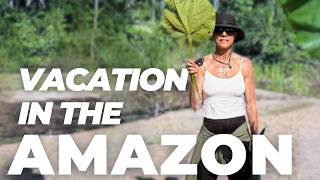
In this first‑person vlog, health‑coach JJ Virgin recounts a six‑day expedition from Quito into Ecuador’s Amazon rainforest, detailing the logistical chain of buses, small planes, and canoes that led to two remote indigenous camps and the renowned Kampari (Eagle) Eco Lodge. He describes the rigorous packing constraints (25‑lb dry bags, moisture‑wicking clothing, mud boots, bug repellent) and the mental anxiety of leaving his comfort zone. At the first community (Naku) he undergoes traditional shamanic cleanses, receives a rainforest name, and experiences uncomfortable sleeping platforms, compost toilets, and outdoor showers that attract insects. He narrates health challenges, including a severe bug bite requiring multiple antibiotics, and the struggle to stay protected from bugs despite using DEET and natural remedies. The transition to the eco‑lodge brings modest comforts—private cabins with mosquito nets, generators, Starlink, and communal meals featuring tilapia and local produce—but also new issues like rats and spiders. Throughout, JJ reflects on the constant alertness of indigenous people, the “comfort crisis” concept, and the profound impact of witnessing biodiversity (pink dolphins, howler monkeys, giant “grandmother” trees) and participating in cultural ceremonies. He connects the experience to the Pachamama Alliance and its founder Lynne Twist, emphasizing the global importance of Amazon conservation. The vlog concludes with personal takeaways: the value of stepping out of comfort, lessons for packing, and a call to make more sustainable choices.
Chapters
At the orientation meeting in Quito, the morning we were leaving for the Amazon rainforest, the guides reminded us that this was not an adventure vacation. Now, I'd read the travel description of the eco lodge, the, like, second best one in the world, the pink dolphins, all the birds. We were going to the place where they have the most birds of anywhere in the world, and these interactions and living with the indigenous tribes. And I thought, all right, I'm not a camper, this might be a little challenging for me, but I got this. I need to get out of my comfort zone. Now admittedly, I should have gotten a clue when I could only bring 25 pounds in a dry bag on the plane and then into the canoe that would take us to our destination. And that, that packing list included for 6 days, 10 pairs of moisture-wicking socks, an equal amount of moisture-wicking shirts. And of course we were wearing those socks with our mud boots they were giving us along with a lot of bug repellent, moisture-wicking clothing, headlamps, and a lot of deet. So that morning in the orientation, I started to get, I admit it, a little anxious. Okay, a lot anxious. As the guides went into the details of the trip, I was like, what the heck was I thinking? I was physically prepared, but mentally, that's a whole nother story. I'm gonna walk you through this trip, what I brought, what I wish I'd brought, and what I learned from being around these indigenous tribes in the sacred waters of the Amazon rainforest, the most biodiverse area on the planet. Now, getting to the Amazon isn't like something you just ease into. First of all, we had to go from Quito to another city on a bus. Then we spent the night there. Then we repacked our bags into the 25-pound bags. Then we hopped on these little planes, 3 to 9 seater planes. By the way, I glanced, I was on this plane, I glanced at the plaque next to the pilot and it says, I kid you not, Last serviced 1997. So I see that as we're up in the air and I'm looking down at this vast rainforest below me and I'm thinking, all right, well, you know what? You know, if you go, you go, what are you gonna do? We are landing on these grass airstrips. And so we land in the first, we went to two communities. We went to the first one, Naku, and you land on this grass airstrip and you pretty much know once you land there, all of a sudden you're going, oh, you're not going back. There's no easy way back. There's no quick, quick exit and no backup plan. And by the way, also no cell service, which was the first time I'd broken up with my phone in— I can't even think of when. We get to the first place, um, I remember some of the gals needed to go to the bathroom, and so they pointed to where the bathroom was and they all went down there. Well, it was— it was not a bathroom. It was the woods, the forest, the rainforest. I'm like, uh, hard no, I'll wait. We were lucky in that first place in that once we went over the little— we got from the airstrip and went on our canoes, they actually had compost toilets. So that was really, really cool. But let me give you a couple really interesting things about this. As we got to Naku, I remember we got in and the first thing that we did was meet this indigenous tribe and their leader, their shaman leader, and they had to do a cleanse for us. The first cleanse was putting orange paint our face and blowing smoke on us and hitting us with leaves and then giving us our rainforest name, which mine, basically the meaning of mine was that I was a little bird that built houses. I'm like, okay. And then we were supposed to snort tobacco. I just faked that. I watched another guy do it and throw up. I'm like, I don't think so. Tobacco's never felt good for me. So there you go. Then we go from there. Um, I remember sitting on those benches going, these are so uncomfortable. Then we get in these little canoes and we go over to our camp, which has a raised up platform, two of them, where we're going to be sleeping. So there were 18 of us, 9 on each platform, and the platforms have, um, another raised bed with a mattress, a pillow, a blanket, and a mosquito net over it. And then you have your area around you to put your boots face down so bugs can't crawl in them, right? And the thing is, like, whenever you're getting off that platform, you have to wear your mud boots because it's always raining and it's always wet. It's the rainforest, right? And you never know when it's going to rain. It can be anytime. So, but the fortunate thing here was there were compost compost toilets and there were outdoor showers. However, the problem is when you take an outdoor shower, the minute you shower, guess what? You don't have any insect repellent on you. And the minute you don't have that on you, you— it's like a free-for-all. So I did— I chose not to do that. I actually ended up bathing in the Amazon, which I'll tell you about. So we get to this community. The people are really cool. I will tell you, I admit I'd had a blowout. I was using my OneSkin tinted moisturizer SPF. So it's, they have this great tinted SPF and I was using that. I'd had a blowout. My hair was like, I, this will be fine for 4 or 5 days. And I had body wipes that were biodegradable and organic. And then I had mascara. I'm like, this is great, I'll do this. We get up the second morning, we get up at like 5:00 AM. We're gonna do this dream thing and then we're gonna dance, all these things. All right. And it's actually December 31st. So we're doing this all for December 31st. I mean, how cool is that? So we do this dance, we do this dream thing, and then we're gonna go to the Amazon River and get in. But before we can go to the Amazon River, we have to be cleansed again. Well, this time they took it up a notch. This time involved us getting smeared with like soot and mud and leaves put on us, and then a big bucket of some kind of water with leaves and dirt, which they put in my hair. Dumped over your head. I'm like, all right, I'm all in now. Meanwhile, everything you're sitting on when you're sitting to eat, when you're sitting to be in these circles, which went on for hours, is so uncomfortable, so uncomfortable. And I'm like, what the heck is going on? Well, it turns out later I found out that they don't do things for comfort. And I think about when I interviewed Michael Easter, who wrote The Comfort Crisis and who talks about how we are just too comfortable. Well, they don't do anything for comfort because if they're comfortable, then animals can eat them. So I was like, oh, ah, that's a good point. So yes, I remember being uncomfortable pretty much the whole time, but it is because you have to be on high alert. So we go down, we get in the Amazon, which is pretty amazing. On— here it is, December 31st, we are in the Amazon River, wild. Except that you get out of the Amazon River and then it's a bug free-for-all. I actually ended up getting a bug bite that was so severe that I had to go 3 different types of antibiotics. I had to go see a doctor in another town. I, by the way, pulled up my Spanish out that I thought I'd lost. So that was pretty incredible. But here we are now, we're in the camp and bonus points, they have amazing coffee. We are in Ecuador after all. And they serve us, I mean, they were just so gracious. They served us breakfast every morning. The meals were were plant-based, like we had beans and rice. My big regret is I didn't bring my essential aminos because they were— I was like, I had my chiotine creatine HCL product with me, I had my magnesium for night, I had my sleep candy for night, I had my electrolytes, double electrolytes, my Electro Replenish. But you know what, um, I brought some Paleo Valley beef sticks, I brought another bar called a Jacob bar. I'm like, I'll be okay. That was Big mistake. I should have brought the Essential Aminos because I could have augmented these meals that they were doing that were not giving me the amino acids I needed. But that's okay, it's just a couple days. I can make it. Um, sleeping at night was pretty amazing. You would not believe how noisy it is in the rainforest. It is like a loud rock band of monkeys and frogs and bugs. And by the way, the frogs are the loudest of all. So there's these howler monkeys that occasionally sound like a, you know, sci-fi movie, like a scary, a scary movie. But the howler, but the frogs are just continuous. It was crazy. So we were at this place 2 days and I kept thinking during these 2 days, okay, after this we are going to an eco-lodge. So we have 2 days here, we're living on these platforms, sleeping under mosquito nets, we are using compost toilets. I still hadn't had to do my hard pass, which is not having a bathroom. And I'm thinking, I can pull this off. I've got my Oslo earbuds at night. If I hadn't had those Oslo earbuds, I don't know what I would have done, honestly. My Manta eye mask that closed out all the light because we had full moon, and then my my earbuds that I had, Oslo's, that I put on rainforest noise saved me. It would have been way too loud and not just way too loud for the rainforest. But remember, we're on a sleeping platform next to another sleeping platform. So there's 9 people on ours and another 9 over on the other side. So I heard every snore. Honestly, I had no idea people farted so much when they slept. Every snore, every fart. Oh my gosh. Hopefully none were mine. Fingers crossed. But it was pretty wild. So then we got up early and did like— we really did what they did, and that was the whole point. We were going to do what they did. And what I noticed the most is they're always on alert, but they're also on like— there isn't really a time. Like, we get up early, they get up early every day to do their dreams, but there's not like you know, then I have to be here at this time and there, like, all that stuff's out the window. Like, I just let that all go. So we knew that after 2 days at this camp, that the next thing we were doing was going to this eco lodge. And this eco lodge had been written up as the number 2 eco lodge in the world. It's the Kampari, Kampari Eco Lodge. To get to this eco lodge, you have to take another airplane from our first airstrip to another airstrip and then a canoe for another hour. Now, this first canoe that we took, we only took for, you know, like 5 minutes down the river. Very small, super uncomfortable. The next canoe is a different story. So we go back to our initial airstrip. We get on our first round of our planes. We take these planes now deeper into the Amazon. So now we're really going deep into the Amazon where we land at another airstrip that's effectively a little airport. Airport because they actually have a little like thatched roof and some benches. Again, very uncomfortable. And because you're going to wait till everyone comes, remember there was a group of 18 of us and the planes were between 3 and 9 people. And so depending on which plane you were on, we had to— it took us like 5 planes to get there. So now we're waiting in the rainforest. And by the way, here's an airport, right? Their airport. There's no bathrooms or anything, just heads up. So I was very much managing my fluids. So you've got this kind of thing where you're dehydrated but you don't want to drink anything because you don't want to have to go use the bush. I finally relented. Just spoiler alert, at some point you're like, all right, I guess I'm doing this here and getting over myself. A lot of this trip was, I think, getting out of my comfort zone and realizing how darn comfortable, uh, I am and how good we have it with so many things and just like letting go. I will tell you that there's something absolutely awesome about just not worrying about your hair whatsoever, just putting in a ponytail and using Amazon Water to wash it, which was great, and then using that OneSkin tinted SPF and some mascara and saying that is it. Um, that was great, love that. And then the lip stuff from OneSkin. So now we are taking this canoe. And we're getting on this canoe, and we were all so excited, I'll tell you, because this canoe had a roof and chairs. The other canoe, you're sitting down on slats. I was like, wow, this canoe had a chair, had chairs with backs. Prior to this, none of the chairs had backs because you had to stay alert. So we go an hour down the river to get to this eco lodge, and like everyone is relieved, excited. We all have our mud boots on still. For basically 6 days, we wore mud boots all day, every day, unless we were wearing our camp shoes. They told us to bring camp shoes. I didn't know what camp shoes were. If I ever went back to the rainforest, or if you're thinking of going to it, Crocs would have been a great thing. Something that you could just— rubber that you could wash off. Anyhow, I didn't know that, so Tim bought these really inexpensive slippers from Amazon, and we trashed those. I also last minute decided to throw in a pair of pajamas I'd gotten when I did the Ezra body scan. I thought, oh, I'll just bring these because I don't, you know, I'll leave them somewhere. And everyone was jealous that I had my PJs, but I thought, if we're gonna sleep all together under this, in this, on the sleeping platform, what am I sleeping in? So that's where I brought these PJs, and everybody was jealous. They wish they'd brought their PJs. So there you go. I will tell you, I left pretty much 90% of the stuff I brought. I just left behind. I figured they could use these things, and I didn't have use for them. Back in the— back in my world, not the real world, because what's the real world? So now we're at the Eagle Lodge. It's absolutely beautiful and spectacular, and it's run on generators. It did have Starlink if you went up to this one place. I tried to really— I went there once a day and that was it, and I held back, but just to check in because I was in the middle of something really important in business, of course, because that's how it always works. They had a beautiful kind of clubhouse area. They also had a yoga platform, but I don't know how you would do yoga outside with bugs in the humidity. Because it's on generators, there were no ceiling fans, there was no air conditioning, um, you know, limited lighting and no hot water. So that was a little bit challenging as well because you get there and you're like, okay, this will be great. And you're like, oh, none of that. I have none of that. However, we did have our own little cabins, which had our own, you know, our own bed with a big mosquito net around it too, and then our own bathroom, which was super exciting, and a shower. And everything was covered with, um, netting so that you didn't have to worry about the bugs. So we had screens and netting. However, we go and we all eat as a group. They had a beautiful dining room where they served us breakfast, lunch, and dinner. They made amazing food. It's the first time I've eaten tilapia, I think, ever, because I would never eat it in the United States. But there it was fantastic. They had amazing vegetables and fruit. Everything was clean. Everything was fabulous. So that was super exciting. So amazing food, amazing coffee. And although I did bring my Sacred Cups instant with me because I wanted to be prepared. So here we are, we're at the eco lodge. And we all go to bed. Next morning we reconvene and find out that one of my buddies, in their room there was a rat, and they spent 4 hours catching the rat and getting it out of their room. And then another room that two gals were sharing, there was a brown recluse spider. We'd already seen one, had been on our dinner table. This was in their room. Apparently they jump. So they went and got help for that. And just as a reminder, like, there were these bugs around us all the time. And it was interesting because the old me, like, totally freaks out about bugs. The new me would go to the bathroom. I remember going to the bathroom and seeing this slime thing over in the corner, and I'm thinking, all right, well, that can't jump. It can only, like, I don't know, slime around. So I'm okay. So I kind of got new context for bugs. But you literally couldn't walk out of your place without full body— like, I put it in my hair, I put it in my scalp, everything. And as much as we don't like DEET the natural stuff didn't even come close. We tried all the things they said, B12 and garlic, and no, didn't do a thing. There is one thing, if you're going to one of these places, that worked really well. It's this battery-powered bug zapper. So after you got a bite, you zapped yourself. That worked really well too. So that was pretty fantastic. At the Eagle Lodge, we then of course got up at, I don't know, 3 in the morning to go to an indigenous family's house to do a special ceremony with them where they share their dreams. So we did that, and we did a lot of things that are very much what these people do, that part of the deal when we went was like, don't talk about it. So I'm going to leave that one to you as to some of the things we did, but we really got indoctrinated into their culture, which I thought was pretty amazing that they were willing to share all of this with us. Looking at all And all the way through the trip, you know, going to the first place and going, okay, as soon as I get out of these two days, I'll be fine. And then getting to the next place and going, oh no, you know, it's just you're always hot, you're always sweaty. And, you know, the place we were staying in at the eco lodge, the sun, it was like a hot box in the afternoons. And we got up at 3 in the morning and went and did that thing. We came back in the afternoon, take a nap. It was like, you know, 110 degrees was like a sauna in there. And there just was no reprieve. And I just realized how comfortable we've gotten. And it made me really appreciate all of the things that I have at home. And it also made me go, you know, I can delay gratification. Like the first 2 days, I thought, once I get to this eco lodge, the eco lodge, I'm like, oh my gosh. And I thought, you know, you're going to look back at this trip and go, this was the most mind-blowing thing. Like literally they talked about pink dolphins. We're in the canoe going down the Amazon. We're in the Amazon at the sacred headwaters of the Amazon, the most biodiverse place in the, in the world. And we actually see those pink dolphins. We go to these trees that are called the grandmother trees. They're the most spectacular things you've ever seen. Like, we did a 5-hour hike through the rainforest that I literally was like, I think I'm going to pass out, because we did it fasted. I'm like, I'm going to pass out. But You know, it's like I just went through all of it and went, I did it. Like, I did this. And I saw things that most people will never have the opportunity to see. And it made me also come back and go, you know, every little choice we make is like choosing for the planet or choosing against it. And, you know, choose wisely. And that's what I'm really focusing on now is how to choose more wisely. Like the things that you use, the things you buy, like all the stuff. We have so much conspicuous consumption waste. And I know I'm a huge culprit of this, like, I'm, I'm definitely contribute, and I'm trying to do a lot less of that. Now, this is part of something called the Pachamama Alliance, and it was founded by Lynne Twist, who really should win a Nobel Peace Prize for all that she's done to save the Amazon, um, because what happens to the Amazon affects everywhere. So, I mean, the fact that I got to go with Lynne Twist, who's 80, so as I'm crying through the 5-hour hike through the rainforest, hungry, and she's right there with me doing great. I'm like, get over it, JJ. But I will tell you, I've honestly never been so happy to get home. I was literally homesick. I can't think of the last time I've been homesick. I'm glad I went. I'm glad I didn't really know what, what I'd gotten myself into till I got there. I wish I'd known a little bit more, but overall, I mean, what an incredible thing. I will tell you what I'm doing now is just running a tiny health test and rebuilding my gut because all those antibiotics take a toll. But again, I wouldn't trade any of that for not going. I'm really glad I did this trip, and I'm really glad I didn't know what I was getting myself into when I did that. And I think the bigger takeaway is how do we, how do we do things? How do we push ourselves out of our comfort zone? How do we do things to get other perspectives? To be able to— I mean, how, how amazing to be able to put and be— get into someone else's environments, experience it on their terms, and get their— see their perspective. I'll never forget it. It gave me a level of perspective I couldn't have gotten any other way. So takeaway for you: if you have an opportunity to get out of your comfort zone and do something like this, Grab it, and then use my packing list.








