Measure Your Health from Home
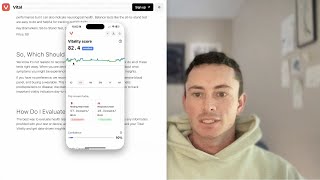
Joe, founder of Vital, walks through three ways to measure your health at home: smart devices, lab tests, and fitness tests. He recommends starting with a DNA test, comprehensive blood panel, and wearable, then shows how Vital combines them into one health score. His grip strength came in at 55.9 kg, just under the 60 kg optimal for his age.
Questions this video answers
Joe, founder and CEO of Vital.
Over 50 metrics.
Critical, Poor, Okay, Good, Excellent, Optimal.
About $40.
Approximately 3–8% error range.
Hi, my name is Joe. I'm the founder and CEO of Vital. Vital is a mobile app that allows you to consolidate all your personal health data, evaluate that data and combine all those evaluations into one simple overall health score. We think tracking your health with one overall score will make improving health a lot simpler for a lot of people. Instead of having to do a lot of deep research and try to figure out which of the experts is right or wrong about the different supplements and interventions they promote, you can just try different lifestyle habits and see how your score goes up or down. For example, recently I switched from heavyweight training to a more circuit based weight training. I'm getting a little more Cardio, seeing my VO2 Max improve while still maintaining strength and that's improved my overall score. Right now in our beta, which is not fully released yet, there's over 50 metrics. You can track different 50 different biomarkers that are indicators of your total vitality. And that data can come from a lot of different places. So I wanted to write this blog and go over where you should be gathering your data from, what data is most useful to be tracking and to be evaluating, and what's the best bang for your buck? So how much does it cost? And if I have to choose one, only a few methods. What are my best options? So in this blog we break down the best methods for measuring biomarkers into three different categories. Smart devices, fitness tests, and lab tests. So let's talk real quick again about measuring your health on your own. Why do this? Well, annual checkup with a doctor is great, super valuable. But having your blood pressure measured only once a year, you know we can do better than that. There's a lot of cheap, readily available devices today that you can use to track a lot of important biomarkers and indicators every day, or at least every few months. So let's start with smart devices. These are really common. One of my favorites is the body composition scale. It's super cheap. I think I got mine for 40 bucks and it gives me a ton of data through bioelectrical impedance analysis. So more than just your weight, you'll get body fat percentage, body water, bone density, lots of cool stats. And they are pretty accurate. It's within, they say from 3 to 8% error range. And one thing to note here is I would not spend a crazy amount getting a better smart scale. Smart scales are limited to this BIA method for evaluating body composition, and that method is limited in how accurate it can be. So spending more on a scale is not necessarily Better if you do want the best one, you want one that. Where you hold something in your hand while also standing on the scale that's supposed to supposedly gives you a better, more accurate reading for body fat percentage. So we can see here the key biomarkers that provides for us and the price range. Okay. The second best is wearables. It's not the first because it's a little more pricey, but this gives you a ton of data on heart health, on activities, so you know, what kind of output are you doing and overall fitness tracking. Everyone should know what these are and you probably have an idea of what your favorite one you want to try. I have an Apple Watch Ultra. It's a little bit excessive for a lot of people. My co founder, Nate wears a whoop strap. He likes it because it's easy to sleep with. Doesn't the Apple Watch was bothering him for that? Yeah, there's a lot of options and they give you a bunch of. A bunch of information to find something that works for your price range. Okay. Blood pressure monitors. I do not have one of these yet. I want to get one of these. So, yeah, like I said before, it's probably better to measure your blood pressure more than once a year. Also, a lot of people get white coat syndrome, where they go to the doctor's office and their blood pressure is really high because they're just nervous. They know it's being measured. That increases their heart rate and their blood pressure goes up. And it's not always the most accurate reading. I actually had an experience where I went to a dermatologist and I had chugged a yerba mate right before, and I forgot that I did. And when they took my blood pressure, it was super high, and I didn't remember why. And they sort of were like, well, you're young and healthy. It's probably fine. So even if they do measure something out of range, they're not necessarily going to help you with it. So really important to measure your blood pressure frequently. It helps you detect trends and. Yeah, okay. Continuous glucose monitors. These are pretty cool. I think they've become a lot more popular in the recent years. They're a little bit expensive. You're gonna spend at least 100 and it's gonna. You're gonna get this patch on your arm. And you might be able to pay with this through insurance, by the way. And that gives you measures your glucose, your blood sugar throughout the day detects spikes. So what's the highest peak you get after a meal? If you eat a bunch of donuts. It's gonna be really high. And what is the fluctuation? So what's the difference between low and high? And what's your glucose level when you're fasting? This is really, really important to measure and detect. If you have pre diabetes or you're developing some insulin resistance, that's going to cause a lot of problems for your health. And using a glucose monitor can also help you figure out how to change your meals in a way that gives you more stable energy throughout the day. So a big spike is usually followed by a big glucose trough that's going to make you feel more really tired, lethargic. It's gonna lower your cognitive ability. So if you wanna increase performance, I would definitely recommend using this maybe once a year and using that to, you know, build a better nutrition plan and meal plan for yourself. All right, the fifth and final smart device we're gonna talk about here is sleep trackers. Like I said, some watches, wearables are really uncomfortable for people to sleep with. If that's you get a sleep tracker, you can, you can use an app on your phone that just uses the microphone to listen and estimate how much you've slept and also how well you've slept. And there's also other devices you can put on your mattress or you can go crazy. Buy an eight sleep mattress that changes temperature and everything to optimize your different sleep cycles. Okay, let's talk about labs. So there's a lot of data you can get from smart devices and wearables, but, you know, it's going to be limited to only so many things. Resting, heart rate, stuff like that. Labs, we get really into the details of nutrient deficiencies and all kinds of other stuff. So the best thing to do is just a full comprehensive blood panel. There's a lot of different services that offer these. You can get them done through insurance or pay for them through insurance. And I think this is really important to do at least once, maybe even once or twice a year. So, yeah, gives you a full breakdown of nutrient deficiencies, which is super important. A lot of people, you know, you'll hear influencers online saying, take vitamin D for this and that reason. But the reality is you don't know how much to take unless you know if you're deficient or not. You don't want to have too much and you don't want to have too little. The only way to know is to get a blood test, see where you're at with your current habits and lifestyle, and then make changes accordingly. So Nutrient deficiencies is huge. There's also a lot of indicators that will be measured that tells you about your organ health, how your kidney, liver are functioning. And then of course, hormones, excuse me, not hormones, but cholesterol, which again, really important for heart health. Something you can only do through a blood test. And these will be probably at least $100, probably closer to 500 for ones that gives you all of these different biometrics. But that's a lot of really important, valuable data. So it's worth doing okay. Hormone panels. Hormones are super important for regulating a lot of your body's essential functions. If you feel really tired all the time, if you, you know, are having trouble with fertility, if your weight is changing in ways that doesn't make sense with how you're eating or how you're exercising, you're going to want to get a hormone panel and make sure that nothing's wrong there because a lot of that, a lot of imbalances could cause harm to your body and your health. So you could find out things like estrogen, progesterone, testosterone. Obviously different hormones are important for different genders. And this is also going to cost probably at least $100 to do gut health tests. Gut health is super important. This is how I first got into health. I had a really bad gut issue. GERD is what it's called and yeah, caused a lot of problems for me. The gut is really central to all your bodily functions, just like hormones. It's gonna cause you a lot of pain and discomfort if you have a bad gut. I think also a lot of people today have gut issues and assume that they're normal. They'll have discomforts throughout the day. Maybe it's not some, anything crazy, but they'll have a little bit of ibs, some gas, some discomfort. It's not necessarily normal. I think you should reach for what's optimal and try to find what makes you feel great all day. So if you're having gut issues, definitely check out one of these tests. You'll see the diversity of your gut microbiome. There are a couple indicate other, other indicators for how that organ is performing. Okay. Lastly, on the lab test is a DNA test. This is something you probably only have to do once. If you get an ancestry based test, they will tell you all your predispositions to different diseases and health issues. So you could take this test and find out you have a really high risk of developing Alzheimer's. That's going to be really important for deciding how you approach preventative health. To Best protect yourself from that occurring. All right, let's dip into the fitness tests. This is probably one of my favorite categories because it's the cheapest to do and really helpful. Still gives you a lot of indicators for longevity. So let's dive in. The number one is VO2 max test. VO2 max is the gold standard for cardio fitness and it's been associated or correlated really strongly with health span and lifespan. I believe Dr. Peter Tia said that having a lead level VO2 max reduces all cause mortality by 500%. Smoking cigarettes, on the other hand, increases your all cause mortality rate by 300%. So elite level VO2max benefits you more than cigarettes hurts you. So VO2max super important, something I'm working on a lot. It does cost about $100 to do one of these tests where you wear a mask and run on the treadmill. If you have one of the fancier wearables like the Apple Watch Ultra, you'll get estimated VO2 max when you go on runs or do workouts outside. Okay, number two is the grip test. Kind of an unusual one. I have this guy right here that I just bought. It's pretty fun. Super cheap. I think it was on sale for 25 bucks. And grip has also been is strongly correlated with lifespan and it's an overall indicator of strength. So one of the reasons people think that it's correlated so strongly with lifespan is as you get older, if you fall and you break a bone that's going to be detrimental to, to yeah, your health, you're going to die a lot sooner basically. And if you have a good grip strength, you can probably grab onto a railing and catch yourself easier. So really important as you age but also as an overall indicator of strength, it's something worth measuring, especially if it's so cheap and strength is just good for protecting your or reducing your chance of injury. Okay, and then we have some other physical strength tests that we offer in vital that you can measure one rep max squat, deadlift, bench, dead hang, vertical, jump height and others. These, like I said, are important because strength decreases your overall risk of injury. It also keeps you independent as you age. So if you want to be doing all the things you love like going on hikes, playing with your grandkids when you get older. Strength is really important to maintain and muscle mass is also really a strong indicator of overall health. Lastly for the fitness test is the balance tests similar. You know, reason for being important. Balance keeps you from falling. It also improves your athletic performance. So you know, having great balance you'll feel really good walking around every day. You'll be able to do the things that you love doing. Longer and really easy to test. One fun one is a sit stand. You sit on the ground and without using your hands, you see if you can stand up harder than you think. And the other test would be a single leg balance. How long can you stand on one leg? Both strong indicators of vitality and longevity. So that was a lot of tests. What should you choose? Well, if you have. If one of them stood out to you and you sort of have this gut feeling like, you know, I've been feeling really lethargic, I haven't really changed my routine at all, that might be an indicator to get a hormone test. If you're worried about your cardio, you probably want to get a VO2 max test or start using a wearable to track your fitness levels. But if you just have no idea, you don't really know what to choose. I would suggest these following three. I would suggest a DNA test. So see what your ancestry is. See what your genetic predispositions to diseases are. Get a comprehensive blood panel. It provides so much information on how you're doing, how your organs are doing, and you can probably pay for it through insurance. And the third would be just to buy wearable. Get. Get something that is tracking a lot of vitals every day. Okay, so how do you evaluate your results? Well, a lot of these different devices and services come with results that tell you more or less how good or bad they are. With Vital, we do it a little differently. For every single biometric you add or you track, we give you, we put you on a range from critical, which is the worst, to optimal level. So the six different ranges, critical, poor, okay, good, excellent, and optimal. Of course, we want everyone to strive for optimal. I think having extreme health just feels amazing and not enough people know what that's like. So get your results, add them to vital, see what your status is and try to improve it over time. I'll give one example here. I'm going to use my grip strength tester, going to take a measurement and then we'll record it in Vital. I'm going to put it to kilograms and start the test. Okay, 55.9 kilograms. Let's open my phone. Okay, let's go ahead and open up the Vital beta app. If you want early access to Vital for the mobile app, just go sign up on our website. If you're one of the first people to sign up for the wait list, you'll be one of the first ones to try it out. Okay, we can see at the top here. This is my overall score and this is how it's been changing over the last week. Let's add some new data for grip strength. Just find it here. 55.9kg. And I think I added this to my favorites so let's go ahead and find it down there. Click on that we can see. Okay. 55.9 kg. I fall into the excellent range. Not super surprising. I've been a rock climber for a long time so should have pretty good grip strength. And we can see here for males 18 plus. I need to get to 60kg to be in the optimal range. So 55.9 is just a hair underneath. I should be able to squeeze a little harder next time and try that out. See also the stats for females and those are the assessment ranges. So that's just one example of how you get evaluations for different biometrics from vital. So yeah, go ahead, sign up for the waitlist and looking forward to hear hearing any of your feedback and excited to get this out to everybody. Thank you.