Building an AI Digital Twin from Start to Finish
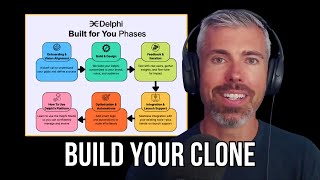
Conversation with Scott and Joe Fier about building AI “digital twins” (Delphi clones). They walk through the client workflow: kickoff to capture vision and priority use cases; content collection (books, courses, membership content, social and public content); a build phase where content + prompts/purpose are encoded into Delphi (typically ~1 week); a feedback/testing phase to tune voice and factual accuracy; launch/integration into platforms (Kajabi, Mighty Networks, websites) with marketing guidance; and ongoing optimization plus automation features (alerts, tagging, actions) to scale and integrate with CRMs and tools.
Questions this video answers
September 10, 2025
About six minutes (initial training/loading).
About one week (may be a little longer for complex cases).
They outline five phases (preparation, build, feedback, launch, optimization) and Joe adds a sixth (optimization Automations).
Chapters
We've shared with people kind of what a clone is, and we've shared how people, how Delphi fits into that cloning world. And we've shared with people how people are using Delphi and some of those use cases.
Let's talk about how we actually make this happen. If somebody says, hey, I'd love to get started, like, what does it take to build a clone with you? Can you just take them through the.
Process the way that I like to run people through? Because I typically do the kickoff with, with new clients and you know, being, being a user of Delphi for a long time, I have a really good understanding of the tool. But it always surprises me with the different use cases or reasons why people want to scale themselves or clone themselves, which is typically my very first question is like, how did you find this technology? Because it's still, it's new. I'm always curious. But also it's like, what's your vision? Like, like, what do you want to do with this thing? Like, tell me your crazy wild vision. Just go go crazy. Don't hold back. And I usually start there because it gets them excited and it also turns on some lights that might not have been turned on. Because I'll hear what the vision is. I might expand it further or it might walk them back a little bit just in. But I'll give them context of like how it works in Delphi, maybe sometimes telling them, like, hey, here's what's what's coming or what I, what I'm aware of. So like, yeah, maybe that's a thing, but not now. So it's capturing that, trying to bottle up what's their, what's their vision and then align it to Delphi essentially. Like what can be built during that call I, I stole this with. But I do credit it to Dan Sullivan, his whole thing of like, all right, so paint a picture. Now that we have your big vision, let's focus on like, what's the priority use case in your business? Typically people have like one or two and typically it's their members area. It's like we have an existing community that we want to give more value to. They ask a lot of questions, which is a good thing. Means you have an engaged community. But it's either the business owner, the expert, or their community manager is completely overwhelmed. That's almost always the story. And again, good problems. But they're usually looking to hire some, you know, multiple people or. But then they see Delphi and they're like, holy moly. This thing can literally do the job of like 20 of these people or even more and better. But it doesn't eliminate the human, you know, in there. Like so the expert or the community manager is still very valuable there to support. So but the point is like figure out where the priority use case is. And then that's when the Dan Sullivan question, which is like, hey, paint this on a scale of 1 to 10, what's an 11 outcome of making this use case, you know, like come to life and like function really well? How is it going to give the most value? How would it act? How would it not act? You know, basically I'm trying to really figure out what are the, the guardrails, how are we going to program this thing. And essentially all that becomes prompts or, or a massive prompt with instructions and different logic that we build out.
So which is where our team. Yes. Steps in. Right. You were mentioning earlier that one thing with a 10,000 award prompt, like that's all stuff that our team is doing.
Yeah. So we're like. So it's a mixture of getting their vision. But then strategically, because I've consulted a ton of businesses, I've advised them as well. I have a marketing mind. So I'm thinking of this as a journey which when I tell people this, I don't think they're expecting it. They're probably expecting some like tech guy, you know, as is like, oh, I build team or from Delphi. But it's like, no, they actually like get super jazzed up when they hear, oh, you're a marketer. Okay, perfect. Like I need all the help.
That's so interesting that you say that because everybody that is a builder for us has a marketing background.
That's right. They have some form of marketing.
So after you guys have. You're kind of in that first that preparation, that prepare state interface, then somebody is directed to send you content. Right. How does that happen? Like what kind of things do they send, where they send it to, how's all that work?
Yeah. And the content is, I always say this is the biggest lift on the person. Like so the business owner coming to us. Which makes sense because they hold the content.
You know, it might live in a whole bunch of places like on their membership area. That's it could be just loaded into a Kajabi or Mighty Networks or Circle platform or wherever thinkific. These are all pretty very common places. Yeah. Most of the times people have backups on a Google Drive or Dropbox, which is helpful. If they don't. There's other ways to extract the information. Ideally you want to have something in a shareable like Google Drive, just because a. And they always thank me after they go through the process, even if it's kind of grueling for their team. You have a backup of your stuff. You're not like platform dependent anymore. And literally I've never had one person say that was a bad idea. Like there's like, yeah, I've been waiting for the point, the moment this had to happen.
Joe, would you say that this is probably when it comes to timing on a project, this is probably what slows things down the most, is somebody's really enthusiastic and then it comes to pulling together their data and sometimes we'll wait weeks.
Yeah, they're trying to get their assistant or themselves or whoever hires someone even to do this. Sometimes it is A lot of times though, I mean, luckily we, we're fortunate enough with Delphi where we get given we're basically like, we're onboarding the, the top tier clients, which is awesome. So a lot of them are pretty organized or they have a team that can get it done fast. But still it's a. There's a content lift. So I'd say yeah, and even if you're not doing Delphi, like have your content somewhere because any kind of AI, it's going to come in handy for.
Any AI from now until forever. You're going to need to have clean content in order to work on projects efficiently and things like that. Just kind of a couple of hacks that, that I use that really helped me to, to get my model kind of like trained quickly was I had, I had three books and what I, what I had to do, actually one of them, I didn't have the manuscript, so I had to rip the whole thing off.
And that's very common by the way, with authors. It blew my mind. I'm like, you don't have your own book, but like. Well, the publisher does and the publisher does. Yeah.
And so, so I literally had to. I've actually got, I'll just show you the back, but I got one of them right here from when I did that.
Oh, you really did rip it apart.
I really did rip it apart. I ripped it apart and whatever and I scanned it. And so I basically I had, I had that plus I had the other books. I had the thingamajigger, the, the, the, the, the document and the manuscript. So I had those. And then what I did is I have, I keep a, keep a Google workbook and in the Google workbook I have a bunch of sheets. And so one of the sheets is all of my YouTube videos, one of the sheets is all of my articles. One of the sheets is all the podcasts. So I have all of that in one place. And basically what we were able to do is we're able to just drag and drop. So we send you a link and you get a link and basically the back end is a Google Drive.
Right.
And I just Book, book, book, work, work, Google workbook. And that was it. And in the initial training and loading of that took like six minutes.
That's right. Yeah.
Right.
It's fast.
And then I clicked a button. Andrew had me click a button. This is 18 months ago. And so I went to a different part in the, in the, in the back end. And I was like, oh, my gosh, this thing knows more about me than I know about me. It was incredible. So again, this takes time. You might be able to use ChatGPT or another large language model to help you to get all that data organized in a way like that. But it's a hack that takes time to do the first time. But once you do it, you. You're going to be able to onboard into really any AI or use any large language model, be able to train it really super quickly.
What we're talking about now is the content that is not published publicly. So, meaning. Yeah, this is all the books that have been published that, you know, obviously you're not going to rip books from Amazon, like. Right. It's, it's. Delphi cannot do that. It's not going to go start scraping some private repositories, like just. No, it won't do that. But so you need to. Yeah, provide it all this clean content. So books, training materials, maybe if coaching calls, whatever it is that you do with clients or your personal information that you want to load in. Yeah, have a place. Google Drive is preferable.
What about social media?
Yeah, yeah, yeah, yeah. That's where I was getting at. It's like now you have. And then you have this whole other side of public content, stuff that you've already consciously pushed live to a platform. So there's social media, all the platforms. You have YouTube, you have podcasts, you have your website, blogs, email, even. All that stuff can be consumed or, you know, basically ingested into Delphi in a bunch of different ways.
Can we provide links or like how.
My favorite ways are. Yeah, like the website links to any kind of website that represents you, your brand. We can put those in there. And Delphi scrapes those websites, which is really Cool. Organizes them. You have the ability to rename anything if you want. You can delete if you don't want certain pages loaded in there. That's a super fast way to get something up to speed. If you have a lot of public content, YouTube is another great one. So you can sync up to a YouTube channel, a playlist, or individual videos, including not on your channel. Those are the ones that you would reference someone else as the. The owner or the creator. And it keeps it synced to YouTube as well. So any future content that goes out basically loads into Delphi automatically without you hitting any buttons. Same thing on podcasts.
Once we have that data, that's where like Joe and his team, that's like where you guys do your magic. That's where the art comes in. So the next phase is kind of the build phase. And what happens in the build phase.
We take everything that we talked about on the call, which we typically record, so we have the transcription. We use fathom, you know, to record all this stuff. So we're capturing everything and then. But we're also taking notes. We take your content, all the information. We're also doing our independent research on, you know, on you publicly and wherever that stuff is. And that's where we build it into the Delphi system. We really focus on this thing called the purpose. It's kind of like the core functioning or the core values of your Delphi. It's going to. It's going to really tell it how it should act, who it is, you know, its roles, frameworks and content to use and all these different instructions that, that we make sure it's not going to say some crazy thing. It's not emulating other people. It's not going to, you know, tell people to go jump off a bridge or. Oh, I mean, like literally. We take all this very seriously. All that stuff is coded in here where we are making sure that this is tuned up, exactly what you have in mind. And we can always go back and revise this, but we're designing that because it is an art, you know, is to do it that way. We're testing and we're adding different instructions. Basically, as we're building, we're testing it in real time, going back and forth, back and forth based on what we talked about. That phase typically takes about a week, maybe a little longer, because last thing we want to do is rush it. We have done very rushed things for timelines or demos that people want to do, but typically I would say budget about a week to get that done.
That phase, you know, we're on it 24 7. You don't have to do anything during this phase. This is really where we do a lot of the heavy lifting which leads to the third phase, which is now we've done our build and it's time for you to go get feedback so that we can iterate. Do you want to talk about that for a minute?
For sure, yeah. So that's the phase where we're now adding you to the platform. We also educate throughout all this process so you're aware of what we're doing and also learning the platform. I think that's a key thing, is we always want you to have the keys, you know, so you're, you're not, it's not this black box where you're like, oh, it's this mystery thing, you know. But we are here to help guide you along the way and actually do the work. So in this feedback phase, the third phase is basically you getting access to the platform, both the back end and also the profile, your Delphi profile. And that's the page where you're going to see your avatar, a description about you and yourself, and then typically two or three boxes for people to interact with you. Text, voice, and if you have a video avatar, a video option as well. So three, three ways people can engage, and then there's some suggested questions or conversation starters right below that. That's basically the profile in a nutshell. And what we do is we, we give best practices on how to test out your Delphi. Typically, it's want to make sure it sounds like you, both in written form, video form, and visual. And those are probably the most like, holy crap moments, you know, where you hear yourself for the first time. And sometimes it's not perfect, but again, we could tweak it. There's a lot of things, like all this is customizable or it's writing the way that you speak and you're like, damn, I always wish I could write that way.
Or sometimes you're just like, wow, I speak like that. I should change. And you can change that too. But again, it's so deli. And I guess I skipped this part. When we load in all the content. Delphi is so dang smart, where it's actually analyzing the way you write and speak. Yeah. So it's creating a whole profile around you and you can customize it. And we do. During this phase, we're not just banking on Delphi to get it perfect, but it's going to set the scene and like Foundationally, but this is what will get the thing to really emulate you and the way you think, the way you speak and respond. So that's part of the feedback phase, like back to the third phase. That's where we want to make sure you're testing all of it. And essentially we make it easy. We have a whole forum and way to interact with us throughout this, actually all these phases where we'll be able to get your feedback, capture that, make those iterations basically in real time. Sometimes it takes us an extra couple days depending on how in depth the, the feedback is. Because some people are, it's, it's as easy as like, hey, I didn't really, you know, it referenced an old product that I don't have anymore. Well, that's easy. It's very easy to update that. Like you said, you know, about your daughter, you know, giving, giving an answer that or a question it couldn't answer. Well, the, that happens as well in feedback. We just give it the answer and it trains the mind and it now knows that from, from now on until it's updated, if it ever is.
And I, during that feedback phase, I know that one of the things that you've done in the past is, you know, you've had the people on the team or the management team listen and ask questions just to make sure that everything's on point with the data that's been given to you. So, you know, you really, really hone that in. You nail that down. And then once you're past feedback and iteration and you as the user are like, okay, I'm ready to go, I'm ready to push this live now. We push live, we integrate, we pass off. Can you kind of walk through that phase?
Basically the integration launch phase is where we're at now because you're feeling confident, you know that this thing is going to act the way that you envision it would, maybe even hopefully better. Now we get to decide and we've already talked about this, we know we have an idea of where it's going to live. So if it's in a members area, it might be in your Kajabi platform or Mighty Networks. So what we'll do, Delphi is super simple in terms of embedding. There are some definitely best practices and things we guide you on. But it's as simple as, you know, an HTML form or an iframe, depending on where it's going. Sometimes it's within an app, mobile app as well. So what we'll do is not only provide the guidance on how to do that. But we're giving you best practices on how to launch this or, or not only embed it and integrate, but how to launch it to your audience or whoever's gonna use this, Even if it's internally to your team, there's best practices to start sharing your Delphi and actually do the launch. I mean, we've all done product launches of our own type. You know, it's like sometimes those are. I wouldn't say it makes or breaks everything it could, but like that launch phase, you really wanna hype people up to be the early adopters. I mean, it's just like with AI in general at a greater, there's always these people that are going to jump on early and then, you know, use it and then talk about it. And that's how I see it with any of this. When you launch it to your own business, even if it's internally, on your team, community, even in the public, you want to get evangelists around your Delphi. So it's not just you talking about it all the time. We want to start sharing what other people, how they're using it. And you know, and then it becomes this kind of this, this thing that's network effect almost. And that's what we try to achieve. So we're integrating a little bit of the technical stuff, like where is it going to live, how's it going to function? But also what's the marketing approach here? How do we get this out? So we get people using it and then telling other people within your community to use it. So it becomes a valuable thing. Right on the rip.
Exactly. And so when we're talking about launching.
It.
And we're talking about kind of where it's going to live, like that's, that's, that's one part of it. Can you talk about actions? Because people are always asking about, does this integrate with anything? Like, how does that work?
Yeah, yeah, good call. I glossed over that. I got excited about the launch.
So tons of integrations essentially. What, if you can imagine, Delphi, like I said earlier, is kind of like a CRM in itself. So as a conversation funnel, it's getting people to opt in. So when they opt in, they're technically added to your database. So there's a profile created around that person. You're going to have them technically opt into your email. At that point, they can also opt into your sms. So the profile inside of your Delphi CRM will show you all this per person and it gives you basically some stats, kind of like if you were to look in your go high level or HubSpot account, you can see stats on that person and you know the information they've given you you. But what if you want to take that information out and have it do some stuff? So that's where you can integrate it to any kind of email CRM. Some are natively integrated, some are not, but you can connect them in a whole variety of ways. Zapier is in there, so that connects to pretty much everything. You could also get a little bit more technical and push to different APIs. So essentially you can connect with anything you want. And there's other integrations. Like you can connect it to your Google Calendar actually, which is interesting. So you can have it. And this is like we're not going to go down too far here, but you can have it actually join a Zoom meeting if you wish to. You know, Delphi can join and kind of be a note taker slash a companion on a Zoom call, either audio or video, which is pretty cool. Blows minds. And sometimes I even forget to use it because it's, it's one of those features. There's so many features in Delphi, but that's an integration Slack, you know, if it's for teams, a great use case, a lot of people do, or even a community that's like a Slack community, you can integrate your Delphi into there. So not only that is a way you can import information into Delphi, but it's also a way it can be your Slack bot, more or less, but it's actually you.
When we started the very beginning with the preparation phase and we're learning about what your purpose is and what the use case is, you know, our team is going to have ideas for you about how you may want to integrate this with other tools that you use. As we go through the build phase and now we're at feedback and iteration and you've learned more and people on your team or people who are testing this are starting to say, hey, wouldn't it be cool if we did this or we did that or we connected with this. You know, we're, we're basically, I mean, just think of us like we're right alongside you, riding shotgun as a member of your team here. And our job is really to help see you win and so you share those things with us and then we can help guide you, coach you, train you on how to create, you know, those, those types of, those, those integrations. And so once we get past that point now you're live so there's, there's a couple ways that, that, that we work with a customer. So the first is as we've taken you through the preparation, we've taken you through the build, we've taken you through the feedback in the iteration now we've launched you and yet so the first way is that we can launch you and your team now knows how to use this and you guys take it from here. What really everyone has done with us up to this point is they've taken it to the next step and that is just we stick with you, you know, we stick with you forever. And so you pay a monthly subscription fee and every month, you know, our team is in contact with you with are constantly optimizing your clone. You can send us an unlimited amount of content and we'll continue to train it. We can add additional use cases for you and we can just help to expand how you leverage, how you monetize, you know, this, this tool. And so really kind of that's really, I think the, the whole cycle right is the preparation, the build, the feedback launching and then optimizing is, is the fifth base.
Yeah. And yeah, actually, well I would, I would add actually optimization Automations as a sixth is a six. Yeah and I'll tell you why. But yeah, the training after launch and all that and this is where everybody as of yet like you said, basically keeps us on staff and I like that we ride shotgun in your business. I actually that's a great analogy. It's perfect and it's, it's, that's the phase typically where we want to keep you engaged in the latest of the Delphi platform. So there's training, a lot of training happening and we have a lot of that pre recorded and we're always adding to it just because the platform and AI moves at rocket speed. But the thing is there's all new features that are always rolling out. So we are constantly. The fact that we work with the Delphi team tightly, very tight and we're seeing what's being released and how to use it. We want to make sure that you're geared up to do the same out of the box. Delphi is extremely powerful and it's great. And yeah, if you wanted to keep up with all this stuff, you could try some of this stuff. You really just don't know unless it pops in on the platform and you start just breaking stuff which is what we do every day. So we basically shortcut that whole thing for you. We're on your team, we know your vision and There should be a lot of trust at this point where we have your back. And again we're making sure that you're trained up on what you need to know and where things are going. Then that six piece is really the optimization and automations. Why this is cool is because now and I'll just describe some scenarios when we don't really start here and some people want to just start like with AI, everybody wants to automate from the get go. It's like great, what are you gonna automate? Do you even have a picture of what the hell you're doing or like the right setup to automate? Maybe you're automating something that's horrible or that no one wants. That's why we go through this phase and we get that feedback and we make sure it's functioning properly. Automations and optimizations, those are all geared to scale and that's that continual thing that kind of loops. But the, a few examples is in Delphi I see it as almost, it's becoming very agent like if you're, if you're aware of this whole concept of agents, that's where basically AI can be built in a way to start doing actions on its own behalf because you programmed it with some really smart logic to do whatever you want. You know, it could be anything. That's very simplified of course. But the point is Delphi is becoming more of that but with its own digital mind that you, that we've already talked about, that you've created or that we've helped you create. But we're all doing this together now. You could set up these different things to tag people during different scenarios. So now you're, you're organizing people and conversations. And then of course you could do things when people are attacked just like you could in like go high level or HubSpot or something. You could set up alerts. So these alerts can be triggered to you or people on your team or even to the user based on different things that they say or conversations they're having. So that's super valuable if someone's mentioning they really want to work with you or they really want to set up a call with the real Scott because they want to invest in our business or something else, you know, like oh shoot, all right, pick up the phone, go like you got the phone, you get their email. Like go reach out as a human, some of these things you want to be alerted to. That's why the whole, you know, scaling connection. That's again why I think Delphi is cool, because you can make human connection come from this scaled connection, if that makes sense. So you have tagging, you have alerts that then can trigger things to happen. And the last bit which is being expanded is you have this Delphi actions. The way I would see that it's almost like Zapier built into Delphi and these are if, if this, then that kind of statements. And in Delphi I'm just going to list some of these off because these are like templates or featured things that just get the, get the party started, gets the, gets the thing going. But like there's inactivity, nudges. Let's say someone just hasn't engaged with your Delphi for like a week or a few days. Well give them a nudge. You know, you can actually send an email from your Delphi, you can send them a message, you can send them an SMS text. If you have them opted in to bring them back and say like hey, we had a really good chat, like how are things going with that thing you talked about or that thing you said you wanted to do? So it's almost like an accountability partner, bring them back to the conversation. You can notify you or your team based on certain things. You can push data out to a different source, to another API, to an external system. So it's another deeper integration. But you can also do that based on actions. You can check in with people at a certain cadence, you can remind people of an event that might be coming up that you have. You can just follow up on anything, a couple other things you can send them birthday wishes, you know, like, or certain reminders on anything they shared with you that's maybe date, you know, focused. Like there's, there's all these little touch points that you can set up and it's really up to you being creative. So that's where the automations come into play. It's again it's kind of like Zapier but within the system. But then on the other later is like Zapier is also an integration. So you can then integrate to thousands of other tools.
They're integrating more things all the time. So I'm sure there'll be more even by the time this episode goes live or soon after. But that's what we're doing in the optimization Automations phase is basically always getting creative and looking at feedback and what's working really well. We figure out if something's not working, fix it. But also it's like well what if we did this to enhance what we're doing that's where our team is always thinking about that and, and then we can apply some of these automations.
Well, you know, we also have the perspective of hundreds of customers. So because we're able to see exactly what's working for people and what's not working for people, we can save you a lot of time and a lot of hassle by really just kind of working side by side with you. What is it that you want to accomplish? Then we can try and figure out the best way to do it within the tool. Because, because our work extends across so many. We're constantly working with the team over at Delphi on, on how to, you know, improve in every phase. So, so you've got, we've got these six phases that we just outlined and I think it's important to note that, you know, some people might, might, might be saying to themselves, well, you know, I, what was phase one again? Or where do I start? Or how does it happen? So we have, for our, our clients, we have a private client portal, a hub. And so you, when you become a client of ours, we give you access to this hub and it actually takes you through each phase and it has all the checklists that you need. It has a description of what happens in this phase, what we need from you in this phase, what would cause the biggest delays and how we can help with that. You've got all of your checklists, you have your pro tips, you have your FAQs and you also have videos as well to help walk you through that phase. So everything that you or your team would need is really just in one place and we've summarized the most important things that you need to help make this just really as simple as possible.
It.
More from Joe




OpenClaw is making AI agents accessible to EVERYONE and this is a total game-changer. 🤯 #ai #ainews







OpenClaw Delete Panic -- The Email Inbox Nightmare! #openclaw #email #nightmare