Hormones Are the Secret to Entrepreneurial Success! | H&F #653
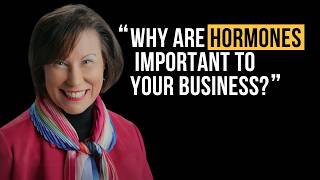
Podcast episode (H&F #653) featuring Dr. Pamela Smith interviewed by Joe Fier about the central role of hormones in health, longevity and high-performance work. Dr. Smith explains key male and shared hormones (testosterone, estrogen subtypes, progesterone, DHEA, cortisol, pregnanolone, thyroid, insulin, melatonin), measurement methods, target/‘golden’ ranges, links between toxins and hormonal decline, and the complementary role of toxin-removal (therapeutic plasma exchange) plus personalized medicine and nutrition.
Questions this video answers
50 (units not specified) — Dr. Smith states 'the golden number for pregnanolone is 50 or above.'
Estrogen, progesterone, testosterone, DHEA, cortisol, melatonin (pregnanolone measured by blood).
About 0.35 to 2 (she recommends the lower limit of normal / near lower range as ideal).
Under age 60: 70–85 mg/dL; age 60 and above: 70–90 mg/dL (anything above 90 she flags as concerning).
6 (units not specified).
Chapters
Probably the most important hormone in the body is thyroid, because thyroid regulates everything in the entire system. And that one you have to get perfect, optimal, and not just normal. I will be 71 in July. I do not plan on retiring. This is my natural color of hair, so I'm going to go for it. I plan on being not just 100, but a healthy 100 years of age. 70, honestly, is young, but it's only young if you are hormonally balanced. We never saw a male under 42 with low testosterone, and now we're seeing men that are 30 with low testosterone and without testosterone. It's really hard to compete in a very intense corporate environment.
Marketers have never been so spread thin. You know, like, with all this stuff happening, technology is going crazy. It's really tough to really focus and get creative and and create great content or connect with the customers like we used to or even prospects. So, you know, you're trying to launch a bunch of content campaigns, you're generating leads, you're trying to score the leads. You're nurturing them so much more, but you really don't have enough time to even breathe, let alone do the best marketing out there. But HubSpot is trying to fix that for you. They have a new AI it's built into the system called Breeze. So it actually combines their marketing hub and the content hub with all these different cool features that help you automate and, you know, remix your content into a whole bunch of different types, score your leads in a better way, and actually have a nice look at the analytics and everything that's going on in your business. So I would recommend to stop spreading yourself out so thin and start making some big moves with HubSpot. You can try it out for yourself. Go visit HubSpot.com marketers to learn more. Hey, before you get into the episode, I urge you to hit pause and go check out the AI Digital mind. It's like a digital twin of this podcast and a whole bunch of other content I've released, go to hustleandflowchart.com AI Joe. That's hustleandflowchart.com AI Joe. You can literally chat with this podcast with me and my guests in text, audio, and video for free if you want one of these made for yourself. If you're Interested, go to hustleandflowchart.com interest and we make these things out. So enjoy. Let's get to the episode. Thank you so much for doing this episode here, Dr. Pamela Smith. It's an honor to have you Here. I know you're busy. You, you're always writing books.
But today we're going to focus in on a very important topic on male hormones. But also this will the women that are listening if they're men in your life. It's very important. But Also, I'm sure, Dr. Pam, that women will also get something from this chat as well. So thank you.
Thank you. Absolutely. Hormones are important to both men and women. Besides, if you fix him, you've got to fix her. If you fix her, you have to fix him. So it goes hand in hand.
That's right. That's why. That's what I figured. And you know, like we were talking right before we recorded. There's a. Well, there's a lot of things that affect us as humans, but, you know, as a lot of us are entrepreneurs, most of us, unless you're kind of thinking about jumping into business for yourself, then you're. I hate to say the wantrepreneur, because I don't like that term, but, you know, whatever it is. But there's other factors at play that make us us. That help us think straight, feel good, and stay in the game. Because that's the whole point. It's like, how do we do this for us and feel great? Have a good time doing it.
I will be 71 in July. I do not plan on retiring. This is my natural color of hair, so I'm going to go for it. I plan on being not just 100, but a healthy 100 years of age.
Right on. You and Dr. Savage, too. I mean, like, he's. He. Well, he's come out of retirement, I think a couple times. You guys are just to call it to him. He's a colleague of yours, good friend, Dr. Paul Savage, who's been on this podcast, too.
Yes. Dr. Savage and I have known each other for our ER days back at Detroit Receiving. And then as we moved into more of a personalized medicine approach, both of.
You individually and collectively, are doing some amazing things. I'm honored that I'm good to like I get to see the first, you know, hand. Look at some of just the knowledge that you're sharing out there in publishing. And I will actually be getting some of the treatments that Dr. Savage is doing very soon. Soon to be. I'll report that on the podcast later. This is the first time I've even said that. So.
Awesome.
Yeah, yeah, I will. But so how. Let's just cut right to the topic and then I think then we'll kind of sneak back a little Bit on your background and, you know, some of the other nuances there. But hormones, why are they so important and what are they? Let's start there.
That's a great question. So, first of all, why are hormones important and hormone replacement for males? We commonly think about it for women, but for men, it's equally as important. When it comes to memory, you need hormones. So we're going to go through each hormone and discuss it. When we look at prevention of heart disease, that is very important when it comes to hormones, when we look at the immune system, when we look at bone structure, believe it or not, men can actually get bone loss. So it's really important to look at it from that viewpoint. When we look at it from the viewpoint of depression and anxiety, there's many reasons. Muscle mass, energy levels. There's so many reasons to look at male hormones. So it's important. So let's start looking at them. We'll start with, believe it or not, estrogen, because that's the one we never talk about.
And that's predominantly at least seen as the female hormone. Right?
It is. But men do make all three estrogens that women make. E1, E2 and E3. And men need estrogen to maintain bone structure and for their memory. They also need it to prevent erectile dysfunction. Ed. So it's a really important hormone. But if estrogen is too high, it increases a male's risk of heart disease and increases his risk of prostate cancer. We want to measure that hormone because we want a dead center of normal, not too high, not too low. Perfect. And the science is actually here so that it can be perfect for every man. Men also make progesterone, again, a hormone more commonly discussed with women because of anxiety, et cetera. But progesterone is important for men for myelination, so their nerve endings stay. It also is a great 5 alpha reductase inhibitor, which means that it really helps balance some of the other hormones in the body, like dihydrotestosterone, the other testosterone.
I've heard of that. Yeah.
And we don't want DHT to be high because then the prostate gets big. You have an increased risk of heart disease and increase in prostate cancer as well. And so progesterone is just a great balance for that. Plus the newest studies are showing that it helps the brain. In fact, we are using IV progesterone in both men and women for a traumatic brain injury. IV in the, er.
Oh, wow. And that's a. I know. That's a bigger topic lately. TPE or not TPES, but traumatic brain injuries, TBIs is a huge issue.
And so we're now using it for that as well. And then of course, the male hormone, testosterone, yes, it is sexual interest, but it also lowers cholesterol, blood sugar, blood pressure, and is memory, is the immune system, is energy. I mean, fights, depression, anxiety, muscle mass. It has so many fabulous functions in the body that without it, that's part of how people age, is that they really don't have it.
So is it the hormones? And maybe this is how does it all work? Because we start off with our own.
Levels of hormones. But then things happen throughout life. Right.
Part of the aging process. There's some hormonal dysfunction, but that's for a number of reasons. People tend to have lower hormones with age. But now, newly, since about 2017, we are now seeing very young men with low testosterone. It did not really happen before then. We never saw a male under 42 with low testosterone. And now we're seeing men that are 30 with low testosterone.
Oh, wow.
Some of it is related to COVID 19. Some of it is related to toxins in the environment. And so there's just a buildup of so many toxins now, including hormone disrupting things like BPAs that are part of plastics, et cetera, microplastics. They cause testosterone to be low a lot. And so you need that hormone for bone structure as well. So men want to not fall. In fact, the stats for men are worse when they break a hip than women. When a woman falls and breaks a hip, 1/2 do not walk for a year. When a man falls and breaks a hip, 1/2 die within a year.
Wow. Just from what being not able to move around and do. Wow.
It's really much more serious. And we don't spend enough time talking about bone structure in men because it is something that is a preventable disease process in almost every single male. But men do need bone density tests starting at 60 or 65 years of age.
Because I'm thinking of my audience right here and myself. I just turned 40. And the stats that I have, and this is why we're talking about people are like, why men and not women? Well, it's about 75% of folks or so are men who listen and watch this podcast, this show. But also, I know it's 40 and up. It's more at 45. Maybe 50 is kind of like the sweet spot. And, you know, the most people are listening and watching.
Well, and without testosterone, it's really hard to compete in a very intense Corporate environment. I still work 18 hours a day. I can only do that because I have hormones. I still speak on four different continents. As you've seen, I've written numerous books. Just have a brand new book on how to prevent breast cancer and how to prevent a reoccurrence that just came out. I'm still going really strong doing the research with Dr. Savage when it comes to therapeutic plasma exchange and getting rid of toxins in the body. So 70, honestly is young, but it's only young if you are hormonally balanced. And it is all about balance. So you have these two other hormones that we don't talk about a lot either called DHEA and cortisol. Those are made in the adrenal glands, the glands that sit above the kidneys. But DHEA interfaces because it makes estrogen and testosterone and it balances cortisol, the stress hormone. DHEA I lovingly call the anti aging hormone. It is the longevity hormone because it gives you energy and your immune system and lowers cholesterol and you feel so invigorated when you take it. It is absolutely fabulous. But we only give it to people that it is low in. And it does balance cortisol, the stress hormone, which is a very interesting hormone. You have to have cortisol to live. If you do not have it, you die within a week. So it's the most important hormone in the entire body. And they all come from another hormone called pregnanolone. And I'm going to spell that because it's hard to say and hard to spell. It's P R E G N E N O L O N E. So P R E G N E N O L O N E which makes all the hormones that I discussed, plus it is your hormone of memory. And Even if you're 45, if you're really, really stressed, the body has to make cortisol. So the body will take pregnanolone and make cortisol. So you can have low pregnanolone even if you're 45 years old. And you will have brain fog and not rapid fire memory, which is not great at a corporate environment. You really want to be able to compete at your best level.
And so pregnanolone is equally as important. All the hormones I talked about are best measured by saliva, except for pregnanolone and is by blood. And the golden number for pregnanolone is 50 or above. And again we only replace it in people who need it. Even though I'll be 71 in July, my pregnant alone level is 55. So I don't take pregnant alone. I still have that hormone. And everybody is really, really different. And that's the reason why personalized medicine is the best medicine there is, because it is a personalized approach. We look at the cause of the problem and not just treat symptoms.
Let's pause there for a moment because that is a key thing that I know you and Dr. Savage really, stress is personalized medicine. And.
I've been fortunate enough. This podcast is honestly a shortcut or a hack to meet a lot of people in all spaces. But ironically, I've come across a lot of personalized medicine type folks like yourselves, but lately even more so because of me getting older and just understanding, wow, all these things, that very toxic environment right now that a lot of us are living in. But I feel like my age group maybe even more so because from the very beginning, and maybe that's something we talk about, but just like you were saying, to continue into the later years at 40 and later, I'm just talking about myself. It's like, what can we do? How can I personally measure what's going on inside of me and then actually have action steps now? Because if you don't measure, Dr. Savage talked about this, like, get the data, and then it's like, what are you going to do with that now? And that's what I really love. It's not a general blanket statement like, okay, take these vitamins or do these things. But no, actually understand your data. Can you talk on that a little bit? Your thoughts?
Absolutely. It's really different for every person, and AI is here to stay. I raise people that it's not going to take over from a personalized medicine viewpoint, because it really is personalized and customized to every patient. But when it comes to that hormone, pregnant alone, when I talked to Siri, instead of typing it in, I usually will talk to her and say, and be saying, pregnant alone. She types pregnant alone. So I don't think AI is going to take over the world quite yet.
Well, Siri's not. Not. She's not the smartest or it is not.
Yeah, no, she can't learn yet. Even though I've probably said it 300 times into my new cell phone, she still can't learn. But it really is a customized approach to every person. That's where the science is here. In my own personal practice, there are no two patients that get the same hormones, male or female. And so all these patients, they're all different. The hormones are compounded, they're made Individual for each person. And men are a little easier to give hormones to than women. They tend to have less side effects. There's a wider, what we call therapeutic range. So they're a little bit easier to give hormones to than women. Women you have to get perfect. It has to be exactly, perfectly balanced in order for them to be healthy and stay healthy.
Got it. Okay, so pregnant alone.
Just so you know what I'm doing on the side, I use a tool called Perplexity AI and it's a great search tool. It's. Yeah. And there's a whole medical aspect to it too. But I'm just reading it here as you're saying. So thank you for spelling it out for me earlier because I found it like that. But yeah, it basically says the precursor to all the other steroid hormones in the body, including cortisol, dhea, progesterone, testosterone. So it's like. Yeah, if you don't have that right. Then you're in trouble. Right. Or like things are out of balance.
At least they are out of balance. And it is all about balance. Pregnant alone comes from cholesterol. And I have a hard time with cardiologists understanding this, even functional medicine cardiologists, because you have to have a total cholesterol of 140 to make pregnant alone. Honestly, high cholesterol does not cause heart disease. Inflammation of cholesterol causes heart disease. And that's how a statin drug works. A statin drug is an anti inflammatory agent. But if you get the total cholesterol too low, then you'll get brain fog because then you won't make pregnanolone to make all those other hormones in the body. So that golden number is total cholesterol 140 in order to make the other hormones.
And you mentioned 50. Right. As being kind of the mark for, for pregnant alone.
Let's see, what would you. Yeah, I don't say recommend, but like it's personalized medicine. So I kind of want to get to like really knowing your numbers. Right. Like, what are the things you suggest us watching, listening should be doing at this phase? Just to understand. Okay, here's where we're at, you know, in terms of hormones. And then, and then, you know, we can talk about maybe potential next steps.
Absolutely. I want to refer people to, if you want to read about male hormones, to my book Maximize youe Male Hormones, which obviously you can get on Amazon, probably the easiest location. But in that book it discusses the other hormones that interface because it really, they do kind of weave together probably the most important hormone in the body is thyroid, because thyroid regulates everything in the entire system. And that one you have to get perfect, optimal, and not just normal. And conventionally in medicine, normal is okay, but in a personalized medicine approach, you want it to be perfect. So let's talk about some numbers, since you asked, okay?
Please.
Yeah. So people, grab your tablet out there, okay? Or a piece of paper if you're like me, and write it down. So your body makes tsh, thyroid stimulating hormone. The hormone that stimulates thyroid. Perfect is the lower limit of normal, which is about 0.35 to 2. The higher you go, then the worse the function is. And then you can be hypothyroid or have low thyroid function. The body makes T3 and T4, which are two thyroid hormones. You want those to be dead center of normal. And these are blood studies. You measure the free form. The trouble is, conventionally in medicine, we Never measure the T3. The T3 is the one that helps prevent heart disease. It's part of the mitochondria, the engines in the body. So really important to measure, as is reverse T3, which looks at store thyroid and thyroid antibodies to see if your body's producing antibodies against its own thyroid gland. So you have thyroid. It is the conductor, literally, of the hormonal symphony. Equally as important is insulin. Insulin is the hormone that regulates your blood sugar. 80% of people that are adults in the United States have insulin. That is not perfect. So let's look at those numbers. Okay? So perfect fasting blood sugar for everybody out there, if you're under the age of 60 is 70 to 85.
If you're from up to age 60, 70 to 85, 60 and above, it's 70 to 90. So as you age, it creeps up a little bit. 70 to 90. Anything above 90, you are going down the wrong road. Why wait until you're diabetic? Why don't we do something to regulate your insulin before that time? The trouble is, unless you see a personalized medicine practitioner, you probably have never had your insulin level measured. So Perfect fasting insulin is 6. Too high or too low is not good. And then you probably all everybody out there has measured hemoglobin A1C. And the perfect there is 5.4. And so you want that one perfect because insulin regulates blood sugar. If your blood sugar is not perfect, not only do you have an increase in getting diabetes, but heart disease, stroke, every cancer there is, and memory loss.
So hugely important, you have to have your blood sugar and that hormone insulin Normal. The American Endocrinology Society said the following, and it's now published that one of the best ways for men to normalize their insulin is to make sure their testosterone is normal and their testosterone is not. To look at hormone replacement therapy as a mode of regulating insulin in the body.
Wow. That just got published. Interesting.
It's very interesting to look at. They really do all weave together.
Yeah. Well, wow. Thank you for laying out all the numbers. Are there some more or are those the main ones there?
That's the main ones to look at. But there is also melatonin, and it's not just your sleeping hormone. Melatonin is part of your immune system. In fact, we even use melatonin now to treat different kinds of cancers like breast and prostate. So that one's measured by saliva at 8 in the morning, 5pm and 3am with the lights off. So too much melatonin is bad. That's why we measure melatonin and serotonin are in the same pathway. Probably everybody's heard about serotonin, the happy neurotransmitter, right? So if you have too much melatonin, then serotonin goes too low. So we want melatonin to be that perfect golden number as well.
I want to pause for a moment and shout out another podcast on the HubSpot Podcast Network, your audio destination for business professionals. This one's called OG Mentors. It's hosted by Julie Mayer and Jimmy Edgerton. And these two, they're a pretty cool duo. Where one is, you know, Jimmy is a lot more on the loose side. I would say that Julie brings it in and keeps us focused on mentoring and movement. And so these folks, they focus on mentoring and exploring ways on how to augment and refresh. Kind of like the way that mentoring is applied. And they have these principles that they weave into their episodes and they give a bunch of practical tips and they lace it with a whole bunch of humor as well. They it's always cool when there's a cool duo happening there. So if you're in the mentoring space or if you have a, you know, leadership space, relationship guidance and things like that, that's what the podcast is made for. So you'll get a lot for it. It's great for entrepreneurs, marketers, sales professionals. They love the show as well. It's a great one. I've checked it out and I recommend it. So go listen to OG Mentors wherever you get your podcasts. I'm gonna do a quick shout out one more time for the thank you Thing I talked about the top of the episode, which is the AI version of me and of this podcast and my YouTube videos and all these things. It all lives within this AI platform. I used Delphi AI to create it, and I want you to use mine. It's totally free. Go to hustleandflowchart.com AI Joe. That's hustleandflowchart.com AI Joe. Test this thing out. It's crazy. You could type with it, talk with it. You can even use video. And you can look up anything from this podcast. You can ask a question about your business life, any scenario. It kind of learns about you with the information you give it. It's rad. You will love it. And also, there's a lot of people who are asking, how do I get one of these? How do I build it out? The cool thing is my team and I have been building a ton of these every single day. I've used the platform Delphi AI for two years. Actually, one of their advisors, because I was one of their first users and just gave them a ton of feedback. I love it. But we build these things. So if you want to use it for lead generation, for, you know, you have all this content as an expert, author, coach, type, person, we can put that into this digital brain and make it interactive. You could use it for customer service, internal training for your team, for your organization. Lots of uses. If you would like one of these, I can pass over an exclusive deal. There's no one else that's. That's offering this out there. I work closely with Delphi as one of their partners, agency partners, to build this out. So hit me up. Type hustle in flowchart.com interest into whatever browser. Again, that's hustle and flowchart.com/interest. And hit me up. Let's build this thing together. All right, back to the episode. It really is a balance. I mean, it's like, yet. And that's why, without measuring any of this, how would you know what you're doing? I mean, everyone's.
You wouldn't. And that's the trouble. And I thank you for inviting me to be on your podcast because there are so many people that go to a practitioner and they don't measure hormones, or they measure them by blood or they measure them by urine. And as you saw, some of these are measured by blood, but the big ones, estrogen, progesterone, testosterone, dhea, cortisol, melatonin, are all measured by saliva.
And you're very welcome, and I'm happy And honored you're here and taking the time because I know, like, you're very busy, you're speaking all over the place. And I really have made a push for this podcast for at least a decent number of episodes here and there to focus on health. And, like, just looking at myself, looking at friends around me, I'm sure those of you listening and watching have been affected by people, maybe yourself, but you have friends and family who maybe got sick too early or cancers or, you know, all these. That's why I'm talking with Dr. Savage a lot. And I'll just say it right here. You know, him and I. And you're also involved in. There is the TPE Blueprint podcast that is either released or it will be very soon, but when this goes out, because I'm becoming more obsessed with this concept of like, okay, really understanding what's in me, but also, what do you do with all this?
Well, that's so important because it really is all about inflammation. A little bit of inflammation heals too much, causes every disease you can think of, from heart disease to colitis to cognitive decline to cancers, et cetera. So all the hormones I mentioned are anti inflammatory. They get rid of inflammation. When we do TPE and we get rid of the toxins out of your body, that is also getting rid of inflammation, which is the key component here.
Let's hammer down on that because on inflammation as a topic, because that is something when I understood this and I'm understanding even more. So talking with Dr. Savage a lot. And just for anybody who has not listened to Dr. Savage, he's been on the podcast twice now, so it's pretty easy to find. Just look him up. And one was pretty recent.
But also just a personal story, like something that caught me the other day as a friend of mine. He was like, yeah, he's 40, 41, I think he's like, I just can't really pay attention at work more than like four hours at a time, you know, And. And I'm sure there's some breaks, but it's just like, it's almost like days done. After four hours, I'm like, four hours? I'm like, that doesn't seem right.
But I doubt he's the only one. And I know I could go longer than that, but definitely, I don't know, you probably have more stamina than I even do. So I'm sure some inflammation. Some. Yeah. And hormones are wrapped up. But I guess let's just talk about that whole topic.
Well, it does. It starts with how you eat.
Okay, okay.
People always say, well, how should I eat? No matter who you are, the best diet is Mediterranean because it's anti inflammatory. So that is a great place to start eat a Mediterranean diet. From the viewpoint of lamb. Lamb is like the perfect red meat because almost. Oh, it is. Because it's the easiest on your stomach, the easiest on your colon. Almost all of the fat in it is omega 3s, the good fat. And so it truly, it's full of carnitine, which gives you energy. So it's huge. It's like the perfect thing. Exercise is key, but people need to understand exercise. You should exercise three to four days a week. If you are an aggressive exerciser, and a lot of my patients are, because I see professional athletes in my practice, then your body gets depleted nutrients. So Even if you're 25, 35, 55 or 85, if you're playing hockey seven days a week, or you're, you're lifting weights seven days a week, or marathoning, etc. Then your body gets deplete of really important nutrients at any age. And so we want to replenish those nutrients. And that is also a very personalized approach to medicine. You know, what I need nutritionally is different than what other people would need. And starting at the age of 50, people do get deplete and three nutrients. They get deplete in L carnitine, which is an amino acid, part of the fueling source in the body. They get depleting coenzyme Q10 most people have heard of nowadays, and they get deplete and something called alpha lipoic. L, I, P, O, I C acid. Alpha lipoic acid. The last two you cannot eat your way into. But you, those are all three fueling sources. So at 50, most people go, well, you know, I really feel 50 now because their energy is not the same, their stamina is not the same, their cognition is not the same. But a lot of that is due to hormones and lack of fueling source in the body. And so we wanna go back and measure all of those very important nutrients and what people need and make sure those reactions work. Again. The science is here to do all this. This is not quote unquote rocket science. The science is here so that every single patient can have this kind of care.
Yeah, it's absolutely necessary. I feel like, like right now we're, I mean not only the food and I'm just thinking of when I'm talking with Dr. Savage, you know, that just the amount of toxins now in everywhere we live and what we eat, breathe, drink, our homes being the most toxic place, I think it's at 500 times more toxic, I believe, than anywhere else. Like, it's outrageous. So we're going against a lot, I mean, stuff that we just honestly can't control. We can control a good amount. But what you said is like, you gotta, you gotta measure the stuff and actually know what to do about it now. And.
My brain's going to inflammation still, but like back to that because like that is like the root of everything. It's all the diseases and how we're feeling.
It is. And there's really three nutrients that everybody needs to take at any age. The first is fish oil, which is anti inflammatory. Okay. So 1,000 milligrams for most people. Make sure it's pharmaceutical grade. Pharmaceutical grade means that it is free of toxins and it's bioavailable, meaning it gets into your body and does what it is supposed to do. So that's fish oil. Now, I personally take 3,000 because I inherited high triglycerides. That's the fat content on your cholesterol test. You see triglycerides. I inherited a high level which increases my risk of heart disease and stroke. So I take 3,000 milligrams a day of fish oil and that keeps my triglycerides very normal. So fish oil, probiotics, a multivitamin. Everybody should start with.
Got it. Okay.
Those are the three things and then we add from there.
So that's like the foundation of everything. No matter. I mean, honestly, just start, just start.
That plus that multivitamin is for many reasons the prostate needs zinc, but in order to make testosterone, you have to have zinc. So sometimes it's just really simple things. I've had some patients, both male and female, that they honestly didn't need testosterone. They just needed a multivitamin and to eat better.
Okay. So, I mean, it doesn't hurt to start there at least.
Exactly. And exercise increases testosterone. I have a patient in my practice that plays aggressive hockey and he didn't need testosterone until he was 65 because he actually exercised his way into it.
Are there different types of exercises for, you know, different levels of testosterone benefit?
We'll say there is it. You really want a mixture of exercise. So first of all, exercise has to be on the ground to maintain bone structure. So is bicycling great? Is swimming great? Yes, it burns calories, but it doesn't maintain bone. So at least one day of the week you can swim, but the rest of the time it needs to be on the ground. So you're actually maintaining bone structure when you're doing it. So obviously there's other types where you're lifting weights. There's many varieties, but you do want to have an aggressive program of all kinds of exercise in your exercise portfolio.
It makes me feel kind of good because I've been doing a lot of jiu jitsu lately, so, like, wrestling and stuff on the ground, and it's probably the most ground type of stuff you could do. I'll keep it up. But I mean, like. But you said swimming and biking does that, or cycling. That's actually really happy you said that, because a lot of folks will just default to that. But you're right. There's not any pressure on your body. That's why a lot of people take it up, you know, is maybe for joint issues or some kind of rehab, which is great. It's better than, you know, it's better to burn the calories that way. But that makes sense to have something on the ground for bones.
Absolutely.
What would you recommend for measuring? Like, do you have go to. Obviously, someone who is doing, you know, practitioner for personalized medicine, I'm sure would be able to be a good support. But, like, if someone wants to test themselves, understand where they're at, and get baselines for all this stuff, where do you normally have people go?
We do, and everybody's different. So what we measure is personalized. But eventually, we really want to look at hormones in everybody. We really want to look at the nutritional status, Amino acids, fatty acids, organic acids, all those things in the body, what your vitamins are. We do want to look at toxic metals and other toxins like BPAs and phthalates and microplastics, et cetera. We want to look at your gut health. It's really important. That's a stool test. 70% of your immune system's in your gut. So if your gut's not healthy, you're not healthy. Biotin for hair and nails, 90% is made in the gut. Your B12 is all made in the gut. Your vitamin K is made in the gut. And vitamin K, by the way, is not stored in the body. So you have to have a healthy gut to make all of those things.
So actually, I didn't know about that. Yeah, vitamin K, it's not stored in the body. It's just in and out seven days.
And then it's gone.
Okay, got it. Well, okay, so where, like, do you have a way someone would go about and say, like, hey, I just want to know this information. Like, what would you recommend someone go and do?
The people can go to PersonalizedMedicineCertification.com if someone's listening and they're a practitioner and they want training, which would be from a medical school that they. So that's one personalizedmedicinecertification.com I'm happy to share my email. You're welcome to email me at FAAFM63@yahoo.com. so f a a f m63ahoo.com if you want to know a practitioner in your area, happy to share that with you. And then obviously you can go to my website via my name.
Yeah, yeah, that's. And we'll link everything below, you know, or wherever the show notes or description is for you. And I'm thinking I'll probably put together some kind of notes too, just because I know it's a lot of information and very specific. Specific. But obviously your book as well, to go snag that over, you know, maximize your male hormones on Amazon.
So. Because I'm just thinking after I learned information like this, like, I got to know my own. Now I can't just, like, hear all these numbers and under, you know, all these names of hormones. And it's cool. It's great to understand all this stuff. It's like, now what. How do we practically do something with it? So.
And it's fixable when, you know, people need to understand that this is good news. We can measure it all and we can fix it all. So, for example, when we talked about estrogen in men, it breaks down into three estrogens. Make it nice and simple. 2, 4, and 16 hydroxy estrone. Okay, so 2, 4, and 16. 2 is the good one. 16 you need a little bit of. For bone structure. 4 is bad. If you have 4, it dramatically increases the risk of prostate cancer in a male. And in women, breast cancer. Breast cancer and prostate cancer are very, very, very closely tied together. And so the good news is we can fix it in every patient. There are no patients, none that have to have abnormal breakdown of estrogen, male or female. It's 100% fixable. So a lot of the things we're talking about today on this podcast are the science is here and we can help people be really healthy.
That's pretty incredible because I feel like with knowing all this stuff or it becomes almost like, oh, my gosh, what do I do with all of this information? Or, yeah, it's almost out of my hands a little bit. But.
Yeah, the science is here, which I'M finding is super fascinating. I mean, you mentioned AI. I know there's once, you know, some of this information.
There'S ways to use AI to help guide you a little bit that way. Obviously have a doctor.
But I don't know. It's very interesting because I've been getting my own toxin test back. I won't go into all that now, but, you know, through Dr. Savage and MD Lifespan and it's. It's pretty incredible. You know, I've had blood tests done, so some of these levels. I'm gonna have another one soon, so I'm like, I'll be able to kind of compare a lot of what you just said. Slide by testing.
Almost everybody's toxic. My grandparents had a farm, so honestly, I never ate anything that wasn't organic until I was 18 and went off to college. And so I only ate organic. We. We picked everything. We ended up, you know, freezing it, canning it. We. We made our own jam. We did the whole kitten caboodle. But I was really, really surprised when I did my toxin test to find out that I was high in fungus. But honestly, I shouldn't have been because I stay in a lot of hotels and places which can have had water damage. It's really important to get that fungus out of your body. So we're discovering that therapeutic plasma exchange can help with so many things. It can actually help people with autoimmune diseases because it decreases inflammation in the body. We're looking at it for women before planned pregnancy to get rid of the toxins, because these toxins do go through the breast milk and they go through the placenta. And there's been a dramatic rise in people who've had, you know, things like autism, et cetera. Very rare when I was in medical school, very common. Now the same thing with breast cancer. Very rare prostate cancer now occurring in people that are younger. A lot of this is really just toxin induced. But now we have a new way of getting rid of some of this. We've been able to get rid of toxic metals, all of them, except for gadolinium and aluminum. But we got. Could get rid of since the mid-80s by chelation. So that's been a great way. Never could get rid of gadolinium. Kind of successful with aluminum, but the rest we were great. Now with TPE, we can get rid of gadolinium almost 100% in patients. So we're looking at it for, you know, prevention of heart disease. We're looking at it for so many different things, but it's not TPE by itself. TPE by itself does not give you these dramatic results as TPE plus nutrients. So at MD lifespan, they really do a great job in the nutritional component to all of this because TPE has been around for 50 years. So TPE plus nutrients plus hormones. Perfect. But what people need to understand is you can't fix everything at one time. It's a process. As much as we like to make every patient and wave a magic wand that everything is perfect tomorrow, it is a process. Anything worth having in life is a work in progress.
Absolutely. Yeah. I mean, like, for me, I think it's going to be at least three to five different sessions. And in the way Dr. Savage explains therapeutic plasma exchange as an oil change for the body, you know, where essentially you're. Yeah, you're cleaning out, you know, the plasma in this case, where a lot of the toxins are hiding out. Not all of them. Yeah, I understand. But, you know, you can basically grab those within. Within that procedure, and then you're kind of waiting a little waiting period as your body's doing its thing, and then you're doing it again and then again and. But along with, like you said, all the vitamins and other nutrients that are introduced, you know that. To a cleaner body. And this is just my layman's way to describe it, but.
And it's funny you should say that because that's. That's an excellent question sort of response, because there are some people that can't take hormones, male and female, and even things like progesterone, which is basically innocuous, but they can't take it because they're too toxic. When we do TPE and we get the toxins out, then they can go back and take those hormones.
Wow. So it's just your body what just will not. Does it reject it, or there's receptor.
Sites for hormones, and so the receptor sites will not hold on to the hormone properly.
Gotcha. Okay, so literally, we'll just like. Nope, not for me. Yeah. Before we wrap up, like, what are some of the. Now, you said the science is here, but you've been doing this for a while, and you've known Dr. Savage for a while as well. He says, what, about 40 years? So you've seen a whole spectrum of science and how things are done. Like, what's. What's on your mind now? Like, where. What's just blowing you away that maybe we haven't talked about quite yet. And then, like, where do you think things are going? Or any. It's Kind of open ended. Like any trends that you're just very, you're paying attention to that we should be also keeping.
The biggest trend now for the next 10 to 20 years will be toxin removal and hormone replacement that is done correctly. There's a lot of people out there that do hormones, but you can hurt people with hormones when they're not done correctly. So it's really, really important that you see someone that has done either a master's degree in personalized medicine or a certification in personalized medicine, so you know that they were trained properly. And so my goal, honestly in the last part of my career here is to make sure that people are properly trained and to make sure that the public understands that this kind of medicine is not Star Trek. It's actually here and available for everybody and everybody does have the right and they deserve to have good health care.
And I hope it goes to. And I think it's just going to be spread awareness is like the first thing right is, and that's why we're doing this right here is we're talking about it, what's possible, what you should know and you know, some of these things there might be. Yeah, I, I had to see ideally the, the costs will get lower for other folks to all be able to essentially benefit from it because I know some folks probably won't be able to. I'm just thinking in the future, next 20 years or so, like things are going to change radically as they always have, you know. So I, I think it's perfect timing with the toxin world that we're all in. And like, the more you start doing some research, because we've talked about water on previous episodes here too. And just like when you start running the numbers and seeing what you're actually drinking, you're like frightened number one, you do need water.
And that's one thing that we probably don't talk enough about. People need one half their body weight and ounces every day. On the days they exercise, they need another 40 to 60 ounces because water does detoxify. But you're right, it really does have to be a very, very good purified.
Water.
Out of glass, not plastic.
Right. Always got one right here. So yeah, no, it's air is another thing. And there's so many others. And this is where the Dr. Savage episode I did with him, he lined out a bunch of them. But now how it relates to hormones, this is all new to me. So, Dr. Pamela Smith, it's been an honor and I'm going to deep dive into your book even more so Definitely. I'll link up the link to Amazon. But Maximize youe Male Hormones is available and ready if you want to deep dive. Maybe mention a couple of the other books that you think would be also good for folks to check out for women.
What you must know about women's hormones. That would be second edition.
Maximize your immune system. If you want to look at your immune system. What you must know about thyroid disease. If you want to know about thyroid and then looking at breast cancer. How to prevent breast cancer before and after. So it's for people who preventing breast cancer, but also people who've had breast cancer. How to prevent a reoccurrence.
And you said that's unfortunately a male starting to see trends with breast cancer. We are.
It used to be that 1% of breast cancer was in men. It's now 3% is in males. So that number is rising as well.
Well, I want to say end on a good note, but at the same time, it is good to know that there's awareness. We're seeing the stats and there's things that you can do about everything we talked about.
And truly the science honestly is here to measure every single thing. And a personalized medicine approach is the way to go. Not just now, but 20 and 50 years from now.
It'll be.
We'll be with our little tricorders from Star Trek perhaps doing it that way, but it will still be a personalized medicine approach.
It's fine as long as it works and it helps everyone else too. So. Okay. Well, it's been an honor chatting and I mean, yeah, I felt like my brain was just wanting to go down all these little rabbit holes. So hopefully you're, you're. You. You're like an encyclopedia and AI yourself, it seems like 14 books. I mean, just go check her out, y'.
All.
It's. And you speak on a lot of different stages podcasts and, and hopefully pretty soon. Or you will pretty soon on the TPE Blueprint podcast that I'm heading up as well. Well, that's a total passion project for me, so looking forward to check again.
Oh, thank you so much, Joe.
Thank you.
More from Joe




OpenClaw is making AI agents accessible to EVERYONE and this is a total game-changer. 🤯 #ai #ainews







OpenClaw Delete Panic -- The Email Inbox Nightmare! #openclaw #email #nightmare