Justin Abrams: The Surprising Truth About Why Opportunity Beats Passion Every Time!
Justin Abrams argues opportunity matters more than passion. He uses cheap tests called Minimum Imaginative Products to check if ideas work before building anything real, and says showing up in person at events and online increases your chances of being in the right place when luck happens.
Chapters
Curious how to partner minimal investment with maximum impact. So Justin Abrams and I break down how to leverage small tests and increase your surface area for luck and build relationships that will propel your growth no matter what field you're in. Let's dive into it.
Justin, we're doing this. It's great to have you here, my friend. How are you?
I'm so good, man. And I'm sorry. So psyched to be here. This has been a struggle. Like, we have definitely taken our time to book this episode, and I appreciate you for bobbing and weaving with my crazy life. We'll unpack a little bit of it today. But, Joe, I'm psyched to see you again on the podcast and join your show for a change.
Yeah, man, I was just on yours, and. And I mean, like, well, strictly from nowhere. And you can find that. We'll link all the stuff up here. Cause of a. I mean, like, I think you just have, like, such a cool brand and cool. I know you have a cool vibe and personality. Immediately got along well. We got connected, actually, through a mutual client of ours doing some. Doing some dev work. I was doing more like on the marketing side. You're actually doing the what? The advising and tech side.
Yeah.
I mean, you do so much cool stuff, man, so thanks.
And then.
And then getting to know you on your show, that's why I was like, well, I could have you on mine now, you know, to just keep the party going. And of course, we'll link you to the. The other episode. But yeah, man, you're. You're living. We're both in wild times. I mean, great things happening, new additions to the family. I know on your side, things are. Are just. Things are popping in all ways. So what. What keeps you grounded right now that just comes to mind?
Like, you know what? There's quite a few things that keep me grounded. I'm gonna. I'm gonna blend the. The three major categories. You know, we'll go, like, extracurricular. We'll go the professional path, and family. You know, in a very interesting part of my life as far as family is concerned, there's nothing more grounding than nesting and welcoming an infant into the world. So, like, I'm very much at home in nuclear. Very limited as far as social engagements and things that I'm doing outside of just my. My nuclear. My nuclear wife and son that I have now. And so that really keeps me very focused, and that allows me to prioritize the other two categories, which is the business and my extracurriculars. My, my activities. And so I have a really healthy relationship with my business. You know, I often give the advice, Joe, that opportunity is sometimes more important to follow than passion. I'm really lucky to have become passionate about my opportunity that came my way. Interesting. So for me, being in this business while, you know, like running an agency lifestyle and being a service provider and like a hectic lifestyle for sure and like really hard to run this business, but like, I really feel like I was kind of made for all of that. You know, my historical career is in. Is in sales, is in client services, is in being a service provider, an expert in my domain. Like, this is just second nature to me. And instead of doing it for an employer, I'm doing it for myself. And I have the privilege of being an employer, which is a whole different topic. We can talk about that I'm really passionate about. And then of course, my activities just like, really keep me remembering that I'm human and capable and sometimes not so capable. And like, it's really sobering to be an athlete. And like, I'm not old at all, but like, I'm getting older and I'm aware of my abilities. And we were just talking, we can unpack it if you'd like, about some injuries that I'm nursing back and all of those things, pursuing my activities, everything from climbing to, to snowboard in the winter and surfing and cycling and I could go on and on. I got so many little activities. CrossFit for sure, is part of my life and just generally in fitness and wellness and nutrition, like, these are all big categories that I'm really super passionate about. But in reality, it really is all meant to just keep me grounded, keep my head from blowing up, keep me humble, keep me pursuing new activities and new adventures and things that just fuel my fire. So yeah, man, I, I have a whole system of ways and continue to evolve ways for myself to, to remain grounded.
That's good, man. And yeah, it seems like a very, like you can communicate it really well too. Whereas, you know, a lot of us just. I mean, it probably helps to have a podcast too, right? And it does a little. Yeah. I know you have a great business, business partner as well, good friend of yours. So I mean, like, that. There's always that too.
I see a lot of similarities with us too. And also agency owner. It's like you're interfacing with people a lot. It's not like you're just talking to a screen all day or. Yeah, no fault of their own, but like just creating content all day. But it's like when you're actually with people, engaging, solving problems together, building together, it's like you reach. I don't know, there's something different because I do the same thing naturally. But I'm curious, I want to go back to that whole like, follow the opportunity thing. Like, can you unpack that a little bit more and your thought behind that?
Sure. You know, like, it's a very mutual belief between me and my business partner. One tangential just backstory of me and my business partner for your audience. My partner, who is also the chief technology officer and chief architect of Cause of a Kind. His name is Michael Rispoli. He's been my friend since we're 15 years old. He's my rock climbing buddy. And like we're still climbing together a couple of days a week. And like, that's a, that's a relationship built on the foundation of a super intentional sport. And it is one thing to be super passionate about climbing, it's another thing to be really realistic about climbing because it's quite literally a deadly sport. So while we're very passionate about it, neither of us were ever going to be a professional at it. Neither of us was ever going to pursue it as a career. And so that is really the relationship between pursuing passion and pursuing opportunity. If I pursued that as a passion, I probably would not have seen success in any way, shape or form. I maybe would have ended up working in the climbing industry, doing something related to climbing, and it probably would have tainted the activity for me. So when I think about the relationship of opportunity versus passion, and I speak to a lot of young people and a lot of career coaching and just a lot of professional development in general, I'm fortunate to do those types of things.
You often catch the advice from people that are your senior, which is to follow your, your, your passions, pursue your passion, figure out what you like to do, then figure out how to go make a buck at it. Oftentimes the things that we're passionate about are not the opportunities that give us the rest of the formula that lead to a successful life. And so for me, it was cool to follow passion, but it was more valuable for me to follow the opportunities that came my way. And I'm lucky enough to be to have become passionate about the opportunities that came my way. And what I talk about is I'm passionate about people and communicating and that's where my career, I spent north of 15 years in client services and sales. Like that passion of communicating functionally with people and value Propositions and being your trusted advisor. That whole formula was. I was so passionate about it, but cool. Put a label on it with a job title so I can catch a paycheck at it.
There you go.
You know, I was, I was following the opportunity of creating a business. Did I originally set out to create a service based business? Not in the slightest. I wanted to be a tech founder. Mike and I have been trying to build Software since like 2014. We've had a bunch of failed projects. An opportunity came along which was clients looking for us to solve their problems and build for them. And so we followed that opportunity and have become quite passionate about the client services motion and about the project development motion and about becoming masters of our domain. And now that passion has become part of our rhetoric. It's become quite contagious in what we're known for. And it's like if you want a team so stoked about the problem that you bring their way, go talk to these guys. And so now we get to evolve off of that. And now I'm receptive to where opportunity is coming from. And I'm a passionate entrepreneur, I'm a passionate operator. I'm passionate about zero to market. And so that opens opportunity up all the way because I'm not pigeonholed. I want to work with amazing people who have amazing tangential talents. And so opportunity for me is all because my pursuit of passion as a career I didn't do. I pursued opportunity and became passionate about the skill sets I was deploying to the opportunity. And so that's where the advice comes from is awesome. If you're that 1% that can pursue your passion to a level of lifestyle that you would find to be successful. If you're not part of that 1% group, pursue opportunity. Don't get stale. Pursue the next opportunity on top of the experience that you've had. I'm not saying to settle. I definitely do not settle. But there is something to say about pursuing opportunities that come your way and figuring out how to become passionate about the atomic pieces that put that experience together.
That's good man. Because I mean it's, it clearly states like one. If you just go to. I'll just shout at your site again. Cause ofakind.com. i remember when I first looked you guys up, I was like, oh damn, this guy is like these guys. I love the way that you present yourself. And it's, it's purely just right in your face. It's, it's not like as a jerk or anything. It's just Straight up, like, here's who we are. Never miss a website deadline again.
What is the thing? Yeah, you basically are talking about? Yeah, get a new bullshit quote right now. I mean it's just the language you're using. You're just like, yeah, we, we ridiculous. We're ridiculously easy to do business with. Want to hop on a quick call? The answer's always yes. Yes. Yeah. Are there any issues that you find or maybe like as you coach some folks or whatever, like navigating opportunity and you know, like issues in getting passionate with an opportunity or you know, because like it can quickly lead to burnout for some folks if you don't approach it correctly.
So opportunity shows itself in quite a few different ways. I often speak to young people that are in pursuit of their first job and the hiring market for juniors in any category right now is really difficult. And you may be looking at a really long stand of unpaid internships and lots of folks just cannot afford, literally financially afford an internship. They quite literally need the income. When that's the scenario, an opportunity comes calling. Probably shouldn't have too much of an opinion about how you make money. And it's always easier to find a gig when you have a gig. That's just a, that's age old wisdom and advice right there. So it really depends on where you are in your career projection. It really depends on what your network looks like. It really depends at where you are in your, in the stages of your career. And so opportunity presents itself differently for the different stages. If I'm talking to a younger audience, it is about being employable. Demonstrate your ability to be employable. So if you made it through high school and you didn't have a job, I, I had my first job. I, I was 12 years old. I was a caddy at a golf course. Super accountable. It's the first time I, it's the first time I ever got told FU to my face because of my performance was subpar.
That's a way to learn.
I never heard that again. That's the way to learn again from some, some super rich local that won't pay you for your round because you just weren't good enough. And so that's like getting a job, demonstrating you're employable, demonstrating that you have a pursuit of skills no matter what job you get. Again, the lens you look through, you could become passionate about the core skills that you, that you stitch together for that experience or you could just be slogged by it. It could be a drag. But that's all about you, man, like, that's all about the person and like it depends on the lens that you look in. I can honestly say I've had some really horrible jobs in my life, but I can, I can dot them all together. I can stitch every single job as a formidable experience. And I can tell you a story from each one of those jobs that compounds today, 20 something years later, into a professional career. Now, opportunity for a more mature professional looks different. It looks like promotional opportunities. It looks like is now the right time after raising kids to start that business I always wanted to start. It looks like the pursuit of financial freedom. It looks like the pursuit of, of travel and calming down and maybe distributing wisdom. And so opportunity presents itself depends on where you are in the stage of your life cycle. But man, being a dad of young kids, being, being exposed to the youth and to the next generation of professionals that are out there, the number one thing that I implore is demonstrate employment. I don't care where you had a job, I don't care where you have a job currently. I care that somebody else has a litmus test on you and that you're proven. And now we can all grow into potential. And again, the opportunity will give you new sets of skills to explore that maybe you'll become a professional at. So this is all a compounding experience.
I love it, man, because with that, yeah, that employable essence, I guess, and however you get in that mode, it changes something in us as well and the way that we think things through. And obviously if you need to get paid, we got that cash flow coming in. You're feeling better, you're more, you're open to more opportunity. Yeah, those dark corners that in your mind are now lit up to something quite different, you know, and things just show up and you're like, holy crap, it was just right.
I'll give you another piece on it. Yeah, I talk about this all the time in the, in the, in the lens that a lot of folks have something in the way, probably something that has to do with social anxiety. I had that for a long time in my career too, but I was like pushed off the cliff into networking and putting myself out there and being my own Advocate and etc. Etc. Getting, getting a job, whatever the heck it is. Putting yourself in those uncomfortable situations, it increases the surface area for luck.
That's true.
By opening up that avenue for yourself, you may run into nobody, but you may run into the next thing that happens to you. Good or bad. Luck doesn't always have to be good. It could be bad luck on that day that you run into. But if you stay static, you can guarantee one thing is that momentum is cut off. And so for anybody that is pursuing opportunity or they're passionate about something and want to explore it a little bit deeper again, I specialize in that zero to market that zero to one that getting that minimum imaginative product off the ground. And like how can we figure out how to increase our surface area for luck? For young people it's about getting a job, demonstrating talent, building your small network, getting referrals, taking the next coffee break. Just get out there and make a name for yourself. For the folks that are a little bit mature in their career, you have options now. You now you have experience, you have worldliness, you have a little bit of wisdom, you have a network. The options are just different. But we're all kind of in the same pursuit of where is the next opportunity coming from for me to say yes or no to. And that comes back to increasing the surface area for luck. That means like yo, take the day off to go skiing, treat yourself to the afternoon to go get your nails done or go go out with your friends. It's not really about enjoying the moment. If you're in pursuit of opportunity, you're hungry for it. Every one of those outlets is an opportunity to connect with a new individual who. Which opens up new opportunity.
Dude. And there's a book I wanna recommend here. I think you'll love it. I highly recommend you. You grab it. I mean anyone. It's called Lucky youy and it's by this author price pridget and the reason why. So I, it's. It's like a 50 page thing, fast read. But the whole point is it's, it's all about. Well it's called the psychological strategy for multiplying luck and achieving your big ambitions. So Lucky you is the name right on me. It's not on Amazon. You actually have to buy it through his website. It's like a pamphlet style smart guy. This book and also a series of other books was recommended by my friend John Assaraf. And he was in the Secret, the movie. And like he's a local buddy of mine here in San Diego, Mastermind. And he was like Joe read this book. And then he also years ago some other books, but his latest one. It's exactly what you're saying, Justin. It's basically like the more you put yourself out there, the more more you say yes, the more that you actually engineer opportunity. Like you have a choice to introduce more luck into Your life, it's totally up to us. And I love the way that you say it's like it's the surface area of luck. I'm like, it's absolutely right. I don't think he actually framed it as that praise Bridget in his book. But you're speaking the same language, so.
And let's just like, let's humanize it for a second, you know what I'm saying? Folks probably look at you and me and think extrovert. And they think like, oh, well, it's easy for you to walk out of the house. But in reality, man, like, I have crazy anxiety level conversations. I've battled with depression for years. I battle with body dysmorphia and my self image. My mind's eye of what I look like in public is quite a bit different from what you actually see on camera. I'm, I'm one of you. I'm one of us. I'm just a regular dude. But like, I refuse to just sit by and watch my life go. And so there's been many years where like cumulatively many years of just no action, no activity. I remember just like not feeling valuable, not feeling like I was worthy of any type of job or in pursuit and I couldn't get an interview and like, yada yada, like I remember all of that. And now it's in this perspective of like, I eat what I kill. So if I don't get out, if I don't go and hit the pavement and figure out where my next deal is coming from, I have a whole business that I have to make sure I can, I can put payroll through. I gotta find, I have staff, I have a business partner. We both have families. Like, the stakes are high. My house is leveraged. You know, I'm saying like, there is no opportunity for me to sit, feel bad for myself and complacent. Yet I battle with all of these things. That's just the reality of just being a man and being human. And so I don't have some crazy formula. I, I, I don't have like, you know, some spiritual coach that's taking me from left and right. Like, I just have a refusal to just be regular. And like, I have this saying and my partner and I have this saying which is like, I'd rather be canceled than irrelevant. And that's where like my personal brand comes from. And like, just, this is me, man. These are my battles and struggles and the things that I have for myself accomplished and, and, and man, does it feel good when I can Give a nugget to somebody and see the light bulb go off. But I'm just a regular Joe Schmo.
You know, was there like, because I, I'm right there with you, Justin. I've, I've, I've very similar. We're a mirror, right? Like we're all mirrors. And like, I know physical activity for me, jiu jitsu for you. You do like, like, I mean I do some other stuff, but you do like a whole myriad of whatever it is. Do you think that helps you break out of that a little bit? Like to maybe not loosen you up, but at least open up a new layer. And then also as you answer that, like, how do you get stuck? Like when you get stuck and when you got stuck in the past, like, how do you feel like you've shaken yourself out of that rut?
You know, I used to, I used to do my activities self servingly. And if you look at the activities that I do, they're all very much individual contributor activities. I'm a rock climber. If you climb on rope, you need one other person on the other end of the rope. And like it's very much just like not a networking experience. I'm a crossfitter. You can go to a class, keep your head down, do your exercise and get out and go home. I'm a golfer. You could just join a foursome at your local municipal and like not make friends and not evangelize yourself and just play your round of golf, keep your head down, so forth and so on. You can ask me about every one of my activities. I use my activities as an opportunity to let my hair down, be authentically myself, and have unbarried conversations that don't sound like sales pitches. So I show up to the gym and I prioritize the people that are standing around. I go out of my way to make that 5 second friend, have an introduction. What do you do, what are you building, what do you care about and what ends up happening again? It all comes back to increasing that surface area of luck. I can't tell you how many times I've been on the golf course that has turned into a lead opportunity for us and has turned into deals. And so then you figure out different ways of compounding your experience. For example, I believe that your first impression is your last impression. So I don't just give somebody a way to remember me. I give them something they'll never forget and throw away. And so this is my business card and I put a QR code on it and I Just, I have come up with little systems that make me the most memorable person of your day. And so when I leave the house to go do the things I really enjoy, I have a conversation with myself in the car while I'm having anxiety about getting out and doing that thing, which is, it's okay if you want to go and be quiet and put your head down today, but you'll probably kick yourself if you realize that the person that was going to change your life was in that gym with you at that moment, was, was in that foursome with you while you were playing golf, was in the surf lineup with you, was at the campsite next over. So I just literally, excuse my language, mind myself into believing that this opportunity is the opportunity. And usually it's not. Like, usually it's not how many times you go out. You just strike out. It's just another casual day.
It could just be a lame conversation at the end, but you're fine. It's all good. You connect.
And my, my whole goal is to, is to give value. I give, give, give. Like, I, I, I, I never ask for the order. It's part of my sales strategy. A customer has to ask me for the paperwork. So for me, it's more about giving and, and, and, and connecting on conversation. And like, if you get past those first few moments of, like, weird pleasantry introductions in American culture, yeah, you really unlock, like, a lot of uniqueness, but also a lot of crazy between people. And that's why you and I vibe, because we got got over the hump of just simple introductions and we really got to unpack each other's story. And like, here we are, simpatico, 3,000 miles away, running in parallel.
It's so true, man, because every, like, you just start chip, chip away from the little, yeah, I don't know, Western barriers or whatever we set up for ourselves. And I think that's probably part of the issues of social, I don't know. There's a greater thing happening with society. Society, I feel like right now where we got to figure out how to get back to people and just communicating in person, ideally. You know, that's why I love going to the, yeah, like the jiu jitsu gym. I freaking love it. Because, like, you get to connect with people on a whole different level. Obviously, you're choking each other out, too. So it's like, absolutely.
Do you trust me now?
Yeah, actually, I do. Yeah. So, yeah, I don't know. Like, there's, I feel like we all need some, something, like, but it's up to us to show up and engage in the moment. I'm going to pause this really fast. Shout out another podcast that I've been liking. It's called the Science of Scaling. It's hosted by Mark Roberge and it's brought to you by the HubSpot podcast network audio destination for business professionals. So what Mark does every single week is he breaks down from the top people in tech of how they're actually scaling sales and revenue, breaking down the secrets, strategies and tactics and to actually used for your company's growth. So Mark's background, he was the founding CRO of HubSpot, he's a lecturer, senior lecturer, Harvard Business School and did a whole bunch of other cool stuff you might know of. I like it. This podcast, it's, it's interesting because it's real. But also he pauses within the episode to talk about a little tidbit, a takeaway almost like a mini lecture. So I think that's super fascinating, very unique, makes it very tactical as well. So go listen to the Science of Scaling wherever you get your podcasts.
We went as far as we created the Long Island Technologist networking group. So like I, I was a little bit burnt out after a career of traveling into New York City. My partner, same thing. But like I'm craving in person networking experiences. I'm part of all sorts of different membership related networking groups, executive roundtables, leadership coaching and mentorship groups. Like I've pursued all of these things, the pursuit of wisdom and knowledge and make fewer mistakes as a business owner. It was the fuel behind that. But we found this moment in opportunity which was how can I increase the surface area for luck for everybody else.
Cool.
Again, it's part of like my giving mentality. So we created Long Islandtechnologists.com not a, not the most beautiful website you'll ever see, but it is, it is an open source project if anybody wants to contribute to it. And the goal was every 45 days we meet at the origin location of Cause of a Kind, which is a small coffee shop in a town called Farmingdale. And we bring together technologists, technology enthusiasts, brand developers. If you're working in the soft skills within the technology arena, which is project sales, client services, revenue ops, whatever, hr if you're related to tech in any way. We built our own networking event. So now what I'm literally doing what I'm preaching, which is I increase my own surface area for luck. Most folks are coming to see me and my partner. That's how they found out about it. In the first place. Yet they leave with a Rolodex, they leave with a handshake and an opportunity. And I'm filling the room with business owners, I'm filling the room with thought leaders, I'm filling the room with juniors. And the whole idea is get these people together. If you're having trouble in the job market, I'll bring the job market to you. And so now that has grown into like a significant passion project for us. But it's all based on this. Increase my surface area for luck self servingly. And if I can do that at scale for everybody else, maybe the next great opportunity comes along for me too.
Dude, it will. And I'm sure it does every single time. More than you can ever even imagine or handle.
Even more. More than I think I can record and things now. And we're in the nice position of that. That sounds great. Probably not best for me and what I'm trying to build. And I wish you luck. And so now it's a really cool opportunity of distilling. What's the right opportunity for us to pursue.
Yeah, that. And then you could pass it off to maybe someone in that network. Correct. You know what? I know, Jim, at the end of.
The day, I'm just a plug. I'm just a plug. I just want to connect two resources together. That's like so satisfying to me. I get like, I get, I get so much out of that man. Like just fuels me. I don't even have to be part of the extended discussion, but like connecting two individuals together, let them watch and make some magic man. I, I could just do. If you can get paid for that, just to be the connector, that would be my jam.
I mean, you probably are in some ways. I know I have been because I, I, I find myself in the same role. And when you do it naturally, I mean you're not expecting anything, but you might get some more referrals. Like that's how I'm saying you probably got paid for it. You're like, boom. All right.
That's right.
Yeah. It's not direct. Tell me or why walk me through this whole minimum imaginative product? Because this is the mip we dubbed it on your podcast, I think. But you break it down because you're the man going from a zero, this idea of nothing or maybe something, a little bit of something to doing something.
I think it's a great opportunity also to kind of just weave in modern tooling and a little bit of AI and like how does this work? So let's give A full thought on this. This.
I build software. Cause of a kind. Builds software and web experience for cause back mission driven and innovating businesses. I build software. So you can imagine that I've hear, I've heard every acronym that you could possibly imagine about building first software or, or second beta release software or my minimum viable product or yada yada. So I went down this like rabbit hole of trying to catalog all the minimums. You have like a minimum marketable product, you have a minimum viable product, minimum revenue generating product. There's all these minimums, but there was never anything that had to do with the, the, the minimum idea. And this is like a Steve Jobs concept. Like this, this goes back to some of the greatest founders. And like this is a, this is like a Ben Franklin concept, you know what I'm saying? It's like what is the minimum imaginative product? Doesn't have to be like your minimum viable, which, which means it lives and breathes. I can interact with it, maybe I can generate revenue, maybe it can get users, maybe it can sell something, etc. This has to do with your shower moment. Yeah, your traffic moment. This has to do with like you're on a call and like it comes to you and you wrote it down and like what is the next series of steps that you take to see if something has a pulse. It's not a heartbeat. This is not really about can this live and breathe on its own. This isn't about does it have blood supply and brain power. This is about inception. And so I built this whole program. It's on YouTube, should anybody really care about it? It's called Inception marketing. And it really has to do with the earliest possible marketing motion to prove viability for an idea. And so we always talk about, especially with building software, as I see a lot of fresh founders and startups that are, that are bootstrapped. And you have to be very delicate with the bootstrapping entrepreneur. It's typically life savings, it could be retirement account and, and it's somebody's emotional passion project that they've been thinking about for years. And lots of times they come with like this big baked product, this roadmap, this big design package, perfectly drawn out landing. Yeah, all this stuff. And I'm like, hey, the most expensive piece of this comes in twofold. One is building it, the other one is marketing it. And those are your two major expenses that you're up against. Of course you can bloat in any other avenue. We can get super bloated in design. Get super bloated in branding. And I've seen all of those things happen. But my fiduciary responsibility, without having a license on the line, my fiduciary responsibility from founder to founder is to make sure that if I build your idea, it fucking works and that you're successful from that idea. And so the minimum imaginative product and my inception marketing strategy is to test whether your idea has legs, has a pulse. And so I created this formula that gives folks the opportunity to use modern tooling. This is nothing out of the ordinary. This is like go on Instagram and figure out the keyword or hashtag strategy for like the atomic pieces of your idea. And is anybody having a conversation about that topic? And then categorize the signal. If nobody's having a conversation about it, that's a red flag. Like, is it so unique and so original that there's no consumer market available for it? Or the opposite, is it so saturated that, like, you'll just be one of a million? And in which case there's a formula for that, if that's the category you want to get into, especially for CPG and for food and for beauty and cool, like there's formulas for all that. This can be like utilizing tooling. So I'm a big proponent for leveraging AI for right now. This is, this is a perfect example for, you know, your OpenAI ChatGPT scenario or Gemini or whatever you're going to interact with. Grok is great for this type of thing, which is build me a small inception product for X idea. And I want to see what it would take to get it from, from zero to market. Not necessarily zero to built, not to revenue, not to user adoption, not to fundraising, like whatever your milestones are that you're categorizing. Yeah, to get it to the, the initial blip of light, that initial pulse. Is it possible? And so leveraging tools, especially chat agents, that can just help us to kind of just take our gibberish thought, even a voice note or something when you're in the car and speak that idea to life. But the way that you interact with the AI agent isn't, hey, build me a business plan for this idea, because it'll just execute. It's break my idea. Does it exist? Is there anybody else in the market that currently has it? Do you see any other conversations? Is there any user feedback from this problem? Can you take a look at forums like a Reddit, like a Quora? Can you take a look and see and build me a case as to why I should take the next Step and make an investment in this. And so I'm using the tooling in a way which is helping me to protect myself. Am I going down a path that I should anticipate failure, in which case I need a different set of skills and body armor to protect myself along the way. Versus.
How I built Long Island Technologists. For example, I ran this program through Long Island Technologists. I said, is there an appetite? So I use platforms like Eventbrite to see is there a local appetite? And sure enough, you find that the historical technology focused networking groups that have taken place are few and far between, but they all have sold out. Every time one of those come into play, they sell out. So hey, that's a super good signal for me to say, hey, if I create one, it will sell out. So why don't we create one? If it doesn't sell out, I'll cancel the event. Like protect myself from the public shame.
Not that difficult to do.
Yeah, right, but, but sure enough, as you go through this formula and you figure out like, hey, okay, there's a market for this, it's not a saturated market. There's an opportunity here, I could put my wrinkle on this thing. Let's have the first one. And so that minimum imagination puts you down this pathway of just proving or disproving whether the problem is solvable. And then from there you can then determine what's the next step that I need to take to make it a viable solution. And so this really came out of, I've heard every acronym under the sun for people building software and building businesses and companies and all these things. And I was like, hey, there has to be something that takes place prior to the minimum viable product. Because most people are so far away from minimum viable product. You have, I'm sure you know, but I'll say it just for theatrics. You have no idea how many people come across my desk that want to rebuild Uber or rebuild Etsy. And I'm like, you realize that the minimum viable product has to be at parity of one of these platforms. And these are billion dollar publicly traded companies.
Massive.
We're not talking minimum viable because I know what viability looks like to compete in that arena. We're talking minimum imaginative, we're talking minimum marketable. Can you get people to drive to a landing page? We're talking minimum buyable. Can you have your first product that you sell for a fraction of what you anticipate just to see if there's throughput in generating revenue and so forth. And so on there's this whole, this whole list of things that happened before minimum viability.
See, this is why, this is probably why you could sell so many and not sell, because people are inviting themselves to work with you as an agency of your own that helps bring people's web applications to life, their web properties, whatever it is. Because you're literally, you're building trust through this process. It's rational. When you start to think about it, you're like, oh yeah, duh, I should probably prove out my idea in the smallest little bit possible first using next to no cash, maybe, you know, platforms we're already on, like Instagram or Eventbrite or these free platforms. You don't have to drop 10, 100k or whatever it is to go build out your MVP.
And then if you really take a look at a, at a little bit of a dark side of building, especially in the technology arena, it's fashionable these days to pursue profitability. For the last 10, 15, 20 years of building software, it was unfashionable to, to be profitable, right? And so it depends on where you're at in the stage of your life. But if you're a bootstrapping founder with a big idea, you, you, I implore you to pursue profitability. And so if the idea that you're thinking about sinking your life savings into does not have a path to profitability, hold on. Like say save the nest egg, put, put in a savings account, high yield with four and a half percent interest. Like, compound the cash in some creative way, deploy it in a way that'll make gain come some other way. But if you can prove before you ever spent a dollar on development that it's not going to work, that's also a very sobering experience to go through as well. And there are not very many founders out there that failed wisely. They, they fail having done the thing with the wisdom, having failed through the moment, having burned the cash pile, having burned the relationship with the engineer, having shipped it overseas and spent 160,000 where they thought it would be at a fraction of what they spent here locally, but they couldn't articulate the problem or whatever, whatever, whatever. So there had to be this life that occurs before you break ground. And so I wish that more.
I wish that more service providers would take a little bit more of a, a trust based, I call fiduciary responsibility. I have a financial and compliance background, a fiduciary responsibility in the various stages that they contribute to. For example, if I was, if I was a brand Designer. If that was like my thing and that's what people are coming to me for, I would take, I would take them through a process that determines whether their brand can live in that arena or not. And so I just don't know if service providers, there's probably a panic to acquire new customers. There probably isn't uncertain economically like all sorts of different reasons that prevent people from taking that extra step. For me, I'm trying to build an investable business. I'm trying to build a business that has incredible retention for the talent density that we acquire. I'm trying to build a business that has a port portfolio of true full on success stories. I'm trying to build my accelerator into an incubator that eventually can feed the venture capital community and private equity community. So my goals of building this business are a little bit different than just taking a monk, taking the money and running and being a little bit, you know, negligent of somebody's goals. I have a responsibility to me, my team and cause of a kind as a brand to make sure that the partners that we bring on a have an appetite for the type of model that we have. Because I'm very different from most businesses that we come across in the way that we engage. But also like is the ride appropriate? Is the mission there? Is it a cause back focused business? Are they innovating appropriately? Do they have realistic expectations of what the technology can do for them? Is their timeline practical and so forth. And so my sales process is more of a disqualification experience than, than it is trying to sell you on something.
And that's trust based right there. And like who doesn't want to have, who doesn't want to engage with someone like that? And you're, it's not going to be a quick, quick in, out kind of project. You're, you're in it for the life of that relationship ideally. I mean shouldn't we all like if we're going to. Yeah, it goes for any kind of relationship in person too. So like extend that here in business and I freaking love it. Justin, I mean this.
Thanks man.
The whole, the whole process, what you just described can be applied in so many ways. Both AI, not AI, but like what you said, there's so many tools where you can take what you just said to ChatGPT to, you know, you could vibe code even though vibe code is riddled with all sorts of issues too but it can get an idea out at least. You know, just don't think that's going to be your go to market strategy against Lyft or Uber, but.
Right, right, right, right.
But dude, I mean, you got my brain spinning in so many ways and I just love the perspective you bring, man. So thanks, Joe. I want to wrap it up right here, but what is. I guess what's one always kind of thinking, like, what are you most excited for? In. I mean, obviously I think I know on a personal level what you're excited for. Maybe you can say that too. But anything else, like in.
Of terms.
Terms of just what we talked about, like your. Yeah. Growth. I would say in your next, like five years, how do you think you're going to evolve into a whole different version of you, you know, just in. I don't know, it's probably 10.0 at this point or beyond anything else, Anything on your radar you think you're going to do to up level.
I'll. I'll go as far as I have never said my daughter's name out loud. I'm expecting a daughter in the next three weeks, which is an interesting.
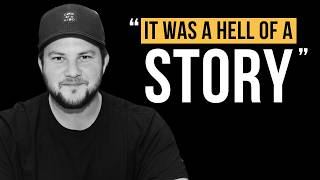
It's an interesting measurement of time. Right. So like my, I have a son, he's four. What I've accomplished in the last four years. He was born with four dollars and seven cents in my bank account. And like, I was not sure if we were coming or going or what the hell the situation was. And so what has been accomplished over the last four years is a true testament. And I heard a very interesting quote probably from, from Instagram. I think it was either LinkedIn or Instagram. And it was an image and it said, on the day you were born, a tree was planted somewhere in the world, and that tree has been growing alongside of you for your entire journey. And so I'll dedicate this episode to my daughter. Her name will be Story True Abrams. And you know, we had a little. We had a short conversation before this podcast of, of our journey and trying to. To achieve Story. And it has been a hell of a story. And maybe one day I'll record it. So I'll dedicate this to her. But the reason why I bring this up is because I will use her as the next measurement of time for the next four years. And I just say four years because my son is four in the next couple of weeks. And like, I can fully measure the success and all the tribulations and everything that's happened over the last four years. I don't know what's going to happen, but I do have hopes and I don't even necessarily label them as goals, but I do have Hopes, and they're hopes for me and my nuclear family, of course, but it's really hopes for my impact. And so I was fortunate enough to listen to a presentation not too long ago at the Long Island Technologists Meetup where the presentation was about what are the two words? If you have to summarize your personal brand into to two words, what would it be? And shout out to Carolina Luna, my homegirl, and she gave an amazing presentation on distilling your personal brand. And if you have one second with somebody, what do you tell them is your purpose? And so for me, I distilled my two words into drive, impact. And so I don't really know what I'm going to get myself into. I'm a chronic entrepreneur. We didn't really get into my seven generations of entrepreneurship, but I'm a chronic entrepreneur. I run multiple businesses at this point in various stages of, in various stages of maturity. And so my entire goal comes back to how we kind of started this conversation, which is about increasing my own surface area for luck. But I don't want to do that without knowing that what I am doing with my time is driving impact to others. And so this comes back to a real childhood pursuit of mine. Like when I was 4 years old, like my kid, I wanted to be a doctor. I went to medical school or tried to go to medical school. And you know, my old, my whole pursuit was for patient care and not so much patient care, but family care and, and being a really stable bedside opportunity for folks that are in trap challenging moments of their life. And so I've carried that all throughout my experience and it's what's made me a very good ambassador from a client services perspective for the companies that I work for. It's what makes me a trusted advisor through a sales process. It's what allows me to be a successful entrepreneur and pursue new businesses and be a great partner for strangers that come along my way. And so my, my real goal and my hope and what's going to happen for the next couple of years, probably a lot of compounding of what currently is going on. A lot of growth. You inspire the heck out of me, man. Like your, your podcast, Hustle and Flowchart, the volume of, of of episodes that you've recorded, the extent of the network people that you're a household memory for. You know, I, I believe that we are, are chronicling with, with our podcast, the journey of our life. And so I'm super bullish and passionate about my own podcast and I can't wait for some of the folks that, that I emulate, you know, like, I have this vision of having Stephen Bartlett, diary of a CEO, on Strictly from Nowhere and like standing toe to toe with a titan. And like, I just like, man, the opportunity to drive impact to people. Those are the, those are the types of guys like that. You, you could be a chronic entrepreneur and have your hat and 50 different things. You can have a full on family and lifestyle. You can have a public forum where you're not only finding the blend of creativity, but also of philanthropy and activity and meaning in this life. And so, so my goal is to, you know, get to the end and look back and be like, yo, that kid killed it.
You didn't leave anything out there, man. You did it all. Yeah, it's gonna happen. You'll have Stephen on and we're gonna keep chronicling like, yes, you will. Strictly from Nowhere. Go check out Justin's podcast. It's over at Cause of a kind.com and, and seriously, man, I love everything you bring to the table and you literally bring it all to the table. You wear it on your sleeve. So I appreciate you for being you here literally everywhere.
So I have one version. I talked to, I talked to my wife about this. I got one version.
It's a great version, man. So appreciate you, man. And you're gonna be meeting story very soon too. I'm stoked.
Thank you so much, man. You're a blessing to me. I wish you forward to extraordinary man. Thank you so much.
Sam.
More from Joe




OpenClaw is making AI agents accessible to EVERYONE and this is a total game-changer. 🤯 #ai #ainews







OpenClaw Delete Panic -- The Email Inbox Nightmare! #openclaw #email #nightmare