Kyle Gray: Mastering Storytelling to Create Business Success!
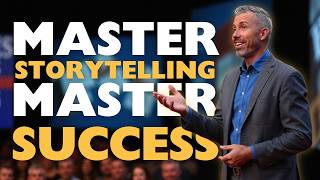
Podcast episode (YouTube) featuring Kyle Gray in conversation with hosts Joe Fier and Matt Wolfe about using personal stories as marketing and leadership tools. Kyle explains a repeatable storytelling framework (the StoryEngine approach), emphasizes converting past pain into purposeful narratives, favors descriptive over prescriptive language, and gives practical prompts (sensory details, client-problem focus) plus calls-to-action for a 45-minute StoryEngine mini-course.
Chapters
Have you ever wondered how the stories of your past could pave the way for a better future success that you get to share? So what if all that suffering, or the good stuff also that you've endured in the past could become the secret weapon that you get to use to connect with people in your business and obviously in your life in general? This becomes that tool and that thing you can whip out as long as you have the right structure and how to present it. So that's exactly why I invited Kyle Gray onto the podcast today. He is one that has mastered the art when it comes to transforming your past and all these different personal stories and narratives that you might have built up over time. But he allows us, and he actually walks us through a framework on this podcast episode and how you can use that in your marketing. You can use it for any talks that you might have on podcasts. When you go guest or. Or speaking in front of audiences or.
Even just telling a really cool story.
At your next party, you're gonna walk away with a story of your own, or at least the breadcrumbs of what your story can become, because you're gonna be able to take everything from your past in your own life and mold it into a thing that you can.
Present to others and actually connect with them in a deep way.
So enjoy this one. Before you go there, pause the episode, go find the browser on your phone or on your computer and type in hustleandflowchart.com/ clone C L O N E. That gets you to a page where you can interact with AI Joe Me. And you can literally ask any question through typing, through voice, or through video, anything you want to know from any.
Of the episodes that have been on this podcast.
So it's over 600 have been published. And literally, you can chat with this thing and have a personalized interaction, a personalized chat, and ask about anything, like any topics about storytelling. If you want to go deeper on Kyle's storytelling method and what we cover in this episode, you can. You can ask about Facebook ads or.
Google Ads or, you know, running an efficient business and saving time, being more.
Productive, whatever it might be. Ask the clone.
I guarantee it's got a bunch of information that you'll love.
Try it out. It's free. Hustleandflowchart.com clone let's get in the episode.
Hey, I don't know if it's just me, but marketers right now are feeling pretty spread thin. You're feeling the pressure to generate content, repurpose that content, launch campaigns, generate leads, score the leads. There's so much more and I don't know if you have time to even breathe, take a moment for yourself or.
Even run the rest of your business.
So HubSpot's got the solution for you and they have Breez which is their new built in AI. It's all here to help you out. So basically what this thing is doing is it's combining the power of the marketing hub with the content hub to give you everything you need to have your best quarter every quarter. So they have tools that help you score the leads and it'll shine light on potentially your best customers. They also have AI curated analytics suites and reports and KPIs. All the things you need right there to know what's happening in your business along with co pilots and agents that.
Help automate automate the task.
So the idea HubSpot here is trying to make your life easier so you get results faster. So go check it out for yourself. Visit HubSpot.com marketers to learn more.
Kyle thank you brother for joining today from the Vortex or the Matrix, wherever you're located right now, I love your background. If no one's seeing you right now, it feels like I'm just like getting sucked into the room towards something.
This was something I pictured for a long time. I've been a traveler or semi nomadic person and I was really looking forward to having an office. I'm in a corner right now so it creates this weird kind of vanishing point optical illusion with my soundy foam. Things that I have that serve two purposes. They have the tiniest amount of dampening of the sound in my office and two they make it look like cool stuff is happening all of the time in my office. Which obviously it is like this right now.
Yeah, this. And also you are garnishing a left handed Les Paul behind you which we both are left handed guitars that we were just fawning over and I also had a left handed epiphone Les Paul for for a hot minute. You know this is back my band days. But dude, I. I love guitar and I love the fact that you're a lefty. There's not many of us out there, man.
Yeah, I think both of those things are really some of the foundations of we'll hear a lot about stories and words and ideas and influence and a lot of this started trying to come up with great chord progressions that were exciting and enticing and lyrics that moved people.
Are you much of a Sounds like it songwriter as well?
In my late teens early 20s, I thought that that was the only way I was going to live a happy and fulfilled life. And I honestly soured my relationship with music and songwriting for a while, just putting too much pressure on it. But I found that same kind of itch to scratch when I was writing blog posts for a startup and being a content marketing manager, which was the foundation for some of the practical realms of storytelling.
I got it.
And I slowly was building up on that skill through writing books. And eventually I saw.
How speaking from the stage and sharing your story and creating an experience from the stage could be used as a business tool. And it reminded me of being 19 and playing guitar on a band in stage. And I became like obsessed with figuring out how to do it. And it took a few years. I started working in, attending workshops, and over the course of a few years, writing my own speeches, building up my own agency, starting to write my own books on storytelling and marketing, and starting to facilitate my own workshops. But it took five or six years and working with hundreds and hundreds and hundreds of people and understanding the simple frameworks that make up stories. In the same way that for those that would understand guitar, knowing what scales you can play in and why allows you to improvise. And in a lot of ways, having these same frameworks allows me to know how to tell a story.
That's a good frame.
Yeah.
This has allowed me to be a great listener and improviser in a really professional and practical way. And so I ask great questions and I try to draw out the notes of the scales that I want to hear. And a lot of us who are very close to our stories and our teaching points, we're too deeply immersed in them. And we try to hit like the piano, just like a wham, wham. And it's all important. Wham.
Noise, noise.
And we have very good reasons for doing that. And that's why people want to work with me to help hold up a little bit of friction and find those perfect notes to say to bring forward the best of what you're already saying, what you're already teaching, what you're already doing, and do it in a way that actually lands for the audience in a way that you want it to.
Yeah. Well, that's where. So I went through your formula and there's a. I mean, I'm just going to shout it out now because I think it's so effective because your company is called the Story Engine. So at StoryEngine Co Perfect, you can hop into this 45 minute free, basically, it's A course, but it's very actionable. And I was already able to get my thoughts in the direction of how you describe it. Like, it's like you said, it's pulling out the best of you, but it's kind of stripping away all the noise, maybe the extra notes in this, you know, in this analogy here, and putting it in a way that connects with the receiver, not in a way that you're talking at them or giving a bunch of information or teaching, which you're kind of doing through story, but it's more connection, more than anything.
Well, let's talk about teaching. And the problem with teaching, and this is, this is something that's fresh and interesting for me.
90% of the work that I end up doing when people pay me to work with them is cutting down teaching content. Why do we love to teach so much? I was on a podcast just earlier this week, and I was confronted with this same problem. So I'll out myself instead of anybody else. Early on in the show, the host asked me about a client that I had worked with, and I was easily. This guy paid me well, and I made him a bunch of money. His speeches are converting better than ever. Hiya. I was.
Mm.
It was great. Easy to do. And then he asked me a different question. Well, he asked me before. Then he asked me, what are some of the people, the mentors, that have really, like, opened up new doors for you in my life? It almost moved me to tears to think of all of the great people that helped me along in my journey. And then he asked me, when did you do that for someone else? And all of a sudden, I had a really difficult time answering this or, like, feeling safe and, like, coming up with the idea of who. I know I did this many times, but this feels vulnerable.
And there's two different Personas being displayed here. There's my professional Persona, which is, like, a lot of what we see and what we put on as marketers. I'm cool. Everything's fine.
And then there was my real human side of me, and it felt risky to share that. And why does it feel risky? Because I believe that me and probably everybody listening to this podcast and everybody who set out on this crazy, ludicrous journey of entrepreneurship has at least a little bit of.
An inferiority complex or not feeling quite good enough. And so they try to achieve their way to feeling enough, to feeling safe, to feeling right in themselves. And so we build these awesome businesses, and we achieve and we create, and that's what we think is important. And that's what we've been rewarded for. And that's where a lot of these things come from. And that's why it's easy for me to talk about the guy who paid me a lot of money to make him a lot more money.
Yep.
But when I'm talking about me, this is who I am. And because I'm so addicted to achieving and creating and advancing more, because I feel like I'm not quite good enough. And this has been a common thread with anybody that we really boil it down to what's happening in their story. They're over gripping on their life in one way because they don't feel good enough. So this is why it feels risky to share stories. Even if you're a very successful person, and maybe especially if you're a very successful person, they start to resist these ideas because they feel and they, they will write it off as. Isn't just telling a story a manipulative way to create or short circuit trust in my audience? And wouldn't they rather hear about my, you know, decades of experience creating businesses.
My successes and high points And.
Yeah, and, and really the. The fact is. No, but we feel like they want to because of our own.
Minor psychosis. And these things have served us very well. And so the process of actually looking at your story is a little bit uncomfortable at first. It's a little bit counterintuitive because of that and because of that, it's difficult for us to sit down by ourselves. Think, what story should I tell today about this thing? Because nine times out of ten, you won't even allow yourself to think about the story because it's probably one that's a little bit painful or a little bit weird. And the secret or the key to this that makes storytelling possible, that removes this sense of risk is both a framework to give you a purpose and some guidelines to tell the story, like what you're illustrating in this course. And a lot of the times this is the choose your perfect story mini course. And a lot of the times these come from moments I ask questions about, like what problems are your clients facing right now? And drilling really deep into that. And we can use their problems as an emotional compass to find our stories. And a lot of the times the stories where we experience problems aren't the ones where we're our proudest, shiniest selves.
But we can use this as an opportunity to share our clients language and lead through our moments of pain and actually transmute them into moments of purpose, into moments of reason. It allows us to Be excited about the things that we used to be ashamed of. And it allows us to create the sense of enrollment and understanding that we really want to create in our listeners when we set out to go onto these podcasts or get onto the stages.
Yeah, and what you're describing, at least the way I'm taking it, how it's landing right now is, you know, we're attracting the people. The people that are kind of around us are attracted to what we're putting out currently. And we're probably sharing some similar experiences, albeit it's kind of difficult for us to see ourselves for all the reasons you just described there. And my question is like, so how do we. Or how would you suggest to slow down and when we're alone, or maybe it's with someone else, to start to extract those things within us and start to see those moments that are pretty obvious on the outside to other folks. But how do we do it for ourselves?
To do it for ourselves? So I'll be the first to admit that even me, who has all this practice and doing this for myself is really like this karmic challenge for me. You're still.
I do this because I find it to be so hard to really give yourself the attention and get out of your own way in this way. But it is practicable. And here's how we practice. We always. If we ever feel the way that I'm just describing right now, it means I'm focusing on me, and that means that I'm focusing on my shortcomings and all my bullshit. But instead, we need to be focusing on the people that need to hear this message and that we are here to serve. It's our divine responsibility. So we start focusing on them. And then I would. The first place I would ask is like, what are some of the problems that your clients are facing? Tell me more about those. How does that impact their family? How does that impact their health? How does their health impact this? What does that really feel like for them? What do you think's underneath all of those? And I just keep going. And like a therapist, it allows the person to let their guard down on their ideas or stop trying to teach me something or to enforce something. And we just meander with it. And as we can kind of immerse ourselves in the client's experience.
I believe memories are. We can't. We don't have full access to all of our memories and all of our thoughts all of the time. And I don't know if you've ever experienced, like, smelling an Old smell that you haven't smelled in a long time and all of a sudden new memories.
I think it brings it back.
Yeah.
And smell like. Actually, I used to work in a homebrew company. I had one of those. And we interviewed someone that was all about smell, taste and senses. And he said smell is like the number one thing that triggers memories. And. Yeah, that connection in our brain.
And emotions are like smells. Yeah, exactly. And words have emotions built into them. And so when we use our clients language, these emotionally charged copywriting words, we can make ourselves feel this way. I actually learned about this technique as a way to take care of my own anxiety, to write my own story and take better care of myself. And then I could find out. We can reverse engineer it and serve our clients by, okay, so if your clients are feeling stressed about cash flow and it's harming their relationships at home and they're having a tough time leading their team properly, then when did you feel like this? What's a specific. I always ask, what's a Tuesday afternoon where you felt like this.
Any other day, Right? Yeah. And a lot of people will try and resist by saying by either teaching us something again, well, it was because I had low thyroid and low thyroid is a result of this and that and this. Or they will say, oh, well, there was like 19 times, you know, that I felt like this. And it's like, just pick one, just try any of them, it doesn't really matter. And then now's the time. If we can really identify a moment, then sensory details I'll bring back I love. What does it smell like? What was something in the room? What was the sound or a real quote that somebody said to you. A lot of the times there's conversations and if this is a moment of great pain, there's usually something said that's very painful. And how can we actually have them quote this? So we are immersing ourselves in this moment. Often, like we said earlier, it's a moment that we're usually not very proud of. And we're not trying to just say, look at my trauma and trust me for it. It's our opportunity to use their language and to paint their picture and to show them that we understand exactly what their experience is. We are leading with our vulnerability, with courage, to show I understand you and I'm here for you today. And when we can feel that way about it, they will feel that way about it. Instead of talking about our resume or all of the achievements are going from 14 to 30% conversions, which are all important and all have their place. But if that's, that's all we use in our tool chest, then we're really missing out on a lot of power in our communication on stage, offstage, and sales everywhere.
I'm having like flashbacks to about, I don't know, eight months ago when I did. I don't know if you've ever done this, but Dr. Jordan Peterson, love him or hate him or whatever, but he has this self authoring course on online. It's like 17 bucks and it's like two for one. I recommend everyone to try it, but like you literally will write a book by the end of it. I think I had like 15,000 words or something written. Took me a good two months, you know, dedication. But the reason why I bring this up is it's going through your past, it's going through your present, and then you're authoring your future. And it's all done through it. Just a bunch of prompts. There's nothing fancy. It's just a bunch of prompts and it stores all the information.
I'm going to pause this really fast to go shout out another podcast that I think you should peek at yourself. It's called I Digress. It's hosted by Troy Sandage and it's also brought to you by the HubSpot Podcast Network, the audio destination for business professionals.
Thank you.
And what I love about this podcast is that it keeps it short and snappy. It's actionable and to the point. It's under 30 minutes. I digress actually helps you eliminate a bunch of complexities and complications confusion when it comes to your business. Your marketing gives you a bunch of frameworks and strategies to help you scale and actually be sustainable with whatever success means to you. So go check it out yourself. I urge you to go listen to I Digress wherever you get your podcasts. Are you tired of the hassle of building sales funnels? I totally get it. I've been there. You started your business not to be chained your laptop all day. You build it for freedom. And thankfully there is an all in one platform that makes it easier easier for you so you can focus on attracting customers online. The platform is called Kartra and it gives you all the tools you need.
To grow your business.
The best part is Kartra comes stocked.
With all the done for you campaigns.
So you don't have to worry about thinking about building from scratch. Everything is designed, connected and written for you already. It also leverages AI to help you.
With some of this writing.
All you got to do is just customize this to your liking and then.
Boom, you got a fully built sales funnel for you.
This is marketing made easy. So go try it out for free. 30 day free trial over at hustleandflowchart.com Kartra will get you there. So again, that's hustleandflowchart.com K A R T R A.
What you're saying there, Kyle, is like when you start to dedicate that time to really visit things in your past that you probably don't normally do, you know, are you just like, oh, that was then things will start to keep uncovering themselves, like memories. When I was going through that process, I was like, whoa, totally didn't remember that thing. Like it started to like chain effect into deeper meaning. And with that, you're actually giving me ideas now because I'm like, I have all that information. I can go take that and extract some of the best darkest things. But also like what I have in the present, how I see myself and where I want to go in the future to build a story for myself. And then obviously that's used to connect with others. But like going through that process was probably one of the most freeing things, most difficult things I did as well. That's exactly what you're describing, you know, going deep.
And the, the ingredient is, is purpose. And this can be applied to past and present pain. If you, your suffering in the past has no purpose, then you don't want to revisit it. And as soon as it does, oh my gosh, I want to go into my journal and find my darkest moments now. This is going to be great.
Woo hoo.
Yeah.
And this is the really interesting thing here is for a long time I've been a copywriter and a marketer and results oriented. And I can tell you that going through this process.
And reflecting on your own stories that yes, if we don't do this, and if we're in our old state, achievement, addiction, we're blinded to the possibilities of our past. And there are stories that are filled with treasure for the quality of our own lives and actual practical business, money in your pocket and a lot of things in between.
And there's also these moments, if we don't recognize this in our present or in our past, there are moments that are passing by and occurring in our present. And we are also, if that's the way we see our past, how are we viewing our present? How are we viewing our future? So if we're not recognizing and seeing ourselves as responsible for Recording and sharing our stories and seeing that as a valuable, integral role of sharing both who we are as much as what we do, then we're missing out on the present opportunities. And we are also likely not dreaming as big as we could or missing out on the future. We blind ourselves on all levels if we do not respect our own story.
Yeah, we live the life. We've written the story internally, and you can write it externally and then share it, at least in the structure that can be presented in this way with a purpose. And obviously there's stories for everything. But for your business, let's talk about that. It's like how you want to connect to people that way. You just connect with anyone.
I think exploring those places of our past, it's not easy, it's not obvious. But when you dedicate some time and however you end up doing it, it's just like some of the questions you already gave. And I kind of like the idea is like if you could frame it with like you're talking to someone else or interviewing someone else, it's actually you, it's a little secret. Then you can really extract the juicy details and make something of it. And I found it as to be a freeing thing when it comes to business. Like, I just let go of a whole bunch of stuff because I think all of us are. We're clinging on somehow internally to a whole bunch of baggage that's holding us back, you know, And I don't think anyone can argue once you get through a process, you're like, holy crap, I feel better now. You know, I wonder why. Because you just released it.
Yeah, it's amazing.
What we will cling onto and understanding the framework underneath it, it does create freedom. And in the same way that I like to listen to people and reflect on their stories, when you understand how to tell a story or how to teach, it does create freedom in the way that most of the people most of the time are waiting to think about what to say next and which way they want to take the conversation. And they might not even be listening that much. And you can, even when it's not a one on one conversation, you can sense this when somebody's doing it from the stage or a podcast in at least a really subtle way. When you start to know, okay, I know that a good story requires this, then you actually start listening to the person you're speaking to or being more present to the audience and the conversation, and you're looking for the ingredients for the story you want to tell within that, within the person you're speaking to or the audience you're present with them instead of constantly in your own head thinking about what to say next. It changes the quality of who you show up as and how you show up as. And this is again, the kind of hidden transformational medicine that comes from writing a speech with the intention of truly upgrading your visibility. And I believe that there is no greater advantage to.
Confidently being the same person on stage and being able to show that completely as you are off stage, as you are when you're leading your team, and as you are at home.
Yeah, couldn't agree more, man. There's a. I've. Yeah, I don't know. We can all. We can all picture those moments. At least. Maybe it was us on stage having those moments or watching. It's very obvious. And at least if you're attuned to it, let's talk about that. Because some of the, I guess some of the obvious mistakes, there might be a better word to put it, but like, where do you find people are kind of.
Just consistently not pulling together the best story that would actually be their true self to speak with the intention to connect and attract more of the best people their way. What are some obvious things and maybe some tweaks that can be shifted?
And then I want to dig into the actual, like some of the structure of how to start framing a story. I think that's super interesting.
One of the biggest mistakes, and this might be my fault more than anybody else's, is thinking that a story is just the thing that I use at the beginning of my talk. What I'm alluding to and pointing out is more like a series of movements, like a martial art kata that can be flexible and used in many places and many times. And we write a talk which has a story at the beginning and several different teaching points and statements that make up a movement pattern of the mind. And so knowing that and knowing that it's not just one story and it's not just the thing at the beginning, and we don't just have one origin story or authority story using the framework. A lot of us think it's kind of like my Spider man, how I got into the business kind of story. But you can use this framework over and over and over again. It's the origin of the problem. It's not about you. It's about you confronting the problem for the first time and deciding that some change needs to happen. Which is why we find this story how? Because we ask about our customers problem. So it's about the origin of the problem. And when you understand that, you go from having one story to hundreds of stories and you know how to sort through those 100 stories. Now the next thing is it's more about our teaching and how we talk.
As experts and smart people. We have learned how to solve problems for a long time and we've become very good at it. And people. It is true that people pay us to solve their problems, but we talk about solving the problem too much. And there's one distinction that is the most important one to make that will change how you listen to everybody, how you listen to yourself and will will empower everything you say. If you can catch this one. So it's prescriptive versus descriptive language. Most people use prescriptive language. They tell us what we need to do to get the result. They tell us this on the podcast, they tell us this in our webinars. They tell us this on our sales calls. And frankly, we're tired of it. We want to hear descriptive language of what we get Once we've done the thing. I will tell you a story that will give you a perfect encapsulation of this. I had a client named Elise who was a health coach. She worked with parents and particularly children with gut health problems. She had a proprietary process called Healthy Gut Happy Child. That's a two thumbs up name in my book. Great name. And then we started asking. I asked her about the steps of the process. Step one to fixing my child's gut health, eat more vegetables. Step two, eat fermented vegetables. And I said, stop right there. I still don't know what step three or four ever was.
We have to just stop right there. I said, I'm just pretending. I've never been a mother with a child with gut health problems before, but I would imagine that there's a lot of behavioral issues that come with that. And just trying to say, hey, Billy, eat your broccoli is probably not as easy as it sounds and is maybe even insulting to try and tell somebody to tell their child to eat more vegetables. Right.
So what's the deal?
She.
Oh, no problem. She immediately tells me this reverse psychology ninja way to get the child not only to eat vegetables, but to like vegetables. Not just vegetables, but fermented vegetables.
Oh, yeah?
Yes. And.
So we thought about naming that there, like that's really where we're going and that's what we want. It's not getting them to eat vegetables. We changed the name to create an adventurous eater.
And now that's something we can see. And we can picture and we can feel. And this is the difference in quality of our language that people want. And they want to hear this on the podcast. They want to hear this on a sales call. And this is actually us serving them and going as far as to understand what they want and actually talk about it instead of just trying to self medicate my anxiety and teaching about the coolest things that I think are cool right now.
Yeah, that's. That's a, it's a cool frame of what you're describing here is, is less teaching, more story, more connection.
And yeah, it immediately drew me in when you talked about, you know, creating an adventurous eater child. I mean, like that, that turns into like, well, I want to know more. What do you mean by that? You know, it draws me in, you know, it leads me in. And that could just be the name of. Yeah, a talk, a company of whatever it might be. But obviously there's a story that goes.
Even further and it's something that you feel and experience. And this is really what I. What I find the missing ingredients where we're just trying. Most of us as experts, we're just playing one of two notes on a scale and that's kind of how we're doing. And what you just see and it felt right there is. The truth is that there are many different ways to persuade somebody to make them believe a point, to make them understand and connect with an idea. Dozens and dozens of them. And most of us have only learned how to use one or two. And they're kind of do a mediocre job at best. Of what we are trying to do on the stage, on just that shows you and it shows you by actually feeling and experiencing. There are different ways to do this and go about this. And that's what I stand for. I'm not smarter than anybody that I've worked with. In fact, most people are a lot smarter than me. And that's why I love to work with them, because I am selfish and I want to learn what they have to teach.
But that's why I started this show, by the way.
Me too.
That's the best reason why I have a podcast.
I'm the dumb guy in the room. I'm just here to ask some questions and learn.
Yeah. But I can show you these slightly different ways to think about and frame what you already know, what you've already done, who you already are, and allow that to shine.
Well, and that distinction going back to where you started, this whole segment here, descriptive versus prescriptive and well, actually Vice versa. We're usually doing the prescriptive speaking, you know, and I'm just thinking relationships. Think of the relationships, maybe the partners in our lives when they're coming to us with, you know, a stressful day at work or how do I look right now or you know, oh, I'm. Whatever it is, the kids are stressful or you know, my boss sucks and you know, here we are. Or at least I know I've been guilty know about you or others watching, listening. Yeah. You try to come with a solution, you're immediately at least the first reaction because it's like you said, we get paid for this, we're good at this. Or at least we think we are. And I gotta find a solution. I don't know if it's a guy thing more so than a woman thing. I don't know. Not smart enough to know all the studies, but at the end of the day, yeah. With the descriptive now you're creating connection, you're creating listening open ended questions. And it's kind of just creating space, it feels like for that connection to happen. And like you said, they can almost like fill in the gaps, especially if you're. It might be difficult if you're on stage, but you can probably make it interact. You do it on a podcast or in a one on one conversation. This works all over the place, I'd imagine.
I love that you're seeing it in like a family or personal or practical matters. And as I was alluding to before, and the thing that's been most mysterious about this process for me, as I have gone through a journey of a lot of personal health and mental health, that the same things that I've used, that I'm using to create these experiences and shift beliefs from the stage are the same tools that you can use to limit or expand yourself and author yourself. I have gone through Jordan Peterson's thing. It's been quite some time, but I have another journal. I have it within arm's reach right here and it is a.
Spell book.
Yeah. If I have one of those same.
Techniques that I use in the perfect story mini course of how vivid of a moment can you conjure? I use those to write out futures that I want to experience. If I'm traveling to an event, I want to write out exactly how I'm going to feel and how I'm going to show up. I write what the end of this year looks like. I wrote what my birthday looked like. If I have a big day ahead and I want to write out what it's going to look like. And it's a practice of creating a future as vivid and clear as possible and then going back and reviewing it. Now there's many pages that are past that I wrote when they're futures.
And so yeah, this is a way to create your life.
It is. And yeah, once you understand the stuff you uncovered and the fact that you've gone through Jordan Peterson's self authoring, yeah, you can see the power of that. You're projecting now and at least you have intention with where you're leading your life rather than just letting life lead you or others around you.
That's a cool way. I mean, honestly, in talking about mental health and just even physical health, that's how I got through some of the darkest stuff. And I felt like it just freed me up was an immediate feeling or it wasn't like a, oh, that's what did it for me. But then looking back, you know, I'm like a couple months even after, I'm like feel a little lighter, like for some reason I'm a lot more clear, more motivated, more happy and present. I'm like, okay, this is cool.
Yeah.
And when you're authoring your future, it's like you're literally telling yourself stories, right? You're creating stories for yourself and creating what that can look like to yourself and others around you, which is what we're talking about here in a nutshell.
And it's to bring it all back. It's counterintuitive. And we've actually practiced ourselves to a point where doing this feels risky and recognizing the value of yourself and your stories and your visions feels risky. But if we can by practicing this first for the talk, for other places of content, for, for reflecting, for creating in the future, embarking on any of this journey upgrades yourself first. And the most exciting part is creating the feeling of enrollment that you want to create in others, that you expect to create in others when you speak, creating it in yourself first by going through this process.
Kyle, this is awesome. And I invite, I think urge everyone to go to thestoryengine co perfect and go through that short 45 minute lesson. Few different videos, but there's questions to help prompt and it goes deep into more of the process of the doing, you know, the how of what we're talking about here. So Kyle, thanks for laying the scene and even going deeper in all these other nuances that aren't typically the way that we think about. Oh, we're going to talk about storytelling, right? Oh no, this is real stuff right here, so I love your approach, bro.
Thank you so much.
Of course. This is fun. Have a good one, man.
More from Joe




OpenClaw is making AI agents accessible to EVERYONE and this is a total game-changer. 🤯 #ai #ainews







OpenClaw Delete Panic -- The Email Inbox Nightmare! #openclaw #email #nightmare