Powerful Lessons for 2025: Starting Ugly, Scaling with AI, and Maximizing Luck
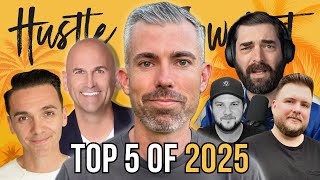
A YouTube video (Dec 24, 2025) hosted by Joe Fier featuring guests Jacob Gooden, Justin Abrams, Scott Duffy, Matt Wolf, and Joe Stolte. The episode presents a five-part blueprint for succeeding in 2026: start projects 'ugly' rather than waiting for perfection (content/podcasting), increase your "surface area" for luck and employability, train digital minds (personal AI clones) to scale businesses, view job displacement by AI as an opportunity to build new careers, and shift marketing toward AI-to-AI personalized experiences that reduce traditional software interfaces.
Chapters
2025 was the year hype died and the real work began. So we stopped asking if AI and new media would change things, and we started asking ourselves, how do I use this to win? So we're going to break down this blueprint of the year through five specific lenses. The first one, starting with my producer and friend Jacob Gooden on why starting ugly is better than waiting for perfection. That's more than important than ever, I.
Would say, right now.
Then we have. Next up is Justin Abrams on how to increase your surface area of luck in a tough economy. Then we have my business partner, Scott Duffy, who is going to talk about the actual reality of how to train a digital mind to scale you and your business. Then we're heading over to my best friend and my old partner here, business partner and podcast host Matt Wolf, the AI guy. He's going to come on here talking about a controversial take on why AI taking your job might actually be the.
Best thing that's ever happened to your career.
Then we're wrapping it all up with Joe Stolte on why software is dead and how AI to AI marketing is actually going to be how things change and how you sell forever. So before we dive into the first clip with Jacob Goodening, make sure to hit that subscribe button and make sure that you are ready to build a more resilient business and life in 2026.
I like the conversations you and I have about the media. You made a great point, which I want to go through, is like, it's never been an easier time to actually create content and make something of yourself. You know, put your voice out there. There's so many different mediums now, like new ones, existing ones that are kind of having new shape shifter moments, you know, like podcasts, going to YouTube, for instance. You have great insights there. But also like the why, because that's like, you see the spectrum of different shows. You have your own show. It's like, why even do this? Like, why would you have this? And like, how can it look? Like, how can it be packaged up and done consistently for the right reasons?
So.
So I kind of want to just talk about that. Maybe we start there is. Yeah, yeah, I don't know where. Where you want to pick up there.
Yeah, I think the why is really interesting because for, I mean, since before I even worked for you, I was like, I'm going to have a podcast. And I bought the microphone and I sat on it for, I mean, what, five years? Something crazy. I mean, it was longer than that. I had it before I sat on it for, like, seven years just thinking about, like, what do I want my show to be? I came up with all these ideas. I could do this, I could do that. I was like, really into the music industry. It's like, I'll do music industry news. And then I started working for you, and I was like, I could do editor type stuff. And then during COVID I had this. I. I got lonely during COVID like, most of us did. And. And I started having conversations with childhood friends. We all grew up homeschooled, and we would have these conversations about, like, what it was like growing up like that and then now being an adult and what's changed and who are we as people now and all this stuff. And so within that, it sparked this idea of, like, oh, this might be the thing. This might be the podcast, right? And then it was like, okay, what's the intentionality behind it? Because I don't want to just, like, be a bunch of people just sitting on a couch, like, yapping about nothing, right? Like, we need to have some kind of driving factor for it. And so it kind of was like, okay, well, let's think about that. And it took another four or something years to. To like, flesh it out. But it. You know, I took way too long doing this. I'll just. I'll just be honest. But. But it kind of landed on this space of like, okay, I want to talk about the good, the bad, and the ugly of homeschooling and what that means, and I want to share individual stories about your experience, what it was like back then, what it's like today, how it shaped you into the person you are today with the intention of, like, yeah, it's like a support group for other people who went through that, but also for people who are currently going through that. Okay, does it get better? Are you having a tough time? For parents kind of looking at it and making decisions. I've interviewed my parents, and we've talked about the mistakes they made, but also the great things that they did. So, anyway, I say all that to say, like, the intentionality behind it became very. And it's changed even within the last. I've been going for nine months, I think, now with the podcast. So it's. It shifted even to be like, okay, we're starting to touch on deeper topics than maybe I initially wanted to. We're talking about deconstruction. We're talking about, like, you know, heavy stuff that maybe needs a little bit of therapy sessions. Yeah, exactly. Parenting. We're talking about all this stuff that's. It's very heavy topics sometimes, not always. We also touch on the fun, laugh, laugh at it, cringy homeschool stuff. But it was this intentionality of like, let's find the spot. And so that's when I work with people like yourself, like with working on an RV podcast, like figuring out what is the reason you're doing this and then like, let's, let's find the space for that, right? Where's the packaging fit the best? Is it a podcast? Is it a YouTube channel? Is it a TikTok account? Like it might not be any of those things. It might be a blog, who knows? We have to find that space. That's the, that's the first thing. And then you can go from there, I guess.
Podcasts. Would you say podcast is like the best way to capture. Because when I think of content, like I'll just give my thought on it really fast is. And how I've coached a lot of people is like, hey, you want to capture it at least, you know, audio and video high quality. We're using Riverside FM right now. Is it perfect? No, but no program is, you know, and make sure your equipment is, is compatible. That's also something that we all learn along the way. But I think of like capture.
How do you.
High quality capture whatever the thing is that you decide that you're gonna do and then know that that can be turned into all sorts of different types of content. So like in terms of the destination, if you capture it well like this, like what we're doing at the highest quality, like 4K if you can, because everything's on big TVs now, even you know, YouTube videos. So yeah, these are all the, like the things that I think about that I know you've coached me on too. But like we've coached each other. But are there any like, I guess like core principles, like foundational things that before someone actually commits to it, like what should they have in mind? Equipment wise software process.
That's a hard one to answer because everything is a little bit different. Right? But, but I think the. We have a friend, Chris Kremit, says he has this like start ugly philosophy and I'm, I'm with that. My podcast is not super polished. It's like sometimes it's recorded on zoom. That's just what's easiest for my guests. So I also have to. There's a level to which you have to like meet people where they're at. And so I think about like, yeah, of course you could go spend $5,000 and get a great camera and a mic set up and all these things. Or you could just pull the thing that's in your phone in your pocket, right? Your phone, pull that out and just start figuring out how to use this to make something. And that I think is like, what's incredible is like, this is why it's so easy. You could literally make an entire podcast just on this thing right here. And there's apps, of course. You know, Riverside is fantastic. Love Riverside. Descript is one that we highly recommend. Like, they're all in ones, but even just like, if it's just you as a content creator, if you don't want to do interview stuff, like just use the camera app that's built into your phone, like, just do it. And then, yeah, you could get a microphone. There's of course, like, wireless mics are great. You can get wired mics. I just upgraded my phone, so now I can plug my, my sick MV7 directly into my phone if I want to. Like, I can. Yeah, of course. But this is a $270 microphone, right? I have like, we talked about tech issues. I have like a 150 to $200 camera setup that just wasn't working with Riverside. Today I'm shooting this on my iPhone.
And you know, I would, I. I didn't see a difference quality wise. Honestly, this might even be better. So there you go.
Very possible. Yeah.
Yeah.
So it is one of those things where it's like, I also, like, I used a 15 webcam for years of like shooting just like my tutorial content that I would do use internally with teams of just like, I'm making loom videos. Right. Like, I don't think it's always so much about like, oh, you got to have all of the tools and get paid, use what's free. Get started.
But.
But once you want to upgrade, I think descript is like the easiest video editor. It's also, if you have a podcast, it's like a fantastic editor for that as well. But if you even. You want to make YouTube content, you want to make blogs, you want stuff transcribed like you talked about, like setting yourself up to make things like six different ways is awesome. It doesn't mean you have to make it six different ways. Right?
Yes. You got to capture it somehow. And if you're going to capture it yourself or with someone else, do it right. At least and in a way that works. Are there any issues that you find or maybe like, as you coach some folks or whatever, like Navigating opportunity and you know, like issues in getting passionate with an opportunity or you know, because like it can quickly lead to burnout for some folks if you don't approach it correctly.
So opportunity shows itself in quite a few different ways. I often speak to young people that are in pursuit of their first job and the hiring market for juniors in any category right now is really, really difficult. And you may be looking at a really long stand of unpaid internships. And lots of folks just cannot afford, literally financially afford an internship. They quite literally need the income. When that's the scenario an opportunity comes calling. Probably shouldn't have too much of an opinion about how you make money. And it's always easier to find a gig when you have a gig. That's just a, that's age old wisdom and advice right there. So it really depends on where you are in your career projection. It really depends on what your network looks like. It really depends at where you are in your, in the stages of your career. And so opportunity presents itself differently for the different stages. If I'm talking to a younger audience, it is about being employable. Demonstrate your ability to be employable. So if you made it through high school and you didn't have a job. I had my first job, I was 12 years old. I was a caddy at a golf course. Super accountable. The first time I, it's the first time I ever got told F you to my face because of my performance was subpar.
That's a way to learn.
I never heard that again. That's the way to learn again from some, some super rich local that won't pay you for your round because you just weren't good enough. And so that's like getting a job demonstrating you're employable, demonstrating that you have a pursuit of skills no matter what job you get again, the lens you look through, you could become passionate about the core skills that you, that you stitch together for that experience. Or you could just be slogged by it. It could be a drag. But that's all about you, man. Like, that's all about the person and like it depends on the lens that you look in. I can honestly say I've had some really horrible jobs in my life, but I can, I can dot them all together. I can stitch every single job as a formidable experience. And I can tell you a story from each one of those jobs that compounds today, 20 something years later, into a professional career. Now opportunity for a more mature professional looks different. It looks like promotional opportunities. It looks like is now the Right time. After raising kids to start that business I always wanted to start, it looks like the pursuit of financial freedom. It looks like. Looks like the pursuit of. Of travel and calming down and maybe distributing wisdom. And so opportunity presents itself depends on where you are in the stage of your life cycle. But, man, being a dad of young kids, being. Being exposed to the youth and to the next generation of professionals that are out there, the number one thing that I implore is demonstrate employment. I don't care where you had a job. I don't care where you have a job currently. I care that somebody else has a litmus test on you and that you're proven. And now we can all grow into potential. And again, the opportunity will give you new sets of skills to explore that maybe you'll become a professional at. So this is all a compounding experience.
I love it, man, because with that employable essence, I guess, and however you get in that mode, it changes something in us as well and the way that we think things through. And obviously, if you need to get paid, if you got that cash flow coming in, you're feeling better, you're more. You're open to more opportunity. Yeah, those dark corners that in your mind are now lit up to something quite different, you know, and things just show up and you're like, holy crap.
It was just right.
I'll give you another piece on it. Yeah, I talk about this all the time in the, in the, in the lens that a lot of folks have something in the way, probably something that has to do with social anxiety. I had that for a long time in my career too. But I was like pushed off the cliff into networking and putting myself out there and being my own advocate and et cetera, et cetera, getting us, getting a job, whatever the heck it is, putting yourself in those uncomfortable situations, it increases the surface area for luck.
That's true.
By opening up that avenue for yourself, you may run into nobody, but you may run into the next thing that happens to you.
Good or bad.
Luck doesn't always have to be good. It could be bad luck on that day that you run into. But if you stay static, you can guarantee one thing is that momentum is cut off. And so for anybody that is pursuing opportunity or they're passionate about something and want to explore it a little bit deeper again, I specialize in that zero to market that zero to one, that getting that minimum imaginative product off the ground. And like, how can we figure out how to increase our surface area for luck? For young people, it's about getting A job demonstrating talent, building your small network, getting referrals, taking the next coffee break. Just get out there and make a name for yourself. For the folks that are a little bit mature in their career, you have options now. You now you have experience, you have worldliness, you have a little bit of wisdom. You have a network. The options are just different. But we're all kind of in the same pursuit of where is the next opportunity coming from for me to say yes or no to. And that comes back to increasing the surface area for luck. That means like, yo, take the day off to go skiing, treat yourself to the afternoon to go get your nails done or go go out with your friends. It's not really about enjoying the moment. If you're in pursuit of opportunity, you're hungry for it. Every one of those outlets is an opportunity to connect with a new individual, which opens up new opportunity.
You were the very first paid customer of Delphi. You were the original innovator that was in on that stuff, right?
I didn't know that until. For a long time, but you're right. Yeah, I was the very first paying customer. That was like over two years ago now. It was funny because, yeah, I was in the offices of Delphi. I know you know this, but I'll just say it up in San Francisco, meeting up with them back in March of this year. And that's where they told me, hey, it's our two year anniversary. I was like, what? Like literally the day. And this is in front of their whole team, like 15 people or so, engineers and everything, maybe more. And then that's when they told me, yeah, you were the very first paying customer. I was like, this is so cool. I had no clue. And it blew me away.
That's amazing.
Yeah, no, it's cool. But that's where I'm like. And that was just stumbled upon Twitter at the time and I was just looking. The story for me, really, I'll just set it here, is that I wanted to make this podcast a two way conversation. I didn't want it to be me just talking at people, listening or watching, but I wanted to give them the opportunity to have a conversation with me and the guests on here. So you can have that two way conversation, make it personalized and go deep maybe on something that we didn't cover. But you know, you can kind of like use the collective podcasts that have been trained into this thing. I mean, my Delphi has something like 14 million words trained into it.
So it's like amazing. Got a lot of stuff that is so amazing. And when you talk about like your use case. So my use case was, you know, 18 months ago I started a conference called AI Mavericks. And I was looking for early AI business tool companies to come out and present. And I was introduced by you to Delphi. And Delphi came out and, and when, when we were first. And they had very few customers at the time. Right, because all this stuff is really new, all this stuff is really early. And, and my use case was I had shifted from where I used to teach. I have a couple of books out there on entrepreneurship, on startup and scale and things like that, but I wanted to move out of that space and I just wanted to talk to people about AI. And what I found was people kept pulling me back into the old stuff. How do I raise money, how do I do this, how do that? And so I said to Andrew, our friend. Oh, Andrew, over at Delphi, you know, I said, I said, this is my thing. I want to spend all my time over here. And he said, well, let's take all of the content that you have, let's take all three of your books, let's take all of your podcasts, let's take all the videos that you've shot, let's take hundreds of articles and blog posts and things like that. And he said, let's put them in there. And he said, let's just train your digital mind. And, and from now on, when somebody asks you how do I raise capital, just send them to your website and have them ask you. And the crazy thing is that from the first person who went on there, it just be like, at first it seemed kind of weird to me and I'm like, how is this going to work?
Totally.
But what I found was that from the, the first time somebody went on there, they're like, man, that was awesome. I was on your clone for 50. I remember he said 50 minutes just talking and having this one on one conversation. And it was about raising capital. And so, you know, I have other friends, we have other friends who've done the same thing, but now what they do is they'll charge, you know, X number of dollars a month or something like that for that 24, 7 access. What that did for me is it gave me so much time back and it enabled me to focus on the programs and the things I wanted to do in my business without missing a beat with those particular customers or leads or prospects.
That's the key thing, is that it's, it's scaling you in a way where it doesn't need to involve your time.
Right.
So many people have. Yeah.
They start with what is the thing that's bottlenecking them in the business right now. Where can you add more value to an existing community? But then pretty quickly after, actually most of the time is they see how well it's working. Like, pretty quickly after, you know, you're onboarded, you have the strat, it's all programmed content's in there. Then you start thinking like, where else can I use this? And then that's where we've seen a lot of people turn into. And like create a front end. Yeah. Legion type of experience that then can turn into a subscription. Maybe it's a new subscription, you know, revenue stream for their business because of that. Yeah. All access pass, basically. And it's, it's in. What I've heard is like, it's literally little to no maintenance when it comes to these, these things obviously want to keep it up to date and check in and make sure you're optimized with the new things coming out. But it's a whole different type of media really. Like just like podcasting, if you think about now, this is a different form, a way it's modulating your existing content, but you're technically creating new way of engaging people online or anywhere in the world.
When it also, you know, coming back to the topic of like AI sort taking jobs from people. Yeah, I welcome it. Here's the thing, like, there's this like double sort of thing that's happening with people where they come home at the end of a long day and complain about how much they hate their job, but then at the same time they jump on Twitter and talk about how scared they are that AI is going to take their job. Right. I think the jobs that people don't enjoy doing, the ones where you're coming home and you're complaining at the end of the day about how much you hate your job, those are likely the ones that AI is going to take first.
Right.
And like, why are you freaking out about that? I, like, I, I don't want to be like, unsympathetic. I am very, very sympathetic. I am very empathetic. Whenever people talk about, like, their fears with AI, I like to listen, I like to address them, I like to talk about them. I like to understand where all these things, like all sides of things are coming from. And so I know saying that sounds very unempathetic of, like, through your job, you hate it anyway. Why do you care about it? Like, why do you care if you lose it. Well, also, jobs create income and you need that income to survive, and I understand that part of it. But could we also possibly see this as like a blessing in disguise? If AI takes that job, maybe it means you're going to move on to something that you actually want to be doing. Maybe it's something you actually enjoy doing. Maybe it's something that you're not coming home at the end of the day going, I hate my job. Right? Like, maybe that's what it's going to create for you. Maybe we can look at that glass half full versus glass half empty side of things and look at this as like, if AI ends up taking your job, well, then, A, it probably wasn't the most skilled job in the world. B, it probably wasn't the most fulfilling job in the world. Maybe this is that blessing that you need to go and find something that is what you really want to be doing. Saying that, and you know, I'll step off my soapbox here in a second, but saying that there is no better time in the history of humanity to go and create your own career, to go and build your own thing, to go and create your own software product and try to sell it, to create your own YouTube channel, your own podcast, your own blog, your own sort of content business, your own agency to help other people. It has never been freaking easier to do any of that. You've got chat GPT, you've got perplexity, you've got tools to make graphics for you. You've got AI tools to do SEO and copywriting for you. You've got tools where you can give it a prompt and it will build software for you. Like, there has never been a better time to start building some little side hustles. So when your job goes away, the one that you hate, the one that you say, at the end of the day, I, I hate my job, but also complain that AI might take it away. Well, guess what? Start building something else with everything at your disposal. Because if you build something else with everything at your disposal, you won't give a shit when it goes away. In fact, you'll probably be cheering that now I get to focus my time on the thing that I want to be doing. All right, so box.
And you're damn right, yes, yes. And if you are offended by anything Matthew Wolff just told you, you should start listening to Matt Wolf's videos more. You know, mine too. But start building this stuff, like, literally, if it's pissing me off, it probably means there's some truth behind It. But I feel like a lot of the world you're absolutely. There's, I think there's just a misunderstanding of what is happening right now.
When I give keynotes, I'll have a slide that says the future of marketing. And it's a picture of C3PO and Han Solo. That scene in Star Wars. Like never tell me the odds because today it's going to be non portable intelligence. It's like it's in your computer, it's in your phone, it's. But it'll get to personalization where why would I need to see a software screen? Software is dead, has stage two cancer. Like it's all gonna be talking to an LLM that gets the result for you.
And so I've never heard software stage two cancer.
It's so true.
It's not gone yet, but it's, you know, it's. And I don't wanna make light of cancer. You know, my father passed away from cancer. So I don't want anybody to take offense to that. It's just an analogy. Like it's not gone, but it's in trouble, it needs to be helped. And the way that it's gonna be helped is things are gonna start to look more like an LLM chat type personalized experience where it's automatically updating and having almost like a C3PO conversation with you in the computer or the phone. Then if you've been paying any attention to robotics, it's very quickly going to become portable intelligence. It'll be that. But in a robot, helping you, doing physical things in the real world and talking to you and being connected to the Internet. So if your products and services aren't moving in that direction and the AI vendors that you're working with don't seem to be trending in that direction, there's a fairly good chance they're not going to survive.
Yep, I agree. It's almost like the way I see it because. And I want to talk about this version, not Delphi, but in daily AI is essentially having these triggers and actions built into a system like Delphi has that it's almost like zapier make to an extent built in within there before it can go out to another layer. And I think, yeah, what you're saying is, you know, you have like the smart intelligence of whatever software platform that makes it unique to you, but also it could take actions on your behalf.
So yeah, and that's why having companies that are building with real machine learning, like where they take your corpus of data, like your customer interactions and your individual things and then they remember them and build on top of them. Because that's going to be the critical input. Because eventually, and probably not that far from now, it's going to be AI is talking to AIs. You know, marketing will become, you know, it's, it's already here. I've been saying this for about a year and a half but like marketing is going to become a member matching algorithm and it's really going to come down to how good is your offer. Where you take your offer and you go to the marketing AI and you say, I want the ideal buyer for this and it will make the creative, it will write the copy. And when I say creative, I don't just mean imagery, I mean the videos too. TikTok's doing it. All the platforms are about this, are doing it. It'll make a fake influencer video, it'll publish it and it'll find who resonates the most. It'll test where the drop off points are, it'll optimize for it. Now if your offer is extraordinary, then what's going to happen is you will end up getting customers back for cheaper than it costs for what they paid you. You'll have a positive customer acquisition cost and that's what, that's where marketing's going. So it's already halfway there with the new, like you look at Facebook like they're absolutely getting away from interest targeting. If you understand paid ads, it's just give me your people, who do you want and give me your offer. You give me like 10 versions of your creative and I will go find the thousand weirdos that are weird like you and love your weird stuff and hopefully it's acquire them cheaper than what they pay you. We're already there. So that's where it's going, man. It's like AI is talking to AIs and doing all these workflows for you and getting you customers and leads while you just work on having great offers and products. That's where all of these things are going. And so if your products and services that you're buying from people are moving in that direction, then they're probably not going to survive again. That's a real thing and that may be okay, but that's just the way it is.
Sam.
More from Joe




OpenClaw is making AI agents accessible to EVERYONE and this is a total game-changer. 🤯 #ai #ainews







OpenClaw Delete Panic -- The Email Inbox Nightmare! #openclaw #email #nightmare