The 2024 YouTube Ads Strategy That Scales Businesses
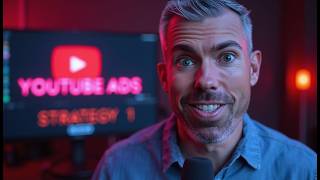
Alaric Heck, who started on YouTube in 2009 with a viral iPhone7 tutorial, breaks down a Hook-Educate-Call to Action framework for YouTube ads. He recommends starting in-stream campaigns at $25 to $50 per day and explains why YouTube's intent-based targeting works differently than Facebook's pattern interrupts.
Questions this video answers
Around July 26, 2009.
27 years old.
About $7.7 million (self-reported).
Over 8 million views (he cited the iPhone7 Complete Beginner's Guide).
Around $60,000 per year (he also said about $5,000 per month).
Chapters
YouTube ads beat Facebook ads every time. Let's face it, Facebook ad costs are going through the roof. And even when you have a great ad, they're almost impossible to scale. In this video, I'll show you how you can use YouTube ads just like the one you're watching right now to scale your business to seven or even eight figures.
Hey, do you know what it takes to skyrocket everything you're doing on YouTube? And I'm talking if you're already creating videos on YouTube, that's one thing. But if you have a business and you're not leveraging YouTube for ad growth like you might be on Facebook or Google and those are good. But YouTube specifically is the one that my guest today says just crushes all of them. So I have the go to YouTube ad expert. I see this guy getting recommended in all the high end masterminds I'm a part of and the circles they're going to Alaric Heck. And there's probably a reason for that. The guy has been on YouTube since he was 12 years old, early high school. He was making more money than his high school teacher. He even showed his teacher he'll break it down in this episode. It's pretty funny. And now what he's doing. So he still runs that business. He's someone else managing it though. He now runs a seven figure YouTube ads business, an agency and he helps people how to grow their businesses using YouTube ads. That's what we're breaking down here. He's going to break down not only the ad side but the mindset shift that gets to happen. The way to frame your content, the hook looks and also these ad strategies that you could literally swipe and deploy today. So that's what I recommend. Enjoy this episode. It's a repeater. Take notes. But I'm also going to give you one more resource if you go over to hustleandflowchart.com clone C L O N E what that is, it's my clone. The Joe AI slash. It's trained on all every episode I've had on this podcast. Over 600. That's all in there but what you can ask it to do either in text, voice or now video. I recommend video. Ask it say hey, tell me more about that Alaric Heck episode. Break down the strategy he used to write hooks or present a hook in a video. Or hey, break down that YouTube ad strategy that he showed on the episode so I can see it in bulleted form. The clone will do that for you. So go try it out. For yourself. It's totally free. Go to hustleandflowchart.com clone and you can try it out. And if you want one of these clones for yourself, just hit me up. Joe. Hustleandflowchart.com Email address that goes right to me. My team and I are setting these clones up for people. I'm actually an advisor of Delphi the Clones software. So hooking up my friends and if you email me, I'll make sure that we can get you started. All right, go enjoy the episode. Have fun with Alaric. Hey, do you have more to dos, less time and an infinite number of tools to keep track of? I know I do. Doing business has never felt harder. But you don't need a miracle to hit your goals. You just need HubSpot. Because they're all in one customer platform can make growing your business infinitely easier. Just imagine this. High quality leads, fast closing deals, wildly happy customers and and more benchmark breaking quarters. It's not a miracle, y'. All. It is HubSpot. So visit HubSpot.com to get started today. Your background's fascinating. The fact that you've been in, what, YouTube is it 14, 15 years? I don't know what the exact dates are, but yeah, you're nodding. So it's gotta be around there.
Yeah, yeah, 15 years. So back in 2009 and actually July of 2009 we're actually coming up on, I think it was like July, like 26, 2009 was when I started. It's actually technically 14 and a little bit. So it's about to be 15 years. So there you go, right on the money there.
Right.
In a couple of weeks It'll be 15 years on YouTube.
And you're still obsessed with YouTube, huh? It hasn't shaken. You haven't shaken it off yet.
Yeah, I love YouTube and of course gone from the organic side to more of the ad side these days. But it's just, it's such an amazing platform. And I remember, you know, getting really excited about YouTube earlier on, you know, because you could just post a video and people from anywhere in the world can go and watch it and you know, it's, it's, it's now just becoming way, way bigger than, you know, I think anybody, including myself, thought it could have been originally.
Yeah, well, I want to get into the story, but like to your point, you just said, are those days still here for YouTube where you can post and people will just find you and talking organically first? And of course we can get into ads on that same kind of question.
Yes, yes it is. And it's also, there's definitely more, you know, competition. It's more of a mature platform. It's similar to, you know, ranking things on Google or SEO. You know, early days there wasn't as many websites or blogs and so it's easier to rank but it's still a viable, you know, strategy. Although with AI, who knows what's going to happen there. That's all discussion. But you know, but it became more and more saturated over time. And so the same thing with YouTube, right? There is, you know, a certain amount and it's growing consistently. But of people that are watching videos, they're looking up content and if they're searching for something specifically then you know, now that there's more content out there, there is going to be more content, more choices for people to choose from. However, the, the beauty is because there's so many people watching and it really is a merit based system. If you can produce high value content, which doesn't, it's not just necessarily the best produced video, it's, it's a video that's going to appeal to your potential ideal client, well then you can get in front of them and you can start building what I call the snowball effect on your channel and really just having it go and get bigger and bigger because the more people watch, the longer the watch time, the more the channel grows. And then of course the big thing I talk about now is YouTube ads. So there's a big way to skip the line and you know, actually ensure that your videos get in front of people. And there's two ways to do that. There's the classic YouTube ads that we know about, the in stream ads that appear in front of other videos, those drive direct leads, direct conversions. We were talking about that a little bit earlier. You know, people filling up their businesses, getting leads, clients from that. And there's another type of YouTube ad that is called a in feed ad that appears in search results or suggested videos where then when people click that, it actually brings them to the video watch page and they can start watching that piece of content. And that's almost like, you know, just paying to get more viewers to watch the content you're already putting up, which can be that little spark that ignites the video growing bigger.
Okay. Because that's keeping them on platform. Right. So on YouTube they love that, that's what they want. Right? That's the main KPI for them at least.
Exactly. And that's why views with in feed ads are A fraction of the cost. Right. They could be anywhere from a fifth to even a tenth the cost of the in stream ads that drive people up off platform.
Okay, we're going to go back to that. I'm taking some notes there on some of what you just said there. That's beautiful. Cool. Well man. So we just set the scene of the power of YouTube ads and you mentioned, you kind of quickly said it and you hinted at earlier, but your ideal client, your avatar will touch that as well because they have a whole method there strategy on that. But before that, take me back like almost 15 years ago. How the heck did you break into YouTube? And you have some really cool stories in between too. But like what was the, what was the very beginning of it?
Yeah, so I started out when I was pretty young. So I'm 27 now. But I started out when I was 12. I had iPhone video camera. Before that I was kind of recording videos with friends, kind of the classic thing. And I was like, oh, I'm just gonna review some of these apps. And back then all the apps, all the good apps were like 99 cents. Right. So how do you decide what app you should download? There's some reviews in the app store, but really you know, I want to see it. I want to visually see like what that app is. So I ended up just buying some of these apps and reviewing them and created a YouTube channel called App Find. And I was doing mobile app reviews. And then you know, when I think was the iPhone4 came out, I started to do like a complete beginner's guide to the iPhone. You know, kind of the type of video like my grandparents would have wanted or even my parents. Yeah, like, like a tutorial on like how to use like their iPhone. And so I published those videos and they started to get a lot of traction. So you know those videos, you know, early on started getting thousands of views and hundreds of thousands of views. And then some of those iPhone tutorial videos ended up getting millions and millions of views and actually being like the top video for terms like iPhone tutorial or iPhone. You know, like I think the iPhone7 Complete Beginner's Guide is one of our most popular videos. Like over 8 million views. Like, like teaching a lot of people how to use their iPhones hour long video. So I like get it. I would just A to Z.
It's kind of like those like old books, like the four dummies books. It was kind of like that.
So it's like I had that in my mind actually.
Exactly, exactly. So I kind of carved out, like, a niche for myself and doing, like, these complete beginners guides. And one of the things I realized is, oh, well, people want to know how to download an app, so I can just integrate a sponsor. If I have millions of people watching this video, apps are gonna pay me good money to, like, say, hey, here's the app you should download. And, you know, and so I was getting all kinds of different sponsorships. You know, I was obviously making ad revenue from YouTube, which made me thinking, you know, how is that money coming in? And so, you know, kind of to foreshadow a little bit. But basically, you know, how I got into the YouTube ad side of things is I built up the channel. I scaled that up through high school and into college. And while I was still in college, I had these different apps that were sponsoring me. And one day, one of the apps said, hey, we'd love to.
Have you do a video on our app. And so it's just kind of a standard sponsorship. They paid a certain amount. I did a video. They're like, this is great. Lots of downloads. Can you post a video again tomorrow? I will pay you $500 to post this video again. I'm like, well, it doesn't really work like that. I don't want to just take your money and just repost the video, because people are going to watch that. And, you know, it's like, they've already seen it, right? So it's not going to have the results you think it's going to have. They don't really understand, like, organic marketing. Well, what if we take that same 500 and we just put it into ads on YouTube and, you know, target people that are similar to those that already watched the video. We can reach more people. And so they're a little skeptical, but, you know, they agreed and ran that they ended up getting thousands of users from that campaign. And then, you know, we kept running it for a little bit. And then from there, you know, there was another app that, like, found out that I did that, and then they wanted me to. And then, you know, basically it became a snowball. So originally I was doing YouTube ads for mobile apps. Then I found, you know, ClickFunnels and the whole kind of online world. Back in 2016, I was at HubSpot inbound. There was the ClickFunnels booth. I saw that and. And signed up for ClickFunnels. And then I joined a mastermind as well. And in that Mastermind, everybody was doing Facebook ads to their funnels, and I was doing YouTube ads. And so people wanted to know how I was getting so much better results with YouTube ads, especially because this was back in like 2016, right? So people didn't really even know that much about YouTube ads or that it was a real possibility to get a lot of conversions from it, like people do know today. And again, part of that is I've spent millions of dollars of my own money, like teaching people or like running ads, I mean, to say, on YouTube, telling people about the power of YouTube ads. So that definitely helped a little bit. But.
Basically I was like, all right, this is it. And I built a whole business around it. Practice what we preach. We've now spent like ourselves over $7.7 million on YouTube ads.
Oh my God.
Inside of our business. And, and then of course, we've helped our clients spend a lot more than that, like collectively. And, and so we've just gone really deep ourselves. We've worked with now thousands of businesses, especially coaching, consulting, course info, you know, education based business, although we have a variety of other businesses as well. But that's, that's kind of the main ones. And, and that's basically been. Been kind of the journey. And so now we, we help a variety of businesses leverage the power of YouTube ads.
It's huge. And there's a. I don't think you said it here, but when, what was it when you were in high school? There is like a story I read and just tell that really fast because I thought that that like, blew my mind. And you know, just thinking like, yeah, I could totally see why, but just briefly, briefly explain that part.
Yeah, so when I was in high school, I had the YouTube channel that was doing well, and this wasn't even including sponsorship revenue on, just the ad revenue. It was making over like $60,000 a year. It was making over 5,000amonth. And I was telling somebody and like, you know, I think this was my sophomore year in high school. I was telling somebody in like one of my classes and I was like, you know, showing, you know, showing them. And the teacher came over and. And you know, he's like, what are you looking at? And, and I was like, oh, you know, showing like, some of the YouTube revenue. And he took a look at it. He's like, oh, that can't be real. I'm like, what do you mean? He's like, he's like, that says he made like $60,000. And I'm like, yeah, yeah, that's the YouTube ad revenue. And then he's like. And I showed him that it's like, this is YouTube. And then his face kind of turned white and he's like. And he said that was more than he makes.
I was gonna say.
So that was a moment where I didn't really know that. Cause I didn't really have a concept at that point, you know, of what amounts of money different. Different people made per se. And I knew it was making money. I knew I was making more than other people, you know, in high school, but I didn't necessarily know I was making more than people doing full time job. So that was when I realized, wow, okay, this is, this is something that I have here. And you know, and that was definitely a big, big moment.
Well, what did that, like, I'm curious of what it did to your mindset. Like going back to the foundation element that we kind of started this with is like that. What do you feel like that was a moment where it was like, oh, wow, like I'm onto something maybe that is scalable or way before other people. Like, was there a shift there? You think that supported you and where you're at now?
Yeah, I think that supported me in looking at like, you know, that there was more possibility there. And I think always I was just competitive with myself, so I wanted to do more and you know, and also I think in my mind I knew I wanted to do more of this type of stuff. So in my mind I was like, well, it's not $100,000 a year yet, you know, so like, that's probably how I was. Not probably that's how I was thinking at that time. And, and so just kind of, you know, normalizing that current level, always looking at what's ahead. But it's interesting whenever you kind of stop and see, you know, what, what other people are doing and you know, and then by the time I was in college, it was over $100,000 a year and. And I was using that to like pay for college and then fund, you know, ad outreach, which. Which became this, you know, the YouTube ads business. So.
Right. And that's where I now. Did you complete college too, all the way through or did you did.
I did. And I even did it in less time. So I was gonna. Yeah, I did it like three and a half years. I was gonna do it in three years, but then I was just like, all right, I need to focus more.
On the business, but don't totally crush your soul. Like.
Yeah, yeah, I know exactly. What I did is I put all my classes on like two days a week. Basically. I was like in classes from like 8am to 8pm and then I had like one or two classes that were on like you know, Wednesday, but everything was like Tuesday, Thursday.
Yeah.
And I would basically do all of my, you know, potential client calls, sales calls, Monday, Wednesday, Friday, client calls, sales calls, fulfillment. I would do all of my, like, you know, extra stuff on, you know, doing kind of more stuff for the business on Saturday. And then I would do all my coursework on Sunday and rinse and repeat. So I was basically just grinding non stop, you know, do what you got to do, man. And sometimes it's like that's a good season for that type of thing that can really spur something, something bigger.
I was going to say actually.
Yeah.
Because like myself, I'm 39. Yeah. I have kids now and it's like. But like there's a different season I'm in now. And you know, I look back to like when I was your age and not sound like some old man now is weird, but like, but there's seasons of life that I find finally learned. I'm like, yeah, like you gotta lean in, in this phase, whatever it is. And if you're aware at those times, like, I feel like that can make all the difference.
Yeah, yeah.
I mean like, that's where it's like, yeah, get through college. But like you're doing it in a way where you're time blocking everything. And it sounds like that's a way that you probably live in general. Right. Like, are there some. Yeah, like I'm curious of any models that you think support you in getting like not only scale because you scaled yourself through college really fast or university while also scaling a business. But are there things like that time blocking, are there other things that kind of stand out that support you as an entrepreneur?
Absolutely. And there's a lot of really good concepts. Cal Newport's like, deep work is really good. So diving into that is really valuable. So kind of pushing as much of the shallow work to individual time spots and really focusing on kind of bigger projects. And also, you know, he talks about like the attention residue and you know, kind of switching costs. And one of the big things that I did was really map out my days of my week. And I'll actually give an illustration of that. So essentially now this is. Is subject to change a little bit. So it's not perfect. So I think anybody who's listening who's just like, oh, it's hard to make it perfect. It's like, it's not perfect for me either, but I'm just giving you the general view of like what I like to do now, which is similar to what I had done back in college, which was like eliminating switching costs is eliminating switching costs. Where it's like Monday is a lot of internal meetings for me, so a lot of like inside of the business internal meetings. Tuesday is a content based day. So that's what I'm doing. I'm more doing like, you know, shooting different like videos, ads, funnels. Also if I don't have a like a large shoot, I'll do deep work. That's also one of the two days I'll do podcasts. The other day is Thursday, which is external calls, which is what we're doing today. Wednesday is more higher level big picture day. So. And again, an example of how it's not always perfect is there's been seasons where that day I don't have any call schedule and it's just deep work. Right now I'm not in one of those seasons because I've got a lot of projects that I'm moving forward and so I am having more calls on Wednesday but they are more on things to push the business forward and then whereas Monday is more like administration. Right. And then Thursday is external calls. So that's also where there's podcasts. If there's, you know, a client or potential client, you know, high value potential client or there's, you know, just. I met somebody at a networking event. We're going to have a, you know, continue the conversation. I also have a couple of other businesses. I still run my YouTube channel app find. So you know, every couple weeks or so I'll have a 30 minute call with you know, the guy who runs the. Runs the channel now and. Or that I still run it. Sorry. I still own the channel but I don't run anymore. I have somebody that runs it. And so every couple of weeks I have a call and so it's basically like that's external calls. And then Friday is kind of like, you know, a kind of data flex day. So anything else I need to like get done or you know, meetings that needs to get put in place, we'll do that on Friday. And then, and then I also do at this, in this season of my life, I also do Saturday as a. That's my true like no call day. So I don't take calls on Saturday but I do work on Saturday and I'll do like what I call coffee shop work and creative work. So I'll do my writing, I'll write for my newsletter, my Social media. I'll also do some, like, deeper work. If there's a project or I'm writing something out or I'm doing a slide deck. If I'm speaking at an event, I'll do slideshow stuff. And then. And then the idea is take Sunday off. And again, it's not perfect every week, but that's basically the how I treat my weeks now and kind of time block things.
It's a great framework. And yeah, Cal Newport's book, good shout out there. But this framework is because I have something similar. But the way that I feel like it's actually rough. It's very similar. But at the same time, I know the thing that crushes me when it gets out of my way or when I'm not being as contained or external calls sprinkling throughout the day. And like you said, switching costs. Right. Like, that's the biggest thing that in the moment, you probably don't feel it. But then at the end of the day, at least me, that's when you're like, dang, my. I have all this other stuff that's still floating around or you just feel drained, whatever. Yeah, I'm sure we're all a little different, but exactly in terms of the foundation, you know, mindset and all that. Maybe we can kind of get into that as we start getting into YouTube ads. Cause I want to talk about the power of these ads now and really breaking down.
What?
What? Because I've had just. Sean Cannell was just on the podcast and he's an awesome guy. He's a great guy. And obviously crushing it on YouTube for a lot of years. Mainly organic. I'm sure he's doing a lot of. Or some ads. I actually didn't ask him that. But the fact is we've been talking a lot about YouTube and it's a platform. Like you said, it's maturing, but at the same time, it's still maybe wide open isn't the right term, but you can find your audience videos with, you know, 100 subscribers or channels that is can still be discovered. You know, there sounds like the algorithm's testing these things out. So there's a barrier, but at the same time, go for it. Like, it seems like it has exponential growth. But hit me with, like, how you would start people off if they weren't really aware of much about YouTube ads. From an overview. And then we'll kind of break it down.
Yeah, and that's where the power of YouTube ads comes into play too, is because, you know, organic. There's a lot of great strategies. I'm sure Sean has like a lot of awesome strategies on there. And I'll speak more on the YouTube ad side. There's big opportunities to get in front of that ideal user when they have intent. And I've got a few frameworks I'll cover. But the big thing to know is that with YouTube ads, you're targeting people that are actually looking things up on YouTube. They're actually making searches, they're actually looking to watch videos that solve their problems. And if you can get in front of them at the perfect time with your video, you then you're far more likely to actually get not only a higher quality lead, but reach them at the right time. So if you think about it, on Facebook and other platforms, they're all very algorithm based. So people are kind of scrolling. They're mindlessly scrolling, like, oh, I'm kind of interested in that. They might click on it, but they're not necessarily in that learning mode. They're casually scrolling and looking. Now, there are ways to interrupt people, pattern interrupt. There are opportunities to see success with Facebook ads and things like that. However, on YouTube, one of the big things that makes it so powerful is the fact that people are actually going and they are watching videos on YouTube. So they're going in and they are searching for, how do I solve this problem? How do I solve that problem? And you're getting in front of them at that perfect time when they have real intent. So they're going on YouTube and they're asking themselves, okay, how can I, let's say, lose weight or what are the best exercises? And if you can get in front of them at that perfect time when they have intent, then you're reaching them at that exact right moment when they have that intent. So YouTube is gonna have a lot more of an intent focus, whereas other platforms, they're more about pattern interrupt. So there's a lot more opportunity to reach the right person at the right time with that right message and that video. And I'm happy to kind of dive into some of the frameworks.
I would love to dive through the frameworks. And yeah, because intent based, I know that triggers so many different things in the algorithm. And YouTube has one thing I like about it are the stats. Just like the background or back end of a channel is, you can understand so much about the people. Whereas like this audio podcast for instance, which I've lived on for almost nine years now, not a lot of stats. So you're like, what's working? What's not working. What's the engagement like? So let's dig into intent and yeah, like how you would go about thinking of that and how to build, I guess the right content. But then obviously your ads support those. Hey, I'm pausing this episode really fast to shout out another show you should follow. It's called this Old Marketing. It's hosted by Joe Pulizzi and Robert Rose. These guys are expert content marketers. This show is Also on the HubSpot podcast network, the audio destination for business professionals. Now, Joe and Robert, on this show they break down all of the latest content marketing trends and things you got to know as a business owner. To attract and retain customers, they break down old marketing strategies called this old marketing examples from the past and applies now. So super useful. It is entertaining. They love to rant. Joe and Robert do. So I always love a good rant and just go check it out yourself. Go check out their latest episode. Listen to this old marketing wherever you get your podcast. Are you tired of the hassle of building sales funnels? I totally get it. I've been there. You started your business not to be chained your laptop all day. You built it for freedom. And thankfully there is an all in one platform that makes it easier for you so you can focus on attracting customers online. The platform is called Kartra and it gives you all the tools you need to grow your business. The best part is Kartra comes to stock with all the done for you campaigns so you don't have to worry about thinking about building from scratch. Everything is designed, connected and written for you already. It also leverages AI to help you with some of this writing. All you got to do is just customize this to your liking and then boom, you got a fully built sales funnel for you. This is marketing made easy. So go try it out for free. 30 day free trial over at hustleandflowchart.com Kartra will get you there. So again, that's hustleandflowchart.com K A R T R A. Yeah.
So we'll start with the ad, you know, what to kind of put in the ad and then we'll talk about how to target that when people have intent. But the thing to think about is people are actually looking to, you know, solve the problem that you solve. And so the way that you structure an ad is going to be very different. On Facebook, you know, for instance, you might want to have something that's kind of crazy or over the top to get people to stop scrolling, scrolling. Whereas on YouTube you actually want to lead with value and have educational value, but you still have to hook them and capture their attention. People have about five seconds before they can skip that ad. And you actually want the people that aren't interested to skip because it gives that signal and that data back over to Google and YouTube. But you want the people that are interested to watch and pay attention. You have kind of a three part framework to a winning YouTube ad. It's the hook, educate, call to action. So the hook pulls them in, then you educate, you provide value to them, you teach them how to solve the problem that they have. And then you have a clear and concise call to action at the end to get them to take action. So it's hook, educate, call to action. That is the framework that works really well on YouTube. And so you want to start off with a hook that really pulls people in. I'll give you an example of our top performing hook. And we've literally ran millions of dollars in ads to this ad. And also it's made over eight figures. This one ad hook, which is YouTube ads, beat Facebook ads every time. Let's face it, Facebook ad costs are going through the roof. And even when you have a great ad, they're almost impossible to scale. In this video, I'll show you how you can use YouTube ads just like the one you're watching right now, to scale your business to seven or even eight figures.
And you can see that and you can tell I've done that a few times.
A couple times, yeah, it was beautiful, but.
Well, thank you. But basically it actually hits a few different points because inside of that hook, you know, you actually start with a polarizing statement which in of itself is kind of like a pattern up, which is YouTube ads beat Facebook ads. So people are gonna be paying attention. Also, if you're not into marketing or an entrepreneur and you don't really care, you're gonna skip that ad really fast. You're like, I don't care about this skip. So it's really gonna attract people that are interested versus, you know, one bit. One mistake sometimes people make is making the ad so appealing that anybody will want to watch it. But if you don't call out your ideal clients, then you could get people that are just watching it for entertainment. You want people to watch it because they have a problem that you can solve. So YouTube ads, you know, be Facebook ads. It's a bold statement. People, you know, are watching it and it's going to attract our ideal client. Then I hit two of the three biggest Pain points that people have with Facebook ads that, you know, they're getting. Ads are getting more expensive. Even when you have a great ad, they're hard to see scale. And then the third, you know, biggest pain point, which I didn't cover is like, if your ad gets shut down, ad account gets shut down, those are like the three biggest pain points. I guess the fourth would be that it's kind of like a roller coaster. Right. But it's similar to the other ones. Those are like the three biggest pain points. I hit two of the biggest pain points. So people are nodding. Yeah, actually that is a problem. Then I introduced the solution. Also, there's something unique about this because I can say like, you're watching right now, but that's like a version of social proof. So if that, that obviously won't be the case for, for other things. But you could say just like this person or this person, you know, you can show examples.
Or an example of yourself to tout your credibility. And then it gives the promise how you can use YouTube ads to scale your business seven or even eight figures. And so essentially that hook draws in the right people, pushes away the wrong people, you know, sets the frame of what we're gonna do. Talks about pain points they have, talks about how I have a solution and then tees up the rest of the ad. So that's a really good. That's an example of like a hook.
Thanks for breaking that down too, because I think the hook is something that we've. We all know now. It's like, okay, five second attention spans. You know, we're all goldfish or less nowadays. But breaking down the hook, that. It was beautiful. That was awesome. I said beautiful twice now because it's true. Because we could swipe that. Everyone can apply that and should in, I'm assuming every YouTube video and not just ads. But yeah, we got to hook them somehow into content. And same with podcasts, let's be honest. You know, it's all the content.
Exactly. That's the thing. You apply some of these strategies. And honestly, the elements of a great ad is very similar to the elements of a great YouTube video or a great piece of content because you hook them in and then the next part is you educate, you provide value. But here's the thing, most people leave this out and I will say on Facebook, it actually probably is less of a thing that you need to do because it's more about getting the click. But on YouTube, people are watching to receive value. So you just say, hey, here's all These things. And then you say, okay, go, go sign up for my webinar. It's just not the best on YouTube. But a lot of people make that mistake. You've probably seen it. We've all seen ads that are only like 30 seconds, 30 to 60 seconds long. They don't actually have any substance, but people are far less likely to opt into those. Especially when you're in a market that maybe there's a little bit more saturation or there's different people out there. Trust needs to be high. You want to build trust by providing value. And so that's where the educate section and actually having the educate section be where you're providing, you know, two to three, what I call golden nuggets. Why golden nuggets? Well, they're incredibly valuable, but they're also small and bite sized, just like a golden nugget. Right? So you want to put these little pieces, you know, in there that's giving real value. If you can give them an aha moment in the ad, then you've succeeded. And then that's all designed to get them to take the call to action. Right? So you want to teach, you want to educate, you want to give them an aha moment. As an example, one of the clients that we worked with, this is kind of a combination between a hook and educate, because it gets an educate. But basically, like one of the clients that we work with helps with nutrition, like nutrition coach, and they really good hook, but then leads into an educate that gives an aha moment that gets them more likely to take action. So essentially they hold up this little pitcher of oil or measuring cup of oil. You can see that there's oil in there. So they say this is 2,000 calories of oil. If it's calories, a calorie, why can't I just drink this every day and be healthy? Well, now that we've established a calorie, maybe isn't just a calorie. Well, why do you think that 2,000 calories of pizza is the same as 2,000 calories of salad? Because there's something else going on here. It's macronutrients. And what those are are the different nutrients that are in the food that you eat. And here's the problem in the industry and at this point and have the rest of this all memorized, but basically, you know, people are talking only about calories, but there's more than just calories. You can get calories from, you know, going outside and like eating the bark off a tree. But there's nutrients that your body needs. And that's also why when you eat certain things, you don't feel full. Right. And so now you're like basically teaching and people are having these light bulb moments.
Yeah.
Because if you haven't heard this before and it's like designed to shock you, give you a light bulb moment. And then when he says, okay, and now that you know that this is the case, how do you know what you should eat? Well, that's exactly what I'm going to teach on this training. So click the link right here.
Right.
And that gets in the call to action. So you can see how there's an educate section where you're providing value for us. You know, it's teaching about the elements of a YouTube ad and how, you know, custom intent, audiences work and like how they can, how that's going to be powerful to reach people at the right time with the right message. And so you can see how you have that like educational component right in there.
It's huge. Yeah. And it can be snappy, like, like you just showed there. It doesn't have to be super drawn out. Like you said, bite size. And as you were just explaining, I'm like, yeah, you know, like that's a nugget. Any kind of nod, head nod, you're getting them more and more closer to that call to action. Having them actually go do that thing.
Exactly. And then the call to action. This is the simplest part, but it's also something where actually it's bad to get too creative here. You want to be, you know, very clear and have multiple times that you mentioned how to take action. So at the end, you know, it's a very simple kind of script. Right now that you just seen how valuable this can be, or now that you've seen X, Y and Z, I want to invite you to and then whatever that call to action is. So download my PDF, that's going to walk you through step by step. Or sign up for my webinar where I'm going to show you how this works or, you know, my free training that's going to walk you through this or book a strategy call, you know, whatever it happens to be. We do recommend sending to some kind of freebie first capture the lead and then lead to a call if it's going to be a, you know, call. But basically, you know, you want to just make it very clear and then you want to say it again. So click that link right here on the screen or down below. That way you're going to get to a page that looks just like this. Then you flash the page up on the screen so it gets them, you know, a little bit familiar with the pages and then just put in your details and you'll get instant access to that full training. So just click that link and I will see you on the training. Right. So you see how your repetition making it very clear you're also eliminating the unknown of what they're going to get when they sign up and that's going to increase your conversion rate there. And so that's the call to action. So that's really the components of an ad, is the hook, educate, call to action.
It's so clear and with what you just said, anyone can at least get this party started and do it with exactly this framework. And I like on the cta and this is where Facebook ads, I guess, video, you can do it, but you're actually showing them what the next step looks like. So you can show them, hey, this is what it's going to feel like, what it's going to look like, you doing this. And you know, it's less unknown. There's not going to be a disconnect once they actually get over there.
Ideally, it doesn't change from what the video is already showing, you know, Exactly. So the structure is great. And this is where, okay, you have the structure now. I'm curious. You mentioned this earlier really early on the alpha AI targeting strategy, it sounds like, because dialing in that audience, right?
Yes.
Are you doing that before doing the ad? I'm sure.
So there's a few pieces to that. So you can actually really figure out. It is important to know who your ideal audience is before you craft the ad. So you can craft an ad that really appeals to them. Once you craft that ad, you know, or in tandem, you can start to figure out the audiences that you're going to target and split test different audiences. So nowadays YouTube is all built around targeting these audiences, but these audiences have intent. So there's a few different types. So there's custom affinity audiences which based on what that person is potentially interested in, and that's based on all the data that Google and YouTube collects on every user. There's also custom intent audiences based on what people are searching for right now. So if they're searching on YouTube, they're searching on Google. You can actually target them based on searches that they've recently done. And that's pretty powerful because if you're looking up, you know, somebody's looking up, okay, how do I do YouTube ads or how to do Facebook ads. I can get in front of them, you know, talking about YouTube ads, or if somebody's looking up how to lose weight or you know, counting calories, something like that. Then the other example we just gave with a nutritionist can get in front of them at that moment. And again, it's not necessarily at the exact same time. Cause they might have made that search recently, it's like within a recent period of time. But if they've done those searches, that means that's what they're looking for. And you can get in front of them as somebody that has intent. You can even target people based on URLs and websites they've been on in the past, called a URL affinity audience. And you could target people based on different URLs that they may have gone on in the past, just put those URLs into an audience and that's pretty powerful. So.
Well, that is, I mean especially. Yeah, if you really know that avatar that you're dialing in, then why not get more specific and go for it now with that in mind, going back to the ads. So the different types of ads that you know, that we have available to us on YouTube, you were mentioning in stream ads, you know, the in feed ads, there's retargeting as well. Where. And you were mentioning the infeed ads, 10th of the cost. I mean it's like the barrier here is really so low. So where, where would you recommend someone start like now that they're already thinking about, you know, like they have some content. YouTube, maybe not a lot, but they're like, okay, I can get on with this, I can create some new content. Even if it's just straight up, I'm going to use ads to go send to my offer, my service, business, whatever it is. Yeah. Where do they start on the getting into the actual ad side of things now?
So great question. And it depends on exactly what the goal is. So if the goal is to get the most conversions and sales and return today, then it would still be running the in stream ads, the ones I'm talking about that are, you know, kind of targeting in front of, you know, videos on YouTube that are skippable. And yes, you'll pay more per view, but you're also going to get much higher intent people. You're going to send them off to your website. You're gonna be able to track and raise conversions, optimize towards conversions and get more of that return and that immediate, like book calls, you know, immediate leads, immediate book Calls immediate, you know, clients. Depending on your sales cycle. Right. Versus promoting your YouTube channel, there's an opportunity if you're looking to grow and build up kind of your top of funnel bucket, have people start becoming aware of you. Then that is where these in feed ads are going to work really well because these what allow you to get your pieces of content that you might already be producing anyways in front of those people as they're searching, as they're browsing YouTube and then they can click on that. Now they go to the watch page. Now they're consuming your content, they're interested in what you're doing and that is really building up your audience which of course then can turn into sales but it's a longer sales cycle. So ultimately it's a time or money equation. You'll spend more money doing the direct targeting but it'll take less time to convert those into clients whereas you'll spend less money on in feed ads. But it can take more time to convert into clients.
Right.
So that is kind of the balance there. And honestly we recommend doing both. You know, as you get to a certain size now, budgetary concerns, doing in feed ads is a great place to start. Just as long as you don't have the wrong idea that that's gonna immediately turn into sales.
Right? Yep. Longer cycle there.
It's a longer cycle. Yeah.
And you said a tenth of the cost. I mean like so yeah, talking about budgets on both of these, like is there a kind of a starting point that you recommend people and maybe, maybe there's a, you know, we're all different in terms of budgets and what we can handle. So maybe there's a range that you can kind of point us to.
Yeah, so that's a great question as well. And so basically with the in stream ads, the ones in front of other videos, the configuration conversion based ads, we recommend at least $25 per day per campaign and we recommend at least two campaigns. So and the reason for that is never wanted to have one campaign. You don't know if that's the best campaign ever or not as good. You always want to have two. So you can. One's the control, then you're trying to beat the control, then that one becomes the control, then you try and beat it again. It's like a ladder where you're climbing up. You always want to have at least two campaigns and $25 per day is what we've found. You know, we works the best just to be able to have enough, you know, views and you know, clicks and potential conversions. The other thing too is that would also be for more of like a lead based, you know, ad where you again, you're going to be optimizing for multiple things, but really optimizing, you know, you want to be able to get at least a lead, whatever that or whatever, like the conversion is at least a conversion, I mean, to say for that now, you know, depending on if you're B2B or if you're B2C, you might have, you know, multiple conversions. You might have a conversion or two for something like that. But you need to be in a spot where you can at least get like a conversion, a few conversions, something like that.
And you can kind of start. Yeah. Playing the math game then. Okay.
Exactly, exactly. So now $50 a day per campaign is where we like to start. So 25 is the minimum. $50 where we like to start. You could start at 100. I wouldn't really recommend much more than 100 though, because you know, you haven't really proven it as a winner. So I'd rather launch if you've got a bigger budget. Let's say you have $1,000 a day in it, which I also, I don't really recommend like doing this right off the bat. I would scale up to that anyways. Let's say you're like, I have to spend this like high amount. I would rather spread it out across like 10 campaigns than, than, you know, throw too much budget in like a campaign that's not proven. So one or two, usually $50 per day is the recommended 25 minimum. And I wouldn't go above $100. I would do more campaigns before, for, before doing that. And then you would scale once you see that success you're looking for.
That makes sense.
Okay then in feed ads though, this is a really interesting one. You could do those as little as a dollar a day. Right.
That's crazy.
Now you're not going to get as many views as a dollar a day.
Sure.
But five to $10 is usually what we'll like recommend just to start off because you can get people watching these videos and honestly it depends on your industry. A lot of different factors, all that. But you know, you could get views for $0.05, $0.10, $0.25. You can get really cheap like $0.01 views. But that's like in different countries. So like in the US like $0.05 to like $0.25. You can get views and you can target those too, you know, for the types of people that you're looking for and have Them start watching your videos again, though those are not necessarily conversion optimized. So these are people that might be, you know, at a, like a lower level of awareness, but you can build up that awareness to your content and then get them more likely to sign up. Here's the really cool thing. You do a bunch of that. These in feed ads get people top of funnel. Well, then you run a warm traffic campaign to all the people who subscribe to your channel or watching your channel or engage with your channel. And you run those to your lead magnet or to whatever goal it is. And those are always cheaper. If you're running this strategy because you're warming people up so you're hitting your warm audience. And so depending on how good you do, it's not always the case that you add them up and it's better than just the cold traffic from the bat. It depends. But if you're running this strategy, you'll always get a lower cost per conversion. I mean, I won't say always, but like for the most part, you know, as long as you're setting it up the right way, you're warming people up, the content and then you're retargeting them. And by retargeting them, your cost per lead is going to be lower.
That makes sense. So yeah, that's basically the retargeting strategy is. Yeah, warm them up that way. Kind of like what you would possibly on Facebook or somewhere else like that and bringing them back, it makes a lot of sense. And you have intent. Right. It's like building intent throughout the whole thing. So why not do that?
Exactly, exactly.
Yeah. Got it. Okay. And you know, I'm thinking, because I've heard some strategies also, you know, as a podcaster, like the thing I'm reinventing right now is how this show lives on YouTube because let's, let's be honest, notoriously long form content isn't at least podcasting. It's not made for YouTube straight up unless it's chopped up, redesigned, rerecorded. I could be wrong, but at least this is my experience.
You know, YouTube is actually pushing more into podcasts. They actually have new playlist podcast features. More and more people are watching podcasts on YouTube. I'm actually really curious. Well, I might have to check out your interview with Sean because I'm curious if you mentioned any of that. But like a little. Yeah, I think that like YouTube, I wouldn't be surprised if they do what Spotify tried to do this. I think YouTube's going to make a play for podcasts, especially video podcasts, because already in the creator dashboard, they're encouraging you to upload podcasts to mark playlist as podcasts. When you mark a playlist as a podcast, again, YouTube doesn't tell you what the algorithm does behind the scenes. But what I've experienced when I watch podcasts on YouTube, I get served way more of other episodes of that podcast. I think that's one. There's a reason they're asking for to be identified as a podcast, because they also know if you get hooked on a podcast, you're watching a lot of content on YouTube.
It's a long time.
So I think that YouTube is going to be going more into podcasts and now is a big opportunity to capitalize on that.
I like that. Okay. Because I do have. I've seen the feature and yeah, they don't talk about it a lot. And still, still a lot of. A lot of podcasters don't even know it exists or haven't tried. So, yeah, definitely market as a podcast. I know the playlist can get a little confusing from personal experience because it's pulling in audio as well. And it's like, then there's video. Don't mix the two. That's where things get.
I agree.
Yeah, Yeah, I found that out the hard way, but it's okay. What other. I mean, yeah, I would be curious from your perspective. Other things on the podcasting side, I know there are a lot of people that have questions on how to really leverage all this beautiful content they're making, you know, and a lot of them are using things like Riverside or whatever to record, so the video's there. What other things are you hearing on podcasting, you know, YouTube and that side of things? Maybe on the organic side, but yeah.
A really good strategy with podcast is to pull a really valuable piece of the podcast and combine that with the guest and have that be the reason people should watch and then pull that clip to the beginning. I'm not sure we do this already, but, you know, that is one thing that works well on YouTube is. So let's say one of the most valuable things that we talk about is how to leverage, you know, YouTube with podcasts. Now you get. You get to be the judge. If we talked about a lot of great things, but let's say that's something you want to do, so that becomes an idea. So instead of it just being, you know, this episode of the podcast or like, featuring me, you could say, you know, how to leverage YouTube for podcasts and use YouTube ads. To grow or something like that. Or you know, how to use YouTube ads to promote your podcast, whatever. I'll talk about that in a second because there's in feed ads, you can use that. But let's say whatever with Alaric Heck. And then at the beginning of the video, you take the clip where we talk about something really valuable. You put it right there at the beginning. And so you either dive right into that or you do an intro yourself and say, today we're talking with Alric and here's what it is. And you have to be more of a YouTube intro, not just the standard podcast intro. And so that works well because people are looking for that concept. So they come for the one thing, but then they stay longer. Also they could come either for me, for you, your podcast or the concept. So it gives you three shots.
True.
They're a podcast listener of you. They might be interested in interviews that I'm doing, or they might be interested in the, you know, that example of like how to use YouTube and YouTube ads to grow your podcast or whatever other thing. But instead of trying it to be everything, you choose one thing that we talked about. Pull a clip like for the first like 15, 30 seconds to the beginning, or you just mention that's going to be talked about and then have it in the, in the title, have it in the thumbnail. And that's something that works pretty well with, with podcasts.
With podcasts. I love it. All right, so in stream ad, you said to have.
Yeah, yeah, so, yeah, in feed ad. Exactly. So basically there's a strategy and I actually have a video on my YouTube channel. It's just under. Alright, if you just look up Alrakech in feed ads and I'll send it to you as well. But cool. That basically talks about how to run these in feed ads. But basically, again, like I said, these appear in search results or suggested videos. So what you can do is you can run your podcast, take the best episode of your podcast and you can run it. There's a few strategies. You can run it. You can run it either against similar podcasts, people searching for the topic that the podcast about, even that person like that the name. Like you could run it against me. Like, so that's a thing. And then all of a sudden, oh yeah, I want to watch a podcast with this. And then they click it. Now they're watching your podcast. Now they're getting to the watch page. They're liking it, they're subscribing, you know, and so they're going through that whole process. And because people are watching, it's boost, seen the watch time where people are going through, they're taking a look at. Now that is one thing you want to look at. I talk about this in the tutorial and anytime I talk about in feed ads. Because if you talk to somebody else, like Sean or other people who do organic YouTube and they'll tell you that YouTube ads could potentially harm your organic growth if you do it the wrong way.
Yeah, that makes sense.
The wrong way is in stream ads, you don't want to run those to public videos. Those are unlisted. The reason for that is a lot of people can click skills. So some of the, and not all, but some of the people who talk about organic growth, they don't understand the difference between in stream and in feed, which is fine because I know that they're more inorganic. They're not on the ad side. But so they say like, hey, don't run the YouTube ads well. Or like to a public video. If you do this unlisted video, it won't affect the channel stats. So what you would do is with an in stream ad, you run it as unlisted video and then it's not going to affect the watch time stats of your overall channel. If you run that as an unlisted video.
That's good. Okay, that's a huge distinction right there.
Yes, got it. Now with, with your public content, let's say your podcast episodes, you wouldn't do those as an in feed ad because the problem is. Sorry, sorry. In stream ad. Oh my goodness. You wouldn't do that with an in stream ad. Sorry, even I get, you know, talking about it. I know they used to be called in stream and discovery ads. I remember that Google change discovery to in feed and now they just sound too similar. But you know, I hear you Google naming, you know, conventions.
Anyways, yeah, that's what they do.
So with in stream ads, you don't want to run those as public videos, just unlisted. But your podcast, you could do that as an in feed ad which appear in search results suggested videos. And the reason that works is because people, it's not a skippable ad. People click it and now they're watching the video. So as long as you serve it to the right people, if they like it and the watch time is good, then it can actually increase the watch time of your channel. And actually the opposite is true because if it's possible to harm the channel, you could also help the channel if the watch time is good. Enough.
True.
Got it.
Okay. And yeah, it's a great way to maybe test watch time. I mean, obviously, ideally, organic will start to pick up, and you can kind of test it out that way, but, I mean, hey, might as well test it with some ads, you know, the infeed ads that is, to content. And it doesn't take a lot of money. Like you said, five to. Five to ten bucks a day per campaign. And it's probably not a bad way to just kick off any video, I would imagine, you know, for the algorithm. I mean, let's be honest. You're playing the YouTube game, right? The Google game. You're giving them money and keeping people on site.
Exactly, exactly. And it's like. It's like with Facebook and Instagram, how you can, like, boost posts, and there are a lot of people that are against boosting posts, and I understand that. And at the same time, it's like, you know, because some of it's like, well, you don't want to, like, get into that, you know, like, you want to do the organic, but at the same time, if you have an unfair advantage that you can take advantage of and you have a little bit more money than you want to spend the time, you know, just waiting for things to pick up naturally, well, there is an opportunity to really throw a little bit of gas on the fire and do that, you know, from an early stage. And actually, that's the same type of thing that we still do with app find. The original YouTube channels will give it a little bit of a burst at the beginning, and then, you know, there's videos that'll take off and do incredibly well. There's some that, you know, don't take off as much, but basically you just give it kind of like a running start by spending a little bit of money on those early ads. And same thing with the channel that I have, too. So it's just. It just depends on what your strategy is, but it's a good way to give it, like, an initial boost.
I'm turning that on today, I swear.
I'll send you the video. I'll send you the tutorial video.
Please do it. And I'll share with everyone else in the show. Notes, description, and stuff. Dude, Alaric, I have literally so many notes over here. That's why I'm looking at, like. All right, great one. So, hey, is there anything you think we missed or, like, some glaring thing at least in framing this conversation? Then I want to send people to you, obviously.
Yeah, yeah. Well, one other thing is I was going to talk about. We've got our AI ad target targeting software. Keyword search, keyword search dot com. There's AI ad targeting for YouTube and Google Ads. And that's also a really good way to find A lot of people are like, well, how do I target, like, yeah, I don't know how to do it or how do I write a YouTube ad script? Well, the cool thing is I put a lot of these pieces like into a software as well. So I've got some resources I'll send people to.
Cool.
But you know, that software, you know, people can get like a free trial. There's like a five day, you know, kind of unlimited trial. But the cool thing with that is there's opportunities to go in and like, you know, figure out, okay, what are people, what are your ideal clients searching for on YouTube or Google? So you just kind of describe the business. Click, you know, type in the URL of your site and then click generate. And it'll go and find all the things that people are searching for on Google on YouTube and they can kind of sync it over directly. And it even. Now here's a cool thing. It does AI YouTube ad scripts. So you can actually write a whole like YouTube ad script. And it's not just like asking ChatGPT because we, we trained it on our top 400 YouTube ad scripts. So we basically built our own custom GPT around that and built it right into the software. So it does like a much better job at actually producing YouTube ads. You do it and you'll be surprised at the quality.
I love it. That's speaking my language because there's a whole solo kind of content play that I'm doing right now. So keywordsearch.com is that what you said?
Yeah. Keywordsearch.com there's a five day unlimited free trial. You can check it all out. Also, I've got a gift for everybody who's in who's listening here too. It's my 19 page YouTube ad strategy PDF. It's adoutreach.com gift. That's a D O u T R e a c h.com g I f t adoutreach.com gift. It's my 19 page YouTube ad strategy PDF. Walks you through step by step. There's also a video training that goes along with that and the ability if you want to book a call with our team and we can of course, you know, walk you through what we'd rather recommend as a strategy.
Dude, you're the man. Seriously, you led with so much value all the way through. And it's, it's honestly what I expected because I hear your name all the time and all the masterminds, like I'm in what a good four of them and, you know, high level people in San Diego and around and you're the guy that, that they turn to all the time when it comes to YouTube ads. So definitely y' all go to get that gift. Everything's going to be linked below. So ad outreach.com gift. I like the fact that you noted it's 19 pages too. So take too much. I love it. Alaric, I appreciate you a ton, man. And maybe we'll be chatting again soon. I'll report back on all the, all the good stuff I'll do with this podcast. So spread the word.
All right, man, I'm looking forward to it. Thanks so much, Joe. All right, bye.
Sa.
More from Joe




OpenClaw is making AI agents accessible to EVERYONE and this is a total game-changer. 🤯 #ai #ainews







OpenClaw Delete Panic -- The Email Inbox Nightmare! #openclaw #email #nightmare