The Hidden Truth About 401ks and Wall Street
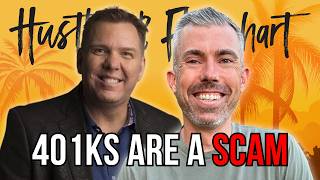
Conversation between host Joe Fier and investor/educator Andy Tanner covering why entrepreneurs should shift profits into ownership (stocks, options, dividends) to compound wealth, how to manage risk through control and systems, and the four pillars of financial education (fundamentals, technicals, cash flow, risk management). Andy emphasizes teaching children financial literacy (Cashflow board game, early brokerage accounts), critiques 401(k) origins and costs, and offers resources (his book and the Cash Flow Academy) while noting practical limits of current AI tools for trading.
Chapters
Most entrepreneurs can build pretty incredible businesses for themselves, for yourself, you know, within.
Your control, you could generate some really great revenue, have a great lifestyle and kind of do it your own way. But when you go to investing outside of your business or even adopting new technology like AI, a lot of people get tripped up or just approach it the wrong way. So today's guest, his name is Andy Tanner. He actually spent 14 years traveling with Robert Kiyosaki, you know, author of Rich Dad, Poor Dad. It's the first book that I read.
Right before starting starting my own businesses.
And Andy ended up teaching his nine year old son how to invest at a level that most of us never learn. And this is how it's investing in other companies. It's also investing in your own business and approaching technology in a way that's really smart. And there's a whole process Andy breaks down. It'll help you reinvent the way that you think of wealth and controlling that. Yeah, not only in 2025, but, but also beyond. So enjoy the episode.
Let's get into.
Takes a lot to grow your business. I'm talking about attracting an audience lead, scoring with your new leads and customers and also just managing all of the.
Channels that you got to manage.
A lot of managing. So a lot of long days, late nights, weekends, hopefully not too many of those. There's a better way. And that's what breeze. It's made by HubSpot. It's a new collection of AI tools. It's even easier for people like us market to attract an audience, increase leads and score those customers really quickly. It means you're going to have a lot more time back and a lot to celebrate. So visit HubSpot.com marketers to learn more. Hey, before you get into the episode, I urge you to hit pause and go check out the AI Digital mind. It's like a digital twin of this podcast and a whole bunch of other content I've released. Go to hustleandflowchart.com AI Joe that's hustle and flowchart.com AI Joe. You can literally chat with this podcast with me and my guests in text, audio and video for free if you want one of these made for yourself. If you're Interested, go to hustleandflowchart.com interest and we make these things out. So enjoy. Let's get to the episode.
Andy, we're rolling. We're finally doing this. I appreciate your time and being here today, man. And I know we're going to have a blast because you think differently around Investments in general. And you have some really cool insights into technology, the world we're all living in now, the, I guess the bullish side and the bearish side. So how are you doing today, my friend?
Man, it couldn't be more grateful to join your show. You do a lot of great stuff and.
Anytime you're invited, it's an honor. So appreciate the opportunity. Look forward to our discussion. Should be a great time.
It will be. And you already just the, you know, the COVID of you online immediately when we got introduced, I saw Rich Dad, Poor dad one of the advisors there. I was like, well, Robert Kiyosaki and Rich Dad, Poor Dad. The book got me into this whole entrepreneurship game in the first place. It was the first book I read and immediately everything shifted.
I want to say there are 40 million copies in like 90 plus languages. And you know, Robert completely changed my life. And I always give a shout out to Kim as well. That advisor team, I traveled with them for about 14 years all around the world. And you know, it was funny because we were invited to come as a team, as teachers, but for me it was all learning, man. I was just sharing what I was learning as a student with that group. And nowadays.
I spend most of my time teaching here from a home studio. My wife had an illness about three years ago. She's diagnosed with breast cancer. So we're doing great. But that brought me home. My kids play high school basketball. So my biggest focus right now is I still teach from my home studio, but I don't care for the travel much anymore. I like to be a, like being a dad right now and a husband. So that's the priority. I love it.
Has it always. Was it always. I mean, obviously did a lot of travel before, but did you always have that kind of intention for the family and kind of making it for Your own time?
100%. You know, my wife and I had our, our kids a little late in life actually. We're both cancer survivors. I had testicular cancer as a younger man. So it took us a while to get the family going and yeah, so it became a big priority once we finally got it here.
Good.
But yeah, and Robert was amazing because this, I mean, not to go too far down this road, but he would invite my kids. Robert and Kim don't have kids, so he would invite my kids with me. So you know, I have. Our home movies are a little weird. You know, I've got my nine, I've got my nine year old son, you know, standing up on stage in Argentina. You Know, diagramming some, you know, real estate deal for infinite returns. And so my kids grew up rich, dad, and it's ingrained in them. And when Covid hit, I brought my older son home after eighth grade and we spent a year of homeschooling nothing but financial education. Two years later, his younger brother wanted to do the same thing. So we attacked this thing as a family and we jumped in both feet. And you know, they're still in high school, so we'll see how that turns out.
Well, yeah, I mean, no better way to learn at such an age. Obviously even better from your parents, your dad, you know, like learning the financial stuff and it's obviously not, not what's really taught in school. So you're navigating them at this spongy age.
You know, your kids so good for the relationship too. You know, it's just, we just get, we were always good buddies, but even better.
So yeah, yeah, I mean, this is a great way to start because you're obviously priming your kids with this awesome financial knowledge and hands on experience and all that stuff. So a lot of business owners, you know, mainly that's entrepreneurs, business owners listening. You know, we're, we're really good typically at making the money in our businesses, but I feel like a lot of us, and this is why I bring folks like yourself onto the show. I'm like, okay, so how do we expand from that and have this financial knowledge of, you know, how do we, you know, leverage things like what, what you do in stock markets and all these other financial vehicles. But like, where do we start? Like how, how would you advise someone who is rocking with their business? They're feeling pretty good or maybe they just want to expand and don't know where to go.
Well, you know, there's the, there's a saying that the ultra wealthy, you know, you make your money in business and then you take your profits and you compound by investing. You know, you acquire assets, you know, businesses generate cash, but they don't expand ownership unless you're investing. And you know, the thing I tell my sons and the thing I believe, especially now with AI, I think business ownership and asset ownership is really important simply because otherwise you're going to compete against AI. So if you don't expand, you know, what we're doing, it's going to be tough, it's going to be really tough to keep up and battle with that AI if you don't expand ownership. And I think stocks are a great way to do that because it's not just Finding Nvidia and doubling your money on a chip maker, people who sell food, people who raw materials, everyone will benefit from AI. So I'd rather own it than compete against it. And just as the tech boom of the 90s blew up the market, there's potential for AI to do that again. It's that big.
Yeah.
So, you know, I've told my sons, I said, any white collar, you know, job or career you might enjoy, great. But you're going to be competing against computers now in a way that is exponentially, you know, it's growing in a way we can't predict. Owning it is probably better in competing against it, in my opinion. I don't know if I'm right, but yeah, makes sense to me.
Well, explain like your concept of ownership, you know, like maybe let's break that down and. Yeah, yeah, let's do that.
I agree with Warren Buffett. Most people, if we were to turn on CNBC right now, those people are interested in owning stocks, they're interested in trading stocks and it's price, price, price, price, price. All day long, nothing but what's up, what's down, Bear, bear, bear, bubble bowl. And they are always making predictions where, if you read Warren Buffett's letters, you know, he had a great one to the shareholders about three years ago where he said, the most important metric, and you know this as a business owner, it's your operational cash flow. In other words, how much money do you make from the business? So the nursery rhyme, I guess, or the Aesop's fable level of this is a golden goose is nobody bought a golden goose to say, I think the price of this goose might go up next week and I can sell it for a quick buck. Every single child can understand that. The operational cash flow, which is the eggs that it would lay, that allows you to compound. True compounding really has a reinvestment element. So if I have a business and I compounding, I'm buying a share of another business. Real estate syndications are the same thing, aren't they? You have a group of people that, what a beautiful word, share.
So when I look at stocks, I don't think about a piece of paper that goes up and down in value. I think about, you know, myself in my garage trying to build an iPhone and failing, or trying to, trying to come up with a vaccine and failing or trying to do quantum computing like Google and failing. And yet these entrepreneurs will share the value that they give to other people with me if I'll share a little money with them. And Buy a share of that pizza. And sharing that operational cash flow.
I like that. It's. It's built into the word. Yeah, exactly. It's the share.
And sharing's a beautiful word. The fact, the fact Steve Jobs would share his genius with me, with the likes of a guy like me. He put me in my garage to build an iPhone. I'm not coming out alive. I'd starve in there. I never get out. So it's a. It's a great lever of. A great way to lever other people's genius. And.
When I think about stocks, if you want to start where to start, think about net producing. When I brought my son home, we went for homeschool. One of the first lessons, went to the gas station, filled up the car. It's like a hundred bucks or whatever it was. Then I took him home after that consumption, and I showed him on my American Express statement how much fuel we put in the. In the air. You know, how much fuel we put into the sky. And it was. It was a good number. I says, this is going to basketball practice and, you know, going around. But then I took out my broker statement side by side, and I said, you know, we own some ExxonMobil, and we have dividends, and we write a lot of options on that. And not the capital gain, not the price move, but simply the dividends of being a fuel producer, an energy producer, far outweighed consumption. And I said, so stocks are a way to become a net producer, where I'm producing more in the world that I'm consuming. And then we did it with our AT&T bill and our Apple phones, and we just went through all these areas of things where we had consumption, but we also were participating in the production on all the stocks I owned. And it was. It's a. It's a way to become a net producer. That's a real great way to build wealth.
I like that. And that's. And that is kind of like Warren Buffett, I guess. You know, it's like, okay, well, exactly. You're investing in the things, you know, right? The things that you're using that, you know, there's demand for world.
Yeah. Warren Buffett is. Is a genius. I wouldn't pretend that he's not. But I think his genius overshadows something more important, which is his temperament. If you looked at the stocks he owns, they're not the best ones in terms of price, but they have what he calls a moat. You know, Coca Cola. He often refers to selling 2 billion drinks a day. And so I went out and bought some. You know, this is okay, I want to be a part of that. And you just, the cola wars proved it. You know, Pepsi tried. No one's going to take down that castle. Right. And so I don't think about risk in terms of stock price movement. I think about terms of risk in the moat. You know, if you took that Coca Cola Company started in 1886. Okay, what's it survived in that? 150 years.
You know, World War I, World War II, plagues, 9 11, global financial crisis of 2008, recently a pandemic. You can't kill it. You just can't kill it. And so that's where I see the risk management in just, they're not going anywhere. You know, it's, it's solid and they always bounce back up. You know, if, if you had a chance to buy, you'd always want to buy at the worst times.
Well, and that's the overall rule, right?
It is, yeah. Yeah.
And, and when you're. So I guess what are the qualifications? So you know, we're talking about kind of these, these long lasting companies like Coca Cola and then you already mentioned Nvidia. You know, this had some pretty steep movements already. Insane. And of course they're leading the whole AI thing. So you know, I'm curious of. There's, I guess two ways to look at it. I'm sure there's more but like how do you look at the stocks that you're, you know, or the, or the shares, let's call them. And then you mentioned dividends too. So I know that's.
Yeah. And you, you asked a great question. How's the person get started? So you know this having done so much business, when you embark on a venture of business ownership, you know, the entrepreneur or you embark as an investor, what you're really doing, whether you know it or not, is you're starting a personal development program. You're embarking in personal development. Your weaknesses, at least it was for me, are rooted out very quickly and they are put on display for the whole world to see. And so when you, if you really want to start investing or entrepreneurship, you're going to learn things like an improved temperament. You learn way like discipline, you know, keeping an even keel, your temperament, which is hard for me because I was an emotional guy, I would get really excited or panic. You know, it was really tough for me to overcome is to just become an even keel guy who has discipline, who has consistency. And most important, it's why I'm an education advocate. It's why I'm in the business is to learn four important financial education.
Curriculum. If you go to school, you know, it's there. Biology and science and literature and art and mathematics, you know, the STEM stuff, history, all that's there. But there's four things that if you can learn in financial education, you're well on your way to becoming an entrepreneur or an investor. And they are thus. The first one's called fundamental analysis, where there's just certain fundamental things a business should do, whether it's your business or when you're going to buy. It has to do with the financial statement. And you should look at that financial statement. There's just got to be a certain amount of growth criteria. And that's how you, you know, any entity anywhere in the world. You look at assets, liabilities, income expenses, statement of cash flows. You know, there's health there or sickness there. You look at the financial statement, the US very, very sick. You look at a financial statement like Joe, you know, probably pretty healthy.
Better than the U.S. yeah, for sure.
They're not hard to beat. It's not a high bar, but I know, but, you know, and so fundamental analysis, the ability to analyze a business and say, hey, this good business as of today, now, tomorrow, who knows? That's where that moat comes in. It's like, yeah, it's probably going to stick around. The second one, especially if you're an option trader, is technical analysis. And that's your price movement. That's your study of the emotions of the market. You know, the company's one thing, but the buyers and sellers are another. And that's just information gathering. But the third pillar is cash flow. How do I position myself within this information to have a profit? Then finally is the most important one, risk management. That's where my team is just crackerjack, man. They're awesome. I've got guys that are professional risk managers, series four option principals and.
Guys like that. They help you deal with the sudden change and the insurance of when the unforeseen happens. And every single thing you find as investor will fall within one of those four. It's either a fundamental issue, a technical issue, a cash flow issue, a risk management issue. And if people can learn those, that's where I would start is with temperament, discipline. Learn the four pillars and then you can have a foundation to invest.
I like it. And that's. You mentioned temperament. And I'm, you know, I just think of, you know, we talked about AI already and how well there's no real temperament. With AI, it's purely, you know, it's logic and it's. It is what it is. And, you know, I'm curious of what you think would be the. I guess, the most difficult of these four to deal with, you know, and because you had the temperament thing, you know, emotional. I feel like a lot of people are emotional when it comes to this stuff.
I think it depends on the person. You know, the engineers seem to have a good temperament, but they're actually more afraid than you think is they. They overanalyze, you know, they're terrified of some type of mistake. I think the mo. I don't know if it's the most difficult, but the most important one, if you have great risk management, then that gives you the ability to move forward because, you know, you'll be okay if I, you know, if I have a seatbelt, if I have a helmet, you know, whatever it is, if I drive my car, the more safety mechanisms I have around me, the more confidence I have to invest. I think that risk management is the most important one that makes sense. Once you get that down, it takes away the fear, frankly.
And, you know, as an entrepreneur, I would imagine there's. Are there certain. Let's talk about risk management. You know, as someone with a business, are there some fundamentals there that you would recommend?
I think so. Robert Kiyosaki. I was upset that I didn't see how obvious this was, but I remember this like it was yesterday. He had a flip chart out and he drove. He wrote this. He says risk is related to control. The more control you have, the less risk, the less control you have. More risk and no control. Well, that would be gambling. We have no, you know, where round and round it goes, where it stops, we don't know. We can't say. And so in a business, I think part of the. Part of what brings controls is you want to have good standard operating procedures where you kind of remove. Maybe not the human element, they still have to follow those procedures, but you want to McDonaldize things as much as you can. You want to have systems in place, legal in place, great communications in place. You know, those are the fundamentals, you know, inside of a business triangle. Leadership is important. That's a fundamental. Having a mission is really important. Having a team really reduces risk if you have a great team. So those are some of the things I think as an entrepreneur, you can think about probably the least important ones. Your product. Yeah. But if you have great systems, great standard operating procedures, great legal, great communication, and you Know you some stable cash flow. You know, you, you, you're controlling a lot. You know, you. I don't know if you can get total control, but the more control you have, the less risk you'll have. That's the basic principle.
I think the idea of having solid systems, I mean, at any business at any level should have great solid systems. Even if it's just you and yourself that can carry into so many different projects or investing, even if it's outside of your own business, there's still systems and you need that support when you go anywhere.
And I think those grow out of KPIs. You know, if, if you have a business, you, you have to know your, your key performance indicators and monitor those. And if something needs to be tweaked, you get a system to address, you know what that is, and you, you tweak your system or improve your system. But, you know, key performance indicators are fundamental analysis. You know, it really is how your business is running. And as you analyze business as an investor, there are key performance indicators, especially valuation indicators. And even as you own your own, your own business, you want to have KPIs in hand. Yeah.
Are there. So when it comes to fundamental analysis, just to understand some, you know, for folks listening here, and I want to obviously send them down to more resources after this too, to go deeper, what are some of those KPIs that you would recommend really understanding and studying on.
The fundamental side as an investor or business owner?
And I was thinking investor, but you know, in business owner, I don't know if you, if you want a little.
Bit of those, let's talk a little bit about investor. That's probably the easiest one. If you are a beginner and you just want to start to invest, there's a couple of books you could read. There's, there's one that's really hard. I don't recommend it. It's about this thick. It's called securities Analysis. It's by Benjamin Graham, who is Warren Buffett's mentor, and it's doorstop man.
You got a robber coming into your house. Just throw that book in the, in the hallway.
Yeah, exactly.
Yeah. It'll stop any door. The other one is a better one, a little easier recalled. The Intelligent Investor, also by Benjamin Graham. That's more of a book on temperament than on securities analysis. But it does talk about two metrics that really help you see value. Market knows this. It's earnings and growth. If a company is earning money consistently, what does that prove? Well, number one, it proves that people want the product or service. So that's really important. We have proof of concept. And number two, it means they're operating in the time being at efficiencies to where there's a profit there. So it proves efficiency and it proves people want the stuff. Growth means that it's headed in the right direction. More and more people are liking it. So those are pretty basic fundamentals, you know, earnings and growth. And we have all types of valuation, you know, EV over ebitda, you know, enterprise value. EV over EBITDA is a metric that is a lot like price earnings. And PEG ratios are price earnings in the growth. And so those are, those little ratios are important. Understanding the work that is done is really important. Do they do great work and are they efficient in the work they do? And if you, if you do that, you can have the confidence to scale in at a small amount. You have to buy the whole company, buy a few shares first. Shares. I bought about 10 shares of a stock that was $16 my first time, just to see if it would work. So $160 was my first investment. You know, just see if the button checks out and. Yeah, so, yeah, you know, on the, on the business side, if you own your own business, those KPIs are very similar. You know, can we grow? Can we scale? That's a big buzzword. Now scaling up, that's a big buzzword, which means growth. You know, that's all it means.
Same thing. Yeah, yeah.
Fancy word, but it's essentially the same.
I'm gonna pause this really fast to go shout out another podcast that I think you should peek at yourself. It's called I Digress. It's hosted by Troy Sandage, and it's also brought to you by the HubSpot Podcast Network, the audio destination for business professionals like you. And what I love about this podcast is that he keeps it short and snappy. It's actionable and to the point. It's under 30 minutes. I digress actually helps you eliminate a bunch of complexities and complications, confusion when it comes to your business. Your marketing gives you a bunch of frameworks and strategies to help you scale and actually be sustainable with whatever success means to you. So go check it out yourself. I urge you to go listen to I Digress. Wherever you get your podcasts. I'm going to do a quick shout out one more time for the thing. I talked about the thing, top of the episode, which is the AI version of me and of this podcast and my YouTube videos and all these things. It all lives within this AI platform. I used Delphi AI to create it, and I want you to use mine. It's totally free. Go to hustleandflowchart.com AI Joe. That's hustleandflowchart.com AI Joe. Test this thing out. It's crazy. You could type with it, talk with it. You can even use video, and you can look up anything from this podcast. You can ask a question about your business life, any scenario. It kind of learns about you with the information you give it. It's rad. You will love it. And also, there's a lot of people who are asking, how do I get one of these? How do I build it out? The cool thing is my team and I have been building a ton of these every single day. I've used the platform Delphi AI for two years. I'm actually one of their advisors because I was one of their first users and just gave them a ton of feedback. I love it. But we build these things. So if you want to use it for lead generation, for, you know, you have all this content as an expert, author, coach, type person, we can put that into this digital brain and make it interactive. You could use it for customer service, internal training for your team, for your organization. Lots of uses. If you would like one of these, I can pass over an exclusive deal. There's no one else that's. That's offering this out there.
I work closely with Delphi as one.
Of their partners, agency partners, to build this out. So hit me up. Type hustleinflowchart.com interest into whatever browser. Again, that's hustleandflowchart.com interest and hit me up.
Let's build this thing together. All right, back to the episode now.
When, when you own a business yourself, you're going to have more nitty gritty and more hands in it. Nice thing about investing and buying a business. Buffett doesn't mess with the management. He doesn't micromanage. When you're buying a stock, you get to buy the management. They come with it included. It's turnkey, batteries included. Right. You have the management team in place. Warren Buffet said this. I hope I don't destroy this quote, but he said the ultimate irony of the investment business is that an obstetrician can deliver babies better than the husband or wife. And if you take dentists as a whole, they can fill teeth or pull teeth better than the patients try to do themselves. But in the investment world, somebody who believes in American business will seek out the lowest way to participate in business and do it consistently will achieve results that exceed those.
Of the Wall street professionals, the group. In fact, it's the only industry I can think of where the professional's efforts subtract value from what the layman can do himself. I think the key in that quote that I picked out is the lowest way to participate.
Exactly.
And that's stock ownership. You don't show up to the work, you don't drive your car to the office. You have the management built in. They're the ones checking the KPIs and managing all this stuff. And you simply participate by receiving a dividend. Maybe you sell some options for, you know, increased cash flow and compounding power. But it really is about ownership. And it's a. Yeah, you know, you play Monopoly, you just buy the board. And I always tell my family, in the family trust, I tell my sons, I go, you know, frickin better never sell our real estate ever. Because if you can acquire a piece of land on the earth, there's only so much earth. Keep it in your family, you don't give it up. Well, it's the same with American business. If you can acquire some shares of our gross domestic product and the work that's being done, why would you ever want to relinquish that ownership of those shares of the, of the GDP? I mean, Warren Buffett's got 5% of the S and P now. It's about how big he is. And that's what one man can do. And so ownership is more important than working, I think. Work for ownership, not for paychecks.
Yeah, I like that. Yeah. And I mean, we can build that into us, you know, what we do as business owners. You know, I've had really smart folks like Roland Frazier, who's been on this podcast and he's, you know, he's got, I don't know, 30 plus businesses. But you know, he's not technically amazing. Yeah, he's not on the. You're not going to find him on an org chart. That's what he always says. You know, and that's one strategy. You know, he has ownership, equity and things. But in the way that you're saying through shares and the stock market, well, there you go. You can kind of do something similar. You know, you're not operating anything, you're doing your own analysis on your side.
The epiphany that escapes. And it having done this for 30 years, it is such.
It'S an enigma to me that people think about the risk. They think it's almost entirely that I'm scared that the stock market will crash or that the value of my shares will go down, that the price will go down. That's not it. Warren Buffett said it. Operating earnings is what you're concerned about. Who cares what the price of the goose is? It's whether or not it will continue to lay the eggs. And if the goose is $100 and it's laying, you know, a $10 egg a month, you, you're, you're fine. You're going to get your money back. You're fine. It's. And if the price, I mean, imagine Buffett, about half his wealth is in companies that are not for sale, like Fruit of the Loom, Dairy Queen, Geico, Duracell batteries.
Geico Insurance, all these companies that have no price, they're not for sale on the market, they're not listed. And so, you know, like the prices of my homes don't fluctuate because they're not for sale.
Right.
The prices of my stocks don't fluctuate. Mine don't because they're not for sale. That stock market only matters to me if I want to give up the golden eggs that the goose delivers. And I just don't see the point in doing it if the option market is there and I can sell premium. And if the dividends are there and you get a double digit return off those two efforts, the hell do you care what this price is?
I like that.
Yeah. And that, that enigma, it blows my mind. If you turn on cnbc, not one person talking about, I guarantee you turn it on right now, they'll be talking about a damn price. They will. And it's just not how it's done. It's just not how it works.
So dividends and options, are those the two things? I mean, that's the, that's the cash flow, right?
Yeah.
I mean, there's potential cash flow.
There's only six things you can do. You can buy stock, sell a stock. Buy, put, sell, put, buy, call, sell, call. Now the combinations of those get really exciting. There's a lot of combinations of those we can learn. But all wealth building is, is learning to conduct a transaction intelligently. That's all it is. And that's what financial education boils down to, is how do I conduct these transactions in a way that is going to produce cash flow. But you're exactly right. People poo poo dividends, and it's crazy. They think a dividend is never going to move.
Inflation.
Makes prices go up, makes the Costs go up, but it also makes the.
Cash flow go up. The gap between the two. Warren Buffett bought Coca Cola at $3.25 a share. That's his cost basis. I think it's a two dollar dividend. Wow. So that thing's paying for itself every 18 months or whatever time after time. And the compounding, when you're compounding it at 50%, that's astronomical.
Yeah.
So it's, it's not what the dividend is today, it's what the dividend will be tomorrow and 10 years from now. And hopefully people can think dynastically. Legacy to where when I die. Hopefully my kids have been educated well enough that they can become stewards of the dynasty and pass it on to their children. Hopefully.
Yeah, hopefully that's a great, great goal and legacy. Well, you know, on that point, because I keep going back to. I love the fact that you educate your children and you know, like, that's what I've, I have a 5 year old and a 12 month old at this time. And like you're in the hot, you're.
You'Re in the beautiful sweet spot. I know Santa Claus and Christmas and.
I mean, she's already questioning Santa at 5, which I'm like too young. Come on.
Good for her.
What I'm thinking here is that, you know, they're at such an impressionable time and.
Like, what are some of these things you mentioned? Real estate, you know, like don't sell the real estate, you know, that's yours. And all these assets.
What are some, some things that you just think that we should all know. That kind of like you taught your children at this young age.
So well, I got to give a plug to some rich dad. They have a game called the Cash flow game.
Yeah, yeah.
And we started playing that game before they could do math. Mom and dad were the auditors, so we did the math. But they just need to understand the arrows, the direction of cash flow patterns. And so the game was number one. Number two is we would take them with us when we do real estate. And we started buying stocks very young. First thing I just said, what would be a fun company to own? And one of them chose Disney. So we went on a business trip to check on how the operation was going. And we stood in line for many hours, bonding as a family as we stand in line.
Bought a demand, right?
Yeah. And they look around like, man, we're doing well. This is good stuff. My other son, I hate McDonald's. I can't stand their food. But kids like it. So he bought McDonald's and he walks in like he owns the place, you know, when he's seven. And that idea of ownership at a young age that you could own these incredible companies was very natural to them. Them in the real estate. Once they had a little lemonade stand money, you know, not much. When we would do a syndication, we would let them pool some of our money. That's probably commingling of funds that I'll get arrested for, but I think a few bucks chipped in by the kid that we keep track of on the side is okay.
It could be all right.
And so they understood this stuff. And then also they were just blessed to hang out with, like, one of my son's favorite guys is. I don't know if you're familiar with Fan Merrill. He's. Yeah, yeah. You know.
You know, locally, here in San Diego.
Yeah. So Than is one of my dearest friends. Cool. And. And, you know, he texts my son all the time, you know, telling him to push because Than's an athlete, my kids are athletes. And. And so hanging out with. With guys like Than, you know, they understood. I remember Than was pitching a syndication. They have a, like, $2.2 billion fund. I think now that's a lot of assets under management for a guy Than's age. But we watched those things together, and I said, son, what'd you take from Fan's pitch? He goes, sponsorship equity. I says, yep, that's it. He said, I like the sponsorship equity. So, yeah, just involving them. And they have their own.
What would you call it? They have their own brokerage accounts. And so those are the things we do with your kids that you have involved them. You know, let them know. We make a sacred pact. We don't talk about, you know, our cash flow net worth with other people, but they're involved in the stocks, they're involved in the. You know, they. They buy silver. They have little silver coins. They don't have a lot of gold, but they have silver. And just let them make some mistakes, you know, that's cool.
It's a game, you know, it's. It truly is. And learning the rules early. Like you said, the cash flow game. That's one I haven't played. I've seen before, though, so I'll be picking that up.
It is. It is. When. When we were in. When we would travel to Australia or Argentina or Paraguay or Rome, all these places, and my kids, Robert, come up on stage and they dissect what really appeared to be pretty complex stuff. Go to a book signing. And everyone wants my kids to sign the books. You know, one in the morning, they're keeling over, and they said, we want to be rich, not famous, Dad. I go, bingo. That's a big lesson. You learn right there. Don't be famous, be rich. But. But what was interesting is all of that. People would say, how'd your kids learn all this? And I says, listen, all kids are geniuses. My kids aren't any different. They're not magic, okay? There's nothing special about them. They're just kids. Yeah, but the financial education, they didn't ascend to a great height. The education was brought down to them. That's the secret of a great teacher, is we didn't try to push them up. We brought the education down to within their grasp. And that's what the cash flow game does is.
Is so good, so many lessons. And that's why they could get on stage and understand those cash flow patterns, because it was ingrained in them since they were very little. Like, before they could do math.
Yeah, I'm picking it up for. For them and for me, just to.
Pick up the cash. At five years old, she won't maybe do the math yet. Well, you and your wife can do that. And we would have. And it's a long game like Monopoly, takes nine hours to play. Right. Same with cash flow. So we just had a little hiding place under a lamp. Table is where we'd put it. And we just put the game under and we'd pick it up where we left off. 45 minutes. They can. They have an attention span for 45 minutes.
That's enough for now. Yeah. Well, what I'm thinking, Andy, is like, so we've talked about AI before, and I think of AI is such a great way to distill information and make it actionable and to learn rapidly. And like you mentioned, you know, the books earlier. Like, the thing I do is, like, I love to use things like ChatGPT as a tool to, you know, if I have the actual resource, maybe upload it or it obviously has a lot of knowledge.
Are you using AI yourself or your.
Team in ways to enhance or maybe, you know, do some of the process that we're talking about here.
You know, the more I use Chat gtp, the less impressed I am with it, and the more I realize how far it really has to go. Anyone experienced in sales or rhetoric and understanding the difference between a rhetorical context and a veridical one understands that that version of AI has been programmed rhetorically not vertically. I would never use it to trade in a million years. I wouldn't trust the data. It's really, really good at saying, hey, here's this spreadsheet, reorganize it for me. Or it's really, really good at saying, well, semi good at saying here's this math problem, go do it for me or write this blog. But the inaccuracy is, is, is a really big flaw because it's, it's, it's taking from the world of knowledge, which is highly rhetorical, with an agenda, trying to convince someone. And as a result accuracy is sacrifice. So there's certainly something to. I mean we've been trading with what is AI? It's a buzzword for more advanced algorithms than we had before. That's all it is.
Exactly.
We don't have general AI yet. We're way far away from that. We're just getting really good at algorithms that can do a lot of tasks.
Trading. Most of it's been done by computer for the last decade. I'd say 90 plus percent of the new York Stock Exchange is just set it and forget it. And they're just trading high frequency fiber optic, you know, read flash boys and you get a, you know, that's true. So you know, do I use AI? I don't use it hardly at all with my trading I might use it for. It's going to tell you what's past, you know, what's the five great stocks that'll make me rich. You know, tell me what the future is. AI can't predict the future. It'll tell you what the past was or what now is. Well, you know, Nvidia has been good. Well, that doesn't mean anything about the future. So we're a long ways of replacing education with AI. People want that because they're lazy. Don't get all get on a rant. If we go down this road, we have a culture of advice is what we have. That's why Wall Street's rich, called assets under management. Why do they have assets under management? Because people don't know how to do it themselves. So they wax rich, insanely rich. That's why 401ks are so awful is they wax rich with mediocre results. Playing off people's ignorance, pretending very much, pretending that they can predict the future better than you can. I'll go back to Buffett's statement. They subtract value from. The layman can do himself for sure. It's the only industry we can think of like that. It's it's terrible. So education is where it's at. Advice is for people who are lazy and don't want to go to work. I really what they're asking for free money. Andy. Give me a stock pick. What they're really saying is give me money for free that I have to work for. I just got to push a button. That's lazy. It's not. It's not how wealth is built. It's built by education, not the culture of advice.
I love it. Okay, thank you. And I'm happy I asked that and.
I didn't have a long winded. You put a nickel in me. You know, it's terrible.
That's great.
No 20 answer on a 10 cent question. I don't know.
I know that's good. Well, in terms of resources and going deeper like let's.
Because there's a lot here and you.
Tease the 401k, you know just how that's such an awful machine. You wrote a book about it. It's actually right behind your head there. So what are some resources folks can. People, people can go down a little deeper with you. And also though you do some, some workshops pretty often that maybe we can invite folks to too.
The first edition of form of Chaos, which is this old vintage one, you know, the publishers 10 years later have asked me to write a new one. So I just finished it. Cool. So don't, don't go out and get this one. It's. It's 10 years old but the new ones coming out and you know, whenever those guys my parts done, I've written it. So it's all in their hands now. So however long that takes. I would just say briefly.
You know, if people really understood the origins of the 401k, where it came from, they'd be flabbergasted. There was no point, was there a group of smart women, smart men that got together, think tank or brain trust that said figure out a great way to retire. This is not like an engineered machine. It's more like the evolution of a beast. Like an organism that evolved badly. And, and so I won't go into that history, but I didn't put it in this book for fear people would be bored. And then when I showed the publishers the real history, they said, oh, you're more on for not putting this in here. But it was basically, you know, a 30 or 40 year evolution to where it was off label use. The. The original 401k section was 800 words. Wow. And the guy who wrote it was a Guy named Richard Stanger, who's still around today, much older, but. But Barbara Conable, late Barbara Conable from New York, Congressman got Kraft or Kodak in his ear and Xerox in his ear, saying, hey, we want a loophole for our rich executive bonuses. You know, Carter, President Carter was failing in his presidency. He's got Iran and, you know, gas prices. He's trying to do tax reform, to do something. And these guys saw an opportunity, so they go to this congressman and he hires this young lawyer right out of Temple University, 20 something young guy, he says, write this, this statute. Well, I was interviewing Richard, you know, I was talking to him on my podcast, and he said, andy, we put this to the, you know, carnival was on the House Ways and Means Committee, was the chairman. And they put it to the.
The IRS and also the Congressional Budget Office and the treasury. And all of them have to run analysis on it to say, what will the impact be to the US Government? How much money are we going to lose by deferring this? And they came back. I about fell out of my chair when he said this. They came back and their analysis said, if they enact this law, the difference to the US budget will be less than a million dollars. There's $11 trillion in 401 s just in the United States today. Wow. So Conable goes, 20 years later, he writes this book called Congress and the Tax Law. It's all his speeches. He gave no mention of 401k in it even once. Not even once. And he's at a party, and Barbara Conable's at this party, and his colleagues come up and say, hey, congratulations, you've been nominated for man of the Century because you invented the 401. And. And Barbara Combs says, I did what? What's a 401K? He had no idea. For 20 years it was growing. Calls up the Ways and Means Committee, says, do I have anything to do with 401k? And they say, yeah, you sponsored the legislation. He said, I'd forgotten it completely. It was a favor to my buddies at Xerox and Kodak. So it sat there for two years from 78 to 80. And a guy named Ted Benna, who was a consultant, was working with a bank that wanted to get these big bonuses for them. And they had this legislation called ERISA that had frozen the law. And he found that little loophole and he said, what if we gave them bait, an employee match and the employee, the employer match, was born, and next thing you know, people gave up their pensions. If you look at a pension, it's a function of the financial statement. On the cash flow side, income expenses never touched the assets or liabilities. It was a cash flow issue. Lifetime income pension. The people didn't have the financial education to see that when pensions were replaced by a 401k that it became a balance sheet issue, a net worth issue. And now it's basically an hourglass that's going to out. You have to outlast your retirement for the hourglass shrinks. So it's a horrible deal. I won't even talk about how much Wall street makes on this. They make the lion's share of the money. They make more money than the 401k guys do through compounding costs. It's a bad deal. So you don't need to buy the book, but.
You know, it's just something you should investigate of whether it's really worth it. And that bait is food that conceals a hook. So even though that employer match looks like money and smells like money, tastes like money, there is a hook inside of that bait that is not seen by most people. And if you really do the math on it, there's a real question about whether it's even worth it. If you do the long term math, which I've done, so, so yeah, resources, people can find me. We could take people. You know, I founded the Cash Flow Academy not because I was beating Warren Buffett in investing contest 20 years ago. I founded the Cash Flow Academy because people had said, Andy, you have a talent for making stuff pretty simple and pretty plain. And so since then we've been very blessed. You know, about a third of our students are outside the US 170 countries now.
We're in wow.
And.
Very blessed to teach people as far as they want to go with investing. If they just want a little bit of knowledge, we can give them a little. If they really want to become a full fledged stud option trader, we can do that too. You know, if you, if you'd like more information, we can give you a little link. It's thecashflowcademy.com you know, t h e the cashflowacademy.com and then just put a forward slash in there and then put in Hustle. We thought that'd be appropriate. So thecashflowacademy.com hustle and we've got a fun ebook, it's free and it'll tell you a little bit about, a little bit about that fundamental analysis and getting out of the rat race. So it's a great place for someone just to start if they just want to do something for free and and learn more about financial education.
Awesome. Andy, I appreciate you so much, man. I love the way that you educate, the pace and the style. And I, I. Your kids are lucky for one for learning for so young.
But now I don't know if they'd agree. I don't know if they agree with that.
They'll look back and thank you.
Guarantee we get along pretty well. We do.
It sounds like it, man. So appreciate you. We'll be chatting soon and thank you very much.
Oh, Joe. Had a great time and hope people found value in our conversation. Thank you so much. Absolutely.
More from Joe




OpenClaw is making AI agents accessible to EVERYONE and this is a total game-changer. 🤯 #ai #ainews







OpenClaw Delete Panic -- The Email Inbox Nightmare! #openclaw #email #nightmare