The Real Reason 90% of Startups Fail! | H&F #651
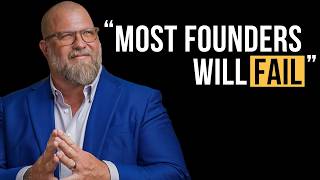
Gregory Shepard, author of The Startup Life Cycle, breaks down why startups fail: bad early decisions driven by misaligned advisors, hiring managers too soon, and the capital trap that forces unrealistic growth. His five-year research identifies a framework from vision through exit, with founder practices like meditation and breathwork.
Questions this video answers
47.1% fail in the first 12–18 months; up to 90% fail over the following five years.
Early stage = pre‑A round.
Chapters
I mean, what people don't realize is, like, 47.1% of startups fail in the first 12 months, 12 to 18 months, and the rest fail up to 90% over the following five years. If you've ever been to a amusement park and you go on a roller coaster and you sit down and a little bar comes over you, and then it's just boom. And all of a sudden it's over, and you're climbing out of the. Out of the seat, and you're like, whoa, that was a rush, right? That's like the average day for a founder. Because, you know, your problems, they grow with your company. Like, it's not like you have this little problem and then you grow your company and the little problem just goes away. No, it gets bigger.
Marketers have never been so spread thin. You know, like, with all this stuff happening, technology is going crazy. It's really tough to really focus and get creative and. And create great content or connect with the customers like we used to, or even prospects. So, you know, you're trying to launch a bunch of content campaigns, you're generating leads, you're trying to score the leads. You're nurturing them so much more, but you really don't have enough time to even breathe, let alone do the best marketing out there. But HubSpot is trying to fix that for you. They have a new AI. It's built into the system called Breeze. So it actually combines their marketing hub and. And the content hub with all these different cool features that help you automate and, you know, remix your content into a whole bunch of different types, score your leads in a better way, and actually have a nice look at the analytics and everything that's going on in your business. So I would recommend to stop spreading yourself out so thin and start making some big moves with HubSpot. You can try it out for yourself. Go visit HubSpot.com/marketers to learn more. Hey, before you get into the episode, I urge you to hit pause and go check out the AI Digital mind. It's like a digital twin of this podcast and a whole bunch of other content I've released. Go to hustleandflowchart.com AI Joe. That's hustleandflowchart.com AI Joe. You can literally chat with this podcast with me and my guests in text, audio, and video for free if you want one of these made for yourself. If you're Interested, go to hustleandflowchart.com interest and we make these things out, so enjoy.
Let's get to the episode. All right, Gregory, we're doing this. This is round two. It's so cool to have you back. We had a blast last time, so thank you. Appreciate you, man.
Oh, man, thank you. I appreciate you. I'm very grateful. I was super excited. I was like, oh, man, cool. I get to go talk to him again. It's, like, fun.
Well, you're another San Diego brother here, at least I believe you still are. Right. Last time, and you're deep in. I mean, you've, what, been a part of 12, probably more businesses now?
Yeah, I've done 12 startups, and then I've invested in a few more, and then, yeah, I have a full portfolio of companies that I invested in and then my own startups, too.
Yeah. So, I mean, you've. You have your fingers in a lot of things, and, you know, we chatted probably a little over a year ago, and that was a fascinating conversation. I'm sure we'll touch on some similar things here because you now have a new book that. That just came out, the Startup Life Cycle, and you're. You know, as I was reading through and kind of prepping for this to chat with you again, I was like, okay, yeah, now I'm a part of some more startups as an advisor, and, you know, I've been through some that have not worked out so well. I'm like, okay, I could see how I've jumped some of these steps here. And you lay it out so clearly, which I've always appreciated, how you. How you do things.
Yeah. I mean, you know, if you. In the research I did, I mean, this was like five years of research. Right. I mean, thousands of interviews, hundreds of thousands of, like, case studies and research. It was a. Five years is a long time. Right. And I put those stages in there to try to prevent people from failing, but they still do it, you know, they still will skip over something. I mean, what people don't realize is, like, 47.1% of startups fail in the first 12 months, 12 to 18 months, and the rest fail up to 90% over the following five years. So that first 18 months is really important because over the following five years, most of the failures happened because of decisions they made in the first 18 months.
Makes sense.
Yeah. So it's like, really, really important. And it's not surprising. Right. I mean, if you're going from one place to another, let's say you're driving from San Diego to San Francisco and you don't have a map and you don't Know when you're supposed to stop for fuel or food or anything and you're just sort of like flying by the seat of your pants, which is what most founders do. You, you're obviously going to make some mistakes. You know, you might run out of fuel, you know, money, you might not stop at the right time, you might miss an exit, you know, so on. And so you might not know about a detour or road construction or get lost. Right? So the concept is that if you're starting a business, you need to know where you are. You need to know where you're going, and where you're going is your exit and where you are is where you are. And those two things need to be. You need to know those so you can string them together through the life cycle.
And like, even just outside of startups, it's like most of us, I feel like, don't know exactly where we're headed or at least have some kind of North Star idea.
It's tough to totally predict.
But yeah, without that, how could you even go through any steps, work backwards? I'm assuming most of the time to kind of plot some phases out for you, but in the book, and hopefully we can go through them at least like an overview of kind of what the phases look like. Because I think it's pretty glaringly obvious where people can, I'm sure listeners, watchers, like, oh, yeah, I committed that and that's why I've struggled for that phase. Or maybe this didn't work out.
There's so many of them and they read the book and they send me messages in LinkedIn and they're like, oh man, if I knew that, I didn't know that. And I da, da, da, da, da. And you know, I'm going to do another startup now, now that I know, you know, it's, it's a fascinating, you know, and it's, it's not. People don't need to beat themselves up over it. You didn't know because you didn't know, right? You made the mistakes because you didn't know and you made bad decisions because you didn't know or somebody gave you bad advice, you know, so it's, it's really critical to understand these things. It's like, I think of it like this. So I'm big into meditation and I do a lot of manifesting meditation, right? And my favorite meditation is what's called a timeline meditation. So you imagine that you're standing in front of two tunnels, and one tunnel is your forecasted destiny, right? It's what happens if you continue to do things the way you're doing them. And the other tunnel is your manifest, what you really want.
You look at the tunnel to the left, which is your forecasted, and you can see where you're going to end up if you keep doing things this way. Whereas if you go to the other tunnel, you can see where you end up if you change the way you're doing things, your behavior, or the way that you see things. An example might be.
I do these quests and these challenges all the time.
If I want to change my destiny, if I want to run a marathon and I haven't run before and I keep doing the thing I'm doing, I'm not going to be running a marathon at the end of the year. Whereas if I change my behavior and start training in the other tunnel at the end of the year, I'm going to be able to run a marathon. And the same thing applies for business, right? Where you're like, if I continue doing things this way, what is going to be the outcome a year from now, two years from now, three years from now, four years and five years from now? You know, so what the life cycle does is it sort of shows you what sort of pit stops you're going to need to make alongside that journey. But it's still up to you to make the decision on changing your behavior to accommodate the future that you actually want.
That's a cool meditation. I haven't done that specifically, but timeline meditation, because it's up to us. I immediately actually go to. I'm curious if you've ever done this. You know, I'm big into AI. Obviously, all of us are playing with it now in some way. But chatgpt it freakishly knows a lot about us because the more we use it, it learns if you have the memory on. But I don't know if you've done this, Gregory, but you can ask it, like, hey, just be brutally honest with me, you know, here's where I want to go. Here's kind of where I'm at right now, you know, if you give me some context, what do I got to do? Don't hold it back any punches, you know, and it'll tell you some pretty good stuff. It's kind of like what you're describing. It's like, hey, here's the possible path you could go down. But it's up to you. You hold the decision, the keys.
You know, a lot of founders, they are afraid to let people go, so they'll have an initial team and who got you there isn't going to necessarily be the people that are going to take you where you want to be. So they have loyalty towards those people and they work and they have loyalty towards them, but they're not actually going to be able to take them past the point that you're at. And they have a really hard time making that decision. So you have to sit down and you have to say, if I keep this person, these people, this strategy or these tactics, where am I going to end up a year from now versus if I change these things, where am I going to end up a year from now? And it will drastically change your performance, right? Because I think most people, the analogy I like is if you've ever been to a amusement park and you go on a roller coaster and you sit down and a little bar comes over you and then it's just boom. And all of a sudden it's over and you're climbing out of the, out of the seat and you're like, whoa, that was a rush, right? That's like the average day for a founder, right? So sometimes it's hard to see the forest through the trees because you're in it and it's just like that roller coaster. You don't even have time to think. You're just cramming away. Sometimes you got to look up, you know, you just got to look up and see where you're at and then move on logically instead of, instead of with an impulse or with emotion, you do it with logic and, you know, be very practical, you know, about where you're going. It changes startups dramatically. Your, your ability to be successful. Coming from somebody who's done 12 startups and 12 exits. I'm on my 13th startup.
Everybody's like, what's wrong with you? Like, you're crazy. It's. It's such a nightmare. Why would you, why would you do this? You know? And I'm like, it's not if you do it right. If you do it right, it's just a journey, right? It's like, it's like going on a holiday where you have a journey, you know, so that, that changes the dynamics of, of your relationship with this thing that you're doing. That's so hard that when I said that changes is just being able to say, this is my trajectory, this is my forecasted timeline, and this is my manifested timeline. This is the one I actually want. And you can start with the end, say, I want to exit in three years. Well, there's Steps you have to go through to exit in three years. You can't just say, I'm going to exit in three years and not change your manifested timeline, just change your forecasted timeline. Because, I mean, that's just a dream. Right. So it's, it. It forces you to really think about what you're doing and make sure that if those things continue, if you're going to get into the place that you want to be at the end of the day.
Yeah.
So with someone and I don't know.
You know, let's say they have a.
Goal and is it typically like, what.
Are the holdups in between?
It sounds like, you know, we have to change our behavior, I'm sure for, for. In a lot of ways, personally, the things that we're doing. But also you mentioned people, you know, holding on to people maybe too tightly or, you know, they were the founding crew or the team you have. But you know, now things need to change, I guess.
Like, what are, what are some very.
Common bottlenecks on that path there? I mean, you mentioned people, maybe is that one of the. And like that leads to failure, as you said.
Yeah. I mean, some people are good and they'll be able to adapt and change.
Right?
They'll be able to adapt and change and then they will start to evolve with it. Sometimes they meet a threshold and it's just like they can't go past that. So either you hire over them and that and somebody else is managing them, and that usually doesn't work out very well because they're like, listen, I was employee number five, this guy's employee number 50, and now he's hired above me. That pisses people off. So you really have to look at the character of the person and you really have to set that stage early on. So you have to say, hey, listen, I cannot guarantee you. And you need to go into this understanding that I can't guarantee you that just because you're early on that you're going to be able to get an slt, a senior leadership position. Right. So you have to say this could. And then you have to make sure you reinforce that along the way. Right. It's really important. There are people that are really good at managing people and there are people that are really good at practitioner tactical execution. Right. And a lot of times they're not the same people. So the early on, you need somebody that's practical execution. You need somebody that can roll up their sleeves and do the work. And a lot of founders make the mistake of hiring somebody that's a senior manager. And all that person does is hire people that can execute and they can't afford either one of them. Right. The senior person's expensive and there's nobody to execute. So now they have to hire people to execute. So it's better early on to hire people that can actually get in there and roll up their sleeves and do the work and then later on hire somebody to manage those people. But you need to make sure that that's clear for all the people going in. So they're not thinking one day they're going to be in a senior management position guaranteed, just because they're employee number four or something. You know what I mean?
Yeah. It's setting expectations up front and I think it's building that culture right in. In what you're doing as a team, as a crew, because everybody's, you know, you might have, at least mentally, you should have ownership in this thing. And it's the best for all. Right. Like, it's the greater good almost if you're creating this thing together. I feel like that should be the mindset.
Yeah. And a lot of times, dude, you're not doing them a favor. Like, people think that they're doing them a favor by. There's two things I found in my research which was really devastating in terms of team management. One was what I called up and out, which is where they keep giving them a raise and they keep giving them a raise, and pretty soon they're more expensive than they're worth and you end up firing them or they end up quitting because there's an insatiable appetite for money. Right. You give somebody money, they raise their standard of living. It's human. And that's just how it goes. I call it up and out because they literally raise themselves up and then they end up exiting the company either by force or by choice in either scenario. So that's an insatiable external motivation versus a insatiable internal motivation, which is what you get when you're playing sports where you're just doing it because you are driven to do it, not because money is driving you to do it. Right. So that's the first mistake people make is thinking that they're going to motivate people with money.
It's a dead end. Right. You give them enough, and then if you're not motivating them internally.
Because they want to do the project, because they're excited about the business, etc. Eventually that person's going to. They will leave because you just can't keep Paying them. I mean Google, all these big companies, the Googles of the world, the, the Microsoft's of the world, they all have churn at a certain point, right? That point is when they get to it. When people get to a point where they're being paid more than these guys will pay, they end up quitting and they end up taking less money because they over those big companies overpay. They don't even know they did it to their own self because HR looks at it and says, who's making the most money? These people. What are their performance criteria? This. Oh, okay. Lay off all these people. That's what you see happening, right? They don't lay off the low wage earners, they lay off the high wage earners. So you know, you don't want to be doing that as a startup. So now you're in the situation where you're laying people off because you yourself made it so that they're unaffordable or not worth what they're being paid. So that's one common mistake.
Yeah, that's a huge one. I mean that's. And I'm just thinking of how like.
What would you recommend?
Like as a founder, you're probably the most motivated person out of everyone in the room and you have that fire, you have that vision, whatever that is probably been brewing for a while.
How do you bring other people into.
That vision of yours so they're aligned and ideally setting the ship straight in the right course from the get go.
You include them in on the vision. So you make the vision partially there. So you listen to them and you say, what do you think? Pretty soon they start adding in and the vision isn't just yours anymore, it's your team's vision. Now they want to make that happen, you know. And the end result of this vision is that they get stock options, right? And you sell the business, they make money. So even if you hire over somebody, they're really excited about the business. And I've heard people complain, you know, they say, oh you hired over me. And they're really pissed off about it. Why did you do that? You're like, I need somebody that can, has experience managing people at the growth trajectory that we're at. And you don't have the experience and I don't have the time to train you. And you're just honest with them, right? Just straight up and honest with them. And you say, listen, you have stock options so when we sell this thing you can go cry on your pillow of money because it's all Going to be worth it for you. Now let's talk about the vision you have for your functional area, right? And get them, and curve them back around into the vision and get them excited internally about it. That's one of the big mistakes that, that people make. And so that's the up and out, I call it up and out, right? Where you're, you're, they're literally firing themselves or you're literally destroying them for the future because you just keep trying to satiate their appetite with money. Just money, money, money, money, right? It doesn't work. I mean anybody knows if you have a kid, you know this, right? You give them a little money, you give them a little. It's never going to end, right?
Five year old, that's candy right? Now are sweets, you know. But yeah, eventually money, yeah.
I mean it's the same thing, right? Can I have some candy? Can I have some more candy? Can I. It's, it doesn't end, right? So that's like part of it. The other thing that I think is, is really, really damaging to teams and is where they hire a manager too early and the manager hires people like I said earlier, and then they end up spending more money than they can afford early on. You need somebody that's tactical. Somebody that can do multiple jobs and do, and will just work through a spreadsheet and muddle through and figure out how to use software and stuff like that versus somebody who hires people to do that for them. So that's another common, really, really common mistake that people make. It's really, really common. Actually way more common. You think? And I talk to these founders, they're like, yeah, I just hired the ex vice president of marketing from IBM. And I'm like, oh really?
What exactly is he or she doing? And they're like, oh, they're hiring a team of salespeople. And I'm like, can you afford a team of salespeople? Right. Why don't you hire a salesperson? You know, and instead of. You'd see what I mean? And have them do the job for a little while and after you learn, then you hire somebody, right? So that's a really super common mistake as well. Those are the, those two things are probably the most common mistakes when it comes to hiring people outside of the lifecycle, you know.
Yeah, that makes sense. And that's, you know, hiring managers. I'm assuming they're, unless they're brought in with this, the North Star is probably pretty fuzzy for them or they're not ingrained into the Culture of the company. So they're, yeah, they're bringing whatever they, they did before from some other operation they're a part of and taking orders or at least, you know, scaling way too quickly before maybe proving a model or like you said, like an MVP minimum viable product in the early stages and actually gaining traction that way, right?
Yeah, exactly like you, you walk and you crawl before you walk, you walk before you run. And when you're running, you start out with a little jog before you go to a sprint. And a lot of companies, motivated mostly by their investors, actually go from a little fast walk to a full sprint and jump over the other stages in a life cycle and then fail because of it. Because your problems, they grow with your company. It's not like you have this little problem and then you grow your company and the little problem just goes away. No, it gets bigger and bigger and bigger and it grows, right? So you feed the problem by not dealing with it. So the stages in a life cycle, including the management team and who you hire and when and all that stuff we talked about, the stages in the life cycle are there to protect you from going from a crawl to a frigging full on sprint without taking the steps in between.
I'm tempted to just ask you what the stages are. I don't know if there's a better way to put it because obviously it's a full on book, you know, but.
Yeah, no, I'll tell you, it's cool, man. So the first stage is vision, right? So this is where you're visualizing what your business is. You're building your North Star, which is what, when and how and why. So what is your company, who should be interested in your company to buy or your product? When should they be interested? Why are they interested? Right? Why should they trust you? When you're raising money or selling to a customer, there's three things that are critically important to that pitch. So why this, why me? Why now? Right, so why this thing? Why should you be interested in this? Why me? Why am I the right person or why is this company, my company, the right person? Why is now the right time to do it? Right, so the North Star, the vision stage deals with that stuff. Then you move into product and product is about building a prototype first, right? So building, you know, like if it's a maker labs, they'll build like 3D models of things, right? And they'll say, here's my prototype. Then you go from a prototype to a pilot, which is where now it's actually Functioning, but it's not fully functioning. It's not an mvp. It's not a minimal viable product. It's just a pilot. Then you go to minimal viable product. Then you go into go to market, and then you go back and forth and go to market quite a bit. Right. You're doing a lot of testing, you're going out to market, you turn it off, you come back, you go back out to market. You know, things like email. Yeah, yeah, exactly. You're going through multiple iterations to figure out, like, where should you be spending money, how should you be messaging things, you know, stuff like that. And then after that, you go into standardization. This is the one everybody skips over. Standardization is where you document what you're doing and you document why in a very, very simple way. It's like, I'm doing this, you click on this, you see this, you click on that. It starts with triggers. So a trigger is when you're supposed to do something. The best practice is how you're supposed to do it. Right. Very, very simple stuff. And the reason why, one of the many reasons why this is super important is because the average cost of a new employee to get to 75% productivity is 33%. Right. So if you're paying somebody 100 grand is $33,000 of burn wasted money in the first six months.
Wow.
And that's because of the distractions that they have on your team, mistakes that they make, and just productivity in whole. They basically have to draft their own best practices in order to be effective. So if you do it for them, first of all, they're not disturbing other people. Second of all, everybody's doing things the same way so that you can track KPIs, key performance indicators and performance. And third of all, when you go into optimization, which is the next step, you can go back and look at the way things are done and, and make sweeping changes to increase margin. Right. So standardization and optimization is a margin exercise. If you have low margins, when you go into growth, they're going to continue to be low. If you have strong margins, they should get better. And people make mistake. They think that, you know, if you have two lines, this being your income and this being your expenses, that they're supposed to go parallel, but it's not. The expense line should start to carve away and the income line should grow. Right. That's economies of scale. Well, you can't get economies of scale if you don't optimize. Right. If you don't look at what waste you're Doing. And this is a lean exercise. Right. Getting in there and really focusing on where am I wasting time? Where are my people wasting time? Where are the reset times? The reset time is like where you, you're doing something and you get distracted and you have to do something else. Typically, it takes 15 minutes for somebody to get back to product. Yeah. So think about how many disruptions you have in a day. If you're hiring five people now, calculate the $33,000 on 100,000. If you're paying them 200,000 like in the Silicon Valley now you're talking about 66,000. Right. So it starts to add up really quickly. And a lot of people will put themselves out of business, literally by growing just from hiring.
Yeah, it's people, mainly.
Yeah. Wow.
And that's it. And I'm, and I'm thinking, let's see, did we get through the all. I think there was one more. Right?
Yeah. So there's a growth phase. Now the growth phase is where you stick the pedal to the metal. Because now you've tested your product, you've tested your go to market, you've standardized your processes, you've optimized everything. Now when you grow, you're going to start see that split, you're going to start to see those economies of scale, and then you go to exit, which is the last stage.
Now what happens when. And you know. Well, I guess there's two questions, you know, like defining a startup, because I know people listening here, they could be a founder of a startup that's actually raising funds, you know, from VCs or whoever, investors or some just might be bootstrapping something that is a startup. You know, it's a smaller operation. But I'm imagining this same flow works with that type of thing as well. Would that be kind of correct?
Yeah, I mean, early stage, like I focused when I did the research and when I did the book and the platform, everything on early stage, the reason why. So when I, When I meet, When I say early stage, I mean pre A round.
Okay.
If you're a vc, you're thinking early stage is a round. But if you're a startup person, early stages, pre A round. So seen.
Or even before. Yeah, yeah.
Because a round and after is highly, highly commoditized. The mistakes usually that they've made are already. It's too late for a lot of them. So what I did is I said, okay, if I'm going to split it in half and say, do I deal with precede, seed, series, seed and a round or Do I deal with a round and out? And I chose the early stage because that's where I thought I could make the biggest impact. That's where I thought I could help the founders the most, is that super early stage. So I think that if you're an early stage founder pre seed, you're going to be in the vision stage, you're going to be in the product stage. When you get to see your seed round, when you get to your series seed round, you're going to be in your go to market and you'll stay in your series seed round all the way until you hit the growth and then you're going to get your A round and then you're going to go after that. So I try to, I tried really hard in the book and also in the platform to make it so that these founders aren't going past their A round, that they're building to their A round and then not taking any more money on board after that, because then they get into the capital trap, which is the trap of overvaluation, which happens after a round, typically.
I want to pause for a moment and shout out another podcast on the HubSpot Podcast Network, your audio destination for business professionals. This one's called OG Mentors. It's hosted by Julie Mayer and Jimmy Edgerton. And these two, they're a pretty cool duo. Where one is, you know, Jimmy is a lot more on the loose side. I would say that Julie brings it in and keeps us focused on mentoring and movement. And so these folks, they focus on mentoring and exploring ways on how to augment and refresh, kind of like the way that mentoring is applied. And they have these principles that they weave into their episodes and they give a bunch of practical tips and they lace it with a whole bunch of humor as well. It's always cool when there's a cool duo happening there. So if you're in the mentoring space or if you have a, you know, leadership space, relationship guidance and things like that, that's what the podcast is made for. So you'll get a lot for it. It's great for entrepreneurs, marketers, sales professionals. They love the show as well. It's a great one. I've checked it out and I recommend it. So go listen to OG Mentors wherever.
You get your podcasts.
I'm going to do a quick shout out one more time for the thing I talked about, the top of the episode, which is the AI version of me and, and of this podcast and my YouTube videos and all these things. It all lives within this AI platform, I used Delphi AI to create it, and I want you to use mine. It's totally free. Go to hustleandflowchart.com AI Joe. That's hustleandflowchart.com AI Joe. Test this thing out. It's crazy. You could type with it, talk with it. You can even use video. And you can look up anything from this podcast. You can ask a question about your business life, any scenario. It kind of learns about you with.
The information you give it. It's rad.
You will love it. And also, there's a lot of people who are asking, how do I get one of these? How do I build it out? The cool thing is my team and I have been building a ton of.
These every single day.
I've used the platform Delphi AI for two years.
I'm actually one of their advisors because.
I was one of their first users.
And gave them a ton of feedback.
I love it. But we build these things. So if you want to use it for lead generation, for, you know, you have all this content as an expert, author, coach, type person, we can put that into this digital brain and make it interactive. You could use it for customer service, internal training for your team, for your organization.
Lots of uses.
If you would like one of these, I can pass over an exclusive deal.
There's no one else that's. That's offering this out there. I work closely with Delphi as one of their partners and agency partners to build this out.
So hit me up. Type hustle and flowchart.com/interest into whatever browser. Again, that's hustle and flowchart.com interest and hit me up.
Let's build this thing together. All right, back to the episode. Well, that's what actually, I wanted to ask about that. So, like, when capital starts flowing in and maybe, maybe talk into that, what you were just bringing up there, the capital trap, Because I know that changes things. I've seen it in, you know, as being a part of some startups, as an advisor and just hearing other stories that things change, you know, now you have new influence coming in and people kind of calling some shots.
Yeah, exactly. So the capital trap is basically, there's two. There's a few different sides to it. One is it causes overvaluation. So overvaluation means that your. The cost of your company isn't going to return the returns to the investors that they expect for that investment. Investment. And a lot of founders, they go, okay, I'm raising, let's say their valuation is 5 million it's early stage and they say, I'm raising a million dollars. So their post money valuation is 6 million, right? Because they just brought off, brought on a million dollars. And they'll say, okay, so in order to make everybody happy, I got to sell this for 6 million and I'm going to make this much. But what they don't understand is that those investors want, I mean, I don't, I don't think a minimum of three, usually five to 10 times what they invested. So it's not a million, it's 5 million. So your value for now you have to, what your valuation is and what you have to sell your business for are two completely separate things, right? So now you have to build a $9 million business instead of a $6 million business, right? So things change quite a bit now because of the expectation from investors, right? That already changed your decisions like right there, your decisions are different than they were before. Now you use that money rapidly and trying to grow. Some of the mistakes that we have already discussed happened and now you have to go raise more money. So now you raise more money and pretty soon you get to the point that you've raised more money to reach investors expectations than is realistic. So an investor looks at it and they go, well, you're raising a million, your valuation is 10 million, we can sell the business for 20 million. I'm out. There's not enough room there, right, for me. So that's the capital trap, this trap of raising money, raising money until you can't raise money anymore. So I always tell people, I'm like, raise some money in the early days, get to profitability and stay in profitability as long as you can. And the impact that that has is you have slower growth, right? So you'll have investors and people telling you take money on. You can move so much faster. You can move so much faster. But you need, and that is true in some cases, not all cases, but in some cases, but you need to rationalize, you need to think about that and compare what happens if I take more money on board and, and what are the ramifications of this versus if I don't and I just stay profitable and grow a little bit slower, right? Market conditions can make you think you need to grow faster or that you can stay where you are.
Some of these companies, they go nuts and they get really big and they sell and everybody makes lots of money. And sometimes they go out of business because they can't raise money or their problems put them out of business things they, they failed to do early on. And sometimes they just, they just beat everybody. You know, they just go to town and they just slaughter the market. In a lot of the scenario, in a lot of the research I did, though, for the ones that raised a lot of money and raced to the market and won, the people actually didn't make that much money. The founders.
Wow.
Yeah, it was really interesting. Something sells for, you know, 500 million and the founder makes like 5 million, you know, or 10 million or something like that. And if they would have not. Yeah, it's. It's like, is that worth it, right? After all the years? And, and sometimes it's not, right? Sometimes it is, sometimes not. But what if you had not taken that money on and instead what you did is you, you sold for 50 million when you owned 50%. Now you would have made 25. You see what I'm saying?
Like, yeah, yeah. Well, does that go back to step number three about go to market strategies and, you know, really.
Going very clear.
About like your marketing and how you're going to attract your initial wave of customers to get to that profitability mark?
Yeah, it does. Your go to market is critical to your success. Meaning, you know, a go to market is not advertising. I can't tell you how many founders I look at and they're like, my go to market is Google Adwords. And I'm like, that's not a go to market. That's a part of a go to market. But it's definitely not go to market. There are two sides, right? There's earned media and paid media, right? So in search, earned media is SEO and paid media is search engine management, right? Where you're paying PPC in Facebook or social media, it's posting content and paid is paying for advertising, right? Blogs, everything, right? I categorize things into four categories, which are the ways that we digest information, what can influence us, right? Which is watch, listen, read experience. So watch his videos, you tik tok YouTube stuff, right? Stuff like that. Listen his podcasts. So what we're doing right now, experience is trade shows, webinars, conferences, like that. And read is blogs and articles, right? So a go to market includes your narrative spine, which is your narrative that you're going to be talking about. Think of 12 vertebrae, one for each month of the year, and each one of those being a topic with watch list and read experience underneath it.
That's cool. I like that.
And that's how you do a go to market, which includes both earned and paid media.
Mm, I see that. Yeah. One, yeah. And they support each other and ultimately you get going. And yeah, a lot of that.
Creates referral. And I think that's where, when you get the inbound coming, you know, from with all of this media that you've put out there. I love it. The watch, listen, read, experience, because it's applicable to everybody.
That's how we learn, right? We learn through our senses, right? Yeah. And our senses are watch, listen, read, experience.
That's it. It's just applied here, which is a whole nother beast, an organism. This startup that we're creating is its own thing that needs to get awareness. And I think that's the biggest thing I know there's so many startups that just don't have a strategy. They're maybe too focused on the product, which is great. You got to obsess over that product too. But make sure that thing is going to resonate with the market and the fact that they can even learn about who the heck you are. So you're not just an unknown, amazing MVP.
Still, or burns money and time for everybody.
Yeah.
Well, is there anything in this, in this whole process?
Because I want to get to your quest and some of your, your. The personal stuff that, that drives you because I just find it so damn fascinating. But like, is there anything during your. You already mentioned doing your research, but like, anything that stood out that like blew you away?
I know you mentioned some stuff, but like, anything from your research, the fact that you've been, now you're part of 13 different startups.
What would you have done differently or how do you educate differently now that you've done this research, put this book out there, following the.
Life cycle, I think is really, really, really important. But I mean, the number one reason why founders fail is bad decisions. So you have to ask why? Well, it was based off bad advice. So then you have to ask, who, right? Who's giving the bad advice? Well, the bad advice actually comes from investors, number one, mentors and program managers after that. Now, that doesn't mean everybody's bad. It just means that you need to be careful because they see the world differently. So, you know, a lot of founders will just take the advice that they get from other people literally and just follow them without thinking about their own, the way that they're seeing the world from their own perspective. Right. If somebody tells you, okay, you got to go for growth now, just slam into growth. You have to ask yourself, am I ready for this?
What is my forecasted timeline? If I do this, am I going to be dragging problems along with me, do I have any anchors tying me back? You know, you have to think about it. So that's what I mean. It's the consultants, the mentors, the advisors, the investors, the program managers, all the people that are there to help them are actually really there to help them. Right. But you can't take their advice without considering your own experience as a practitioner. And that is something that shocked me because I was like sitting there looking at the data and I kept going back and forth because I was like, what the hell? These are the same people that are supposed to be helping them. What is going on? And I found myself at first blaming those people, right? Saying, well, they're screwing up the founder. But then I realized that wasn't the case. It was that the founder was taking their advice literally and just following it without considering things that, that they should have been considering in their own business as the practitioner. And also that they weren't asking the right questions. So they were getting advice based on the wrong questions, so they got the wrong answers. So you know, I tell mentors and investors all the time, I say, listen, you gotta be really careful to make sure you're helping them ask the right question so that you're giving them the right. Instead of just answering, make sure that they're asking the right question in the first place.
You get the wrong question, you get the wrong answer and then you're off track.
Yeah, it's complete. It takes you down a whole different tunnel potentially.
Yeah, it's off course.
Yeah. Is there any good advice for a founder to find out who are the great mentors? How can you trust the right person or even a board of advisors to bring onto the crew any criteria you.
Can think of, the ones that were previous corporate people. So they had never done a startup, they were just corporate, corporate people. They had big, you know, titles from big companies and they never did a starter before. Those ones were the ones that were a lot of the bad advice was spinning out of because they're remember, their lens on the world is corporate. Unlimited money, zero risk. You know what happens, you fail, who cares? You move into another functional area or they shut down the program and continue. But you know, you still have a job and you're safe, Right. Versus if you're a founder and every decision you make may help you or not allow you to make your friggin house payment. Right. So it changes things dramatically. So that was one of the things that I think was really fascinating. Another one was what I call the one hit wonders, which is a founder who had a strong tailwind, you know, the wind was pushing them, right. And so they basically got pushed onto the shore by a big wave. And that's luck. It's not necessarily all talent, right. Or a founder that took on a whole bunch of money and succeeded to sell their business, but didn't actually make that much money. But they have a, now they have a reputation.
Sometimes it's a consultant who's trying to sell them services, like an accountant or a lawyer or somebody like that, who in the end their real mission is to try to make money from the founder, not actually help the founder.
All of these people can be helpful, all of them. Really, Truly what I do is I tell them, you shouldn't have one mentor the whole time. If you're in go to market, you need a marketing mentor. If you're in product, you need a product mentor. If you're in standardization and optimization, you need somebody that's familiar with Lean and Six Sigma. Right. And if you're moving into exit, you need somebody that's done transactions before. Right. So, you know, having the same mentor the whole time is oftentimes a mistake. You can have the same mentor the whole time and add on other people that have subject matter experts. Right. And that is one of the big mistakes that I saw repeatedly, right. Is they're like the mentor gets over their skis, but they don't want to let go of the deal so they stay involved. Right. And it's okay, but they need to step back and say, hey, listen, we need to get somebody who's an expert. Advice isn't necessarily your advice, it's giving them the best advice that's available, even if that advice is, isn't coming from you. Right. So to be a good mentor, you have to understand that your job is to get them the best advice, even if that advice doesn't come from you.
And that's great for me to understand too, as being an advisor to some of the startups. And I know even as just a supporter of a. There's so many startups now with AI, I feel like too, anyway, it's like there's boom of everything and I don't know what your take is on that.
You don't even need to say AI anymore. Right. Like people are like, we are AI enabled. And I'm like, really? No shit. So is everybody else.
It's just now it's everywhere. Yeah.
It's like saying, I'm on the cloud. Really?
The Internet?
Yeah.
We deal with big data. Everybody deals with big data. You Know what I mean? Like an Iot. Some sort of an Iot company saying, we have an Iot. No. Right. So when people talk about AI, I'm like, of course you have AI. Everybody has AI.
You know, shiny. Yeah, it's that. It's that label. But I want to.
I want to get to the.
The quest because you brought it up and you pointed at something behind you that. That's happening next year, which is pretty cool. I want to hear about it. But last episode when we did that, what last year, you talked about you go on these quests every year, right? It's like one big thing to look forward to. I'm curious what you're doing this year, but I know it next year. Tell me about both and maybe. And I want to dive into that again and how important that is for you.
Yeah, I mean, for me.
This is, you know, part of that tunnel situation. Right. I say to myself at the beginning, on my birthday, I say to myself, I want to do something exceptional this year, right? Something personally exceptional, meaning something that I think is impossible for me. And then I choose something from this giant list I have to do, right? And so I've done things like wrestled alligators, bullfighting, drove Formula one, drove nascar, climbed El Capitan, ran a marathon, swam a marathon, rode a bike from San Francisco to la. I mean, it goes on and on, right?
And each one of these things require you to be more comfortable with struggle. They require you to deal with pain. They require you to deal with being uncomfortable. And they require you to look at failure and not accept those. Those that as. As an option, right? You just say, I'm gonna go until I pass out. Right? Like, I barely made it past. It took me seven and a half hours to run that marathon. I mean, I. Everybody. I had children and old people passing me. It was really hard because I have asthma, you know, so it was. It was exceptional. And I felt. My feet felt like I was running on bloody stumps. I mean, the pain was extraordinary.
I've done a marathon before. I knew the. I know the feeling. But, yeah, it sucks.
Yeah. And both my knees were swollen. And, you know.
I ran the whole time. I didn't stop.
I just ran really slow. But there's a lot of times where you're sitting there going, why am I doing this? What am I doing? This is ridiculous. And your body is telling you to stop, and everything is telling you to stop, and the only thing you have is your own control over your own mind, right? One of the reasons why I like meditating so much is, is because we think we have control over our minds. But if you've ever tried to meditate, you learn really quickly that your mind has its own agenda. It's out there thinking about everything all the time. And meditation is getting control of those thoughts. It's not necessarily ending them, it's just noticing them and realizing what's happening. You can do that with these challenges. When I was doing the swimming marathon, you know, I couldn't even swim across the pool one time, which is only 25 meters. Like it's, it's, you know.
Yeah.
You know, and I ended up swimming for. Yeah. And it, I mean, you know, it was terrible. I had to stop in the middle of the pool. It was really embarrassing. Hanging on to the ropes, you know, and.
Yeah.
You know, sitting there, oh my God, this is a nightmare, you know, and at the end I swam for six and a half hours non stop.
And. Yeah. And you know, this is the kind of thing where you think it's impossible and you do it and when you're done, you become more powerful because you can do things that you thought you couldn't do. And that's the whole idea of my birthday things. I have to do them in one year and so I start on my birthday and I have to do it by my next birthday.
Nice. Well, tell me about the travel you'll be doing soon and why you chose that and kind of what that means to you.
Well, I bought a ticket to space so that I could. It's like a capsule that it's on like a hot air balloon and it's like a massive balloon. It's like the size of a football stadium and it pulls you up into space and then you get a view of the Earth. You get to see the Earth from, from space and look down on it. And I think that for me anyway, it's a way to see how big and how small our little planet is and how connected we all are. Right. I don't know what I'm going to feel when I get up there, but the people that I talked to that have done it, they said it changed their entire perspective of even other people and animals and the environment. They're like, it looks like a living creature, the whole planet. And we are just this little component of this living creature and that we really are all connected through subatomic particles, atoms, and the planet itself. So we should probably be a little nicer to each other and a little nicer to the planet and, and realize that.
We'Re all related in the end.
And so you wanted to know what I'm doing this year?
Yeah, let's end it on that one. Because already I was just like, wow. Yeah, that's okay. But what are you doing this year?
I'm doing fire walking. So they burn a big bonfire and then you walk over the coals with bare feet.
Okay, you're not doing this. You're not setting it up yourself, right?
No, no. You have to go with a professional. Cause it's frigging dangerous. You.
But there's a whole process before that where you prepare for it and you get your mind in the right place. It's been done for thousands of years. So it's just a matter of, like. I think people get burned if they aren't in the right mindset.
How does that work? I know, like Tony Robbins, like, they. They have a fire walking thing. I don't know the details, but yeah. How do you prep your mind for something like that? Because I've always been fascinated. I never looked into it.
I don't know, but I imagine it's the same way. Like, when I went to swim, when I was doing the marathon, I was terrified of sharks, okay? Just. I wouldn't even. It took me three months to get past my shoulders. And then I swam in the ocean, you know, for. I mean, I was doing it every weekend for four hours, you know, and then the actual marathon was six and a half hours. And then last year, I dove with sharks without a cage. Just me and the sharks. And it's the same. I think it's the same thing there. You know, you're sitting in the boat and the guy is telling you they can. They can see your heartbeat.
Wow.
They can see that you're. They can see your stress level, you know, because it echoes in the water. And they have this high sensory. So they can see. So they can sense animals that are in despair so they can hunt those animals. Right? So, you know, you go in the water and you see the sharks and your heart rate starts to go, and you have to really, like, calm yourself down and, and get control of yourself and realize that it's okay, it's safe. And the crazy thing is, is that they're the, the. The tiger sharks, the Galapagos sharks, and the, the black tailed blackfin sharks that I saw were just like, fish, like, you know, they didn't care about me at all. They were just hanging out, swimming around, looking for food, you know, they realized.
Yeah, they realized that right away. They're like, this isn't food. And you know, when you realize that, and you realize that they are ancient creatures and they can't afford to get hurt. So if you're big enough that they think they can get hurt, they're not even going to try because they know if they get hurt, they're going to die.
Good point.
Right. So their instincts keep them away from you because. And they're scared. Like, if you move quickly or whatever, they swim off like a fish.
Yeah.
You know, spooked them. Yeah, you spook them. So you have to actually really.
You know, you have to be. You have to be kind of calm and mellow, and then maybe, you know, they get close enough. It's. I got scared a couple of times. Yeah. I mean, one time I was sitting there and there was a couple of them in front of me, and. And I sort of like, look out the corner of my eye and there was one right behind me coming right over my head. And I was just like, holy shit. I actually. I got out of the water after that. I was, like, really scared. I was like, okay, I'm done. That's good. That's good.
Check the box.
Yeah.
I did it. I did it.
You're good. Well, what.
I mean, this. So something I've taken on recently.
I'll just relate it. And I'm curious because, like, I've. I've learned some things, but I'm curious how you regulate in the moment is. I've started doing jiu jitsu, Presenting Jiu jitsu, and it's really cool. I've never had a fighting background at all. I was. I was a runner, cross country track and all that stuff. Not. Not, you know, physical, all that stuff, but I'm like, I fricking love it. It's the best thing ever. And I've noticed that it's scary as hell, especially at first. Now it's like, whatever, let's do the choke thing. I've been choked that so many times it doesn't even matter anymore. But I'm like, but go. It's the anticipation going into it, but I've noticed is a. It chills out my nervous system. Like, it just makes me more grounded and chill with everything. A lot more confidence, easier to do, hard shit, tough stuff. But in the moment, there is. You definitely learn to regulate your. Your excitement, your energy, your, you know, your fluidity. Like, just being relaxed in the moment. That's the thing that I've learned to do a lot of nose breathing, slow exhales kind of thing. So I'm just curious if you have any of those types of practices when you're in any of these quests, obviously, working, staying focused, staying grounded, anything you need.
A hundred percent.
Yeah.
Like, I am, you know, really big into breath, work, and meditation because it calms your vagus nerve, you know? So what you're experiencing is your vagus nerve letting go. Right. And calming down. I'll tell you, one of my challenges was to fight in Thailand.
Muay Thai in Thailand, like, fight a professional fight. So I trained for years for this one, and I did. Let's see, eight fights. I lost my first one and my last one, and I never did get to do it. What I noticed in that moment was that you have. There's an immediate reaction when somebody hits you that causes you to get angry or get scared, right? Which is the same thing that happens in work, right? You have. Something happens, and it causes your body to go.
And it screws you up. What I realized is that you can't do that. You can't be mad. You can't go in angry. You have to go in with respect of the other person and treat it like a sport. And when you get hit, you're like, hey, good strike, man. You know?
Exactly.
You know, and move on.
And it really changed my life, actually, because I would find myself, you know, in there, and I would. And I would get hit. Bam. You know, I'd be like, yep. All right. All right. And reset. You know what I'm saying? Oh, yeah. And you can do that in work. You can have a bad pitch, and then you can just reset, right? And make it so that something a lot of people say. I had a bad day, right? And bad things that happen on. Can happen on a good day. So it's your decision whether you let bad things create a bad day or just become bad things that happen on a good day. Right. It's the same thing in the ring, you know?
Yeah. Oh, yeah. Okay. That's it. Now I'm happy you have that. That. Yeah, the Muay Thai. That's. I've did a little bit of training there. That stuff's pretty scary, too. Yeah, the strike was gnarly.
I got my teeth knocked out. I got veneers. My whole front teeth are veneers because.
Oh, man.
My last. So my first fight, I was just. I got angry, and I was scared, and. And, you know. Know you're scared. It's full contact on the knockout, so it's. It's. It's really scared. And then my last fight, I. I was just way over my head. I went into a amateur pro am ring because I was trying to, like, accomplish my objective. And my coach was like, you're not ready. And I did it anyway. And I got just totally obliterated by the third round. I was in an ambulance and.
I was like, okay, all right, I'm done with this.
Accomplished.
Yeah. You know, like, you know, now you're. Now you gotta have dentist appoint. I had my ribs broken. I had my teeth knocked out, my nose broken. I mean, this guy was a. Was a beast and just destroyed me. Smaller than me, too. Like, a lot smaller, but just so fast and. And skilled, you know? And I was like, okay, I. I'm. I'm not doing this anymore. And it was like. It was like a quest that I failed at.
And then I did another one instead. I just was like. I was like, I gotta do something. I can't. I can't. Can't just sit here and say I tried and failed.
Okay. That's not. Yeah. So you weren't checking the box on that, even though you got your whole grill knocked out and everything. So.
Yeah, it was really painful, you know, and for a long time, too. I mean, you know, it took months. It took like six months to get my teeth fixed.
I bet some folks with their teeth knocked out, it's not fun. And. Yeah. To process. But Gregor, you're. You're a beast, man. This is fun. Thank you for sharing. And the concept of quests, I mean, that's the. The thing I've noticed because my quest is basically Jiu Jitsu, but, like, I should probably specify. It's probably going to be a tournament in there. I think is. My birthday is coming up, so I got.
You should do it, man. There's something. It's a lot different to do a tournament, especially when you're up against somebody you never grappled before.
That's right. Yeah.
And you're like. And you see the other cat and you're like looking at this dude and you're like, okay, I can't be angry. He's here just like me. We're both doing the sport and I don't know the skill set. I don't know. You don't know anything. Right? It's. It's pretty. It's intense. It's not pretty intense.
It's.
It's super intense.
It's everything. Yeah. And your focus just. It's just there and that. There only. Nothing else.
Especially after the first hit. Like, for me, I really wanted to get hit the first time. I would, like, let Somebody hit me the first time. Because then I was like, okay, I got that out of the way now. Now my. My body is like, oh, shit. This is real. You're in the game now.
That's right. Something weird happens where you don't really. I mean, you care, but you don't care because you're like, okay, yeah, we're in it. We're gonna just move. I'm flowing with you. Yeah, it's cool. Totally.
Do a tournament because it's. It's a whole different experience than when you're in, you know, at the gym, training with somebody. It's a. It's a whole different deal.
Yeah, I won't do it.
Yeah, seriously, like, I can't tell you. Like, you need to do it for you.
Yeah. Yep. Oh, yeah. No, it's already in my. My brain. I got the coaches for it, so. No doubt.
You got this, man. You're going to win, and then you're going to tell me all about it.
Heck, yeah. We'll do round three. We'll talk about it.
Done.
All right, Gregory, how do they get the book? Point them to the right direction, how they can follow you, chat with you. All the good stuff.
Yeah. So the Startup Life Cycle is the book by Gregory Shepherd. It's in all the bookstores. Amazon. You can order Audible if you want to listen to it. My website is gregoryshepherd.com and you can access the platform for free. If you're a founder, you can go in there. There's investors, there's courses, there's grants, there's templates. I mean, it's everything. And on the other side, if you want to buy the book, you go to the link that says author, or you can go into Amazon or Barnes and Noble or whatever platform you want to go into. And I really appreciate the support and. And reviews are huge. So please, if you like the book, do a positive review. Give a good one. Yeah.
Give a great one. It's. It's a great book. And as you obviously know, there's a map for this. So follow the map. Follow the. The whole life cycle of a startup. Gregory, I appreciate you, man. I'm happy we did this.
Thank you.
You're welcome.
Jam.
More from Joe




OpenClaw is making AI agents accessible to EVERYONE and this is a total game-changer. 🤯 #ai #ainews







OpenClaw Delete Panic -- The Email Inbox Nightmare! #openclaw #email #nightmare