What If Musicians Treated Their Career Like a Startup? - Mark Roberge
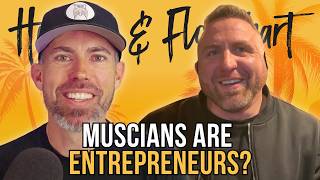
Mark Roberge built a music career agency and now runs Fanflow, a platform for artists to own their fan data through email and direct messaging instead of relying on social algorithms. He started with a MySpace band that charted nationally, survived a failed label deal, and now advises musicians to treat their careers like startups, using data and strategic Spotify release timing to build sustainable audiences.
Chapters
You think about all the greatest artists that we've all, you know, come to, to really love over the course of, you know, the human existence. And they all have like a real story in regards to how they grew up, their life, their, their, their real experience. And that's what actually relates to. No robot's going to have that experience, no AI is going to have that. Every human is going to have. Like, and so those standouts, like, we all know Eminem's story with him and his mom growing up, you know, like, you understand that, you know, you know, Jimi Hendrix's story, you know, you understand like, you know, Freddie Mercury story, like there' and legends that we can all think of. And because of that, they had a real human experience. And so that influenced them into how they made music and how they, you know, were creative. But it's also their story that you gravitate towards. And so no robot or AI is going to actually have that because they're not a human. I'm Mark.
We're here, we're doing this. This is really cool because you come in, I mean, you're a business partner of a really dear friend of mine, Dan Ryan. He always loves a shout outs on this podcast for the last ten years or so. So, Dan, what up, Dan? But I feel like this is a long time coming, even though this is the first time we met. Yeah, just through Dan. You know, he's, he's done so much and influenced actually his podcast a lot. But music, I mean, that's him and I have jammed, I record some stuff at his studio, done a lot of other things. But you're his partner on that whole side of side of things, you know, producing music and helping promote artists and really guide them in a new way that I think can completely change how not only artists and creators think, but just entrepreneurs. And I think that's where this chat can kind of go down.
Yeah, no, I mean, Dan's been very implemental in regards to, like myself as an entrepreneur as well. You know, it's funny because obviously, you know, we kind of discussed off air, but it's the music industry in regards to having a band or being a music, a musician or an artist. And when you start to actually start putting product out there, like recordings and videos, you're ultimately a business, you're a startup business. Right. And so it needs to be treated like that. And you know, I've always taken that approach with my own projects, which has led me to where I am now and how I've gotten my obviously foot in the door into the industry and understanding. But ultimately, as an entrepreneur, Dan, you know, kind of helped augment even my vision in regards to what I was seeing and what I wanted to do, which was great. And he took it from a different angle, understanding, you know, obviously business at the level he does, which was great. It kind of reeled me in, I would say, you know, because I'm half creative still, half business, and that creative sometimes wants to win over and. And go look at shiny objects. Right. And I'm in. But you got to kind of just trust the systems and say, okay, you know, it's got to be strategic, one thing after another. And it's. You know, it's. It's across the board with the music industry and any other industry ultimately, in order to gain success, you know, for sure.
And I think that's a big thing because, yeah, us entrepreneurs, any entrepreneur, creator, like, we are creative. We have this vision. Right. But. But, like, just getting stuck in there and not dealing with, you know, following systems, creating systems, and trusting those along the way and getting a trap. Right.
Yeah. It's like, oh, you know, you know what would be nice? You know, so anytime I say that dad's like, oh, really? You know, it would be nice, or, oh, I think this will work. Oh, you think? You know, so it's like, you got to make sure that you're weighing out everything on a data level. And that's really what he's helped me with. And understanding. It's helped obviously position ourselves as a company and myself as, you know, the owner of a band, you know, of my music project to kind of think differently in regards to, you know, systematically approaching things and making sure you. You utilize the data to tell you what actually should be the move. You know, ultimately, instead of going, oh, I feel this. It's like, okay, great, you feel it. But what is the data saying? The data saying opposite. You got to go with the data, you know.
Yeah, man. Well, let's. Let's get there. I want to. I want to understand a little bit more about your background because, like, I know you've obviously, you've been evolving a lot over your career, but you've been in. Yeah. Bands, you've worked with a whole bunch of artists. On the production side, you have a whole crew that you work with, too. Tell me a little bit of, you know, like a brief of. Of yourself, what you're doing. And I kind of want to hear about the transition point, too, of how you got to where you're at.
Yeah. So, I mean, I started my rock band out of high school, right? And so we took that rock band and basically blew it up and broke it nationally. And we utilized certain strategies, but at the time MySpace was, know, popular. And so we figured out ways to kind of really utilize MySpace in order to gain audience so that we were driving people, you know, not only to our community, but also into our shows and actually having people show up. And from there we went from like 50 people at our shows to upwards to like 1200 sellouts, you know, and then, you know, that gained the attention of the industry and we were charting on Billboard and then songs are getting picked up by radio and it just snowballed. Things start to snowball once word of mouth starts to really start to pick up and there's real fan base there and it starts to move. And so we went, you know, we went national and we signed a deal and the deal didn't go well. You know, it's typical VH1 behind the Music, right? You know, money's guaranteed and the money disappears. And, you know, we have a song on radio with no promotional money or radio team at the time. And you know, unfortunately our single that was Come Alive at the time, my band's called Prospect Hill, the song, song Come Alive, was, you know, poised to be a top five, top ten minimum. Basically the setup that had. Because there was already major stations that committed to picking it up and we had Sirius XM already within full rotation on octane, and we needed the radio team and you need a good budget. There was $50,000 supposed to be back behind at a minimum behind the song. And the day the song goes to radio, it's called the Impact date, the radio team walked because they weren't getting paid from the label and the money went missing and it was just a mess. And. And so our single went up the charts without any radio team or any budget behind it. It, you know, it broke, you know, 38 at Main street, so top 40 at mainstream Rocket Billboard and 42 at Active Rock. And that was without, you know, no team, nothing behind it. It just kind of organically went up just from all the word of mouth and the work the band did on the road by, you know, basically going into these radio stations before the shows, bringing coffee and donuts, bringing pizzas, like really just making ourself known to all these major radio stations and creating relationships. So that helped that. But unfortunately that led to basically, you know, a stall with the band. And it kind of, you know, it, it kind of killed the motivation inside for the for the band there's a lot of, you know, turmoil. We've been together since high school, you know, we're all best friends, we're brothers, you know, we're strangling each other at the same time, you know. And so, you know, that led me to kind of take the band off the road for a bit and say, you know what, let me reassess what's going on. And so my partner, Sean Lichtenstein, him and I started writing and producing for a number of other bands and artists and developing them. And Sean's in another touring band called Lands down and now they're blowing up in Europe and so you know, every, it's all coming full circle. It's funny but we started writing and producing. We had a few artists that ended up, you know, signing major label deals that we were working with and we've worked with everybody from like Daughtry to.
Godsmack to no Taproots on there. I used to listen.
Yeah, yeah, yeah, yeah, yeah, yeah. I just recently put out a song with those guys with Prospectillo actually too.
Yeah, I think I heard that one. That's good.
Yeah, yeah. Non point. I mean there's like honestly there's. From Queen Drake to. From Ashes to New to. I mean there's. There's really not an artist or a team that we haven't really worked with at this level at some, you know, at some point or somebody a member of their team. Right. And we built that company, that's Red 13 Studios and that was basically our artist development agency which then also started doing major music videos and you know, documentaries and TV pilots and brand commercials. So expanded from there and that's kind of like, you know, right around that time is when Dan got involved where he started helping with us because we had a model for recording studios to franchise them. So we wanted to create a member based studio where you could just pick up your project if you were Nashville in New York and start working on it, you have a membership, you'd have access to it like a gym. And so he was working with us on that and really teaching us like the Google SEM strategy to really blow up and drive and new leads and just a follow up infrastructure on, on go high level so that we can set up you know, automations for, for you know, obviously lead nurturing and then post, post service, the follow ups and surveys, all that stuff.
Right.
It was, it was really cool. It's like stuff that I didn't really fully understand and yeah, I still, you know we had to like Kind of break it down. It took years to really wrap my head around it all, but it was working ultimately within implemented for what we were doing on the ad strategy from the Google Ads, started driving, you know, tons of. Of new customers into the recording studio and started blowing up, started working. So then we started, you know, expanding that operation. And the goal was to bring in major VC to then expand that nationally. And so we had two facilities with about four recording studios, each with a full staff. And so that was, you know, the test. Can we have two locations? Is this franchise a ball? Can we do this? And it was working until Covid hit. And so then Covid smashed us. And, you know, ultimately we, we jumped back on right as soon as things opened back up and things were working. But I saw a huge dip in the, in regards to the, I guess the mentality of the artists and the people that were coming in from their. From, you know, prior to Covid. Yeah, they learned a lot during that time on their own and they were forced to so that they can learn how to record themselves. And so. And by then the technology was also advancing pretty quickly. So the ability to, like, record in your bedroom was obviously scaling. And it was becoming more of a. Instead of like a couple of our, you know, clients, it was pretty much the majority of them. Now we're doing some of their project at home. And so I just didn't like that trend. And I said, okay, you know, that's going to, you know, it's going to eat into the margin because most of them, you know, Instead of bringing 100, you know, 75 to 100% of their project into the studio, they're only going to be bringing 20% of it in now to just finish it up and tighten it up. And so I didn't like that trend. And it was a lot of work. It was, you know, it wasn't really. The juice wasn't worth the squeeze, you know, doing the whole.
Yeah, the license model.
It was just a lot of work, a lot of people, a lot of things. And it was, you know, it was kind of chaotic. And then it kind of took me away from what I actually wanted to do, which is I still want to be creative and I still want to help artists, and I still, you know, I want to be that. But it was, it was, it was a lot of work. So we kind of backed off that idea. We did like the subscription element and so we moved towards more of the model that we're currently at now, which is more of like, you know, it's a, it's a, it's a consulting agency where we, you know, handle the marketing and the nurturing of fan bases and building of fan bases backed by our tech and all of our tools with our full strategy. And that's really where we focus now. Utilizing our team, our tech tools, all of our ad strategies, all of our, you know, network, you know, everything that we have inside of our toolbox is now accessible to all these other artists and independent artists as well as, you know, even major label artists and major management companies that we work with.
And that's a fan flowy, right? It's that kind of like the, the tool that's, that's in between all that.
Yeah, so fanflow was the first iteration of it. So Dan was really pushing us to create an educational backed, like, product where, you know, subscription base based off of like, here's, you know, our teachings. Right. And so, you know, I know he was like really driving that home. But I, what I started to do was like, I went off on my own and I started like developing an automation system for a strategy that I use on Instagram. And so I have artists that will, you know, will drive in new followers through multiple different strategies, ad strategies, engagement strategies. And when those new followers come in, I want all of my artists to then DM them and message them and create a, you know, personal relationship right off the rip. And then from there there's a whole communication tree that I have them, like an if this, then that communication tree. So, and they were having, I was giving them as a guide on a manual level so that they would go and manage this and then they can create a conversation with them. And if they say, say that because ultimately we want to get them to hit like four different call to actions. And so I would have all of my artists do this. And when they implemented it, they were like, holy shit. Like, this is insane. It's working, right? This is like unbelievable. But, but the problem is this is too much work. So they were like, I can't stand manually. I can't do this all day. This is consuming my day to the point where they were getting hung. But it's funny because it was a ghost town for them. No communication, no fans, no engagement on Instagram to now. All of a sudden they couldn't handle it. And I said, okay, well that's a different, it's a different problem now, you know, so good. It's a good problem. So that's what, well, that's what led me to start developing that, that tool which was like the first iteration of Fan flowing and then I was working the, you know, the automations and I would kick them over to Dan and then Dan would go, all right, let me mess with this and I'll fix it. He'd send it to me. And so I started learning automation systems through just trying sending to him, him refining it. Then I'd be, oh, that's how you do it. So we went back and forth and there was like two months I just didn't sleep and I just was like, building this, building this. And then I was like, well, what if we had this feature? We had this feature and we just kept going and now that's where fanflow we started and that's where it is now. Now it's, I mean it's beyond that. We've got develop developers in there with API integrations and all types of things going on now.
Yeah, no, I've seen a little bit of it from Dan and, and obviously we're talking a lot about Dan here and his ego is inflating currently. But. But, right, you're welcome, Dan. Yeah, exactly. But I mean like what you're, what you're pointing out, Mark, is it's like a perfect blend of like you've been hustling and grinding your way. You know, you're, you're creating all these connections and figuring out what's working, what's not, but doing it this manual way and you're not, you didn't jump to systems from day one and you probably were unaware of some of these things. But then you reached a point, obviously a guide, someone like him, a partner that can really enhance that. And then you mentioned something because like about the whole Instagram thing, it's capturing them multiple calls to action. I think it's something that you guys wrote about, but like this thousand fan rule, like this, this idea of basically capturing them in email and sms, something that you can actually own instead of what, relying on all the algorithms and the platforms out there, which I'm sure artists are. I mean everybody, entrepreneurs have that problem too, you know, in general.
Well, yeah, and that, that comes from like, honestly like my MySpace days because we had hundreds of thousands of followers as a band on there and then one day it was all gone.
Yeah, yeah.
You know, so I've always felt like, man, you got to own that audience. Like you can use these social platforms as aggregators to then drive them into your own list or community that you own, right? So if you have that list, you have their name, their phone number, their email, their Location. And for the music side, I want their preferred DSP digital streaming provider, you know, so, like, I want all that information. I want to be able to contact them, I want to be able to give them a call if I need to. Right. I want to be able to text them, I want to be able to email them, I want to be able to find them on other platforms, which you can usually do with a phone number or an email. Right. So that is like the root of it all. So if you have that, then you're not left, you know, in a situation with. Which would happen. With MySpace, we had hundreds of thousands of fans that were. All of a sudden, we couldn't get to them anymore. Right. And so that was a problem. And I've always, you know, I kind of have a little PTSD from that. So I think that's what has led me to ensure that. That's like one of my main, you know, focal points with any of the artists or projects I work with is like, make sure we capture that audience's information so that we can reach out.
Yeah, I'm just thinking of, you know, Spotify. There's probably a lot of artists still that are relying on places like that. I know YouTube for creators, people pushing videos out. It's all about, in their mind. Yeah, the numbers over there. But, you know, like, at least on YouTube, I know subscriber value. It's a vanity metric more than anything now. It's not really driving the actual views so much or even conversions, you know, there needs to be some thought. It's like, what's the path? Where are you going to take them to something you own?
It's similar with Spotify. Right. So if you're just like driving conversion ads to Spotify, then they're just going to Spotify and you have no way of actually, like, you know, communicating with them after that. Right. You don't know what happens to them. You don't know where they go. My whole thing is capturing them first, understand how they even stream and then get them to take those actions. Right. Because now you have the ability to communicate directly with them. And if they. If you nurture them into a superfan, they'll do anything you ask, really. They're. They want to help you, you know?
Yeah. So what's like, I know you have a bunch of frameworks in your book, and we'll shout out like your book is. Let me see. It's the Artists, the Indie Artist Compass. And. Yeah, Good. This the URL I got. I'll just shout it out as book.make our music.com. i don't know if there's a better one, Mark.
Yeah, you can get it right off the make our music.com site as well. There's a, there's an access point from there, but yeah, that'll bring you directly to the book offer.
I like it because, you know, and I blasted through the book and it's, it's just like, it's got a bunch of frameworks and it's, it's interesting because I like reading books that like I do. I played music for a long time, had bands, but never pursued it for as like, you know, it's like that's my thing. Maybe later. But I love to read books like this and talk with folks like, like you that aren't exactly what I'm doing, but it mashes up, it has these flavors that you can kind of just take and like, oh, okay, that's a cool almost analogy. And yeah, like you have a. I think it's a fame framework that maybe is in line with this whole thousand fans concept. I don't know if you could break that down or maybe talk about how like when you're communicating with fans out there and growing an audience, like what does that process look like? Like how do you walk people through it?
It all stems from obviously even understanding your brand. Right? So like who are you? Right? And then who is the, who is the audience that you ultimately want to speak to? Right? So you're going to first dial that in. I mean, I tell everybody it starts with product first and foremost, right? You need a good product, you need good music, you need a good competitive recording so that it can compete at the highest levels. Because ultimately in order to create a major label sounding recording, it doesn't take much anymore. So like the, the, the, the level of like recording, the bar has been set at such a high level now that if you're not even competing at that level, then you're kind of already, you're not even in the game yet. Right? And so it really starts there. That's the beginning of it all. And then from there it's like understanding, you know, how to, how to get that audience through. You know, where are they, where is that on? So they on Instagram, Facebook, are they on TikTok? Are they on YouTube? But ultimately then there needs to be a system that can, can be continuously repeated, right? It has to be momentum based. It has to be consistent. It has to be a daily exercise where there's, you know, outreach. It's targeting Audience with a great piece of content that is now proven through data, right? You put out some pieces of content, you see which one reacts organically, then you say, okay, this is the one. And then you use that as an ad infrastructure to then drive those fans in through a call to action system. We use a very specific, you know, ad strategy where it's, it's basically like a lead ad is, you know, we're using the music industry, which is funny because a lot of people are like, what does that mean? So ultimately what we're doing is we're, you know, we're keeping people on platform, on meta, you know, and we're running a piece of content. Maybe it's the band live, the artist live, or maybe it's them rehearsing or it's a piece of their music video, whatever's converting it and grabbing the attention. And we're, you know, we're trying to find those fans of a similar artist, right? And maybe location based, based off of where the artist wants to tour or where, you know, they want to build their fan base based off of whatever other strategies we have. And then from there it's like getting them to, you know, feel like they're, they're finding out about this artist before anybody else and they're part of this community and they want to join it. And so we get them to join the fan list and we get their name, phone number, email, location, preferred streaming platform. And then from there the automation start to begin to then basically nurture them and turn them into a super fan by getting them to take multiple different actions through email and text message and dm. And so it starts there, and then from there those communications are now structured and continue to go out. So you have this machine and it's running all day, every day, all day, every day. So no matter what, you know, you could be posting content all day, every day across all the socials. And the way I look at that is you should be, you should be absolutely putting out content and figuring out what works and what doesn't work. But those are like lottery tickets, right? Some of those will work and some of them will hit an audience and you'll get a good influx of followers. Some of them will go on deaf ears and it won't do anything. And then maybe by luck you'll have something that goes viral, right? So you should be playing the lottery ticket. But the more real audience you, you have, the, the more opportunity that lottery ticket will have because now you have real engagement with pushing it above into the algorithm. So if you have this system in place, A, you have more of a chance of hitting that. That lottery, you know, win. And B, even if that doesn't say you're not even posting or doing any of that stuff, you're still gaining an audience every day. Real fans that want to communicate. So at the very least that, you know, we have a lot of, you know, some. Some like weekend warrior bands that like, don't understand social media and don't want to touch it. They don't even want to be on it. But we turn this on and they're still getting fans regardless, you know, which is nice.
Yeah, I mean, it makes sense. Cause you're getting in front of the right people. I mean, you guys as a. As a group have a lot more data. I'm sure that you can help your clients and the partners you got. So it kind of, you know, speeds people up too. What are some other. I'm just thinking of, like, even content creation because I'm seeing a lot of artists I follow and follow someone Spotify, where I see them drop a, you know, a track, a new track off. Yeah. Pretty often, like every two weeks, let's call it. Or even every week. But it seems like, you know, that's like a consistent flow rather than like, here's a whole, you know, a freaking an album all at one time, you know, so it seems like. And I think that's one of your strategies too, is almost. I call it batching, you know, with the content is like you always have some stuff that's baking things that are out there that you're marketing, but you're never kind of ending that. That new flow of material getting out there is that kind of an approach that you. You tell artists to do the same. And yeah.
So, you know, ultimately it's like the way people consume music is different now, you know, and especially, like, if you are still in the infancy of your project and you don't have a massive audience, you have to build the demand for that amount of product. Right. So it's like, you know, and then every single piece of product is very valuable in regards to then getting you up the ladder of success is the way I see it in the ladder of. So for you to just dump out 10 songs without having a proper system in order to ensure that, you know, if you have 100 fans on Spotify and you dump out 10 songs, you only got 100 fans that are actually going to consume those 10. Or you can put 100 fans, put out one song, gain maybe 50 to 100 fans between that next release and then the second release, now you have 200, maybe, you know, 150 depending. And then from there double that and then from double that. So you can utilize each one of those songs as a ladder to build more audience so that each one of them starts to grow and, and then it starts to snowball. So that's the better way to approach it in regards to obviously having, you know, a limited audience. I mean, if you're Drake, you know, people would be very upset that he put out one song. What do you mean, just put out one song? We've been waiting three years for an album. Like, it's different, you know, it's a different element because of, he has, he already has the audience. When you're building the audience, every single one of those songs is an asset towards your growth. If you to just dump them out there is a waste.
Yeah.
You know, and the algorithm on Spotify is actually set up to reward you for that. So when you put out a song, it goes into the release radar pool on the algorithm. Right. And that's for anyone that's been following you or engaging with your, your Spotify to give them almost. It's like a notification internally inside of a playlist that they have access to. It's the release radar playlist and so automatically get added to it. Right. And so when you release a single or any type of, you know, release a song, it's going to be inside of that release radar playlist for four weeks. Oh, and then after, and then week, week after the end of week four, it's out, falls out. So if you have a continuous release cycle, you can ensure that you're juicing that and then that algorithm is going to continuously push you and then once you get the back end score of your song to a certain level on the engagement level, you know, in regards to how many people listen to it, how many people listen past 30 seconds, how many people saved it, how many people added to their place. It's like the algorithm is looking for these things, right? It's looking to see what the score is in regards to the ratio of people listening to actual positive action taken. And so once you reach a certain percentage, right around 20%, you get added into the radio playlist and now they're going to broadcast it into the radio playlist for other people to start hearing. So now Spotify is now promoting your music and then from there, if it gets to a 30% is usually where I see it is. Now you get into the Discover Weekly Playlist, which is a bigger pool, and then that will start to build, and over time, both of those will grow audience wise. If the song is doing its job and it's doing well, it's a good song.
Interesting. I didn't know that. Okay, is there, like, do you guys focus on YouTube as well? Because I heard you do some video production and all that. Or is it primarily Spotify for everything?
I mean, we've done a ton of work on YouTube. We do a lot of ad work on YouTube as well. However, best bang for your buck on the music industry. It's not really, you know, ultimately, it's like YouTube is not. The way I look at it is like someone. When someone sees an ad on YouTube, right. They're more annoyed than anything.
Yeah, right. Yeah. You're shoving something in front of them.
You know, I'm here to watch something. I'm here to watch something, and you're in my way. Get out of my way. Right. So the, the. The chances of somebody actually going, oh, wow, this is amazing. I really want to stop what I'm doing. I'm gonna go down the rabbit hole of this band is very few and far between. Like, it. Does it happen? Yes. But the cost per that result just doesn't make sense financially, especially on a limited budget. So it's all about saying, okay, what's the full budget an artist has? And what's the most value that we're gonna be able to get out of that dollar to then acquire a real fan that we can communicate with, that we can always get to YouTube after we get them to subscribe. Right. So it's like, I, yes, we can find people on YouTube, but if you have a limited budget, it's not ultimately the best place to find them. And you could also, you know, look at it two ways to this, you know, that way. But then there's the other way where people go, oh, well, we need the numbers, right? We need to see bigger view numbers for a promoter to get us or whatever. It's like, okay, understood. So now we're just spending on optics marketing. Right. It's not really. It's an empty box. I tell everybody. Yeah, it's, you know, it's like a number. Cool. I have a hundred thousand, you know, views on my music video. It's like, cool. You bring two people to your show, you know, so, like, cool. You'll get the gig, but then you'll bring two people to the show and you'll never get that gig again. So it's like, if you want. If you're trying to do both and you're trying to get attention, it's like you want to have the real fans first. And if you want to do some optics marketing then to enhance the sell of the band. As long as you could fill that box 75%, I'm in for it. Let's go. But ultimately if you're not there yet, then we hold off on that and that budget needs to go into real fit acquisition.
That makes sense. How about on the. So like paid stuff on Spotify and we're talking, you know, obviously artists right now. You know, for other businesses. You guys listening? It might be elsewhere, not Spotify. Totally cool. How about like on the organic side I think of partnerships, like I think of all these things that I mean I feel like it started in the hip hop industry right where they started collaborating and then like one lifts up one of their buddies or whatever deal they got going on. Is there some strategies you guys use for, for that?
Yeah, yeah. So we, you know, we, we call it like the piggybacking method. So we utilize, you know, finding an artist that's obviously aligned musically that makes sense and has a similar audience to that artist or an audience that we want to actually expand into. And then you find an artist that's at the same level or bigger and, and you put together those collaborations because then from there, you know, their audience is now going to be getting the notification of that release radar. That song's in there. They're obviously going to be paying attention to who this artist is. So it's funny because Sean and I have our own musical project that we put together as like, you know, writers, producers called Ono Octopus. And so we, that's all we do with this project. It's a collaboration only project and we bring in bigger artists and we, we write and produce the songs and we have them, you know, sing a rap on them and then you know, they contributed. Right. As well. And in a silo we tested it out without doing really any too much any other marketing on it. Right. So it's just like this is what it is and the songs crush. Like the catalog does really well. There's millions of streams across all the songs because these are the artists that we chose were bigger artists that had at least like a hundred thousand to almost 400,000 monthly listeners. So when we release these songs, that's amount of the audience that we're seeing in regards to, you know, the initial push. And so it works really, really well. And obviously an artist has to get to A certain level where they have some leverage there in order to get to, like, the next, you know, tier of artists that have that audience. But even starting small, like, if you only got like 2,000, you know, monthly listeners, then find another artist that's got 2,000 monthly listeners and collaborate and then build like a little collaboration content scheme around that as well. So their fans own your fans, and now you're borrowing fans. You know, I dig it.
That. Yeah. I remember when I started way back in the day, before I knew anybody, and, you know, I was in digital marketing space. It was called ad swap. So we both had email lists. It's called A Thousand People, Thousand People. And yeah, you just swap and talk about each other's stuff, and it was a way to grow the list. And yeah, like you said, you just level up with people that are kind of around the same level that you're at, and you might get, what, an introduction to someone who's bigger that can just open the door and be like, yeah, I'll give this guy a try. Mark's, you know, he sounds awesome storm on a track.
It opens up other doors other than just access to their. To their audience. Because, like, you're saying somebody else that might have an eye on that artist goes, oh, I kind of like who that is. That's cool too, man. You know, so there's a lot to that, you know, and. And we. We push that big time. That's one of the things we try to do with our community that we have, which is make our music, which is basically like a, you know, like a chat room for all these artists that have different opportunities and ways to communicate and. And find ways to collaborate, whether it's for song recording, you know, recordings of songs or collaborations on. On shows. Right. Get them to swap shows. Hey, I'm from Philly. I need a band from New York. Hey, I'm from New York. I need a band from Philly. Cool swap, you know, and so stuff like that, too, helps out as well. Not just on the recording of music, but actually bringing each other into each other's audiences in your hometown.
I so wish that. I mean, like, I think about this often because a few of the guys I still am in business with and buddies, like, we're all doing band stuff back in high school and after high school, that was like, my first taste of entrepreneurship. It felt like it's like what we're talking about. It's all so similar.
It's so similar.
Yeah, I wish I knew all this stuff back then. It's like the marketing, the. I mean it's never too late. That's.
It's never too late. Yeah, yeah. It's a different world now. You could put out music and, and find your audience, you know, and still do pretty well and have a six figure project that's at a minimum, you know.
Absolutely. Yeah. And it could just be a side project. Yeah. For me with my daughter possibly, you know, like she's.
Yeah, we have a lot of, you know, people that come to us that are that, you know, upwards from like, you know, 50, 50 years old plus that are saying, hey, we want to take a shot at this now. We're like, cool. We could set it up and build the infrastructure. We'll find your fan base regardless. It's a different world. You don't need to be, you know, an 18 year old artist that, to, you know, obviously major labels. Yeah, they want longevity, but yeah, you could build a career outside of the major labels, you know.
Yeah. So shout out to your community just so it's like super clear. If someone is in the music industry, you just want to explain, explore, go to make our music dot com. It's free. You can check it out. Find the book over there too. Just want to shout that out.
Yeah, we got a bunch of artists over there, rock bands, producers, engineers. There's, you know, and I don't even know what the number is, but it's like grows every day. It's really great. And there's.
That's cool.
A lot of communication going inside there in regards to collaborations and people showing off their work and just talking to each other. It's. It's awesome.
Sweet. That's. I mean just that alone, having a community. You need that. You mentioned back to making music so easily now because I have recording gear at home, I can record stuff. I mean obviously really cheap iPhone, you can do stuff. But then there's AI and all this stuff. I know it's kind of an opening, but I'm in the world of AI. I know you guys, I think are collaborating with a little bit of stuff too with Dan, I guess. What's your take on AI music and people kind of starting out by recording. Maybe they're not like super into the full. Like they don't have a band. They're kind of just curious. Where would you lead people to kind of start flexing the creative muscle and is AI part of it?
Well, yeah. I mean, so it's, it's funny because I've been. I was just on another podcast and there was pretty much solely this topic, right, because it's a hot topic right now. You know, everybody's discussing this and it's ultimately like, you know, what is, what is real music? What is true, what is, what is, what is authentic? You know, and it's, it's gonna get blurry. And it already really is because I get hundreds of submissions, you know, pretty much weekly, if not more, of artists that are submitting music for us to review than to jump on phone calls. And so, you know, I am constantly now asking the question, is this real? It's. I'm already here now, and so I have to like, kind of like really dig in and look. And so. And there's a lot that aren't right. And so this isn't. And I mean, real is like, is this the artist? Is this person really singing on the track? Right? No, this is, this is. This is an AI voice. All right, now, okay, what's the next layer? Did they write any of these lyrics? They say they did, and you never know. Maybe they did, but through chat GPT. So now they're AI lyrics, you know, so it's like, okay, cool, that. Now the music was created on suno, which is a very cool platform where you can create music and you could give it prompts and there's ways to utilize it as a tool if you are creative, if you. And you want to, you know, not completely sell out to AI, there's still ways to utilize it to, like, help you get some other ideas from your original works, which I like that point of it all. But then ultimately, like, you know, this is where I think it's going to happen. If someone is exploring and they think they want to start creating music and writing music. Right? Yeah. SUNO will get you there. And then you can start, you know, playing around with that and say, okay, this is kind of how I hear it in my head, and this is what I want to hear and see. And it's going to make like the, the picking up the guitar and, and actually playing it, you know, almost like obsolete at some level at some point. Right. However, people still enjoy watching that guy play guitar and they want to see that live and they want to see the passion and the talent behind that. So you putting prompts in isn't really a talent. It just is. You're just kind of, you know, whatever's inside of your brain, you're able to get it out, and that's pretty cool. But then ultimately there's. That's going to be. It's going to bring the, the, the level of like musician production and musical production to a, I guess one, you know, median level because everybody can do it with, you know, or any other app that comes out. But then it's gonna allow the real talent to rise is what I, I'm hopeful of. Right. It's gonna allow the, the, the, the, the, the cream of the crop to rise. Right. So you're gonna start seeing like, you know, the, the real artists with the real stories that have the real talent. And it's like that's what people are going to gravitate towards. And we're already seeing like a big shift in regards to live music. You're seeing all these festivals that are sold out. People really enjoy live music again. And I'm seeing a difference in regards to ads that we're putting out. This is funny, but we would put out a lot of like, you know, music videos as the content to hook somebody or somebody playing live, but then put the recorded music over it and then get that it took and that worked forever and the conversion rate was super high. And now I'm starting to see that the raw audio from that live performance, even if it's crap, is hooking people more because I think they're going, oh, this is real.
It's polished.
Yeah, it's less polished, but it, I know it's real. So they're not, you know, there's no question. They're like, oh, this is interesting. Oh this, even though it sounds like crap because it's done from maybe like a droid phone and a hall, you know, like, but it, but for some reason, you know, they don't care about the Polish audio anymore in regards to the conversions on the, on the, on the outside, you know.
Interesting. Yeah. Because you kind of went exactly the direction I was going to ask you about is. I feel like the in person music experience. And just in general, I think even Elon Musk said something like this like that the biggest, the most valuable experience you can have now is in person. Like these gatherings. It's not anything you're really even creating online or this stuff. It's like getting around people and sharing that experience and music. Like there's nothing better to feel the music, see the music and then be with people who are all in it together, you know. And that's why the prices of these things are even going up. You know, like tickets are these and like you said, they're selling out festivals. And I think it's freaking awesome, man.
It is great. And there's a resurgence in live and I Think everybody kind of like, prior to Covid, were taking it for granted. I think that was a big thing. And then they were like, wait a minute, I love concerts. We can't go to those. All right, let's start going to all of them and let's empty out our savings accounts to go, you know, so, like, that's what you're seeing. And ultimately it's like, you know, as this progresses, as the AI, you know, revolution began, you know, continues to move, which is, you know, I honestly, you know, then, then we get into conversations like, okay, well, then there's going to be AI robots, and then they're going to be able to play guitar. So you'll be like, I know we could go as far as we want with it, but at the moment, it's like, you still want to, you know, the real human experience, I think ultimately is always going to win, right? Because like, you think about all the greatest artists that we've all, you know, come to, to really love over the course of, you know, the human existence. And they all have like, a real story in regards to how they grew up, their life, their, their, their real experience. And that's what actually relates to. No robot's gonna have that experience. No AI is gonna have that. Every human is gonna have. Like, and so those standouts, like, we all know Eminem story with him and his mom growing up, you know, like, you understand that, you know, you know, Jimi Hendrix's story, you know, you understand, like, you know, Freddie Mercury story. Like, there's all these greats and legends that we can all think of. And because of that, they had a real human experience. And so that influenced them into how they made music and how they, you know, were creative. But it's also their story that you gravitate towards. And so no robot or AI is going to actually have that because they're not a human. No matter what. At the end of the day, it's the one thing we have on them. So. That's right. We're not going to be able to relate to the robot, we're not going to be able to relate to the AI, but we can always relate to a human that's had real human experiences that are similar to yours or at least parts of similar to yours.
Yeah, man. And that's where I think you mentioned documentaries early on. I love going into. I mean, you see like. I mean, Taylor Swift is like, it seems like she's got this frickin mastered, you know, in terms of however. But like, you see shows and episodes and it's like it's all behind the scenes and like when you obviously you reach a point and you have enough people that want to see that kind of stuff. But I feel like even at the early phases, documenting the behind the scenes stuff and publishing it somewhere, if it's even just YouTube publicly and using marketing, I just feel like that's one of the coolest things that a band can do for marketing and showing they're human.
And, and, and, and it allows the audience into the process to make them feel like they're part of it.
There you go.
You know, they're, they're, they're in, inside, they. It's like almost like I'm, I'm inside the club. You know, it's, it's, I tell everybody it's get. It's, you know, everybody loves cooking shows, right. So let, let them into the kitchen.
There you go. I like that.
You know.
Yeah, put them in the studio with you. Maybe, maybe after it's a little bit polished up rather than just.
Yeah. Like I just announced, so my band's going out on tour with Lands Down, Prospect Hill and Lands down in Europe in April, April to May. And so we just announced that earlier this week and now we're starting to document everything leading up to it. So after I get off this call, it's actually my band's going to be walking into the studio and we're going to be documenting the process of us getting all the new promo material together. We're going to be talking about it. So we're going to open this up and now this is going to be part of a docu series that will be, you know, ultimately sponsored by Make Our Music Fan Flowy. Right. So now it's. And now you get to see, you know, how we're utilizing make our music and fan flowy to then now market and build the tour up outside and drive audience in and nurture those fans and get them into the club and then from there beyond that, you know, ultimately heck yeah.
Where do we. I want to follow along with you but I'm sure others now where, where can we go find you on that?
So we're, you know, you can, you could follow, follow us on Instagram and on YouTube. Prospect Hill is, you know, the, the, our band and then their bands Lands down and so we have land soundmusic.com and prospectilband.com which will take you to wherever you need to find. And then it will basically be putting out a YouTube series on all of this that'll be a Collaborative series that'll be on their YouTube. Our YouTube and make our musics as well.
Sick. Okay, cool. So jump on that. We'll link everything and make it easy for everybody.
Yeah, a lot of links. Yeah, we got a lot of them.
It's all good. It's, it's fun. I'd like to get it all. And I selfishly, I just want to follow along too because I'm like, this sounds awesome, Mark. Just to wrap it up, you might have already kind of answered this, but like, I'm always curious, like, what are you most excited about? I mean, you got a lot of excited things, you know, the tour and all that. But is there something that stands out for like artists that you see in the next like year or so that you're working towards? There's some big idea that you're just like, yeah, this is going to be core. A prediction maybe.
Yeah. So, I mean, I think some of the stuff we're working on is going to be game changing and some of it already is. But there's a next level to where we're headed and, you know, I believe that there's going to be, you know, basically I would say a crossroads from what we're doing to currently what like Spotify is doing. Where, you know, there's going to be a new way of consuming music and consuming your favorite artists that I think, you know, as what we're doing progresses, it's going to start, it's going to start melding into that. And so there is going to be more opportunity to then put more value behind what music is. But it's going to allow the fan to almost like dictate that and then it's going to allow the artist to then, you know, see the reward from that. And so there's a level of what we're building in regards to like a community side which will build melded to almost like a, you know, it's like a digital street team for your superfans which will eventually then have certain access that no one else will.
Right.
And so then that's going to start to meld into what this new streaming and music consumption phase will be. Because there is a sentiment out there amongst so many artists and so many, you know, you know, music fans that Spotify is just not great. Right.
Yeah.
And you know, I have my arguments on both sides that I see both because I do think they saved us from being completely free. Right. We went from Napster to Spotify, so there needed to be a lifeboat. Right. And they were the lifeboat. But now let's get back to the main ship and figure out a new, new situation here. So I'll never short Spotify on that because otherwise it would have been real bad. So. But we reconditioned the, the music consumer to then see some value in music and now we just got to get them to see even more value. But then I think it also needs to be experiential, kind of like what you're saying on every level and then that's what we're going to melt towards. So I'm excited for the. There's a vision I have in my head. It's a, it's a. You know what would be really cool. So Dan's keeping me at bay right now. But once we get to the, you know, fan flowy 3.0 and the next level of this, that's what I'm really, really excited for.
Yeah, man, I, I know Dan wants that too. So let the data prove it out. But I think the data is showing more interactiveness. Two way people want to get involved, you know, with the music and, and the people they love and they follow.
So thank you so much for having me. I really appreciate it.
Absolutely, man. I'm gonna follow along again. We'll link everything and, and just a quick shout out. Makermusic.com it's probably like the hub to, to go to if you're ready to jump in and. Yeah, man, have a blast on the tour. I'm stoked to see what you guys do.
Awesome. If we come out your way, I'll, you know, hit me up. Let me know. I'll put you on the list.
I'm in San Diego, so Dan and I will be there.
All right. We'll be out there. Rock and roll marathon. Let's go.
I'm in. See you, brother.
Thank you. All right, lady Joe, take care. Have a good one.
You too.
More from Joe




OpenClaw is making AI agents accessible to EVERYONE and this is a total game-changer. 🤯 #ai #ainews







OpenClaw Delete Panic -- The Email Inbox Nightmare! #openclaw #email #nightmare