6 Ways to Heal The World and Make It a Better Place Feat. Peter Diamandis
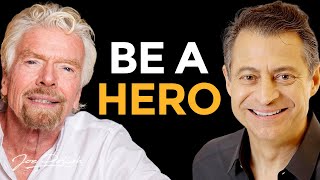
Peter Diamandis, Steven Kotler, Richard Branson, and other entrepreneurs argue the world is actually improving and show how to accelerate solutions. They discuss XPRIZE competitions, Singularity University, and entrepreneurial philanthropy as concrete ways to drive breakthroughs.
Chapters
Let me ask you, who do you guys want to be a hero to? I mean, there's a lot of different people in the world. There's lots of organizations.
So our goal, at least my goal, and I want to speak for you, but, is to change the conversation in the world. You know, there's a conversation that's going on that we're screwed, that the world is getting worse. The world for my children is going to be worse than the world. I'm done with that. I'm done. That is patently false. That is the world that the news media is feeding to us nonstop. Because that's the way the news media catches our attention, by this constant pervasive pessimism that is just, you know, puttingit's a real downer. But the fact of the matter is that the world is getting better at an extraordinary rate. And this book is about showing people, first of all, why they're immune to the good news and then what the good news is and creating a world that they can help be part of creating. In other words, you can now stop complaining about a problem and start solving it. You're empowered as individuals and entrepreneurs. We are now empowered more than any time in history, in fact, more than governments and large corporations were in the past to go and solve a problem. So what do you care about solving? You know, go solve it, right?
You know, I have a dear friend named Dan Sullivan who is a brilliant guy, and he says, you know, you can either, you know, you can either create or you can complain. You can't do both. And there are creators and there are complainers. And the bottom line is when someone reads Abundance, I think it will do immense amounts, first in just their perspective and their attitude. It's a great energy charger. And I think there's, you know, if you want to make impact in the world, you deal with people that are energy chargers, not energy drainers. Because some people, no matter what, are going to look for the negative things, and those are not the people that I think may per se resonate with this. But I believe if you have any sort of belief that the world sucks or there's no opportunities, read Abundance, because, for one, it'll give you an instant attitude, perspective, and change, and secondly, it'll give you a roadmap. So, I mean, really, what will someone get out of this book other than discovering all kinds of fascinating things about technology and about resources and about just innovations? I mean, really, what will someone be equipped with once they literally read the entire book and go through it? Because I Think it's more than just a book here.
I mean, on a certain level the answer to that question is a little silly, but the answer to what will they get? Hope, which is a humans we're hope junkies.
You can't go forward without that.
It doesn't work. You can't change the world if you don't believe it's changeable. Can't do any of those things. You know. This is an incredibly well researched book. I can't tell you how many hundreds and hundreds and hundreds of of top experts that we interviewed for it. There's a 90 page reference section at.
The back so you can see all of our data.
We're really. Not only are we saying the world is getting better, we're laying out a very, very, very, very easy to digest factual case for it that pretty much anybody reading the book is going to come to. It's not like there's secret data here. We just, you know, so it's that in and of itself seems to me, you know, one of the greatest things that's coming out of this book. That was just a terrible answer.
No, it was actually.
It's heartfelt and truthful. And then we've also in the book talk about how to drive breakthroughs. There are a few chapters on the use of incentive competitions, the use of approaches to allow in your organization for you to take bigger risks and create an innovation culture which is a critical part of this. And ultimately you can find out how a you can explain to your friends and family where the world is going. But most importantly you can figure out where you want to get involved.
Right.
You can figure out what change you want to create in the world.
I think what you just said too, what I think is really important is whenever you find yourself in a conversation with naysayers and where people that just really want to complain about how bad things are, I think you will be absolutely equipped having read the book with really knowing that the world is in the greatest state it's ever been in. The opportunities are endless. The amount of people that are out there doing good things is huge and growing. Yeah. And you guys are catalysts to that. And one thing I will say as a plug for Singularity University, I'm only two days into Singularity University, the executive program here. And it is absolutely mind blowing. I mean I hang around a lot of smart people. I've read over a thousand books, I'm pretty good in a couple of areas of business and just my perspective on things has been massively shifted in just a Couple of days.
You got five days ahead there. No, no, no, I don't.
That's my point. I haven't made a couple phone calls to some real dear friends. I even had a text back and forth with Tim Ferriss, who's the author of the Four Hour Workweek and the Four Hour Body. And he's like, there are some smart and I'll at Singularity University. And I was like, yeah, no shit there are. You were Talking to a 25 year old a few years ago and ment how you trade everything you had being the CEO of Whole Foods, all your wealth, all your success for being 25 years old again. And because it's all about the journey, what are a few life lessons you would share with the entrepreneurs here as it relates to aging, enjoying the journey and living consciously? And this is one of the questions I think would be one of the most important things I could hear from you. Just love to get your perspective.
Well, first I'm going to tell that story because I think it's interesting. So, you know, I, I forget where I'm at at a conference or I made a presentation. And somebody who clearly really admired me, a young man came up and he said, I hope to do something like you've accomplished someday. I really admire what you've done with Whole Foods. And he says, you know, I just hope someday I can be like you. And I said, you know what? I'll trade with you. And he says, what do you mean? I said I'll trade with you. You can be me, you can have all my money, you know, all my success, fame, all the other accoutrements that go along with that CEO of a big business and I'll just be you. And he thought about it, he says, well, why would you want to do that? And I said, you would be a fool to make that trade because life is about living. It's the journey itself. People oftentimes ask me, say, aren't you so proud of what you've created? And it's like, well, a, I didn't do it by myself, we created it. But B, you know, I'm excited about the things I'm doing now. I'm excited about what I'm creating, not what's been created. It's like an artist that has done a painting. They're too busy working on the next painting or writing the next book or whatever their past is something maybe when they're really, really old they might look back on with some satisfaction. But the joy of it is the actual creating it the journey itself of life is reward in and of itself. So yes, absolutely, I trade everything to be 25 years old again because then I could go, I'd still be on the journey of life, of adventure, of learning and growing. And that's so much fun, isn't it? I mean, how many people here think of themselves as entrepreneurs? Yeah, there ain't nothing more fun than building a business. It's hard, but it's so deeply fulfilling because you get to be creative, you get to explore, you learn about yourself. You have to grow as an individual and as a human being. It's just such a grand adventure. And I, you know, I don't say I have no regrets, but I don't have any major regrets and I absolutely would do it all over again if I could. So what are life lessons? That's one life lesson right there, love, I've talked about. I've given lots of lessons here. Everything I've said is a lesson, something I've learned.
So what are some of the biggest hiring mistakes you see entrepreneurs making and how could they or should they avoid them?
Well, there, I think some categories of mistakes that are worth mentioning. The first one is too many entrepreneurs hire people like themselves because naturally we empathize with people like ourselves and we see ourselves in them and so we want to hire them when in fact we should be hiring people who compliment us. That one of the biggest mistakes entrepreneurs make, particularly once they get successful, is it goes through their head and they think they're geniuses, they think they're brilliant and they don't have enough self awareness to understand that they need to hire people that compensate for their weaknesses. And I suppose one of my advantages in business is I've always been aware pretty well of all the things I can't do very well. And there's a huge list of them. So I always hired people. It's like they're going to compensate for my weakness in that area because I really believe in the power of the team. And you will never create anything great by yourself. It will always be a team that you will create it together. And you need a team that helps your strengths to shine forth and compensates for your weaknesses. So that's one category mistake that people make. A second mistake that people frequently make when they hire is they are afraid to hire people that are smarter and better than themselves because they're afraid their own egos can't handle the idea that someone might be better than they are. So they hire weaker people. That's such a stupid strategy. If you hire great people, they'll make you look good. They'll make you. I always say I've gotten far more credit for whole food success than I deserve. And I might add, far more blame when things go bad than I deserve as well, because we've, again, it's been a team effort. So you gotta hire great people that compliment you, and you gotta hire people that are smarter, better than you. And together, you can do some pretty amazing things.
Yeah.
You know, like, I was on Richard Branson's island a couple years ago, which.
You helped me introduce you.
Yeah, I introduced.
Thank you, Joe.
You guys hung out. And I asked him. Unlike you, it's hard to get Richard to say stuff that actually makes a lot of sense in terms of strategy.
Now, he's a very bright guy, but.
He'S a very intuitive entrepreneur. He doesn't like. If you ask him, how do you do it? He doesn't go really deep into it.
And one thing I.
The best thing he ever said to me about hiring, though. Did you want to say something?
No, go ahead, Richard.
So I said, richard, I was just joking with him. I said, when's the last time you, you know, went to a grocery store? And he, like, looks up, he's like, I've never gone to a grocery store. And I'm like, what do you mean you've never gone to a grocery store? I go, when you, you know, Sid Vicious or Johnny Rotten, they needed to buy beer for him or something, he's like, I've never been to the grocery store. And I was like, that didn't make any sense to me. I go, well, when's the last time you did laundry? And he's like, I've never done laundry.
I'm like, what do you mean you've never done laundry?
What about when you were a kid?
Did you ask him did he take it? What did you do last time he took a shit?
I didn't ask him that. I should have. I know he's taking a shit.
He's actually.
I've seen him piss in the ocean right when we were, like, during the barbecues. But basically, he's like, I never. He's like. He goes, I've never done laundry. I'm like, well, you know, when you're a kid, he's like, well, my mom did my laundry. And I'm like, your mom did your laundry? And what he said? He goes, joe, he goes, hire people to do stuff you want to do. He goes, one good hire could save you thousands, tens of thousands of hours in Your life. And, you know, Richard said a lot of things, but the fact is, like, that's one thing he's done incredibly well, is he's built a team of people around you. And so the reason that your perspective. I could ask a lot of people about how they think about hiring, but you have, you know, 85,000 people that work for your organization. You have been through it. And so I think hearing what you have to say can make all the difference in the world. It just comes with a far deeper experience than. Than the average person is. Hey, I hope you're enjoying this video. And I want to let you know that I have a new book that's come out, and if you'd like to get it absolutely free, there's a link below in the description. Or you can wait till the end of this video, or you can Simply go to joesfreebook.com and you can get a copy there. You know, I want to jump into something.
You keep coming up with this make a difference. And, you know, being a difference in this, about entrepreneurs creating a difference. And. And so I actually have written it down in my journal because we've had several conversations on Necker, and one of the things you said that you wanted written on your tombstone or your gravestone was, he made a difference. And so I'd love to hear about that in the context of entrepreneurs and maybe their next phase or where you think it makes, like, for Virgin unite, Because has it always been, let's make a difference? And then the community and social involvement and the social entrepreneurship and the charitable. Philanthropic side, or is that maybe in the second phase of entrepreneurship? I'd love to hear your take on that. I think when you're starting a business, you've really just got to concentrate on survival and climbing over that wall. And once you've climbed over that wall and you know that you're secure and you can survive, then you can start worrying about the. The next phase, which is continuing to build your businesses, but.
But.
But also tackling some of the problems in the world, I think. I mean, I personally get enormous satisfaction from utilizing some of my wealth and my entrepreneurial skills, you know, to look at some of the social problems in the world and see if they can be tackled in a better way than they've been tackled in the past. And so, you know, in this temple that we're in right now, you know, it's got 12 pillars. The elders was formed in this. In this temple which Nelson Mandela and Grush and Michel are the founding elders. And you know they've appointed 12 wonderful men and women in this world who go into conflict regions and try to resolve conflicts, use their moral authority to try to tackle them. And we run the elders just like we'd run a business. And we've found excellent chief executive to head them up, make sure they're properly funded and then give them the freedom to go and do the wonderful things that people like, you know, Kofi Annan and Archbishop Tutu and President Carter and Nelson Mandela can do. And that is use their moral authority to resolve this year's. And we've set up a number of other similar organizations in different areas. Carbon War Room to try to get on top of the problems of global warming. A Center for Disease Control in Africa to try to get on top of the problems of diseases in Africa and have done it in quite an entrepreneurial way.
You've accomplished so much in terms of business and in terms of philanthropy.
I would love to hear, is there like two things? Is there something you're most proud of creating in business?
I know I've had the pleasure and.
The honor of being at now three of your Virgin limited edition locations, you.
Know, including here in Necker Island.
And then I've also had the honor.
Of being involved with some of Virgin Unite.
So just would love to hear if there's things that kind of pop out for you. Just being so proud that you, that.
You had a hand in creating them.
Well, I hope that our, I hope the Virgin Galactic will be on the business front. Perhaps the most exciting business that we've ever created. You know, the, the, the idea of building a spaceship. You know, I still have to pinch myself when I think about it. The idea of being able to fly on the, on the spaceship that we've built is pretty damn exciting. I'm pretty excited about it.
I'm up for it.
I, I mean I'm 144 already. They, we still got to get these other two up.
Hey, hey, if there's a spot for me, get my specsy spacesuit on.
Anyway, I mean, I think, I think that, you know, it's the start of a whole new era of commercial spaceship travel. And you know, we're only about a year or so away, so it's getting, it's getting very, very exciting. You know, if you can tap into, you know, the hundreds of thousands of people I think would love to go to space and try to make it affordable to hundreds of thousands of people, then, you know, there's so many, so many possibilities in space. So on the Business front, although I'm jumping the gun a bit because it hasn't even been properly born yet. I think Virgin Galactic will be perhaps the most exciting business venture that we've ever done.
And how about on the philanthropic side? Is there. Is there.
I know you have so many initiatives.
And you're very passionate about many of.
Them, but is there one that even.
If currently, right now, is just kind.
Of popping for you, that you feel is.
Is very important?
I think the Elders is something which hopefully will live on for hundreds of years, where the, you know, the leaders in the world who have really excelled can then be appointed by the Elders to join them as elders, you know, to speak out on the big issues in the world and for the world to look up to. You know, that's something which I think will hopefully live on for hundreds of years and I think could make a big difference.
Well, you know, I mean, you could have just cut a big check or could all the time to charities, but instead you decided to start your own with Virgin Unite. So why did you do that? And what would you like to see Virgin Unite accomplish? And even people that are, you know, watching this interview, watching us talk with you, you know, what would you. Why did you start, first off, Virgin Unite and what are you hoping that it accomplishes?
I think if you're an entrepreneur, you can make a check go much further if you actually use your entrepreneurial skills alongside your philanthropic wishes to tackle problems. So I think that by setting up the Elders, or by setting up the carbon war Room, or by setting up the center for Disease Control, we will run those like we'd run a business. And we'll make sure that every penny is well spent and it's not wasted. And. And we'll make sure that, you know, that those organizations make a real difference. There are some times that we'll just write out a check to really good organizations. I mean, the tiger is in peril. I mean, there's only 2003, two, sorry, 2800 tigers left in the wild. Most beautiful animal on earth, you know, so we're supporting, you know, organizations that are trying to make sure that the tiger is there for generations to come. And hopefully, you know, hopefully we can get the numbers to double and triple. But where we feel we can bring our entrepreneurial skills is something we will.
Don't panic. No reason to get too concerned. No matter what you've heard here. I'm not Jesus. I mean, I just don't have his powers. He could turn water into wine. And the best I could do is turn it into pee. Plus, I've just made mistakes Jesus never made. I had two kids. Yeah. And one's now a teenager. But I know the moment he became an adolescent because we always play this game. Would you rather. And he was like, hey, dad, it used to be, would you rather, you know, be Batman or Spider Man? And I'm like, well, Batman's Ben Affleck. I think I'll just be Spider man at this point. But the other day he said, would you rather look at a girl's butt or her boobs? That tells me two things. Number one, he's becoming a man. And number two, I don't think he's discovered the vagina yet. Belongs way up there.
Yeah.
I mean, the conversations have changed. The other night, he's like, hey, dad, you have sex with mom every night. I was like, well, son, I certainly try. I didn't want to disappoint him. Yeah. But he has gone from, like, a sleep and romance terrorist to my very best wingman. Like, we'll go upstairs, and he'll shut the door to my room. I don't know if that's what I'm about to do to his mom or if it's because of what he might be doing in his room that nobody wants to see. Right. I kind of miss the days of him being in middle school, though, because the first day he came home, he's like, hey, dad, the kids are swearing at school, and they're not even 18. I'm like, well, son, that's more of, like, a house rule than a universal law. He's like, well, I kind of need something. Can I have. And he pulls me aside, shuts the door, and says, h E double hockey sticks. I'm like, yeah, you say it just like that. I think you'll be fine, buddy. But then the next day, he's like, hey, dad, that's just not enough. I need more. Can I say the D A M word? I'm like, don't add an N to the end of it. And I think we're totally cool, buddy. Right? But it was the third day that was really alarming when he came home, and he's like, hey, dad, what's a stupid cunt? And I was like, oh, I guess you never met mom's roommate from school, Bree, did you? But then I remembered Steve Simson said, oh, you can say it in London. It's totally cool there, you know? So I have another son who's just super confused about religion. And why wouldn't he be he was born in Utah, so he's not sure if he's Mormon, goes to the Jewish school, and his dad looks like Jesus. I mean, every time I go to the school, people get really concerned. And I had to go the other day for parent teacher conferences where they said he's been misbehaving and they thought it would be a good idea for me to spend more time with him. Turns out it was a horrible idea, and I'm a terrible influence. Yeah. I came home the other day, and he's like, hey, dad, are you hungry? And I'm like, oh, see, this is already working. Yeah, of course. Yeah. What? He's like, oh, would you like a bowl of cream of some young guy? Now, he doesn't know that means a bowl of semen. He just knows it's funny. So I decide, well, I better find some appropriate kid jokes. But I go to the wrong place, Google, because this is the only joke he remembers. Why did the chicken cross the basketball court? Because he heard the ref was blowing fouls. That means sucking. Okay? You guys don't get it, but most people do, so don't worry about it. It's good. It's good. I ask these kids inappropriate questions all the time, like, who do you love.
More, me or Mom?
And they're super diplomatic about it, like, we could never choose. I'm like, well, if I'm going to leave her ass, who you going to live with? I found out this is definitely not me. Right? Say Mom. Way too quickly. When I got married, my wife was like, hey, here's the deal. Like, we're not going to spank our kids. I'm like, well, all growing up, I got my ass beat. And she's like, exactly. I was like, oh, touche. Yeah. So one day, the kids are just misbehaving, and she's like, you need to take care of your kids. Amazing that they're my kids when they're acting like assholes. They're her kids when they're doing something great, right? So I sit them down. I'm like, look, guys, mom says I can't spank you, so if you keep acting like this, I'm gonna have to beat your mother. She didn't even care. She was like, just chop me right here in the throat if we'll have him shut up. You know? Yeah. My son, he's just 14, and he's asking for help that I don't know how to help him with. Like, he says, hey, dad, will you help me text a girl? I'm like, I don't know what to text a 14 year old. But then in my head I thought, damn, I actually have friends that do. So I had to make a rule. I had to make a rule. If I can take the girl's age and combine it with the guys and it sounds like a time of war, we can't be friends anymore. 1836? I don't think so. 1942, please. 1776, their ass is going to jail. But I decided, you know, I've been married for 17 years and 15 very happy years of my life. So I'm like, you know what, I got to be hip. I got to start doing some of these things. So I decided I'm going to sext my wife. So, I mean, I'm a writer, so I'm like spending some real time on this. Talking about nibbling and caressing and pulling. Well, I'm like, maybe I'll pull that statement back. But after about 20 minutes, I finally hit send. I get a little bit nervous. I'm like, I wonder what's going to happen. Is she going to send me a video? I'm like, nah, please, that ain't going to happen. Maybe a picture, that'd be awesome. But maybe she'll just say something that blows my mind. And I get a little nervous. But finally those three magical dots start to appear, like, oh, this is great. What's it gonna be? Spent a couple minutes, it's gonna be something good. Finally it comes through. K. No, that's it, just K. But hell, I'm an optimist. I'm an optimist. So I'm like, that's fine. I'll just drive home and I'll deliver the O if she can't type it in. But when I get there, she's like kind of pissed off. And I'm like, oh, maybe this is role play. She's waiting for me at the door. I'm like, what's up? She's like, sometimes your sons have my phone, So you might as well go upstairs and get changed because they think we're all eating out tonight. Look, thanks for letting me share a little bit of this with you. The reason why comedy is important to me is because of connection. From the time I was a little kid, my grandparents on my mom's side would gather the whole family around and I'd tell jokes and I just saw that the pleasure that that brought to them. They weren't worried about their problems in the past. They weren't concerned about what's going to happen in the Future. In that moment, we were laughing about imperfection. The world suffers from perfectionism all the time feeling like we've got to be perfect, otherwise we're unworthy or unlovable. And that's where so much pain is caused. And all of a sudden, I saw that release. And then my dad's side of the family, they would do the same thing. And it was the only common thread I had about both sides of my family. So I chose to start doing comedy because in the world of money, there's tons of guilt, there's tons of shame, and there's not enough courage for people to face their fears and their finances. So I figured if I could start bringing a little bit of comedy, maybe there'd be some healing, maybe we could have some advancement, because there's millions of people online getting educated, but there's billions getting entertained. What if we could kind of sneak in, create some laughter, build some connection and make a big difference?
Picture all of us at the Genius Network member graveyard. Each of our tombstones have our birth date, then a dash, and then the date of our death. Thanks to Peter Diamandis. I mean, I really want to have an abundant future, and I've learned from Dan Sullivan, my other clients, about abundance tools. But I really believe I'm going to live to 106. But realistically, I might not. That possibility is why I'm compelled to share with you this very important message. It's worth much, much more than $250,000. Now I'm going to read an awesome poem called the Dash by Lind Ellis. I read of a man who stood to speak at the funeral of a friend. He referred to the dates on the tombstone from the beginning to the end. He noted that first came the date of birth and spoke of the following date with tears. But he said what mattered most of all was the dash between those years. For that dash represented all the time that they had spent alive on earth. And now only those who love them know what that little line is worth. For it matters not how much we own the cars, the house, the cash. What matters is how we live and love and how we spend our dash. So think about this long and hard. Are there things you'd like to change for? You never know how much time is left that can still be rearranged. It could just slow down enough to consider what's true and real and always try to understand the way other people feel. Be less quick to anger and show appreciation more. Love the people in our lives like we've loved them. Before, if we treat each other with respect and more often, wear a smile, remembering that this special dash might only last a little while. So when your eulogy is being read with your life's actions to rehash, would you be proud of the things they say about how you spend your dash? I'm going to give you a copy of that. You know, after my talk. This. It makes you stop and think, doesn't it? This book called the Dash was co authored by my client, Mac Anderson with Linda Ellis. The book, this poem, and the story I'm going to tell you now changed my life. Ten years ago, I did completely embellish this story in hopes of getting a few smiles today and for our benefit, it goes like this. A genius network member, just like us, goes down to the basement of his fancy house to find something at the request of his spouse. Typical ADHD entrepreneur, gets distracted when he sees a bright blue journal. Go figure. Opens it. Oh my God. February 23rd. Wow, that's today. Went fishing with my dad. Best day of my life. Right away, the guy tears up because he realized he didn't even know his son kept a journal. And he didn't even remember fishing. Of course, Mr. Big successful genius network member had his own career journals. Matter of fact, they say winners find ways. And I helped Joe get with those. He has logs everything in there. Sure enough, he verifies it. 223 wasted. Entire free day fishing. Didn't catch a damn thing. Wow. That's two different mindsets. Luckily, his son had an amazing day even though his dad wasn't really present. Probably thinking about work. Starting today. Starting now, you have an opportunity to improve how you spend your dash. Let's get busy with some strategies on how to change our lives. And focus daily on the dash. Slow down, enjoy the moments. Every day. Life's not a race to 10x your business. It's an art project. To 10x your life. And most important, the lives of the people you impact each day. Watch a sunrise, a sunset. Admire flowers, trees. Meditate. Hear beautiful music. Enjoy your senses, taste, pleasures. But the most important thing you do is you got to spread the joy around you to the people you contact with. Besides Peter and Dan and Mac and I have some awesome clients in this room. So I decided to highlight a few of them today to help us learn. I suggest you constantly smile with incredible spirit. Like my friend and client, Joel Weldon. This incredible man has the nicest smile and genuine make it a great day kind of attitude. Every communication with this man makes me feel Good. He makes people smile. Yeah, I'm sure it's helped them make a lot of money. But for me, I think it's more important is the amazing effect he's had on other people, I suspect. How many great days has he affected? Well, plenty of mine and I suspect lots more for others. As a side note, I've been alive 21,798 days, and as of today, I plan on doing 20,000 more days. But I want to focus on my dash. Will you guys join me? Promise me today that never a day will go by when you're not grateful. It's important to light a torch deep inside and have it grow and then expand. Maybe spark a torch in somebody else. Don't be a sour pussy entrepreneur like I've been occasionally in the past, consumed being so busy with all my important work that I couldn't be alive or be present for the benefit of everybody around me. Why don't you be like my friend and client, Mike Koenigs? That guy, he's grateful every day and he's so much freaking fun to be around. The knowledge you can get from him, it's a pleasure to receive. His high energy is amazing. Chief disruptorsaurus. That dude cracks me up. His crazy outfits, his antics. He gets crazy amount of stuff done, but he's always super nice. Or how about my client, Cathy Mock, who I met six years ago at Genius network meeting? Do something for others with no expectations for anything in return. Pay it forward. That's what she did for me once at a previous meeting. She figured out she could help me. Scheduled a 30 minute call and then another 30 minute call and another 30 minute call and she gave me her wisdom, I listened and now I'm a better person. And she's a sweetheart. How about this guy, man? He's my friend and client. Kevin's a champion at listening and serving others through making connections. He hears every word you're saying and he even feels what you're feeling. Talking with Kevin's like getting a bear hug. He hears things you don't even know you're saying. He has made a huge impact in my life. He thrives on how he can help you daily, which is what the Dash is all about. When you talk to Kevin, good things happen. Don't get high on yourself. Don't walk around with your cool attitude, get sunburned under your nose or mistakenly think your shit doesn't smell. Thankfully, no one in this amazing group is like that. But I do want to suggest a little tough love. I think Some of us could do a little better. I mean, I know I could. I think it'd be wise for us to target just a small increase of time spent on being a nice person every day to everybody you meet. I know we have our important big missions and our life's purpose. Just do a little bit more on the daily dash. Make your inner glow grow and shine on somebody else. In closing, we must concentrate on how we act each day. Every person you encounter, you got to show them respect, have a daily impact on others. Please repeat after me. Starting today, starting now, I will focus on my dash daily.
I want to acknowledge Joe and Mike Klein for their help. I've created a new program which you're going to be getting a copy of here today, called Exponential Thinking, which is really all of the thinking around abundance and around bold in its early stages. I want to share with you what I've been learning, because it really is the ability to harness the power and force of the crowd. Every interview I'm doing, I am blown away by the applicability I have to XPRIZE and SU and all the companies that I'm working with. Another thing I want to give away. Many years ago, I had an interesting experience. I was starting International Space University, and a friend of mine put a copy of Murphy's Law on the wall. You guys all know Murphy's Law. If anything can go wrong, it will. And I'm sitting there going, I'm so pissed at this. I'm like, you know, like, what? That is like, the stupidest thing I've ever heard. I was literally angry. And so I had a whiteboard behind me at my desk, and I went to the whiteboard and I wrote on it. If anything go wrong, fix it. To hell with Murphy. And I wrote Peter's Law at the top. And then I started accumulating things that worked for me in my life that had been sort of like the way I was living my life. And it's all, again, about mindset. It's all about mindset. And so I wrote next, when given a choice, take both, who actually said, you have to choose one. And I ended up writing something called Peter's Laws. It was about 18 laws, 19 laws back then. A friend of mine who was in an advertising agency saw this. I wrote them out on my Mac Image Writer, if you remember that thing, and he created a poster of it, and he printed 100 copies and gave them to me. So I went to the Harvard Co Op and I gave the guy 10 copies. I said, would you sell these and he says, okay, leave them here. I'll see if they sell. He called me back two days later and said, can I have 100 and so 50,000 copies later, I ended up saying, okay, time to revamp them and create the next iteration. So with Mike Klein and his team's help, we've created the next version of Peter's Law, the creed of the persistent and passionate mind. And I've got a copy for all of you. Some of them, some of my favorites, start at the top, then work your way up. If you can't win, change the rules. If you can't change the rules and ignore them. I mean, I think these are sort of the mindset by which all of you live by. No simply means beginning at one level higher. Best way to predict the future is to invent it yourself, which is my favorite and the way I live by. So I'd like to talk a little bit about xprize because a number of you have been getting involved. A number of you were at our visioneering. I want to acknowledge Naveen Jain, who's one of my trustees and benefactors in the audience here. Naveen, would you please stand up one second? You'll get to meet Naveen, the CEO of inome, and Jake Silverstein, one of our Vision Circle members, and Laura Mueller, who works with me at the XPRIZE Foundation. So at xprize, we're cranking. We're having an amazing, amazing effect that I'm very proud of. And I really want to invite this community to help us. Our goal is to find the world's biggest problems that people think are stuck and then literally ask the crowd, ask the world to focus on solving them and to say, I don't care where you've gone to school, what you've ever done. Before you solve this problem, you win and all of us win. And we do this by setting a very clear goal and weighting it with a large amount of money. And people don't do this for the money. The money is the excuse, the credentials. The problem is being useful and important to the world. So we have had a few big successes. The Wendy Schmidt oil cleanup competition on the heels of the BP oil spill was amazing. We asked teams to reinvent how to clean up oil spills because it hadn't changed in 21 years since the Exxon Valdez. 350 teams entered this competition. The top 10 teams that went head to head in the world's largest oil spill cleanup facility, which is located, of course, in New Jersey. I know low blow. Of the top 10 teams that went head to head, seven of them doubled the rate of oil spill cleanup. And these teams were like 20, 30, 50 person companies. And imagine that doubled what had been 100 billion dollar industry had done. The top team improved it by a factor of six fold cleanup. So you're cleaning up on the ocean before it hits the land. One of the teams that doubled the oil spill cleanup rate was a team that met in a Las Vegas tattoo parlor. I kid you not, it's a great piece of video I'm not going to show here but. And so you could have bet on any of the 350 teams you'd have never bet on. On that team that met in a Las Vegas tattoo parlor, the tattoo artist was the designer. One of his customers backed it. They built a scale model in the guy's swimming pool. The first time it saw full scale oil and water was in the test facility. But it still doubled. It was extraordinary. We have the Google Lunar X prize. We have 25 teams building lunar lander vehicles and the size of these teams are like 20 to 50 people. There's only been two countries ever to gone to the moon's surface, the US and the Soviet Union. And Soviets aren't around anymore. So the next team that actually goes to the moon may in fact be one of these teams. Naveen's chairman of one of them, Moon Express, putting his money where his mouth is to go and get to the moon's surface. We have just launched the Qualcomm Triquarter X Prize. Let me tell you what this is about because it's perhaps one of the most impactful prizes we're doing. Rand Corporation a few years back did a study to show that 45% of the time that you go to the doctor, you get the wrong diagnosis or the wrong course of treatment. 45%, it's a coin flip. By 2020 in the United States we're going to be short 91,000 doctors. We can't train enough doctors and people are worried about that. So what we've said is we want teams to create a handheld mobile device that you can speak to. It's got artificial intelligence you can cough on. It has the ability to do literally an RNA or DNA analysis of the pathogens in your sputum. You can do a finger blood prick and do a full blood chemistry, perhaps transdermal blood chemistry and can diagnose you better than a team of board certified doctors. Now I announced this on the stage at CES with Paul Jacobs, the chairman of the Qualcomm foundation in January. Six and a half months later, we have 230 teams from 30 countries around the world competing for this. And we expect this to be one in the next three and a half years. And when it's won, it's going to transform healthcare in a huge way. So what else are we working on? Working on something called the Autonomous Auto X Prize. For the first fully autonomous car to race nonstop from LA to dc. We'll have Google, we'll have gm, we'll have universities, all the car companies about transforming the future of driving, giving you back your time and freedom. We're working on an earthquake prediction xPrize. Imagine being able to predict an earthquake just 5 or 10 minutes before the lives that would be saved. This week here in New York, we're working on the launch of a childhood obesity xPrize. One of the epidemics striking this nation in many parts of the world that could take down our health care system. Other areas working on the field of Alzheimer's, we're looking at an X Prize, perhaps for mapping the ocean floor. We know of only 1% of the ocean floor, so literally anything that there is a market failure where people think it can't be done.
So I'll tease.
One thing that we're doing, the way we do this is we get our extraordinary group of trustees, benefactors together and we brainstorm and we spend a lot of time thinking about where an XPRIZE could exist. So one of my goals is every year to bring together a small team of people who are passionate about changing the future and creating an innovation and adventure trip. And so we're going to do one of these for just 36 people. And we're going to be doing it this coming February and tomorrow. I or Joe. And Joe's been great and really modeled after the trip that Joe's been taking with Richard Branson to his island. We're creating an extraordinary experience where we can bring people together to talk about changing the world. In this image, Rob McEwen, the chairman of Goldcorp. On the far left, Jim Cameron, myself, Elon Musk, and then Jim Giannopoulos, the chairman of Fox. So we're creating a trip for 36 people. It's going to take place in February, in which over the course of four days, we're going to give you the most extraordinary experience. We'll start in San Diego with Paul Jacobs. We'll be going down to the top oceanographic institutes there, taking you down to Subdive. We'll be going up to LA, going and tour SpaceX with Elon Musk. We'll be going to Jim Giannopoulos and Fox Studios. We'll be sitting down with folks like Quincy Jones. We'll be going up to Virgin Galactic and the Spaceship Company. We'll be touring that facility. We'll be going up to Paul Allen's Stratolauncher. We'll be going up and doing a zero G flight. We're going to be creating the experience of living on the edge of the space and ocean frontier and then brainstorming what X prizes should we be creating in exploration, in ocean, in space, in land and really getting you in the mindset of what's possible in the world and where should we be going. So my goal is also to get your guys help in where should we be going and how do we spread the message of this? How do we change the mindset of people to. Saying anything is possible if you focus the passionate human mind, the capital and the technology. So what I'd like to do is end on a video if we can go ahead and switch over, which just got released. I just saw this recently. I was very thankful that I was included in it. But the mindset again, the idea that the future is ours to create. So if we can switch, let's go.
Climate change.
The suicide bomber is a nuclear device.
In the heart of the nation's capital. It's no wonder that we're pessimistic. It's no wonder that people think that the world is getting worse. But perhaps that's not the case.
Perhaps we forget that we've only just begun.
Doing what's never been done before is intellectually seductive. Whether or not we deem it practical.
What we're seeing is unfathomably new possibilities all of a sudden becoming available to us.
The future doesn't belong to the faint hearted.
It belongs to the brave.
You have to trust in something. Your gut, destiny, life, karma, whatever.
We truly are living in an extraordinary time and many people forget this.
So now technically you're doing.
Can you hear me?
The yearning to do what we do in the service of something larger than ourselves. Where did we come from?
Are we alone in the universe? What is the future of the human.
Race when you conduct those exercises? Innovation follows just as day follows night.
We can do this. I know we can because we've done it before.
Stay hungry.
Stay foolish.
Ladies and gentlemen, thank you very much.
Look, there's so many we could do a whole week on. Just all the business lessons of building and growing up company and stuff and that's why? You know, we always have I love marketing episodes. Talking about marketing, right? Because there's a lot to it. What, what advice would you give? What have you learned that would be really valuable for people that have a product, a service that is. They're not in the transaction business, they're in the transformation business because that's the business you're in. You're not in the transaction business, you're in the transformation business. So you have something that has transformed your life and then you started teaching it to other people. And there's a lot of people here that are in the transformation business. How do you build it? What advice would you give?
What are some fundamentals? Yeah, there's a few things. And yet to be clear to everybody, I self published the book, right? And like you said, Joe, there was no platform, so this was pretty slow going for me. You know, it was me doing. In the first year that the book came out, I did 150 some podcast interviews. I did 50 of my own. I launched a podcast to nurture my audience that I was going to build. It was just like, hey, I should have something to send out to people every week. And so that was the podcast. I was on 13 morning television shows, including like national NBC daytime that year. And I, oh, I give 36 speeches. And I engaged in the Miracle Morning community every day, which started out with like five people. It started out with me and my parents and my sister and like a few of my friends. Like that. That was how the group started, right? I never knew what was, what it was all going to become, but I was committed. And here's a few things. The biggest thing is I focused on one thing. What has it been eight years since the Miracle Morning published? I still do interviews every single week to talk about the Miracle Morning. I have a movie coming out called the Miracle Morning, right? Like, I chose one thing and I'll tell you, my goal my first year was to sell a million books. Just because you pick an arbitrary one year time frame, I'm like, well, I'm going to change 1 million lives 1 morning at a time. That was the goal. And I did everything I just said, right? 13 TV interviews, 150 podcasts, 50 of my own episodes, 36 speeches. I sold 13,000 copies that year. So I want you to think about that for a second. I was 987,000 copies short of my goal. 98.7% failure rate in terms of the metrics, right? But I dusted myself off and I went, I'm committed to, for as long as it takes to impact over a million people with this book. And so I tried again in year two, and I sold like 25,000 copies in year two, give or take, right? I'm still 97% away or whatever it was. But Joe, here's the point. It's one thing. It's like the Gary Keller book. The one thing. I've shown this graph of my book sales during speeches at your event, actually beyond the best seller. I gave my beyond the bestseller talk at Genius Network. And I show this graph and people see how long it took for my book to take off. And that's all I did was focus on that one thing because I believed in it so much. And I have all these authors come up and they go, man, I only promoted my book hard during the launch. And then I got the entrepreneurial ADHD and I shifted gears and chased the next squirrel. I wonder what would have happened if I would have stayed as relentlessly focused on that one thing for as long as it took. And I think it's true for most of us, right? Like, Joe, you're a great example. Genius Network, that's been your one thing. And it's a multimillion dollar a year business, right? Because you picked that one thing. And so I think that's one really important component, is that you've got to. If you know that what you're offering impacts people and it changes lives. Like I knew because I had taught it to all my coaching clients. That's what got me to write the book. Is every coaching client I taught it to, they went from being I'm not a morning person to wow, how this changed my life. And I went, if it worked for me and it worked for them, it could work for anybody. Then when I wrote the book and the book came out and I started getting emails and reviews from people saying this, you know, this cured my depression, this saved my marriage. I mean, these really profound results. I went, I have a responsibility to get this in the hands of. And I was thinking small. I thought a million people. That felt really big, you know? And then once I reached a million people, we shifted the mission and I took the number off. And the mission is to elevate the consciousness of humanity one morning at a time. So that's the overall, I think, mindset and commitment is to that one thing. This, while this is specific to the book, I think it can apply, you know, you can apply it to anything that you're doing. Most books simply shift people's thinking and it's a Very temporary shift. Because you, we've all been there, right? You read a book, the book you're reading, your mind is blown. You're telling anyone that you talk to, dude, have you read this book? Have you read. It's amazing. But if that book doesn't change your behavior in a consistent, meaningful, long standing way, then you forget about it as soon as you're done reading it. Because now you're on to the next book. And now that one's blowing your mind, and now you're talking about that one until you're onto the next book and the next book and the next book. So here's the nuance. Whatever product or service you offer, it's got to shift people's behavior in a meaningful way. Shift their behavior, change their behavior, transform their behavior in a meaningful way so that they don't need you anymore. Coaching is a great example. A lot of coaches, right, they just, you get on. It's like a therapist, you know, you get on. Even a therapist is a good example, right? You get on and you're like, wow, when I talk to my coach or my therapist, I get these amazing insights and I feel better. But then you go back to your regular life and you, for, you know, you forget. But if you're, if everything we do is focused around changing people's behavior so that every day they're doing things that enhance their mental, physical, emotional and spiritual life, well, now they're going to talk about it indefinitely. And that's the thing with the miracle morning. The entire thing is a ritual. And the entire book culminates into a 30 day challenge that I hold their hand through to make this a lasting habit. And you know, we have people posted the miracle morning Facebook group all the time. Today was day 100. Today was day 1000. I've been doing this for six years, right? And so. And in terms of the word of mouth phenomenon, which is really important, the miracle morning became a word of mouth phenomenon. When I was in the hospital fighting cancer. I didn't do a single interview. I didn't run a single ad. I just focused on fighting cancer. And we sold more books that year than any year before. And it was all via word of mouth. And again, that goes to if people's behavior is changed in a meaningful way, people are doing the miracle morning every day. So when they have to leave a dinner party at 8:30 because. And they're like, why are you leaving early? And they go, well, I got to wake up from a miracle morning. What's the miracle morning? Oh, you haven't read the Miracle Morning, Right. So it's all about behavior change. And again, most people focus on, you know, we get information that changes our thinking or shifts it for a small amount of time, and then we forget and life goes back to the way that it always was.
Such good advice. Yeah. The ability to be a effective consultant, coach, advisor is your ability to take what, you know, transfer it to someone in a way where they can use it and apply it to their life and get results. Because it really is about producing results. I mean, that's what all of this boils down to. And something that me and Dean talk about constantly, you know, what would happen in your business if you could only get paid if you produced a result. And it makes you really think about how you say it, how you deliver it, what you're delivering it, what you're offering. So that's really good. Do you have a lot of people that get really pissed off at you with these sort of conversations, or do you think you've learned how to basically set it up and get their permission so they become receptive to what you're saying? Or do you find yourself still having to bust through the shells, the resistance, the facades, the fears, all the things that. All the roadblocks that people put up to, you know, being able to be coached, That's a.
What.
It only takes, like, somebody that's in the space and is a great coach to ask a question like that. Because, yes, there are people that are ready to be. They're ready, you know, like, when the student's ready, the teacher appears kind of thing. So there's always those people that show up and they're a blessing because they're easy. But I'm not doing this for the ease of it. I mean, this is one of the toughest sort of businesses I've ever been in, and yet. And I work harder and longer than I did even when I was a workaholic attorney. But I love this work. I love it. And part of why I do love it is that it's the nut that's hard to crack that oftentimes is the one that will bring us the most fulfillment.
Oh, yeah, exactly.
Because that's a person that. Yeah, they really. They need to be driven to a place where they can have a mirror put up and see themselves as they really are showing up. And that's. That's probably. I'd say that's one of the areas where our company does excel. It's on the experiential learning side of things. On the breakthrough side, because it's one thing to deliver great content, and it's another thing to lead people through process and exercise to discover what they forgot, what they've forgotten about themselves.
That's real key too, getting someone to the point of having that experience and feeling it at a visceral, emotional level. My dear friend, the late Nathaniel Brandon, he was like the father of self esteem. I interviewed him many years ago, and he said, when someone goes to a therapist seeking help, they're not seeking an explanation, they're seeking an experience. And I just thought that was a really profound line because you can hear these things all day long. I mean, there's a lot of stuff that we can say and talk about until someone actually has the experience of it or goes through a process, then it becomes much different. I mean, you know, if someone goes to a gym and looks at the equipment, that's much different than sitting down on the bench and actually working out. It's much different. And the same thing with personal development. So you're totally a student of this. At what point did you start utilizing what has now become your life? I mean, because everyone has that stage where they. They seek it out. No one would be listening to this or watching the video of us talking if there wasn't some bigger future or some obstacle, opportunity, challenge, something they want to pursue. I mean, people are more apt to watch, you know, cat videos on Facebook than they are a couple of guys talking about how to get your shit.
Together in your life. No kidding.
So, you know, these are obviously anyone that would be paying attention to this, there's something that they want. What was the light bulb for you?
Well, I want to start with that last thing because I don't believe there's any accidents. I don't think you do either, right? No accidents in the universe. So if somebody, whoever's listening to this or watching this right now, the good news is that it's totally for a reason. It's totally on purpose, right? Because there's bazillions of people out there that could be and aren't or wouldn't be because it's not their time at the moment. So for me, it was the same thing. I was again, unhappy, had plenty of money. I mean, I'll give you just a little thing on this. I'd made several million dollars Before I was 30 in my law practices. I had a practice in Manhattan and one in New Jersey. And then because I was miserable and unhappy, I started to create new things to do. I opened up a restaurant I bought some commercial real estate. I bought residential real estate. I bought a title insurance company. I was a serial entrepreneur. Now, some of those businesses made money, but quite a few of them lost money. And I hemorrhaged quite a bit of money during that period of time where I was miserable. And people wonder. I think one of the biggest questions that they have inside that they're not vulnerable at the point where we usually meet them. They're not vulnerable enough yet to express that they get there pretty quickly, but because when they find that everybody else has kind of been in that same boat, then they feel more comfortable, right?
Yes.
Sharing how they've screwed up their life or sabotage their success and given back a boatload of money. But for me, I was driving in the car from our home one day, it was with my wife, Randy. And I pulled off to the side of the road, and I said, would you please drive? And I was the guy who was always driving the car. You know, Type A, gotta be behind the wheel, whatever. And she said, no, no problem. You know, we switched seats. And I said, just keep going straight. And she says, what do you got? You know, make a phone call or something? And I said, no, no, just. Just go up here, you know, make a left and then make right. And before we knew it, she could tell something was up, but she wasn't probing it too much. We're pulling into the Central State Hospital, which is in Freehold, New Jersey, where.
We used to live.
And we're right up. I said, just pull up, right up to the emergency thing. And now she completely gets. I said, listen, I'm having some chest pains and trouble breathing, and I think, you know, I don't know what. But I got to get in there. Next thing you know, I'm on a gurney. You know, they got electrodes on me. I'm in a full on cold sweat, and I'm. Now my heart is pounding three times as hard as it was just 20 minutes earlier. And my wife's in there with me, and she's holding my hand and she's crying and I'm crying, and it seemed like an eternity. But a doctor finally walks in and looks at my EKG and whatever else. And he. Long pause, says to me, goes, so what do you do for a living? I go, I'm all, I'm a lawyer. He goes, okay, and what kind of practice I got? Litigation. He's like. I'm watching his face, almost like creating a slight grin, but it, you know, small. He could barely not notice it. He says to Me. And he goes, and do you drink coffee? And I said, yeah. He goes, well, have you had any today? And I go, a little. And he goes, how much? And I go, I don't know. Five, six cups. This is like noon or whatever. And now he's. He is like two, three, grinning me, you know, And I'm going, you know, what's going on? He says, listen, I tell you right now, you're not having a heart attack. I know that's what you think you're having, but you're not. He says, so, you know, take a deep breath. And at this point, you know, my wife, she's bawling. I'm getting emotional now, even just thinking about it, because I could still feel the tingling in my fingers like that. The ends of my fingers were numb. And he says to me, you're not having a heart attack. You're not going to die today. Because I'm lying in that bed thinking, I'm not going to see my kids today, and I'm not going to even have an opportunity to correct any of the things I knew inside of me were just not right. And so I thought, jeez, I'm not going home. And when he said that to me, it was like, I got this. It washed over me that I'm going to actually get a second chance. So he said to me, look, you're lucky today, but you could be in here in six months or a year and not have the same good news story. And we walked outside, my wife and I holding hands, and I look up at the sky, and I'm a spiritual person. At the time, I think I believed in something, but I wouldn't say somebody sneezed. I'd say, God bless you, but that was my only word for God. And I looked up at the sky and I said, thank you, God. And that was a moment for me where I realized I knew something had to change. I had no idea what that change would be. But I wasn't going to go back to the thing that was, you know, that was running my life today. Just a day earlier.
How old were you at that time?
38.
38, yeah. Yeah.
I'd let it go on for a while. You know, these things don't come upon us. I don't. You know, like overnight.
Right.
We just sort of ignore.
Yeah. We notice it when the punch is. Or whatever it is, is big enough. And it gets. There's always clues. I mean, your life and everything that's not working. These are all. There's signs everywhere. It's just if you're receptive to see it. And again, I'm in the same boat. I mean, there's so much of my adult life with the success, with money, with the driveness that I was completely numb to it. From addictive behavior to body pains, to all kinds of.
You can ignore incredible feedback.
Right.
Stimulus from everywhere, and you can ignore all of it if you're up here. Right. You're totally in your head, which I was.
Yeah, yeah. And I think a lot of entrepreneurs are, and It's a catch 22 because, you know, like you say, workaholic. I want to actually talk to you about the strategies used to actually shift after that sort of thing. But, you know, workaholism is the respectable addiction, you know, and there's. There's a lot of driven entrepreneurs that the driveness comes from trauma as a kid, comes from crazy making. I mean, you could trace a lot of insanity in people's lives now. It's better than being in prison in some cases. Although they do end up there. There's all kinds of ways that someone, you know can transmute whatever their life experience is into better ways. I'll tell you, though, I know a lot of people that have built lots of prisons with golden bars. I mean, they have a lot of money, but they live lives of incredible torment and angst and the outside world, because they'll see the financial success, think they're lucky, or the people that we have as role models. And anyone can be a role model. People have no idea what's going on in many of their lives and the pain that exists for some people that you would look at and think, oh, they've got it all.
You can make a heaven or a hell out of anything.
Exactly. Exactly.
As Doug said earlier, people, many people spend their health creating their wealth, and then they have to spend their wealth trying, trying to regain their health. What if we just valued health number one? Hello, fellow Genius members, Genius network members. We're so excited to be part of your family. You heard. I'm Jennifer Carroll.
And I'm Jessica. And we are J and J. And we are going to talk to you guys today about how to live large and live long. So this is a room full of entrepreneurs. Now raise your hand if you live life go big or go home kind of way. Yeah, I kind of thought it was about everyone. Well, that was my dad's life motto, just like you. My dad was a rock star entrepreneur. He lived large. And actually, according to this poster right here, entrepreneurs are the new rock stars. Just like you, my dad valued success at a very young age. Travelers who loves to travel in this room.
Yep.
Dad loved to travel. Just like you, my dad loved his sports. He ran marathons, he wake surfed, and he cherished all 18 summers with his family.
Just like.
Like you, my dad was a thought leader who wanted to make a difference. Dad lived to give. And actually, for the past 20 years, we've been going down to Mexico, building homes for homeless families in Mexico. Just like you, my dad loved his life and he loved his wife, his playmate. Entrepreneurs. You guys take care of everything. You take care of your business, you take care of your staff, you take care of your family. But do you take that same care of your health? I ask you, do you value health as number one? Because you know what? My dad didn't. My dad lived large, but he never went to the doctor, as you see right here. He's a 6 3, 220 pound guy. He worked out every single. But he bragged about not going to the doctor. And I do believe that if he did go to the doctor and if he actually got checked and if he was actually proactive about his health, he would be in this room right here and that he would actually be one of the 97% of men who survive prostate cancer if detected early. So, yes, I encourage you. And I know you guys live large, but live long. My dad made his first millions in his 20s, but he made his first widow in her 40s.
You're probably asking yourself, what on earth could this grieving widow and her darling daughter share with you today that could be worth $250,000? That's an excellent question. But I have a question back for you. Do you want to be unstoppable? Do you want to go on and make $250,000 again and again living our live large, live long philosophies? Yeah. Okay. Then imagine, if you will, you're not here at a genius network meeting. Sadly, you're on your deathbed, surrounded by your family and friends, your loved ones, and you're fighting for your last breath. And in that moment, I want to ask you, what would you do? How much would you pay for more time? How much would you pay for 250,000 more hours? That's 28 and a half more years. I know my Philip would have paid a lot more than 250,000. How much would you pay for more time? Time to scale up our businesses. Scale up your businesses. Time to keep living large as entrepreneurs. Time to watch your son live out his dream. Time to walk your daughter down the aisle. Time to grow old with the person that you love. Like you. My Phil thought he was unstoppable. But at the age of 52, he was stopped by prostate cancer.
Steve and I in Forbes magazine. Bill Carroll is 25 years old. Rich's cheesecake particle at our marina. Dave and I in Flair magazine. Wayne Gretzky is with us. That's cool.
I know that footage is hard to watch. It's excruciating to remember. Now, you had a chance here today to meet my darling little mini me daughter, but I also want you to know that I actually gave birth to a human truck. Yes. And as my husband was holding the screaming newborn. I'm panting. I said, is it a boy? And he goes, it's a hockey player. And that's exactly what he became, a professional hockey player. Six' four, 220, missing teeth, power forward enforcer, professional hockey player. A couple months before Phil passed away, I went up to Canada to see Austin. And when I was up there, one of his practices, one of his coaches, Coach Jeff, comes up to me and he says to me, I'm sorry. I hear your husband is really sick. And Austin says he's fighting for his life. Can I ask what he has? I said, prostate cancer. He looked at me like, I'm sorry. I thought everyone survived prostate cancer. I said, yeah, if you go to the doctor and you get checked early enough, you can be one of the 97% of men that survive this disease. But, yeah, my husband wasn't that guy. By the way, Coach Jeff, how old are you? 48. You get checked regularly, right? Oh, no. Look at me. I'm in great shape. I'm on the ice with the guys every day. I eat organic. I drink or smoke. And besides, I hate going to the doctor, and I don't need a doctor going there, if you know what I mean. Well, I watched this big, burly Canadian hawk fist, and he just. He metamorphed into my fill, standing there healthy, and I just lost it. I'm like, what? I just said, no, you go in and you get checked. If you don't do it for you, you do it for your wife and your kids. You do it so you can watch your son live out his dream and you can walk your daughter down the aisle and you can grow old as the person that you love. Because you know, my Philip, he can't do that anymore because he's home and he's dying. No, you go in and you get checked and you bend over and you take it like a man. He's like, whoa. I'm usually yelling at your kid on the ice like that. Fast forward a couple months. Phil's passed away of prostate cancer. So we're back in Canada and watching one of Austin's hockey games, and Coach Jeff comes up and gives us his condolences. But then he leans in and he kind of whispers, and he looks around. He says, jen, I went in and I got checked, bent over and took it like a man. And, you know, when the doctor was putting on his glove, I said, doc, I'm doing this for a woman, and it's not my wife. A lot of information there.
How many of you guys have children? Raise your hand. You guys would do anything for your kids, right? Hey, dad, will you teach me how to drive? Hey, mom, will you help me pick out my prom dress? Hey, dad, will you help me pick out my new cool shoes? Hey, dad, will you watch me as I play my first NHL hockey game? Hey, dad, will you walk me down the aisle when I get married just like you guys? My dad would have done anything for Austin and I, but he can't do any of those things anymore because he's not here.
When we hold our crystal ball and we ask that infamous question, what do you want? We see a man putting on a bow tie. He picks up the phone, he says, I read your book. We saw you speak, got checked, went to the doctor, found out I had cancer, got treated, and I'm a survivor. I'm about to walk my daughter down the aisle, and I had to reach out and say, thank you for making a difference. If I could give this book to one person, just one person, I would give it to my Phil 12 years ago because I believe he'd be sitting here in this room as a genius network member if he knew the stories in this book.
Now, this message is not just for the women or for the men also. It's also for the women. And you know what? Right now, it is Breast Cancer Awareness month. So, yes, I want you to live large and make magical memories, But I also want you to live large, long, and take care of those memories. Health number one for everyone in this room.
We're here today to share our stories in hopes of encouraging you to take action, to not only continue to live large as entrepreneurs, but to live long and value health number one and get checked.
And there's actually something you can do right now to add time to your life and your loved one's life. So I. I actually want you guys to take out your phones.
Seriously?
Seriously. I want you to do this. And in the past 10 minutes, you've been thinking about someone, and it might have been yourself, which is totally okay. But I want you to send this message to that person. I love you. Live long, get checked, and bend over and take it like a man.
Okay?
I hope you found that video awesome and useful.
So if you want to get a.
Free copy of my book, I want.
You to click here.
And if you want to watch some more videos that will be useful and awesome, click here.
Go ahead. You're over here.
Do it now.
Come on.
Thank you.
Watch them.
More from Joe

This FBI Trick Can Command Respect Without Saying a Word ft. JEFFERSON FISHER & CHRIS VOSS

How To Stand Out, Be Different, and Create Raving Fans, Customers, and Employees ft. Jesse Cole



90% Of Businesses Fail In Their First Year, Here's Why! ft. Dr. Benjamin Hard & Dr. Robert Cialdini

The 1 Piece of Business Advice I Got From Elon Musk That Changed Everything Ft. Kamal Ravikant

The 6 Traits You CAN'T Teach in Entrepreneurship ft. Richard Branson & Gino Wickman

The Leg Method: How to Make Your Book into a Million-Dollar Asset ft. Anna David


7 Millionaire Mindset Hacks for Daily Success and Wealth ft. Brian Tracy & Dan Sullivan
