7 Powerful Ways To Create Human Connection And Make Them Say YES To Your Deal! Feat. Chris Voss
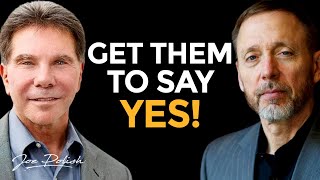
Robert Cialdini and Chris Voss discuss influence and negotiation. Cialdini introduces a seventh principle beyond his famous six: unity, or shared identity. Voss shares negotiation tactics like mirroring and asking for "no" instead of "yes."
Questions this video answers
1984.
$610,000 per share (as mentioned in the video).
Mel Robbins’ “5 seconds” rule (countdown) — referenced as a 3/2/1 or 5-second start cue.
Chapters
According to the new thing that you've done, you have added a seventh universal principle, which is so appropriate for a theme of connection, for the theme of this Genius Network meeting. What is that seventh principle and how does it apply to Genius Network members?
Okay, that's a good question. And it's a differentiator for the new edition, as opposed to the others, the other editions. I should just name the six principles and go on to the seventh. But the principles are reciprocation. People say yes to those they owe. So if we go first with benefits, advantages, information, they give that back to us in terms of benefits and advantages in return, liking. Nobody's surprised that we prefer to say yes to those we know and like. But there are two very simple things we can do to highlight and enhance the rapport that people feel with us. One is to point to genuine similarities. Another is to give genuine compliments. Third principle is social proof. It's a term that we coined back in 1984 in their first edition. Now people use the term all the time, and it means that people want to follow the lead of their peers. What those around them, like them, have been doing or are doing, reduces their uncertainty as to what they should do in that situation. If we can give them evidence like that, they will significantly more likely say yes to the request that accompanies that evidence. Fourth is authority. And you know, the people want to also want to reduce their uncertainty by following the lead of the experts in a situation. Again, if we can give them evidence that there are expert voices that are aligned with the proposal or the request that we are, we are making of them, they will more likely say yes. Next principle is commitment and consistency. People want to be consistent with what they have already said or done. If we can show them how what we have to offer is congruent with the commitments that they've already made, especially in public, especially in front of us, we significantly, once more, increase the probabilities that they will say yes to that proposal. Scarcity is the sixth principle. The idea that people want more of those things they can have less of. And if we can honestly show them that what we have is scarce, rare, dwindling in availability to them, gives them something unique that they can't get elsewhere. They pile in to the offers that we make under those circumstances. And now we come to the seventh principle. It's what I'm calling unity for a communicator. If, as a communicator, we can arrange for people to see us as sharing membership in a group, an important group, that they use to define themselves, that they use to identify who they are. All influence barriers come down to us. They just come down right, because inside those we groups, people trust us more, they cooperate with us more, they believe us more. And for the bottom line, they say yes to us significantly more often. They comply with our requests, proposals and recommendations significantly more often. And this is different from similarity inside the liking principle, where if we see that we have similar tastes or preferences or style orientations to other people, that causes us to like them more and that that's successful. This isn't similarity like that. This is similarity of membership in a category, a group that we use to define ourselves. Let me give you an example from a study that was done on a college campus. Researchers took a young woman, college age student, young woman, put her on a very heavily trafficked spot on campus and asked her to request donations for a legitimate charity from students who were passing by. And she got some results from that, she got some contributions, but she was able to more than double contributions by adding one more sentence.
Hey, I hope you're enjoying this video. And I want to let you know that I have a new book that's come out and if you'd like to get it absolutely free, there's a link below in the description. Or you can wait till the end of this video or you can Simply go to joe'sfreebook.com and you can get a copy there.
To the request it was. I'm a student here too. I'm of you, I'm one of you. And all the barriers came down and these college students who don't have a lot of money were 250% more likely to reach into their wallets or purses and make a contribution. Let me give you a personal example of how this works where you can identify an existing category in which you exist with somebody else, right? And simply raising that commonality to consciousness makes all the difference. A while ago I had a project that I needed to complete by the end of the next day. I had to submit the project. And as I was reading through the final draft of my report that was going to request that the project be approved and funded, I. I noticed there was a section in the report that wasn't really compelling. I didn't have the evidence I needed to make that case in a convincing way. But I knew I had a colleague, let's call him Tim, it's not his real name, who did have the data like that, because he had done an experiment the year before that provided that evidence and and so I sent him an email. I said, tim, I'm going to call you in a few minutes, but I want to put you on alert that I have this need for some data that you have in your archives. I have this problem. I have this report due tomorrow. I need it today. Could you go into your archives? I'm going to ask you if you can go in, take the data out, get it into a form that I can use, and send it across to me today. So I sent that and then waited a few minutes and I called him. Now, I have to tell you, Tim was renowned in my psychology department for being a sour, irascible guy, a difficult guy. This was a difficult guy. So when I called him, he answered the phone. He said, hello, Bob, I know why you're calling and the answer is no. You say you have deadlines, I have deadlines. You say you need to have this done by the end of the day. I have things that have to be done by the end of the day. I can't just respond to every time you need something because you have poor time management skills.
No.
The answer is no. Before I read the research on unity, here's what I would have said to Tim. Come on, Tim, I really need this. I have this thing. It needs the data that you have, and it also is due tomorrow. He had already said no to that. Instead, here's what I said. Come on, Tim. We've been members of the same psychology department now for 12 years. I had the information that afternoon because I reminded him of a connection that we had. I know that the title of this meeting is connection. This was a we connection. This was a connection that we used to define. Define who we were, identify ourselves.
Right?
And those things have massive power to move people in our direction. So let's. So I know we'll probably come back to this in, in some of your questions about how you actually do this to harness the power of, of unity. But I'll leave it at that at this point.
Well, I'm going to vary our program right now because in listening to you and watching you, you are doing so many things in a virtual world that are exceptional. Because one of the things, Robert, if you remember when you were here in 2018, I critique all of our speakers and we've re established that in this zoom or virtual world. So I want to point out a couple of things as a member that you should be noticing. Notice his eye contact. Now, if you want to look at me on the screen, I'm going to look at you at the screen. Robert, here's what I would look like. Look at me on the screen, too.
I'm looking.
Okay, we're not looking at the screen. We're looking at you. And Robert, you did that so beautifully. All your comments were to your audience, and the audience is always in the camera. Great idea. The other thing, we learned this at our last meeting, the hand gestures, the two most important ways virtually you can connect your eyes and your hands. And all of those gestures were just perfectly done. And the third thing that you do so well is you soften your voice and you slow it down. And she only asked one other question. These are the things that you can use to make even better presentations. So even though we're just at the beginning of this discussion, congratulations for doing those wonderful things. And now I'm going to put you on the spot with the next question.
Well, let me just respond to what you just said.
All right.
Because I took your Advice Back in 2018, Joel, you know what I said about you listen to authorities, you listen to experts, you listen to people who have the background and credentials that reduce your uncertainty about what step you should take. I listen, Joe. And let me just say that one last thing that you mentioned. Modulating your voice, changing the speed and even the volume. I'll tell you why that works. After you told me about it, I actually went and dove into the literature, in scientific literature on communication and voice change and so on. There's a reason that works. It's something called the orienting response. That is, our brains respond to change by orienting to the next thing that occurs after there's been a change in the stimulus of this stimuli of a situation. And you pay greatest attention to. To the thing that immediately follows a change.
Hey, I hope you're enjoying this video. And I want to let you know that I have a new book that's come out, and if you'd like to get it absolutely free, there's a link below in the description. Or you can wait till the end of this video, or you can Simply go to joe'sfreebook.com and you can get a copy there.
So here's a. Here's the lesson I learned from you, Joel. You know where I want to put my most important, important or resonating information? It's immediately after I change the volume or the pace of what I am saying.
Well, that is so wonderful, and I think it makes such a good point. Oh, that's not what you're talking about. Well, thank you for sharing that. That evidence was wonderful. Now Here's a little offbeat, but it's right into the new book that you've written. Next question. Since this meeting's theme is on connection, we have a number of members, quite a few that are single and they're looking for partners. Can you tell us the factor that online dating sites have found that makes a potential romantic partner most desirable both to men and women?
Right.
Since this is now new to the.
Book, how about that one, Robert?
And I'm going to answer that in two ways. One is, how do you obtain such a relationship? How do you get that relationship, a good one, with somebody that you haven't met before? And then there's another set of research I want to talk about. How do you maintain the strength and even bolster the strength of that relationship? So the first one, what is the one thing that online dating sites report is most likely to produce a connection between two individuals? People think it's physical attractiveness. That's what they report that it would be. But if you look into the data, that's not the thing that is most correlated with choice. The thing that's most correlated with choice of a partner.
Yes.
Let's go out on a date. Let's take this to the next communication stage. It's similarity. We're comfortable with people who are like us. And if you can establish not just like us, but of us and build in both similarity and that comes with, for, through liking and unity, a sense of deep shared identity. That's gold. Those are the things you should, in any initial interaction, search for, sample around, ask questions for, and when you encounter those commonalities, bring them to the surface. There was a lovely study done on negotiators, professional negotiators. They were bargaining. And because of all of the problems associated with people being in the same room these days, they were negotiating by email. Email is the most bloodless communication channel we've ever developed.
Right.
There's, there's, there's no humanity there. Researchers had these individuals bargain by email. And under those circumstances, because there was so such a lack of common humanity in the exchange, in 30% of the cases, they, they were stymied. They were, they walked away with no agreement, no mutual agreement. Both sides just lost nothing. They got nothing out of it. But if the researchers had another half of the negotiators send some information to one another before the negotiation began, information about themselves. What are your interests? What are your hobbies? Where did you grow up? Where did you go to school? What was your major? These kinds of things in school. Stymied. Negotiations went from 30% to 6%. Once those similarities are there, for example, people would learn in that information, oh, you're a runner, I'm a runner. You're an only child, I'm an only child. You have teenagers, I have teenagers. Those kinds. It was those connections, not the amount of humanizing information that was sent. It was the information that revealed parallels and commonalities that didn't exist before. So those are the kinds of things that when we are beginning a relationship and seeking arenas in which we can move forward with it, similarities is the platform from which you should start. Now, let's say you've got that relationship and it may even be a long standing one, let's say quite a few months, but there's a problem, there's some sort of difficulty that you're having with your partner and you just can't seem to get over the top of it. It just keeps coming up. There was a study done in Texas. They took couples that had this issue, some issue that was preventing them from being entirely compatible, and they nominated one of the people and said, we want you to be the persuader to try to convince your partner to come into line with you on this. And then the researchers said, you do that here in this conference room, we're going to leave. Well, they didn't really leave. They had video cameras going, they had tape recorders. They knew what was going on. And there were three kinds of persuaders who emerged from this. The worst in terms of effectiveness was the one that the researchers called the coercive, punishing persuader, who said, you know, you better do this for me or you'll be sorry and I'll have to do some things that you don't want, that you don't like. Not only was that a failure of moving the partner in the requested direction, it had a boomerang effect and it actually polarized the partner to be further away. So we certainly want to leave that out as a strategy. The second was what the researchers called the rational, logical approach, where the persuader said, you know, if you'll just take a closer look at this situation, the problem that we're having, you'll see that my position is the more reasonable one. Yeah, that didn't produce polarization. It produced laughter. The partners, oh, yeah, sure, no change at all. But there was a minority, a small minority of persuaders who used the only strategy that worked. They simply said, you know, we've been together now for whatever the amount of months were. I really wish you'd do this for me, that's where I got my cue for talking to my colleague Tim. You know Tim, we've been in the same psychology department. I wish you for 12 years, I wish you would do this. That was essentially the same language that came out of this, the study of personal relationships. Not business relationships, a personal relationship. They were the only ones who got change and notice something about it. They added no new facts to their position. They didn't clarify the logic of it, the reasonableness, the rationality, none of it. They just pointed to a unit that existed. They pointed to a category.
Couple.
We are a couple. This is what I was so impressed with in those people who did it. They didn't sit still for the psychological frame that the researchers gave them. Difference. We want you to talk about and focus on a different difference between you. They said to themselves, yeah, there's this difference. But what characterizes us is something much larger. We are a couple. They raise the couple status to consciousness. That's all they needed to do. How many times have you had long standing relationships with colleagues at work, with clients, with customers and there's a new issue to be negotiated, to be hammered out. We would be fools of the influence process if we didn't raise the existing relationship we relationship to consciousness before we began. Because remember what I said at the outset, inside that relationship, people trust us more, they want to cooperate with us more, they believe us more and they want to say yes to us more. Bring that to the surface. And now all of those things that are associated with the we come in into relief and dominate and drive the decision.
Let's talk about.
Influencers today versus influence. When you first wrote influence. And so we've got a whole category of people that want to be famous and there's a lot of pursuit of status and look at me and it's quite seductive because I like it when people think I'm cool. I like it when people admire me. And I also know there's an ego there that could get misinformed by thinking I'm so damn special. Because, you know, let's take for instance that video. We show this video, right? So someone made a movie about my life. That propaganda piece was not created by me. It was actually done by one of my clients and made a movie about me, which was. I was worried because I was like, oh, is this going to be sort of a fluff piece? And of course it's got social proof. That's a perfect example of positioning. And so I think of marketing as anything you put in front of Somebody is marketing. How do you position yourself? Right. So we know each other. Gave everyone a copy of my book show, a video. There's. There's. That sort of stuff. So there's this whole world of influence. Look at me, look at me, look at me. What's the dark side of it?
Of influencer.
Yeah, of being an influencer. Of going out and being famous. I mean, you've got a. Not a lot of fame and notoriety in your world. Not like, you know, movie star, sort of a celebrity where you can't, you know, walk into a restaurant without having everyone notice you, but you're quite a known human. Right. And you see what fame does to people, good ways and bad ways, how to leverage it and how it could be destructive. So I'd like to get your perspective on it.
Yeah.
The takeaway for me is to use as the metric how famous I am rather than why I am famous. So we're in your. Where if you're in competition with your rivals for more fame, right, Rather than for what you're providing to your audience, and then you're working just to get the profile up there.
Right.
Then it's all empty calories now that you're giving people.
Right.
It's just your glow. And that's not enough. Just the glow. There has to be some reason that you're glowing, you know, the real merits of the light you're providing to the world.
Yeah, no, that's a really good point because it is. It's like empty calories. If you just like. And you can game the system. And there's a lot of people that are gaming the system. A lot of it is purely vanity, but there's not a lot of substance. So to if. Who do you consider a true influencer? If you could name.
You know, I have just been at.
The Berkshire Hathaway meetings. Charlie Munger was no longer there. He's Warren Buffett's partner. And Warren Buffett is a true influencer of opinion and activity in the way that he presents himself as being truly concerned about the welfare of his stock, of his shareholders, and beyond that, the company as. As a whole. And I saw something there that almost made me weep. If you've ever been to these meetings, they. There were 47,000 people in an auditorium at. At in Omaha where the Berkshire Hathaway. By the way, a single share of Berkshire Hathaway stock is on this morning's New York Stock Exchange is worth $610,000 a share. A share. There's never been anything like it in Our markets. And one of the reasons that that's the case is not only are they amazing financial analysts.
They know that the.
Market is not made up of econometric models. It's made up of people. And when they send out communications, they have studied human psychology before they do that. They are experts at communication, experts at connection, experts at giving people cues of honest information. So, for example, Warren Buffett, on the first page of all of his annual shareholder letters, mentioned something that went wrong that year. Something that went wrong. And then he says, but you've heard that here. But. And then he mentions the strengths. Well, now you believe the strengths because you've. He's shown himself to be an honest person who's willing to mention the drawbacks. Right. So he does that sort of thing. But there's the thing that almost made me weep. His partner, Charlie Munger, was called the brainiac of the company. Warren says that he was the architect of Berkshire Hathaway. And at these meetings, they would sit on a stage, and there'd be this crowd of thousands upon thousands of people, and they would take questions, and Warren would always take the question and then take the first swing at it. And then he turned it over to Charlie. Charlie died last year at 99 years and 11 months. He missed by a month.
Right.
Just before. It was in December. So just before the Berkshire Hathaway meetings by a couple of months. A few months. And so Warren would take the. The questions, and then he would turn it over to Charlie. And Charlie would usually answer with a single, various cervic line. That was funny.
And.
And so. So everybody waited for that. And this time, I think it was the second question. Warren got it, and he finished answering. And there were a couple of executives on the stage with him in Starling instead of Charlie. So he. He finished and. And he turned and said, charlie.
Hey.
I hope you're enjoying this video. And I want to let you know that I have a new book that's come out, and if you'd like to get it absolutely free, there's a link below in the description. Or you can wait till the end of this video, or you can Simply go to joesfreebook.com and you can get a copy there.
The place fell silent. You could have heard a pin drop. Charlie was still there. 50 years later. Charlie was still in his memory and in his psycho, his psychological space. Charlie was there.
Yeah.
That's the. That's the kind of connections that you were talking about. Yeah.
You know, you got your wife over here, you got your granddaughter. You. You got a lot of people in your world that you care about deeply. What's the best way to influence love?
Give it. Give it.
Chart Warren Buffett.
He said the best. This is Charlie Munger. The best. The way to be the best spouse is to earn it. And then you get the best spouse in return. Earn it. That's how you. That's how you get love. You earn it.
That's great.
You show people the approval you definitely feel of them. You don't hide it. You don't try to worry about hierarchies and so on. You earn the. Earn their love.
Yeah, you know, I think that's where.
A lot of marketers and a lot of people that just try to look at the technique because, you know, you talk about the science. There is an art and a bit of science. Right. It's using both of them. And one becomes skilled in these methodologies by integrating them, not just doing them or parroting them, but just actually going out into the real world and doing it. I mean, if someone wants to. You take a guy who wants to figure out how to meet women, you can read every pickup book, every book in the world about what to say and how to say. But if you never go out there and just meet people and talk and interact and show up in a certain way, you may have a lot of knowledge, but it doesn't mean it's integrated into your world. So everyone here has been through two days of training here. What advice would you give them on, okay, here's how to make it part of you?
Well, it's in doing some things that you can't do a scientific experiment, but you can try different forms of connection, for example, different forms of showing approval or affection and so on, and see which one fits best with the person that you're dealing with. Because not everybody's the same. The audiences will change. But the concept of everybody wanting to have approval or relationships or closeness or trust and so on, you can provide different forms of it and see which ones resonate. So it's. It's kind of like being an experimenter trying different things out and then. And then selecting the one that has the greatest resonance with the people that you're. You're dealing with. Yeah.
And what about fear?
What if someone's scared? What if someone's worried about rejection? What if they're not quite there yet?
How do.
How do you deal with fear?
Yeah, so, I mean, how do I deal with fear? As somebody who's.
If you've been afraid to approach someone.
Or Say something or someone's utilizing the methods that you have taught so well.
On you, and you kind of like, oh, my God, you know, you're just, you know, you don't want to be offensive. You also don't want to be rejected. You want to get what you want. But you also, you know, there's this resistance that you may have. How, how do you, how do you. How's that play out?
So we actually talked about it in an earlier presentation. I don't mind somebody using my principles on me as long as they're doing it ethically, as long as they're honestly representing the state of affairs. And then the way to overcome your fear. I'm blanking on the woman's name, you probably know it, who wrote a book called 3, 2, 1. What's her name? Anyway, she says when you're afraid to interact with somebody, right. Or afraid. She was saying, I saw this, this guy that I really wanted to meet for a job that I had and so on, but he was elevated high. And she said, here's what I tell myself. Three, two, one. And then you do it.
Mel Robbins has a five second.
That's it. That's it.
Five seconds.
So me, four, four or five? Four, three, two, one. Mel Robbins. That's who it is.
I think three is even better. Yeah, just you do it.
I mean.
Yeah, you get.
That's right.
Otherwise that guy might be.
She's wasting two seconds on her completely.
But I mean, just give yourself a starting gun, essentially. Start, go.
Yep.
You know, somebody was asking me, I think it was Pratif. What are the, what are the things, the symbols that you can give. We were talking about how you get people to want to change.
Right.
So what are the things that are associated with change? One thing we talked about was at the beginning of a period of time and, well, what symbols could we use to put in an email or a message that stimulates the idea of change? There's actually been some research on this. The number one image that leads people to be put in the mind, the mindset of change. It's a sunrise. A sunrise. We can put that in our messaging. We can put that in our PowerPoint decks. We can put that in our, in our subject lines.
Right.
And number two, you know how in the movies at the start of a scene, there's a clapper clap. Start something. Start the scene. That's the number two. One that's associated with the motivations and the, and the intents to change. Clap start. That's like five, four, three, Two, one, go. Yeah.
I'll tell you something, this is an interesting thing. We talk about 25 years that like it was yesterday, because it feels like yesterday that we were at the Wigwam having dinner with Evan and Bobette and hanging out. But I had an experience a couple of summers ago. I had somebody come to one of my breakthrough blueprint events. And she was 30 years old, young, you know, bright young, you know, go getter marketer. And I, in that moment I realized, you know, she was born in 1990 is when she was born. And I thought, wow, we've got a whole new generation. I bet a lot of the people that are listening, that's even on the zoom here, are, you know, 30ish type of people who weren't around when the first, when Influence first came out. So I think it'd be good if you could maybe tell a little bit about the background of your work because it's been kind of defined your life's work since then.
Well, as your very gracious introduction suggested, I started out as a traditionally trained and traditionally practicing academic doing research on my college campus with college sophomores, pretty much as the students in laboratory settings and recognized there was something missing there. And I needed to get away from those academic constraints into the environment where the influence wars are being waged every day. After all, we're always either sending out influence appeals or receiving influence appeals of one sort or another every day. And there are certain people who know how to do this because their economic livelihoods depend on using the influence process properly and effectively. And it seemed to me that those professions, sales management, recruiting, fundraising, marketing, advertising and so on, those were the people who really knew what I should be focusing my, my, my thinking on. So I began to invit. I began to infiltrate their training programs with disguised identity, disguised intent, to learn what they had done that produced yes from people regularly. And I spent two and a half years in that undercover activity to learn something beyond the college campus where I had been studying this process.
I remember you saying how it was initially because you wanted to learn about these things, not to be a practitioner of them, but to protect yourself from them or to help people protect themselves from the illicit use of those principles so that people could recognize them.
Exactly. Recognize, resist, deflect, defend. But it turned out soon after the publication of Influence, that a lot of people were interested, besides that, in harnessing the process in ethical ways, in morally responsible ways, to move people into positive choices that they could make, that they were hesitant to make. They were sitting on the Fence. They just were dithering. They weren't thinking through what exactly the costs and benefits might be. The merits of one's case were simply not being presented to them in an optimal way. And so they wanted to know about optimization of the persuasion process for that reason as well.
Mm.
That's what I found when I first started studying it. Like I've always told you, from the moment I read your book, just the understanding was like having a pair of 3D glasses all of a sudden that you see the mechanisms that are at work and why things are turning out.
The way they are.
And.
This kind of underlying understanding of influence has really helped me in applying the marketing principles then that you can overlay on top of that, when you've got an understanding of why people are reacting, how our brains are responding to things. And one of the greatest phrases that you used in the description is that when these are presented, they trigger this click were pattern that. It's just. It's almost like an autopilot thing. When somebody is presented with this, with into the right circumstances, one of the elements of influence. It's almost like instinctual. We can't even. It's not a. They're not reasoning or thinking it. It's just happening automatically.
And you know the thing about the click that you were talking about, the thing that triggers their response, it can be a very small thing. I like the metaphor of a light switch. Suppose you were in charge of lighting a stadium for a night match or game of some sort or another, and you're down in the bowels of the stadium and there's a. There's a switch that you just flick and suddenly everything is illuminated. All of a sudden things are possible that weren't possible before. It didn't take a lot of strength or effort or time on your part. You just had to know how to locate that switch. And then it's just a little bit of effort and all of the power that's stored in the power system of that, of that arena flows because of that small thing you did. It goes against the rule of proportionality. There's a belief that in order to get big effects, we need to do big things to change people in substantial ways. It's just not true. There are big power sources inside people and our job is to locate the switch that flicks them on that then drives their behavior.
Now I'm going to ask you. So when Joe Polish and I did our first I Love Marketing conference, it's all about our eight profit activators. And he asked Me a question that was just funny because he asked me, do I know all the eight profit activators? Like without looking. And I'm going to ask you, just for fun of just maybe quickly name what the six elements of influence are so we can set the context for what we're talking about here.
Sure. Would you prefer that I just label them and how they work or give an example?
Let's just kind of name them first and then we'll pick kind of. And go through some of them because we've got so many stories. Yeah.
So the first is the rule of reciprocation. People want to say yes to those people who have given to them first, done a favor, a service provided, a gift. People want to give back. So you go into a room where you want to be more influential. Your first question should not be who can help me here? It should be whom can I help here? Whose circumstances can I elevate? Whose outcomes can I increase? The they will stand on the balls of their feet wanting to do the same for you. Next principle is liking. Nobody's surprised that we prefer to say yes to those we like. But there are two small things we can do that substantially enhance the feeling of rapport that people feel with us. And one is to point out genuine similarities and the other is to give genuine compliments or praise as warranted. Next principle is social proof. This is a term by the way that's used, we coined it back in when with the first edition influence. Social proof didn't exist before. I'm so glad because I was thinking of using people proof. Right. What's happened with social media now.
Yeah.
Think about social media. I'm so glad that I use the term social media social proof, where the, the fact that a lot of other people are doing something, especially people like us, is the proof that we should do it too. It's not fact based proofs, it's not scientific proof, it's not logical proof, it's social proof. So that's the other thing, simply letting people know of the others who are around them, like them, who are choosing or have been choosing our recommended step forward.
Robert, what year before you say what year did the first book come out?
The first book came out in 1984.
Okay, so this was well before anything with the Internet. I mean it was really okay because I was turned onto it in 1996, as you know, so already been out for 12 years. But that was just at the very beginning of the Internet. So I'm sorry for interrupting your train, but.
No, no, that's exactly the people say to me, you know, Bobby, your book is called the Bible of Digital Commerce. There wasn't digital commerce. How did you see, how, how did you foresee this? How did you look forward and see this 40 years, 35 years later?
Yeah.
And it was by looking back, Right. At what were the factors that have always driven behavior in our species. Look back at the evidence to be able to predict how we as a species will behave in the future.
Yeah.
Love it.
Okay, so social proof then. Carry on.
Next is authority. If we're uncertain about something, one way to reduce our uncertainty is to see what the experts are saying and what they are doing. And if we have expertise, we have to be sure that the people who we are trying to move in our direction are properly informed of that before we ever try to influence them. Next principle is the principle of scarcity. People want more of those things they can have less of. It's just the way we are.
Right.
So things that are rare, scarce, dwindling in availability, if we properly inform people of those characteristics, they get a little crazy.
I'll tell you what, that's the absolute truth. I've got some. I'm. I'm hypervigilant of what's going on in my world because I'm aware of all of these things. And so I always kind of observe the situations that I get into and I see how influences that work in my life too. And I'll share a couple of stories with you as we go on, but please continue. Yeah.
Then the next principle is commitment and consistency. People want to be consistent with what they have already said or done, especially in our present, especially publicly. They don't want to say one thing, do another, or misspeak by saying one thing and then contradicting it the next time. They want to be congruent with what they have already made a commitment to. So asking people to take very small steps in our direction causes them to be much more likely to want to continue to take steps, even outsize steps in our direction in the future. And then finally, there's a new principle.
I was going to ask you about. So now this is exciting that you got to the point. That's masterwork of the six. And then in revisiting now, you've discovered a final. A new one.
Yes. And I'm calling it unity.
I love that.
But it has to do really with membership in a particular group, a tribe, some in group that defines us. And if a communicator can arrange for us to see him or her as inside that group, one of us. All the influence barriers come down for that communicator. We say yes to those people. We cooperate with them. We believe them, we trust them. Those people who are of us become people who we want to favor and follow.
So let me ask you this, Chris. So what's the most valuable negotiation technique or strategy that you've ever learned and.
Why is it so valuable?
Because you know a lot of them.
You know one of the simplest ones. All right, let's go with simplest. Mirroring. Repeating the last three words of what someone just said.
The last three words?
Yeah, you know the last three words. Just repeat the. Nice job, Dean. I know what you're doing to me.
For it right away, without even how.
Dare you put me on me.
Nice.
No. If you can master that skill. Because a lot of times you just need some time to think. You know, everybody says, boy, you know, now that I'm thinking about it, I know what I wish I would have said. And now that I'm thinking about it, now I see what I missed. That mirror technique, the last three words buys you that time in the moment without the other side realizing that's what you're doing. Because they're going to go on, they're going to talk some more, they're going to add a lot in. One of the crazy things about the mirror technique is it's a preferred move of the people that possess both a high IQ and a high eq. Now, I cannot explain why that is the case. I can speculate on it. I think if they are high in both areas, they love the simplicity of it and lack of effort. And they're data loving people. So they love how little they have to do to get a bunch of information out of the other side. But that's probably the single most valuable thing that you could learn. Simply.
Very good. Very good. Well, so we've talked about this one before, but it's always so important because you've shifted. You've helped so many people just with this one.
So why is the word no more important than yes? And if you could give an example.
Wow. Wow. Yeah. Okay, so the key to negotiation, it's not about you. You know, we hear this all the time, but here you hear no. And you're like, oh my God. Oh my God. I hate no. I hate. I hate being told no. I think we get that conditioned every child on earth, regardless of the language. What's the first word they learn?
No.
Because they get told no and they get pointed at them and no don't do that. No, no, no. So we get it beat into a hardwired into us. So when we hear it, something horrible has just happened. But the flip side, the person who's saying it feels protected and safe and they calm down and they relax. They feel like they just protected themselves. The other thing too is you can say no when you're tired and then immediately contribute to the conversation and think things through really quickly. So it's completely different if it's about them. People love to say no. They feel. And they're gonna say a bunch more afterwards. You know, I got a couple no stories that I love, but I'll tell one of my favorites. Robert Herjavec. We're negotiating with Robert Herjavec's crew over how many tickets are gonna buy for one of our training events. I've already offered him one. His response for free. His response to the one for free was how many can we buy? Not how many more free ones can we get? I'm a huge Robert Herjavec fan. Based on my interaction with them, I find him to be a generous, decent human being. So we're going back and forth and the event is getting ready to sell out. And my son Brandon, who runs my company, he calls me on the phone late in the day. I'm in la. He says, you get Herjavec to commit how many tickets are gonna buy now or they're gonna be sold out by the time the sun rises in New York tomorrow. Because my son's on east coast time. We're getting ready to sell the event out. And Brandon says, and if he doesn't buy any, I'm giving away. I'm selling a ticket that we're supposed to be giving him for free. So I'm like, all right, I got to cut this deal now. It's five o' clock in la. When's the last time you tried to get a hard decision out of somebody? At 5 o'.
Clock?
At 5:03 and also an email. At 5:03 I sent a two line email to Robert Herjavec. Is it a ridiculous idea for you to commit to buying three tickets now? Second line. Are you against paying for them before the business day starts in New York tomorrow? Again, we're three hours behind New York. The time stamp on his email response is 504. One minute later. No, we'll commit to the three tickets right now. No, it's not a problem. We'll pay from right away. Send me a link. We'll pay for them. Right now, within the hour, I send them the link, we get the money at 523. Get people to say no. You'd be shocked at the responses you get.
Fantastic.
So there's, there's some questions that people have, but what I'm going to ask everyone, save your questions. When we open it up for Q and A, I might ask you to repost them because it's sometimes hard for me to track everything and be present here too. So Chris, how might an entrepreneur use these strategies and techniques that you teach to better understand and serve their clients?
Well, yeah, I mean, first of all, in simply understanding them better will help you serve them, you know. Alright, so let's say you're the favorite and let's say that they're elf. They're not half, they want you to dial into them. You know, you, you want to be open to a better deal, which is you tailoring your services to them so that it better serves them and it's more lucrative for you. Because first of all, I'm going to presume that everybody on this call believes the same thing that I do, that you over deliver. So first of all, if you're over delivering, you are bargaining whatever you were charging anyway, which means if you tailor your service, you're good of service so that it's a better delivery for them, you're worth even more. Yes, you want to get what you do. No, don't, don't be greedy, don't grab with both hands. But when you provide a service that's worth it, you are entitled to be paid. So the more that you listen to them and understand them, and I'm here to tell you there are ways that you can tailor whatever you're providing that would be easier for you to provide it, which means it would be more profitable for you and it would be better for them. So be willing to engage in conversations and be open to that. And then the other crazy thing is there might be something really counterintuitive.
That'Ll.
Make it profitable for you in unexpected ways. And one of my favorites is, you know our mutual friend Dan Sullivan, he's talking about his book deal. He's talking about listening to me. Never split the difference. And we pay.
Sorry, I pushed the wrong button.
We pay people what they ask. No, I don't pound people on price. So Dan turns around and gives every dime of the book proceeds to Dan and Tucker.
Ben.
Ben and Tucker. Sorry. And then Ben and Tucker. Tucker says, Dan got the last drop of my blood. When you're not greedy on the price term, what the other side gives you back might be worth 10 times what the dollars were worth. And those guys, I think those guys, I think Ben and Tucker would die for Dan.
Yeah.
Yeah.
And that's. See, the beauty of Dan, too, is. And I think it's one of the reasons. I mean, heck, me and Dan have done podcasts on this is we like reciprocal people. You know, we like people that are generous. We like people that are useful. And it's just so much easier to. That's what an ELF person is. People keep asking, what does ELF mean? ELF is easy, lucrative, and fun, and half is hard, annoying, lame, and frustrating. It's actually a term I got over 20 years ago from my friend Mark Schneider, who unfortunately passed away earlier this year, but I heard him say elf years ago. And I said, I'm going to develop that into something because I started thinking of all the different business methodologies you can use in terms of marketing and the stuff that me and Dean Jackson teach on. I love marketing. It's ELF marketing. It's automated, it's robotic. But then I started thinking, how do you. You can filter everything through an ELF filter. What are people, what are projects? What are things that you're doing? Are they easy, lucrative, and fun, or are they hard, annoying, lame, and frustrating? Sometimes people can be hard, annoying, lucrative, and frustrating. Not all money is created equal. So ELF is a really great filter. And I'm super happy, Chris, that you're referring to that, because I think it just offers some framing. So, yeah, I mean, this is. Once you. Once you become skilled at utilizing what Chris is teaching and what he's talking about here, you will find a lot of things in your life that were difficult become more elf. And that's the whole goal, is to bring ELF to people in all areas.
Of their entrepreneurial endeavors.
I'm going to jump in real quick because there's one more tangent I want to go on to on half and.
Out.
Before you fire your half clients. And we just shifted into this recently. We got a couple of deals that were proposed to us, and they were half deals before we walked away. And I had this conversation with my son Brandon and everybody else in our company. When it came up, I said, what's the counteroffer that would make this an ELF deal before we walk? Maybe they don't know that this is half. Maybe they don't understand it. And there's a pretty good chance of what, you know, the chances are that they're going to offer you a half deal because they don't know any better. They can't help themselves. There's a whole bunch of reasons. I said, let's counter with what would make this an elf relationship. At that point, there's no doubt in anybody's mind what we're looking for. And they had the option to take it or leave it, and we have the option to take it or leave it. And we turned a couple of deals around with that by simply countering. Instead of saying goodbye so long, we said, all right, here's what would work for us. Here's what would make us want to do business with you forever and make us want, 10 years from now, look back on the last 10 years and say, that was cool and we threw it out there. And the batting average is actually pretty high on that. You know, we don't counter offer their offer term by term. We construct what would be great for us and how we would love to do business with them before we walk. And you'd be surprised at how many people will embrace that because they just didn't know any better.
Do you ever have situations, Chris, where you look outside of the. The scope of what will be the immediate terms that are on the negotiation to see, to draw in other things that might tip things some way or be an influence? I was just thinking about how, you.
Know, that's a great question. I'm glad you brought that up. We're trying for that all the time. And, you know, how do you know what you don't know? What we'll do is we'll start to say, let's brainstorm this a little bit. Like, here's some ideas that people have gotten in the past. Start throwing out wacky stuff that people brought up, and that will kick their brain into gear. So, yeah, try to kick them into a collaborative brainstorming process to look for how to get outside the scope. But, I mean, I love that question because that's absolutely what everybody should be doing. We will just kind of rock and roll into this, and I'll give you some background. We'll get to Q and A, and then I'll throw something at you at the end. So, asked for the top 10 greatest negotiation responses. Number one. Is now bad time to talk. Now I'm going to dig somewhat into why you want to get people to say no versus saying yes. And there's a million reasons for that also. But I will tell you an initial indicator, in my view, because Dan talked before about if somebody says, hey, I want to talk to you about something that's mutually beneficial, you Know that's a in, that's a, an indicator of behavior of a half. Hard, annoying, lame and frustrating. Dan's come to recognize that, and it immediately turns them off. We're actually developing, within my company, we've developed this. We get specific profiles of what do halves say, what's an indicator of a half, and why you should want to walk away as soon as possible nicely. The last impression is lasting impression. But if you got a few minutes to talk is one of those things. So, I mean, how long is a few minutes? When somebody said to you, have you got a few minutes to talk? When was it ever actually less than 5, which is a definition of a few. Right. So it's now a bad time to talk. In place of that, why is that one of our top 10 lines? There's only, there's only one of two answers. And this is, this is why Howard asked me to do a fill in a blank. So you could take notes if you wanted to, to write it down. Because clearly if you write something down, you're more focused and you're more likely to retain it. It's an accelerator of learning. So there's only two answers you ever get. If it's now a bad time to talk, one of them is hesitation. And they say, why? No, no, it's never a bad time to talk. Go ahead. What do you got? When someone responds like that, you've got 1,000% of their focus, which is what you called for in the first place. Their focus, their attention. As Dan said, you got their attention. Now, keeping their attention is a secondary issue, but you've got their attention. Now what happens when you say, have you got a few minutes to talk? Well, they think, how long is a few minutes? What do you want to talk about? When's my next appointment? That's what goes through people's minds. When you say, have you got a few minutes to talk? What does that mean? You do not have their attention. You just blew the first seven seconds by put clouding their brain with those thoughts. So it was now a bad time to talk. They stop, they clear their head and they go, no, what do you got? Or they say, yeah, it is a bad time to talk, but I can Talk Tuesday at 1. Now you just got an appointment for their focus and their attention, which is what you were after in the first place. That's what we say. That's what we get over and over again. I remember seeing this come up in a thread on LinkedIn once and somebody on LinkedIn, you know the level of Discussion in there of people clinging to their own beliefs. Someone wrote, well, I don't want to say is now a bad time to talk? Because what do you do if they say yes? And my thought is, do you really want to talk to somebody who says yes to that? If they're willing to say yes, now is a bad time to talk. You want to keep talking, think about how stupid that is. So it's now bad time to talk. And if you that from this point forward, don't at least experiment with this, that loss is on you. I'm sorry, I'm blunt. All right, so extending. I never ask anybody if it's a good idea. We consistently ask over and over, is this a ridiculous idea? And this also will begin to get us some underpinnings of why no works. One of the reasons why no as an answer works is what we found from our own experiences. No matter how fatigued somebody is, somebody can say no and clear their mind. Every one of you listening to me right now, we all have the same problem. We suffer from decision fatigue. No matter who you are, you have capacity for X number of decisions in a given day. You start running out of gas at some point in time. It's between the decisions that you've made. The number of clicks, every click is a decision. Your circadian rhythm, what you've had to eat, what a good night's sleep you had the night before doesn't matter. You've all got so much gas in a tank. We see over and over and over again. And people on my staff are, especially my assistants are told, never ask Chris a how or what question after 1 o' clock in the afternoon. Because if you say, what do you want to do? What do you want me to do? How do you want me to handle this? After one, my reaction because I'm fatigued is going to be, I don't know, stop bothering me, go away, don't bother me again. Which there's a couple of. You do not want to trigger that sort of response from somebody. Because then my last interaction with you was you annoyed me. And the last impression is a lasting impression. So it also begins to put you on a slippery slope, if you're working for me, of a downward spiral where I don't think you're that smart because all you did was annoy me. Now, all they, they've all been taught, and I explicitly say this, never ask me a question ever after one o' clock in the afternoon where I can't say no, because if you say, do you want me to do this, I'll say, no, do this, this, this and this. And I will, in fact, ask, answer. The question that they want to ask was, how do you want me to do it? But something about saying no triggers my ability to think through steps. First time I ran across this Jack WELCH Book signing LA, I'm standing in line of 200 people. They're doing everything they can to minimize the amount of time that you spend with a book signer for a whole variety of reasons, not the least of which I'm at a book signing a couple years ago. There are 300 people in line. The people orchestrating the book signing walk up to me and they go, like, from the moment somebody walks up to you to the moment they move on, you've got 30 seconds. Otherwise, we're going to be here for six hours. We don't have that much time. We got to get everybody through this line. 30 seconds per person. We're going to ask them their name before they walk up to you. We'll write it on a piece of paper. They will hand you a book with their name. It's going to take you 30 seconds for you to look them in the eye. Sign to Bob. Nice seeing you. Good luck, Chris. And they're going to move on. 30 seconds. And doing the same thing with Jack Welch because they got to move everybody to the line. Plus, they don't want me pitching Jack Welch. They don't want me asking him over to the house. They don't want me asking him over to dinner because my wife makes a great meatloaf. All that's going to happen. They're going to want pictures. So I know I get seven seconds when I walk up to Jack Welch, I want to pitch him on coming to speak at the negotiation course I'm teaching at usc. I ain't got time to lay this out. And he doesn't have time to listen. And it's late in the day. I walk up to him and I say, is it a ridiculous idea for you to come and speak at the negotiation course I teach at usc? And he looked at me in the eye and he started to squint. And then he looked up into the universe and he got this hideous scowl on his face and he just froze. And my first thought was, has killed Jack Welch? He got so mad because he looks furious that he had a stroke and he died and he's getting ready to fall over. So when he initially doesn't die, I'm relieved. But now he looks furious. I mean, furious. I think he's going to start screaming scaredy scurry. Get this guy out of here. I don't know what he's going to do. He finally unfreezes. He looks at me and he says, this is my personal assistant's name. This is special Twitter account we have set up to communicate with her. I will call her and tell her who you are. I think we're going to be in Los Angeles in the fall. If we are, we'll come in and speak at your class. Reach out to my assistant. I'll let her know what's going on. Decision fatigue. He said no and he thought through all the next steps and he laid them out for me. Now is it a ridiculous idea and are you against the next two going back and forth with Robert Herjavec over him sending some people to one of our courses? I had lunch with Herjavec. Generous dude, sweetheart of a guy. Completely generous. He paid for lunch. It's my favorite kind of lunch. On top of that I was at a steak restaurant. So it was even better. He paid 90 minutes and he paid. Great guy. I look at him and I say, we got one of our in person sessions coming up in New York. Can I give you a ticket? He looks back at me and says, how many can we buy? One more indicator of a generous, decent human being. We're going back and forth on the tickets. My son who runs my company, he doesn't care that it's Robert Herjavec. He's mad because we're going to sell out and he wants to sell the ticket and he's hoping Herjavec doesn't take it so he can sell it. He's on the east coast, we're on the west coast in la. Herjavec's offices in la. I was living just up the street at the time. My son calls me at 4:30 in the afternoon, 7:30 in New York. He says, you get Herjvik on the phone and get a commitment for the tickets before the business day starts tomorrow or I'm selling his ticket and we're going to sell out because we're on the verge of selling out now and you're holding up the whole circus. And I can't wait to start of the business day tomorrow because the business day starts three hours later in la and by the time we get up in la, New York's going to lunch. We're going to be out of luck. So I get needed a decision from herjavec now at 5:03 in the afternoon I sent him a two line email. Is it a ridiculous idea for you to commit to three tickets for our course now? Second line. Are you against paying for them before the business day starts tomorrow? That's a 503 email. Again, decision fatigue. Five o' clock in the afternoon. When was the last time you tried to close somebody with a hard decision after 3 o' clock in the afternoon, let alone after 5? The email response from herjavec comes back at 5:04. No, we're willing to commit to three tickets right now. No, it's not a problem. My assistant will be within in touch with you within the hour and will pay for the tickets. Tickets are paid for at 5:23. I've got all the emails, timestamped, our favorite negotiation, one liners and why. All right, number four. Have you given up on what's the context? This is context driven. I see a lot of people trying to manipulate me who've learned this and they'll send me in an opening email. Have you given up on doing business with us? Well, now I have because you just tried to manipulate me with one of my tools. Now, I don't mind if you use my tools with me, but if you want to use them against me, I smell it really quickly. So any of you that want to try, have you given up on as an opening line? It's going to sound harsh. It's out of context. You deserve to have that door slammed in your face. On the other hand, it is the most effective restarter for people who are ghosting you.
Real quickie, I guess. I mean, I'm a writer. I'm a writer of fiction and nonfiction. And maybe the one thing that would stand out to somebody meeting me for the first time is that it took me like more than 30 years from the time I first quit a job to try to write until I actually had a book published. So I'm sort of the poster child for having no talent, but, you know, hammering and hammering away and finally getting good enough to crack something through. So there is life after 50. And that's, that's. I guess that's what I would say is sort of a nutshell version of my story.
Well, here's one thing too. You both are the.
You're the same age right now. At the time we're doing this, you're both 78 years old.
And Dan, I think before we started.
Recording, you said that is who's six months older.
Yeah, I think, Stephen, if I remember, you're November of 43, right?
Yeah, September, actually.
Yeah, it was September of 43. And I may have. I was born two weeks before Normandy, before the Normandy, Normandy invasion. So I was born right at the, you know, the last year of the Second World War. And that had a lot of influence. I mean, I would say that being born at that time has been very, very influen influential. And I don't know if you found that too, because all the adults that you were surrounded with for, you know, like the first. My teen, right through my teenage years had, you know, some of them had World War I experience, they had the Great Depression experience, they had Second World War experience. And it was a big deal, you know, I mean, you could tell that really big things had happened in the world and were happening right when you were born. Yeah.
Could you elaborate a little bit on that, Dan? Why you feel like that was a big influence on you?
Well, I tell people, you know, when I was born, Stalin was alive, Hitler was alive, you know, Mussolini was still. Still. I think Mussolini was dead when I was born, but he. I think he was alive when you were born. And then you had. Churchill was alive, Roosevelt was alive. And then you had all these great military people, the army, the Navy and everything. And I said. And there were just such momentous forces unleashed during that four or five year period which really remade the world. I mean, we're living in the world that's more or less still a consequence of what happened 75 years ago.
Yeah. Although today I'm sure the names you just rattled off, you know, 20 year old kids are going, who, Who? Churchill, Stalin, who?
Yeah, who do they. Yeah, what's their band? What's the name of their band?
Well, I mean, so look, both of you were in the military, so Stephen, you're a Marine and Dan was in the Army. I mean, how. I would love to hear how that influenced who you are today. I mean, you always talk about Stephen in your books how the. How Marines. And I've never been in the military, so I can only speak to my friends that are. And you know, just observation how Marines literally are trained or love to suffer. And so this is the thing that.
I sort of apply to, to being a writer, being an entrepreneur, being in any. In the arts. It's like the Marine Corps on the people. Marines are going to get pissed off at me when they hear this. But the Marine Corps is not like the Special Forces or the Navy SEALs in the sense that you have to pass some amazing. You have to swim, you know, five miles and you know, carry a thousand pound log or anything. Like that pretty much, if you can breathe, if you have a pulse, you know, you're in the Marine Corps. But what makes the Marines elite, in my opinion, is that Marines take tremendous pride in suffering more than any other branch of the service. Like, if there's like the shittiest assignment, you know, the worst possible enemy that you're up against. If any other outfit gets that assignment other than Marines, Marines are really pissed off. It's like, we want to go in there where it's the worst. And if you think about the episodes in Marine Corps history that the Marines take the most pride in, they're not like tremendous victories. They're places where the Marines just suffered the most. You know, Tarawa, Khe Sanh, things like that. That's what they take pride in. So I feel like as a writer or an artist or an entrepreneur, you got to have that attitude, too, because you're going to get the hell beat out of you over and over and over again. And you just have to somehow kind of, you know, embrace the suck, as they say, and not let it get to you.
How old were you when you went in the Marines?
I think I was 21 or something like that.
Yeah, well, you're an old guy. They like the 18 and 19 year olds. Yeah, they like the ones who think they're immortal.
Yes.
I was drafted right at the beginning of Vietnam. So I. It started in April of 65. That was the Gulf of Tonkin. The, you know, the. What was given as the reason for starting the most ugliest war in American history. And so I got my draft notice, and what they were doing is that they just went 25 years down. And, you know, I was 20, so 45. I was 65. I was 21. And if I had been drafted, I wouldn't have. I wouldn't have, you know, I wouldn't have enlisted. But when I got there, so it's only two years, and I got to basic training, and I just heard people talking about, boy, this is a waste of two years and everything else. And I said, I am totally not going to waste these next two years. I'm going to get. I'm going to squeeze every bit of value as I possibly can. And long story.
You were thinking like you're thinking now. Yeah.
And long story short, in about. So that was. I went in in June of 65, and then I. I ended up in South Korea. So I was in South Korea, and within about eight months, I was now the entertainment coordinator for half of South Korea for the uso. Shows and everything. It was just as the one. The other rule was never volunteer for anything. And I said, wow, if nobody volunteers for anything, I wonder what happens to the person who volunteers for everything. And doors just open up. Because most of the army people, you know, they're lifers, you know, the sergeants, the officers, and when that draftee comes in, he's really excited and really enthusiastic. They just knock themselves out to open doors for you and give you opportunities. And I was sorry when my, you know, my time came up and I put on five plays. You know, I was a theater major in college.
Let me interrupt you, Dan. Can you tell a story about Frank Sinatra doesn't move pianos? Because.
Yeah, well, a million times quoting you. Yeah, Frankson. You know, the, the, you know, during wartime, the USO brings famous people. You know, they bring Bob Hope and, you know, they bring all sorts of people. Korea was a backwater. So we didn't really get the. We didn't really get the, you know, the main. We got mostly the never was and the has beens, but they were better than you were, so they could entertain you. And. But I had a guy who worked with me in the entertainment center, and he had worked with Frank Sinatra. He had been on crew with Frank Sinatra. And he said to me one day, he said, he says, the first thing you notice about Frank Sinatra, Frank Sinatra does not move pianos. He's got a team that comes ahead of him. He's got a team that does everything. And he says, you have to understand that's why people want to get to the top, so they can just do what they do. They don't have to do all the. They don't have to do all the crap. It's like Major League Baseball. The biggest reason why a lot of people want to get to Major League Baseball is they don't have to do their own laundry anymore.
Yeah. So. But I mean, out of that came your idea of unique ability. Right. That you've really taken and run with it for years and years. And it's been. What's so helpful to me when I heard, you know, Joe's interview with you years ago, and you were talking about unique ability, which I'll give you the super short version of it, is that as an entrepreneur, your job really is to find out the one thing that you do well and then delegate everything else. You know, and when I was, I wrote a book about the Israeli Arab War of 1967, the Six Day War, and if you remember, the great Israeli General Moshe Dayan was kind of the genius of that era. And one of his axioms was, I never want to do anything that somebody else can do. If there's anybody else in the organization below me, some colonel, some general, and they can do it, let them do it. I want to do only what I know how to do, which is at the super top, top, top of the. The of the food chain.
Can I ask you a question about that? I find I'm 78, and every quarter, I find something that I've been doing for 15 years. And I said, I don't know why I'm doing this. It's got to be some. There's got to be somebody who can do this better. So it's like peeling an onion. You know, you think you're down to the core, but there's another. There's another layer below it. So I. Yeah. You know, and I don't know if you got the book, My Plan for living to 156.
No, I didn't.
Oh, I got to send that to you. Yeah. And I just. In May, I just hit halfway. I just hit the halfway mark. So I said, okay, so my life is two stages. First 78 years, I just completed 78 years, and that's R&D. Next 78 years, now I get real serious, you know, but it's all about unique ability. And, like, when I write my little books, I have nine other team members who are part of the process of producing the books.
Oh, really?
Yeah. I don't write them. I create outlines and I'm interviewed by someone, but I'm a copywriter, and we can talk about that. Stephen, the one thing that advertising teaches you, that no other form of writing will teach you, that you write to 6 inches, and you write to 30 seconds, and you write to, you know, you write to a minute. And so when I do the book, I know exactly how many pages is going to be in it. I know exactly how many chapters. I know there's going to be two pages in cartoons, and every one of them. So I know right off the bat. And so I can outline each of the four pages, but I can talk for a half hour. But the writer, when they get the transcript, they got to put that into four pages.
Okay. I hope you found that video awesome and useful. So if you want to get a free copy of my book, I want you to click here. And if you want to watch some more videos that will be useful and awesome, click here.
Go ahead. They're over here.
Do it now.
Come on.
Thank you.
Watch them.
More from Joe

This FBI Trick Can Command Respect Without Saying a Word ft. JEFFERSON FISHER & CHRIS VOSS

How To Stand Out, Be Different, and Create Raving Fans, Customers, and Employees ft. Jesse Cole



90% Of Businesses Fail In Their First Year, Here's Why! ft. Dr. Benjamin Hard & Dr. Robert Cialdini

The 1 Piece of Business Advice I Got From Elon Musk That Changed Everything Ft. Kamal Ravikant

The 6 Traits You CAN'T Teach in Entrepreneurship ft. Richard Branson & Gino Wickman

The Leg Method: How to Make Your Book into a Million-Dollar Asset ft. Anna David


7 Millionaire Mindset Hacks for Daily Success and Wealth ft. Brian Tracy & Dan Sullivan
