Broadcasting & Communications Legend Hugh Downs Presentation
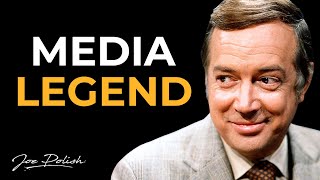
Joe Polish introduces broadcasting legend Hugh Downs at a marketing conference. Downs holds the record for most hours on commercial television and has won multiple Emmy Awards. He shares insights on effective communication and business strategy.
Chapters
All right, our next presenter is one of the world's greatest communicators on the planet. Since we're at a marketing conference, and marketing is really about what you say and who you say it to, the message and the market, what I thought is there's probably not another individual alive that knows more about effective, compelling, powerful communication than Mr. Hugh Downs. Let me read just a portion of his very long bio, and I had to really determine what I could actually mention here because he's done so much. So. Hugh Downs, he's one of the most familiar American television figures in the history of the medium. He was an anchor for ABC's 2020 from 1978 to 1999. He's enjoyed a distinguished career in radio and television as a reporter, newscaster, interviewer, narrator, and host. In 1985, he was certified by the Guinness Book of World Records as holding the record for the greatest number of hours commercial television. His record of over 10,000 hours still holds. Can you imagine that? 10,000 hours? Do you know how many hundreds of billions of people have watched Hugh Downs among a number of Emmy Awards? Mr. Downs has received one from his work as the host of the PBS program Over Easy, a Daytime Emmy award for Live from Lincoln center, which he hosted for over a decade, and a 1989 in depth interview with Patty Duke about her struggles with manic depression. He's the author of 10 books. I won't list them all. You can get them on Amazon if you'd like. His books are about an enormous range of interests and experiences. His most recent book is titled A Letter to a Great Grandson, Inspired by his grandson's child, with whom he is privileged to babysit this fall. His grandson had a second child, a little girl this time. When Arizona State University upgraded their department of communications to a school, they named it the Hugh Downs School of Human Communication. He and his wife Ruth, who's in the back, make their home in Paradise Valley, Arizona. They have two children, two grandchildren, and three great grandchildren. How many of you have watched my genius network interview with Mr. Hugh Downs? Okay, what did you think? Awesome. Now, I was so totally honored. My good friend Brian Kurtz at boardroom made an introduction to Hugh Downs, and that's how I was able to actually meet him, spend a little bit of time with him. I've had lunch with him after we had the interview, and the guy is awesome. And what I really want you to take away from this is not only his effective communication skills and some of the suggestions and stories he'll share with you, but he's 88 years old right now and he's awesome and he's doing so much incredible stuff. And when I first went on ABC's 2020 in 1999 with Barbara Walters and the investigative reporter at the time, Arnold Diaz, we did the anti bait and switch story and they actually put the EthicalServices.com site on ABC's 20 20, which led to another show from Dateline. And literally just tens of thousands of consumers actually visited the site and that's what actually launched ethical services. So Hugh's going to speak about business and things that will really help all of you. So I'd like to just give an Amazing welcome for Mr. Hugh Down.
Yeah. How you doing? Thank you so much. I what I want to do in this time and I'll try to keep it short so we can get going with some questions and answers too. I like the two way communication better than I do just expounding. What I want to do is look at the process of selling from a personal viewpoint and share some stuff with you that I learned along the way. You know, as a salesman in a one to one sales effort, you know, I was probably one of the worst on record. You know, my first attempt may have been criminal, literally. And maybe I wasn't a criminal because I didn't know the illegal aspect of what I was doing, but the merchandise I was trying to sell was stolen. This actually happened, it was in the summer after my sophomore year in high school. I was 15 at the time. And I tried to find a way of getting a little money. This was in the middle of the Great Depression. And you know, the word great is apt for that depression because we have bad times now with our economy and you know, get over 9% unemployment and everything. That's not good. But after the banks closed in 1932, there was 25% unemployment in America. And that went on for years. So that depression was great. Anyway, I was approached by a man who had a calendar bank for sale. It was a thing about the size of a fat paperback book. It was upright, had a slot in the top. You put a dime in there and then worked a lever and put the dime down into the body of the bank and, and advanced the date by one number that was called a calendar bank. And you know, this was a monster exercise in futility because the people that I was trying to sell this to had other uses for any dime they had. They might want to buy food with it or something. And they weren't in tune with the idea of saving So I struck out completely. And this strange man's wife was with him in the enterprise. She always wore dark glasses and was frequently bruised about the head and arms. He was in the abuser. And in addition to this, it turned out the calendar banks that he was supplying me with were stolen by him. And he was about one step ahead of the law. So part of my summer was spent peddling stolen banks to people who had no desire to own or use them. And I began to feel that selling was something for which I was not suited. Well, this guy and his bruised wife moved on to Dayton where I heard later that they had collared him. And I was not questioned about this. So my crim start in the selling business was glossed over. I later got a summer job winding armatures for automobile generators and alternators. And I managed to master this art. Since I didn't involve, I wasn't involved in selling anything. And it was not a get rich quick scheme. They paid me $3.50 a week. You know those numbers. Even with a different dollar value then that was, that was not very great. I did not at that time realize or have any inkling that I would soon start several decades of selling things on radio and television in the days when broadcast commercials were live. Nor did I have any inkling that I would be hugely successful at it. Somehow that worked for me where door to door attempts failed me completely. And it wasn't just a depression. You know, I can't blame that for, for the whole thing. I just was not talented for that kind of selling. I got into broadcasting in a very strange way. My father. I was living at home and I was, when I graduated from high school, I was 17. And he rather pointedly said I ought to try to find work to help with family finances. And I went out pounding the streets. And again, it was futile. In those days if you asked for a job, people would laugh heartily before they slammed the door in your face because there just weren't jobs. And then one day on a whim, I had come back from shopping for some milk we could get by the gallon at some kind of a discount. And I walked past the bank building in Lima, Ohio, on the top floors of which were the local radio station with call letters wlok. And it just struck me, I'd like to know what would be involved in trying to become a radio announcer because that seemed like a big glamorous thing to do do. And I went up there and I remember a red haired receptionist in the lobby who I asked what it Took to be a radio announcer, setting my milk jug down. And she said, we have auditions on Tuesday. Well, it wasn't Tuesday. So I picked up my milk jug and I would have left. And that would have been the end of it, really. I wouldn't have gone back. But the program director was standing in an archway nearby and overheard our conversation. And so he said to me, I could listen to you. Now, what I didn't know was that the station's sole announcer was leaving and budget constraints meant they didn't have the money to hire a professional. So he thought maybe he would comb the local scene, see if there was anybody who would be suitable. So he took me into a studio and there was a gooseneck mic hanging over there and gave me a piece of paper, a copy for an ad for a paint store. And he said, when that red light goes on over the door, you read this into this microphone. So I'm. He disappeared. And after a while the red light came on and I read this paint store commercial and looked up and the light went out. And after a bit he came back from his office where he had watched it, and he said that was very bad. But he actually said, and I swear these were his words, he said, but great oaks from little acorns grow. And he offered me a position at the station seven days a week for $12.50 a week. And I went home and told my dad about this. And my dad said, well, I want you to continue looking for a job for another week, and if you can't get a job, go with the radio station. So as far as my dad was concerned, I never got a job. I just stayed with broadcasting. And I remember one of the things that Howard Donahoe, who was that program manager, said to me about reading the paint story thing. He said, don't think about how am I doing, think about what am I doing. And this is a big difference because he said, you've got to take the copy and make those people listening think that their life will be blighted if they don't take advantage of these special offers that's in the commercial. And if you concentrate on that, you forget about your voice. And your voice does a lot better than if you're trying to do those pear shaped tones that some announcers try to do. It was a great lesson for me right from the beginning to do it that way. Well, nowadays we know that no commercials are live. They went from film to tape to digital, and they're very safely packaged now, slickly edited and usually pretty dull back in the live days, wonderful things happened that you will never see again. I've got to share a couple of them with you. In the course of network being involved with commercials on the Today show in the early years, I did a commercial for Alpo, a dog food. It's very good dog food. I didn't taste it, but I took their word for it, and it was a live commercial. They had a live dog, and in this case, there's a big sheep dog named Patrick. And I put the dog food dish down, and I put the Alpo in it, and I called Patrick over, and we're live on the. On the air. And Patrick came over and sniffed it and walked away. I tried to cover by saying, you know, somebody must have fed a lot of Alpo to Patrick that he would walk away from another. All day we got phone calls from people saying, don't shoot the dog. They thought we were going to shoot the dog. So I wanted to do. The next day, I wanted to get Patrick back and put him on a stool beside me and interview him about why he didn't eat the Alpo. And, you know, I would ask him a question, and he would just look at me through that hair, and I'd say, I know it's embarrassing, and I hate to put you on the spot, but could you tell us why. Why didn't you eat the. And he wouldn't say anything. I dismiss him. But it didn't work because Patrick had another gig and Handler didn't. Wasn't able to bring him. So I didn't get to do that. Anyway. The other one was even more. More spectacular. This is something that never made the. Never made the blooper books or. Or tapes or whatever, but this actually happened. And I witnessed it, and I just fell down on the floor laughing because this was on the Today show. Also, Pacific Mills made a special contoured sheet that they were selling in this commercial. And the idea was that a contoured sheet allowed the bed making to be much easier. And there was a woman actress and a little girl actress, mother and daughter, presumably. And you see them making the bed together. And the slogan for this product, which was handled by a narrator that Pacific Mills had specifically put in, the slogan was, makes bed making easy as child's play. And I swear this guy said, makes child making easy as bed play bong. I just thought the truth of that is profound. You know, it's really weird. I think that my success, though, in this kind of selling is rooted in the fact that really quite early, I realized that my first allegiance was to that person tuned in after that to the product or the company or the agency or the network or the station or whatever. And by doing that, because I figured that was the only way to go. And I once voiced that to a young Madison Avenue guy with one of the ad agencies who had come over to a new product, was going to go on one of the shows I was doing. He was shocked. He said, well, he said, you don't know where your bread is buttered. And I thought I said to him, my bread would not be buttered at all if that person tuned in doesn't believe that I believe what I'm saying. And this got me a couple of times. I was in trouble actually in breach of contract twice because the old Tonight show had a product on a floor covering. I didn't like it too well. Anyway, I kept blue penciling their copy and they finally complained about that. And I said to the agency guy, why don't you get somebody else to do this commercial? Because maybe somebody else wants to do this, but I don't want to do this the way it is. He said, oh no, we were guaranteed that you would be available to do our commercial on this program. And I said, well, I'm not going to do it. And this reached Newsweek magazine which put out a story about how I had refused to do this and I was in breach of contract. And I thought, well, that may be the end of my selling career and my career, but I'm not going to do that on a different basis. The exact opposite happened because of that other people seemed knowing that I wouldn't do a commercial that I thought was not a decent dollar value. I was more in demand than I had been before. And that was the beginning of a lesson I think that I've seen now in action. Well, for a number of reasons. But the most important one really is that shortly after I met Joe Polish, I came to realize that his success is in large measure because I think his first allegiance is to the people he deals with and that what he has to offer is of use to his public. He's concerned with their well being. And so what he's selling really is service. And that's what this whole new idea is about. I think he is of service to people by helping them avoid scams, by steering them to avenues of satisfaction. And this is very gratifying when you consider that the opposite of this, the, you know, the hit and run, bottom line profit snake oil type of selling that we still see in some places in Mass media and maybe, alas, it'll never die. P.T. barnum may have been right that there's a sucker born every minute. But the better kind of success may be catching on today, however slowly service to others can continue with exponential growth on the finite surface of a sphere. Years ago the Club of Rome proved, and it's a pretty simple self evident thing, you can't have exponential growth on the finite surface of a sphere. In the matter of plundering the Earth's crust from resources and that kind of thing, that is not sustainable. And I think not only physical resources, but exploitation of our fellow humans will have to be curbed if we are to survive. And it seems like in a movement like this that we're into that pretty well of not exploiting humans, but being of service to them. And that could be profitable. And it can be sustainable. And I'm rejoiced to see that moving in the direction that it is. Another element worth mentioning in my broadcast career, I think both in the commercial years and later in news and news features, I never competed with anyone. This is an odd thing to say. I would compete with my own past record or, you know, strive for goals of improvement, but by cooperating with others instead of competing against them. I found that people in my industry were helpful and they reciprocated in the matter of non competitive behavior. Now there's an element of trust in this approach and I'll give you one example that I ran across. It may be rare. Somebody once asked, you know, you can never say what a typical cab driver is in New York, for example, because there is no typical cab driver. But I ran into one that really interested me because in that year I worked in a studio at the corner of 67th and Columbus and had to go to get. I was living in Connecticut. To get the train at Grand Central was a cab ride that showed 85 cents. On the media. It's hard to believe. Turn back the clock. It was 85 cents. So I'd give a dollar, which left something of it, reasonably decent tip. And on this day I was crowded, worried about whether I was going to make the train. And it was important that I make that train. And I pull up and realize I don't have a dollar in my pocket. I had a 50, was the smallest I had. And I said to this cab driver, I've got a problem. I said, I've got to make this train. I said, if I stop and go in to get change and come out and pay you, I'll probably miss it. He Said, well, don't worry. He said, you can send it to me. And he gave me a card that had his name on it and I was very grateful to him for that. I not only sent him the fare, but a lot more tip than I would have otherwise. And we began to correspond. And I said, aren't you afraid that people would do you out of it? They just walk away and never pay. He said, oh, there are such people. He said, but for everyone like that, there's somebody like you. And he said, I come out ahead by trusting people. I said, what a wonderful idea that that was. So anyway, I want to go to something now that I've been asked so often. Oh, I'm in good shape. I'm. I've been asked so often what is my favorite broadcast segment or commercial or interview or situation, whatever it is. And I usually came up with something different. I finally put together what I call my list of 10 mosts and I want to share them with you because it. I have my most illuminating interview, the worst interview, the most interesting to me interview, the most humorous, the most embarrassing, the most satisfying, the most historically important, the most musically significant, the most agonizing physically and the most strenuous. And I'll just run them down for you. The most illuminating interview that's number one was this was about. I can't tell you the exact year, but I was doing the Today show and it was coming from the ground floor in the old Florida showcase in Radio City. King Hassan of Morocco, the father of the present king, was in town and they snagged him for an interview on the Today show. And the king was pretty cool, I like him. But his retinue included those terrible martinet type people that are insufferable and they were insulted. They were going to tell us the king would be insulted. They arrived at 8:22 and they wanted to put him on right away. And I explained that at 8:25 about half of the stations, close to 100 stations, would dump out and do their own local things. And I said, the king really deserves better than that. And if he waits till 8:36 after the 8:30 news, he will have the full time for the interview. Well, we finally won. But during that time the king detached himself from his retinue of bodyguards and moved. It was early in the morning. Bear in mind, seven something. No, it was eight when he arrived. He went across Fifth Avenue to Saks Fifth Avenue and just strolled around, looked in the windows and later that day told his people if they would get Saks to open up again at 9pm he wanted to go there and shop, and he did. And he bought about $50,000 worth of stuff. And I always felt I should have had 10% of that. I'm the one that delayed him. But in that interview, he told me something I didn't believe at the time and later saw it. It was proved for me that in Morocco there was no strife between Muslims and Jews. And this was. And I didn't. I thought, well, it's a bit of a stretch. Years later, Ruth and I were in Morocco with a guide in the city of Fez, and he showed us a synagogue and a mosque across the street from each other. And he said, you know, when one of these buildings breaks down momentarily, the other side lets them use their building until they get it fixed. And this works back and forth. I said, my God, the king is right. And wouldn't it be worthwhile for the Middle east to study this and find out how that comes about? And that impressed me with the idea that the king managed that and managed to sustain it. So now the worst interview. The chess player, Bobby Fischer was a great chess player, obviously very intelligent man, but he was not exactly Mr. Charm. In this live interview. I had about seven and a half minutes on the Today show. It was the worst interview I ever had because he was sort of hostile and suspicious and detached. And I was forced back onto bad interview questions like, how does it feel to be representing your country? He was going to go to Iceland to play Boris Spassky, I think. And he'd say, well, what do you mean, how does it feel? And at one point I said, who taught you to play chess? He said, my sister. Thud. You know, And I said, why? Imagine, she was a pretty good chess player. He said, no, she wasn't very good. The whole interview was like that. And I was. I just thought that was so, so miserable. The most interesting interview. I was talking to somebody backstage here a moment ago about the most interesting one for me was the advanced theoretical physicist Stephen Hawking, who has Lou Gehrig's disease, you know, and Ruth and I spent four evenings in his home in Cambridge, and I did a. And I'm sure I would never have been able to do something and get licks in on advanced theoretical physics on network commercial primetime television, except for his dramatic physical condition. And. And it was a wonderful thing to do because he somehow knew of my interest in the subject. And I. And this is. I've been interested since I was 15 in that. In that subject. And he was very I got a glimpse into that cauldron of a mind and came to understand why. Why many scientists think he's smarter than Einstein. You know, he really was a leading mind and still is, oddly, even though his body is a wreck, he doesn't. I gotta tell you one thing about him. He. He. At one time he was wheelchair bound, but he still could. Had enough intercostal muscle, voluntary, to expel air through his larynx and talk. Now, he can't do that. You know, from here up, he's normal. And this is characteristics of the disease. I think he can blink, he can smile, he can swallow. But from here down, he has only the use of two fingers on one hand and a wrist. That's the prison that he's in now. But he works a wheelchair with that, and he can work a computer that comes out and says things for him, you know. But back before, when he could still speak, a friend of mine, the late Dr. Robert Jastrow, who was a very good mathematician and physicist, was visiting Stephen. And Stephen wheeled his way out of the room momentarily, and Jastrow was alone and noticed the manuscript on the coffee table. And he saw that it was a thing by Stephen that was going to go to one of the technical journals. And after reading a little of it, Jastrow realized he was in very deep water and it was so arcane. And when Stephen came back, Jastrow said to him, how many people in the world could understand this? And Hawking thought a minute and said, four. How would you like to write something only four people would understand what that meant a lot. Number four, the most humorous interview I had with Mel Brooks. Mel Brooks is something else. You know, he's made many movies and never any really good movie, but every movie had things in it. You know, he never got an Oscar or anything. He must have felt like Bob Hope did when Bob Hope said. Because Bob Hope never got one. And Bob Hope once referred to it, and he said, and now at the Oscar ceremonies, which in my house is called the Passover. And Brooks never, never got that kind of an award, but he certainly had some really funny stuff in his movies. And the one movie that was opening, I was interviewing him and I had every question just would put me on the floor with laughter, because at one point I had to do some serious biographical stuff about him. And I said, I understand that you were only four when you lost your father. And he said, oh, we didn't lose him. He died. He said, it wasn't like we left him at the corner of his 67th and Madison. Didn't know where to pick him up or like that. And that whole interview was like that. But it was a lot of fun. The most embarrassing. And this is odd because when you're doing a secular thing of any kind and something goes wrong, you can joke your way out of it, but if it's religious, you. You kind of don't like to do that, you know. It was a charming story, really, on the. On the Today show. I'll tell you what the story was that I was going to report on a group of Kalmuk Buddhists on the banks of the Don river in the days of Stalin. And they were kind of rough days for them. They fled. Finally they realized they had to get away from persecution. They had to. And they went west, and they went to Germany about the time Hitler was rising, which wasn't a good place to flee to. And they managed to flee from there on west and wound up in New Jersey, and years ago, New Jersey, well, they built a temple there, and they were peaceably there for a long time, but now things were safe again on the banks of the Don, their original place. So they had raised money to mark the blocks on the temple and put them all back and then put it back together. It was a charming story. So I knew that much about it. But it was a branch of Buddhism called Kalmuk. And the morning arrived, and a Buddhist priest was there with an interpreter. And I started the interview and I asked. I did a very short layup, started the interview, and I asked. I don't remember the question I asked, but the priest smiled at me and nodded, and I looked at the interpreter, and he smiled and nodded. And I thought, well, I wasn't too articulate in my question. So I rephrased the question, got the same thing, smiles and nods and nothing. So then I went in, I told the audience everything I knew about Kalmuk Buddhism, which took about eight seconds. And then I asked another question and got smiles and nods and wound up thanking them and dismissing them and going to a commercial. And I said, what was that all about? Because things were flashing through my head like, is this April 1st, and they've set me up for some kind of a thing? And what had happened was the priest was there ready to talk about it, but the interpreter had been taken ill in the night and didn't want to disappoint us, so he sent his brother, who didn't speak both languages. That was one of the wildest things I ever was involved in. I couldn't really joke my way out of it either. The most satisfying, really, was this piece had no socially redeeming value at all, but it meant a lot to me. I had always been interested in the South Pole, and Admiral Byrd, when I was a kid, had set up Little America. And I always wanted to go there and once thought I had a chance because a syndicated group was doing a thing on Admiral Byrd, and I volunteered to be the narrator and the. And the host for it, and then found they didn't have any budget to go there. They had to do archive footage and do his home on Beacon Hill in Boston. And it was. But I was trapped. I had to do it and I did it. But years later, I was doing 2020 and I read when Amundsen discovered the South Pole, there were. He did it with a horizon sextant and got it boxed in within about three miles, which is pretty good for that. By the International Geophysical year, which is 1957, 58, they had gotten that down to where I saw a photograph of a ring of oil drums 75ft in diameter. And they said, we know 90 south is where the pole comes out through within this circle. Well, now, it had just in 1982, they had done some early work with a new polar satellite which could determine where the Earth's axis came out through that ice within 20 inches. Now, that is for a globe 8,000 miles in diameter. That's precision. And I knew I was going to do a thing on Antarctica. So I called John Slaughter, who had attended some of my science meetings, and he was then head of the National Science Foundation. And I said, when do you plan. I heard you plan to move the South Pole to a corrected position. And he said, yeah. I said, when are you going to do that? He said, well, early December. I said, I'm going to be down there in early December. Could I be the guy that moves it? And I was only half serious. Three weeks later, Slaughter called me back and said, we talked to the scientists down there and they think that's a good idea. So I got to go down there. And on December 10, 1982, at what would have been 6:10pm New York time at that time, because all the things converge at the polls, so you can pick any time you want, you know, but at that time, I mean, it's on tape that I picked up the pole from the incorrected position, went to the surveyor's pen in the snow, and I've got the paperwork at home that tells about how they arrived at this and put this. And incidentally, The South Pole is not that barber pole you see ringed with the flags of the treaty nations. You know, that's quite a ways from the real pole. The real pole is a 15 foot bamboo pole with a tattered green flag on top. That's what it was. So I carried it a fair distance and put it in where it belongs. And I was the one who corrected the position of the South Pole. This allowed me to do something had never been done before. I clocked a radius up The Greenwich Meridian, 7 1/2ft exactly. That allowed me to walk around the world in 24 steps, each one in a different time zone. And that somehow meant a lot to me. But unfortunately, when I got back into this hemisphere, people blamed me with the lousy weather we were having because I moved the pole. You know, that's what they seem to think the most historically important. Adlai Stevenson was the ambassador to the United nations for the US this was during the Kennedy administration. And Ruth and I had been invited to the White House for, I think it was honoring Robert Frost or something of that kind. And we weren't sitting together on the dais. She was next to someone of cabinet level. And I don't remember now who that was. But he said to her while they were eating, he said, you ought tell your husband he ought to have Adlai Stevenson on his program very soon. And she said, why? And he said, I'm not at liberty to tell you. That's where it stood. So I, I naturally called Stevenson's office the next morning and said, could, could he come on the program this week? And, and they, they agreed. And we set a thing up for Friday. An hour later his office called back and said, could he come on tomorrow? Because now he knew why. And when he got there, he laid it out. He told me what it was. There was a cabal, a fragment of the Kennedy administration that wanted to dump him. That was the old eyeball to eyeball confrontation thing, you know. And they had planted something in this then Saturday Evening Post, which was still being published regularly, and if that got out, that would give them an excuse to go after him and dump him. He explained all this on the air. And I said to him, do you think the administration will give you a clean bill of health and you'll continue as ambassador to the United Nations? And Stevenson said, I can't speak for the administration, but I know they'll do what's right and honorable. And the coup collapsed and he stayed on. That's the closest I've come to being any part of history. But I did enjoy that. The most musically significant, I did 10 years of Live from Lincoln center on PBS, and Yo Yo Ma was a guest one time. And in the middle of now, bear in mind, this is all live. Out of the blue. He said to me, I hear you're a composer. He said, if you write something for cello, I'll play it. And my hair stood on end. I didn't know how he even knew, because that's a hat that I wear that I never publicized. But it took me eight years. And I finally. And I wrote to him in the meantime, I said, it won't damage our friendship if you don't want to play this. But I finally finished it up, orchestration and all, and I sent it off to him. Two months went by and I didn't hear anything. And I thought, yo yo is trying to figure a tactful way of telling me that he doesn't want to ruin his career by playing my composition. And then his letter came and said, no, he loved it just as is, and he wanted to premiere it with the St. Louis Symphony in June. And he did. And Ruth and I went down there and that's the first time I got to hear it, really. You know, I could hear it in my head, but. But it kind of added, you know, the glory of the sound of an orchestra makes it. And that was a very, very worthwhile thing. I think I got time to tell you the last two, the most agonizing. This was an odd thing, and I'm glad I did it, But I would never do it again. I was in Siberia in January at the Arctic Circle. Now I've been to both poles and I never experienced a temperature like this was 66 below zero Fahrenheit. That's not a wind chill. That was the temperature. And there's an old Air force rule of 30 that says that human flesh in a 30 knot breeze at 30 below zero will freeze in 30 seconds. And so I was doing this stand up. And it wasn't. The breeze was not 30 knots. It was much milder than that, but it was much colder also. And I realized that I was not seeing out of my right eye for a while, but it was watering. And every now and then I had full Arctic gear on. And I had a scarf that I would rub my face with every now and then. And toward the end of that thing, I. Before this Russian cameraman signaled me that I ought to get into a vehicle that wasn't far away. I rubbed my face and it felt warm. And I Looked at the scarf was covered with ice because my breath had done that to it. And then I rubbed again. I thought, warm ice. That's really unusual. Well, the reason was it was all anesthetized because I was. And I got in this military vehicle and looked in the mirror, and my right eye was frozen open. It just. It was just. It wasn't water. It was ice, you know, And I. So I thought, well, I won't. I won't blink it right away. I let it melt. It never affected my vision. But I had to have two operations then to. For what they called proud flesh. And then they had to do some cosmetic surgery to make sure that I was reasonably symmetrical. And I came out of it all right, but I'm not going to do it again. And lastly, the most strenuous. This was a wonderful opportunity when John Glenn was going to go back into space, when it was first rumored. And I've known Glenn, he's in Ohio. And I knew him before there was a NASA, when he was a young Marine pilot. And there was a rumor that he might go back into space because, you know, after the Mercury, he was the first American to orbit the Earth. And he was such an icon and such a fixture that President Kennedy decided that he shouldn't risk going into Gemini and then Apollo because sent back to America if something happened to him would be bad. So he ruled him out of that. So Glenn went on to other things, including being a very good senator for 22 years. And I called him when I heard about this. I said, are you going to go back into space? And he was going to go on a shuttle mission. He said, well, don't hold your breath. He said, it might happen, but I'm not sure it's going to happen. And I said, well, if it does, could My Magazine 2020 be the thing of record that covered it? And he said, yes. So I got my best producer, Rob Wallace, to do a, you know, get with NASA and see how we do this. And NASA came back with the word that they would not allow us to film or tape John Glenn's training. And we thought, oh, boy. I realized right away NASA was right, because if they let us in, they'd have to let everybody in. And that really would ruin it. So we looked at each other and said, how do we make a program out of this? Rob went back to NASA and said, downs is exactly the same age as Glenn I am. And he said, could we film him doing the training? And NASA said, yeah, it'd be all right if he Qualifies. So I bundled everything from mail up, I do once a year. I should have known better. And they sent word back, they said, that's not good enough, it has to be a flight surgeon. Well, then I thought, duh, you know, I went to my flight surgeon, I'm still current as a pilot, and I sent everything there. And they sent word back, that's not good enough, it has to be a NASA flight surgeon. And I thought they're trying to weed me out because they don't want another 77 year old on their hands. It might be a problem. But when I passed their rather stringent exam, they turned clear around, were enormously helpful. And I got to do almost all of that training and qualified really to go on the shuttle, but I didn't get to go. That was. And I know when he came back, I was among the first to greet him back in Florida. And I said, John, if they, if NASA wants to see how 87 year olds do in space 10 years from now, can we both go? And he said, you're on, but don't look for that to happen because there are two impediments to it. One is named Annie Glenn and the other is named Ruth Downs. So I don't think it's going to happen really. Anyway, so now what? Yeah, what do I sell now? I'm going to wrap this up here in a moment. You know, I talked about competition and people used to see it was in competition with 60 Minutes, which had been on the air 10 years before we started 2020. I never felt competitive because their audience tuned us in and our audience tuned them in. And I, and I really admired 60 Minutes and still, I still admire 60 Minutes because I think they've done some, they continue doing good television and that's. It took them about six years to get off the Runway and it took me only two years, partly because of them, to get 2020 off the Runway and where it could go and dominate its time slot and everything. So I felt very good about that. So now in my third retirement, you know, my first retirement was going from radio into television. When I realized that tail was going to wag the dog if I couldn't lick it, I better join it. And I did. And my second one was when I left 2020, I just, I didn't want to do any more regular television. And then it really hit the fan for me because they wanted me to take over 2020, which had had one episode that was disastrous. It was a kind of a gamble for me, but it was the best thing I ever did because I really enjoyed doing 2020 and B, I felt I belonged in a multi subject hour because I am a generalist. Ruth has a wonderful definition of a generalist. She says a generalist is somebody who comes to know less and less about more and more until he knows nothing about everything. I said, I think that's where I'm headed, you know. But I do that. But now if I can avoid anything regular, I do things like PSAs, things for Hospice of the Valley, PSAs for the police. I got to tell you one funny police story and then I want to tell you major thing that I do that's not on a regular basis. The police, local police for Paradise Valley had a public service announcement they wanted me to do with a borrowed Ferrari, where the cop who was the actor playing it was a real cop who had retired. And I knew him from before. And the guy who supplied this wonderful new red Ferrari was there. And it took us about a half a day to do this thing that showed how you could get your license renewed online and whatnot. Because he pulled me over and noticed my driver's license had expired. That was the plot of the thing and it was fun. It made a nice announcement. With me at the time was my great grandson who is now seven. He'll be five. I mean, he'll be seven in a few days. And he was five then. And at the end, the owner of the Ferrari said, would you like to take a picture of him behind the wheel of the Ferrari? And he was all for that. And we got a nice photo of him that way. And then the Ferrari owner said, why don't you just take him out for a spin and come around and he can say he's ridden in a Ferrari. And for about 1 1/2 seconds that seemed like a wonderful idea. And then I developed a scenario in my mind that made me back off. I could imagine now we're tooling around and a truck bumps us or something. Now the real cops appear. They want license and registration, which I had no idea where it was. They'd want to know what I was doing with a child in a front seat without a child seat. And they would finally say, who owns this car? And I would say, I don't have any idea. I'd be in the pokey still, I think. Awful thing. The other thing was an infomercial that I got involved with because I. And one thing really hooked me on this. It's a wonderful. Joel made reference to this. But boardroom has puts out maybe Some of you have this bottom line stuff. It's just wonderful things. And they had. At the time I first went with them, they had over 300 doctors, including PhDs and Nobel laureates. Now there's 700, and they've got an added Nobel laureate and several more PhDs. These are good, sound doctors who want to get their ideas across, and they're impeded by just the lethargy of the AMA and the drug industry and the domination of various other forces. And that's why they donate their services. But what attracted me was they had a team, bottom line had a team that thoroughly investigated 10,000 folk remedies and they found that just about 1% of them were worth anything at all. But that gave them an opportunity to publish a book, 100 Folk Remedies that work. And they do. And I thought that's another thing where they're serviced to the public that they sell to. This is something you might understand better than I do. I don't know how they print all that stuff. There's no advertising in it and offer it for as little money as they do. It's a very, very useful household thing for people interested in keeping up with their health. So I enjoy doing that. Now, I also, I sell viewpoints, I guess. Talk about selling for no money. At Arizona State University, where I do four or five lectures a semester at the Huedown School for Human Communication. I enjoy that. And then recently, a kind of a third career has just unfolded when I was asked to join a small group of scientists at the university who are going after trying to establish an institute, probably called the Origins Institute, Origins of the universe, you know, of life, of human consciousness and the complexity of the human brain and things of that kind. And I was very honored to be asked to do that. But that's a whole thing that I kind of count as a extra career. It's not a moneymaker, but it's a thing that I know I enjoy doing. And that's. I think I've filibustered just about enough. And I would like to turn this over to any questions anybody has, keeping in mind one thing. There's no such thing as an embarrassing question. There are only embarrassing answers. So you can ask. Ask anything that you would like. If anybody has a question, let me mention this, too.
If you could come up to the mic. We're going to take four questions. If we get. If we. If we have for the time available and if there's more time, then I'll say we can do two more. So if you Want you have a question for Mr. Downs, then get your butt up to the mic. Talk closely.
Good.
Thank you. What's been your most memorable flying experience?
Ah, yeah, flying experience. I had. I've had a couple of. I suppose you'd call it close calls. Scared me. For a time I had an old biplane, a de Havilland Dh82. And for a time I towed gliders with it. And then I found the towing was dull and gliding was fun. So I have. I have a glider. I like doing aerobatics and that. But while I was towing gliders, once I. On a climb out that my own house in Carefree was not. Was on the same direction as the. But quite a ways out. And I didn't know whether my airspeed would drop because I was towing a kind of a heavy glider and I wasn't really getting the altitude I wanted. And I came out. When I finally looked down, I was. I was about 100ft over my house before I. And I thought. And I didn't want to drop the guy, I dropped the glider. He couldn't make a 180 and get back safely, you know, So I. I went on, that was that. I don't know if that's the most memorable. I'll tell you one that might be considered memorable. When my grandson, not my great grandson, my grandson was a little boy, he wanted to go with me in the glider and I did aerobatics with him. I grow up acro. And he was behind me, but we were at about 2,500 to 3,000ft and he was airsick from doing the thing. And he called me Poppy. He said, poppy, I think I'm going to throw up. You'd be surprised how fast you can get a glider on the ground if there's somebody behind you is going to throw up. And I pulled on the dive brakes and come screaming down like this and finally got landed and he didn't until. Until we had landed and got out. I got out and before he got out of the glider, he lost his lunch. That was memorable. I guess. I can't think of a good one. Yeah.
Hugh, you've talked to so many people. What advice would you have for those.
Of us in the service business?
We meet a client for the first.
Time, they don't know us.
What should we do in the first 10 seconds so they feel comfortable having us in their home?
Boy, I don't know. That is a personality situation. And I imagine if you've got a good personality, and I'm not sure personalities can't be honed up to being better than they were. If they strike you as a friendly person, first of all, and don't have any reason to think that you're. That you're out to get to gouge them some way, you will score then and engage their attention long enough to get across what you want. That's a good question. I don't have any formula for it, but it is important to be as friendly as possible, I think. Thanks. Good one. Yeah. You ready? Yeah. I hope you understand. Took me five minutes to write it down, and it's kind of hard to translate it in Spanish in my head and in English on the paper. It says, what is the moment when you told a story, no, when you told a joke, that it didn't come out funny at all, but when you tried to get out, it just got worse. You know, that's odd. That never happened to me on the air. But one time in an elevator. Is your wife here? In the elevator, there was a guy that I thought was sophisticated to know, to understand badinage and irony and sarcasm and everything, and he didn't understand it. And. And I said, because I. I just. I just missed. And it's my fault, probably, but what I said, and I could say this to many people I know and they wouldn't be offended. I said, you know, your basic problem is not just surface. It's a deep lack of character that you have. Well, no, a lot of people would laugh at that. He thought I was being serious and I couldn't talk my way out of it. I say, you know, I was just joking. That only makes it worse, as you said. And that's the only one I think of now like that. Goodman, thank you for taking our questions. At any time in your career, especially when you were with abc, did you ever feel any political pressure from politicians or from the broadcast medium that would tell you how to cover a story, what. How they wanted it done, as are the major media outlets now, New York Times, all these papers are in bed with the Obama administration, you know, so that's a good question. And actually, throughout my regular career, nobody ever knew whether I was a Republican or a Democrat. And there was a good, grounded reason for that was because I didn't know. I never voted party. I would not vote party. I voted for this situation and the person and what was best. So, no, he's right that there's a tendency now in a part of several elements of media to go one way or another in a highly split situation. And the, the old, you know, it's silly to argue with anybody who has a silly argument. And so it's best. It's best not to do that, to try to try to do something that would put oil on the troubled waters. I think if you, if you're espousing a cause and you, you want to get out and, and do something for the cause. But I never did that as a reporter because reporters are supposed to report and not merely give opinion. It's nothing wrong with giving an opinion. Editorial opinion, it's good. Thank you. Editorial opinion and advertising are both the third category. Persuasion. Every bit of human communication either is information or entertainment or persuasion and whatever you do. And television ad has got some of all three of those things. But mostly it's trying to persuade people of the value of their product. And editorial comment is propaganda. And it's all right if it's labeled that way, but if it's a supposedly neutral reporter and then it's got political freight, that's not right. And I think that's. That's a. That's a good question. Oh, there we go. I got a. I'm sure you have the means to live anywhere you would like in the world. And I understand you live here in Phoenix. What? Or do you have homes, other places and. No, we did at one time and now everything solidified. Our home period is in Paradise Valley, Arizona. No, that's interesting because Ruth and I had looked for a long time for some place we lost our roots in the Midwest. And that's not necessarily a good thing because first of all, the people we knew had either moved or died. And there wasn't any point going back to the Midwest for even nostalgic reasons. And we never liked living in a big city. You know, we lived in Chicago for 11 years and in New York City for 17 years. And then we lived in the Berkshires and had homes in other places and kind of survived that way. But in 1968, neither of us had ever been in the state of Arizona. And I was asked to come out and speak to the Phoenix Executives Club. And I did. And it was the first time we saw Arizona. And something about it got to us. This was during the hot weather. It didn't take us long to discover that all the cliche statements about the heat and the humidity are true. I would rather be at my home at 110 than, say, in Houston. Or I could name some other places at 90 because if the humidity is up, that that's what gets you. So we liked Arizona. And within a very short time Bought some property and built a house out and care. Carefree. We now have. Our house now is in Paradise Valley, but we closed up the New York apartment and the place in the Berkshires and we had a condo in Scottsdale and one other. Oh in San Francisco. We had a house in San. We just put all that and put an end to the thing. I always hated the idea of being someplace where there was a garment that I wanted or a CD or anything. Oh no, that's over at the such and such place. And so now we're where we want to be and we really. We really enjoy it because I just. I'm from Indiana and I just came to Phoenix in March to purchase a home and. And I think. And maybe this is a good spot since somebody like you is staying here. It's a good spot. In our search, I should mention we were. We looked literally from Tahiti to Portugal and finally narrowed it down. We didn't really. French bureaucracy is not tolerable and Portugal was lovely. But we finally concluded we didn't want to live under a different flag and that that left if we wanted to do island stuff as Hawaii as a state and we. And then I thought about that and I thought, no, Hawaii is probably too easy living. I'd probably become an alcoholic if I. So we finally settled on Arizona and we haven't regretted it. It's been a really wonderful place to be. God, we've covered everything. This is a. I got a. What do you got?
Two questions for you.
Yeah, okay.
You've been doing this for so long and you have maintained such an absolutely incredible reputation. I mean, you're so well respected, you know, I'm sure you've probably done some embarrassing things, but it's not really come out. And what recommendations do you have for just maintaining such an awesome reputation throughout your life? Because I know your reputation is everything. It can be destroyed.
Well, partly what you display and start of this new idea and my determination to have a first allegiance to the. To the person tuned in rather than elsewhere that might help in establishing a reputation where you're not going to. First of all, if you come down strongly on a political side, one or the other, you've alienated 50% of the people at one stroke. Right. That's why people have asked me if I want to run for public office. And I said, why should I make a bunch of enemies when I'd like to have everybody as my friend?
Yeah, that's a good idea.
Good point.
So I won't ask any political questions. What Makes a great. Everyone here is an entrepreneur. And part of being successful as an entrepreneur and getting people to actually do business with you, work with you, versus other options, is the ability to effectively communicate that. So there's been a school named after you. Downs School of Communications. What recommendations do you have for people to just continually develop their communication skills and abilities? Because you're known as one of the world's greatest communicators and have done it your whole life.
I'm positive you don't have to do it academically, although it's a good shortcut because if there are courses in the Huedon School on Business Communication, international communication, marital communication. Ruth and I did a joint lecture one time in the President's community enrichment programs about being married a long time and what's necessary in the way of communication. Most marriages fail because communication breaks down. That's one of the problems. So I would imagine that the best advice is if you're not doing it academically, you can do it on the job basis because you discover for yourself what works and what doesn't work and you back away from what doesn't work. And again, a friendly attitude that it doesn't mean you have to. You have to lie down and get walked over, but it means that you do, you know, you remember Tim Russert? That was a big loss when he died. He was wonderful because he was a bulldog when it came to questions, but he was never rude, he never attacked anybody. And I thought he was a real role model for doing that kind of thing. I got to say, you're a good interviewer and you never attacked me when you're doing the interview. So I really had to hold back.
But no, I'm kidding.
It was.
No, interviewing you was awesome.
You're, you know, you're.
You're just easy to talk with and you're, you're just great. You're fantastic. So, last thing, how long have you been married?
How many years? 65 years. Now it'll be 66 years.
Well, not, not that there's like one secret or anything.
What, what, what are, what are? No, there isn't. I'll tell you. We've got to kind of broken down. There is an important component and that's luck. Because we were so young, we couldn't know each other. We were in love. And, you know, I could. I could have been an abuser. She. She could have been a snake. And it was only after, after we were married a little while, we began to see the depth of character and these other traits that are so important, but then in addition to that, you still have to work at it. You know, that's a cliche thing to say, but. But how many hours a day work?
I've got kids.
How about 25? But, you know, I hear. I still hear males who. I don't know what their insecurity is, they say, well, I don't have to tell her I love her. She knows that she doesn't. I mean, that's wrong. You need to say things like that. I. I think it's important. And what was it with one other thing about. Oh, yeah, I. I was telling somebody backstage. I had to tell a whole crowd. Well, we've been married 50 years. We were doing our golden wedding anniversary, and we have this friend who's. He's okay, but he's not good husband material. He's been married. He's been married five times. And we think that every time it failed was his fault. It really was that kind of a situation. When we'd been married 50 years, he said to me, have you really been married to her 50 years? And I said, yeah. And he said, what went wrong?
Where's your wife at some place.
Oh, there.
She's over here to the left.
Where are you? Oh, sitting down over here. Oh, you're there. Oh, that's. I. I couldn't lip read. She is. She's right there. Yeah, that's. That's Ruth. Girl. Wife.
Well.
That's good. You know what?
You're awesome. Thank you so much.
Thank you, Joe. Great, great.
And any famous last words?
I don't think so, except just keep moving in the direction you're moving. I'm really impressed with what's going on here, and I'm going to follow that with great, great interest, because I think that's a new way to accomplish things. Yeah.
Ethical services.
Thank you. It.
More from Joe

This FBI Trick Can Command Respect Without Saying a Word ft. JEFFERSON FISHER & CHRIS VOSS

How To Stand Out, Be Different, and Create Raving Fans, Customers, and Employees ft. Jesse Cole



90% Of Businesses Fail In Their First Year, Here's Why! ft. Dr. Benjamin Hard & Dr. Robert Cialdini

The 1 Piece of Business Advice I Got From Elon Musk That Changed Everything Ft. Kamal Ravikant

The 6 Traits You CAN'T Teach in Entrepreneurship ft. Richard Branson & Gino Wickman

The Leg Method: How to Make Your Book into a Million-Dollar Asset ft. Anna David


7 Millionaire Mindset Hacks for Daily Success and Wealth ft. Brian Tracy & Dan Sullivan
