Calley Means Interview: Huge Lies Big Pharma Is Telling You!
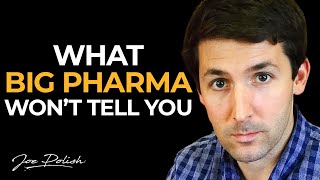
Calley Means, a former D.C. lobbyist, argues that pharmaceutical and food companies profit from chronic disease by influencing research, media, and policy. She links rising obesity, prediabetes, and infertility in young people to ultra-processed food and medical incentives that treat symptoms rather than causes, and calls for restricting pharma ads and changing subsidy policies.
Chapters
Chronic disease is the greatest invention in human history for profit. In 21 states, patients aren't legally allowed to view their medical records. There's this battle to keep medical data away from us. If you, your parent or your child is trying to prevent or even reverse a chronic condition, it is irrational to listen to your doctor. Every single person in the medical system have completely washed their hands of asking why people are getting sick and they're profiting from people getting sick and they need more people to get sick in order to hit their targets. It's a big societal moment, I think, where we got to ask ourselves which way we're going to go.
All right, well, you've been getting a boatload of press over the last three days, which is well deserved. And when I first met you, we had a mutual friend introduce us. Spent a couple hours in this building talking about stuff. And you say things that I don't hear anyone else talking about in quite the way that you do. And so before, I have a whole bunch of questions for you. And we don't have to cover all of them, but first off, because I know you're going to talk about some things that people will be like, well, how do you know this and why should we listen to you? So if you could maybe give a little bit of backstory of how you got to where you are today and why should anyone listen to you or take your. What you will say is valid and credible. Awesome.
Well, Joe, it's great to be here and talking to folks at the table. I had a common experience, I think, first meeting where we had our lunch, but it went about four hours and just in so many different directions. And so grateful to be here talking about this thesis. But, yeah, I was born and raised in Georgetown in Washington, D.C. and my dad went to D.C. he was in business, but worked for the Ford and Nixon administrations and kind of grew up around the dinner table thinking about public policy and politics. Went out to Stanford, but that was my goal. I was going to be in politics and public policy my whole life. So after graduation, worked on some campaigns. And what was surprising to me is that when the campaigns are over and very idealistic people on those enterprises, you inevitably are a consultant or a lobbyist once those are over. And that's what I ended up doing early in my career. And if you're working in dc, you're inevitably working for the pharmaceutical and food industries. Those are the two biggest spenders in dc, the pharmaceutical industry. We all know they spend a lot, but it's five times more than the oil industry. The healthcare industry spends three times more than any other industry lobbying. And I was with my, I was on the McCain campaign, I was with my counterparts on the Obama campaign. It's a bipartisan enterprise and you know, there's a lot of hindsight in retrospect and various experiences, psychedelics to kind of put all the pieces together and it's taken a decade to do that. But in retrospect what we were really doing and what I was doing was directing money to institutions that we trust and it's very systematic. So for pharmaceutical industry specifically, it is the largest funder of the media. So as a junior kind of lobbyist consultant in D.C. we were actually planning out media spending for pharmaceutical companies not to influence consumers but to influence the media itself. So we would actually fund ad spending on all the major networks in order to get relationships and actually dictate coverage and actually tell them how they should cover chronic disease and how they need to talk about how the pharmaceutical treatments is the right way to do it or pharma companies are the largest funder of civil rights groups and food companies. So from both sides we funded Monityville, naacp. It was very interesting in one meeting I was working with Coke and it was about a decade ago when the food stamp bills were up for debate and people were asking why Coke is the number one item purchase and food stamp. Why are we funding 15% of the most lower income children to buy diabetes water? And obviously there's a bipartisan uproar about that. I had meetings with the MWCP and we said we're going to pay you millions of dollars and you need to say that these efforts to restrict choice to take Coke away from lower income kids is racist. And there was an all out campaign at that time report in the New York Times of the NAACP saying we can't take soda away from lower income children. That's actually attacking people for being racist, attacking mothers groups who are worried about childhood diabete being racist. We were the largest funder. Pharma and food are the largest funder of basic foundational nutrition research. I was shocked that in a public relations office in Washington D.C. as a junior person there, there was a list of Harvard professors and the donation strategies to Harvard, to Stanford, to Tufts, to working with the NIH. That's coming from lobbyist office in D.C. the food industry spends 11 times more on foundational nutrition research than the NIH. And you know, it sounds ridiculous but these studies that are saying, you know, sugar doesn't cause obesity, these are still being put out today. And these are not being directed by, you know, a pursuit of unbiased academic inquiry. You know, I really do believe, and from what I've seen, that nutrition research specifically is nothing more than public relations for processed food. There's been 50,000 nutrition studies in the last, in the last two years created, peer reviewed. Animals in the wild don't have chronic obesity, don't have chronic diabetes. We're the only animals that are dealing with these chronic conditions. And we're the only animals really with experts with 50,000 nutrition studies telling us what to eat. It's entirely made to obfuscate. And the last thing I'll just say is we funneled money, of course to politicians, as I said, you know, they are the largest. We funneled money, the largest funder of money to media, civil rights groups, research institutions, politicians, anything we trust. And I think that really because most people follow the institutions and we have to defer to some institutions of trust, I think to be sane in this country, you know, that creates the environment that we exist in. And putting the pieces together, you know, today I think the biggest issue in the country is that devil's bargain between the food industry and the healthcare industry. We are losing our way as a country and becoming sicker, more depressed, more infertile and fatter. And I think you really look at it with kids. I think a number of us have young kids or older kids, but looking at kids, there's nothing more shameful in this country that 33% of young adults have prediabetes. I mean, a diabetes doctor wouldn't have even thought of seeing a patient with diabetes a generation ago that's young in their career. Now it's 33% of young children, 50% of teens have obesity or overweight. There's nothing more scandalous as a country than these statistics about what's happening with kids. 40% of teens have a mental health disorder. That's happening because of metabolic health. That's happening foundationally because of food, because of stress management, because of sleep, because of these basic things, sedentary lifestyles. But taking the most important one, food. It's very clear what's happening. Food companies are aggressively lobbying to make food cheap and addictive, to have neurotoxins and different chemicals that are banned in other countries. That's happening. We get that food companies are doing that. The devil's bargain is that I saw is that chronic disease is the greatest invention in human history for profit. A kid that's sick, that's on a chronic Disease treadmill is the most profitable thing thing in this country. A sick depressed child in fear. Right. Is on a treadmill of generating profit for the rest of their lives. And I'll just close with this and kick it back, but you know, looking at pharmaceuticals with children, I think it's 10 to 12% now of high schoolers are on an antidepressant. 15% of high school seniors are on methamphetamine. Basically Adderall, which book Blitzed, is a fabulous book. Adderall was created by Nazi Germany to make Nazi soldiers more effective and it was actually discontinued because it caused so much psychosis.
It's good for war though.
Yeah. So that's now being prescribed to 50% of kids. And now of course we can get into this. When I was paying the. And actually partnering with Koch and the American Academy of Pediatrics not speaking out about food stamps. And 70% of food stamps snap going to ultra processed food. Now the American Academy of Pediatrics is saying loudly that 12 year olds who are overweight or obese, which is 50% of them, not a later standard. This standard of care for urgent intervention for any sign of being overweight or obese should be Ozempic, which is a lifetime drug. So that is very profitable. And a kid foundation that learns how to eat healthy and learns how to move and learns how to be, you know, have curiosity and awe for what they're doing and their metabolic health and interconnectedness of disease. That is a very disruptive, unprofitable patient. And there is a war. There are some evil people, but it's an invisible hand of the healthcare industry, which is the largest industry in the country and the fastest growing, which is staggering to think about. It's the largest industry, the fastest growing, producing worse outcomes for every dollar we spend on a trajectory to truly bankrupt our country. That amoeba is built to grow and it grows by getting people sicker, younger and that's what's happening. Unpacking that I think is really important and hopefully it seems like there is more conversation about right now.
Yeah, well, everything you just said was. I was trying to say, but you just said it better. No. So there's. Do these individuals have to have an ethical bypass surgery or something? Like you got Harvard trained, Stanford trained, smart individuals, doctors, and like you were in it, then you walked away from it because you had a moral ethical dilemma with what was going on, which I can't imagine. How other are they so highly manipulated? Is it? I mean, when you pay somebody off, at what point do they look themselves in the mirror and say, what? We're sitting here, like, the whole. Do no harm. They're doing tremendous amounts of harm. They know they're doing it.
Like, what.
What causes that?
Is it deep indoctrination?
Is it greed? I don't. It's very hard for me to wrap my head around that sort of what you would have to do to be witnessing this and still go along with it.
I would say what's happening to our kids right now is so evil, it's almost like, hard to even envision how somebody could be doing this. And I just think one framework I have is, like, just. I think it's almost in some way I want to get into the motivations I think about a lot. But in some ways, it's counterproductive to even think about it. It's like there's this thing I saw recently, like to see what a system, the intentions of a system. Don't look at what people say, look at what the system does. And what the system is doing is systematically, I mean, almost. Almost committing genocide against children. I mean, when you look at 25% of teens having fatty liver disease, the diabetes and obesity rates that I mentioned, the mental health, absolute calamity that's happening, it's all interconnected, obviously, to metabolic health. It's not. You define metabolic health. Yeah, metabolic health. Well, let me actually take your other question and I'll connect that actually, because. Because about the intentions, and it actually leads to metabolic health. So unpacking your question about intentions, I'm really inspired by my sister. So my sister's like the hero. So we were very like. My trauma is, like, success driven. Growing up in D.C. kind of go up the standard ladder, just go to the right school. So my sister and I were like, I was trying to rise up the ladder in politics, and she was going up the medical profession. So she was president of her Stanford undergrad class, top of her class, like, number one at Stanford med school, head and neck residency. So she. With a family who was very proud of her, and she abruptly quit. 11 years into medicine. And it shocked everyone. It shocked me. I'm like, what the hell are you doing? You're on the path. And what she said is that she had a realization where she was doing her third surgery of the day, and she was doing head and neck surgery. So sinusitis surgery. So she had patients under her knife again and again and again that had such bad inflammation in their sinuses that they had to be knocked out. And she had to cut that Open. And she was looking down at a patient, and she realized that patient was under her knife six months ago. And she realized that patients kept coming back under her knife. And then she happened to look at that patient's charts, and they were 50 pages long. And she had seven other comorbidities. She had seen, you know, the hormone doctor for diabetes, heart disease, depression, you know, all these things. So seven different doctors, seven different drugs, seven different treatment plans. And she realized that this is time after time after time, all these comorbidities. And she never had even talked to those other doctors. It's all just, like, siloed. And then she's like, could these things be connected? And she started asking questions, and she was reprimanded. So she was actually reprimanded, and she actually asked a question about nutrition and tried to intervene with one of the patients on a nutrition intervention when clearly that was the root cause. And the intending surgeon said, don't be a pussy. And we're here to do serious medicine. We're here to do surgery. You didn't go to nutrition school. That's the culture. So, you know, I think we all know doctors who are good people. But what Casey realized is every single person, if they're honest with themselves in the hospital, cannot say that patients are coming in that hospital and getting better. They're profiting from putting Band Aids, and they're also waiting to get sick. They're completely washing their hands of why people are getting sick. Every single person in the medical system, from a medical school dean to a hospital administrator to a pharma company, to insurance companies, have completely washed their hands of asking why people are getting sick. And they're profiting from people getting sick, and they need more people to get sick in order to hit their targets. So she realized that. And I do think doctors understand this. Doctors have the highest rate of burnout, depression, and suicide among any profession in the country. The New York Times recently did a study actually likening their mental health struggles to soldiers who. Who are getting the fight for the right reasons but are forced to commit war crimes. So there's this, like, moral problem that doctors are having. But I think, in a way, the motivation thing, it's the systemic design of this system that's so brilliant in a way, that it takes very good people and gives them plausible deniability and saddles them with debt, saddles them with societal rewards of being in this profession. You know, at Harvard Business School, going to pharma, you know, it's still celebrated, right? So you have These like plaudits from society and money and time. I mean, it was amazing that she stepped away after 12 years. She was very scared. Most people don't want to do that. She had support of our family, which was amazing. But that's the dynamic. So it takes a lot of good people and gives them plausible deniability on the motivations. What she realized is, is that every single thing she was doing surgery on was tied to what's called metabolic health. Now metabolic health, I think there's five pillars to it. It's really how our body processes energy and it's food, sleep, environmental toxins, stress management, and what I would call. It's also related to sleep. But circadian rhythm is totally messed up and we can unpack those. But health is simple. When you look at, in a way, if you look at the top nine of the 10 causes of death in the United States, it's heart disease, kidney disease, respiratory illness, diabetes, cancer. These are all skyrocketing and they're all interconnected. If you have many forms of cancer, it's more related to you having pre diabetes or diabetes and smoking. As to lung cancer, what we're eating, what we're putting in our bodies obviously is very important, but it's literally that's not even talked about in Medical School. 90% of doctors today graduate without taking one nutrition class. 90% of medical school curriculums today are pharmacology. That's it.
So much for the food is medicine thing, right? Well, we'll come back to the health part and there will be solutions too. I like the fact that of identifying the problem here so people really know the severity of it and how much deception is utilized through the process. You know, this reminds me of. I gave, I was interviewed for a podcast that goes out to 50,000 emergency room physicians and doctors and nurses. And it was about trying to understand the addict. Because my view is, you know, help change the global conversation about how people view and treat addicts with compassion instead of judgment and then find what works and share it with people. And we talked a lot about compassion fatigue where if you're seeing hurt people all the time, there's a point where you become numb to the fact of pain and suffering. And if you don't remind yourself to be sensitive to that, you can oftentimes be very flippant, very just disconnected from the pain and suffering. So it seems to me there's like you go to Nazi soldiers, you know, when they were taking crystal meth. Long term exposure to crystal meth removes empathy and so therefore they were in situations where they would fight more aggressively, eat less food because of the amphetamines and they would, they could do things like concentration camps, but it didn't happen overnight. They had to be built into that. Right. So it seems that there's this system that is creating just not giving a shit anymore. Where you get to the. And what you said about doctors having the highest levels of burnout, you talk about a lot about stress. And when people are very stressed, they will do things that they will not normally do without that level of stress. So you put a whole country, a whole globe under immense stress and fear, porn and everything that's been happening, people start doing things they normally would not do. So it seems like there's this massive lack of compassion and care that is just seeming to be taken away so that these companies, these pharmaceutical companies can sort of do their manipulative, very profitable enslavement.
There's so much to unpack there. You talked about the book Dopamine Nation and this idea of desensitizing and dopamine. I mean I'd say what was interesting working for Coke is there was a real, I thought strategy on this on to normalize and desensitize us to kind of unless obviously horrible things and decent sized parents. So one of the biggest priorities Coke had was to get vending machines in schools for young children and pediatric wards. So 80% of grammar schools still have a full sugar Coke machine. There's an absolute fight. There was a legislator in New Mexico who I've been connected with and he put a bill forward like a couple months ago, simple bill to not have sugary drink vending machines in schools for second graders. And Koch flew a private jet within a day with four executives and they went into every single office and donated money to all the legislators in New Mexico. This was also a bill he was in the minority party had no chance of passage. They private jets squashed it. They aggressively try to normalize. My 2 year old was born here in Arizona, walked out right after giving birth. There's a soda machine in the pediatric ward. That's a calculated strategy. Again, I think it's to get kids hooked. Another thing we did for Koch was we lobbied the FTC aggressively. Like in Europe, children's programs are not allowed to market sugary crap, toxic crap. It's the number one funder of Nickelodeon is processed food companies. You go on YouTube what your kids are watching, it's almost all processed food companies. That's aggressive lobbying from this. So it's Getting these kids desensitized. And then I actually talk to a lot of educators now. You go into a daycare or a pre K and it literally, it looks like a bunch of meth addicts with the sugar and it's candy time and they have candy everywhere. And what I've actually heard from a lot of educators is that the reason there's so much candy and there's so much sugar in schools is because it's a way to almost control and placate the kids. And they've kind of like given up. And then I think there's a psychological element where we become so desensitized to it. You know, we're never going to convince ourselves that, you know, we're bad parents or that we're doing bad stuff to ourselves. So I think that's key, and that's what I'm really trying to push into this conversation. RFK and I think many other, you know, I'm following in the footsteps and just trying to echo that message is that it's not our fault. I think I'm a personal responsibility guy, but I think something's happening in society. I don't think 80% of American adults who are overweight or obese that just changing dramatically in the past 40 years is because we become more suicidal or lazier. I don't think we have a generation of just terrible parents who are trying to give their kids metabolic dysfunction. There's clearly forces that are rigging our dopamine, profiting from us being frankly sick, and we're not fully realizing that.
Yeah, well, I have a friend who watched your interview on Tucker that wrote back, a healed patient is a non existent customer. I mean, the moment they're healed. So there's a lot of profits to be that saying they'll never find a cure for cancer because four times as many people make a living off of it every year than die from it. And you can apply that to almost anything, any sort of condition. Hey, I hope you're enjoying this video. And I want to let you know.
That I have a new book that's.
Come out and if you'd like to get it absolutely free, there's a link below in the description. Or you can wait till the end of this video or you can Simply go to joesfreebook.com and you can get a copy there. Well, I love your fish tank analogy. Okay, so I want to talk about that. And then I love how you talk about how there's not an ozemic deficiency, there's not A Viagra deficiency, there's not an Adderall deficiency. There's all these things. But we have become conditioned that if we have something like we want to lose weight, we need to take a pill. So share the fish tank analogy because I think it's a great metaphor for how we look at everything related to health.
I mean, I think again, I just, I'm trying to articulate and find ways what I think is the biggest issue in the country. But one way is that if you have a dirty fish tank, you clean the tick, that you clean the tank, you don't drug the fish. And it reminds me, you know, if I could just share a story. I'm running this fight because of my mom. And the most transformative and important experience of My life is January 2021. Got a call. She's my best friend, a vibrant woman, and never really had major health issues. I mean, she was on six medications, but that was actually below average for a 71 year old. The average 71 year old is on seven medications. And she is told every primary care visit that she's perfectly healthy. So I thought she was perfectly healthy. She gives me a call and she says, had a pain in my stomach, went in to get a scan. Stage four pancreatic cancer. I'm not going to meet my future grandchildren and I'm going to be dead in a couple weeks probably. And we rushed to her side and went to Stanford to the top oncologist, worked some connections, top rated oncologist for pancreatic cancer in the world. And he looks across the desk and says, this is a tough break. And that is the biggest lie in the country, right? That all of these life threatening things are tough breaks. We get cancer, Alzheimer's, heart disease, it's literally like, we treat them as like this random thing. It's not. And what's crazy unpacking, this is my mom for 40 years, was on a chronic disease treadmill. She had gestational diabetes when I was born. And the doctor said, no problem, no problem, that's normal. I was born at £12, a blaring sign of metabolic dysfunction. And she got high fives from the doctors for having a large baby. She had trouble losing weight. Oh, that's normal. She had high cholesterol, statin, high blood pressure or high blood pressure, ACE inhibitor, high blood sugar, metformin. So every single time, it's a rite of passage. It's no problem, right? This is what's happening across the country, starting with kids, literally. The Harvard obesity doctor, the lead obesity doctor, in the country, like the most respected obesity doctor in the country is saying obesity is genetic and not tied to food. They are telling kids when they give them ozempic, this is your cure. Obesity is not tied to food. It's genetic. We are training people that the statin and the ozempic and the metformin is the problem. The American diabetes association, until 2018, their standard of care is that if you took diabetes medications, you could eat whatever you wanted. You did not need to change your diet at all. You had no regulation on how much sugar to eat. They were ashamed to change that. But that was until 2018. So this is the message that's given to every American patient. It was given to my mom, who, frankly, had kids that were very woken up on this issue, and she was woken up on the issue, relatively. But that cancer wasn't random. That was a lie. And that's what the top oncologist in the world was telling us. The second thing he told us, and they pushed, is she was going to die no matter what in a couple weeks. And they pushed for dramatic interventions. They said, you have to do biopsy, you have to do surgery. And my sister had the wherewithal. You know, they were rushing us out of the room. You know, the oncologist says that that's what you do. You fight. My sister said, what are the chances of that extending life? They said, 30% will extend her life two weeks to three weeks. 30% neutral, 30% negative. And because of COVID protocols, she'd have to be alone in the hospital. So my sister said, no, we're taking her home. And they had to have us agree that we're going against medical advice and actually tried to shame us and pressure us to go. 99.9% of people would, of course, agree with oncologists. Those 13 days were the same spiritually, and just for my life were the most important days of my life. My mom sat overlooking the ocean at their beloved house in Half Moon Bay, California, and read hundreds of emails and notes about people, how she impacted their lives and how she changed their lives. And it really sunk in for me, you know, what the purpose of life was, that it's not how many years, but the impact that she had and her final moments of life. You know, she embraced my dad and said how grateful she was for their lives together. And that moment would have been robbed for most people. And those moments, those final days, transformed my life. So that's what the system does. It obfuscates us of the interconnectedness of disease. And it aggressively pushes for interventions that I think represent a spiritual crisis because I think we're getting totally detached as a country from curiosity about interconnectedness, about what we're feeding our kids, about what we're feeding ourselves about that. And, you know, that's kind of what comes through to me.
Well, and you know my friend Rick Sapio, who I interviewed at the Genius Network annual event, has pancreatic cancer, or so he's been told. I still question that. That's a whole nother. I'm not a doctor, so I just listen. I have a lot of friends that are doctors and I have a lot that, you know, both sides that have been sucked into the toxins and others that fight it like crazy and tell me how difficult it actually is. And every freaking doctor is telling him to go a particular standard of care, but the more he researches it, no one lives. And it's fascinating. And so it seems the fish tank is the whole system. It's just this dirty, toxic fish tank. So let's talk about Ozemik and then we'll come and talk about solutions because I know you, I know you have a lot of really great ways of identifying the problem, but you actually have solutions for it also. So let's talk about what is now becoming the biggest weight loss, pill, grift, whatever you want to call it, I've ever seen. So talk about the company and what they're doing and how they have in other countries. How like for instance, the food stamp. 10% of food stamps can go to sodas. Is there any other country that allows that?
No. I was recently. Well, Novo Nordics, the maker of Ozempic, just passed Louis Vuitton as the most valuable company in Europe. 90% of their profits are estimated to come from the United States. And I was recently, I was in Denmark last year. And they have. It's like a dream world over there. Everyone's biking, everyone's moving. They serve kids poison. They have bipartisan consensus about not poisoning kids and not having glyphosate covered all over their ultra processed food that we recommend to kids in the United States. I mean, they run a pretty tight ship over there. Ozempic is not the standard of care for obesity in Denmark. And they are taking advantage of a US healthcare system that's literally poisoning kids. That has the usda. I mean, I think this is the most shameful policy in America. The usda, which sets the foundational nutrition guidelines that inform, you know, schools, prisons, and also just, I think the Overton window For parents, what's acceptable for them to serve Kids says a 2 year old should have 10% added sugar, that it's recommended. Up to 10% of a 2 year old's diet should be added sugar. 19 out of the 20 folks on the panel that made those recommendations were directly paid for by food companies. On the 2025 panel that President Biden's appointing, this is this. I actually can't even make this up. 40% of the panel right now is paid for by the maker of Ozempic. So I don't. You gotta unpack that. Why the nutrition guidelines panel that sets hundreds of billions of dollars of ramification, trillions of dollars I think of kind of downstream costs why that is. But that's the case. So we have that dirty tank. We've got a situation where glyphosate is being totally banned in Europe. There's literally thousands of neurotoxins we put in foods that are banned in Europe that are in the United States. A child's diet is 70% ultra processed food. So we have this situation, you go to a playground, go with my 2 year old, it's literally every kid is eating ultra processed food. And clearly so we've got that problem and we're being told and I'm not concerned about the 400 pound super diabetic person like they can make up a thing with their doctor. The problem with Ozempic it represents, I think it's this Rosetta stone to understanding this corruption that's really impacting us and our country is it's being really aggressively pushed for the median American and the median child. I'm concerned about that median person, the median American and median child is overall overweight and metabolically unhealthy. And there's an all out campaign. This Danish company is one of the top 10 largest lobbyist spenders in the country. They're the second largest spender on TV news. They are a. The NAACP is a registered lobbyist for Novo Nordics saying that not prescribing Ozempic is racist, not government funding it. So you've got this company which is now the 12th largest company in the world on this one drug only based on expectations for US growth, rigging every institution of trust with an all out assault to make it the standard of care. And I just think that is the path that really represents something we really need to unwind. And it's going to be very painful to unwind this right if you actually say no when we have a overweight pre diabetic Child, we're going to, as a country ask how we can get that child on a path of curiosity, a path of movement, a path of good habits. That sounds like that is like if we don't do that, we need to start thinking about public policy and thinking culturally and societally about that moment and changing this pharmaceutical treadmill that we're on or I think we're going to go bankrupt as a country and then we're going to lose our human capital. So if we're not going to make that decision now, if we're not going to ask what are we doing to kids, when are we going to actually start getting the root cause? If we're not going to do this? With this Ozempic battle, which the big issue is Medicare and Medicaid, there's a big effort to make it funded by insurance, funded by taxpayers. And the second that happens, which we're on the verge of doing, that's going to be $15,000 per patient from the taxpayers, mostly at the stroke of a pen for any doctor that wants to put a patient on that. When the standard of care from the American Academy of Pediatrics and all the associations is immediate intervention right at the sign of overweight or obesity, to prescribe that, not to talk about dietary interventions, not to talk about exercise. That is literally the guidance. So it's a big societal moment, I think, where we got to ask ourselves which way we're going to go.
Well, okay, so you know, you're libertarian in wanting, thinking drugs should be legal. If someone wants to take Ozamic. How do you come to grips with the level of, you know, it's kind of like, look, I used to do a lot of stories on anti bait and switch advertising because there's a lot of companies that would do. And it's like, I'm not opposed to someone upselling or charging more money for something. What I'm opposed to to is how they go about doing it. You know, all forms of sexual intercourse involve fornication. Some is rape, others consensual. And to me it seems like giant rape is happening on so many levels with these drug companies. I mean, that's what I said when I interviewed rfk. They did it with syringes. It's non consensual penetration. And I think they're doing this. I mean, I think it's that bad.
Yeah, 100%. You spark one. I mean this, you know, we're probably across the whole political spectrum, but I just want to be clear, like these unimpressive people know how to play the political win. So when I was working for the pharma companies, we would use the nanny state argument, the anti regulation kind of appealing that all the time. So for instance, when we were trying to combat SNAP food stamps being taken off funding Koch, we would say don't be a nanny state, that's over regulation. What I failed to realize is that's a perversion of free market principles. What's anti free market? What's nanny state is soda companies lobbying the government tens of millions of dollars to get a $10 billion transfer from the U.S. treasury to soda companies every year for a program that is ostensibly supposed to provide nutrition assistance to lower income kids. That's the corruption of the market. If we're going to have a program which we can debate on subsidizing food nutrition for lower income kids, we can absolutely say that shouldn't go to diabetes water, shouldn't go to a 20 ounce bottle of Coke that is more sugar than a child would have in a year 100 years ago. And in liquid form directly to the bloodstream. So I think there is this like on the libertarian on the right side of the aisle kind of this reluctance to get involved. But the system has been totally rigged. That's washing your hands of a broken market. You know, I think the biggest problem what this all leads to is corruption. I mean, you know, we talk about socialized matters and there's that we have worse than any kind of. We have worse than a European socialized system. We have a kleptocracy right now. We have a system that's totally being co opted. That's the largest industry in the country that just as a statement of unemotional economic fact, profits than rather from us being sicker, more depressed and more infertile and we're becoming more infertile. Male spore counts plummeting 50%, 25% of women have PCOS. Almost every friend I have that's a woman of childbearing age is having struggles. It is skyrocketing. So that's the reality. And washing your. So we try to use the anti regulation argument to get conservatives to wash their hands of the fact that the system is already just hopelessly rigged. And that's a big problem, I think.
Yeah, yeah. So, okay, so let's talk about the reason that I wanted to have Callie here and to hear this. Because every time I talk to you I learn something about what the fuck is going on here. This room has incredibly influential people. I mean, sitting in this room, millions of emails and videos, tens of millions go out every single day. So there's some highly influential people in this small group of individuals here. And so I want them to be aware of it and they can make a decision for their own personal lives and then to what degree they want to want to share this. And then secondly, what do we do about it? So if you could wave a magic wand, what would you know? What do you recommend as some of the solutions to this? Your comment earlier about they throw their hands up because they don't think they can do anything anymore about it. I mean, when that hope is lost, then they've won Whoever they is.
100%.
Yeah. Who is the they're doing this? I mean, how would you do that?
It's an invisible hand of the largest industry in the country, the healthcare industry that has, through incentives, has been masterful, designed to give almost everyone plausible deniability to what's happening. I think is what's happened. It's an invisible hand of this system. Gotcha. I really appreciate my life's mission, given my story that I mentioned. Kind of inspired by my sister with my mom. It's like after my mom died, my sister and I just were like, we want to talk about if we could just push this idea that RFK is leading. Frankly, Trump's talking about whatever side you're on. It's like, I think people are waking up. Independent media is talking about this. I mean, it's the number one topic discussed on podcast. Health is the most important thing. I think when you ask any person, like, I think there's anxiety, rightful anxiety about health of kids and health of us. It's what we're all talking about. And I don't think what's happening right now around chronic conditions is normal. And I want to be clear, it's chronic conditions if you have something acute, an infection or a complicated childbirth or an ability, appendicitis, it's like, that's awesome. The medical system is amazing at like things that are going to kill you right away. But 90% of costs are around managing chronic conditions. It's a beautiful invention because you don't die right away, but it's like recurring revenue for the system. And this is just the message I'm trying to put in people's ears. And we're pushing, we have a nonprofit that's trying to write executive orders for the next president and really trying to push this forward. But since it's this room, I'll start with a couple top down things and just want to make this point if this resonates with anyone, there is really, really simple top down solutions. I mean the core thesis here is that we have to attack the fact that our systems, our healthcare systems are incentivized for us to be sick. Anything that doesn't address that fact is missing the point. And then when we talk about health care policy, we go out and you know, I go to these like counseling for relationship or different like policy groups. It's like Talking about page 500 on Medicare Part D, how we need to tweak it slightly. Like we have to speak boldly about health care and changing those incentives. And we're working on creating some executive orders. Working with rfk. The Trump campaign actually reached out trying to work across the aisle to anyone who will listen, have met with the White House. But the president tomorrow could sign an ad taking pharma ads off TV tomorrow and that would cut 60% of revenue for all news networks, which might be an interesting thing and they would go absolutely crazy. It is a executive action. Reagan with a stroke of a pen made that legal and a stroke of a pen tomorrow and that robs the ability of pharmaceutical companies to dictate the information to the American people. That's why Covid, which was a foodborne illness nobody metabolically healthy is dying of. COVID Covid attacks are people with weak immune systems. And the death rates and the complication rates in America were four to five times more than Japan where the obesity rate's four times lower. It's like Covid was a metabolic issue and the media didn't explore that at all. The media's not running stories right now on the 33% teenage prediabetes rate. Joe Rogan in a picture and media are, but the media isn't. So you've got to change that incentive. We subsidize $100 billion per year ultra processed food. It's that simple. Through school lunch programs, through food stamps, through agriculture subsidies. In the United States today we subsidize cigarettes more than fruits and vegetables. Literally. We literally subsidize tobacco more than all fruits and vegetables combined. 95% of subsidies go to the ingredients of ultra processed food food. 80% of NIH grants go to professors with conflicts of interest. With a stroke of a pen to mar the president could make a simple statement that no NIH grants go to professors who are being paid by the pharma companies who study the foundational research of that grant. There would be an outcry that that president is attacking science. They don't have to touch NIH funding, it's simply the fact that nih, because of the revolving door is simply an R and D research lab for Pharma. And Ozempic. Ozempic is a huge battle. It's thinking about simple funding of where things go. It is so simple. And this sounds like almost like fluffy I would have thought a couple years ago but like you've got to actually ask and not give the medical system and doctors so much leeway on what standards of care are. We have outsourced standards of care to medical groups like the American Diabetes association, the American Academy of Pediatrics, who are subsidiaries of PhRMA. Those groups are funded 90% by pharma and they actually statutorily can create the standard of care, which is why with somebody with an autoimmune condition, they're put on lifetime injections. Somebody with a diabetes or pre diabetes is put on a pill when they can reverse it in a matter of months with detailed dietary interventions from the bottoms up. And I think a bottoms up revolution is happening. I'm learning from all of you guys and I'm on a journey myself. I think a huge what my sister and I are writing in our book is like get a functional medicine detailed like hundred unit blood test. I think that's transformative and should be standard for the whole country and gives you a deep insight into what's going on inside your body. I think the four or five blood tests where doctors just go by the range and you're basically pre diabetic but you're not quite there to have a pill and they say you're fine. It's like get a detailed functional medicine. And this functionhealth.com does that very easily. But I think that's the foundational is having knowledge about what's going on in our body. And I think it's 21 states patients aren't legally allowed to view their medical records. There's this battle to keep medical data away from us and I think that's a big revolution. And then I just say, and I know we're all on this journey to various things, degrees but I just on this path just meet so many people who were kind of destined to have that autoimmune condition where they were kind of living a suboptimal life or destined on the pre diabetes or the heart disease train and just really I would say outwardly distrusting the advice you're getting from your doctor, if you are eminently going to die, listen to your doctor. But it is irrational if you, your parent or your child is trying to prevent or even reverse a chronic condition, it is irrational to listen to your doctor. You should listen to them, but you should not give them the benefit of the doubt. That's crazy. We are at a state of emergency where literally every single chronic disease is exploding at the exact time. We're spending more money to treat them. Every single one. So we actually. And really part of my goal is actually undermining trust in the system on chronic diseases. It's not rational to listen to a pediatrician talk to your child about how to prevent or reverse a chronic condition. I think we've got to be on our own path. And I think there's this spiritual crisis where we basically, through funding of corrupt research from Harvard and Stanford on down, telling us to trust the science we've been battered to trust the science on chronic conditions, which has been a disaster. So those are a couple thoughts.
Okay. I hope you found that video awesome and useful. So if you want to get a free copy of my book, I want you to click here. And if you want to watch some more videos that will be useful and awesome, click here.
Go ahead. You're over here. Do it now.
Come on. Thank you.
Watch them.
More from Joe

This FBI Trick Can Command Respect Without Saying a Word ft. JEFFERSON FISHER & CHRIS VOSS

How To Stand Out, Be Different, and Create Raving Fans, Customers, and Employees ft. Jesse Cole



90% Of Businesses Fail In Their First Year, Here's Why! ft. Dr. Benjamin Hard & Dr. Robert Cialdini

The 1 Piece of Business Advice I Got From Elon Musk That Changed Everything Ft. Kamal Ravikant

The 6 Traits You CAN'T Teach in Entrepreneurship ft. Richard Branson & Gino Wickman

The Leg Method: How to Make Your Book into a Million-Dollar Asset ft. Anna David


7 Millionaire Mindset Hacks for Daily Success and Wealth ft. Brian Tracy & Dan Sullivan
