Charles Poliquin & Dr. Mark Hyman: How to Get Fit and Eat Right!
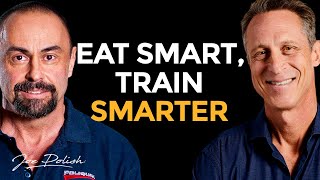
This is a multi-speaker YouTube conversation hosted by Joe Polish (uploaded Aug 26, 2024) featuring Dr. Mark Hyman, JJ Virgin, Charles Poliquin and others. The panel centers on sugar's role in health (described as addictive/toxic), short-term resets (Hyman's 10-day detox and JJ's 7–14 day taste-bud reset), practical exercise prescriptions (brief HIIT, resistance and compound lifts), and broader drivers of obesity including stress, sleep disruption, environmental toxins and adrenal/hormonal regulation. The video also includes guidance on breakfast composition, intermittent fasting caveats, HRV/sleep biology, and brief promotional segments.
Chapters
Hey, there.
This is Joe Polish, the tall one in this video. And I've got the very awesome Dr. Mark Hyman and JJ Virgin. And we're working out here together.
And Mark feels great.
Yes, he does. Look at that.
Let's do it. Chris said he probably won't be able to lift his arms up later.
Well, here's the thing. Both of you are, like, sugar experts, so which one of you smart.
I love sugar.
You do love sugar.
I love sugar.
All right, but you both have written books about why sugar is toxic and poisonous. Now, I guess this is all about.
Blood sugar balance, right?
And what sugar is every.
Which is everything.
I'm just fed up.
I'm fed up.
Yeah.
Fed up with sugar.
Fed up with the food industry. Fed up with all the bullshit we're eating, all the coffee and so is Jake.
All the lies the government's telling us, all the stuff that's food. I mean, I actually met with a woman who's head of the ADA American Diabetic association this week, who has diabetes, who was following the freaking guidelines, was on four medications, shots and all kinds of crap and wasn't getting better. She went on my program and boom, off the medications. Diabetes better. And she's like, wait a minute. The ADA is wrong.
If you follow that diet, you will become diabetes.
Yes, absolutely.
Okay, so when you say programs. So you both have programs. What do people do? People watching this, what do they do to get an optimal physical shape? Get diseases. They buy her book.
They buy my book.
They do them both, and they get.
A double whammy, everybody.
That.
How do people get both of you in their house, like, to just have a sleepover? Like, if they wanted a sleepover.
You want an eat.
You don't want an eat over. Not a sleepover.
Well, that too.
A workout.
A workout that would be actually kind of cool. What if there was a prize where you could hang out with Mark and jj, get back massages, the whole world.
You know, I'm good.
Just doing the back massage.
Me.
I'm good.
Yeah.
That's how I got into medicine.
It's this massage.
People are like, oh, it feels good. I'm like, oh, I like feeling good.
Yeah, Maybe do some medicine.
Well, he's been going into houses and cooking.
That's true. Well, okay, so I'm going to plug some stuff here because I have done amazing interviews with both of them, which you can find@gieniusnetwork.com Ilove marketing.com. we've put them all kinds of.
And I love joe.com and yeah.
And I love Joe. And that's really this. Because this video I really wanted to lead back to me. Okay, so. So out of the, out of all of the things that you guys have learned, what would you consider are the essential elements in taking people that are at a stuck point? They're not exercising, they're not eating right, they feel hopeless, they have consumed, bought so many books, they feel lost. What do you do?
My view, and I think JJ is probably similar, is people need to do a reset, like a reboot. When your computer's on the fritz and it's going round and round and it doesn't work, you've got to do a reset. So that's why I wrote the 10 day detox. People can do anything for 10 days. And in 10 days, if you change your food into a few simple lifestyle practices, you literally can change your physiology, retake your brain chemistry back, retake your hormones, retake your taste buds, and in 10 days, we can go from feeling like crap to feeling great. And the weight loss is just a side effect.
Yes, it's automatic, like you said. And here's the coolest part about that, because people talk about losing weight and they're white, knuckling and struggling. But when you reset your taste buds and you get rid of your sweet tooth, which you can do in seven to 14 days, we've seen it.
All of a sudden you've got the.
Control back over sugar. And even though, like Mark says, I love sugar, it's like it's not an issue because you don't crave it anymore. And then everything changes.
It's really true.
And I think most people don't get that it's not their fault. Like people, they blame themselves. I met a woman the other day who was told by a food expert, a nutritionist, that she there was no such thing as food addiction, that it was her fault that she didn't have willpower and that she couldn't control herself. So she read my book, which talks about the power of these foods, like sugar, to hijack your brain, literally to be biologically addictive. She says, I'm going to try it. And she literally got her body back, lost 30 pounds, and was able to reset her brain and realize that it wasn't her fault that she was fat, it wasn't her fault she was craving, it wasn't that she didn't have willpower. And her whole government policy and the food industry is all about blaming the fat person. Eat less, exercise more moderation, all things. There's no moderation of bad stuff. Like, if you actually are eating trans fats and high fructose corn syrup, you can't moderate that. You've just got to cut it out. And if you do that, you'll reset and then you can enjoy all sorts of foods. But you're not going to become a victim of your brain chemistry that's been hijacked by the food industry.
Yeah.
And if you assume that these are all drugs, which they are, and sugar is the number one drug of choice, it's taking down everyone everywhere. Kids are not smoking and drinking at age 5. They're having juice and cookies. If you knew that, you wouldn't have a little bit, that would be ridiculous.
But I do eat sugar. But like, it's a recreational drug. Like, I like tequila, but I don't like drink it all day long. People have sugar for breakfast, lunch and dinner.
Well, they start with Stewart cereal, milk, juice and a banana or a muffin latte.
That's right. And people don't realize that breakfast cereal is 75 sugar. It should be called.
Right.
Breakfast called dessert. Right. It's like, so we need to just reset and understand how to and find.
Where everything is sneaking in so that we don't turn our salad into a.
Sundae and our love that salad into a Sunday.
Right.
All right.
So, jj, exercise. How frequently do you. Must you do it? Kind of, sort of. What are your thoughts on this?
You must do it.
She told me 15 minutes twice a week.
I'm good with that.
So, yeah, for weight training, resistance. Look at this. Look at this specimen.
This is like 15 minutes once a year.
Look at this.
Well, this was the start today. Whole new mark, Right?
Yes.
Today is the last day of the way mark used to be.
I know.
All right, you gotta move more. Everyone should be moving at least 60 minutes a day. But if you're not getting hot, sweaty, and it hurts a bit, it doesn't count as exercise. But we are supposed to move.
That's why you were hurting me this morning.
That's why.
Because I wanted to count as exercise.
I was hurting.
Trust me.
Bit.
And then high intensity interval training or cardio burst training three times a week to accumulate four total minutes of all out bursting. So if you're on the bike, what's bursting?
Where you go as fast as you.
Can, as hard as you can for 30 to 60 seconds and you don't want to pace yourself. You want to burn yourself out.
Yeah.
It'll be the longest 30 to 60 seconds of your life. And then you recover and you do it again. Four to eight total minutes, three days a week. And then resistance training, hitting, pushing, pulling, pulling, pulling.
Nobody told me about pulling.
I was always pushing.
I missed that one. Hips and thighs and core. You do that at least twice a week. So for you, we'll start there. And that's the big thing is how do you fit fitness in? And then you've been whining, you're all there. And then flexibility work. But really like yoga, flexibility work because you want to lower your stress hormones. And so that is huge. And that's why I don't like.
That's true.
So there you go. I mean, that's a simple four, four formula that I think we agree on and you're just missing a little piece, but we're fixing that. And that helps you with your sugar cravings.
Yes, it does.
It just helps you with your life.
And so if you do not take time out for this now, you will take time out for it later with very poor health and disease and probably misery and suffering. And so if you're a parent, this is also something that children will watch. How you live, they will watch you become a model. And so you want to be a model not only for yourself, but for everyone around you. And that's how everyone around you gets better. And there are a lot of forces that are literally always directing you in wrong. I've always loved the line that the most expensive information in the world is bad information. There's a tremendous amount of bad information that can kill you. So both of these individuals have written amazing books and have led literally collectively millions of people to better health. So what is the best book for people to start with with you and then with you?
I think it's a 10 day detox diet. 10 days, people can do anything, reset, and then they own their body and then they realize how close they are to health and happiness.
There's just a few days and if.
It doesn't work for you, great. But if it does, you literally get your life back.
It will work if they work it.
It's true.
It's true.
You don't have to believe me, you.
Just have to do it.
Yes. And the Sugar Impact diet and what the Sugar Impact Diet helps you do is identify where all the sugars are sneaking into your diet and to understand that it's not about no sugar, but that all sugar is not created equal. And you need to know which to choose and which to lose, which has.
Made it simple to do.
There you go. And if you watch this on YouTube or wherever else I'm going to put the links of their interviews and stuff related to both of them in the, in the little area. So just do it. And it's fun hanging out.
You could pay like $5,000 to come see us or you could buy the book for 10 bucks on Amazon and like change your life.
That's true. That's it.
And they make good presents.
Famous last words.
I think the most significant thing you can do to, to change your health, to change the health of your kids, your grandkids, to change the economy is to lower your sugar impact.
Absolutely. I would say remember that sugar is a recreational drug and use it like that. Don't think of it as breakfast, lunch and dinner. It's a drug and enjoy it, but not in the way that you would enjoy like tequila all day long.
I want to clarify, you know, the point on the post workout shake. A lot of people say, you know, you have a shake with grape juice in it and it's causes you to get insulin, which builds muscle. I don't understand that you're not a proponent of that.
I have a pron of it. If you deserve it, write this down. You need to deserve your carbohydrates, okay? So if you're not lean, like, you know, tell men if you don't have penis skin on your arms, you're too fat, okay? So you pinch. It has to be really lean. If it's not, fuck, stay away from cowboy beans. They're not your friend. Right? But I think that's really good to be vulgar because it raises dopamine levels and people actually pay attention. But the thing is that.
I'm for.
Spiking some post workout if you deserve it, okay? So you have to be sub 10% body fat for a male and sub 16 for a female.
All right? So if you could say it real loud, Ed too.
Sure. I wonder if Charles, if you talk about the difference, especially on a guy's hormones with respect to doing isolated workouts versus compound workouts, you know, full body movements versus isolation, Is there a difference?
Yes. If you look at the research, the larger the muscle mass you recruit, the more hormones, I mean beneficial hormones you produce. So if all your exercise are single joint, you're not going to be able to a lot of muscle mass, you're not going to lose a lot of fat. So if you center your first 70% of your workout around big compound exercise, you're on the right way. I have a friend who's set 76 world records in parlathing. He says work On a Christmas tree. Not the ornaments. That's Ed Cone. So I think it's really important that you. It's what I call most bang for your buck exercises. So squats, deadlifts, chin ups, bench presses. I really like a lot of dumbbell work because it keeps you balanced. And I really like fat handle type of dumbbells. Joe has done a video on that.
Yeah.
Watson's gym in the UK make the best dumbbells in the world for sure. Designed by Charles.
Yes. So, you know, nothing beats the basics. And the thing is that basics are hard work. And people like to avoid hard work. Right. I mean, they do tricep kickbacks, and they don't forget to purge the lips. Okay. That's not gonna do much for you. Right. But if you vomit a lung because you did a set of 20 in a squat, you're gonna make progress. Right.
It's real great advice.
Just.
Yeah.
Yep.
The goal workout is that your spleen should come out through the left eye. If it does come out through not the right eye, but the left eye, then the workout was hard enough.
So we'll take two more. So summer and then Dan, and then we're done.
What are your thoughts on intermittent fasting?
Thoughts on intermittent fasting for people watching.
Okay. If you look at the research, you'll find that intermittent fasting is beneficial in the very obese. What level of research on intermittent fasting is. Look at the world through a straw. Okay. They don't look at other things, but in the labs where they look at things like cognition, they found and muscle performance, they found that intermittent fasting was harmful. So I think that you should take care of your brain. Right. So I'm not big on intermittent fasting. There's different conditions. It depends how you do it. There's a lot of. But one thing they found in women is that it does really mess up the endocrine system. And one of the things I find when people do intermittent fasting, they become food obsessed. It's like another 52 minutes, another 48, and then they compensate by drinking more coffee. So I think that because I'm a big believer in a breakfast, I'm not so keen on intermittent fasting. Some people are very. But I think a lot of it with intermittent fasting, if it works for you or not, is actually genetics. Some people, for example, if I did intermittent fasting, I would be for the first time in my life on CNN because I've killed 76% persons in a parking lot on my way to work because I Get extremely irritable if I don't manage my protein intake in the morning. Some people don't have an appetite at all. So I'm not 100% against intermittent fasting. It's conditional, but I'm not a big fan of it either.
Okay, Dan. Hey, I hope you're enjoying this video. And I want to let you know that I have a new book that's come out and if you'd like to get it absolutely free, there's a link below in the description. Or you can wait till the end of this video or you can Simply go to joe'sfreebook.com and you can get a copy there. You brought up breakfast being the most important, I guess, meal of the day. I have 11 and nine year old. They're important to me. And also for me, I'm curious, what are the foods that you recommend at breakfast that the best that we could look at either for ourselves or our kids?
I think what you have to look at is a very high quality protein. Now, I prefer to eat only wild meat, so I live in Colorado. I can get elk or yak or bison.
It's undurable.
That's if you live in Kentucky. But the quality of the protein is very important. And then I would like to have a type of nut. The reason why I like to have different types of nuts for breakfast is that they provide choline, which is a precursor to the neurotransmitter acetylcholine. So it helps you with paying attention and brain speed, which is important in our lives. And then if you can't afford it, berries is a good source of carbohydrate. A very simple rule is the thinner the skin is of the fruit naturally, the more phytonutrients it has, because, for example, a raspberry doesn't want to be sunburned. So how do you protect yourself from the sun, which is an oxidant? You make antioxidants. So if you look at, for example, grapes, the grapes that have the highest amount of phytonutrients are the ones harvested in hills, like in Sardinia and in Spain, as compared to, let's say, German wines, which are in valleys and they don't have that angle of the sun. So berries are a very good choice. And any thin peel fruit is good.
Do you advocate green shakes?
Green shakes are very good. One of the problems, though, in the industry is a lot of them are loaded with heavy metals. So there's some companies that are good and some, you know, might as well drink A liquefied bumper. Okay. So the quality of the product really.
Matters, like if you make it yourself, like spinach.
Okay.
That's even better if you make your own green drinks. But I thought you were asking about powdered greens. Powdered greens. There's a lot of good countries out there, but usually if you can buy them to a regular store, you're drinking a green liquefied bumper because it's full of heavy metals.
What about juicing versus, like, blending like greens in smoothies?
The problem with juicing is that you cut away the fiber, and the fiber is very important to stabilize your blood sugar. So I prefer to use a powdered green versus a juicing.
Okay.
Anything that I should have asked you that I did, not that you would like to say?
Well, I'll take an extra question on that. I don't know. I mean, there's so many things we could talk about.
What is your fitness routine? How do you exercise? How do you work out when you're at home and when you're on the road?
Basically, I wake up early, I do meditation first thing. Then I take my book and I write what I want to be most proud of before I go to bed. So that sets up my mind and I write what I'm grateful for. But it's not repetitive. So he talked yesterday about lowering the bar. So sometimes I say, hey, it's a really great bed at this hotel or whatever. So I simplify it. And then I say, what am I going to do? Then write this down. This is the most important sentence of this interview. The first thing you put in your mouth in the morning, provided it. It's food. Okay? So the first thing you put in your mouth in the morning, provided it's food, will dictate the neurotransmitter cascade for the whole day. So that's why I'm a big advocate of the meats and the breakfast, because it provides you with the raw material to make the proper neurotransmitters for the whole day. And there's lots of research from Even the early 50s on the content of your protein and the ratio between proteins and fats and the quality of the protein you ingest in the morning dictates the energy, even in the later afternoon. So with children, what they found at Harvard is that if they eat, let's say, oatmeal or even worse, microwavable Oatmeal.
Yeah. Cereal or something.
Yeah. What they find is that when you give them lunch and they have to self select the food, they will eat they make worse choices if they had a carb only breakfast. Also, for example, if you give kids pancakes with that fake syrup, French canes, we call that telephone pole syrup because telephone poles don't have SAP. So if you have, let's say, telephone pole syrup and then pancakes, kids score 20% less on IQ tests because temporarily their brain's in a fog. So it's very important to set up your day with the right food. Then typically an hour after I've eaten breakfast, I train and shower up, take a post workout shake and go to work. Whether I'm at home or I'm on the road teaching, that routine doesn't change. And I think it's really important to have very steady habits in your life. And then this way you never have an excuse for missing out in the gym. You know, you don't miss your dentist appointment or you don't miss your appointment with your tax lawyer. Well, you shouldn't miss your appointments with your fitness because you got to take care of your body.
So as you age, out of all the different things, say, you know, because I do a lot of yoga and I lift weights, which is why I'm, you know, bigger than you. But basically. So strength training, stretching, cardio, good, bad, how to go about doing it.
The problem with cardio is most people do long, slow distance, right? But if you look at research, the athletes, Olympic athletes who've done the most long slow distance cardio have the most brain damage in later age. So a lot of cardiovascular training is actually brain damaging. And you can find it up in the research. So I prefer that people do interval type of training. But the most important thing is that you show up, okay? So if your thing is yoga, or if it's Tai chi, or if it's taekwondo or you want to play hockey four days a week, that's great. But you got to be active, you got to sweat, right? For busy executives, you know, I've got certain types of workouts, which I call German body comp training, that people can do a lot of work get it. Basically, it's a fat loss through weight training. And strongman training is very good. Crossfit, if it's done in a proper box, is very good. Some people need external sources of motivation. They need to be extra front of a group. And you got to be. Here's a very simple rule about exercise. If it's not a hell yes, it's a no. So if you don't enjoy it and you're just doing because you need the discipline, that's Bullshit. Okay? And I don't believe in discipline. That's a myth. I wrote an article, the most popular and most plagiarized article I've ever written. It's called the Myth of Discipline. And the basic message of this article is that you make the choice and you gotta decide what you love more. You love your brain more than doughnuts. Then you'll exercise. Okay. Do you enjoy healthy joints more than croissant and Nutella? Right. So I don't know anybody that's ever been mugged by a dozen donuts. It doesn't happen. Okay. I mean, have you ever eaten anything by accident? It doesn't happen. So this is the type of conversation you need to have with yourself. And then when I tell people, just make a conscious choice. Is this the best thing for me now? But don't tell me you don't have discipline. What you're telling me is you love donuts more than having a great physique or a healthy physique. Does that make sense?
The adrenal reset diet. What does that even mean? What does adrenal mean?
What is that?
Because I don't think the average person understands that.
Yeah, our body has little glands that control whether we're burning or storing quite simply. And a lot of our strategies to make us lose weight are strategies that make us more apt to store weight. So I talk about how you can go out from storing and towards burning. It's a big global catastrophe that we're facing.
Yeah.
Okay, so I've got a whole list of questions here that I'd like. I mean, we could talk for a week, but. So the rates of obesity are growing, like, dramatically. What are some of the latest projections of kind of where we're at?
You know, it's pretty terrifying stuff. One stat that I read recently showed that in the next little over a decade, we're looking at 2/3, 67% of people on the globe being overweight, obese, or morbidly obese. So globally, the numbers of deaths we're projecting. So go back to like, 1800. All the wars all around the world since 1800. So World War I, World War II, Vietnam, Korea, and not just our wars, but all the others. So all those casualties together, we're talking about more than that in the coming decade from complications of obesity. And we're talking about roughly ten times the cost of all those wars since 1800.
Why?
That's it. So the old model is people are lazy and they eat too much. That's what we're being taught and told. And it's so disconnected from reality to see the rates go up stratospherically in the course of a decade. So one thing we see is that animals, so chimps, when their food is controlled, they're getting obese even on controlled diets. So it's not behavior and lifestyle. There's a collective number of factors that push us into the storage state. And our body is getting geared up for famine. We have these mechanisms that allowed us to survive famine in the past. And now a whole lot of things push those buttons. And we're storing all of our food as fat.
Yeah, and you get right into it immediately. In the beginning of your book where you talk about stress, you talk about toxins, you talk about all of these other factors that I never really quite considered had that much of an impact on. On people's weight. I have a friend, I won't name his name, where he. And I've known him for probably 15 years. And without changing his diet, when this guy would go through a breakup of a relationship or go through stressful situations, he would literally just gain weight and whenever things would. And he's like kind of a roller coaster sort of lifestyle. I mean, he would have lots of ups and downs, and it was amazing. And I'm not talking just like 5 or 10 pounds. I mean, he would literally fluctuate 30, 40 pounds. And then things, he would start meditating and he would like lose £20. And he would swear that he could not figure it out. But then he identified a few years ago that it was totally based on stress level. And so now one of his maintenance things is keeping himself not freaking getting completely stressed out because if you're not sleeping, all these sort of things.
You know, way back when, stress meant danger and danger meant predators. And predators would go after us when they had fewer food options. So that meant food scarcity. So stress equals famine to our bodies. And famine means we prepare, we hold onto it. So his body was not under physical danger, but the mental emotional stress, which can be part of that for sure, that triggered the same thing that danger would. And his body went into a storage mode because of it.
And I'm not even sure where I first read this, but it's like people would make the analogy, well, we're so much safer and we got all these luxuries that we never had before. The difference though is it's just nonstop, the interconnectivity. Whereas if you're chased by a lion hundreds of years ago, when you're done.
If you survive you're bored for a while, you're safe.
Right, Exactly. Whereas in modern society, if you have lions, like anxiety going on, it could just be constant from the moment you wake up to your inability to sleep and all these sort of things. So let me, without going too deep into that, how much do genes control our body weight? And what is a gene? I mean, I'm going to ask you some very basic sort of things because I want people to, you know, you hear about all these things, but, like, what does it actually mean?
You know.
You know, many who have struggled have been told that it's genetic, that their weight is genetic. Genes to our body are what a blueprint is to a building. So a gene is a set of instructions that tells us how we're going to grow. So you see a set of identical twins. They share the same genes, They've got the same eye color and a lot of the same health habits. They've been studied. So if twins are raised separately, their body weight has no relationship whatsoever. There's like no correlation. And they've shown that the difference in weight from one twin to another is predictable based upon the adrenal hormones. So the more one twin has adrenal hormone stress, the more that twin will gain weight. So we're often told that weight gain is genetic. And it is true that there is susceptibility among certain family members. We see. But now we know it's not because of the genes. And the positive side of that is that means it's not inevitable that it can change and it can improve.
Okay, so if I see some, like, let's have. I have a lot of female friends and some just don't eat very. And I know skinny fat. I mean, so there's some people that are not healthy, but they look good, and there's others that just exercise and work out and they still have trouble losing weight. And so the best of my layman's understanding is, oh, it's genetics. This person just has sort of this thing, and this person does not. To what degree are some people just born a certain way where they can eat whatever they want and they maintain a certain, certain level of thinness and other people do not. What is that all about?
Well, they're a vanishing species. Current stats tell us that you brought up skinny fat, which is a good concept. There are those to where their scale weight may be good, but they do not have enough muscle tissue. So they're okay weight, but just not lean enough, not enough lean mass. So if you take them out and you Take out those who are overweight or obese. The remaining percent of the population is about 11%. So about 11% of the people right now have good body composition. So there's not many. And they are dwindling very rapidly.
Wow.
Okay, so now one of the things you talk about is why do you argue that calories do not explain weight gain? Because there's been this for years. You know, calories in, calories out, that explain what is a calorie. And then how does that relate to weight gain or weight loss or whatever?
You know, it makes me nuts. And that is one of the biggest public policy statements is that it's just eat this, not that, move more, change the calorie equation. So a calorie is a unit of fuel. So you've got like a gallon of gas as a unit of fuel. So a calorie is how much metabolic energy food would release if you burned it in a test tube. Now, they've argued at the level of public health that weight gain is from people consuming more calories. And then the solution based on that is eat fewer calories. And I think about that. Well, let's go like to football. So I'm not a big sports expert. I'll put that out there.
Same with football.
Okay, good. So I don't have to be embarrassed. So let's say that we're doing a post game analysis and the Cowboys just crushed it. They won the Super Bowl. And someone wants to know from the big commentator, well, why did the Cowboys win? Oh, here we go. The Cowboys won the game because they scored 30 more points than their opponents. Like, well, duh, you know, that's. So there's a description, but that's not an explanation. And that wouldn't be a strategy. You couldn't say, hey guys, next year let's score more points. We could win that way. So at best, that's all the calorie model is. It's just describing events. But with. Doesn't explain it, doesn't explain it at all. And not only that, but it doesn't work.
So can you explain it?
Sure. It's the storage response. The body goes into a storage mode. And you mentioned about the very real, powerful mental, emotional stress. And that's big. But a lot of the other factors that are invisible do the same thing. So we could breathe in. We could breathe in plastic residues. And the same thing like your friend when he would go through a breakup or a crisis and how his health would change from that. The same stuff can happen to you from breathing in byproducts from plastic. The same things that would happen under a crisis. Or you can spend more time around electromagnetic fields. You know, we're carrying our devices all the time. That's just like the breakup and the crisis. Or we can have the fact that a third more people than ever before do shift work. You know, they're not sleeping at regular times. That's just like the stress. That's just like the crisis.
Did you say a third more actually do that?
Starting in 1980, it went up by about a third.
Really?
In the US or is this worldwide?
Globally.
Wow.
You know, the global economy. We're working on each other's schedules.
Yeah. Interesting.
Yeah.
Because I mean sleep. Well, let's talk about something like sleep. I mean, you know, I'll throw that in here. I guess I can zig and zag.
Here a little bit.
But like, how much does sleep affect things?
That's a factor. And somewhere around 1980, 1990, things shifted that caused radical weight gain. And we've seen that sleep can be a stronger predictor of weight than diet or exercise can. So the old model of it being behavior, habit, calories, sleep, doesn't make sense on that. If you sleep more, you're actually burning fewer calories. But the data is strong that good, deep sleep rhythms are helpful. And they help because they reset the adrenal response and move us out of that storage state.
Yeah.
Okay, so one of the questions I have here is that experts say that weight gain is a result of poor habits. How does habits relate to this? Because I'm of the mindset that much of any sort of indulgence is addiction and the brain gets hijacked. And I know a lot about behavioral addiction, sex addiction, gambling addiction, food addiction. And when I say a lot, I mean I've done quite a few interviews with people on behavioral addictions versus chemical and drug addictions. And I used to be a drug addict. I won't go into my whole story here, but I've talked about that. When I was 18 years old, I used free based cocaine. I was a drug addict. And I'm a big admirer of 12 step groups and recovery and all that. That being said, there's a difference between habits and just flat out addiction habits. I think everyone has good habits, even if the consequences of their habits are very poor. If someone wakes up every day and eats an egg McMuffin and doesn't exercise and smokes a cigarette, they've developed really good habits of waking up and eating poorly and doing that. But that's used to shame people and guilt people. What's your take on it?
Well, yeah, it shames, it guilts, it raises the stress load and it's not a rational solution. So habits implore willpower and they imply intent. They imply that we've got a choice to eat this or that or move or not move. There's some conscious intent behind that. This model, this idea totally breaks down when we look at the fact that infants and toddlers are getting obese and morbidly obese at unprecedented rates.
And you even talk about animals and animals.
So from 1990 to 2000, about 20,000 separate animals were tracked, representing dozens of different species and many different habitats. Every single animal tract was found to have unprecedented weight gain over that time frame. Now some people say, oh well, people feed their pets too much. Well, okay, we'll dismiss that. And some could say, well, wild animals eat scraps from humans. We could dismiss that too. But many examples were animals on controlled diets. So their food was measured, their food was unchanged, their activity was monitored, their activity was controlled. Chimps, between that time frame, our second closest genetic relative, they gained roughly 30% body weight per decade. Two decades back to back on controlled environments. So once you see that, the whole idea about willpower, habit indulgence, no, it just doesn't fit anymore.
Right, so what is causing that?
There's a collective higher number of factors than that push our bodies to the storage state and make us hold onto things. There's actually a clock. So this is crazy, but belly fat, the stuff around our organs is very different than the subcutaneous fat below our skin. And every part of your body has a clock. There's rhythms, there's timing to it, like you're asleep versus awake. It's obviously very different. So you can pull out someone's belly fat and you can keep it alive in a dish. Provided you've got the right ingredients, it'll survive for a little while.
That's exactly exciting.
And you can watch its clock. You can measure the activity of its biological rhythm. The more visceral fat someone's carrying, the greater degree that their clock is out of rhythm with their body central clock, which the adrenal glands control. So when this regulation is off, the body is storing and holding onto things. And it's not a matter of starving it, it's a matter of resetting it and recalibrating its timing.
So you're a swimmer. One thing I, and you mentioned, you know, as you got, you used to run in the beginning. I have to bring this up, and I didn't have it as a question, but what I found when we were talking, when we went out to lunch in Tucson, is that you were a fan of Dr. John Sarno's work. Yes. When it comes to physical pain, and I'm a huge believer, I think the vast majority of the way that pain is treated and diagnosed is wrong. And I lived in chronic pain for most my adult life, which the way Sarno would describe what he called tms. In the beginning he called it tension myositis syndrome. Then it became tension myoneuro, then the mind body syndrome. And you're an expert in this area. And he said that the pain is caused by oxygen deprivation and brought on by repressed emotions, predominately anger and rage. And so Steve Ozanich, who wrote recent books on it, he sent you some of his books. Could you explain that from your standpoint about how much the mind and emotional states affect the physical body?
Well, to me, this is one of the great limitations of conventional medicine is that it is totally stuck in the biomedical model which sees only that which is physical as being real. And in that model, if you observe a change in a physical system, the cause has to be physical. The idea of non physical causation of physical events is not allowed. And for that reason, all of the whole realm of mind body medicine is viewed with great suspicion by conventional science and medicine and that enormously limits their ability to manage these conditions. With back pain particularly, one of the most striking facts about it is that you can see, you can look at X rays and scans of people that look so horrible, you can't imagine that they are not crippled by pain and they have no symptoms whatever. On the other hand, you can look at scans and X rays of people that look completely normal and the people are disabled by pain. So there's a very low correlation between physical findings and subjective experience. And that's one of the things that Sarna is based on. So this is a major component of integrated medicine called whole person medicine, where you don't exclude the mind. That's like it's key. Let me tell you one story. A couple weeks ago I was in Japan and I spent time in Okinawa, which is one of my favorite places. When I was doing research for my book Healthy Aging, I made a number of trips there because Okinawa has had the highest concentration of centenarians in the world. And it's very interesting to look at their. What is it about that? It's awful hard to tease all those things apart. It's a Tropical Pacific paradise with clean air and water. The Okinawan diet is one of the most interesting diets I've ever seen. Very different from mainland Japanese diet, but incredible variety of sea and land vegetables, unusual foods. Okinawans get great physical activity all the time, not by going to gyms and using exercise machines. They're quite hauling in fish nets and carrying water and chopping wood and hoeing in the garden and stuff like that. But I think especially there is an enormous influence of the way that aging is thought of in that culture. The old people in Okinawa are honored. They're living treasures. They're made part of all community activities. One story I collected there, which I think is very telling, is that a common culture of sibling fighting in traditional Okinawan society is over who is going to get to take care of the aging parents. Very different from here. Anyway, I was in. There's a village in Okinawa called Ogimi, which is celebrated as the longevity village. I had been there a number of times, but I went back this time, and they paraded out a number of their old peep centenarians, which they do. And all of them were asked what. What was the secret of their longevity? And one of the things that they all said was eat everything. Interesting. However, in the past couple of years, Okinawan longevity has plummeted, and now Hong Kong has surpassed them, which is hard for me to believe. And the fall in Okonoman longevity is entirely attributed to McDonald's. That there has been a sudden appearance of American fast food, and people go for it. So when these people say, eat everything, I don't think they meant McDonald's. I think it was their traditional diets. But how dramatic to see this change in such a short time.
No doubt. Wow, that's fascinating.
One woman who is 102, I think. Another secret that she had, which I've started to practice. She says, you want to move your fingers all the time. She was always doing things like this. She said, it's very good for the brain.
Most of us have learned the importance of understanding body language in our business. Studies show that nonverbal cues account for over 50% of our overall communication. The science is in. We all speak using our entire bodies, and we watch others in order to understand and build relationships. But what happens when the ability to see over 90% of the body is taken away due to a world that now relies so heavily on virtual conferencing? Between bad camera angles, terrible lighting, and spotty Internet, Too often the conversations you're having are not able to see the whole Picture. Therefore, you are missing out on over 2/3 of the conversation. So how does that really affect your ability to communicate and build strong relationships? If you are in sales, how does it affect your ability to authentically connect, clearly communicate, and powerfully close no matter what your profession? The skill of clearly sharing your message and thoroughly understanding your prospects, clients or team members is vital in today's world. For over two decades, Dino Watt has been helping business owners and teams learn how to improve their communication skills using both verbal and nonverbal techniques. Today, using his shell system, he's going to show you the top four areas you need to be aware of in order to more effectively sell yourself through the screen.
Awesome. All right, well, everybody, thank you for having me here and to continue on with the conversation around asking great questions and thank you for that previous talk. That was awesome. I love asking questions. Back in 1960, back when Joel was a young man, or a younger man, I should say, there was the very first ever televised presidential debate between President back then Vice President Nixon and candidate John F. Kennedy. And something very interesting happened out of this debate. First of all, when they did the polling after the debate, it wasn't divided on political lines like it is today. It was divided between people who watched the debate on television and those who actually heard it on the radio. And overwhelmingly, the people who actually heard it on the radio totally believed that Nixon won the debate, but the people who watched it on television absolutely believed that Kennedy won the debate. In my opinion, this was the very first ever selling through the screen incident before they sold products. This is the first time people had to sell themselves and their ideas. So why did that happen? Let's make sure this works. Now, why should you care about the way that you see yourself or you are seen on the screen? Well, if we think about all the research that's been done all the way back to 1967, we understand that our words make up about 10% of our communication. Our tone is about 35%. And then 55% are the gestures that we use when we look at the problem that's happening in our world today. After Covid started, something really unique happened. Now, there are people who, like Michael Bernoff, who do amazing things with words, but when it comes down to it, that human interaction, being together with somebody, really feeling the energy of the room and feeling who they are is very vital to your sales process. However, now this is what we are dealing with. We're missing out on the entire picture and only seeing about 15 to 20% of people's bodies on the screen. And if you haven't watched Mike Koenig's 25 Ways to Do better Zoom calls, you probably have been on a call where you've seen something like this. Even celebrities like Hugh Jackman surprisingly don't know how to use a computer. This is an actual screenshot from a interview he was doing with Jimmy Fallon on the Tonight Show. People have a very big challenge when it comes to actually communicating their message through the screen. So how does body language actually happen? It's important for us to understand that body language happens because of an emotion that happens in our subconscious and then comes through our brain. As a matter of fact, what happens about every one minute? We have about 450 words that are developed inside of our subconscious to answer a question or to reply to something. Now, to be clear, for women, it's typically a little bit higher. For men, it's typically a little bit lower. But average is about 450 words per minute. But your consciousness knows you can't say all of those words. So it narrows it down to about 150 words per minute for you to actually use that. You can choose. Yes, I want to use that. This is a safe place to say that. Oh, remember when I said that last time this happened? I don't want to say that. So what happened to those other 300 words?
Where does it go?
It's not clicking. There we go. 300 words inside of our subconscious. Those energies actually exist inside of our subconscious. They have to go somewhere. And that is what is created body language. That's what goes into all the other parts of our body and comes out. I want to know that story because what they've brought up in their head is very important for us to understand. And the body will tell us what those things are. So today, I want to walk you through. Oh, sorry. This is something that's really important here. There's always a Jim do joke going around somewhere, so I figured might as well throw one in here. But this is actually a really weird picture. But when we think about what the brain connects with first, when we meet somebody, a lot of people will say it's their eyes that we notice first. It's actually not the brain notices first. And this scale or this image here is by scale. The first thing people notice or the first thing the brain notices is the hands first, then the lips, then the tongue, then the ears. And this is showing you exactly what your brain sees when you meet somebody new. So it's important to know this.
Hey, I hope you're Enjoying this video. And I want to let you know that I have a new book that's come out, and if you'd like to get it absolutely free, there's a link below in the description. Or you can wait till the end of this video, or you can Simply go to joesfreebook.com and you can can get a copy there.
So I've created a shell system that I like to use with my teams when I'm teaching them about what to look for when they're through the screen. When they're talking to somebody through the screen, it goes shoulders, hands, eyes, lips, and language. Language is something we're not going to talk about too much today or at all today, because there are other people who talk about that a little bit better. Shoulders. Shoulders are the first thing you want to look at and recognize. According to a study by Harvard, it's the number one missed movement when it comes to body language. Because shoulders show uncertainty. If somebody doesn't know the answer to something by saying, yeah, what is the square root of 386? And they go, I don't know. That makes sense. But if they say, if you ask somebody, hey, would you like to move forward with this contract? And they say, yeah, sure. Well, there's uncertainty there. And you better be careful to stop and actually ask a question around that. How was your day to day? Oh, it was wonderful. But they shrugged their shoulders. Well, there probably wasn't something wonderful about that day. Ask a better question. One of the things I love most about body language, it gives us an ability to ask a better question. Next would be your hands. Our hands are actually our secondary communication device. When you are seeing a speaker, when you're talking to somebody or seeing somebody on stage, if they walk around with their hands in their pockets the entire time, your brain starts to mistrust them, thinking they're hiding something. Ever since we were cavemen back in our DNA, we looked at hands first, as you saw on that image there, because the hand would show me, are you going to feed me or are you going to kill me? And I like to hear myself. So that's good. So we want to make sure we're looking at the hands. The hands will also tell us when people are nervous or concerned. They will soothe themselves with soothing gestures, whether it be from their clothing. Like you see this person down at the bottom picture there, or wringing their hands together. Or women often will go and cover up the little. It's called the super stental notch right here in their body, right. Or the Decollete if I were to get fancy with women's clothing. Right? So they cover this up. Any type of hair movement or twirling of the hair. Those are all hand movements used to show you that they are uncertain or that they are trying to soothe themselves. So watch for hand movements. Now, this is important for you as somebody who's on the screen. Oftentimes, because of the way that we position ourselves on the screen, we're not showing people our hands and using our hand gestures. But people will trust you more if they can see your hands. Matter of fact, if you look at TED talks, there's a great statistic here at TED talks that the least popular TED talkers use an average of 272 hand gestures during the 18 minutes. But the most popular TED talkers had 465 hand gestures. That's almost double. Use your hands more often when you are talking. Sorry, this should have said eyes. It says hands there. It says eyes. It's supposed to say eyes. Eye blocking is the next thing I want you to look at.
What?
When people close their eyes, there's usually either one or two reasons. They're either trying to see it and focus in on the thing that you're asking them, or they're trying to avoid it and disassociate their emotion with what you're asking them about. These are two really great examples of people who are either on a witness stand or this is probably Obama hearing another Biden gaffe. Who knows? But on the last slide here, this is called eye blocking with their hand. If somebody raises their hand and shuts their eyes at the same time, it'll most likely be around something financial, money driven. So you want to make sure that they're showing because. Sorry, you want to make sure you ask a question around that because they're actually looking at some sort of shame around the thing that you're talking about. That usually shows us that they have some sort of shame with it. All right. Now, lastly is lips. And I love lips, because lips will tell you everything. If somebody has a question to ask in the middle of your presentation, they will often first just close their lips slightly and then they'll start to eat their lips. If you see the lips disappear, you know, there's a challenge there. If you're going through contracts, this is really important for you to be able to watch what's going on with their lips. Because the moments their lips go from natural, which would look like this, to close or at least have a concern, you want to stop and say what questions you have around this area here, or let's talk more about that part of the contract, because now you know they had something to say. The best people to look at for this is children. If you have children in your home, go home tonight and ask them to listen to your story. You're going to tell them a story. It doesn't matter what the story is. But they cannot ask a question or speak during that story. And you will notice as you are talking, they will shut their lips, they will start to bite their lips, they will chew on their lips, and suddenly they will raise their hand to cover up their mouth because they want to say something. You told them to shut up. You do that, too. When you're sitting in a room like this or you're sitting here watching on TV on Zoom, if somebody is saying something and you have something to say, you will notice. You will close your lips, too. You might even raise your hand to your lips. When your lips are disjointed, like you see here with President Trump, his pursed lips, he disagrees. His pursed lips pull to the side. He disagrees very strongly. Here's a clue. I want you to remember this saying. When you don't like what you see or hear, your lips disappear. So if you're watching somebody on the camera and you see all of a sudden their lips disappear, they're not liking what you're saying. Make sure you stop and ask a better question. Shoulders, hands, eyes, lips. Those are the areas of the shell that you want to look at. Even though we only get to see 15 to 20% of somebody's body now, you can learn so much with just these areas. And more importantly, they can learn so much about you. Now, let's go all the way back to Nixon and Kennedy. Why did Nixon lose this debate? There are three very specific things he did at the very beginning of this debate. And you can actually go on YouTube and watch the introduction of President Nixon. Nixon and Vice President Nixon and Kennedy. Here are the three things that happened. Number one, we always look to the most authority in the room or the authority figure in the room, especially when we're nervous, we're finding out if we're doing what is right. So America saw this and saw him continually. And if you watch the videos, see him keep looking at Kennedy, then his hands, his hand looks like he's holding on for the ride. But also from tv, it looks like a fist and it looks like it's dominant. And people don't want to feel like they're being pressured to do Anything. And lastly, were his feet. His feet are in what we call the runner's position. He's ready to get out of there. He doesn't want to be here. Look at his posture compared to Kennedy's and how much more relaxed Kennedy is of being there, looking straight at the audience, as opposed to Nixon, like he doesn't want to be here. And oddly enough, who won that presidential not debate. The debate, yes, but also the presidency was President Kennedy and went on to be the President of the United States. So what does it really matter to you? It really matters because if you truly are somebody who wants to connect, communicate and close more often in your virtual cells with your teams, you must understand the shell and understand how to properly sell through the screen.
Turns out that the sleep rhythm is all based on core body temperature. So as your core body temperature rises and falls throughout the day, that's how your sleep rhythm actually turns on and turns off. So on average, a healthy person's body temperature starts to decrease around 11 o'.
Clock.
You know what the national average is for bedtime? 10:30. Why is that? Because people get sleepy around 11. When you have that core body temperature drop, it's actually a signal to your brain to release melatonin. Melatonin is that key that starts the engine for sleep. Okay, we're going to talk a lot about melatonin in some of the proper uses and improper uses of melatonin that are out there. But it's very important that you understand that the core body temperature is really what happens here. There's actually a second small dip in core body temperature. It happens between 1 and 3 in the afternoon. You know what else happens between 1 and 3 in the Afternoon? People get tired. Right. That's where the siesta comes from originally. So when you go down to Latin American countries, that's part of the evolutionary process of sleep. It's pretty interesting when you start to talk about the evolution of sleep. Most people think, well, sleep is that thing that I go into the back of that room in the house and it's dark and hopefully it's quiet and I go in. Maybe six, seven, eight hours later I come out and hopefully I feel re energized and generate some good ideas and things like that. Sleep has evolved. Disease evolves, we evolve. Sleep evolves. Sleep today is nothing like sleep was 100 years ago. Sleep today is nothing like sleep was 10 years ago. Do you know what the single biggest disruptor of sleep was in the last 100, 150 years? You should all know this because you read a paper on it last night, right? Nobody read the paper.
Thomas Edison.
Thomas Edison, that's correct. The invention of the light bulb turns out to be the single biggest disruptor of sleep that there is. Because we used to be an agricultural society. And what would we do? We would go to bed when the sun went down and we would wake up when the sun rose. But we didn't actually do that. We actually had two forms of sleep. People would sleep for about seven hours, then they would wake up, they would have a second meal. A lot of people would have sex with their bed partner. They would visit with family members, then they would go back for their second sleep. And then they would wake up with the dawn. And it was an agricultural society. They'd go out and they'd get tend to the fields and things like that. Well, with the invention of the light bulb, it all changes because people could work at night. You know what I personally think the second most disruptive invention out there? Overtime. What do people do with overtime? They get paid time and a half or double time to work. So what do they do? They work longer hours. They still want to spend a lot of time and energy with their family. So what happens? It slowly starts to shrink their sleep. One of the top questions that I get asked is, Michael, can I hack my sleep? Can I get eight hours? In six hours, I'm going to actually show you a way that some people have figured out how to do that. So anybody in here know that they're a morning type of person by a raise of hands, People better in the mornings. Okay, so that's about half of you. How about evening people who are night owls? Okay, night owls on this side. Yeah. Now it's tough to be both. There's actually, believe it or not, biological influence on whether or not you're a night owl or a morning lark. It's actually genetically determined and it has to do with your core body temperature. Here's what we see. This is core body temperature in Celsius. These are hours across the evening. Remember that dip I was talking about that happens for the siesta? Some people's core body temperature rises a little earlier. Guess what? They're morning types. Some people's rises a little later. They're night owls. So these are things that are actually biologically determined. And when people come to me and they say, well, Michael, I want to turn myself into a morning person, good luck with that. It's not going to be as easy as you might think. There are ways to do that. That are pretty interesting. And we can talk about that in a minute as well. There is a lot of sleeplessness in the United States today, actually, across the world. This is not a problem just amongst entrepreneurs and people whose minds are going, going, going. Here's what we know. 75% of adults actually have some sort of a sleep problem. 70 million Americans suffer from them. And there's over 88 different sleep disorders. I didn't actually know there were 88 ways you could screw up your sleep, but as it turns out, there are. And some of them are incredibly bizarre. I've been in practice now for 14 years, and I've actually documented and seen all 88 of these different types of sleep disorders. It's pretty amazing. The most popular, of course, is insomnia. Right. Roughly a third of the population at any given time suffers from some form of insomnia, with 10% of it being chronic. There's roughly 400 million people in the United States. That means there are 40 million people who are having chronic insomnia every evening. It's pretty fascinating. It's the largest single disease state there is. Right. Here's the most interesting part. Almost nobody's sleeper is broken, okay? Unless you have a tumor in a very specific part of the suprachiasmatic nucleus, which is right in the dead center of your brain, you have the ability to sleep. You haven't failed at sleep. Every one of my patients that comes to me tells me they think they failed at sleep. They said, I used to be a great sleeper. I don't know what happened.
One thing I wanted to also say, based on you were talking about becoming trigger proof and the things that we take in. My brain remembers weird things. And one thing I remember from decades ago, I was probably. I don't know how many years ago this was, but Dan Quayle, he was on tv, and there was a conversation about someone was saying, you know, television doesn't influence people to go out and kill and music. And it was like, it's something to do with censorship. I can't remember the context, but I just remember the line he said where they were arguing about how, you know, television is not responsible for people making decisions and influencing them. And he said, well, if television didn't influence anybody, there'd be no such thing as advertising. And I thought, you know, that's a very interesting point, right? You influence everybody with words and what they hear and what they say and what they see. And if you're sitting there consuming news and riots and upset and everything, there's no way that you're not going to be affected by that. So in the midst of all of this, what I'm piecing together is if you're in a parasympic state versus a fight or flight state, the same sort of stimuli is going to be digested, interpreted, intercepted, differently than if you're not. To utilize the analogy I talked about with marketing earlier, tool belt, toolbox, tool shed. What are some ways that. What should everyone have on their tool belt?
Daily.
Things, tool box frequently and tool shed, special need. Is there a way you can maybe frame some fundamentals?
Yeah, certainly. So I definitely think that one of the most overlooked and underrated opportunity in healing is sleep. So if people could start prioritizing their sleep, that will make a massive difference in so many different areas in their life. Prioritizing sleep. You know, sometimes people are traumatized around going to bed early because that's how they were punished. They were punished by being told to go to their room. So when the doctor tells them to go to bed early, what's being triggered with their child brain is that they're being punished and that's why they resist. So for some people, we have to kind of understand, is there any trauma around sleep that's preventing you from going to bed early? For some people, they were told that, you know, if they were caught taking a nap, they would get in trouble or they would be accused of being lazy. Right? So sometimes there's subtle traumas that have happened to us that prevent us from making those really simple changes. Because I'm left scratching my head sometimes. I know this person understands English. I know that they're smart and I know they want to get results, but why aren't they making this change? And it's because of that limiting belief that they have or, you know, that micro trauma that they experience. Just like micro traumas can affect our joints and tissues and ligaments and muscles over time, those micro traumas can also affect or significantly affect our emotion around things, even around food. You know, so, you know, obviously eating whole healthy foods, I mean, I don't think anyone on here needs to be told what to eat. I think it's pretty obvious. I think innately we can look at something and know for if it's healthy or not. We all have this capability. Some of us like to be told what to do because it gives us an excuse that when we're not told what to do, it gives us permission to eat whatever we want. Right? We, so we delegate that away. But that's a limiting belief that's a mindset shift that needs to take place for people. If people can start eating whole, healthy foods, but not just eating those foods, but actually being in the state that their nervous system needs to be in to digest that food. So, you know, I coined this term called autonomic pairing. And so you want to pair your nervous system with the activity that you're doing. So, for example, if you're in fight or flight, where does the blood in your body go? It goes to your arms and legs, as we discussed earlier. But if you're eating and you're in fight or flight and you're only sending 20% of the blood flow that was. That should be going to your digestive system, to your digestive system, how do I expect you to digest that meal? So one of the first things that we talk about with our clients is not changing their diet, because when they come to us, they've tried every single diet under the sun, and none of them worked for them. But then they're like, how can my husband eat anything he wants? Or how does this person eat whatever they want? And how come they don't have these problems? And so the first question I then ask is, how are you eating? So are you chewing your food? Are you chilled out? Are you grateful for that meal? Are you choosing meals that are based on who you want to become, not who you are? Because your food literally becomes you. It'll become parts of you within hours of eating it. So eat who you want to become, not for who you are. We start shifting people's mindset around food before we change what they're eating, because you can eat the perfect meal, but if you're eating it under stress, I promise you, you're not going to digest it as well as if you were eating it consciously. So you always want to pair your nervous system with the activity you're trying to accomplish. So just like you can't sleep when you're stressed out, because the chemistry in your body is fight or flight, when you're stressed out and eating, the chemistry in your body is fight or flight. So we need to get people a little bit more product present with their meals.
I'm sorry. I didn't mean to cut you off. I love that. I love that almost all the diet books are on what to eat, not how to eat. I really think you should do an entire. There's books on mindfulness where they touch on it. There might be a chapter on it, but I'm yet to see an entire book just on conscious eating. And I think it'd be. So the marketer in me is almost thinking, I really think you should be the guy that writes that.
Okay, consider it done.
Yeah. I mean, it's. Yeah. Because there's so much eat this, this diet, this diet with a bunch of people that are stressed out of their freaking mind and missing all of these other elements, as if one ingredient is going to solve a life that is completely out of control in all kinds of different arenas.
Well, it's kind of like the story you said, right, about that gentleman that asked you, is there anyone successful that is in the same business as you? So, you know, maybe it's not the business, maybe it's not the food. Maybe it's how you're eating the food. So for a lot of people, I'm like, do I ask them, do you know somebody who eats really unhealthy and doesn't have these problems? Like, yeah, I hate that person. And I'm like, well, you could be that person if you changed the way you eat. Because I, you know, certainly there's people that eat perfectly healthy that have major digestive issues, and there's people that eat crap and have. Don't have any digestive problems. And a lot of it could have to do with that.
Yeah.
I remember that story that Tony Robbins would tell, and I have no idea where this was or if it was, you know, how accurate is it? He would tell the story about the rabbit in a university where they did animal testing and they were literally giving these rabbits poison to see how their bodies would deteriorate. And there was one particular rabbit that was not getting ill, where the other ones were deteriorating. And what they traced it to was a lab student that. That took a liking to this one particular rabbit. And during his shift, he would go in and he would take this rabbit out of the cage and just hold it and pet it. And for like an hour, he would just hold this rabbit that he really liked. And this rabbit, because of the touch and the affection versus the rabbits in a cage that were being given poison, he was not getting sick. Very similar to like Wim Hof, who can inject virus into his body, but with the cold therapy and the breathing, and he's somehow able to not have that affect him and get him sick, whereas other people would literally get that virus. And so I think, you know, there's so many things that we just don't even. We're just beginning to understand and many people that understand it very well, but it's not adopted, I mean, at all in mass culture.
Right.
I've got a great. I've got an awesome story around that, actually.
Please share it.
Yeah. So one of the things that we teach, one of the. The most important biological markers that you can measure, and of course, this is up for debate, but what I feel is the most important biological marker for you to measure, and you can measure it instantly every single day for practically free, is hrv. So HRV is known as your heart rate variability, and it essentially measures the volume of your stress cup. So if your HRV is low, then your resilience to stress is low.
If you.
If your HRV is high, then your resilience to stress is very high. And so I measure this using a ring. It's called the Oura ring. And, you know, I know Joe's got one.
Yeah.
The CEO is a member of Genius Network, so. Yeah, yeah.
So heartbeat's great. And so this is a very powerful tool for you to track your hrv, which is your resilience to stress. Now, you can actually train resilience using breathing patterns. So there's a device you can buy, it's upstairs, it's called a heart math. And a heartmath will actually be a neurofeedback coach for you. And it's going to measure in real time your HRV and tell you if you're in the parasympathetic state or not. And you can actually build resilience. And it's like building a muscle. And so you can increase your HRV by simply using breathing. That's the beauty of the body, is that to get from a sympathetic dominant state, which is fight or flight, into a parasympathetic state, we can use our breath. Breath is the bridge between fight or flight and relaxation. Now, interesting fun fact. It takes about seven minutes for you to go from being stressed out in a fight or flight state. And to use breathing as a technique takes about seven minutes to get your physiology back to normal. If you use your mind, it takes about three seconds. So the way we think and what we think plays so much bigger of a role on our physiology than we're led to believe. So, yes, you can use breath, but the fastest path, the elevator to success versus the stairs to success, is really becoming, you know, wielding your mind like a sword. So the way I think and the visual that I have is I'm holding in front of me the sharpest sword that's ever existed. And if I'm not wielding it carefully, I could kill myself or hurt somebody or damage other things. And so that's the regard in which I have to my thoughts. Because my thoughts become my things. My thoughts change my physiology. I could say things right now to you, Joe, specifically, that will completely change your physiology. And if I can change your physiology now, I'm in control of every single cell, organ and tissue in your body.
Okay. I hope you found that video awesome and useful. So if you want to get a free copy of my book, I want you to click, click here. And if you want to watch some more videos that will be useful and awesome, click here. Go ahead. They're over here. Do it now.
Come on.
Thank you.
Watch them.
More from Joe

This FBI Trick Can Command Respect Without Saying a Word ft. JEFFERSON FISHER & CHRIS VOSS

How To Stand Out, Be Different, and Create Raving Fans, Customers, and Employees ft. Jesse Cole



90% Of Businesses Fail In Their First Year, Here's Why! ft. Dr. Benjamin Hard & Dr. Robert Cialdini

The 1 Piece of Business Advice I Got From Elon Musk That Changed Everything Ft. Kamal Ravikant

The 6 Traits You CAN'T Teach in Entrepreneurship ft. Richard Branson & Gino Wickman

The Leg Method: How to Make Your Book into a Million-Dollar Asset ft. Anna David


7 Millionaire Mindset Hacks for Daily Success and Wealth ft. Brian Tracy & Dan Sullivan
