Charles Poliquin Leaves the Audience SPEECHLESS
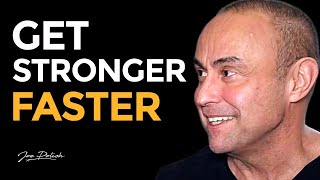
Live interview (recorded Jan 2, 2017) where Joe Polish introduces Charles Poliquin — renowned strength coach — and they discuss training, nutrition, sleep, and behavior-change strategies. Poliquin illustrates his methods with athlete examples (Helen/Elena Maroulis), advocates short, intense strength training (~4 hours/week), protein-forward breakfasts to set neurotransmitters, careful management of sleep and light exposure, minimizing grains and sugary drinks, compound lifts for hormone response, and certain supplements (fish oils, amino acids). The session ends with audience Q&A offering concrete thresholds and supplement doses.
Questions this video answers
72.8% (as stated in the talk).
Sub 10% body fat for males and sub 16% body fat for females.
DL-phenylalanine and L-tyrosine — 3 grams of each on an empty stomach in the morning.
strengthsensei.com
January 2, 2017 (from initial metadata).
Chapters
Don't know who Charles Poliquin is. Let me give you a quick background. Charles Poliquin is recognized as one of the world's most successful strength coaches, having coached Olympic medalists in 22 different sports ranging from bobsled to long jump. His two latest successes at the Rio Olympics were Helen Morosis, the first US woman to win a gold medal in wrestling, and Will Clay, silver medalist and triple jump. He is known for making athletes faster on any surface, whether it is ice, water, grass and track. He's also trained world record holders in 10 different sports from powerlifting to speed skating. His name is also well established in pro sports, having coached athletes in every major professional league, NHL, NFL, NBA, MLB, UK premiership league, etc. He's lectured or consulted for a variety of high profile organizations such as the US Secret Service, Walt Disney Corporation, Australian Sports Institute, to name a few. He's the author of 14 books on strength training and his work has been translated in 36 languages. His first appearance on the Tim Ferriss podcast is still one of the top 15 most listened to episodes. And I think it's maybe number two on the most downloaded or something. Number 10. Okay. And he's constantly requested by listeners for a round two. So give it up for a very smart dude, my friend Charles Polkin.
What's up? All right, so.
How do you describe yourself? If I didn't have like a bio, like people come up and without being a smart ass, because you can be kind of like, you know, sometimes I.
Would say most simple lines. Most successful strength coach in history. Yeah.
What is. Okay, so strength coach, what do people come to you predominantly for? I know a lot of things from everything from bodybuilders to winning, you know, I mean, but what do average people come to you for?
Well, I don't really work with the average, but the average athlete that comes to see me basically is interested in winning. So probably my biggest success in my career is Ellen Maroulis, who became the first American to win an Olympic gold in wrestling. Okay. But when she came to see me, to be politically correct, she was a bit fluffy and she could do zero chin ups. Zero. Okay. So for somebody who I've been on the national team for eight years, that wasn't so good. So nine months later she could do two chin ups with a 55 pound dumbbell and she only weighed about 125. And then she won the world championships. And then by the time she went to Rio the Tuesday before she left, she did two chin ups with 66 pounds on the rings, which is much harder to do. So when she defeated Yoshida, who had only lost twice in 20 years, she was a big ticket in Japan.
Oh, speak up is what they're saying.
Okay, so what happened is that she defeated a girl that only lost twice in 20 years. But I was trying to watch it online, and then I kept getting texts and WhatsApp from my students going, hey, congratulations. And in every media around the world, whether it was Sweden or the Emirates, they said Ellen Maroulis won because of strength. So it was probably the best marketing I could ever do for myself. But even Yoshida, she went on national TV in Japan and she said, my opponent was much stronger than me. I had to concede defeat. And now Ellen texted me yesterday, and she's a celebrity in Japan because she's the first person to defeat. And then when she fought Yoshida last time, Yoshida turned her into hamburger meat. So the second time she fought her, she says when she grabbed her wrist and pulled her, she goes, whoa, she's much weaker. I said, no, it's not. She's weaker. You're much stronger now. And that's what made the difference. But she goes, it was a shock to her when she made first contact in Rio.
Interesting. Very cool. Well, okay, so what does it require mentally and physically to perform at that level? Because I think it's a combination of both.
Yes. I mean, but the thing is that Ellen Maroulis is probably the poster woman for dedication. I mean, she went 18 months without having dessert. She didn't have Christmas dinner. You know, and we have a saying in sport. What does third place taste like? Cake. Right. So the thing is that she was very, very committed. But she, for example, learned Japanese so she could understand what the coach was telling her on the mat to her opponent so she could figure out the next move. Wow. So, you know, Helen, of all the athletes I've coached in my life, is probably the most detail orientated athlete that did every single thing. She watched YouTube videos of her fighting, she could understand her moves, you know, and now what we see is that now everybody's copying, so they're trying to see what you're going to do next. And we have a plan for Tokyo for that.
Okay, awesome, awesome. So for people that are here in the room, which are like a bunch of driven, successful entrepreneurs, male and female, I want to talk about some different advice and recommendations for people here to get in as optimal condition as they can on all levels and things that anything you want to talk about to improve not only their physical Bodies but their sleep or anything that you think is important. I first met. Okay if I tell the story how we met. Yeah. So we both have a friend named Janet Atwood who actually invited both of us. Unbeknownst to both of us, we had heard about each other because I had been Bill Phillips marketing consultant since 1996 and Charles was writing for Muscle Media magazine. He'd written for pretty much everyone and basically I'd heard of him and he was at a big reputation in the world of fitness and bodybuilding and powerlifting and you name it. But I never met him in person. And so we go to Fairfield, Iowa and we both go through meditation training for TM training. And that's how we met. And so we spent four days together with like five other people who were all my friends going through meditation training. And it was kind of funny because we were in a hotel where there was like nothing to eat except a bunch of carbs and you were like ready to kill somebody while going through meditation training. And we shot some funny ass videos at the grocery store and stuff. So that's where me and Charles met. So you've explored a lot of different areas of the mind and the life. So what are some just fundamentals that people need to do in order to get in great shape?
One of the biggest myths is that it takes a lot of work to get a good physique. And I mean Tim Ferriss wrote a book for called the four Hour Body. But I think that four hours a week is plenty. Even my top level athletes as far as strength training is concerned, it's about four hours a week. But there's no messing around when I train. And I think what people should realize, the room is full of entrepreneurs. But the difference between you and Olympic gold medalist is not that big because you're very driven. But the problem is that the way I explain to people is that you're like an oil lamp and the flame is the yang energy. So the bigger you can burn the flame. It's great. So people spend a lot of their energy, but the problem is they don't take care of the oil. That's what we call the yen reserve. So executives should be really focused on building the highest possible yen reserve to be as yang as they want to be. Because how many of you work 16 hour days? It's quite common, right? And then you cut back a lot of things. And I think that the modern trend is to say you have things like the one thing or Tim's philosophies, but you should Try to shorten your workday and take care more of your yen reserve. And sleep is the limiting factor. 72.8% of Americans complain of sleep disorders.
Wow, 72%.
Okay. So where do we have most accidents in the US Is when we put the clocks forward and we lose an hour of sleep. So they put more cops on the road because there's going to be more accidents. So just one hour of sleep makes a huge difference in accident statistics. So I think that we have to take care of our sleep patterns. And there's also. What I like to say to people is that the two biggest stressors or lead it to their mouth. In other words, it's the things we say. It's what we put in our bodies. And the thing that happens is that you never had somebody say, oh, man, I was so stressed last night, all I could eat was Brussels sprouts. Right? So people will say, okay, I was so stressed last night, I went through three boxes of Pringles, you know, two kilos of chocolate chip cookies, blah, blah, blah, blah. So we tend to self medicate with carbohydrates. Why? Because we found out a long time ago that cortisol, which is a stress hormone, is lowered by insulin. Right, but the problem with insulin, it's your friend sometimes, but for most of us, it's the enemy, because insulin is the hormone of aging. So the more insulin you make, the faster you age. And controlling the fat loss process is managing insulin. The more you can control your insulin, the better you will do. Great.
So when we were outside at lunch, I was doing a Facebook live video, and I said, what's the best piece of health advice you could give to people? That would be a total game changer. And you said, if grains were eliminated from the planet. But the caveat being that half the world's population survives because of grains and people. If there weren't grains, people would die. If you have the availability of food, like most people in this room, how would you eat?
Okay, I've worked a lot with the hockey players, football players, and I got to make it very simple for them. So I say, ask them a question. I said, ask yourself that. The food you're going to put in your mouth was accessible to cavemen. And I run a test. So I go, like steak? Oh, yes, a caveman could have that. And then donuts. And they go, ooh, is there a donut tree? No, pop. Is there a pop river? So if a caveman has access to food, he can eat it. So that's a very simple rule to simplify our eating habits.
Did cavemen have. What about grains? They did have access to some grains.
Very little.
Yeah.
Grains are more linked. The grains started to get popularized in ancient Egypt. And then what we saw though, if you look at skeletal remains, is that that's when we start to have degenerative diseases. We used to be much taller, much more muscular when we were living more off a Paleolithic diet.
Yeah. So when you travel, as most people here, they travel a lot. How do you eat when you're on the road?
Well, the thing that you have to realize is that I actually do a lot of my teaching schedule based on the countries where I could find the proper food. That's why I don't go to England. Right. It's like a third world country when you look at food.
And all those of you in England on Facebook Live.
Hi there.
How you doing?
In all seriousness, to be productive, you have to eat properly. But one of the things, for example, with jet lag, I just did a post today in some of my pages is that the food you eat when you land in the country will make a big difference. Are you going to. Your brain is going to be. So, for example, as they land in sail. We're now going to prepare for landing. Well, you should drink about 1.5 liter of water. Why? Because have you ever noticed it's really hard to fall asleep if you got to pee? Right. So basically when you drink a lot, you activate the kidney meridian, which is the energy meridian. So you drink a lot of water. Then this thing you should pull out of your briefcase or your purse is caviar. Caviar is probably one of the best brain building foods. And you have to reset your neurotransmitters. And the Yang neurotransmitters are dopamine and that's still choline. So you could have caviar or you could have, if you don't like fish, you could have roast beef, but it has to be a meat or a fish that contains a lot of tyrosine because to make dopamine you need tyrosine. So that would be a thing. And the second thing I would eat is macadamia nuts because my cadaver nuts contain a lot of levels of choline. And choline will fire up your brain. And you know, and also when you look at, sometimes I teach, I land, let's say in Estonia at seven in the morning, at nine o', clock, I'm teaching and people go like, when did you get in? Last week? No. And they Say, how come you could have so much energy teaching? Well, a lot of it with jet lag is actually your mindset. If you keep saying, for me, it's three in the morning in Boston, hey, fuck, shut up. Like you're in Estonia. You're in Estonia. Live like an Estonian, shut the fuck up. So, you know, that's my philosophy.
It's beautiful. It's very, very sweet. So what is your fitness routine? How do you exercise? How do you work out when you're at home and when you're on the road?
Basically, I wake up early, I do meditation per se, then I take my book and I write what I want to be most proud of before I go to bed. So that sets up my mind and I write what I'm grateful for. But it's not repetitive. So he talked yesterday about lowering the bar. Sometimes I say, hey, it's a really great bed at this hotel, or whatever. So I simplify it and then I say, what am I going to do? Then write this down. This is the most important sentence of this interview. The first thing you put in your mouth in the morning, provided it it's food. Okay? So the first thing you put in your mouth in the morning, provided it's food, will dictate the neurotransmitter cascade for the whole day. So that's why I'm a big advocate of the meats and the breakfast, because it provides you with the raw material to make the proper neurotransmitters for the whole day. And there's lots of research from Even the early 50s on the content of your protein and the ratio between proteins and fats and. And the quality of the protein you ingest in the morning dictates the energy, even in the later afternoon. So with children, what they found at Harvard is that if they eat, let's say, oatmeal, or even worse, microwavable oatmeal. Yeah.
Or cereal or something.
Yeah. What they find is that when you give them lunch and they have to self select the food they will eat, they make worse choices if they had a carb only breakfast. Also, for example, if you give kids pancakes with that fake syrup, French canes, we call that telephone pole syrup because telephone poles don't have SAP. So if you have, let's say, telephone pole syrup and then pancakes, kids score 20% less on IQ tests because temporarily their brain's in a fog. So it's very important to set up your day with the right food. Then typically, an hour after I've eaten breakfast, I train okay. Then shower up, take a post workout shake and go to work. Whether I'm at home or I'm on the road teaching, that routine doesn't change. And I think it's really important to have very steady habits in your life. And then this way you never have an excuse for missing out in the gym. You don't miss your dentist appointment, or you don't miss your appointment with your tax lawyer. Well, you shouldn't miss your appointments with your fitness because you got to take care of your body.
So as you age, out of all the different things, say, because I do a lot of yoga and I lift weights, which is why I'm bigger than you, but basically. So strength training, stretching, cardio, good, bad, how to go about doing it.
The problem with cardio is most people do long, slow distance, right? But if you look at research, the athletes, Olympic athletes who've done the most long slow distance cardio, have the most brain damage in later age. A lot of cardiovascular training is actually brain damaging. And you can find it up in the research. So I prefer that people do interval type of training. But the most important thing is that you show up. Okay? So if your thing is yoga, or if it's Tai chi, or if it's Taekwondo, or you want to play hockey four days a week, that's great. But you got to be active, you got to sweat, right? For busy executives, I've got certain types of workouts, which I call German body comp training, that people can do a lot of work. Basically, it's a fat loss through weight training. And strongman training is very good. CrossFit, if it's done in a proper box, is very good. Some people need external sources of motivation. They need to be in front of a group. And you gotta be. Here's a very simple rule about exercise. If it's not a hell yes, it's a no. So if you don't enjoy it and you're just doing it because you, you need the discipline, that's bullshit. Okay? And I don't believe in discipline. That's a myth. I wrote an article, the most popular and most plagiarized article I've ever written. It's called the Myth of Discipline. And the basic message of this article is that you make the choice and you gotta decide what you love more. You love your brain more than doughnuts, then you'll exercise. Okay? Do you love, you enjoy healthy joints more than croissant and Nutella, right? So I don't know anybody that's ever been mugged By a dozen donuts. It doesn't happen. Okay. I mean, have you ever eaten anything by accident? Doesn't happen. So this is the type of conversation you need to have with yourself. And then when I tell people, just make a conscious choice. Is this the best thing for me now? But don't tell me you don't have discipline. What you're telling me is you love donuts more than having a great physique or a healthy physique. Does that make sense?
So when people body fat and stuff. Some things I've worked because I've been through several of your workshops, you know, like multi day trainings and stuff. Is people's ability to. Because so many people, it's a vanity thing. They just want to lose weight, they want to look good, you know, and it's almost like secondary or circulatory system or how your heart's going to be or how your brain's going to function. I mean it's like we live in a culture that is so much about how they look. And what I've learned so much from you is hormone levels. And so that people can really have maybe good workout rituals and stuff, but their hormones are all jacked up. So what if people are really putting forth a lot of effort and they still feel lethargic or they cannot lose weight, or they don't feel stronger, they're mentally foggy. What should they do to discover how to fix it and what is causing that? I mean other than obvious things like the environment. If you're working your ass off and you're giving your no time to rejuvenate. I think what you've talked about a lot is stress. Human stress can cause so much of. So what should someone do if they're either in a state of like, I want to work out. This sounds good, I've always wanted to, but I can't stick with it. I can't stop carb cravings, I can't stop sugar or I'm like tired. I have no motivation. I mean just being in a place where they're stuck. How do you get unstuck?
Okay, the first thing is I always tell people to do this. The best day to change a habit in North America is Saturday. So you don't have to rush to go to work. So you say, okay, I'm going to commit. But I think people over commit. So I say just go to the gym 10 minutes. Okay. So it's better to undersell, right? And then after that they could work it out. But the thing where people should, where they would have the most impact is actually sleep. Do you really need to send that extra email? Do you really need to watch the news? Do you really need to watch that TV show? Okay, you could tape it. You could buy a Netflix subscription. There's a lot of research out of Germany that shows that the earlier you can go to bed actually, the better it's going to be for your hormones. One of the problems we have with our lifestyle is actually lights. So the more we can offset lights. And there's a lot of technology out there for controlling the effect of light on your brain, but also gradually diminishing the amount of lighting in your house as you prepare to go to bed makes a huge difference. There's stuff you could put on your computer screen so that there's less stress on the brain and your eyes. So managing the electronics in your life will do a lot for your sleep. And simple things like don't watch CNN before you go to bed. I mean, have you ever seen great news on CNN? It's usually 99% tragedy. And the thing that the.
Yeah, TVs and bedrooms, I think are incredibly unproductive sort of devices, especially for entrepreneurs. You know, if you have nothing going on in Your life and TVs your biggest highlight, then maybe. But, you know, yes.
And then, you know, simple reading and book reading and journaling will do a lot for your sleep because one of the things with sleep is that people can't shut off their brain. One of the most common disorders I see in executives is the inability to shut off the brain. So journaling is one of the best ways to get out of your system. And I like people to journal before they go to bed. But having a grateful log, in my opinion, is probably the biggest step for sound sleep. And you have to have what we call a sleep routine. So you have to have a countdown of what you're going to do and the activities you choose before going to bed. And if you go to my website, strengthsassay.com, i've got lots of sleep strategies. But for example, there's a botanical called reishi mushroom. And one of the names in Chinese means the mushroom for the professor lived too much inside his head. So reishi mushroom is actually an anxiety lower, it's an anti exiolytic. And then if you consume reishi mushroom extract before you go to bed, you actually have better sleep. There's a lot of different amino acids that can make a huge difference on the quality of your sleep. Like theanine. Okay. That comes originally from Green tea. How much magnesium you take before going to bed makes a difference. A lot of people have inflammation because of stress. So, for example, taking a probiotic with glutamine an hour before they go to bed lowers inflammation and they sleep better. I mean, the amount of sleep strategies that are possible for anybody are limitless.
Okay, So I have a person who is in this room that I've been trying to. I'm not going to say who it is that I've been trying to encourage them to quit drinking sodas, because sodas are pretty much like Liquid Satan. And I don't consume hardly any sugar unless they sneak it in the foods. And I don't eat dairy, and I try not to eat processed foods. I like eating foods that have a single name, like broccoli, not Doritos, because that's not the same thing. So let's take soda. A lot of people just consume a ton, and there's a ton of sugar, water, juices and stuff. Good or bad?
I mean, horrendous.
Horrendous.
Okay, so horrendous is the best word. The thing is that Americans consume 50% of their calories through liquids. So I think that one thing we should do is tax the hell out of.
Tax the hell out of liquids.
Sugar liquids. Yeah. So if it costs $97 to buy a bottle of Coke, the consumption will go down pretty quick.
Well, and that's where many of the healthcare costs are going to people that are consuming.
Exactly, exactly. And then. So basically, water, teas. I'm really big on coffee, but it's the timing of your coffee that makes a big difference. Right.
When you said first thing you eat in the morning, I was going to ask you what about coffee?
From what the research shows with MRIs, you can see which areas of the brain lit up when you consume certain foods. I recommend that you eat solid food before you take your first sip of coffee.
Okay. Yeah. Because I know many people that the first thing they do is they drink coffee in the morning, then they get to the other stuff. If they get to it, and if they're too busy, the coffee becomes the way that tides them over. And these are the same people that are usually stressed out of their fucking minds.
Exactly.
Yeah. Okay, so going back to soda, what does it actually do to the body?
Well, one of the things it does is changes the alkaline balance in your body. One thing that, for example, a very good orthopedic surgeon from the Valley showed is that the more the kids drank soda, the weaker the bones are. Okay. Because it contains a lot of phosphates, and if you consume too many phosphates, you actually leak calcium out of your tissues. So when I was a kid, I never heard of a guy playing football who broke his patella. Right. But Nowadays, since the 2000s, kids who break their patella playing American footballers. And the main factor associated with broken bones in teenagers is actually soda consumption. So besides. And then the thing is, there's all sorts of artificial sweeteners and additives that we're not even sure if they're healthy. I mean, I would like to see the science behind it, but there's not such a thing as a. Well, one of the things we know is that one of the most common additives in soda is sodium benzerate, and it is the chemical most associated with prostate cancer. So if you consume a lot of sodas, you're more likely to get prostate cancer. So that's enough of a reason not to drink them for males. So they're quite evil, to be fair. Right? Yeah.
That's good. Now, by the way, so Tim Ferriss has written about you in his latest book, which is Tools of Touch, and he basically considers you like the guy. So there's a bunch of pages of stuff which is kind of funny, and he has a quote from you. What you put in your mouth is a stressor. And what you say, what comes out of your mouth is also a stressor. And so, yeah, it's a very good book.
600 pages. And you got. Basically, it's the top 30 of his most downloaded books podcast. Yeah.
So listen to the. The episodes with Charles.
They've downloaded already over a million copies of that podcast. It's the 10th most downloaded podcast of the Tim Ferriss series. And I still get emails every day about that first podcast. I just did another one, and I think they already downloaded 700,000 copies. So it's a very good medium to do deliberating information.
Totally. If you were to get in a physical fight with Tim, you think you could take him?
Yeah.
I'm going to say someone could tag Tim Ferriss so he could watch whatever, however far is that still going? Okay, good, good. Awesome, awesome. So what we're going to do, we're going to take a couple of questions from the audience. Just talk really loud if you could so that people can hear it.
So what is your drink? You said you take a shake after your workout. What is it?
Well, what you consume post workout will affect how fast you recover from the workout. But what is in the drink is a function of how Lean you are. Right. So if you take your shirt off and you shape it, it's like a melted candle. Well, you got to stick to proteins and some amino acids. And if you're very lean and you have a lot of muscle mass, then it would be a combination of carbohydrates, maybe five different types of carbohydrates like pentacarb from ATP labs and the protein. But one of the things we see clinically is a lot of people are actually intolerant to whey protein. So I prefer to use straight amino acids or some people are allergic to dairy from cow but not from goat. So you could have goat protein. I'm not big on plant proteins because about as nutritious as the cardboard box. So I prefer to use straight amino acids if I'm not going to use dairy based protein.
Have you ever had a shake or anything like that?
It's not a green shake. It's literally you're just taking mixed proteins. It's more of a manufactured shake is what you're saying.
Correct. I mean there's also now the technology for beef protein shakes and they've actually worked on a taste and they're very good. Yeah, like that.
That's what JJ Virgin's latest shakes are, is. It's organic beef protein shaking.
A steak, basically. It's a steak shake.
Yeah. Okay, awesome. Jennifer. And then we'll go to Paris.
So when it comes to even some of your like the athletes that you.
Work with, I'll show the Facebook live.
Through the beautiful audiences.
You talked a lot about like the yin and some of the mindset and so how have you been able to get to people to be more consistent with their workouts and some of these things as far as like stopping drinking pot when for the most part it's probably like an emotional thing for them that's stopping them from working out or emotional thing, a trigger that gets them to drink that pop.
I don't give much credence to that because if people don't control their food intake then it's easier for them to make bad choices. So the emotional part somewhat, but I think a lot of it is solvable by managing your brain nutrition to a T. Right. For example, a lot of ADD is malnutrition. So you fix the kid's diet, then suddenly you can concentrate as addiction. Yeah, yeah. Addictions and so on. So I think that if you. There's a lot of papers that have been published mainly out of Toronto and Boston where they look at a composition of the breakfast and how it impacts cognition, but also food choices throughout the whole day. So it does really set you up as far as discipline. If you have a proper breakfast. I think that, you know, one of the best ways to solve America's health issues would be to have a federal breakfast program. And then you don't have to feed your kids at home. You bring them in half an hour earlier and they have the right nutrition. So if I was emperor of all galaxies, I would standardize the breakfast because that would be a way to fight things like obesity. And, you know, kids don't pay attention in class. And any. Ask any school teacher, you can tell if kids eat breakfast and a proper breakfast by the attention Spanish in class, okay. Because it sets you up for the whole day. Yeah.
Awesome. And we'll go to Paris.
I want to clarify, you know, the point on the post workout shake. A lot of people say, you know, you have a shake with grape juice in it and it causes you to get insulin, which builds muscle. I don't understand that you're not a proponent of that. I'm a prone of it. If you deserve it, write this down. You need to deserve your carbohydrates, okay? So if you're not lean, like, you know, I tell men if you don't have penis skin on your arms, you're too fat, okay? So you pinch. It has to be really lean. If it's not, fuck, stay away from carbohydrates. They're not your friend. Right. But I think that's really good to be vulgar because it raises dopamine levels and people actually pay attention. Right? But the thing is that I'm for spiking some post workout if you deserve it, okay? So you have to be sub 10% body fat for a male and sub 16 for a female.
All right, if you could say it real loud, Ed too, sure.
I wonder if Charles, if you talk about the difference, especially on a guy's hormones, with respect to doing isolated workouts versus compound workouts, you know, full body movements versus isolation. Is there a difference? Yeah. If you look at the research, the larger the muscle mass you recruit, the more hormones, I mean, beneficial hormones you produce. So if all your exercise are single joint, you're not going to be able to muscle mass, you're not going to lose a lot of fat. So if you center your first 70% of your workout around big compound exercise, you're on the right way. I have a friend who's set 76 world records in parlathing. He says work on a Christmas tree. Not the ornaments. That's Ed Cohn. So I think it's really important that you. It's what I call most bang for your buck exercises. So squats, deadlifts, chin ups, bench presses. I really like a lot of dumbbell work because it keeps you balanced. And I really like fat handle type of dumbbells. Joe has done a video on that. Yeah.
Watson's Gym in the UK make the best dumbbells in the world, for sure. Designed by Charles.
Yes. So, you know, nothing beats the basics. And the thing is that basics are hard work. And people like to avoid hard work. Right. I mean, they do tricep kickbacks, and they don't forget to purse the lips. Okay. That's not gonna do much for you. Right. But if you vomit a lung because you did a set of 20 in a squat, you're gonna make progress. Right?
It's real great advice. Just.
Yeah. The goal of workout is that your spleen should come out through the left eye. If it has to come out through not the right eye, but the left eye, then the workout was hard enough.
So we'll take two more. So summer and then Dan, and then we're done.
What are your thoughts on intermittent fasting?
Thoughts on intermittent fasting for people watching.
Okay. If you look at the research, you'll find that intermittent fasting is beneficial in the very obese. A lot of the research on intermittent fasting is looking at the world through a straw. Okay. They don't look at other things, but in the labs, where they look at things like cognition, they found and muscle performance, they found that intermittent fasting was harmful. So I think that you should take care of your brain. Right? So I'm not big on intermittent fasting. There's different conditions. It depends how you do it. There's a lot of. But one thing they found in women is that it does really mess up the endocrine system. And one of the things I find when people do intermittent fasting, they become food obsessed. Okay. It's like another 52 minutes, another 48. Right. And then they compensate by drinking more coffee. So I think that because I'm a big believer in a breakfast, I'm not so keen on intermittent fasting. Some people are very. But I think a lot of it, when intermittent fasting, if it works for you or not, is actually genetics. Some people, for example, if I did intermittent fasting, I would be for the first time in my life on CNN because I've killed 76 persons in a parking lot on my way to work because I Get extremely irritable if I don't manage my protein intake in the morning. Some people don't have an appetite at all. So I'm not 100% against intermittent fasting. It's conditional, but I'm not a big fan of it either.
Okay, Dan, you brought up breakfast being the most important, I guess, meal of the day. I have 11 and nine year old, you know, they're important to me and also for me. I'm curious, what are the foods that you recommend at breakfast that the best that we could look at either for ourselves or our kids?
I think what you have to look at is a very high quality protein. Now, I prefer to eat only wild meat, so, you know, I live in Colorado, so I can get elk or Yakur or Baishin.
Awesome gerbil.
That's if you live in Kentucky. But the quality of the protein is very important. And then I would like to have a type of nut. The reason why I like to have different types of nuts for breakfast is that they provide choline, which is a precursor to the neurotransmitter acetylcholine. So it helps you with paying attention and brain speed, which is important in our lives. And then if you can afford it, berries is a good source of carbohydrate. A very simple rule is the thinner the skin is of the fruit naturally, the more phytonutrients it has, because, for example, a raspberry doesn't want to be sunburned. So how do you protect yourself from the sun, which is an oxidant? You make antioxidants. So if you look at, for example, grapes, the grapes that have the highest amount of phytonutrients are the ones harvested in hills, like in Sardinia and in Spain, as compared to, let's say, German wines, which are in valleys. And they don't have that angle of the sun. So berries are a very good choice. And any thin peel fruit is good. Do you advocate green shakes? Green shakes are very good. One of the problems, though, in the industry is a lot of them are loaded with heavy metals. So there's some companies that are good and some might as well drink a liquefied bumper. Okay. So the quality of the product really.
Matters if you make it yourself, like spinach.
Okay, that's even better if you make your own green drinks. But I thought you were asking about powdered greens. Powdered greens. There's a lot of countries out there, but usually if you can buy them to a regular store, you're drinking a green liquefied. Bumper because it's full of heavy metals.
What about juicing versus like blending like greens in smoothies?
The problem with juicing is that you cut away the fiber and the fiber is very important to stabilize your blood sugar. So I prefer to use a powdered green versus a juicing. Okay.
Anything that I should have asked you that I did not that you would like to say?
Well, I'll take an extra question on that. I don't know. I mean there's so many things we could talk about.
Is this the most important book you've ever read? The pre release of Joe's marketing book.
But your check didn't clear my bank account until it does. No, but this is a very good book. I've actually read it or that one of the first advanced copies. And we do marketing every day anyway. Right. So it is a valuable tool.
Yeah, I just needed to fit that in just for no other reason than is you're right here. And my self esteem requires constant edification. Okay, so where do people find more information about you?
On my website, which is strengthsensei.com so strength and s e n s e.
I strengthsensei.com and what I'm going to do in the future because of what we're doing with artists for addicts and the platform with addiction. Charles can speak to a variety of different subjects on health and exercise and fitness and supplementation. But he also knows a ton about the brain and about human behavior. And so I want to do a whole episode with you in the future when we launch the platform to help people with addictions about because like for instance, the supplements. If someone has an alcohol problem and they want their body to kind of reject alcohol, what is it?
The best two are the combination of two amino acids, which is thyroid, D L phenylalanine. And if you take 3 grams of each on an empty stomach in the morning, people will find that they don't find alcohol tasty anymore so they naturally take it out of their regimen. You will find that pretty much anything that has to do with the brain is fixable with a certain combination of the omega 3s and certain amino acids. Because with fish oil, if the fish is big and comes from a warm water, it tends to contain more more EPA. And of the omega 3s, EPA down regulates inflammation. So if you have arthritis, high blood pressure and so on, you want to use a fish oil with a lot of epa. But if you have attention deficit disorder or bipolar disorder, there's at least 16 brain disorders that we know are manageable with the right type of fish oil. But that fish oil has to have an IDHA content. And where do you get a high DHA content in the first fish oil? They tend to be small fish in very cold water like sardines and herrings and so on. But when you go to the store, if you go to your doctor or nutritionist, you can look at a ratio between EPA and DHA and that will decide actually which tissues are affected with it. If you don't have anything particular with your health, I would say every time you go through a bottle of fish oil, pick another brand with a different ratio and that will lower the odds that you have any sort of disorder. One thing you should know about omega 3s is that there's not a single disease known to man, and I've known this since 1994, that is not helped by Omega 3s. So if you don't believe me, you can go to PubMed, which is the biggest library of scientific papers and put in any weird disease, you know, put omega 3 as a second keyword and you will find at least one study, if not minimum 14, that show that that fish oil is beneficial for any ailment known to man. Is there any way to know if.
Fish oil is good? I've heard that a lot of the fish oil you buy in stores is rancid and you should just never eat it. It's actually worse than not eating it. I used to do it until I heard that. And you know, you hear so much bullshit advice. Worst advice is, you know, bad advice is the worst thing you can take. So how do you know whether fish oil is good or bad?
The best way to find out. Is it available through a health practitioner only. So basically it means that you can't buy on the Internet. The only company there's an exception to the rule and I don't get paid by this company. It's called Nordic Naturals. Nordic Naturals, they have very high quality. They really standardize the way they make fish oil. In Canada the rules are very different. So in Canada you can actually buy a store bought and probably the best company to buy is called ATP Labs. But they make a fish oil that already has carnitine in it. It's called Omega Carn and I think that's the best product for your brain. One thing we know from research is that any brain disorder is actually an electrical problem in your brain. And research backs up. The combination of Carnitines and Omega 3s is probably the best healing agent for any brain disorder. For Ranging from dyspraxia to dyslexia.
And you're saying 6 grams per day.
That would be a minimum. I mean, it depends on your percentage of body fat. Right. So at higher body fats, I've used as much as 45 grams. But that means your body fat is 45%. As you get leaner, you will use less and less fish oil. Okay.
It's relative. If you got 10%, do 10.
Yeah.
Typically when you start off, but you could be at 10%. You've been on fish oil for six months. If I measure your fatty acids and your blood may be down to 3 grams. But usually one of the guys I was recommending 30 to 45 grams for at least two decades. And then I remember Mark Houston is probably one of the best vascular health specialists in the world, said, man, that's three to eight times more what the literature recommends. But the problem literature never tried high dosages. And one of the best complications ever had is that in 2008, there was a KN study that showed that in the average person, 60 grams of fish oil was the best dose. Okay, so he sent me an email that says, in the bottle a day, huh? No, but if you use liquid, it's not so bad. But the thing. The interesting point that Mark put in his email was clinicians always ahead of the research. Okay, but when we were cavemen or cave women, we consumed 3 to 400 grams of omega 3s a week. But where did it come from? Came from animal brains. Because if you're in South Africa in the middle of the savannah, you're not going to have access to a lot of fish. So what would happen is that the caveman would wait for the lion, Lions would eat the entrails of the antelope and leave the rest alone. So what the caveman would do is he would split the skull of the antelope and eat the brain. And 60% of the brain is actually omega 3s, and 80% of that is DHA. So that's why what you find in research is that where humans, early humans, consumed the most Omega 3s, the faster their brains developed. There's a strong correlation between omega 3 content in a native diet and IQs. So, for example, the bow and arrow concept was developed where there was more better developed brains.
Well, okay, so now what we're going to do is we're going to arm wrestle, and we're going to. We won't Facebook live that, because I don't want Charles whole reputation to be ruined. No, I'm kidding. He would kill me. So that was awesome as usual. So thank you. Go to strengthsensei.com and check his stuff out and have a wonderful day. Thank you.
It.
More from Joe

This FBI Trick Can Command Respect Without Saying a Word ft. JEFFERSON FISHER & CHRIS VOSS

How To Stand Out, Be Different, and Create Raving Fans, Customers, and Employees ft. Jesse Cole



90% Of Businesses Fail In Their First Year, Here's Why! ft. Dr. Benjamin Hard & Dr. Robert Cialdini

The 1 Piece of Business Advice I Got From Elon Musk That Changed Everything Ft. Kamal Ravikant

The 6 Traits You CAN'T Teach in Entrepreneurship ft. Richard Branson & Gino Wickman

The Leg Method: How to Make Your Book into a Million-Dollar Asset ft. Anna David


7 Millionaire Mindset Hacks for Daily Success and Wealth ft. Brian Tracy & Dan Sullivan
