Conscious Capitalism John Mackey: 7 Secrets to Building a $15 Billion Empire!
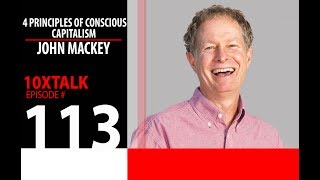
Joe Polish interviews John Mackey, co-founder of Whole Foods, about building a $15 billion company. Mackey discusses entrepreneurship, business ethics, and conscious capitalism, sharing insights on culture and leadership.
Chapters
Welcome to 10X Talk. In this episode you'll discover why entrepreneurs are heroes, the four principles of Conscious Capitalism, the two most important components of a great company culture, and more with John Mackey. John is the co founder of Whole Foods, advocate of entrepreneurship and best selling author of Conscious Capitalism. Recorded live from the Genius Network annual event. If you would like access to the full feature video presentation, the show notes and the special resources for this episode, please visit 10xtalk.com113 that's 10xtalk.com113 I am.
So super excited to introduce our next guest. His name is John Mackey. He's the co founder and co CEO of Whole Foods Market. He's led the natural and organic grocery line Whole Foods market to a $15 billion a year Fortune 500 company with more than 435 stores and 85,000 team members in three countries. The company has been included on Fortune magazine's 100 Best Companies Work for list for 18 consecutive years and ranked first in the Food and drug store industry. As part of the magazine's Most Admired companies list in 2016, John Mackey has been recognized as one of Fortune's World's 50 Greatest Leaders, Ernst and Young's Entrepreneur of the Year, Overall winner for the United States institutional investors Best CEO in America, Barron's World's Best CEO, MarketWatch's CEO of the Year, Fortune's Business Person of the Year and Esquire's Most Inspiring CEO. If there's anyone here that has gotten more than those titles, let me know because I doubt it. As a strong believer in free market principles, Mackey co founded the Conscious Capitalism movement and co authored the New York Times and Wall Street Journal best selling book Conscious Liberating the Heroic Spirit of Business to boldly defend and reimagine capitalism and encourage a way of doing business that is grounded in ethical consciousness. In 2006, Mackey cut his pay to $1 and continues to work for Whole Foods Market out of passion to see the business realize its potential for deeper purpose, for the joy of leading a great company and to answer the call to service that he feels in his heart. So give it up for my friend John Mackey.
Thank you sir.
How about we put you in the middle here? Then everyone will see you the best in that.
Is that the hot seat?
Yes, that is the hot seat here. I wanted to do something because I got this idea from Conscious Capitalism. Is that okay if we put it there? But I like the way that you write about it in Conscious Capitalism because your the theme of this event is freedom and your way to speak to capitalism. I love, I love your philosophy. Not only have you been extraordinarily successful in your industry Transformer, which the room is filled with many people that are at the top of their game, and you certainly fit that. Just your focus on value creation is huge and how you frame capitalism. So what did I not say about you that people should, should know?
I don't think I want all that stuff.
That's true, that's true. There's some things in there. So I've got a whole list of questions. We did a lot of prep, as you know, for this, and I first met you about three and a half years ago. Me and Renee came down and we're supposed to have an hour lunch, and it ended up being about three hours.
And that was give your money's worth.
Yeah, exactly. It was great. It was great. And so I'm going to talk to you about business, I'm going to talk to you about food, I'm going to talk to you about your life. And so I want to start with just capitalism, which is. So this question is, why do you think intellectuals dislike business, commerce and capitalism so much?
Well, they clearly do. The first thing, I think intellectuals have always hated business. They're the class enemy of business, if you want to get right down to it. I mean, think about world history. Business people have been routinely persecuted. I mean, the Jews are persecuted in the west, the Chinese in the east, and it's by the scribes, it's by the intellectuals. Why did they do it? Probably a lot of reasons. One, they think they're smarter than business people, and they don't like where business people oftentimes rise in society. They have disrespect for commerce, which they see as sort of dirty tradesman type stuff. And then there's just envy. Envy of the wealth that business people generate. Yeah.
So how do you mentally prepare yourself when you get attacked?
You know, I do get attacked a lot, so I think at some level I must be drawing that to me. But the best way, of course, is to stay in your heart, not be defensive and, you know, just don't let it get to you. But I admit I like to debate. So frequently I. I do respond and try to make logical arguments, which usually doesn't get me anywhere. Yeah.
Thank you. Well, okay, so this is going to be a long question, but you talked about how if Adam Smith's ethical philosophy, the theory of moral sentiment, had been synthesized into his economic philosophy, the wealth of nations, the world might not have attacked capitalism as fundamentally selfish or greedy. And let me say, by the way, these questions did not come from John. These are questions that I came up with with my friend Jared. You also give a fantastic analogy about how when we consider the purpose of a doctor, a teacher, or even a lawyer, the purpose of business is often misinterpreted. Can you explain this analogy or just give a brief history into how this narrative came to be that business is greedy or selfish and all about money and profit, why it's fundamentally wrong, and how we need to change the mythology because it's holding back the potential of humanity?
Well, I think there's a metanarrative in our society about both business and capitalism. It's what my friend Ed Freeman, who's kind of the founder of stakeholder theory, he calls it the business sucks narrative. Business sucks. I mean, you know, if you look at, if you watch television, you know, something like 80% of all the murders you ever see on television are committed by businessmen. And in reality, of course, businessmen commit less than 1% of the murders that happen in real society. Businesses caricature is all about money. We're raping the environment or exploiting our workers. We're ripping off our customers. We're a bunch of greedy bastards, a bunch of sociopaths running around. Just all we care about is money, money, money, a bunch of money grubbers. And a lot of people believe that metanarrative. It's very powerful in this society. And one of the ways that's illustrated, I think, is that if you ask people what the purpose of business is, let's say you go to a party and you say, you know, does business have a purpose? Does it have a purpose? People look at you, very odd. Try this. And it's like, what do you mean business have a purpose? Everybody knows the purpose of business. The purpose of business is to make money, right? That's an odd answer, because you asked what the purpose of a doctor is. Doctors make a lot of money, but they heal people, right? Teachers educate. Architects design buildings, engineers construct things. Journalists supposedly uncover the truth.
Supposedly.
Right? Politicians or public servants. But business is all about money. That's what we're about. And yet business is the greatest value creator in the world. Joe. We create more value than all the governments and all the nonprofits combined. Exponentially. In fact, if you think about it, where does the money to fund government and nonprofits come from? There's only one source, from business, because we make it and we create the value in society. And business is a great Value creator. And yet we don't tell that story. We don't defend ourselves well. We are too easily fall for things like, well, business is selfish and greedy, but I'm socially responsible. I can atone for the crime of being a business person by good works, and perhaps someday I'll be saved. These are very deep metaphors and deep mythologies in our society. And business people starts with entrepreneurs. Entrepreneurs are the heroes. Guys, gang, we are the ones that are creating the progress in our world. We're the ones that are moving humanity along and we don't get credit for it. And so, yeah, it kind of pisses me off, actually. And yeah, so I'm a defender of capitalism. I'm a defender of business. It's not perfect. If you want to find things wrong with business, they're there. You can find things wrong with doctors and lawyers and politicians and teachers and everybody else. And business is held to this standard of perfection. I don't think it's fair.
You know, there's so many business owners that are running so fast that they don't even think about it sometimes. I mean, a lot of what I think you speak to is just not having a lot. I mean, you wrote about it in Conscious Capitalism. You tell the story here. I mean, your own views and perspectives. How would you encourage. I mean, you got a room full of very influential, very smart people. I mean, this room communicates with millions of people on a weekly basis.
Shop at Whole Foods Market. Please tweet that out.
How many of you shop at Whole Foods?
By the way, what are you doing here?
That is funny. When you can't find a Whole Foods somewhere, you're just out and about. What do you do?
I arrange it so I'm never too far away from Whole Foods. Okay.
There's got to be a time you've gone into like a convenience store or something to put your head down.
You know, I'm afraid somebody would take a picture of me. I told my wife when we got married, I said, sweetie, you can pretty much do whatever you want, but you cannot go shop at a competitor's store. That's. That's grounds for divorce.
You know, it's interesting though, you actually acknowledge different competitors in conscious capitalism. Sure. Was that more strategy or just you genuinely. I mean, you look at. I mean, how friendly are you with some of your competitors?
I mean, the truth is, of course, that rightly viewed competitors help you. I mean, the reason why capitalism is so dynamic is because it has competition and you have to get better or you get passed by and that causes us to need to innovate and be creative and think of new solutions. And that advances the entire world. The entrepreneurial creativity competition is part of the reason for that. So when competitors do something Whole Foods hasn't done, that's something we can learn. So in a sense, we're on a mutual quest to make each other better.
So I want to stay along the lines of the value creation that businesses do. So you made a great comment once. That is rarely stated. You said poverty. Poverty has always been the default condition of the human race. What's unprecedented is not poverty. What's unprecedented is wealth. Can you share your perspective on this?
Yeah, I mean, it's a sad thing that people are pretty much historically ignorant that humanity has been poor throughout all the time. I mean, until capitalism came around, we were. Well, here are the actual statistics. If you go back 200 years ago, 85% of everyone alive on the planet Earth lived on less than $1 a day. And that's adjusted for inflation. Today's $1 a day, 85% people were very poor. 90% of people were illiterate. The average lifespan was 30. We were poor, we were ignorant, and we didn't live very long. That was a reality before capitalism, before entrepreneurs were unleashed, before we got out of the thumb of the intellectuals and the aristocrats and began to make a better world. So poverty is the natural default condition of the human race. What's unprecedented is wealth, and wealth for not just a few people. But we look at those statistics now. Instead of 85% of the world living in less than a dollar a day, we're down to 14%, we're down to 13% illiteracy rates across the planet. We're going to wipe out poverty in the 21st century, probably in the lifetime of some of the people that are here. Abject poverty. And yet, of course, there's still a long way to go. I mean, here's an interesting statistic for you. How many people here make more than $34,000 a year? You're in the 1% globally. If you make more than $34,000 a Year, you're in the 1% of the wealthiest people on the planet. But the fact of the matter is that that's what we can create across the whole planet. We can create massive wealth and we can end poverty. And that's one of the great things that business does. And again, of course, it doesn't get credit for it.
Are you trying to create that? How do you go about creating that? I Mean, certainly when you write a book and you put your ideas and your thoughts and strategies and lessons out to the world, you're actually, you've put yourself in a role as a teacher. I mean, the way that this interview was assembled, these questions is 29 hours of that are available online of you.
Super impressed with Joe's organization. I think Joe's organization now knows me better than my own wife does. And that's a little bit scary to me.
We had his food that he wanted, a Vitamix, what he eats, the movies that he likes in his room. I mean.
He had a massage therapist come by last night. Not really.
I was going to see where you're going to go with that.
That was great. I realized I needed a backup question quick on that one.
Okay, so you said human needs, desires and wants are virtually infinite. They just move in different directions. We have different ways of creating value for ourselves. So does this way of thinking mean fears of automation and unemployment are likely unjustified? And if so, what entrepreneurial opportunities become possible with this truth about human nature?
Well, it's been going on since capitalism got going, really, that we're going to. There's nothing more to invent and there's going to be massive unemployment and we're going to have robots meeting all our needs. It's just a myth, because human creativity is limitless and the things that we're interested in are limitless. I mean, I didn't know I needed an ipod until it was invented. I didn't know. I mean, here's the interesting statistics again. Google didn't exist 17 years ago. Neither did Facebook. Well, how many people have used Google in the last 24 hours? Raise your hand. Facebook didn't exist. You know, they got 12, 13 years ago. They got created Uber. How long? They've been around five years, six years, seven years. Airbnb. The world is continuing to be innovative and creative, and that creates new opportunities, new jobs, because humans are never. I can't tell you exactly if I knew what it would be doing. I'm just fascinated, though, about how much technology has transformed our lives just in the last 20 years, 30 years. It's astounding. I mean, hey, I remember when Netscape went public. I mean, that was not that long ago. And how that's transformed our lives. Who knows what's going to happen in the next 25 or 30 years? It's probably going to be more exciting than the past 25 or 30 years. That's going to create employment. We can't even imagine. There could be new energy technologies that are created that we can't even imagine right now that will. I mean, oil was in the ground for millions and millions of years, and people just thought it was like a waste product. It could sometimes pollute water. And here we knew that that was going to be the energy of the entire industrial revolution. And yet. So I just think that there's a lot of reasons to be quite optimistic about the future, including employment, because the only thing turning employment right now is that we're artificially forcing wages up above the level of productivity that can support them, and that causes unemployment, particularly among the young and the unskilled. That's very unfortunate.
Yeah, totally. You know, what you're saying is just the speed of stuff. I remember, I think it was 2000. I was at All Things Digital, and I met Jeff Bezos there. Mark Zuckerberg. Martha Stewart was there. Bill Gates was there. Rupert Murdoch was there.
ZUCKERBERG Only like 10 years old.
Yeah, I mean, it was. Well, what's funny is one of our clients, he actually did all the original legal work for Facebook when they started. And he said when Mark Zuckerberg and his partner showed up, they were throwing spitballs in his office, and he's like. He didn't even understand what this Facebook thing was.
And.
And they offered him stock, and he's like, no, you need to pay me. So I never took stock.
But, yeah, not a good call.
He's still the top. The number two Silicon Valley attorney.
He would have been number one if he'd taken.
That's great. He's in strategic coach. He's a great guy. But the thing is how quickly those things changed the world. I mean, just so. I mean, it's amazing.
I bet you there are entrepreneurs in this room right now that are changing the world and that, you know, there's our Zuckerbergs and Bezos, and people like that are in the room right now. They just haven't been completely unleashed and discovered.
I agree. I agree. So you described integrity as a master virtue. Right up there. The most important virtue, love. So what is integrity? Why is it so important? And what are your thoughts, perspectives, and insights on love?
Okay, well, we'll start with. We'll start with love. Yeah. I think love is. Well, I could argue love is the meaning of life. I mean, the meaning of life is love. And you won't be happy if you don't have love in your life, but love in an organization is extremely important. And yet in most corporations, love's in the closet. It's in the corporate closet. It's hidden away. You think about why is that? Well, because people think love is weak. Yeah, love's nice. But think about the metaphors that are used in business. There are three major types of metaphors. Now, getting some technology, metaphors, that makes four. But the longest metaphors have been war metaphors. Right. We're going to kill those guys. Let's roll. They're dead meat. Or they're sports metaphors. Right. It's about quarterback in the game and getting the game plan and hitting home runs. And so we use sports metaphors and sports metaphors. There's winners and there's losers. Somebody wins, everybody else loses. And then you got Darwinian or biological metaphors. Survival of the fittest. Only the paranoid survive. Is a jungle out there. Well, our metaphors define how we structure reality, how we think about it. And those metaphors do not leave much of a place for love. Love is too. Yeah, that's good. When we have peace, someday we can have love, but we don't have peace. And so we've got to. We're going to go out and fight the good fight. So. And that really, organizations will not reach their highest and fullest potential until they can unleash love in the culture. And then with that. Because when people feel love, when they feel safe, when they feel comfortable, they can be most creative then. So I really think that helps feed innovation. It certainly feeds loyalty and connection. So I'm a. What can I say? I'm a champion of love. I believe in love is incredibly important in life and it's very important in business. And it's underappreciated integrity. Integrity is much more than just being honest. Integrity is about trustworthiness. It's about having ethical courage to do the right thing, even though it might cost you something doing it. In my experience in life, I'm not saying integrity is extremely rare, but it's not common. I've met very few people that I think have very much integrity. People just routinely lie, for one thing. Think about our political system. Tell me the truth. Has there ever been a president in your lifetime that wasn't kind of like a good liar? I mean, it doesn't matter what party they're from. They're just liars. They just lie, lie, lie, lie, lie. And what people want, they want leaders to have integrity. They want them to be authentic. They want them to show up as they really are. But I don't know if you could get elected anything if you showed up that way. So I think integrity Is very important. It's very important in business because if you're dealing with somebody with integrity, you know you can trust them. You know they're going to do the right thing. You don't have to be watching your back. And I think that. I know that I strive to be a man of integrity, a person of integrity, and that's the kind of people I want to work with in Whole Foods as well.
You have 85,000, give or take, team members. When I go to Whole Foods, for the most part, very intensive, great culture. People seem to really enjoy being there compared to any other type of grocery store that I experience. How do you instill that into the organization, especially when it's so large?
Well, I mean, there's a lot of love in Whole Foods, and that's a big part of it. We've unleashed it. But I mean, culture is very important. Culture is underrated. And people, particularly entrepreneurs, are so busy. Entrepreneurs are busy people. We're out driving. We're pushing things along. We take culture for granted. But what I found is that if you have a good culture, then it self replicates itself. It attracts the right people to the organization, and it teaches people, enculturates them. It acts as an immune system to keep the wrong people out. So culture is very important. It starts with values. What are your core values? What's your higher purpose? What are you trying to do in the world that inspires people? Most people don't want to work for a company if the first day somebody comes on to work and you say, okay, so welcome to Whole Foods Market. While you're here, your main job is to get shareholder value up. We got our stock price. We got to get it up. Your job's to get up to 50 bucks. That's your job. I'm afraid that's not going to inspire very many people. That may work on Wall street, but it doesn't work in Main Street America. People want to have purpose. They want to have values. They want to be part of a tribe, a culture, a family that cares about them, that genuinely cares about them and that they care about as well. People want to bring their whole selves to the workplace, and they usually don't, right? They. They compartmentalize. They bring part of who they are, but their whole authentic self doesn't show up. And so they're playing a role. They're pretending. And so the level of dissatisfaction in most corporations is like 70% of the people are not engaged. They don't care. Whole Foods Market has not solved all the problems there, but we tackle them, and we've made more progress than many other companies have to create a place where people have a sense of purpose and have a sense of belonging, feel loved, feel cared for, and that they know the company will try to do the right thing by them.
Awesome. So this will be a long one, but I think we'll cover a lot here. So you've described the four tenets of conscious capitalism as one, conscious leadership in which the servant leader wants to see the organization flourish and see people reach their highest potential. Two, stakeholder integration with its web of interdependent relationships between society, partners, investors, customers and employees. Three, conscious culture and management with systems and processes that foster love, trust, authenticity, caring, transparency, integrity, learning and empowerment. And then four, a higher purpose of why the business exists and the value it's creating. So can you explain briefly how these four tenets integrate together, how young entrepreneurs are eager to adopt this philosophy, and how conscious businesses succeed in the marketplace and help evolve our world.
Now, can you repeat that without your notes?
No.
Absolutely no. That is a big question. But you're only asking the question, what's conscious capitalism? And I'll try to explain it really briefly. It starts with higher purpose. What is the purpose of your organization? Why does it exist? What is the value it's creating in the world? Why does anybody care if your business disappeared tomorrow, would anybody care? You know what? They would care if that business had a purpose that it was fulfilling in the world. And so oftentimes, entrepreneurs, they have a purpose, but they don't articulate it well to the rest of the organization. It's all kind of. They just know it in their gut. And so making it more conscious, making your purpose, your higher purpose conscious to the organization liberates massive quantities of creative energy. So that's the first principle. And then stakeholders, I mean, the interdependencies between customers, employees, suppliers, investors, communities that we're part of, they're massive. And we now live in this very complex world that you can't possibly hope to understand and you can't possibly hope to be very effective if you don't understand those interdependencies, those relationships. So one of the things I realized many years ago, and it was like, I remember on the day I got it, it was like, I got so excited. To me, such a breakthrough idea, which was if you can optimize the value creation for every one of your stakeholders, then you have almost the perfect. You're managing your business almost perfectly. If a strategy you're doing and one of the major stakeholders is losing. Say this is good for your shareholders or bad for your employees, or this is good for your customers but bad for your team members, then that's probably not a good strategy. You need to go back to the drawing board and come up with strategies where everyone can win. And by the way, this is something that the world does not understand about business. The reason why there's such great progress in the world is partly entrepreneurial creativity. And part of it is that business is a win, win, win, win system. Right? We create value not just for our investors, but for the people that our customers that we trade with, for our employees that work with us, for our suppliers that trade with us, for the communities that we're good citizens in and give donations to pay taxes in. There's this continued upward spiral of exchanges that's making each of those stakeholders better. The reason why that's so revolutionary is because most people think in terms of win, lose. If someone's winning, someone else must be losing. That's kind of our sports metaphor, right? So if you're paying your employees more, well, then that must be making you make less money that way, right? That's less money for the shareholders. They had this sort of zero sum mentality of the way the world works, but once I really grasp it, they're all interdependent. I have to create value for all of them. And when I do that, I create these upward synergies because you get the, you get these positive feedback loops that empower all of them. On the other hand, if you're not taking care of some of your stakeholders down the road, you will have a blowback on your hands. You'll have rebellion, you'll have one of the stakeholders, they'll unionize you, or you'll have a bunch of employees quit on you, or you'll have customers boycott you or whatever. You got to manage them all, integrate them well together.
You know, even the terminology that you use. Let me say this first, like Dan Sullivan, who I've not introduced you to yet. He's sitting right over here.
Hey, Dan.
He's coached more successful entrepreneurs than anyone in the world. He has a company called Strategic Coach. Been coaching people for 40 years. Just brilliant guy and has taught me more about how to think. I mean, in a lot of ways, pursuing you to meet you probably came out of just conversations with Dan related to he's a big champion of capitalism and he has this thing called a value creation monopoly, where you don't have a monopoly. That's manipulative. It's literally, you create so much value that people just grant you their business. And the way that you talk about buying stuff or how something costs. You use the terminology trade. Well, I think it's so integrated into the way that you think. I think to the average person hearing trade. But everyone here is trading with me right now. They're coming to this event, paying money.
Did you have a gun to any of their heads to make them come? No. That they came here for their own gain. Right. For their own benefit.
Right.
It's a win, win.
Totally business. So a large part of the world looks at business owners as they're forcing people.
You're cheating someone. Yeah, right. You're cheating someone because otherwise why would you trade with them? You must be cheating them. That's where they don't understand that business is this. It's this positive feedback loop of win, win, win, win, win. Because business is ethical, Ultimately, it's ethical because it is voluntary. No one has to trade with your business. You can't make anyone trade with you. I could make my wife only shop at Whole Foods Market, but I can't spy on her all the time. She might be sneaking around on my back, two timing me. But no, seriously, it's because it's voluntary, because it's based on voluntary exchange that makes business fundamentally ethical. As long as you don't cheat someone or steal from them or use a gun to coerce them, then it's good and it's ethical.
Was it Hayek that said the problem with capitalism is it was named by its enemies?
I think Hayek did say that. Yeah.
Yeah. So, I mean, there you go.
Named by Karl Marx, I might add. Yeah.
So, okay, let me ask you this, because it's always so when people give you shit about the prices of your food at Whole Foods and that they.
La, la, la. Whole paycheck. Whole paycheck.
Whole paycheck. Yeah. So how like. No, of course. Yeah. So I just want to hear how you.
If you think our food's too expensive, then don't buy it. Isn't that great?
But people still do.
You know, we're doing 16 billion in sales. So somebody likes what we're selling.
Exactly. No, my point is, though, it's like you're not coercing anyone to be forced to shop.
If you want to sell the highest quality food in the world, which is what we strive to do, the very highest quality food available, that's going to be a little bit more expensive. And we want to create a great experience in our stores. We want to pay our team members well. So there's, you know, Whole Foods has always tried to be a race to the top. We haven't tried to be a race to the bottom. Now competition is forcing us to be innovative, to take cost out, to get our prices down. That's good. That's capitalism. And so we're responding to that. Competitive because for a long time we just, we kind of had a. I don't want to say we have a monopoly, but we were so far differentiated from everybody that we just didn't people. We were just a couple of cuts above. Now we have so much competition because everybody's copying us. Everybody wants to be like Whole Foods Markets like this. And I guess that's good because our purpose was to change the way America eats, and we're succeeding at it. I just wish they wouldn't lie in their marketing and they would actually put the stuff that they're pretending to sell actually out on their shelves.
Oh, your perspectives on marketing in this book are great. I mean, I love the way that you describe. You're a champion of marketing, utilizing it in obviously ways that.
Thank you.
That help people. And I say that about the cost because this is one of. If you just simply want to look at what's it cost to come to Genius Network, this is one of the most expensive seminars and events that exist and people that don't know anything about it. If there's any negative stuff I see online is like, you know, who would pay $10,000 to come to this event? It's a rip off. I mean, they immediately say, but, you know, I mean, I'm able to do an incredible experience at this event because of how I structured it, because that's what I want and that's what Whole Foods. It's a great experience. I mean, I love shopping at Whole Foods because it's just awesome.
Thank you. 10,000. No, that seems like a reasonable price for the value that you're creating for people.
If you want me to help you mark your conscious capitalism, absolutely. You were Talking to a 25 year old a few years ago and mentioned how you trade everything you had being the CEO of Whole Foods, all your wealth, all your success for being 25 years old again. And because it's all about the journey, what are a few life lessons you would share with the entrepreneurs here as it relates to aging, enjoying the journey, and living consciously. And this is one of the questions I think would be one of the most important things I could hear from you. Just love to get your perspective well.
First I'm going to tell that story because I think it's interesting. So, you know, I forget where I'm at at a conference or I made a presentation. And somebody who clearly really admired me, a young man, came up and he said, I hope to do something like you've accomplished someday. I really admire what you've done with Whole Foods. And he says, you know, I just hope someday I can be like you. And I said, you know what? I'll trade with you. And he says, what do you mean? I said, I'll trade with you. You can be me. You can have all my money, you can have all my success, fame, all the other accoutrements that go along with that CEO of a big business, and I'll just be you. And he thought about it. He says, why would you want to do that? And I said, you would be a fool to make that trade, because life is about living. It's the journey itself. People oftentimes ask me, say, aren't you so proud of what you've created? And it's like, well, a, I didn't do it by myself. We created it. But B, you know, I'm excited about the things I'm doing now. I'm excited about what I'm creating, not what's been created. It's like an artist that has done a painting. They're too busy working on the next painting or writing the next book or whatever. Their past is something maybe when they're really, really old, they might look back on with some satisfaction. But the joy of it is the actual creating it. The journey itself, of life is reward in and of itself. So, yes, absolutely, I'd trade everything to be 25 years old again, because then I could go. I'd still be on the journey of life, of adventure, of learning and growing. And that's so much fun, isn't it? I mean, how many people here think of themselves as entrepreneurs? Yeah, there ain't nothing more fun than building a business. It's hard, but it's so deeply fulfilling because you get to be creative, you get to explore, you learn about yourself. You have to grow as an individual and as a human being. It's just such a grand adventure. And I, you know, I don't say I have no regrets, but I don't have any major regrets. And I absolutely would do it all over again if I could. So what are life lessons? That's one life lesson right there, love, I've talked about. I've given lots of lessons here. Everything I've said Is a lesson of something I've learned my journey.
So what are some of the biggest hiring mistakes you see entrepreneurs making and how could they or should they avoid them?
Well, there are, I think, some categories of mistakes that are worth mentioning. The first one is too many entrepreneurs hire people like themselves because naturally we empathize with people like ourselves and we see ourselves in them. And so we want to hire them when in fact we should be hiring people who complement us. One of the biggest mistakes entrepreneurs make, particularly once they get successful, is it goes through their head and they think they're geniuses, they think they're brilliant, and they don't have enough self awareness to understand that they need to hire people that compensate for their weaknesses. And I suppose one of my advantages in business is I've always been aware pretty well of all the things I can't do very well. And there's a huge list of them. So I always hired people. It's like they're going to compensate for my weakness in that area because I really believe in the power of the team. And you will never create anything great by yourself. It'll always be a team that you will create it together. And you need a team that helps your strengths to shine forth and compensates for your weaknesses. So that's one category mistake that people make. A second mistake that people frequently make when they hire is they are afraid to hire people that are smarter and better than themselves because they're afraid their own egos can't handle the idea that someone might be better than they are. So they hire weaker people. That's such a stupid strategy. If you hire great people, they'll make you look good. They'll make you. I always say I've gotten far more credit for Whole Foods success than I deserve. And I might add, far more blame when things go bad than I deserve as well, because we've again, it's been a team effort. So you gotta hire great people that complement you and you gotta hire people that are smarter, better than you. And together you can do some pretty amazing things.
Yeah, you know, like I was. I was on Richard Branson's island a couple years ago, which you helped me introduce you to. Yeah, I introduced.
Thank you, Joe.
You guys hung out and I asked him. Unlike you, it's hard to get Richard to say stuff that actually makes a lot of sense in terms of strategy. Now, he's a very bright guy, but he's a very intuitive entrepreneur. He doesn't like. If you ask him, how do you do it? He doesn't go really deep into it. And one thing I. The best thing he ever said to me about hiring, though. Did you want to say something?
No, go ahead.
So I said, richard, I was just joking with him. I said, when's the last time you went to a grocery store? And he looks up, he's like, I've never gone to a grocery store. And I'm like, what do you mean, you've never gone to a grocery store? I go, when you, you know, Sid Vicious or Johnny Rotten, they needed to buy beer for him or something, he's like, I've never been to a grocery store. And I was like, that didn't make any sense to me. I go, well, when's the last time you did laundry? And he'd like, I've never done laundry. I'm like, what do you mean you've never done laundry? What about when you were a kid?
Did you ask him, did he take it? What did he do last time he took a shit? I didn't ask him that.
I should have. I know he's taking a shit. He's actually. I've seen him piss in the ocean right when we were, like, during the barbecues. But basically, he's like, I never. He's like. He goes, I've never done laundry. I'm like, well, you know, when you're a kid, he's like, well, my mom did my laundry. And I'm like, your mom did your laundry? And what he said, he goes, joey goes, hire people to do stuff you want to do. He goes, one good hire could save you thousands, tens of thousands of hours in your life. Richard said a lot of things, but the fact is, that's one thing he's done incredibly well, is he's built a team of people around him. The reason that your perspective. I could ask a lot of people about how they think about hiring, but you have 85,000 people that work for your organization. You have been through it. I think hearing what you have to say can make all the difference in the world. It just comes with a far deeper experience than the average person. And so this question, one of the things you said is you really can't motivate anybody else. It's a lot easier to select enthusiastic people. And once you create a conscious culture, it selects for its own kind, which is interesting. A company has an immune system, and the people that don't fit into the culture, the immune system begins to select them out and get rid of them. So what should entrepreneurs look for and do in order to better select talent? Instead of trying to motivate people. And what can entrepreneurs do to cultivate and encourage self selecting cultures?
Cultures? Well, of course we can inspire people. I don't want to say you can't motivate anybody, you can inspire people. But I consider it kind of like a bucket with holes in it. If people are dependent on you to fill them up with energy and it's all going to leak out. So they eventually have to be able to create their own energy. So again, I kind of talked about it already. You've got to create a culture that really allows human beings to be creative and flourish. Where they feel a sense of purpose, they have a sense of meaning, they have a sense of belonging that they're cared for, people they care about, and that they can have some fun in the workplace where they can be fully human. We need to create workplaces where humans can be fully human. In a sense, their highest potential of being a human. So I've always had that perspective and I've tried to model it. And then I try to instill the values and get the culture. I spend a lot of time thinking about the culture. I sometimes think it's like a gardener. You got to look around, if there's a few weeds that you got to pull out, you got to pull them out and other things you need to plant. And if you're the entrepreneur of your business, what you'll find out as your business grows, that the business begins to take on a lot of your own personality, the things that are good about you and the things that are not so good about you. And they just unconsciously model on the leader. It's just the way it works. Just like kids model on their parents and then later their peer group. That's what we are, human beings. We copy each other. So once you realize that, then you got to get your own shit together. Because one of the things that I learned in leadership is that when I got stuck somewhere in my own life, oftentimes the company got stuck too. And when I got unstuck, that let the company move forward. So personal growth is very important. It really is. And it used to be seen as sort of narcissistic. We focused on that. Now you grow not just for yourself, you grow for your whole organization. So one of my goals is to continue to learn and grow until the day I die.
So you're very transparent about many issues and sometimes it makes people mad or they criticize you. And the company can even become Whole Foods can become the subject of resistance or boycotts. And so what can entrepreneurs here learn from you about handling criticism, dealing with the media, and dialoguing with people who may disagree with their perspectives?
Well, it's a tough question for me because, I mean, I tell the joke that I failed media training at Whole Foods Market three separate times. In media training, they always teach you to look, decide what you want to say, and then just whatever they ask you, just bridge to it. Just bridge to. But a person asks me a question, I try to answer it truthfully and honestly and authentically. And that gets me in trouble sometimes. And I don't even care about people attacking me personally. You're welcome to attack me. I don't care. But they attack my baby, they attack Whole Foods, and they try to hurt Whole Foods. And for those of you that are parents, you know, nothing upsets you more than having your kids attacked and beat up by bullies. So I've learned the hard way that I cannot be as open, particularly about politics and the society, as I once was. I wrote an op ed piece in the Wall street journal back in 2009 that led about Whole Foods alternative to Obamacare, and it led to massive boycotts. Still going to Facebook. 350,000 people signed a petition to boycott Whole Foods Market. There were petitions in our stores. There was thousands of letters that were sent to the board of directors demanding that I be fired. So we live in this incredibly interesting society now where if you say things that people don't like, they just smear you and they attack you. And it's made me. I don't want to say it's made a chilling effect, but I'm a little bit more careful about giving at least my political opinions in public, at least until I retire. Then I'm going to go on a rampage.
Yeah, I want to do the interview the day after you retire. That would be great. We'll do it. Not on all kinds of stuff. So when it comes to dealing with and mastering fear, you said fear really doesn't exist in the moment. Can you explain how fear is almost always about the future and how focusing attention and energy in the moment can help almost anyone overcome fear in almost any situation where they are afraid?
Yeah. I mean, anxiety, worry, fear, they're all about the future. They're not in the moment, they're not in the present moment. And when you can center yourself and get your mind calmed down, you will see what I say is true, that there is no fear in the moment. And it's not to say that you can't ever be scared. I mean, a Rattlesnake could step out in front of you on the path, and in the moment, you would probably be afraid. But in general, you're not going to be. Rattlesnakes aren't in every place we turn around the corner when we're walking. And so if we're going to be as effective as I always say, the thing that limits people most in life is fear. Fear prevents people from following their hearts. It prevents people from taking the risk and chances that will lead to their being successful. So you have to. If you're going to amount to much in life, you're going to have to master your fears. And to do that, you have to realize that fear is a creation of your mind. It's not objective in the world. It's in your mind. It's in your own anticipation of what could go wrong or the bad things that might happen. And once you see that, you can make different choices. You can focus in the moment, in the now. And in the now, there is no fear. In the moment, there's peace, there's love. That's the core of reality.
Awesome. Thank you. So since Whole Foods is all about food, I got to ask you some food questions. So what's your philosophy on food and or healthy eating? Where do people go wrong when it comes to diet? And what is the Whole Foods diet? And then anything you'd like to add about what your favorite foods are and why?
Well, I feel like I'm in a bulletproof diet conference, so I'm a little bit. Got to be cheerful.
No, you can slam Dave if you want, if you don't like his coffee.
No, it was very strategic because I sat next to Dave at lunch and he's such a wonderful man, such a really nice person. I can't partially slam this guy. I've been spending all this time talking about love. I can't go trash Dave Asprey here.
That was really my attempt of having you for me because we're good friends.
He's a great guy. Yeah. I've got a book that tomorrow is being sent to the publisher and should be out in April called the Whole Foods Diet. The philosophy is pretty simple. You should be eating, do not eat hyper processed foods. They're the kind of junk that Americans eat. It's. It's going to kill you. It's going to cause cancer and heart attacks and obesity. Don't eat it. Stop eating that stuff. So you eat real foods. Eat real foods. Fruits and vegetables, whole grains, beans, nuts and seeds and a little bit of animal foods and I think if you look at the longest lived peoples in the world, the Blue Zones people, none of them were vegans, except for a small subset of Seventh Day Adventists. But they were all whole foods eaters and mostly plants. About 90% of their calories came from plant foods, 10% come from animal foods. Human beings basically evolved as plant eating omnivores. That's our digestive system, that's our teeth structure, that's the foods that we really flourish on. So maybe a little bit of wild caught fish, a whole lot of fruits and vegetables. And I would also say that it's so trendy now because of people's terror of gluten and grain brain. And people are trying to avoid all or Paleo. They're trying to avoid beans, they're trying to avoid whole grains. Those foods correlate extremely well with longevity. Whole grains and beans are like those healthy starches are foods that we need. And if you cut those out of your diet and substitute animal foods for you, I think you're making a terrible long term mistake for your health. You might lose a little bit of weight on it initially, but if you eat a whole foods diet, you're going to be thin. I weigh the same as I weighed when I was 18 years old, about 145 pounds. My cholesterol is 135, my blood pressure is 105 over 70. I mean this type of diet really does work. You really flourish with it, but that's all. I'll do my preaching on diet today, but my book will be out in April, so I hope you'll take a look at it.
I had another food question for you, but I can leave that out.
I like food questions. I am a grocer after all.
I'm going to ask anyway.
Yeah.
What's the most interesting insight or truth you've discovered about one, food and two health that people might not know, but we would be surprised or shocked if they knew it.
I think I just said it because we now live in this low carb mentality. People are concerned about managing their insulin levels and voice eating low on the glycemic index. So as a result, in my opinion, they're eating way too much fat. They're not eating the healthy starches. The Okinawans, which were one of the longest lived peoples in the world, the elders of okinawa were eating 70% of their calories from 60% from just sweet potatoes alone and about 80% from starch foods, including beans and rice and sweet potatoes and then vegetables. And that's a Diet with a little bit. They eat 4% of their calories from animal foods. A little bit of pork, a little bit of fish, a little bit of eggs, and they flourished. I think that's a. So healthy starch foods. That's my word for you today. Those are the foods that humanity has evolved on. We do very well on whole starch foods. I'm not talking about sugar, I'm not talking about white bread, I'm not talking about croissants, bagels, junk, that kind of junk. I'm talking about whole grain type things like steel cut oats, sweet potatoes, things like that.
Gotcha. Okay, so I got to ask you, since you know a little bit about. We've talked about my addiction project. And addiction comes in many forms. You know, drugs, alcohol, process addictions, behavior, and food. And I think so much of the obesity, so much of the health problems are because of addiction and what that leads to in terms of behavior. So you said. I think food addiction is much greater than we realize. We take smoking as an addiction seriously. We see alcoholism, and we tend to think of food as more innocent. And yet you don't really understand your food addictions until you try and change the way you eat. And then the food addictions begin to assert themselves. And so what is your perspective on not only food addictions, but addiction in general?
Well, addiction in general. I think human beings are very easily addicted. I think we're all addicts in some way or another. We're addicted to something or another. And I always say that you should strive to get rid of the unhealthy addictions and replace them with healthy addictions, such as good exercise and meditation and things that enhance our life force rather than drain it. So we know the unhealthy addictions. Smoking, alcohol, cocaine, heroin, things like that, those are clearly not going to be good addictions to have. But food addictions are. People are not. They're much more in denial about that. I say the culture. We have mass cultural denial about food addictions. And yet you don't know you have food addictions until you try to change the way you eat. Try to change it. You'll find it's not very easy to do. You'll find your 95%, 96% of diets fail within the first year because people just revert to their old eating patterns. In America, we're very much addicted to junk food. We're addicted to fast food. We're addicted to sugar. We're addicted to, you know, here's the key. We're addicted to calorie dense foods. That's how we evolved. Where calorie dense foods were very rare in evolution, you were foraging for fruits and vegetables and tubers. Occasionally you could bring down an animal, but it was very lean meat that you were eating. So whenever we could get something that had a lot of fat in it, or something that had a lot of protein in it, or just something that had a lot of calories in it, we like it, it tastes good. Yum, yum, yum. And we now can. We can indulge ourselves every single meal. We can eat calorie dense foods every single meal. And the price of that is addiction, obesity, heart attacks and cancer. So we have to struggle with our own food addictions. But the good news is that you can get over it if you focus on it again. I have a book coming out that will tell you how to do that.
When's your book coming up?
Should be out in April.
Okay, awesome. So last, because of timing, since the theme of this conference is freedom, and we had Alex Epstein talked about being a freedom fighter and how so many of the wealthiest people in the world don't really mention the F word, which is freedom. You are a big proponent of.
I've heard the other F word a lot more today than that F word.
That's true. Well, when you showed up, yeah, that was on purpose. So what is your definition of freedom? And how would you encourage everyone here in the room to create the ultimate freedoms in their life?
That's a good question. It's also not a simple question to answer because there's many. Freedom means different things in different contexts. Right. There's political freedom, which we know that means that you can, you know, you can have freedom of speech, you can vote for whoever you want to. And so we cherish that in America. And that's a type of freedom. But I think you mean it more in the. In this. And of course, we have economic freedom, where we have less regulations, lower taxes, more ability to freely trade, make deals with people without the government telling you how do you have to make the deal. So that's economic freedom. Personal freedom, I think in a lot of ways is a overcoming your addictions, particularly the unhealthy ones, so that you have control of your life so that you are fulfilling your own purpose. And I find that when you find your own purpose in life, you will escape from any of your addictions because you'll just. It'll be too much fun and you won't have time for it anymore because you're on the adventures fulfilling and exciting. So freedom is very important and I'm definitely, I'm all about freedom. Here's the thing, I already asked the question, how many of you are entrepreneurs? Most entrepreneurs really can't work for other people. You know, I can't. I never could. And I had to start something so I could, I could show what I could do. I could be creative and so I could be free to pretty much create what I wanted to create instead of what somebody else wanted. So I think freedom is very dear and near to most entrepreneurial's heart. We know what we can do if we just get an opportunity to do it. So kind of get out of our way and let us get on with it.
And famous last words for business and personally, like any words of advice on just rituals that you do to take care of yourself personally and any final business things that you would, you would share, like if you could only have one piece of advice that would be the most valuable, what would it be?
Yeah, I'll tell you what that is. Real simple. I'm 63 years old, so I'm getting to be the elder in the tribe. And life's very short. It really is. You just don't know it. You don't know it until you get a little older and you begin to put it in perspective. It's too short to not follow your heart. It's just too short to sell yourself short and not be what you can be in life. That's the advice I give young people. But I'll give it to entrepreneurs. Go for it. I know you all are, but keep going for it. If you fail, don't let that stop you. You just get back up. You learn from your lessons, from your failures and you get better going forward next time because you don't want to get to the end of your life and feel like you lived a life that you just didn't go for it. You didn't take the chances because you were too scared, too afraid. You wanted security. Security is an illusion. There's no security. You're going to die. That's a fact. You're going to die. Nobody gets out of here alive. So since you can't escape from that, embrace it. Embrace it and live your life to the absolute fullest that you can. If you do that, probably you're going to have the most grand adventure in life and it's going to be full of joy and love and it's going to be wonderful. And that's what I wish for each of you. I thank you for having me here today. And good luck with all your businesses.
Awesome, John Matthew, thank you.
More from Joe

This FBI Trick Can Command Respect Without Saying a Word ft. JEFFERSON FISHER & CHRIS VOSS

How To Stand Out, Be Different, and Create Raving Fans, Customers, and Employees ft. Jesse Cole



90% Of Businesses Fail In Their First Year, Here's Why! ft. Dr. Benjamin Hard & Dr. Robert Cialdini

The 1 Piece of Business Advice I Got From Elon Musk That Changed Everything Ft. Kamal Ravikant

The 6 Traits You CAN'T Teach in Entrepreneurship ft. Richard Branson & Gino Wickman

The Leg Method: How to Make Your Book into a Million-Dollar Asset ft. Anna David


7 Millionaire Mindset Hacks for Daily Success and Wealth ft. Brian Tracy & Dan Sullivan
