Dan Sullivan and Joe Polish on The Abundance Mentality - Episode #24
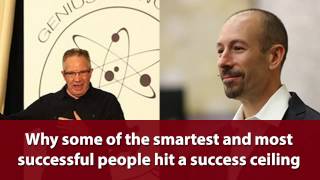
A recorded conversation (Episode #24, May 6, 2014) between Joe Polish and Dan Sullivan about entrepreneurial growth and mindset. They contrast an 'abundance neighborhood'—people who are grateful, creative, cooperative and access opportunity, ingenuity, and exponential capabilities—with a 'scarcity neighborhood' marked by envy, guilt and anger. They discuss the 10,000-hour rule and Cal Newport's 'So Good They Can't Ignore You' idea, emphasize becoming a hero to specific people (finding unique ability), the value of building networks (e.g., Genius Network), and a daily gratitude/win practice via the Win Streak app (free; reported up to ~2,500 downloads/day). Practical advice: cultivate gratitude, surround yourself with 'abundance' connections, and record daily wins to build momentum.
Questions this video answers
May 6, 2014
Episode #24
Win Streak (WinStreak)
About 2,500 downloads on a single day
strategiccoach.com and geniusnetwork.com
Chapters
Hello, everyone, it's Joe Polish.
And this is Dan Sullivan.
And welcome to another episode of 10X Talk, where we help entrepreneurs think about growing and building their companies and other areas and aspects of their life. Ten times could be quickly, it could take a period of years, but it's really focusing on exponential growth goals that matter, impact, where you can make impact, and basically working in a way that multiplies you and the people that are most and the projects that are most important to you. So, Dan, at the last couple of episodes, we talked about, you know, the 50 connector future, how to build a network of people, why it's important. You talked about a criteria on the last episode that I'd love to have you kind of do a refresher on. And then I want to talk to you about an abundance neighborhood versus a scarcity neighborhood.
Yeah. So what I'm going to do right now immediately connects to that conversation. And I said that if you look at the world in terms of people who just always grow and seem always to create something valuable in the world, that they actually have some personal characteristics. And then because of those personal characteristics, which are three, they then are able to take advantage of some incredible capabilities, resources, and opportunities out in the world. And there's also three of those. So the three personal qualities or characteristics is that they're very grateful people and they really enormously appreciate everything in their life, raising the value of it. And they're very good at creating things, of putting things together, which, you know, at first look, don't logically belong to each other. You know, Steve Jobs said creativity is putting stuff together. Well, some people, first of all, they don't put things together because they don't actually appreciate the things they have. So there's no point in putting them together. But the other thing is that just logically, they're living in a limited world and they can't see bringing something from this point to another point. And then because of their gratitude and creativity, they have a high ability that keeps getting better of cooperating with other people who also have gratitude and creativity as part of their makeup. So there's an explosive multiplier effect when people like that get together. And that sets them up. Those three qualities then set them up for three conditions in the world. And one is massively bigger opportunity as they personally get more skillful, and opportunity to take advantage of extraordinary ingenuity out in the world, people who are really uniquely gifted at creating entirely new solutions. And then the combination of opportunity and ingenuity produces exponential capabilities in the world. And we see this of course, in the high tech world and all the 26 year olds that end up with their picture on Time magazine, Right? Yeah. It's getting to the point now that the man of the year that's ending up on Time magazine can't even shave yet. You know what I mean? That is funny. And we're going to have 12 year olds who create ingenious solutions which transform the world. It's the age we're living in. It's kind of neat in some ways. You can get very successful in that multiplier world, the 10 times world. But if you cut off what got you there, if you stop being grateful and you stop being creative and you stop being cooperative, then the electricity gets cut off and you're. None of your equipment works anymore.
Well, you know, can I ask you about something related to, let's take the Malcolm Gladwell, when he wrote about the 10,000 hour rule. What are your thoughts on that? For people that really young but doing incredible things right out of the gate, are these individuals lucky? Were they born with something that other people weren't? I mean, of course, probably a combination of all those. But what is your take on people that are very new to something but they have incredible impact and build a company that sells for a billion dollars and they're 23 years old or something?
Yeah. And you know, a lot of people, you know, have that experience, blow their brains out, then with all sorts of excesses in their life, they can't handle the success. You see it in the entertainment industry all the time.
Oh, well, I have to mention this while you're saying that, I mean, even Jordan Belfort, they made the movie the Wolf of Wall Street. I actually had an interview with him two years before the movie came out that we put up on ilovemarketing.com and it's really interesting to see the transition there. But you know, you talk about a very young person that a lot of money now, of course he was a completely out of control maniac. But that being said. Yeah, I mean, you're absolutely right. A lot of people that come into that level of financial success, ethically or unethically, they could really come out in very weird vices.
Yeah. I mean, emotionally and psychologically, they're not geared to take advantage of what their unique ability has actually created in the world. And people burn out. A lot of people, they have a unique ability, but they burn out really fast because the other parts of their life don't support their success. But the real aspect of this is that there's parts of the world, you know, I mean, there's parts of the city where you live that are better for you to be in. There's parts of the world that are better. And the reason is, and I call them neighborhoods, because people are really, really successful, live in really, really successful neighborhoods. And I don't mean really great houses, and I don't really necessarily mean really rich or wealthy lifestyle. What I mean is that the neighborhood that they operate in, from a connection standpoint, who their relationships are, they're actually characterized by those six characteristics of gratitude, creativity, cooperation. And then those relationships introduce them continually to greater opportunities, greater ingenuity, and greater exponentials. So what I've really, really noticed is that compared with 20 years ago, I'm significantly hanging out more in the Abundance neighborhood than its oppos. And I can just take about five minutes and describe what the opposite looks like, although I don't want to spend too much time on it. But it's important for people to know what the negative side looks like, what the bad neighborhoods look like. But the big thing is that if I'm training someone, I said, you've got all the skills. I mean, everybody who comes to me in strategic coach has really, really good skills. And already they've achieved beyond the norm for any industry that they happen to be in that they would be considered role models by many other people. But they've got certain personal attitudes and they've got certain mindsets about the world which are basically, they've hit a ceiling. So if they don't make significant changes, they're, you know, and I just ask them questions, well, how are you looking at that? You know, I mean, you can't trust people. I said, well, that's an interesting thought. Does that do you any good? You can't trust anybody. And I said, is it completely true you've not trusted anybody? So a lot of people have some thoughts or beliefs about how they operate and how the world operates, which are very, very limiting thoughts. And we all have them. I mean, I'm very successful, but I'm running into limiting thoughts all the time. But my limiting thoughts are 100 stories higher than some other people's limiting thoughts. And, you know, we all do that. You know, the smartest and most successful person in the world is still hitting limiting thoughts.
Yeah, totally. So, I mean, what are your. Some of your limiting thoughts that you've experienced in the past that you've transformed?
Well, I mean, when I first started coaching back in the 70s, I had the notion, well, you can only do this with one person at a time. For the first 15 years of my coaching career, I only had one on one relationships. And Babs and I had a notion on a much nicer house than we had. And I said, you know, we're not going to get to that nicer house until we change our thoughts about who we can coach. And then I realized that we knew enough that we could do it with a group of six people. And then we got a notion, well, yeah, you can do it with a group, but you can't do it more than 20 people. And then we wanted to furnish our house, right, you know, and have a lifestyle. Usually you're driven by some external improvement you want to make to your life, and then you have to come back that there's something the way you're thinking about things which prevents you from actually achieving that external result, you know, and that's entrepreneurs very, very much they're driven by external achievements in terms of the life they're living and, you know, the ease with which they can do their work. One of the things I realized at a certain point that if I really wanted to make a fundamental breakthrough and really go for it as an entrepreneur, I just had to construct a neighborhood and live in a neighborhood in terms of my connections and my relationships, where everybody just had those six, the three personal qualities. But they were also looking for the three breakthroughs in their life. And every year I'm surrounded by more and more and I can measure the results. First of all, just in my enjoyment of what I'm doing, my sense of satisfaction about what I'm doing, but also the significance of what I'm doing. There's three things which really measure a great life, and one of them is success, the other one is satisfaction. And the third one is significance, as I've done. And then of course, the revenues and profits are, you know, they're almost like byproducts and we've really gone up. And I use the number 50 because this whole conversation over the last number of sessions has really been about surrounding yourself. And 50, I mean, that would take your lifetime to really develop. 50. I'm figuring 25 years. I can have 50 and I've got about nine or 10 which are head and shoulders above the others right now. And I'm learning an incredible amount. I'm not pushing it real fast, but I know over 25 years I'll have 50 of these connections. And all of them are creating a significant, what I would call a world changing capability, not just for me, not just for them, but for in some cases, millions and billions of other individuals, it's just a very, very enjoyable activity. Being involved. You're one of them. I think the whole Genius Network concept that you've created, Joe, is just in its very early infancy. As you add other people's capabilities and connections to it, it'll just go worldwide. It won't be in its present form probably in 10 years.
Right. I mean, I think even 10x talk, and I love marketing that I do with Dean Jackson really came out of Genius Network because it's, you know, Genius Network started out with interviews, you know, and these were interviews on cassette tape. When I first started doing interviews, I mean, I've interviewed over 400 different business people and entrepreneurs and athletes and, you know, you name it, all kinds of interesting folks. And part of it was just wanting to connect other people with wisdom. And I called it Genius Network. And then it eventually became real geniuses getting together and meeting and talking with and developing relationships with other geniuses to get geniuses to collaborate. And genius is an interesting word because there are skills and genius in all kinds of areas. You know, from marketing to business to technology to all kinds of artists and musicians. And you name it, and you put these people together in a room, interesting things happen. And when the focus is on abundance, not scarcity, the world becomes way more exciting. Their world. I don't mean the world in general, I mean their world. If you want the world to change, you change your own world.
Can I just say something about that, Joe? Because you asked me the Malcolm Gladwell 10,000 hour thing.
Yeah.
So my definition of genius is that you find out what your unique ability is. I go back to that definition. It's you're totally passionate about it. You do it all the time. You would do it whether you got paid or not, but you do it. To be a hero to someone else in the marketplace. And providing an incredible value to someone you want to be a hero to produces a multiplication of revenues, profits and reputation. And that's your unique ability. Now do your 10,000 hours, which for entrepreneurs is very easily accommodated probably in less than 10 years, because most entrepreneurs probably put in about 1500 hours to 2000 hours, even if they're taking a lot of free time. I mean, the 10,000 hours thing, there's a hitch to it. You gotta be doing something great at the beginning to multiply by the 10,000 hours. I mean, I've met people, I know that very early in their life, they discovered they were a genius at Boring other people. And they've put in about 30,000 hours, and they're incredibly boring, you know, so you gotta be very careful. Careful with what? You're multiplying by the 10,000 hours. You know, I put in my 10,000 hours. Yeah, but what'd you start with? Being annoying and boring? I mean, some people, they're geniuses, but, you know, and they've obviously put in a lot more than 10,000 hours. But are you being a hero to anyone? Is there any multiplier in it?
That is total comedy.
No, I mean, people, you know, they have these formulas, but they don't back the formula far enough to figure out, well, where did this start? I mean, it's like garbage in, garbage out. If you have a really bad message and you put it on the Internet, you just multiplied it by a million times. But has it done you any good?
Exactly. Yeah, exactly. I wish I could remember the despair dot com. They have this one about blogging. Never have there been so many people saying so little to so few. Anyway, once you create a platform, there's no telling how quickly you can spread nonsense that no one even reads.
And you'll meet every nonsense lover in the world, you know, very quickly.
Oh, yeah.
Because.
Yeah, there's an infinite supply of them. So I don't know if you ever heard me talk about this book I read called so Good, They Can't Ignore youe. And the title actually came from a conversation with Charlie Rose and Steve Martin, I think in 2007, when Charlie rose was interviewing the comedian Steve Martin, and he asked him about, how do you become such a great comedian? And he said, you know, be so good they can't ignore you. And so this guy named Cal Newport wrote this book called so Good They Can't Ignore you. And he did a pretty exhaustive study on how people actually excel in their careers. And the tagline is how skills Trump passion. And his whole premise is that passion, you know, find your passion and do what you're passionate about is not only bad advice in most cases, but it's actually dangerous. Because if someone just pursues passion, but they don't have any skill attached to it, then they never develop a skill which he calls rare and valuable. And that you develop it to a point to where you're actually producing results and creating value. And then it gives you career capital where you actually have control of your life. And he says, where someone just blindly follows what they want to do, but there's no skill attached to it. It's like trying to follow Your passion, Those people tend to just jump from thing to thing to thing to thing because they never put their roots in the ground.
And.
And what's always struck me as interesting, because I love your concept of who do you want to be a hero to? And when you combine passion and who do you want to be a hero to? And the thing with strategic coach, there are people that talk about passion from a rah, rah, get excited standpoint, but they don't have any sort of backup to build these people as more capable and skillful. But whereas everything in strategic coach and everything I ever hear you talk about is never just like some blind. You know, if you're passionate about football, that doesn't necessarily mean you have unique abilities in that it just means you could be really interested in football. And so I'd love to get your take on. Since we're talking about an abundance neighborhood, which consists of the criteria exponentials, ingenuity, opportunity, being grateful, creative cooperation. What is your thoughts on people following their passion? Because I've never thought of Dan Sullivan as a guy that, you know, I've never seen you do the passion talk without backing up unique ability and value creation. And I think a lot of people just take that whole concept and they misinterpret it entirely.
Well, you know, it's a really good question. And again, it's one of those things that you can only explain from how you experience. I'm very, very passionate, but I have a particular communication style where, you know, I've got enough of a sense of theater that it's what the audience wants to experience. It's not what you want the audience, you know, in other words, that communication has a lot to do with its receptivity to the audience. I mean, if you go to the movies, you see people emoting enormous passions, but if you notice ordinary life, almost nobody does that. Maybe they do it in Hollywood, I don't know. But, you know, I mean, I think Hollywood people, you know, I was watching a movie the other night, and it was just, you know, over the top in people's emotions and their anger and their angst and everything else. And I think I said Hollywood people are the most clueless people in the world because they think the rest of the population actually experiences life the way they do. You know, they think the rest of the world is totally conflicted and erotic and everything else. And they impose their own personal experience on the rest of the world. I said, you know, most people are just kind of agreeable, friendly. They're kind of cooperative. They go about their life and everything else.
Right.
You know, and a lot of the actors, they just have some very, very serious problems, you know? Absolutely. You know, and they live a lifestyle and they work in an industry which multiplies their personal problems. Who was the actor? He was 24 actor, and he said, don't go to Hollywood trying to find out who you are.
Well, Glenn Warshower, he was on every episode of 24 with Kiefer Sutherland. He's played more military roles.
Yeah, he's been fully employed since he was about 18 years old. You know, I mean, because he's everybody's favorite. Not star, but somebody you always want to have in your cast.
Yeah, just an incredibly nice, caring guy. Very grateful for his fans. I mean, I've had lunch with Glenn many times. He's a really nice guy, and he said that if you get into the entertainment industry without knowing who you are, it will misinform you.
Yeah. And that's the big thing about circumstances, you know, and proper training and preparation. And to go back, you know, that's a great story because that story is worth a session in itself, because there are a lot of people who are not stars in a particular industry, but when you add up the total of what they've done in their lifetime, it's 20 times bigger than the biggest stars, because 90% of the actors in the world are unemployed 90% of the time. Right. But there's some actors that are just fully employed all the time, and they're employed when they're in their 20s and they're employed when they're in their 70s. And there was no break in between, you know, but they've learned to take their passion and make it to be a hero to the people they work with. And there's this constant multiplier. They just have a constant paycheck, and they might not win an Academy Award, they might not ever be featured, you know, as the marquee performers, but they just have found a groove in a world where they're just eternally useful and valuable to other people, you know, which is a great formula for life. To go back to this other thing about passion, because it's misinterpreted, because people think it's an external expression, but it actually isn't. It's an internal motivation. I know a lot of introverted people who are almost not noticeable, who are just incredibly passionate about what they do, and they've created a structure around it and everything else. It has nothing to do with external expression. I mean, there's Useful individuals in the world who just combine both worlds. They have the internal motivation and they also have amazing external expression. You're actually one of them. You're a great, great front stage guy. You're a better front stage guy than I am. Because you actually like it. Yeah. You know, and that's part of it. And then you gotta be a hero to someone that you actually want to be a hero to. And in my world and over the years, having tested other possibilities, I've just decided I just want to be a hero to talented, successful, ambitious entrepreneurs who want to grow 10 times while simplifying their life and gradually differentiating themselves from everybody else in the marketplace. And that's my formula. And I'm just looking for those kind of people. And having said that, they have to be grateful, creative and cooperative or I don't want to do anything with them. I don't want to deal with them.
So let's talk about the flip side, because in the scarcity neighborhood, when I was taking notes, you know, I wrote down zero sum, depleted unfairness, envy, guilt, anger, indignation. And so is it a choice to kind of think of the abundance neighborhood or scarcity neighborhood, or is there a buildup in this? I mean, some people, they'll operate out of an abundance mindset and they'll fall back into patterns of scarcity. You're obviously going to experience your life and the world much differently when you're coming from a mindset of abundance versus scarcity. So recommendations for our listeners. What do they do to not only create an abundance neighborhood, but the abundance relationship? So it does fit into the connector future which we've been talking about for the last couple episodes.
Well, it all has to do with consciousness. If you're conscious of what constantly develops and expands your neighborhood of greater and greater connections on certain criteria, you'll never fall back because you're working on it every day. But there's a lot of people who just luck into the abundance neighborhood. You know, they might be born in the right circumstances or they just have a personality that opens doors for them, but that's not really conscious and they don't even really know the basis for their success. So I'm a great proponent of understanding consciously the principles that make you successful. And once you do that, then you can see the opposite. You can see the principles that guaranteed will make your life negative. So just to do the flip from the abundance neighborhood, the number one thing that immediately gets someone into the scarcity neighborhood is envy of other people. Envy is a killer. Envy Produces nothing but bad results. The moment you go into a state of envy, in other words, being angry at someone else because they have an ability or they have a condition or circumstances that better than you, it kills all gratitude. They're mutually exclusively. You can't be grateful and envious at the same time. And if you're envious, you're not going to be grateful. If you're grateful, you're not going to be envious. And then there's two other things that really fall out of that. And the next one is guilt. You're very, very guilty about the things that you have that are better than other people. Guilt and envy are flip sides, the same coin, but two different sides. And then that sets you up for kind of being angry at the world because you're feeling angry at yourself and you're feeling angry at other people, and then you export it to the world in general. So you're angry about politics, you're angry about what's going on in the world, you're angry about this, you're angry about that. And I just noticed that people were envious and guilty. There's just this low level anger all the time. And I think the entire psychiatric profession really depends upon those characteristics. You know, they sit there, you know, I'll just sign you up for one week every week for the next 10 years, and you'll pay me $200 an hour to tell you how angry you are and what you're feeling guilty about and what you're envious about, you know, and we won't make any progress, but I'll make a lot of money.
That is funny. So I mean, you absolutely oppose to therapy, like completely or just.
No, no, no, no. Here's the thing. I think there's some phenomenal psychiatrists, there's some phenomenal therapists on the planet, but the reason they're really, really great has to do with them personally. It has nothing to do with their training.
Gotcha. Yep. That makes sense.
Has nothing to do with their profession. I've run into psychiatrists who can read a person up and down in about 15 seconds. Ned Hallowell has kind of that ability and that's why he's created his own unique psychiatry. I mean, Ned can talk to you for, you know, about five minutes and he can start asking questions, which tells me that he just intuitively understands what's going on in you. But it's not because of his training at Harvard that he is that way. Yeah. Yes. It's not because of the degrees on his wall that he is that way. He's just naturally that way.
Well, what I like to do with the remainder of the time that we have is I'd like to give people that are listening to this something that they can do every day that is very simple tool that could have a dramatic impact on their life in just a short period of time. And it's something that you created called Win Streak. And it's an app where people can immediately build the gratitud muscle and the winning muscle. And so I'd like you to just talk about what this is, how people get it and why they should use it, and we'll wrap up.
I'm glad you brought that up, because we're expanding the Win Streak to include a gratitude component. But basically, almost every entrepreneur, everybody who's been successful, has a sense of certain times in their life when they're kind of winning and there's a momentum, and other times when they're aren't. And what I have discovered that you can actually create a momentum and reinforce it every day, and the momentum never stops. And that is before you go to bed at night, just think about three things that were wins for the day. In other words, you made progress, you feel good about it, you're feeling very, very proud. And that becomes the explanation of that day that you just lived. And then you set up three wins in your brain to approach the next day. So tomorrow's gonna be about these three wins. So we always did that in the program, but it was on paper, and we had journals where people could write in their journal. But, you know, we live in the iPhone and the cell phone age. And I said, well, you know, there's just these great things called apps. So one of our talented and successful people that I have in strategic coach by the name of Kathy Davis, she took it upon herself just to create this app, and it's going great guns. It goes by person to person. We don't advertise this or anything else. One person gets it, and they can just send it on to their friends. You can just say, hey, download this app. It's free. And, you know, it's starting to go viral. You know, we're starting to get days when we have 2,500 downloads on a single day, and these people are not known to us. And I just want to get that out just to reinforce it. But the other thing is, Joe, when you talk about a win, when you have been very, very specifically grateful to someone in your life and you. You've actually communicated to them that is a win under any circumstances. The impact on you personally, the impact on them, appreciates value, you appreciate yourself more if you're grateful and the other person feels growth and appreciation because you appreciated them and the relationship grows. So if you're just going to start this attitude of being in the abundance neighborhood, just keep expanding the number of things in your day that you're grateful for and then the number of people that you actually express your gratitude to and it takes on a momentum and then people who don't respond to it well, who don't reciprocate gradually, they won't be in your life. And more and more you'll be attracted to people in your life who really appreciate gratitude and really demonstrate gratitude. And you become sort of the center of a ring that goes out into the world. And you know, you do it to one person, he does it to another person or she does it to another person and it spreads to families, it spreads to all sorts of relationships. So when in doubt, be grateful. When you don't know what something to do, if you're in a losing streak or you feel like in a funk, just spend a whole day being grateful to people and within 24 hours you'll be out of your funk.
Yes, exactly. And plus you can just scroll through and you can just look through all the wins that you've had.
Yeah, I mean it goes back to when you started the process. So you can go back 10 days and then we have neat little messages. I mean, we're quickly making the app. So if you do five days in a row, it says congratulations, you're on a five day winning streak. 21 days is huge because you get to 21 days in a row and it's probably a pretty strong habit. And then we're going to gradually expand it until it's a community app where you can have 30 friends who are telling each other about how they've been on winning streak and everything else. But. But you know, we're just letting it grow at its own pace. And kids just love this. I mean, you get a six year old and six year olds, you know, are better at their cell phone than you are. Kids just lock into this. And you know, you get a kid to do this for about five years, they're locked in for the rest of their life. They're going to be in the abundance neighborhood for the rest of their life.
It's better than the McDonald's playground is what you're saying.
Yeah, it's not a substitute, but it's an add on to the McDonald's playground? Yeah. Oh, my God. Yes.
I would highly encourage everyone to do it. It's really simple.
I mean, and, Joe, you're just always doing this. Every week, I get about 10 things from you that are a form of gratitude. And you're always doing this. I've got a poster on the wall, and I have a little light, and I light the light every night, and I say a prayer to Joe. We're both born Catholic, so we understand the ritual.
You know, we should start doing blooper videos and put them up so people actually think it's serious. Then it starts going down this totally bizarre path. That's great.
I mean that realistically. I mean, you stand out in my life as the person that I've shared all these values. I mean, next to Babs, who's my life partner, but outside of my immediate relationship, I mean, you're the central person. You know, I'm in my 70s, and I've not met anyone like you.
No. Thank you. Thank you. And that seriously makes me feel good. I think it's amazing that the one individual that I've learned more from about running a company, thinking about life behaviors, like everything acknowledges and edifies, and we're able to even have this wonderful collaborative relationship and friendship that we have. So it's phenomenal. I would probably say. Why wouldn't everyone listening want to develop these sort of collaborative relationships? And hopefully the conversations that me and Dan have been having give you some insights, some direction, some understanding of the importance and the value and the usefulness of going out and starting with one person, changing your life, changing their life by adding value. This is not super complicated. It's just simply where you place your focus. And using my ELF criteria, you can develop an elf business, easy, lucrative, and fun, or you can have a half business, which is hard, annoying, lame, and frustrating. I really tend to apply that to people. I want people that are easy, lucrative, and fun. And I don't want people that are hard, annoying, lame, and frustrating. You know, a lot of things in life, they're not that way in the beginning, but if you stick with it and it becomes a ritual, it becomes a habit, then it just, like, win streak. I mean, it'll be maybe a little clunky for someone, but I would just encourage everyone to go and download Winstreak right now. It's free, and just use it for the next seven days. And I guarantee you, in a week from now, for something that will take you like a minute or two a day at most, you will be thinking differently a week from today. So that's it. So thanks Dan. As usual, another great episode of 10X Talk. I want to thank all of our listeners. Comment if you want to go to 10xtalk.com we also have a great report that you can download on the website if you want to opt in and actually have us email you things. And as you can tell, we don't spend a lot of time using 10x talk as a blatant sales pitch towards our programs. Strategic coach and 25k genius network are for high level successful entrepreneurs and these conversations are to talk about the things that help people become more successful in their business. If you want to check out strategic coach, it's strategiccoach.com and genius network is geniusnetwork.com so any final last words, Dan?
Yeah, Joe, we're never blatant, but we're always selling.
Of course. Yeah. And if anyone has an issue with that, then here's one thing I will ask. I will direct them to do. Go to Google and type in Is selling evil? Is is selling evil. That's all you need to type in. You don't even need to type in my name. And that's the first thing that will pop up is a very short 3 1/2 minute video with me talking about answering the question is selling evil? When they interviewed me for it, a documentary. And this video was so well liked by people that we actually had it animated by the draw shop and we have an animated version there too. And both of those will pop up. And so if you have any problem with selling and you think it's a bad thing, then you know, hopefully that three and a half minutes will give you a perspective change. And as Dan said, definition of selling is getting people intellectually engaged in a future result that's good for them and getting them to emotionally commit to take action to achieve that result.
Help.
And we'll talk about that in a Future episode of 10X Talk. So thanks, Dan.
Thank you, Joe.
More from Joe

This FBI Trick Can Command Respect Without Saying a Word ft. JEFFERSON FISHER & CHRIS VOSS

How To Stand Out, Be Different, and Create Raving Fans, Customers, and Employees ft. Jesse Cole



90% Of Businesses Fail In Their First Year, Here's Why! ft. Dr. Benjamin Hard & Dr. Robert Cialdini

The 1 Piece of Business Advice I Got From Elon Musk That Changed Everything Ft. Kamal Ravikant

The 6 Traits You CAN'T Teach in Entrepreneurship ft. Richard Branson & Gino Wickman

The Leg Method: How to Make Your Book into a Million-Dollar Asset ft. Anna David


7 Millionaire Mindset Hacks for Daily Success and Wealth ft. Brian Tracy & Dan Sullivan
