Daymond John's Billion-Dollar Lessons: Keys to ENTREPRENEURIAL Success!
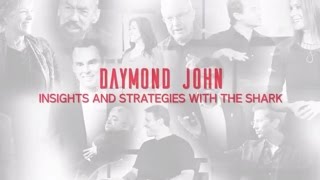
Daymond John built FUBU to $6B in lifetime sales after mortgaging his house for $100K when 27 banks rejected him. He nearly lost everything to cash-flow problems with overseas suppliers and retail payment terms, then learned that distribution, not product, wins.
Questions this video answers
Approximately $350 million.
> $6 billion.
$100,000.
27 banks.
$30 million worth of product in three months.
Chapters
For our next presentation, I'm actually going to be interviewing a TV celebrity who is also an entrepreneur. He built a business that was at its peak grossing 350 million in annual worldwide sales. And to date, Fubu has earned more than 6 billion in worldwide sales. Anyone here want some wisdom that's built a $6 billion brand? Okay, but that's not all. He's also star in a TV show that averages 6 million viewers an episode. Anyone here want to know the secrets to being a celebrity personality or a well known brand in your market? Yep, that's what I thought. It's like cueing you. All right. The business is fubu, said Fubu. The show is Shark Tank. And the next 30 minutes with our guests is going to be awesome. So give it up for my friend, Daymond John. Thank you, thank you, thank you, thank you.
Don't play that.
The man who creates multi million dollar fashion empire. This is 220s.
This is what this man had started with to build a billion dollar empire. Daymond John displayed his entrepreneurial talents at an early age.
Damon John turned rags to riches with his clothing brand fubu.
Now FUBU open all the doors for everybody. You created a brand and again created part of a movement. I created this market about 15 years ago when they said there wasn't an urban market. This space did not exist. And what I created was what today we call a $20 billion market. My meeting with Damon, it really builds me up and it makes me really confident because he's so encouraging and he sees that I could do this. So the question is going to be when is time for Chloe to start her line? I know that's what I want my next step to be, but that's also why I like it's time now though it is. Damon John is the man we need to help us get a better understanding of the loyalty based relationships that brands and celebrities create.
We're working with Daymond John, who is part of the FUBU for us by us movement.
He's a part of Shark Tank and is someone that I think I have a lot to learn from. We sold $30 million worth of product in three months. It was about breaking through boundaries.
You know you're large when your company.
Is on an Indy 500 race car. Everything you've seen from FUBU, Coogee, Heatherette and all the brands that I own have come from directly under our office. I know everything from the brand development side to the manufacturing side, all the way to the advertising side. He successfully created brands. He's written Books about it, display of power. And my favorite, which I love, the.
Brand within, the hit new ABC reality show Shark Tank.
Whether you like FUBU or not, I have branded a stinking pair of jeans globally to take a brand that's declining and make it hot again.
Fresh from last week's premiere of Shark Tank. Two of the Sharks, Daymond John. And our own season five favorite, Mark Cuban.
You have the power that people want.
What's the magic secret sauce?
The magic secret to power is to be decisive. Life is like business. It's 20% what happens to you, 80% how you respond.
This is jeopardy.
You'll be just another fish in the sea if you don't understand the concept of this. As a result of his success, he wanted to share his knowledge with other aspiring entrepreneurs. I'm a student of life, and I'm truly somebody who stands on the shoulders of giants. I see that excitement in these young entrepreneurs. And you're not only a successful entrepreneur, you've just given back to the community in so many great ways. Takes the same energy to think small as it does to think big. And you must think big. I have unlimited manufacturing capabilities. I have the power to do this deal and make you Hilton rich. The great entrepreneurs of our generation. Daymond John. Damon. John Damon. John.
Damon. John. Damon.
John. The forerunner. He is the leader. He is the guy that started off the pioneer. Are you ready?
You are the best.
You are the best. After the break, we're gonna try to.
Make some more money. Voila.
All right, thank you. Thanks. I. I didn't. I didn't want them to play it, and I think they sent it because I feel like I'm in room with my peers, and that's kind of for the general public who may not know. So I'm sorry, because I'm sure everybody has a tape that long. It took me 45 years to make it, but it's there. So, anyway, sorry. Thank you.
No, no. What do you think when you watch that stuff? Do you like? Huh? That guy seems.
I mean, you know, I think I'm too close to it. And I think that, as we all know in this room, you know, especially with an amazing director that was up here just prior, you can make anything look good.
Yeah.
So that was all we really done in one day with a bunch of CG and a bunch of crap. So.
Yeah. That's awesome. That is awesome. Well, hey, you know, I've always said that a lot of times your job as a marketer is if you don't have credibility, you Manufacture it. Now, obviously you want to be able to stand behind anything that you say. And if you're going to build yourself up, I mean, one way to really destroy a reputation is kind of suck. But, you know, make believe that you're actually awesome and present it. But, you know, packaging and presentation is. Has a lot to do with it. So give us a bit of history about you. You know, have you always been driven to succeed? And I know that you and your mom mortgage your house for a hundred grand to start FUBU in the beginning. So talk about that.
Talk about have I always been driven to succeed or the mortgage at home?
Yeah, well, both.
Well, you know, I've always been driven to succeed. I've always been driven to create some form of an income, but the income was really the afterthought of creating some form of an idea that was executed from beginning to end. So, you know, I opened my first business when I was 6 years old. It was in the first grade. I would, you know, the boys, when they liked girls in the first grade, they would. They would kick them, they'd pull their hair. So I. I saw a way to make a profit off of this. And I would go and I would find pencils and I would scrape the paint off the pencils and I would paint the names of the prettiest girls in school on the pencils. And then I'd say, don't kick her. I would sell the pencils to them to then give to the girls. That was going pretty well, actually. The girls, because women are so vain, they bought all the pencils of their own names. But I was making a lot of money. And then my principal made me close the business after like one month. I think because he didn't have any vision. He found out that I was stealing the pencils from the guys I hated in school as well. So my cost of goods was zero. Right. That was my first business. And I always wanted. After that, I just kept going.
You know, it's funny when you. If people that are willing to admit it, there's always kind of a little criminal background in many successful entrepreneurs.
Absolutely. Yeah.
Yeah. Until you kind of learn integrity or at least learn that once you know how to do things, you can actually. It's more sustainable. So borrowing money to mortgage the house, doing that sort of stuff. I mean, did it almost not work?
It did almost not work. You know, it was one of those, you know, us entrepreneurs take affordable next steps and we dream big. And I was one of the people who were fortunate enough to come out of it. But that was a very dangerous time in my life. I had gotten turned down by 27 banks. And I didn't have any financial intelligence, but I had orders for $300,000 worth of goods. Not knowing that cash is a huge choke and the credit system and everything else like that. We took out a mortgage on the house for $100,000, you know, moved out everything, slept in sleeping bags and turned the house into a factory. And that was all good, right? And we figured we'd sell the $300,000 worth of goods and we put the extra. We'd put the hundred back into the house. But of course, you months later, I'm looking at three months later on the mortgage. They're about to take the house from me. I have $500 in the bank, I'm selling the goods. But my lack of financial intelligence at that time, you know, I didn't understand that paying three months in advance for raw goods to come from overseas was going to take that cash. And paying for my utilities and my staff and shipping and everything was going to take that cash. And I had to give the stores terms of 60, 90, 120 days. So my ignorance in that sense, I was fortunate to take out. My mother took out an ad in a paper for strategic partners, and she said, money's always available. Sales aren't available. So she took out an order, took out an ad, and said something to the effect of million dollars in orders, need financing. And of course, you know, to romance the truth a little herself. I'm not saying that I was a thief and my mother was a liar, but maybe that's what it was. But 33 people call that ad, and one was Samsung, and 30 of them were loan charts, and three of them were real, and one was Samsung's textile division.
Okay. You know, it's funny, Dan Sullivan, who's in the audience, says that there's two things you need when starting a business. Ignorance and courage. Yeah, that's true. Yeah, totally. So what's the best piece of business advice you've ever received and how did it change your business path in your direction?
I think it was. Well, I received a couple of them. The first one was somebody said, don't spend all your money, kid, because it's really, really hard to make money and it's 10 times harder to keep it. I think that was one of them. And I think the other one was, you know, it's all about the numbers. There's only two ways to do business. Increase sales or decrease cost. That's it and don't do anything because it's an ego play. Increase sales or decrease cost. That's it. And those things probably have been the ones and everybody else knows all the other ones. Of course, do what you love. Of course, do your research and everything else. But the room knows that already.
So FUBU has. It's had 6 billion in global sales. What are the key elements, secrets and requirements of building, like a $6 billion brand that people here can utilize well.
In the days that we built it? I think that there are a couple of things. First of all, you know, in business, it's purely about distribution. I think that you can have the greatest idea in company or whatever the case is, but you don't have a way to distribute it. It's. It's a pipeline, it's a challenge. I think that to understand and don't fall in love with your product where you think that you're creating something new, because we will never create anything new. It will only be a new position or a new angle on it, a new price. You know, I would say Twitter was, as I shared with you before, it was a note on a pigeon's leg a million years ago. And I didn't put three sleeves on a T shirt. I just created a movement around it. So it's always a different positioning. And I think those are the ways. And then after you get to a certain level where you have brand equity, I think it's creating a large amount of really amazing strategic partners. You know, licensing, whether it's a territory or licensing, a different angle of your product is important. I'm not going to understand what they necessarily want in Japan, even though they want FUBU in Japan, it's a different culture. As well as I can do my men's business, but you and I were two guys. If you wear a 32 and I wear 32, there's two size 32, there's 32 long, 32 short. If I sell a pair of seven or a pair of eight jeans to a female, there's 17 sizes because the thighs are too big, the butt's too big, it gaps over here. So I would license that business to an expert in that area because I don't have a lifetime to learn the ladies business as well. So I think that strategic partners are very valuable.
Okay, so your friend Kevin Harrington was here earlier, and he was talking about Shark Tank, and he said that Kevin O', Leary, Mr. Wonderful, was a far better and more intelligent negotiator than you. I don't know your thoughts on that.
He didn't say that.
I told. I'm totally kidding. I would say I should have just let that go.
No, no, no. I knew. I knew that. Kevin's a great guy and I'm. I'm. I'm actually representing him in the speaking, and I would absolutely make sure he doesn't get any more gigs after that.
Yeah. If you were to get in a fight, a physical fist fight with Kevin o', Leary, you think you could take.
Him with Kevin o' Leary or Kevin Harrington?
Kevin o'.
Leary.
Well, both, actually. Be interesting to know.
Kevin.
Celebrity death match.
Well, so Kevin o'. Leary. I could take Kevin Harrington to a crack my head to the white meat. One day. I don't. You know, I think he's like 100 years old, but one day we all did push ups on the set and I think I was on my 19th and he was on his, like 107th.
No, he's. He's a maniac.
He is something. There's a problem.
He came. He came to Necker island and he was like in one of those sumo suits and everything, and I swear to God, he was like knocking everyone down. It was bizarre.
You know, if you've ever been in his office, he does not have chairs in his office.
He's too neurotic.
He just has a table right there and a bunch of crap all around.
Yeah, can I get a timer up here too? So I know where we're at. What are the little talked about factors that most successful people wouldn't want to publicly share that drive growth and success?
Well, anybody that's really successful, such as yourself, such as Jay Abraham and the people in this room that I respect have always shared every single aspect of success. Success. That's probably one of the things that you end up forgetting to share is that the opportunity to give somebody this knowledge only comes back to you. But I think other things that people don't share in success is. I really wouldn't know. Honestly, I don't come from that model. Any and everything that I can share in success, I will. So I don't want to take up time trying to think of something.
Okay, well, you don't have to be all hurtful about it.
Just kidding. Hey, I love the whole 10 minute thing. You know what? Because I was thinking over here, all of us is like public speakers. If you gave me 10 minutes, I would be uncomfortable. Right. And I'd ramble through it. But you know what? I would have been uncomfortable and it would have tested me. So I want to Stay on the. Even though I got 30. I like that idea.
Yeah. Okay. In 2009 you joined Shark Tank. How have your investments worked out on the show? And you know, if a business owner. These are the questions I have. Doing over a million a year was going to investor wealth, what would you recommend they look at, analyze and try to do so.
All right, so in the investments on the show, I want to make this quick. So the first three years I think I lost 750 the first year, 500 the second and I think I made it all. I lost about 200 the third and I made it all back in the fourth year up of one deal called Jamba Juice. Talbotiz we sold to Jamba Juice. Here's the reasoning. You know, people really didn't know what Shark Tank was at first, so the deal flow was poor. Second of all, the producers are really producers. So in the first season of vetting people, whatever people said was whatever people said and the producers didn't know any better. After sitting on set for three years watching, you know, 150 people per year pitch and two hour pitches, the producers became more savvy towards this. So the deal flow became much better. And the closing ratio went from only closing 30% to now we close approximately 95%. Also the sharks themselves have become very astute. We've all put the right resources around us after making those mistakes. So I didn't make anything up until that point. And then only one deal itself paid for everything. And now we have found ways to convert sales and I've had a license and division everything else. Taking that and going into the model of having a million dollars. You want to know where should somebody invest that?
Yeah. Like if they were going to invest the wealth, what would you recommend they look at, analyze deals and try to do so?
We're not talking about going to public markets or anything. We're talking about looking at venture that's out there in the market and angel things of that nature. Correct.
Yeah.
Tell you, if it was me, first of all, I would invest in what I'm seeing is a large shift in business where many people in this room are doing this already in regards to online curriculums and things of that nature. But I'm seeing that there are kids at home and people at home that are going into these networks and into these forums and they're speaking the voice of other people and people are prepaying for goods or whatever it is and they're doing 2, 5, 7, $10 million worth of business. The entire business model is shifting now, you know, so they always say retail is messed up or bad or let's say my business is 20 billion. It's not that. It's not a $20 billion business no more. It's just that these big guys like us aren't doing it. It's 10,000 kids doing a million dollars out of their home. So that is how business is shifting. And it's about social media and it's about continuity and transparency.
You read a lot?
I read a lot, but I don't get to read a large amount because I'm dyslexic. So reading a lot means three pages to me, but it may take two years. And usually the three pages are one of J. Abraham's emails. That is actually funny with every adjective, every noun. So I'm reading that, then I gotta go to the dictionary. Then I gotta read that. Go back to dictionary. What the hell did he say? What?
No, I mean, he has the most expansive vocabulary of any human being I've ever met.
He's like the Muslim guys that come out of jail with kids and they just start saying everything because they studied the dictionary. Everything.
No, I. I always let Jay's like talk about engineer reciprocity and stuff like that.
Amazing. But that's why he's my mentor.
Yeah, yeah. So what are the key things to look for and do when growing and developing talent and stars in an organization?
Good idea. I mean, you know, when I speak, I can only speak off of my experiences and what's worked best for me. So people can't object. What I've learned about in talent is, first of all, I don't pay a high price for talent coming aboard. I want people who are willing to bust their butt and prove themselves. And I think we both then are a little uncomfortable. And this is how I structure it with anybody in my company. Number one, you have an obligation to the team that you must do, and this is in your silo. Number two is if you are able to contribute to part of the team, there is some form of compensation, a percentage or whatever the case is. And number three, if you do well enough, we will start this business together and we will be partners. Now why do I do that? Number one, you have to have a dedication to something. Number two, you have to show that you're a team player, but you're compensated. And number three is great. People are very hard to keep, and sooner or later they will either leave and be your competition or they will just leave or they will be such a large cost. So if you make them a partner here, you basically take them off the market, you increase your margin and your revenue, they start teaching everybody else down the line and it becomes a pyramid and domino effect. And that's the way that I've always run my business.
Okay, cool, cool. So this is always a complex one. How do you manage your time? And what's the biggest time management lesson you could share with the super busy entrepreneurs, which is most people here?
That is going to be the biggest challenge ever. And I am, you know, I think that I'm in a room full of, you know, people just like myself. And I've been having an enormously hard time with that this past year about time management. And that's the biggest struggle I think we all have, because you have the time management challenge of first of all, being with the ones you love, because that's why we work. You have the time management challenge of staying up with your health and then you have the time management challenge of not going out and putting out fires, but starting fires. So learning the new way that things are shifting and time management is very, very hard. So my basic practice, as much as I can, has been to put the work out and get the things out of the way daily. That needs to be done immediately. I have a goal setting process to keep me on schedule. And those have been the biggest challenge. I'm having a big challenge with it now. I was just sharing that with you and where I think the biggest challenge I have is if you don't create a solid form of communication. I've noticed the 2040, 60 rule is getting worse, worse every day. No matter what I say to my team, if they say it to somebody else, 20% is gone. They say to somebody else, 40% is gone. By the time you know it, you are adding on 2, 3, 4 hours to your day of fixing things you said and you thought it was done. And the two aspects, the problem is this. Am I going to talk to somebody like a child and say do this, this, this, this, this, this, or am I going to fire them if they do something wrong or am I doing something wrong? And it's just, it is a big, big challenge. And I know somebody in here probably has a book or a curriculum I can fix that and talk to me later about that.
Okay, so what do you see as the biggest opportunity right now in the marketplace that you may not want to fully share, but you just know there's huge opportunity for entrepreneurs who can take advantage of it. That would be worth, you know, 10 times the 10,000 to 25,000 people invested to be in this room.
I think that. And I don't mind sharing. I think that there are influencers and people all around the world right now that have become, you know, pseudo celebrities. And I think that we are going back to the days of the proprietor. You feel like you're dealing directly with the proprietor. No longer is there three, three forms of separation between you and something you're consuming. You can consume something from a proprietor. And I think that the days that I grew up of meeting the rappers and the artists and to wear something and talk to the manager and do this and that, and then needing the TV to air it, I think it's a different time now where there are kids in the middle of Australia sitting there on Instagram with 10 million followers, but they're not moving anything but content. And then if you have something else, whether it's a pen, a jacket, a book, a cup, or something like that, and you brand it to that kid, and the average is A half a percent or 1%, go ahead and convert. You can sell something every single week. And if you end up creating an infrastructure where you have 5, 10, 15, 20, 30 of those kids, you can create a total movement.
Awesome. So who do you privately turn to for advice, if anyone? And why you, Jay?
Who else? You know, I turn to my kids because, you know, I've gotten to the point where, you know, these little brats of mine were on Snapchat, they were talking about Uber, they were talking about this and that, and as adults, we ain't going, what the hell are you doing? You should go, no, what the hell are you doing? Because, you know, that's just where it is.
You know, that's actually really good. Okay, what is your business model and model for living as successful of a life that you can, and what's the most critical single element you focus on within it?
Having fun by far. And I've gotten to that place in my life where it is, and many people in this room may say, well, you know, you have enough money to have to have fun what you're doing. But I really look back to the days, and even when I started fubu, when I started fubu, even due to the frustration of the fact that we felt nobody wanted to support this community. Most of my friends where I grew up were drug dealers and things of that nature. And at that time, to be a designer in 1989, 1990, the perception of a designer was they're either Italian, older, white, Caucasian individuals, or they were gay and I have no issue with anybody's sexual preference, but I decided that I love to dress and I wanted to do it, and I had doing it. So now, even when I'm at this stage in my life of having fun, I'm excited about people I work with and people I have fun with. It's not because I have the wealth, because once I stopped chasing my friends and hanging out and wanting to be cool and make the money and get the girls, and I just stopped and told some, tell a bunch of rough guys, hey, I want to make a couple of little hats. It wasn't easy, but when I did that, when I did that, I found success and I found peace. And then, you know, and that's just why I operate business. And hopefully that answered it. And I'm sure everybody up here has said the same thing.
What are the biggest dark sides of success and fame? I mean, you have people that write scathing things about you if you become famous. You know that criticism.
I think the darkest side of success and fame is, number one, you don't change. But the people around you say that you've changed. And they, they, you know, they. Certain people around you have said you change and you can't be yourself no longer with your friends and some of your family. I think that the challenge of knowing that you haven't watched your daughters grow or you're, you know, you weren't there for your wife when something happened and you weren't physically there due to the lack of time. You never know what that costs you. Now, I do know individuals who are making minimum wage who still are not home. Like, I'm not home. So it all is the balance of I'm not there, but I can. I can afford the finest doctors and the things for you in life. I think also the other. The other challenge of success and fame is if you're a true entrepreneur and you're a business person, when you get home, can you cut it off no matter what? Are you talking to your husband or wife like they are somebody who is employed by you and your children and can you get that soft side of you back? And I think that those. And again, that becomes a time management situation. Time's the only thing that we can't change.
Yeah, Gotcha. So knowing everything you know and have experienced, what's the one question I didn't ask that I should have, and what would your answer have been?
You know, I think that. I think that all of us are probably workaholics by nature. And I think that one of the biggest challenges are at what point do you either sell the business, stop the business, share the business with somebody else, or, you know, at what point do you make that transition? That tends to be the entrepreneur's struggle. Can I make more? Should I sell out? Should I bring on partners? And I found that the businesses that I was more successful at or the businesses that I didn't miss were the businesses that I actually had to think about what to do with the business. I wasn't excited. I wouldn't say, what are you crazy? You know, we love sharing information. And you know, you said to me, come on out here and hang out. And I said, alright. And then it turned into me speaking and then it turned into a bunch of other stuff and I was happy. If it was about something else, I, you know, if I had to think, man, do I want to do this? I should stop doing that altogether. So it's just that pivotal moment of when do we pivot and use what we have to still be successful? Because I've learned in my time, in my life that people thought I was a designer. I'm not a designer. I'm a distributor and a manufacturer. So I don't love designing. I love the art of distributing, manufacturing and branding. And a lot of times we get stuck in the area of no, we're supposed to do this and this is our business. That may not be your business.
So you have to say no a lot. Especially when you reach a certain level of fame. And it's interesting what the world, who the world admires and how they put some people on a pedestal and the sheer volume of people that are simultaneously trying to tear you down while beg from you for money. It's interesting to see it's very much of an anti capitalistic society too. A lot of jealousy, a lot of envy. How do you cut that stuff off? How do you mentally deal with it? How do you say no to things when people are just hitting you from all angles? And I know it's hard, it's not a perfect answer for, well, first of.
All, you know, well, if it's somebody that I don't know and they come and pitch me, you know, all black guys look the same. So I tell them I'm either CeeLo or Ashy Larry from the Chappelle Show. They stop pitching me, right? So I'm not worried about them.
Does that actually work?
Yeah, it works. The challenge is the ones you do know. The issue is I've learned to become very comfortable with my gut. And the first couple of years of success and money. I've handed out a lot of money and I lost a lot of friends and never got it back. So I'm very, you know, I'm very quick to say, hey, this is what I believe in. Number two is that I just. I've now created something where people have to go through a lot of hoops and not. Not to demean them. They have to make sure that what they're bringing me is so special and it's thought out so right that it works for me. And then I've also learned to say no to other things and say, guys, I tried it. I lost money. I don't know that area. No. Yes, you do. I'm. Trust me. I don't know. I just. I've just learned to not become, you know, not drown in opportunity and think I know everything. I know. I know a very specific area and I try to stay there.
No, you're very good about that. I've noticed that a lot about you. I have some Joe Polish stickers from my stickerface.com this guy does. And I. I was thinking this could be a really hot item and I wanted to pitch you on it. If you. I'm kidding. I'll give you a sticker though, if you want one for your iPhone or something. We can work something out. I think those. Nothing puts a smile on a kid's face like a joke, you know, you.
Have some of the stupidest crap that I've seen you do. I love it, though. I love it. I love it, I love it.
What I'd like to do is two. You're willing to take two questions only from the audience. Only two. So if anyone has a question for Damon, come up to the mic right now. We're going to take two of them. Make it snappy. You said earlier you have goal setting processes. Obviously there's off the shelf programs to do all that. Do you have anything special on how you track your goals? KPIs, that sort of thing?
No, I don't. It's a general process. So my thing at night is I try to load all my thoughts into my BlackBerry at night. So I feel like I'm downloading myself and I'll revisit them in the morning. I have a set of goals that I read at night, which are they go. They expire. They're about eight goals. The short terms, they all expire in about six months and then I have two or three more that expire in five years and in 20. In 20 years, I read them all Because I feel that that's the last thing that I'm going to think about when going to sleep. And then I read them back when I wake up in the morning. The only thing that I feel in regards to the goals that I feel is when that. Let's say they all expire July 27th. I feel this huge weight of animosity on me right around July, like, 15th. And I don't know why until I reset them. So that's my process. And I started initially from reading Think and Grow Rich as a kid, and that was what inspired me as well as Brian Tracy. Tracy.
Awesome.
Right on. Hey, Damon. Matt Boggs, with all the success, man, how do you stay hungry to keep moving forward, to keep growing, to keep building? It goes back to my theory of, first of all, doing what you love. But I surround myself with a bunch of people that, you know, in my company, if you really look at it, I probably hired about 35 people that I've known since I was 12 or 15 years old. So at any given time, I get out of place. They. They remind me. But that whole partnership and theory program of those people when they come aboard, and you may, you know one of my guys right here, Cliff, where are you at? Cliff is my guy. You know, I was entrepreneurial resident at Babson University, and he didn't show up for the first day of class, and we taught him for a while, and then all of a sudden, you know, he moved to various different areas, and he was willing to intern. Now, this guy can make being a college grad. He was already 30 years old. He averaged out 120, $150,000 a year. But he said he was going to scrap all that and put in as much time as he wanted. And I wanted him to intern until he found a way to make money. Now, he's obviously making way more than that now, but he betted on me, and in return, and I'm hungry because I bet on him. I can't have a lot of people running out going, oh, yeah, I bet on Dave. And it's not like. And I have 15, 20 clips like that in my life, and I think that makes me hungry. I'm excited. I live through him.
Awesome. And, Elko, since you flew a long way to be here, you can ask the question. Yeah. What are the lessons from the rap game that you use in business?
From what game?
From the rap game. From hip hop.
What lessons from the rap game I've learned to use in business?
Yeah. Cause you or to pick up women.
From the rap game. What I've learned using business is they utilize the haters, the people that hate them, more than they utilize the people that love them. They make sure that those people that hate them will talk about them constantly. So they play off of that. And the successful ones are Kanye west and 50 cents. I've learned that they are all about that little piece you see on the camera is what it is. Most of the successful rappers, at the end of the day, you see how rough and how they're killers and all that stuff. They were nerds in school, playing music, you know, in band, trust me, they weren't rappers like that. Right. So I've learned that they've able to, you know, perception becomes reality from these guys. Thanks.
Awesome. Any famous last words?
I'm out.
More from Joe

This FBI Trick Can Command Respect Without Saying a Word ft. JEFFERSON FISHER & CHRIS VOSS

How To Stand Out, Be Different, and Create Raving Fans, Customers, and Employees ft. Jesse Cole



90% Of Businesses Fail In Their First Year, Here's Why! ft. Dr. Benjamin Hard & Dr. Robert Cialdini

The 1 Piece of Business Advice I Got From Elon Musk That Changed Everything Ft. Kamal Ravikant

The 6 Traits You CAN'T Teach in Entrepreneurship ft. Richard Branson & Gino Wickman

The Leg Method: How to Make Your Book into a Million-Dollar Asset ft. Anna David


7 Millionaire Mindset Hacks for Daily Success and Wealth ft. Brian Tracy & Dan Sullivan
