Digital Analytics: 7 Clues to Identify Ineffective Marketing Strategies EARLY!
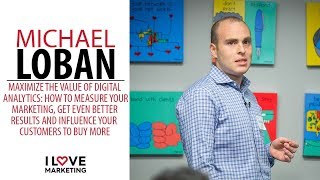
Joe Polish and Michael Loban break down how to catch broken marketing early using analytics. Michael frames it as three steps: measure what happens, understand why, then influence the outcome. He splits the funnel into exposure, landing, contact, and transaction so you can fix each piece separately.
Chapters
In the late 1950s, almost all of us were born. One of the most popular television shows was the $64,000 question. How many of you remember that? Okay, good. Even though most of us don't remember that TV show, we know the expression the $64,000 question. And the $64,000 question most of us in this room need to answer is how can we measure our marketing to get even better results and influence our customers to buy more? Most businesses have data about their marketing, but unfortunately, they don't know how to use the data effectively. Once you can do that, you can grow your business exponentially and grow up profitably. According to Michael Loban, analytics can be used to not only measure your marketing, but help you understand and influence your customers. As co founder of InfoTrust, a digital analytics technology and consulting company, Michael has worked with Fortune 100 companies in 18 of the top 100 brands in the world. On an annual basis, they analyze over 1.6 billion in digital media spend. Michael has spoken at many conferences and taught graduate courses on digital marketing and analytics at a number of colleges and universities. Michael brings great insights into the use of analytics. You'll learn some easy to execute strategies for increasing your marketing results with analytics without necessarily spending any more money on on your marketing. You really need to focus for the next 10 minutes though. Since Michael's first language is Ukrainian, his second language is Russian, and his third language is English. I can't even imagine how he functions this way. But anyway. Good. Okay, so Michael's title is Maximizing the Value of Digital Analytics. Please help me welcome Michael Loeban. Thank you, sir.
Look, over the past 72 hours, how many of you have seen an advertisement that you didn't care for? Or how many got the newsletter that you did not quite understand why it was sent to you? Or maybe you came to the website and it was so difficult to use, you actually left the website. So why is this happening? We are living in an amazing time when we are able to collect all the information about our customers, when we are able to collect the data, data. And data about how different devices are performing, what people are doing, what people do not do on our websites, and yet they suck at actually using that information. So as Joe mentioned, I worked with many organizations and what I was able to understand working through this company is that there are actually three ways that you can begin using analytics and how it can help you grow your business. Would you like to know what they are? So it actually boils down to three simple concepts. Number one is, well, we need to measure makes sense. Number two is we need to understand, which is a little bit more difficult than measuring, and few companies do it. And we need to influence once we're able to understand, which is even more difficult. Let's start with measurement. How many of you follow sports? Baseball. Football. Great. And when you turn on TV and there is a game, what is the number one thing that you want to see or to understand what's going on? You want to understand the score. So a couple of weeks ago, we had Olympic games. I turn on TV and I see this, and I am as puzzled about what's going on as that guy over there. I'm looking at this. It seemed like a score. I don't know what game this is. How many of you know what game this is? Curling. Curling, right. I could not understand the point of it. That's besides the point. But I could not understand who was winning. And then I had an epiphany moment. I was looking at it and I realized, well, you know what? This is not just a scoreboard. This is a typical marketing dashboard that my clients give me. I look at marketing dashboard, and many of you probably can relate. I look at it, shows the numbers, and ask them, do I look at it like this or do I look at it like this? Like this. It makes even more sense. Or maybe like this. So if you are looking at the information, we are looking at the marketing dashboard, but we still are not quite able to understand, is the campaign profitable? Are they making money or not? How many of you feel this way when you're working as an agency, Your marketing team gives you the information and you're not quite sure are you winning or not. So if you cannot read the scoreboard, how do you know who's winning? So the way we look at how to measure is actually fairly simple. And Jennifer, I'm so glad that you had this discussion just a few minutes ago, because really, the power of analytics comes down to our ability to break down the marketing process in as many manageable components as possible so then we can understand each one. Step number one, well, it's all about exposure. How many people see our advertisement? How many people click on our advertisement? Stump number two, maybe people come to the website. How many landing page views we have. So how many people landed on our website? How many people decided to click more? Step number three is maybe people were intrigued by the website and they decided to contact us. So how many successful form submissions we had? And step number four, maybe there was some kind of transaction. Maybe they decided to buy Something or maybe a conversion happened. Now, most of the organizations have something like this. One thing to keep in mind and the reason you want to break down your marketing process this way. One is it obviously becomes much easier to measure. The other one is a lot of times people think, well, the marketing funnel needs to be as short as possible. That's not necessarily true. Sometimes, as we've discussed today, you want to have more marketing messages because that ability allows you to test them and see what marketing message is the most powerful in your sequence. And you know what? The last and the main reason you want to have this type of marketing funnel is that you can optimize each one of those steps. A mere 10% increase in each of seven steps that we've seen here can produce 100% compound increase. How powerful is that? So great. We have our scoreboard, right? It actually is something that is valuable to us. We have total sessions, we have our form views, we have number of form submissions, we have now number of appointments. It actually makes sense.
Sense.
What's not enough? Well, the reason on what's not enough is I know how many appointments I'm in, I know how many people visited my website and how many converted. But I don't necessarily understand why this happened. How many of you want to be funneled? How many of you want to be clicked throughed? How many of you want to be measured or submitted? We don't as customers, yet as marketers, that's how we think about marketing. So what if we decide to flip it? How do we focus or go from measuring what to understanding why? Because if we can understand why something is happening, we can influence it. Now, it is easier said than done, right? You have a fancy dashboard. You maybe have five or six different dashboards. How do you actually understand what is going on in the mind of your customer? And there is one powerful way to do so. It's called the narrative. Now, I have a nephew, right? My nephew is five years old. And when my nephew doesn't understand something, I do not try to give him more data. What I try to do is I try to tell him a story. If there is one thing that you remember after this presentation should be this. The most important part of writing a narrative is writing is writing a narrative. It's not to get more data. It's not to produce a dashboard. It's to write a narrative. What does it look like? Let's take a look. The way we build our narrative is we answer either ourselves or we get our marketers, our agency, to answer three simple questions. Who are the people that we are marketing to? What are they doing? And the results and then you write it out. Here's our who. Let's say I have a group of people. It's represented by Amy. Amy from New Jersey never shopped before on my website. What happened? She is intrigued by the promise of my advertisement and she arrives on the mobile landing page. What was the result of it? Overwhelmed by 30 plus different offers Amy leaves the site in less than 20 minutes. That's my narrative. What?
Who?
What results? Now what do you think works better when we are trying to analyze our marketing campaigns? Just a dashboard on a dashboard and, and a narrative. Narrative. Somebody used this word today. Humanize us. That's exactly what it does. What you want to do is humanize your marketing so you can really understand what people are doing not just to measure their behaviors. Great. Now we understand that we need the narrative but what happens then? So now I know why somebody why Colin came to my website and Colin did not buy. Why did that happen? Colin? I can do this method probably would not be very effective. What I can do try to do something else. In my opinion marketing is all about influence. If we see advertisements that we do not click on, if we see the websites that are too difficult to process we do not know what we need to be doing on that website. It means that the market really did not influence us to make a purchasing decision. So the question that I want to pose in front of you today is how do I influence my audience to make the right decision? Yesterday during the webinar training Jason was saying if I know that there is something that is right for you to buy I have to give it to you. It's my obligation to sell it to you. I'm paraphrasing, I apologize but he'll probably give you a better version. So how do you influence this? Well a lot of organizations do what's called testing, AB testing. Unfortunately that is not enough. So what we put together is what we call an influence quadrant. So let's take a look. So we have our customers, we have our prospects, we have incremental testing and we have exponential testing and we have four different quadrants. Now quadrant number one is what majority of marketers are doing right now. It's newsletter subject line. Right? I'm sending out newsletters and they want to try a different subject line. As was discussed today when Jennifer was planning to send out the message. The question is can I test it? And that's great. They are testing a subject line. But what if I want to present to my customers something new that was not available to them before. Maybe what I can do is pilot a new subscription service. A couple of years ago, Burberry Burberry brand was the first one that started to online during when they were presenting different clothing and then when they had fall when they showcased the new products during their fall collection, they were the first company to start sell those products during that ceremony. Now every major brand does it. So what they did they pilot a new service and they tested it out. Now you can have exponential testing with your prospects so people have never purchased before so you can enter a new geomarket and that's bullshit. When someone says well in order for me to enter a new JR market I need to do this, this and this. All you need is a landing page and see how many people respond. And last one is if I have prospects and I want to do incremental testing, landing page testing where I try new ideas. So in marketing, in order for us to grow our understanding of what we need to do is have similar type of quadrant and make sure that our testing falls into each of those quadrants. So if I had to answer Joe's question, there are only three things that I would say. Break out your marketing process into manageable steps. Build your narrative and identify two or three desired behaviors that you can test or one may maybe for each quadrant. And I'm going to leave you with this. Thank you very much.
More from Joe

This FBI Trick Can Command Respect Without Saying a Word ft. JEFFERSON FISHER & CHRIS VOSS

How To Stand Out, Be Different, and Create Raving Fans, Customers, and Employees ft. Jesse Cole



90% Of Businesses Fail In Their First Year, Here's Why! ft. Dr. Benjamin Hard & Dr. Robert Cialdini

The 1 Piece of Business Advice I Got From Elon Musk That Changed Everything Ft. Kamal Ravikant

The 6 Traits You CAN'T Teach in Entrepreneurship ft. Richard Branson & Gino Wickman

The Leg Method: How to Make Your Book into a Million-Dollar Asset ft. Anna David


7 Millionaire Mindset Hacks for Daily Success and Wealth ft. Brian Tracy & Dan Sullivan
