Direct Marketing Strategies Interview - Richard Viguerie & Joe Polish
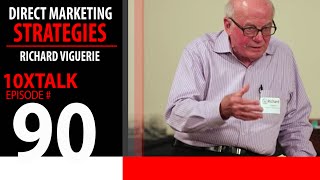
This is a long-form interview (host Joe Polish) with direct-mail pioneer Richard Viguerie who recounts his 50-year company history, political fundraising breakthroughs (Goldwater, Reagan), and practical marketing rules. Viguerie emphasizes direct mail's continuing power, the lifetime value of donors/customers, and his "Four Horsemen": position (own a hole in the market), differentiation (public face), benefit, and brand. He gives tactical advice (long vs short letters, test headlines/offers, write to one person, use simple words, PS summary, taglines), recommends studying marketing constantly, and cites examples (Reagan's March 30, 1976 25-minute broadcast raising ~$1.6M; large mail campaigns that influenced legislation). He also stresses planning, accountability, building teams, keeping a diary, and mentoring.
Questions this video answers
82 years old
50 years old
about 150 million postal letters and 2,300 million emails (as stated)
75 employees
about $1,600,000
Chapters
This is an amazing opportunity to speak with one of the greatest business minds on the planet. So I'm going to actually read his bio just to make sure you have some context of who he is. Okay. His name is Richard Vigori and he's transformed American politics by developing technology that empowered tens of millions of grassroots Americans. In many ways, Richard's technology was the Internet of the 1960s, 70s and 80s. For the first time, regular people could combine millions of small contributions, offsetting the power of political fat cats. For the first time, small organizations could communicate messages effectively and affordably across the nation. For the first time, the big media had grassroots competition in the marketplace of ideas. For these achievements and more, he's been recognized as the founder of the modern conservative movement and he's been honored for empowering people of all political persuasions. Richard's company has mailed more than 4 billion letters over the past 40 plus years. Ronald Reagan's 1968 campaign manager Cliff White and journalist William Gill wrote in their book why Reagan Won. They said in every election from 1966 onward, the Vigory company and its score of imitators brought information to millions of Americans. Information that quite often the people could not obtain from newspapers or television or mass circulation magazines. Richard has appeared on countless television programs including Nightline, the Daily show with Jon Stewart, the Today Show, Good Morning America, ABC's this Week, meet the Press, Face the Nation, C Span Book Notes, PBS now with Bill Moyers, Larry King Evans and Novak and Lou Dobbs. He's also been a commentator for ABC's election night and inauguration day coverage. He's debated David Duke on the Jesse Jackson show, appeared on the pilot of other episodes of Politically Incorrect, and appeared as both guests and co hosts on CNN's Crossfire. He and his wife Elaine have three children and six grandchildren and live in the Virginia countryside. So give it up for my friend Richard Biggery. So what we're going to do first, I'd like you to just talk about whatever you want, give some context to it, and then I'm going to sit down and then come back up and do some Q and A for you. So people, people know really what you're all about. So thank you.
As I mentioned to you yesterday, in a few weeks I'll be 82 years old. I literally go 12, 14 hours a day, five and a half days a week. Do not know the name of anybody that keeps up with me at any age. Plus I enjoy every minute of it. Our company is 50 years old this year. We'll mail between now and election day next year, November, about 150 million postal letters, 2,300 million emails. We have 75 employees. Most of them are really high powered direct marketers operating at a very high level. 1961, I get the opportunity to go to New York to become executive secretary of a political youth organization that had been founded a few months earlier, earlier on Bill Buckley's family estate. So I run this organization. I'm in charge of everything, including fundraising. And I found out real quick, like, I didn't like asking people for money. I asked some very famous people for contributions. Charles Edison, youngest son of the inventor, J. Howard Pugh of Sun Oil Company, Captain Eddie Rickenbacker of Eastern Airlines. And they were generous, gave me nice contributions, but I didn't like that. So I started writing letters that seemed to work. I got something called a mimeograph machine, started turning them out with a mimeograph machine. Hired secretaries, a few here and there. And after a year and a half, I said, hey, I want to be relieved of all duties in the organization except fundraising through direct mail. I want to focus on that. Did that for a year and a half, and by then I had a wife and two babies. And I said, I'm out of here. I'm going to start my company. And I thought I knew everything there ever was to know about marketing. Of course, I knew nothing. I didn't know a fraction of 1% of what I know now, but I thought I did. But what I was, I was blind in one eye and had blurred vision in the other, but everybody else was totally, you know, blind in terms of direct marketing. So I looked pretty good. But though I knew, I thought I knew much more than I did. Of course, there was one thing I knew I didn't have I needed, and that was names and addresses, people to communicate with. And in the summer of 64, I discovered that if you were running for president, you had to file with the clerk of the House of Representatives all of your $50 plus donors. I went down there for a couple of days with the legal pad and started writing Barry Goldwater's $50 plus donors. And I did that for a couple days and said, hey, Richard, you're not making a lot of profit. So I hired five or six women, and after a couple months, I had 12,500. It gave me the courage, the confidence to quit a good job with a wife and two babies and go where no one had gone before. No one literally had done political fundraising through postal mail before. And that's one of the most important things you can do in life. We'll talk about that here in a little bit about branding. If you can at all. You want to be first, can you be first? And. And if you can't be first in some category, find a category where you can be first and where you can own that category. I've been in multiple groups of different times. People were talking about me, not knowing that I was in the group there, and they were talking about me because I was first. You know, who knows the name of the second pope? Who was the second person to fly solo across the Atlantic? You know, nobody knows. Okay, it's the first. So whatever, you know, find a category that you can own that you can be first in, and that's how you build your brand. So, anyway, I did that for the next 15 years and had no competitors, basically. And by the way, I caught a lot of criticism because I was doing something no one had ever done before. And I was regularly, literally regularly attacked on cbs, abc, NBC, cnn, New York Times, Time magazine, and Republicans and Democrats. The establishment was coming, you know, really hard at me. But all of the criticism stopped within a few hours. And a few hours was election night, November 1980. Aha. That's what Vigory has been up to, okay? And so the left had been relying mostly for their campaign funds on involuntary sources, the union, views, corporation, foundations, et cetera. And so they ran out there real quick, like, and tried to replicate, duplicate what we had been doing. And I told my conservative friends, don't worry, you know, it's taken me 15 years to do what I'm doing here. And besides, I'm smarter than they are. So it's going to take them 20 years to catch up with us. Not so. And within three or four years, in my opinion, the left caught up with the conservatives. And to this day, they do a far better job than the left does than the right does in marketing. Think of the 2008 campaign. Obama had 3 million donors to his campaign. I haven't been able to see numbers for 2012, but it's something north of 3 million donors plus 10 million additional names of his supporters on email. Huge. Republicans had nothing like that. And so as a general rule, to this day, the Republicans are not doing the job they need to do to be competitive with the Democrats. So one of the things that I do to this day at age be 82 in a few weeks, as I said, I spend two to three hours every day studying marketing. Okay, I don't need to do that, but I do two to three hours, six days a week studying marketing. And that's one thing I can leave with you more than anything else. Study, study, study marketing. I don't know of a competitor that I have on the right that spends two or three hours a month studying marketing. Okay? I've developed something that I call Vigory's Four Horsemen of Marketing. You've got to get these four things right and get them right. Life is downhill, the wind to your back, pretty easy. Get any of them wrong, you're going uphill, the wind in your face. Highly unlikely you're going to succeed. And I'll explain each one, but just the four things briefly are position, differentiation, benefit and brand. Position is nothing more than a hole, H O L E in the marketplace. What hole in the marketplace can you occupy that no one else is occupying there? And you do that, by the way, privately. That's something you just. And I like to use the example, say of Rupert Murdoch, so. And Roger Ailes 20 years ago. They're thinking about setting, building a national cable television news network. They don't sit there and say, well, CBS does this, we'll do this, ABC does this, cnn. They don't care what they do because they're going to occupy a hole in the marketplace right of center. 50% of the country is not being served by, by television news. Life gets pretty simple at that point. Okay, then differentiation is what you do publicly. So publicly they differentiated themselves from all the other television Networks with Bill O'Reilly, Megyn Kelly, Hannity, Glenn Beck for a while, okay? That's how they differentiated themselves from the others. Third benefit is obvious. You get news and information on Fox, you don't get anywhere else. 4th brand. Brand is the ball game, okay? That's products these days are seldomly sold. They are bought. Okay? I bought this week a new car. Well, a new car to me it's a few years old, but they didn't sell me the car, I bought the car, okay? They could have had hundred different types of cars out there. I was looking at my daughter's strong and wife's strong recommendation for a Lexus, okay? I wanted a Lexus and that was it. I didn't have to be sold. I bought that car. You go into the supermarket now, 40, 50,000 items to be sold. Not one salesperson in the store. They will check you out, but Nobody's saying no, Mr. Vigory, you shouldn't buy this brand of paper towels. Buy this one over here. I'm a Viva man, I like Viva paper towels. That's what I'm going to buy. I'm sure Bounty makes a good paper towel, but I've been sold before I walk into that store. And so brand is so important for success in your marketing. So position is what you do privately. Differentiation. You differentiate yourself from your competitors by whatever you do to differentiate yourself. Benefit is number three and then fourth is brand. Okay. And by the way, I do almost nothing in my life of any consequence, any importance without a writ. Four part plan. We used to get off, a lot of us in the late 70s, early 80s, 2025, for a long weekend, Friday, Saturday, and we'd plot and plan for the try to bring conservatives to power. And we'd come up with a problem. There was a young congressman from Georgia, part of our group of 2025, Newt Gingrich. He didn't invariably, when we came up with a problem, go to the blackboard. We didn't have white boards in those days. And he'd write four words on there, vision, goal, strategy and tactics. An hour later we had filled in those four words and we saw a clear path forward of how we should proceed. And, and that's not the only way to do a plan, but that's a good way to do a plan. It's simple, doesn't take very long. And by the way, the number one benefit of a plan is not working. The plan, that's important, but that's secondary. The number one benefit of writing a plan is writing the plan. Because as you write the plan, it clarifies your thinking, it crystallizes you. Thought you wanted to go over here, but as you write it down, you say, nah, I think I need to go over here. More of this, less of that. So the exercise of writing the plan is so, so important. Joe said yesterday that Dan Sullivan gives me a lot of credit for Reagan's lecture, quite frankly. I appreciate the compliment, but it's nonsense. And I've seen different people at different times take excessive credit for Reagan's election or victories and whatever. And it reminds me of a slow moving freight train and somebody running alongside him pushing that freight train. Look at me, look at me, what I'm doing. Reagan with a freight train. And the rest of us had very little to do. The one thing though that was very, very helpful to Reagan was the, what was something called the new right that came into being in the mid-70s and the entire conservative movement began to come together in the 60s and the 70s with hundreds and hundreds of new organizations. And almost every single one of these organizations was funded. They got their membership they sold their books, they sold their subscriptions through direct mail. And Reagan, when he ran and lost in 76 and ran and won in 80, was running against the entire Republican establishment for the most part. Bob Dole, of course, Jerry Ford, George Bush, John Connally, Howard Baker. And they were getting the thousand dollar gifts. Reagan depended upon the $10, 15, 25, $50. And he had 250,000 of those people. And so the small givers through direct mail just changed American history. In March of 1976, Reagan is literally out of money riding commercial airlines. And his aide Lyn Nofsinger goes on and buys $90,000 worth of time on NBC. Reagan sits on a stool, much like this, I guess, for 25 minutes, March 30, 1976, and makes a 25 minute stump speech. The last five minutes he asked for contributions. About $1,600,000 came in. And that was huge back in 1976, turned his campaign around, allowed him to go to Kansas City that summer and get 49% of the vote against the sitting President and propelled him onward in 1980 for success. And if he hadn't been able to do that In March of 76, he would have never been the candidate that he was in 1980. There's a number of odds and ends here, but I know Joe wants to get to some Q and A here, but let me just mention a few things here. I know a lot of you are focused on marketing through the Internet, and that's important. You need to do that. Obviously, we certainly do it at our company. But the workhorse of marketing today, in my opinion, is still direct mail. And when I started in 1961 in New York City, direct mail was the second largest form of advertising in the country. Today, in 2015, it's the second largest form of advertising in the country. And by the way, I understood that most people in the nonprofit community to this day and in commercial world as well, do not understand, do not comprehend that direct mail is advertising. Okay, so in the late 70s, David Broder, the preeminent political correspondent in Washington D.C. at that time, since passed on, just a giant at his time, came to see me and he sat down in my office and we had a casual conversation for an hour or two. And this is late 1970s. And he said, richard, I'm perplexed. I've been all over Capitol Hill, the White House, it's. The Democrats have almost a 2/3 majority in the House, in the Senate, at the White House, nothing is happening for the Democrats. They're not able to pass their legislation and said, I've been to Walter Mondale's office. The vice president, he can't help me. Nobody knows what. Do you know what's happening out there? Well, I don't know, David, if this will be of help. But I began to explain to him what we were doing, mailing 100 million postal letters a year, doing this and that, all under the radar. And when we were mailing those hundred million letters, we were very focused on passing legislation, mostly in those days trying to defeat the Democrats proposed legislation. Jimmy Carter saw him in an interview just this week complaining about he had announced in March, April 1977 that he wanted to change the election laws in four ways. Been devastating to the Republicans. Like any instant voter registration, just show up on election day and say, I live down the street, I'm going to vote, Federal financing of elections, et cetera. And so anyway, a friend of mine calls at night, woke me up at 10:30 and I said, paul, you know, we can beat this. He had just come from meeting of Republican senators saying, we can't stop this, it's a bad idea. But it's a time has come and so it's going to pass. I said, we can defeat this. Let's talk in the morning. I'm to going, going back to bed. So we did. We got together for four or five months at my home, my office, et cetera, and we designed a strategy through direct mail, using it as advertising. And we defeated all four pieces of legislation. And to this day, Democrats are still complaining that it didn't get passed, but it was the power of direct mail. Just briefly, a few high points. There were some very good questions submitted to Joe here, but most of them weren't dealing with a lot of the weeds of direct mail. So I may get these questions here, but I'll just briefly say long letters output, short letters counterintuitive. And by the way, most of what we know about direct mail is counterintuitive. You don't want to go to a doctor with an appendicitis attack and say, doctor says, let's go into surgery right away. Great. Doc of whatever you say. By the way, where do you go to school? Medical school? Oh, I didn't. I'm just a natural appendix puller. It just comes to me and funny, my father was a natural appendix puller and his father, no, you're looking for a deviant at that time. Okay, it is deviant behavior to lay somebody on a table and cut them up and do what doctors do. Okay, so this what we do is learn behavior. Most people and you have to be careful about direct mail. It's very expensive. It does great and wonderful things, but it can also be very, very expensive. And you can lose a lot of money because people say, well, I learned to write in first grade. I know where they sell postage stamps. What's the big deal? It is a big deal. That's why I spend two or three hours every day studying marketing. So if you're going to do a big marketing campaign, get a professional involved. It'll reap great benefits for you. So long letters, I pull short letters. Short paragraphs are better than long paragraphs. Use one or two syllable words. Don't use big words that stop people in their reading. It was a wonderful book called the Man Nobody Knows, written back in the 1920s by a congressman. At the time he was a major advertising executive and the man nobody knows was Jesus Christ. And he described, described how he communicated with one and two syllable words. Christ didn't use a lot of three and four, five syllable words. Write to one person, you may be sending it to a million people. Write to one person who is a likely prospect. Summarize your whole mailing if you can, in a PS Test. Test, test, test headlines, test offers, test price. A lot of you have names of your organization doesn't mean anything. So sometimes you need what we call a tagline, a sub headline. Joe, I like these coffee cups and these glasses. But Genius Network doesn't say anything. If it says something like the world's largest gathering of marketing professionals or something like that. Well, what's the genius? Is it, you know, menstrual society? Is it, you know, PhDs, whatever it is. So just a little tagline on there indicating that this is a collection of the world's largest, you know, high powered market or something like that. So anyway, taglines, sometimes your name, it just doesn't, doesn't say anything. So you need to tell people what it says there. And so Joe, that could go on for a long time. But that covers the highlights. I wanted to say.
No, that's great, that's great. Thank you. Well, that gives you an idea of just the depth of his knowledge. I mean the fact that you know the exact day in 1976 and how many minutes Ronald Reagan spoke for and how much exact money he brought me is great. So there's a tagline under the Genius Network banner that says where to connect with the most successful entrepreneurs on the planet. So we now need to put that on the mugs. Thank you for Pointing that out, Jason. Okay, so what I'm going to do first, I'm going to ask Richard some questions, questions that I have here, and then we'll do some Q and A with the audience, and you guys can just pick up a mic and ask Richard some questions. So let me make sure I actually have the sheet with the questions on it. Well, if you were starting over, what three things would you do differently, better, more seriously, or less seriously?
This is very helpful, Joe, to get the list before, because you can always say something without giving a thought. But I had a chance to spend 2 or 3, 4 minutes on each question, and I hopefully will be able to give you far better answers here. I talked about the importance of a plan. I don't do much of any importance in life without a written plan. I didn't do that in 1964, 1965. Okay. I would have a written plan for my life, for my family, and for my business. I think that was a big shortcoming. The old saying, if you don't know where you're going, any train will get you there. Okay. I was telling Mr. Sean yesterday morning, he's dealing with the issue of how much you involve his wife. Big, big mistake in not involving my wife for 53 years in my business and making her a full business partner. She's very, very bright, got great ideas, and I didn't do that. And in fact, I resisted everybody being involved in terms of leadership. Ten years into my business, I'd hired a company called Tush Ross. They're no longer around, but they were one of the big eight accounting firms in those days, and I paid them a lot of money to come in and spend five months analyzing my company, talking to clients and vendors and employees, et cetera. They came back five months later with a very detailed written plan. The essence of it was I need to resign as president, CEO and become chief, creator, creative person, vice president of coffee, whatever. That's the dumbest thing I ever heard. Hey, this is my company. I built it. I own it. You know, Best advice I ever got. So 10 years ago, I promoted a woman, Kathleen Patton, that Jo knows, involved in strategic coach, to be my president and CEO. She's an answer to all my business prayers, changed my life. Okay. And now I can focus on my unique ability. Okay. And. And Joe Dan Sullivan has this concept of the retirement trick. Okay. Well, I feel working 12, 14 hours a day, I am retired because I am focused entirely and completely on my unique ability. And Kathleen is focused on her unique ability. Just a few more Things on that question there, what would I do different? I heard a man speak some years ago in Washington, D.C. area, and some of his 40, 50 of us in the room, some of them were his clients, and he was giving them a hard time about. They were still stuck in the same gunk he found them in five, six years earlier when he was here. And, you know, he was kind of difficult to listen to and looked kind of rude, crude and etc. But anyway, he said, I'll tell you what the answer is. And his answer was devastatingly accurate. And I just felt an arrow go through my heart. He said, you're stuck in that same gunk I found you in five, six years ago because of lack of accountability. I was the owner of the company, didn't have any bosses. I get up in the morning, hey, look at that rabbit. I'll chase them. 9:45, hey, look at this one over here, you know, and 10:30, you know, by the end of the day, quick start, you know, I'm all over the place. Okay, you know, a lack of. Now I've got accountability, I've got Kathleen Morkviski Givens, my president of corporate and legal affairs, et cetera. So I urge you to have a real board of directors or real serious advisors. So when you meet with them, say, hey, Richard, last month you said you're going to do X. You haven't done X. When are you going to get your act together? When are you going to do this? And that lack of accountability is probably, maybe, if not the number one on a short list, major reason why companies fail. Briefly, I'm at the point now where I'm doing a lot of writing, remembering this, remembering that. It's hard. Keep a diary. I strongly urge you. Keep a diary. You think you remember everything. Your mind plays tricks on you. You forget this. Regularly, people say, hey, remember that trip we took here or there, I don't remember the trip. I don't remember you. Who are you, literally? And so keep a diary.
All right, great. What's the most interesting political marketing idea you've ever discovered or uncovered that everyone here could benefit from?
I'm going to answer that in a second. Let me go back to the first question. What would I do different? Another thing that I would do different. I made a major study of marketing advertising. And by the way, I guess I was a pretty good salesman when we first got married in 1962, because a year later, the first baby came. A year later, the second baby, and I was really into direct mail and I said, Honey, I think I've got something here. I think I'm really on the verge of making a real profound discovery that's going to change America, et cetera. You know, I'd really like to be relieved of all household duties. Diapers, trash. She bought into it, she bought into, paid off, hopefully for her and the everybody. But anyway, what I did was focus on marketing. I did not focus on business. So if I had to do it over again, I would make a major study of marketing, but also business. I would have found in those days a Joe Polish, a Dan Sullivan and others. So do both become the best in your area of expertise, but also study to business? So what the question was, yeah, so.
What'S the most interesting political marketing idea you've ever discovered that everyone here could benefit from?
Maybe there's a number of them, but on a short list it would be that early on I discovered. And by the way, I've learned very little marketing from the nonprofit community. The vast, vast majority of what I've learned, I've learned from the commercial business world. I often say I wouldn't dream of flying in an airplane with a pilot who had the skills of the average person in non profit marketing.
That is awesome.
Or eating in a restaurant. But so I discovered something early on and that's one reason why I was criticized a lot in the 70s, because I understood the, the lifetime value of a donor, in your case, maybe the lifetime value of a customer. We regularly would spend a dollar and bring back 70, 80 cents because I understood that we were going to go back to them and ask for a second contribution and a 10th contribution and a 50th contribution. And the lifetime value of that customer donor is huge. Another thing that I did early on, in fact it was about the first thing I did when I started my company. I realized real quick, like I had all this knowledge, but I was dealing with nonprofit people. And as a general rule, with few exceptions, God in his infinite wisdom seldom saw fit to put in the same body. You know, a non profit person and an entrepreneur just do not go together. The definition of an entrepreneur, among others, is risk taker. And we're all risk takers. How many times we put everything we have on the table and rolled the dice, okay. And so I would go to, I would, you know, work with clients and we'd do a test of 5,000 letters and we'd spend a dollar and $3 would come back. Wow, this is great. They say, good, okay, let's do another 5,000. No, no, the barbarians are Right there, I can see them. You know, we need to mail 100,000 and then a million and say, no, no, no, it's another 5,000. So real quick, like I said, okay, I tell you what I'll do. I'll take the risk, you know, I will put up the money and we'll do 50,000, 100,000. Then after that we'll do 500,000. A million. And that helped build the conservative movement back in the 60s and the 70s, that our company would go out there and build organizations at no risk to the nonprofit. And one thing that I think it's a question comes later, but I'll mention it now, and that is that I said I'll do that. I just want one thing in addition to paying our fees. And if our money doesn't come in, you don't owe us anything. Okay? Risk is all ours. We'll put up the postage, we'll pay for the printing, et cetera. Just want one thing, pay our bills when the money comes in. And two, we want a copy of the names and addresses of the people who respond to the mailing. And that was huge. So that when a new candidate running for office in 1970 would come to us, we could go to the people who gave to 1966 campaigns, 68 campaigns. We didn't have to go to expired subscribers to the Wall Street Journal, the Saturday Evening Post. And having a database of most all conservative Republican right of center donors in the country was huge to build the conservative movement back in the 60s and the 70s. But I did it because I recognized a weakness. My clients just were not going to go where I wanted to go. They didn't have the vision that I did because I could see. There's a wonderful scene in the movie 1776, and if you haven't seen it, I highly recommend it. It's one of my favorite movies, 1776, dealing with, of course, the founding of our country. And it's the summer of 76 and they're bickering and arguing and nobody getting along with anybody else. And so they all go home for the day or whatever. And John Adams goes to the top of the. The tower there, where they were in Philadelphia. And he's talking to himself and he has a wonderful line in the movie. Can't anybody see what I see? I see America. I see what can happen out there. So I felt that way with these organizations. I see what we can do, you know. So you won't do it? We'll do it for you.
Great. That's awesome. The secret to marketing success in the three sentences or less is what?
Read, read, read, study, study, study. And you know, there's hundreds of good books out there. I recommend read what you like to do, but mostly identify 10, 11, 12 books, which I do. And I read those and I read them like a textbook. I underline them. I keep that book. I buy. I give away hundreds of marketing books a year. But I have my copies of my books that I underline and I go back and reread them. I can go through a book in 20, 30 minutes because I've underlined the key parts two, three, four times a year. I have a friend who, when he's six years old, was on a transatlantic ocean liner with Winston Churchill. Churchill looks at him and says, study history, young man. Study history, study history. So I say to marketers, study marketing. Study marketing. Study marketing. And if you really make an intense study of marketing, identify the 10, 12, maybe 15 best experts on marketing. Within five years, you'll be at the very top of your game. You'll be better than, you know, 90, 95% of the people in the country because the competition is, quite frankly, not that sharp out there in terms of marketing. Study, study, marketing, the. All right, if you give me your, your business card, I thought about it. You know, this one's too late today. I've got a bibliography I'll be glad to send send to you. But let me just tell you right.
Quick, if you give it to me, I'll send it to everyone, okay? Because I know, I know a lot of the books that you like.
I am a disciple of Al Reese, R I E S and Jack Trout. Whatever Al Ries and Jack Trout haven't written about marketing may not be worth knowing. Okay? These people wrote the book on marketing. And you don't read Rhys and Trout. You memorize them. They are really good. Now. They used to write together, now they write separately. And Al Ries writes with his daughter Laura. But the origins of brands, the 22 immutable laws of branding. I was reading them on the plane coming over here. I just go over and over and over. And all of our top executives are required to read Reese and Trout. I think the best marketer communicator in America today may be Seth Godin. He's got a free blog. If you don't get his blog, you need to get it. It's every day, sometimes eight times a week. It's really, really good. Seth Goat G O D I N. He's written any number of books and by the way. Let me go back to Brandt. Position differentiation, benefit brand. I live out in the country. Regularly pass fields of 40 black cows, 50 brown and white ones. Over here, they all look polite. Can't tell one from the other. But one of those cows was a purple cow. And Seth Godin has written a book, purple Cow. And so all of our goals in life is to be a purple cow. Not only for your business, but for you personally. I speak before young people a lot, most of them single. I said, you like to get married someday. And a lot of competition for that pretty young lady's hand out there. So how do you separate yourself from all that competition? The last thing I did before I left Houston to go to New York in 1961, the summer of 61, was take my girlfriend out to San Josina Monument battleground. That's where Texas won its independence in 1836. And asked my girlfriend to marry me. And I didn't realize it at the time, but I had serious competition. I had gone away two weeks summer camp. National Guard came back and found out that Charles had really moved in. They were looking at homes, et cetera. Charles went on to be chairman of a major oil company. You know, it's serious competition, honey. Marry me and life will be like this. So that's your goal, to be a purple cow and separate yourself from everybody else out there.
Fantastic. What's the greatest marketing campaign, A direct mail campaign or sales letter you've ever seen that everyone here should see? Study in depth, if you have one.
I don't have one letter. You know, there are books out there of great sales letters. And, you know, there's some good books out there. Buy those. Read those two examples which make a bigger point. Maybe a man named Morris Dees, early 1970s, got associated with George McGovern. Morris is still active today. Runs an organization called the Southern Poverty Law center, which I've got serious issues with. But Morris and I have known each other and been friendly over many, many years. Morris writes a 16 page letter from McGovern. McGovern was furious. Nobody read the 16 page letter. He mailed like 100,000 letters, some large number, and nothing came back. The first day, second day, McGovern called him into the office. He was doing it as a volunteer. And so, in fact, he was a, I guess a roommate, classmate certainly, of who founded Habitat. Thank you. Thank you, Habitat for Humanity. Millard Fuller. They were classmates in college, made a lot of money on selling, doing marketing, et cetera. So anyway, Morris writes his letter as a volunteer. McGovern brings him in, chews him out, you know. And about two days later, mail trucks start arriving and they don't stop for weeks. And it just went through the roof. And that changed everything for the McGovern campaign. Morris went on to run a phenomenal campaign. Of course, McGovern became the nominee in the Democrats in 1972. In 1975, a client of ours, the National Right to Work Committee, good organization, still going strong, was concerned about legislation called Common Citus. Legislation. And that's legislation where if you got, say, a union project or a construction site, 10, 12 unions on it. One union goes on strike, everybody goes on strike. It's against the law to do that now. But the unions wanted that Jerry Ford, the President of the United States, said put to the congressional leaders, said it to George Meaney, aflco. Put the legislation on my desk and I'll sign it. Okay? They did. He vetoed it because we mailed 4 million letters for the Right to Work Committee. In those days, you could mail a letter for 25 cents. So we mailed 4 million letters for a million dollars. About $700,000 came back, okay. But a friend of mine in Jerry Ford's press office said he got 720,000 letters demanding that Ford veto the legislation. And at that point now, January 76th, and he's staring down the barrel of R. Ronald Reagan about to run against him there. So the power of direct mail and the lifetime value of a donor. So they lost $300,000 in that campaign. Purpose of the campaign, of course, was not to raise money to spend in newspapers or on television. It was to defeat the legislation. One, they did that. Two, about 90,000 people gave to that campaign. Everybody, myself, the people in the organization are going to go to their grave never knowing how much more money those 90,000 people. But it was something north of $25 million. So lifetime value of your customer, your donor, et cetera. Right. Awesome.
Just ask you a couple more. What's the single best piece of business or non business advice that you've ever received and how did it alter your business path and your life?
I've already covered it, I guess. And that would be the lifetime value of a donor. And it's not a direct answer to your question, Joe, but you know, you walk out, I'm a turtle on a stump. And most everybody here is a turtle on a stump. You're walking out in the woods and you see a stump there and you see a turtle on top of it. You know something? You know, somebody came along here recently and put that turtle on that stump. Get up on that stump. Okay, we're all true, you know, and I had a lot of help along the way. And I had mentors and gurus I was fortunate to direct mail. I had three giants out there. Dick Benson, first was Ed Mayer, and he was a giant back in the 60s and 70s. He dies suddenly. Late 70s, Dick Benson, another giant, calls me on the phone and says, your guru just died. Can I be your new guru? I said, you got the job. And he was a giant. And so. And by the way, he's written one of the best books on marketing. Benson, on marketing. Dick Benson. He's only wrote one book, Highly, highly recommend it to you. And then I had my first boss was my mentor, Marvin Liedman. Then late in life, I have found Dan Sullivan and then Joe Polish. And I wish I had done that 10, 20 years earlier, but so important. By the way, just about a year and a half ago, Joe and Dean Jackson asked me to do a podcast. So I did that. And I've got a 40 year old son who lives in the Czech Republic and he's got an English teaching business and he's trying to scale it and market it throughout Europe. And so his last few years really, really gotten into marketing. And when he comes back, he talks to me about marketing. Wow, how'd you learn that? How do you know this person, that person, etc. So anyway, after podcast had been up there a week or two, he calls me on the phone. Dad, how do you know Joe Polish? Wow. You know, he's met, you know, presidents and senators and governors and celebrities out there, you know, not interested. Joe Polish. Wow, that's a true story.
You gotta love stuff like that. You're never like a hero in your own family, you know, Although you could.
Yeah, I mean, you know, meet the press, face the nation, do all that. That's not important. Joe Pollitz. That's important.
I love that we just created the best testimonial clip right here, you know. Oh my God. I will say this about you, though. You are. And I said this about Robin Sharma when I interviewed Robin the day before yesterday, that there are some individuals that want to be the smartest person in the, in the room that are incredibly smart, but there's people that are very coachable and that's you. I mean, you study two to three hours a day of marketing. I mean, that's why you are so good at what it is you do, because school's never out for the pro. And you're a true Pro. So that's awesome.
I understand two days ago, you also interviewed Kay Colby.
Yeah, Kathy.
Kathy. And I knew her when she was Kate Wonderlick, and she was my boss in 1961 and 62. She. She was 20, 21 years old, and on the board of directors of this youth organization that I was running in 1961. 62. And she was Kay Wonderlic then. And now she's Kate Kobe.
That is. That is.
Wow.
Small world.
I knew her 54 years ago.
I mean, you're so good with dates. I mean, do you know one of the defining moments in marketing in 1968.
1968. I give up.
I was born in 1968. Just joking. That's kind of a. All right, so what's something that you would rarely share publicly, whether a marketing secret, a political idea, or life philosophy, but it would change the lives of everyone here who hears it?
Well, I'm very, very fortunate. I've been very blessed. As I said, I started 54 years ago. My company is 50 years old this year. And when I'm a teenager in growing up outside of Houston, we're playing cops and robbers, kids in the neighborhood, cowboys and Indians. I don't tell anybody. I'm not shooting robbers. I'm not shooting Indians. I'm shooting communists. And communists, because I came out of this world knowing them as bad people. So it didn't happen yesterday, Joe, but I promise you, before the sun sets today, I will say Western civilization. That's a passion that's driven me all my life. So I've been exceedingly fortunate and blessed to be able to have my work be my life's work. It's my passion. I hate to go to bed at night. Can't wait to get up in the morning. And so if you can combine your work with your passion. I am a person of faith, and that drives everything that I do. And I just. The idea of retiring, I can't conceive of that because I feel that I'm either making a difference or trying to make a difference. And I am not required to succeed, but I am required to try. So that's how I approach every day.
Thank you. I mean, you're just so great. You're awesome.
Thank you so much. Thank you.
More from Joe

This FBI Trick Can Command Respect Without Saying a Word ft. JEFFERSON FISHER & CHRIS VOSS

How To Stand Out, Be Different, and Create Raving Fans, Customers, and Employees ft. Jesse Cole



90% Of Businesses Fail In Their First Year, Here's Why! ft. Dr. Benjamin Hard & Dr. Robert Cialdini

The 1 Piece of Business Advice I Got From Elon Musk That Changed Everything Ft. Kamal Ravikant

The 6 Traits You CAN'T Teach in Entrepreneurship ft. Richard Branson & Gino Wickman

The Leg Method: How to Make Your Book into a Million-Dollar Asset ft. Anna David


7 Millionaire Mindset Hacks for Daily Success and Wealth ft. Brian Tracy & Dan Sullivan
