Following THIS Process Will Find You Your Next A-Player ft. Kasim Aslam
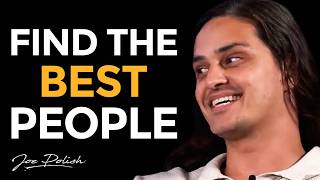
In this live interview, Kasım Aslam—founder of Solutions8, co‑founder of Pareto Talent, and seasoned growth operator—delivers a provocative, profanity‑laden critique of traditional HR practices and unveils a seven‑step hiring system designed to secure "A‑players" in an era of AI‑augmented labor scarcity. He argues that resumes and interviews are useless, that the real hiring bottleneck is the offer, and that AI is not a magical unlock but a force‑multiplier that amplifies the value of top talent. Aslam frames the current economy as an R‑selected environment where only the most elite workers thrive, and he proposes paying premium compensation, crafting irresistible offers, and flooding the market with highly specific job postings (the "fly‑trap" method). He then walks through the seven steps: (1) define core principles/mission‑vision‑values, (2) craft an extraordinary offer, (3) generate massive traffic to the posting, (4) filter applicants with strict instruction‑reading tests, (5) run paid trial projects to assess execution, (6) conduct interviews that manage expectations rather than evaluate fit, and (7) hire on a 90‑day trial with clear risk/reward framing. Throughout, he stresses delegation as a "black‑box" process, the importance of giving peak performers autonomy, and the need to remove managerial bottlenecks. The talk ends with promotional plugs for Joe Polish’s book and a call to action.
Chapters
Everything that you've been taught about hiring is wrong because you've been taught it by dipshits that work at HR. Resumes and interviews tell you nothing. Resumes tell you what somebody wants you to see, and interviews tell you how good somebody is at interviewing. If you've done this right, step 1, you have good core principles. Step 2, you have an amazing offer. Step 3, you get a lot of traffic. Guess what will happen? You will be inundated. You will not be able to fight them off with a stick. It's going to be overwhelming. So what do you do? I call them flight traps. So I'm trying to catch you. I'm trying to stop you. I'm trying to make it hard. But if you send my EA an email and the subject line doesn't read, "Actually read the instructions," we never see it. Automatically filtered out. I'm gonna pay you in advance for 2 hours of your time to do a trial project. You never follow up and you never talk to them again and you wait to see who goes to you. If you've done this properly, you'll end up with the best employee you've ever had in your entire life, and then everybody in this room will do what I did for 10 years. You'll ruin them because you believe that your intervention is of value. Get the fuck out of peak performers' way. You define what goes in, you define what goes out. What happens in the box? None of your business.
Qasim Aslam is one of the smartest operators I know when it comes to scaling companies, building teams, and driving real results. He's the founder and CEO of Solutions8, one of the top Google ad agencies in the world. But what he's going to share today isn't about traffic.
It's—
and he sold that company, by the way. It's about something way more valuable, hiring. As the co-founder of Pareto Talent, Qasim specializes in connecting entrepreneurs with highly skilled, pre-vetted, AI-trained executive assistants tailored to support entrepreneurs specific needs. And I know this because he helped me find one of my amazing assistants, Anna, who is here today.
Where's Anna?
She's sitting—
she's back—
she's right there, right there, all the way from Argentina. And she— so Kasim has spent over 20 years refining what he believes is the best hiring framework in the world. Hard to find, vet, and install A-players, especially the critical operator or integrator that can either make your life easier or make your life miserable. Today, Kasim is going to walk walk through his 7-step framework, what to look for, what to avoid, and how to actually execute the process so you don't waste time, money, or energy on the wrong people. Please help me welcome my dear friend, Kasim. What's up, brother?
Thank you. We were talking to Joe Polish Polish about hiring for him, and he's like, can you talk to Genius about this? I was like, yeah, dude, absolutely. He's like, we can't. "You can't pitch, you're not allowed to pitch." I'm like, "I know that, I've been to Genius before." And then I asked him this morning, I was like, "Dude, I've got 350 of these boxes sitting in my house with my book." And he's like, "Well, you prick, that's a pitch." But I brought them anyway. Just kidding. So I'm giving everybody my book. The reason I'm bringing that up right now is because I am going to go lightning fast because I want to honor your time. And so if you feel like, "Dude, slow down." I'm trying to get a lot of context in, but I feel like you'll be able to catch up, and I will be gifting you with this. The benefit of the book, I think, is if you have the book, you don't need to hire me. That's the point. I'm a premium, I'm super expensive, there's no reason to work with us because you can do it yourself. And what I want to teach you today is what I think, and I'm allowed to say this because it's not really mine, it's stolen. I feel like I've developed the best hiring process in the whole wide world, and it's been just 20 years of iteration of me stealing from people that are way, way, way, way way smarter than me. Before I dive into the process, I want to just maybe offer some context from a paradigm perspective. And I would love if somebody were to challenge me on what I'm about to say, because I believe it with the fervent religious commitment of a child. AI is not an unlock. AI is not an unlock. How could it be? It might be for Google or Anthropic or NVIDIA. It's not for you. It's not for me. We don't own the trillion-dollar organizations. We subscribe to them. AI is not an unlock. It's table stakes. AI is not an unlock. It's now the minimum standard. So to think that AI is going to somehow improve your opportunities over your competitors or against the market I think is naive. AI is the thing that everybody better fricking learn how to use because it's now the minimum requirement. That's belief number 1. Belief number 2, AI is a force multiplier. Great, thank you, Kassim, for the fricking soundbite and the buzzword that nobody ever really thinks about. But think about force multiplier if we were to break that up. And I have a 10th grade education, so most of these words I'm not going to understand. But I'm going to do my best. Something that multiplies a force needs what in order to be effective? More force. If AI is a force multiplier, what in the hell are we multiplying? So to think, especially as a small business— I understand that Microsoft and Salesforce, they're laying people off in mass and they're making more money. That's because it's an unlock when you get to a size that allows for that economy of scale. And even then, I think they're following my model. It just looks a little bit different depending on the size of the organization. AI is a force multiplier, needs more force to multiply. What's the force? People. People, people, people, people. AI is a force multiplier of people. I'm the only idiot in the world right now, and I don't know why, I actually think this is super secret sauce, y'all, to be honest. I'm the only idiot in the world right now in the world of the AI craze telling people, go find good people. Because that's the fricking unlock. Bill Gates has this great quote, if I'm allowed to quote a pedophile. He says automation applied to an inefficient system only amplifies the inefficiency. It's true. So it's not just that any people are the unlock. Here's what we need, and I'm about to say a bunch of things that are true and sad. We are looking at the biggest labor collapse in human history. If you don't believe that, you're not paying attention. And I think UBI is in your future. We are looking at the biggest labor collapse in human history. Uber and Lyft are the second largest employers, second only to the US government. And self-driving cars are a reality today. The meteor already struck. We're just waiting for the blast radius to have been cleared. What this means is you are about to have access to more quality talent than humanity knows what to do with. This is bad for employees, good for entrepreneurs. You don't just need people. You need the best people that exist. Because to go back to the pedophile's quote, Automation applied to an inefficient system only amplifies the inefficiency. It used to be that a C-level player or a B-level player or an A-minus level player were OK because we all had assembly lines. And if you're printing t-shirts or whatever it is, you've got a couple of people that you love and then you got Jerry. And Jerry sucks, but every now and again you have more orders than you can fulfill on and it's like, all right, at least we have Jerry here. And I know he sucks, but he gets the product out and he gets the job done. Well, imagine taking the trillion-dollar nuclear supercomputer and attaching it to Jerry. Do you know what I mean? Everybody's screwed. So the rule is get rid of Jerry, metaphorically. And y'all, Jerry's going to be fine, by the way. Jerry is going to get paid to go home and watch Netflix, which is what we're going to do with the majority of humanity. This is Sean Putty's K-shaped economy. The downward trending leg of the K is 80% of people will be nullified to absolute zero value from an economic perspective. Still beautiful humans, still wonderful souls, still going to heaven. Worthless economically. 20% of humanity is going to spike to a level of output that exceeds all demand. Think about that. The best people in the world— Jeff Hayes, one of the best filmmakers on the freaking planet— imagine what he can do when he has trillion-dollar supercomputers at his fingertips and has no restriction. He'll be able to make more films than anybody will ever be able to watch. If you are the best, you will be able to produce more than the demand could ever ask for. That's the key. That's the unlock is how do we take the best people, 1 out of 1,000, the best of the best of the best of the best, and then hook them up to our trillion-dollar nuclear-powered, literal nuclear-powered supercomputers that are going to be able to do anything. But they're force multipliers. They're force multipliers. And the day that's not true, by the way— because I get into these little philosophical conversations with people that want to argue with me about AI's ability to ideate. Great. Let's say that you win that argument. Let's say that I'm wrong, my thesis isn't correct, and a human being on a long enough timeline doesn't need to be the catalyst, isn't the force to the force multiplier. In that event, all of us are nullified. And the K-shaped economy goes from 20/80 to 100% everybody UBI. So we might as well act as if this is Pascal's wager. Might as well act as God exists. Thank you. This is Pascal's wager for AI. You might as well act as though you're going to be the 20%, right? Any challenges yet? I realize I've been very petulant. Okay, here's thesis. Yeah, yeah. I'd say here's the thing. Nobody else knows what they mean either, so you can throw them out. And everybody's like, "He sounds confident." Here's another thesis. What's the plural of thesis? Thesis-es? Thesis-i. Okay, so my collection of thesis-es. Here's another thesis-i. You've all been told shit, and I'm gonna offend everybody in the room and every thought leader who's ever existed, okay? I'm gonna tell you some things that were brilliant.
Hey, I hope you're enjoying this video, and I wanna let you know that I have a new book that's come out, and if you'd like to get it absolutely free, There's a link below in the description, or you can wait till the end of this video, or you can simply go to JoePolish.com and you can get a copy there.
Niche down. Choose your one thing. Build a moat. Focus. Specialize. I've run out of stage. These are great pieces of advice. For an economy that no longer exists. Those all come from— if you look on an evolutionary perspective, there's two types of species. There's what's called K-selected species and R-selected species. K-selected species are optimized for a stable environment. Oak trees, whales, humans, dolphins. They have very few offspring, the offspring take a long time to raise, they're very expensive, But they're expansive, right? And they can get really strong and really smart and very complex. K-selected species. R-selected species: cockroaches, bacteria, weeds. Not an aspirational species. And yet, in unstable environments, they thrive. Why? Because they have multiple R-springs. R-selected is reproduction. They just pump out little babies because they have no idea what's gonna happen in the environment and so in order to survive they realize this is a quantity game. I'm going to have as many as I possibly can 'cause I don't know in a tectonic shift what's above water, what's below water, what's covered in lava, what's not, et cetera, et cetera, et cetera. There have been 5 mass extinction events that we know of and in all 5 the species that survive are not the strongest species. They're not the species optimized for the environment. As a matter of fact, The optimization for their environment works against them because they're optimized for an environment that just got destroyed. The species that survive are the R-selected species, the species that are just making it rain with their genetic material. You as an entrepreneur have been taught to be K-selected, which was brilliant advice because for the entirety of recorded human history, we have been in a K-selected economic environment. Even at times like World War II or the Cold War, because supply and demand were consistent and understandable, demonstrable, and you could— it allowed for a level of prognostication. Even if people were starving to death, you still knew they needed food, wanted food, and were willing to pay for it, and food would yield a financial margin and arbitrage, right? We are now in an R-selected economic environment. You do not know what's going to happen. It's insane to me some of the category kings that have been completely wiped out. Software is no longer of value. I was on the phone yesterday with our mutual friend, Kamal Ravikant. One of the greatest investors in the world with an amazing track record who's told— yes, on a recorded call, you can watch this on my YouTube channel. That's called a call to action, by the way. He said, I'm no longer investing in software. We're talking about the apex for M&A for as long as it's existed. And he's like, I'm no— and I guess it's not just him, it's everybody in the VC environment. They're not investing in software. Software is no longer of value. Can you believe it? And it's not the only one. AI beats radiologists. With radiology 1,000 times out of 1,000. And they now have AI-driven janitors. And there's just things that you're like, I can't believe this. That's in our selected environment. No idea what's going to happen. Here's why this is all relevant. One, if you want to use AI, you need people. Really smart, really amazing people. If you're trying to learn AI yourself, and I am, and I'm bad at it, Does anybody feel empowered by AI? Or do you feel horribly overwhelmed? You know what I mean? It's like, oh, God. It's just like so— and every time I think I have a handle on it, I wake up and it's like Anthropic just rolled out Opus 79. And it does all this other shit. And then you get those eggheads who just show up and like, oh, and if you do this, and you do this, and you do this, and you do this. Oh, it's horrible. You need people, number 1. Number 2, you need to do a lot of different shit. You need to look at different markets, different services, different customers, different approaches, different strategic partners. This whole focus, niche down one thing, specialize, best of luck. Would love to see where that ends you. We have to diversify. There's no choice. There's no question. How do you diversify, people? Everybody in this room should have an R&D department. Guess what AI did? It collapsed the cost of R&D to zero. It also collapsed the innovation timeline to close to zero, to where the minute something is— the concept is proven, we scale to ubiquity, which means entrepreneurs are now inventors. It's not a place we used to be. So Qasim, how do you find these people? So glad you asked. What if an extraordinarily gorgeous brown man invented a 7-step system that would yield the greatest hires that you ever had in your entire life? And what if, because he's desperate to be Joe Polish's friend, he gave it to you for free regardless of what it costs him? Here's the thing, everything that you've been taught about hiring is wrong because you've been taught it by dipshits that work at HR. And everybody that's ever had an HR title is a dipshit. Um, resumes and interviews tell you nothing. Resumes tell you what somebody wants you to see, and interviews tell you how good somebody is at interviewing. And unless you want to hire a professional interviewer or interviewee, um, what you need to do is you need to follow my system, and I promise you, you're 7 steps away from the greatest hire you'll ever make. And to prove this, I along with Susan's help. Where's Susan? I just got the opportunity to listen to Susan and what she does, and y'all, she's a freaking powerhouse. I'm really excited to work with her. She and I are going to help Joe find what I hope ends up being an extraordinary asset to Genius, and I want to do it publicly, and I want to let you watch, assuming he'll allow for that, because I want you to see how the process works. Here's process, the 7-step process. Who's ready for 7 steps? To the best hire you've ever had in your entire life. Y'all, if you do this, I promise you it's gonna work, okay? A lot of it's counterintuitive. How am I doing on time?
You're good, keep going.
Okay. Step number 1, you have to clarify your core principles. I hate saying this out loud because so much lip service has been given to like mission, vision, values, and it's just important. It's just important to know who you are, what's important to you, what moves the needle, 'cause I can tell you from a peak performer perspective, Peak performers, real top talent, they want it. They need it. They need to know who they're following. They need to know whose banner they hold. You have to get clear on your mission, vision, values. Here's how you know you're doing mission, vision, values right. You attract and repel. If your values aren't repellent to a tax-relevant sum of people, they're not good enough. You attract and repel. Step 1, get clear on who you are. Best of luck, God bless, lots of therapy. Step 2, I'm a traffic guy, by the way. I don't know if you all know this. I built the number 1 ranked Google Ads agency in the world. I had $100 million in ad spend under management. I spent $100 million of other people's money a year. I know traffic really, really well. And the thing about traffic is everybody thinks they have a traffic problem. They don't, they have an offer problem. If you have a good offer, you don't need a lot of traffic. For all of you that are like, my ads aren't working, no, dipshit, your offer's not working. A real live human being came up and went, nope, and you're like, must be the traffic. Sorry, there's a lot of resentment and trauma. You have to have, this is step 2, the book says create your job posting. What I really mean is craft your offer. Why would a peak performer want to work for you? Right? Especially in this country. And I'm going to say a bunch of things. My mom's white, my dad's Pakistani. I spent half of my life thinking about the fact that I could have ended up on the wrong side of some arbitrary line and be playing Slumdog Millionaire my entire life. Okay? So I am uniquely aware of the gift that I've been given by being born here. I was raised by a blind single mother on Social Security disability, which to me is a trust fund. Because the trust of the United States got together and said, let's feed, house, clothe, and educate this kid. So God bless America, et cetera, et cetera, lip service served. We have fucked our labor. The US population does not need to work. They're the laziest group of humans on the planet because we won. It's not that we don't produce peak performers. It's that peak performers don't need to work for you. If I'm a peak performer in the United States of America, I'm going to go where? Google, Amazon, Microsoft, Apple, Facebook, pre-IPO company that's going to make me billions. I'm going to start my own business because it's more accessible than anywhere else on the planet. I'm not going to work for you. That's going to change, by the way, as the labor collapse happens. But right now and up until this point, this is about the labor that you've experienced. Go to the rest of the world, y'all. They're the same group, same percentage of brilliant people with no opportunity. And because of the petrodollar and us artificially holding down their currencies, the financial arbitrage is extraordinary. You can pay somebody 3, 5, 10, 15, 20 times what they make domestically, change their life on an anthropological scale, and still save money. Or if you want to, stay here. But here's what you have to do with your offer. You have to pay more. You have to pay more money. Why? Winners want to win. And money is how we keep score. Peak performers are winners. So what I was taught as an entrepreneur is people are commodities and you buy commodities how? You want the most for the least. Right? You buy commodities in bulk. You want the most for the least. So you try to pay— if the window for the salary is like, I don't know what, 75 to 100 rupees, I'm going to try to pay 74.9 and squeeze as much as I can out of that commodity. I tried that over and over and over again. It doesn't work. What you need to do is pay 10% more than the high-water mark. Now here's the math everybody else did. If the window's $75,000 to $100,000, everyone went, okay, 10% more than $75,000. No. We're gonna pay 10% more than $100,000. You want to go to the top of the window and then you want to exceed it. You want to pay more than anybody else is willing to pay in the environment. Why? 'Cause you want to take 1,000 applicants and only hire the one. You want to have the most attractive job offer in the world. In whatever market you happen to be hiring in. And it's not just money. How else do you pay? Benefits, flexibility, time, be a good person, do not screenshot desktops, you Nazis. Who does that shit? It's insane to me. What kind of human, what kind of peak performer would work under those environments? I'm gonna watch everything you do every second and measure your mouse stroke. What if they actually do just get bored and wanna go watch Netflix? You know what I mean? You ever done that? Be a place that somebody who's real and has demonstrable prowess would want to work. Craft your offer. Be extraordinary. If you let somebody in an emerging nation work from home on a semi-flexible schedule and you pay them more than they make domestically, you change their freaking lives. And I promise you, they turn around and they change yours. Step 3, plan your distribution strategy. This is a traffic problem. Here's what everybody does when they want to hire. They take their bullshit job posting that says things like, you must comply with all rules and regulations or you will be publicly flogged. Which is a great sales letter, isn't it? And then they post it one time on one job post and they hire whatever, whoever comes in. And then they complain, it's so hard to find good help these days. Is it? It's a traffic problem. Take your amazing job posting that's the best job posting that anybody's gonna experience in that market and then go put it where? Everywhere. Everywhere you possibly can. Multiple times. Just be ubiquitous. Run ads to it, God forbid. Pay a little bit of money. Because a bad hire is the worst mistake you're ever gonna make. If you've done this right, step 1, you have good core principles, people want to work with you. Step 2, you have an amazing offer. Step 3, you get a lot of traffic. Guess what will happen? You will be inundated. You will be inundated. You will not be able to fight them off with a stick. It's gonna be overwhelming. So what do you do? I call them fly traps. This is step 4, you filter the stack. All my job postings, and this is all free by the way, there are templates in here that break this down start to finish with everything that you'll ever need. All my job postings read like this. The top says, "To apply, your subject line must read 'I actually read the instructions.'" Guess what that is? It's a fun sneaky little hint to actually read the frickin' instructions. If you send me an email, and it's not me, it's my EA, but if you send my EA an email and the subject line doesn't read "I actually read the instructions," we never see it. Automatically filtered out. Then read the instructions. And my instructions, again, I call them fly traps. I'm trying to catch you. I'm trying to stop you. I'm trying to make it hard. Why? Because I'm paying more than anybody else will pay. I'm letting you work from home on a semi-flexible schedule. I'm gonna show you an amazing growth path. I'm awesome. Everybody wants to work for me. So I get thousands of applicants, literally. Subject line: I actually read the instructions. And then I'll say things like, I want a link to your resume in a PDF format with this naming convention. Do I care that it's a link and not an attachment? Do I care that it's PDF and not Word? No. I want to know that you'll slow down and follow instructions. Because when you're hiring an employee, you're hiring for two things. You're hiring for somebody that can actually do the job, which is whatever little tinker-tailer-soldier-spy job you have, and do the job of jobs, which is manage them damn selves. There is no need for middle managers in any business ever, period. If I have to watch you, talk to you, follow up, motivate you, get out. Have fun. UBI's for you. I hire adults. Do your shit. Did it get done? No. Why? Don't know. Out. Nobody here should be managing anybody or have people that manage people. It's not necessary if you have peak performers. I'll have other questions like, I love Khalil Gibran, he has a quote, "Work is love made visible." I say, "What does this quote mean to you?" 'Cause it's meaningful to me and I wanna see how they think about work. You might have a Bible verse or a meaningful quote for you. Give them 2, 3, 4, 5 different filters. You could have a personality test, you could have English proficiency tests depending on where they are. They send you this application. They followed all the instructions. And then you also look at soft skills. Formatting. Is their email something like, you know, bigballdaddy99 or some bullshit? Y'all, I've seen some stuff. Check, check and see, like, are you an imbecile? I never look at resumes yet. Instead, what I do is I come back, I shorten the list to only the people that are just glowing, and then I'll come over and I'll say, hey Rob, listen, love your application, dude. It looks like you're going to be a great fit. I've been hiring for 20 years of my life. I can tell you interviews tell me nothing. Here's what I'd like to do. I want to work together. I'm going to pay you in advance for 2 hours of your time to do a trial project. If you agree, send me your PayPal or your Wise or your Payoneer or whatever's applicable in that geography. Cool? They send you PayPal. I send them money for 2 hours. Whatever's applicable. If you're in the Philippines, this can be $20. If you're in LATAM, maybe it's $50. If you're in the US, it's $100. You send them the money, and then what do you do? You never follow up and you never talk to them again and you wait to see who ghosts you. And you're like, wait a minute, Kastrom, you're gonna send them money and then just let them walk away? Yeah, and you know what happens? Some people, if you're gonna ghost me for $100, I'm sure glad I didn't hire you. Best $100 I've ever spent in my entire life. Or even better, I have, I can't tell you how many times this happens. People will come back a week, a month later and be like, hey dude, you sent me $40 and you never sent me the trial project. And I'm like, yeah, person who obviously needs to be managed, glad I didn't hire you, dumbass. They follow up, "Hey, where's the trial project?" I send it to them. It's the hardest thing they'll ever do in their entire life. It'll take 2 hours, but it makes them think. If you're hiring a graphic designer, here's the worst thing to do. You have to create this design in this way with these specifications and these colors following this brand guideline. AI can do that. I send them a problem. I've got this client who has this need, has to accomplish this goal for this user base, and we have no idea how to do it. What would you do? And then I'll do really sneaky shit like if they have to download assets, let's say, I'll say the assets are in this box account. Here's the username and password. By the way, when's this going to be done? I ask, I never tell. It's Monday. They tell me it's going to be Friday. Great. Here's everything you need to do the job. Excited to see the output. I send them the wrong password. And then I wait to see how long it takes for them to follow up. Who are these people? You know what I mean? Let me actually get to the bottom of who you are and how easy you are to work with. If it's a customer-facing role, sometimes I'll schedule a meeting with them and I won't show up. Can you follow up, or is that enough to discourage you? I've had people curse me out before for being late. Whatever's hard about the job, work it into the trial project. Whatever's made people quit before, put it in the trial project. Whatever really defines prowess, put it in the trial project. The trial— and you're paying for this, so you can expect extraordinary output. Make them think, make them wow you. And then I always ask at the end, do me a favor, shoot a video and explain what you did. Because I want to see how you think about it. I want to see what tools you used. I want to see how honest you are about what tools you used, especially in a post-AI world. When I do interviews, I usually already know who I'm going to hire, and I generally hire multiple people at once. Because now I have— it's gone from thousands of applicants to probably 3 to 5 human beings that are all bloodthirsty assassins, deadly killers, choose your own analogy. I skipped some steps. We talked about filtering stack. What I just talked about was run the tryouts. When you conduct the interviews, the interview process is not for the hiring. You already know who you're going to hire. Interviewing is to manage expectations for the role. So you come on and the very first thing I say is, hey, I'm going to try to talk you out of this job. OK? This is why it's hard. You're going to deal with customers that have to do this thing. You're going to have— we've got a supervisor that's like a stickler for whatever. Standards are changing. I don't have training. I don't want to— here's everything that's hard. You know what I'm doing? I'm taking their first 90 days, everything they could ever use as an excuse, and I'm saying, you tell me why this isn't a problem. I make them talk me into the fact that all the shit on the other line of signing on the dotted line isn't an issue. I manage all expectations perfectly. If they answer the questions in a way that I like, I hire them on the spot. If they don't, hey, I'm so— I really appreciate Another thing that I'll say is, listen, this might not work. I hire everybody on a 90-day trial. What happens to your life if in 89 days I come to you and say, hey, I like you a lot, but I just don't think you're the right fit? Are you willing to take that risk? Is this catastrophically damaging? What kind of position am I putting you into? Figure out if this risk is worth the reward for both of you. If you've found— if you've done this properly, you'll end up with the best employee you've ever had in your entire life, and then everybody in this room will do what I did for 10 years. You'll ruin them because you believe that your intervention is of value. Your intervention isn't worthless. Worthless would be good. It would be zero. Worthless is zero. Your intervention is of negative value. You drill, you go subterranean, and you bring the value to a net negative in a way that could only find itself among death and decay. Get the fuck out of peak performers' way. Here's what everybody does. Every entrepreneur on the planet hires a peak performer. Thank God you're here. I'm so overwhelmed. So glad I have help. I've been complaining to all my friends at Genius Network about how overwhelmed I am. I have this person here do this project. And they're like, hey boss, I did this project. Oh, you know what? Change the red to blue. Change the circle to a square. Move the line to the left. Shut up! Shut up! Unless it's objectively wrong, in which case you screwed up because you gave them the wrong input. All you're allowed to do is input and output. You define what goes in, you define what goes out. What happens in the box? None of your business. None of your business. And if you disagree with them, you're probably wrong. And if you do this, y'all, I'm so successful it's not funny. And I'm the dumbest, least competent, laziest human in this room. I own the largest vibe coding incubator on the planet. I own AEO.co. I have more data on answer engine optimization than anybody here. I own a staffing agency out of Latin America. I own a subpar mastermind. I own 16 different companies. Do you know what it is? I just find somebody who's fucking extraordinary, and I let them go, and they build a business for me. I have multiple separate 6-figure, net-to-me mailbox money incomes. And my calendar, I promise you, is lighter than yours. But I get out of their way. I let them do it. Stop, stop, stop playing. And if you do this, you slowly start to rise above. And with AI, you see what these people do for you. And they will move mountains. They're amazing. It's unbelievable. It's un-freaking-believable. I'm so just impressed on a daily basis with the people that I have and what they're capable of. They run through walls, man. But I allow for I allow for magic, if that doesn't sound too arrogant. Can we throw that image up real quick? Do y'all see it? This is what good delegation looks like. This is what everybody does wrong. One, you're the bottleneck. Get out of the frickin' way. Two, expect miracles. A human being is a literal miracle. I don't care if you're non-religious. You have to believe that. Even an atheist would have to look at the absolute impossibility of a super smart chimpanzee floating around on a flying rock building shit. People are amazing and they're available to you and they will solve problems. And you're sitting in there screenshotting their desktop. Stop that. Expect a miracle. If they're not a miracle, fire them. Only allow for miracles but expect for miracles. Delegate messy. If you're defining the process, if you have bullet points in your email, you're spending too much time delegating. I open my phone and I say, "Hey Gina, can you do me a favor?" I don't know what the— how to do— I don't even delegate solutions anymore. I delegate problems. Delegate messy. Parkinson's Law says that work will expand to the time allotted. So what most people do with new hires is, "Hey, listen, we're gonna start you off slow, and for the first 90 days you're gonna shadow John 'cause he's good at his job. Let's slow him down." And then there's the training manuals. You start and I'm like, "Hey, listen, there's 10 things you can do every day. I'm gonna give you 12 every single day. I don't expect you to do 12. I expect you to do 10. I want you to have a beautiful life. I want you to have your nights and weekends. You'll never work more than 8 hours a day 'cause the science says that it's not productive." But you manage me. You're gonna tell me, hey, I'm not doing this and I'm not doing this right now because I don't think that's important and this can be put on my back burner and I'm gonna do these 10. You be a grown-ass human being. Parkinson's Law. Authorship equals ownership. Y'all, let them take ownership of things. Let them have it. Because when you do that, they'll take it further and farther than you ever thought was possible. Silence is negligence. A lot of entrepreneurs break really good employees because they're not willing to offer feedback. If you think something, say it, y'all. It's your responsibility to them. And trust is greater than fear. They're going to make mistakes. It's going to happen. But if you come to them, it's such an opportunity. Hey, shit happens. You know what I mean? Like, you cost me money. You cost me time. You cost me a client. It is what it is. I know you're never going to do it again. They're a peak performer. That's true. And when they learn that they're going to be trusted and they learn to trust you, that's the unlock. This is really, really important. Let's get real racist real quick. This is really, really important in Asia. East Asian employees have been abused by the entire subcontinent. And they're not trusted and they don't trust their employers. So if you've had, you know, I have employees in the Philippines and they won't, you know, they just wait to be told what to do. Yeah, because that's the culture. You have to coax them out of it. And then when they do, it's an extraordinary unlock. Do I have time to go over the playbook? Yeah, yeah, go for it. You delegate projects, not tasks. If you delegate a task, you're not delegating, you're micromanaging. For a new employee, smaller projects. And then you expand out. If you don't know what to delegate, delegate the research. Oh, I already skipped a step, sorry. The black box of delegation. You define the inputs, you define the outputs. What happens in the box, none of your business. Don't lift the box. It's none of your business. Don't lift the box. 2-6-2. I'm going to give you 10 things to do, and here's what happens. You give any human being 10 things to do, they suck at 2, they do 6 fine, check the box, well done kid. They do 2 better than any human being you ever encountered in your entire life. Do you know what we do? We've been trained to do by Jim Collins and Stephen Covey? We go focus on the two things they suck at. Don't worry, we're going to do a performance improvement program, kid, and we'll get you there. How about never have to do that again? Because if you judge a fish by its ability to climb a tree, it spends its whole life thinking it's stupid. And let's go talk about these two. How about we make that your job? Play soccer. Every entrepreneur tries to score with every kick. I do it too. By the way, when I say you and I'm making fun of you guys, I'm really making fun of me. I hope you know that. This is all stuff that I've had to beat out of myself. Kick the ball. My son's obsessed with soccer right now and I'm watching soccer and I love it a lot because it's such a perfect analogy for entrepreneurship. The way to score in soccer isn't to kick at the goal. It's actually to just get it to that side of the field and then everybody collapse at the end. But you don't collapse until you're in the last 2 or 3 yards or meters, I guess, for the foreigners. Football. Kick the ball and it doesn't matter if you're kicking the ball, all of us try to kick towards the goal. Don't do that, just kick it towards that half of the field. You have a 180-degree direction that you can kick. Do that with projects. People will come to you and deliver something that's actually great. It's moved down the field. But you're thinking about the goal. Stop that. Kick the ball. And then when they bring it back, first words out of your mouth, oh, dude, this is awesome. Great job. I love how you did this, this, this, this. The next thing you tell them is actually a corrective mechanism. But they're going to look at it as the next project. Now what I'd like you to do is take this awesome work product that you did "Get it closer to the goal for me, here's how." Chances are you screwed up in the delegation, to be honest with you. Water wheel. Employees are not entrepreneurs. Is Douglas Brackmann here? No? If you haven't read Driven, you have to. I'm gonna misquote it, but that's okay 'cause he's not here. From an epigenetic perspective, there's a massive difference between employees and you. They're good people and you're broken. I'm paraphrasing. The chemical cocktail that you experience as it relates to goals, which I think is dopamine and serotonin up and norepinephrine down— I might have that wrong— you experience in pursuit of a goal. That's 5% of the population. It's 1 out of 20 people. You're broken, all of you. Where's the therapist I met today? There you are. You need her. 95% of people experience that chemical cocktail upon the completion of a goal. These are employees. They're consistent. They're tried and true. Here's the sad fact. Entrepreneurship is easy, easier than we let on. These are people that have traded massive upside for the comfort and security of a paycheck. It's a different psychology. We have to honor that. It's not better, it's not worse, it's different. Here's what the water wheel says. An employee is like a water wheel. It can move— let's say a water wheel can move, I don't know, 100 gallons a week. An entrepreneur goes, okay, 100 gallons a week, 4.3 weeks in a month. I should get 430 gallons by the end of the month. And then you show up at the end of the month and you're like, dude, there's not 430 gallons here. What have you been doing? What you didn't do is you didn't feed the water wheel. This is your fault. The wheel will turn, but it turns in a consistent nature. And you can't force more water through it than is allowed at a time. Because an employee doesn't move 430 gallons a month. It moves. 100 gallons a week, and then what would that be? 20 gallons a day? And then I'm losing my math here. Whatever that is divided by 8. You know what I'm saying? It's a consistent— you have to allow for a consistent flow of work. So we need to put it— because what most entrepreneurs do is you don't do anything, and you forget to delegate, and you forget people exist. And then you wake up on Friday, and you're like, everybody go move 430 gallons. It's not going to work. When in doubt, delegate the research, especially in an AI world. Hey, I don't know how to do this, I don't know what to do that. You need 3 categories in your mind: rocks, risks, reaches. Rocks— what's the boulder we're moving up the hill? Not goals. Employees don't care about goals. What's the boulder? That's your rock. You should have 3. Risks— Charlie Munger's inversion theory. If a ruthless competitor wanted to take me down, what would they do? Risks. You should have 3. Reaches— if I had a magic wand in my business, what would I do? Reach. Rocks, risks, reaches. And everybody should know what your rocks, your risks, and your reaches are, and you should be trying to find as many extraordinarily talented people as you can in order to delegate rocks, risks, and reaches. And your calendar should be as clear as mine.
Okay, I hope you found that video awesome and useful. So if you want to get a free copy of my book, I want you to click here. And if you want to watch some more videos that will be useful and awesome, click here. Go ahead. They're over here. Do it now.
Come on.
Thank you.
Watch 'em.
More from Joe

This FBI Trick Can Command Respect Without Saying a Word ft. JEFFERSON FISHER & CHRIS VOSS

How To Stand Out, Be Different, and Create Raving Fans, Customers, and Employees ft. Jesse Cole



90% Of Businesses Fail In Their First Year, Here's Why! ft. Dr. Benjamin Hard & Dr. Robert Cialdini

The 1 Piece of Business Advice I Got From Elon Musk That Changed Everything Ft. Kamal Ravikant

The 6 Traits You CAN'T Teach in Entrepreneurship ft. Richard Branson & Gino Wickman

The Leg Method: How to Make Your Book into a Million-Dollar Asset ft. Anna David


7 Millionaire Mindset Hacks for Daily Success and Wealth ft. Brian Tracy & Dan Sullivan
