Freedom of Speech Feat. Joel Weldon
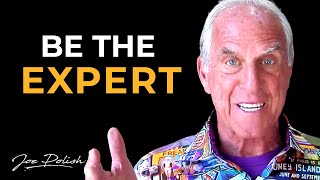
This is a recorded conference session hosted by Joe Polish featuring a keynote by Joel Weldon titled "Freedom of Speech." Weldon—an experienced professional speaker—teaches three core principles for effective presentations: make your message relevant to the audience, make it crystal clear, and make it doable (an actionable call to action). The session includes illustrative examples from other conference speakers, distribution instructions for printed handouts, and several concrete facts (audience size, speaker experience counts, and brief anecdotes) used to support the guidance.
Questions this video answers
Over 3,000 times.
Over 10,000 speakers.
Since 1974.
People from 11 different countries.
Approximately 350 people.
Chapters
Well, Joe told you that that can you've got is just a reminder of what you can do every time you have to make a presentation. So when you think of freedom of speech, we know that's one of our gifts as Americans, but we have people from 11 different countries. So basically, freedom of the speech means what makes a great speech or speaker. What can you do to be even better? Well, there are limitations. You certainly can't libel anybody to. You can't slander somebody. You can't yell fire in a theater and create incitement and you can't commit perjury. We should add a couple of other things. You shouldn't be boring and you shouldn't be offensive.
All right, I'm really looking forward to this one because my friend Joel Weldon deserves a great introduction. So I want to start this day off with a special 10 minute talk focused on speed speaking. Yes, everyone in the room should be using speaking to do things. First, to grow your business, and second, to position yourself as an expert. There's no one I know who can do this better than hall of Fame speaker Joel Weldon. He's been paid over 3,000 times to speak and has personally coached or critiqued over 10,000 other speakers in his 40 year career as a professional speaker. He's also a speaking skills coach for about a third of our genius network members who've hired him to work one on one with them when they have to make an important presentation. You saw him yesterday and this morning and throughout the breaks as your MC Joe. He's going to basically do what he always does and deliver what I believe are $250,000 ideas to you as he will teach you just killer ways to present yourself. Now, he is the creator of a program called Joel Weldon's Ultimate Speaking System. And here's his creative business card. Okay? It says success comes in cans and cannot. It's an eight ounce can. And I don't know how in the hell this is even possible, but half a million people have this can. I don't know where he gets these manufactured, but they better be cheap. Most people keep this on their desk, as do I, as a reminder of what they can do. And all of you have one of these cans in your gift bag. And so Joel's message is titled, for freedom of speech, what makes a great speaker and a speech. Please let me welcome the amazing Joe Weldon. Now you finally get to hear him talk.
Aaron, let's go back to the beginning, please. Good morning. Are we having some great ideas? Well, Joe Told you that that can you've got is just a reminder of what you can do every time you have to make a presentation. So when you think of freedom of speech, we know that's one of our gifts as Americans, but we have people from 11 different countries. So basically, freedom of the speech means what makes a great speech or speaker. What can you do to be even better? Well, there are limitations. You certainly can't libel anybody. You can't slander somebody. You can't yell fire in a theater and create incitement. And you can't commit perjury. We should add a couple of other things. You shouldn't be boring and you shouldn't be offensive. And Michael Fishman talked about being open. I was offensive yesterday after lunch and I need to apologize. I made a comment when we come back. We should have had the robots serving lunch because we were so late. The speakers were on outside and the serving staff heard that and that was offensive. We have to be so careful what we say. It's something called the privilege of the platform. Our words have power. So I apologize to the staff if they're not hearing it. I'll go and tell them lunchtime. So what makes a great speech? Well, we've got to be open. So I've been doing this since then. I mean, that was 1974. And I've been paid, as Joe said, 3,000 times. I've coached so many people. And at all those smaller meetings that we have in Tempe, I have a handout of these ideas. So don't write anything down. There are three things I'm going to share with you. How do you have freedom of the speech? Freedom when you speak? First, be relevant. One thing. If the next 10 minute speech was working for the post office, how would you, would you be excited to hear that message? Is anybody here ready to quit their job and go to the post office? No, that's not a relevant topic. So here's the first. Is your message relevant to that audience? At that time Yesterday, there were 14 speakers on the stage. We had the panel at the end. Every one of them had relevancy to this group. I told you, the sponsors were selected by a survey. The speakers were selected by a survey. What did you want to hear? So these topics were relevant to the audience. So I made some notes about what happened in relevancy. Peter talked about the future. The first three, Dan talked about procrastination. And Sean Stevenson talked about laugh, cry and get them to think. Those, those are relevant subjects. What if you asked yourself Is what you're saying relevant to the people that you're talking to? And set it up in the introduction. Have the introduction say so. We've asked our speaker to talk about this subject and why it's so important to you is, hey, I hope you're enjoying this video.
And I want to let you know that I have a new book that's come out and if you'd like to get it absolutely free, there's a link below in the description. Or you can wait till the end of this video, or you can simply go to Joe's freebook.com and you can get a copy there.
So before you even say your first word, the audience is mentally geared up to hear what you want to hear. That's relevancy. Second thing to think of is clarity. Is your message clear? What if the next speaker on this stage was going to talk about the top 10 top 10 lists on the top 10 websites? That is actually the title of a speech. Can you imagine how the audience felt when they heard that title? What is that all about? That's impossible to understand. So your goal is make it impossible not to be understood. How can you be so clear in your message? And when you have clarity, you hear the audience say this to you afterwards, I really could see what you meant. I see what you mean. It's a visual thing. I got the picture. When you talked, I could really see what you were saying. And yesterday we had speakers that did that. So looking at my notes, I want to use Peter Diamandis as an example. He had seven speeches. He had seven speeches. He talked about computers, robots, human longevity, artificial intelligence, energy, virtual reality, and space exploration. Did you understand what he talked about? This is stuff we never even heard of. And how did he do it? Every message was opened with a title slide that was different from all the other slides. Now we knew we were on a different subject. Each one moved progressively through his message. And then he said, so what does this mean to you? And then he connected that with such great clarity, even though that it was such an innovative message. Doable is the third idea. And this is perhaps the most important thing for you to think of if you want freedom of speech in your message. Is your message doable? So what if our next 10 minute speaker was going to talk about how to finger text at 100 words per minute, when a recent study found that the average person in this room can text about 38 words a minute? Well, if you heard that, you might say, well, sounds good, but can I do it? So I happened to look in the Guinness Book of Records and I found the fastest finger texter is a guy in Brazil and He can do 83 words a minute. So how can we talk about you doing 100 words a minute? It sounds like a great idea, but it is not doable. So here's what you need to think of in your call to action, which is always a verb. What do you want the audience to do? Think, feel, say go or buy? What action are you asking for? And if you would think in your mind, can they do that? Can they do that? So let me look at yesterday's closing 10 minute speaker, Craig Crazy Man Distwalt. Would you say he had energy and passion for his subject? Would you say he was loud? Because that's why it was written in the introduction. So Joe has me write all the introductions. So we set it up that this guy worked with Guns N Roses. This is going to be a different kind of program. This is a rock star guy. So when he started yelling at you, you were already prepared. What are you putting in the introduction to prepare people about your accent, about your height? Big guy gets on the stage, everybody's thinking, how tall is that guy? Put it in the introduction. And Fred is 6 foot 7. Okay, nobody's thinking about it now we've got the answer. So if you want to have a call to action, let's look at our doable speakers. If we had Craig back up here, he talked about six books that you could write. And I asked my table mates, after he finished that, do you think you could do that? And somebody said, oh my God, I've been wanting to write a book. I never thought of that. I could have a book of quotes. I could use my own system. That was such a simple idea. My tips, I could put my tips in a book. I could do interviews, my blog posts. How many of you, when he gave those six thought to yourself? I could do one of those. Let me just see your hands. That's a doable idea. Are your ideas so doable that the audience says, I can do that? Because that's all accounts what's going to happen when you finish speaking? What about reverse shoplifting? Now that was such a creative idea. You might say that would be great. But I don't think I would do that. That's not really me. But some of you could do that. So that's great. By the way, are these insights helpful for you? Okay, so what I'm going to do is Joe has arranged, I'm going to do a special follow up Video on all the speakers you've seen and go into a lot more depth of what you've seen here that you could use specific things. So you can use speaking to build your business and also position you as an expert. How do you get better as a speaker? Now, Joe mentioned, I work with a lot of you on one coaching on the content. That's my strong suit. How do you organize your ideas so it's impossible to be misunderstood? But you can do that today, and you do it by watching and listening. That's your job. Like these two characters up here. Just sit there and watch these speakers. We've got nine more coming today. Open up the handout. On your table, there's a white envelope that says, don't open until Joel tells you. Somebody find that envelope, open it up and pass it around. I wanted to use this idea. Many of you use handout materials. We have 350 people in the room. Open the envelope, quickly pass those sheets around the table. So we have 350 handouts that are already being distributed. Nobody has to go through the room. This is a simple idea. If you do events, put your handout material on the table and just put on an envelope with a little sticker like that. So if you would look at that sheet and on that first topic says freedom of speech. And there are the first two ideas, relevancy and clarity. On the back of the page is the idea of doable. Let's go to the call to action at the very bottom where the can is. Take those three words. Is it relevant? Is it clear? Is it doable? When you organize your next message, study every speaker that you see and hear and ask what worked, what didn't work. And then follow up by watching that video. I'm going to send you about relevancy, clarity, and doability. How many were you in this room last year on October 26th or 27th? Raise your hands. We had 24 speakers. How many do you remember? What are you going to do as a result of what they said? There was one speaker that left more of an impact based on the survey that I did and Genius Network did, and that was John Paul DeJuria. He runs multiple companies. He's worth $2.7 billion. How many remember that interview? It was impactful. He was quiet and calm. He said two words in 45 minutes that everybody in that room was left with and they could do. Be nice. Be nice. So what can you do for your audience? Be relevant. Be clear, be doable. You'll have freedom of the speech and when you do those things and you're nice, it makes a difference. Now make it a great day. Okay?
I hope you found that video awesome and useful. So if you want to get a free copy of my book, I want you to click here. And if you want to watch some more videos that will be useful and awesome, click here. Go ahead.
You're over here.
Do it now. Come on. Thank you. Watch them.
More from Joe

This FBI Trick Can Command Respect Without Saying a Word ft. JEFFERSON FISHER & CHRIS VOSS

How To Stand Out, Be Different, and Create Raving Fans, Customers, and Employees ft. Jesse Cole



90% Of Businesses Fail In Their First Year, Here's Why! ft. Dr. Benjamin Hard & Dr. Robert Cialdini

The 1 Piece of Business Advice I Got From Elon Musk That Changed Everything Ft. Kamal Ravikant

The 6 Traits You CAN'T Teach in Entrepreneurship ft. Richard Branson & Gino Wickman

The Leg Method: How to Make Your Book into a Million-Dollar Asset ft. Anna David


7 Millionaire Mindset Hacks for Daily Success and Wealth ft. Brian Tracy & Dan Sullivan
