Functional Health Strategies for Entrepreneurs During Tough Times and Normal Times
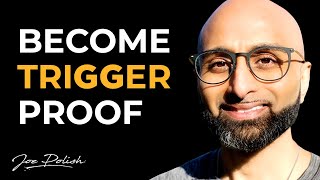
A recorded conversation (Joe Polish interviewing Dr. Sachin Patel) about functional medicine and practical strategies entrepreneurs can use to protect and improve health during normal and stressful times (e.g., COVID-19). Main points: functional medicine focuses on root causes, requires patient engagement, and complements traditional (allopathic) care; mental/emotional states (triggers, beliefs) strongly shape physiology and healing; becoming "trigger proof," prioritizing sleep, daylight/circadian alignment (sunrise/midday/sunset), and exposure to nature are high-leverage interventions; measure and train stress resilience via HRV (example: Oura ring) and HeartMath tools (Inner Balance ~ $160); genetic testing (DNA Company all-inclusive test) can guide personalized interventions. Also covers behavior/personality screening (DISC) to tailor coaching and increase adherence.
Chapters
If you want to sleep better, you got to figure out what's keeping you up at night. What are the thoughts that are consuming you? What are the things that are triggering you? So this day and age, a very powerful skill set that we should all try to develop is to become trigger proof. Because if something can trigger you, even in its most subtlest form, it completely shifts the tone of your nervous system.
Dr. Sachin Patel is a father, husband, philanthropist, functional medicine practice success coach, speaker, and author. His philosophy is that the doctor of the future is the patient. And he is actively doing whatever it takes to keep people out of the medical system by empowering them through education, self care, and remapping their mindset. Sachin founded the Living Proof Institute as part of his own personal transformation and now coaches practitioners all over the world on how to step into their power and save their communities. To date, he has delivered hundreds of community and corporate workshops.
He's.
He's an advocate for changing the healthcare paradigm and he's devoted his life to the betterment of healthcare for both patients and practitioners. So give it up for my friend, Dr. Sachin Patel.
Thank you, Joe.
What did I not say about you that I should say? And then I'm going to ask you some questions.
I think you covered a lot of what I do on a personal and business perspective, but there's so much more to all, each and every one of us. I don't know what more you could have said, though.
Okay, cool. Well, what I'm going to do, I'm going to just ask you some questions then I'd like some people to jot down any questions you may have for what time we have available after I go through a list and we'll do some Q and A. And are you going to be with us the rest of the day too?
Yes.
Okay, good, good. All right, so what are the differences between functional medicine versus traditional medicine and the benefits and drawbacks of each?
That's a question that comes up quite often. And functional medicine, for those of you who are new to that terminology, is essentially what we call root cause, personalized and practical medicine, where we actually create a partnership with our patients for not just a healing strategy, but also what I believe is a personal growth strategy as well. So we try to go with our clients beyond just healing and actually moving them towards becoming the best version of themselves. My version of functional medicine also really includes the personal development side of things because I feel there's always another level that we could be reaching for when it comes to our health and our Wellness. So I incorporate that. Another way of looking at functional medicine is that it's upstream. So it's looking at the upstream causes of disease and kind of like you do with elegant solutions. What is one thing that you can do that could solve a hundred other problems? Well, there's so many opportunities like that in your body. And that's what functional medicine does, is it helps use lifestyle and nutrition and mindset to unlock those levers in your body so that you could have massive healing and growth opportunities. The downside of functional medicine is that it requires high engagement from the participant themselves. So our philosophy is that the doctor of the future is the patient, but that means you got to do the work. In traditional medicine, it's an 8020 split where the medical doctor is responsible for 80% of the outcome. Whether it's surgery or picking the right medication for the client, or the right procedure, the right testing. 80% of the responsibility is on the practitioner, and sometimes even more. Whereas in functional medicine, 80% of the responsibility is on the patient themselves. We teach them how to become their own best doctor. If I think about my family, for example, I don't want my family members, my son, or anyone to go see even a functional medicine doctor if they know how to take the best care of themselves possible. And I believe that there's a great intersection happening right now with technology and humanities and self care and self preservation, that health is such an important skill that we all need. And as a functional medicine practitioner, we teach this to our patients. The difference between this and allopathic medicine is typically our pharmaceutical allopathic model of healthcare is designed to treat the symptoms. What that means is that the patient has to be sick enough to seek help, and then they have to be sick enough and dysfunctional enough for the testing and the lab work and the imaging studies to actually pick up the dysfunction. It could be very late in the disease progression or process when things are identified, because it's a reactionary model. You're never really trying to create health. You're just trying to manage disease as it occurs. So it's a completely different paradigm from traditional medicine. We need traditional medicine just like we need hardware and software. What I believe functional medicine is, is helping people understand the software of their body. And I believe allopathic medicine, simply put, is understanding the hardware of the body. And to have a beautiful computer system, you need both. But where you can have the maximum amount of benefit is software. You know, Steve Jobs talked about this. He says, we don't compete on hardware. We compete on Software. Because software can make something work a million times better. You can't make a computer a million times faster than the latest chipset that's out there, but you can make the software work a million times better. And so our body has a software, and if we understand the coding and the language of it and the levers that move it, we can make some pretty profound shifts in our health.
Yeah, yeah. You know, so I think I should probably, before I even make a statement like that, I probably should do a Google search and find at least the exact number. But I'm going to throw it out there. Isn't there something like 8 billion prescriptions in the United States per year with 300,000,000,000 people? I mean, something crazy there's. And someone could probably find that exact number. I could be completely off, but I know it's massive. And there's, you know, I mean, what I've learned with a lot of health care people, a lot of doctors in all levels, you know, medical, functional medicine, integrative doctors, naturopaths, chiropractors, you name it. We live in a world where so many doctors, it's a pill for an ill. If it's not a medical doctor giving you a prescription, it's a different type of doctor giving you a supplement. And certainly there's benefits to both. And I think a lot of people, though, are just so over prescribed. And then there's the monetization model of how does a doctor get paid? And, and they're not incentivized in many cases for keeping people healthy. It's just keeping them tied up into a system that keeps them continuously consuming procedures and pills and things that cost money, injections and I mean, you name it. And I think there's an army of individuals fighting the wrong war. And I don't even know how to wrap my head around it all. So I just wanted to ask you, how does one, to what point does someone reach out for health care and what tips and suggestions do you have for them? Because I think a lot of times people don't, they abdicate their health to another individual, which goes against your whole statement, the doctor of the future is the patient.
Well, first and foremost, Jo, I want to kind of echo what you said, which is a pill for every ill. So this even happens in natural medicine. So for example, if somebody's vitamin D comes back low, then they'll be given a vitamin D supplement. But that could actually be a very dangerous style of intervention because if somebody's low in vitamin D, let's Just assume all things are equal. If somebody's low in vitamin D, what they're really low in is sunlight. If you're low in sunlight, it probably means your circadian rhythm is off because you're indoors all day exposed to artificial light. And Dave can talk about this quite a bit, but you're also deficient in nature. You're deficient in fresh air. You're deficient in the fractal patterns that nature provides, which actually heals our brain and unlocks our creativity. So giving somebody vitamin D to move a number on a piece of paper and not change the behavior could be very detrimental. And there are so many people. It's really interesting as a practitioner, when I was seeing patients, people would come in and they would not want to take one medication. And in order to not take that one medication, they were taking a garbage bag full of supplements. And I'm like, something isn't quite right here. So we need to, we need to change that paradigm in natural health care, but also in allopathic care. You know.
I'm sorry, go ahead.
I was going to say people have what we call ptsd, which is post traumatic supplement disorder. So they're just so tired of taking all these, all these supplements. But, you know, we have to really apply that skills over pills model. And if all the skills are being applied and then you want to supplement, then that might make a lot more sense. Yeah.
And I mean, I've openly spoken about how much of a big believer I am in Dr. John Sarno, the late John Sarno's work on physical pain, carried on by my good friend Steve Ozanich, who wrote the Great Pain Deception. And basically, it looks like I'm locked up there, like I'm moving slowly. Can you guys hear me? Okay, thumb up. Okay, good, good. Because my, my computer screen is like showing me moving like a robot. And so there's, there's a lot of physical manifestations of psychological issues, psychosomatic things. What is your belief on the. I mean, it's not, I think so many of the conditions that we have are based on people's response to trauma. And I think the mind has incredible psychosomatic abilities to make you sick if you're stressed out and how much that affects you versus if you're taking care of this vessel and what you generate. I mean, I think we generate poor health in many ways with our, our thought process, who we hang out with. There's physical toxins that enter the body, from food to chemicals to exposure to things, but there's mental Toxins. And I think they. I mean, we try to cover all of that up. And I think it so many people's. And I see that with addiction. I mean, when you're, when you're an addict, you're gonna have. You're gonna have physical pain, you're gonna have sickness, there's all kinds of other things that come out of it.
So.
Wanted to get your take on that.
Yeah, absolutely. So we're fractal beings. And so in a fractal world, as is the microcosm, so is the macrocosm. As we all know, thoughts become things. So our thoughts are actually frequency generating, you know, impulses, and they emanate into all of time and space. So we can literally use our mind, and I have evidence to show this, that you can actually use your mind to create whatever reality you want. But whatever reality you're creating, because you're creating it using what we call a fractal architecture. It shows up in the smallest scale in your life, and it also shows up in the biggest scale of your life. So as is the microcosm, so is a macrocosm. And your health and how you feel is essentially a microcosm and a macrocosm at the same time. It's a microcosm of your life, but it's a macrocosm of your thoughts. So our emotions play a huge role in our health. And in fact, you know, the Chinese were really good at mapping this out. They were really good at associating emotions with organ systems in our body. So, for example, based on the organ system of complaint that somebody comes to see me with, a lot of times you could look at somebody just from their facial features and know what's going on with them. But when somebody gives me details and I go to and they tell me, hey, I have digestive issues, the first thing we go for is, okay, where is the anxiety in your life? What's causing stress in your life? Because there's emotions associated. If somebody has liver issues, right? Then we go to, where's the resentment and anger in your life? I had a consult just the other day with a lady, and she's had liver pain for three years. I'm like, okay, well, when was your divorce? Three years ago. And she hasn't forgiven her husband. And so she's holding onto that and showing up as liver pain. And she's going from doctor to doctor, lab to lab, scan to scan, MRI to CT scan. But that's the thing with the hardware model of healthcare, which is allopathic medicine. If we can't see it if we can't measure it. It doesn't exist in a software model. It does exist. In fact, what's really cool about our bodies is the software actually builds the hardware. That's what's different between us and computers. The software in our case, builds the hardware and tells the hardware what to do.
Hey, I hope you're enjoying this video. And I want to let you know that I have a new book that's come out, and if you'd like to get, get it absolutely free, there's a link below in the description. Or you can wait till the end of this video, or you can simply go to Joe's freebook.com and you can get a copy there. Well, now, you know, we're doing this towards the end of May 2020, but I believe everything you're saying will be, you know, time, you know, timeless, not just timely. I'm going to ask you a more timely thing. What can people do during COVID 19 to deal with anxiety, stress, and even trouble sleeping, since we're all in the midst of this?
Yeah, you know, that's a good question, and I think the answer is going to be unique to each of us. So, you know, if you want to sleep better, you got to figure out what's keeping you up at night. What are the thoughts that are consuming you? What are the things that are triggering you? So this day and age, a very powerful skill set that we should all try to develop is to become trigger proof. Because if something can trigger you, even in its most subtlest form, it completely shifts the tone of your nervous system. So, for example, if I'm watching the news and I'm being presented violent images or negative news, and that news is designed to trigger me. I mean, it's designed to trigger somebody. It's designed to create an emotion in somebody. Well, that emotion that's created in my body completely changes my physiology. If it puts me into a fight or flight state, immediately, my body stops sending blood or minimizes the amount of blood that it's sending to my guts, my liver, my kidneys, my digestive organs, my reproductive organs, and start shunting it to my arms and legs, because that's the chemistry that the stress creates in our body. Now, what happens is most people are constantly micromanaging their chemistry. So if they feel stressed out, they're taking something to calm their stress. If they feel tired, they're taking something to stimulate themselves. But if we can really understand what triggers us and make ourselves trigger proof, then we're not triggering constantly. Our physiology, you actually said this many, many years ago, is that the limbic brain perceives the environment first and creates a response. We talked about this earlier today. It creates a response, and then the conscious brain gets the message. So it's a survival instinct for our body to respond first before the mind actually has a chance to process what's going on. Because if there was even a slight del, we'd be dead. You don't want to think about what to do when the lion's presenting in the room. You want to be prepared physiologically to run away from it. So if we're constantly being triggered, we're shifting ourselves from a healing state, which is known as a parasympathetic state, and putting every single cell, tissue, organ, and part of us into a fight or flight state. A really interesting example, Joe, is that think about this. At rest, about 50% of your blood flow goes to your liver and kidneys. So guess what? Your liver and kidneys are probably pretty important organs. If you're sending 50% of your blood flow there in fight or flight, only 5% of your blood flow goes to your liver and kidneys. So think about that. If somebody comes to us and they're having liver and kidney detox type of issues or digestive problems, well, if I want to heal that organ, I've got to send blood to it. And in order for me to be able to do that, I've got to get people and shift their physiology into a healing and regenerative physiology. And that means getting them to not be so easily triggered and getting them to be in control of the tone of their nervous system. As a chiropractor, that's one of the things that we do, is we help tonify your nervous system and make your nervous system more resilient to the stressors so that you can stay in a parasympathetic state and actually stay in a healing and repair and regenerative state. Our body's amazing when it's in the right state. You can't be in fight or flight and heal at the same time. So if you're in fight or flight, for example, what happens is there's an immediate signal that goes from the limbic brain based on our experiences, values, and belief systems. And those are unique to each of us. So Joe's values, experiences, and belief systems are going to be unique to him. So that's why it's important for us to know that for ourselves. And based on that, he's going to get triggered. So I could show somebody a picture of a dog and if they've been bitten by a dog before, it's going to trigger their nervous system. But if somebody's only had positive experiences, then that image is not going to create a response in them, might actually create a positive response in their physiology. So it's unique to each of us. That's basically our servo mechanism that's constantly surveying the environment to know if we're being threatened or not. If it perceives a threat through one of the five or even six senses, then immediately sends a signal into our body. And blood, instead of going into the core, now goes to the arms and legs and blood sugar goes up. Our cell mediated immune system shuts down, cortisol levels go up. So all the things that are undesirable long term with our health get activated and we're put into a state of survival. But all the things that are required for healing and repair and regeneration get shut down. Because your white blood cell is not going to save you from a lion, right? Digesting your lunch is not going to save you from whatever is attacking you at this point. So our body is intelligent in making that decision, but it might be coming from beliefs that are no longer serving you. So if we can get people trigger proof, maybe that means cutting out the news, maybe that means doing things that help relax you. Like spending time in nature, for example. We can talk a bit more about that too and how to unlock these amazing tools that our body has. So I'll give you a simple example. Some of the smartest people, most influential people that we all look up to, spend a lot of time in nature. And I don't know if they knew this or not, but some of the best ideas are generated in nature. Now most of us probably go for a walk or we might bike through nature. But it's when you're in nature and still with nature and focused on a macroscopic level, so if you really look at a tree and pay attention to the shape of the bark, pay attention to the leaves and the shape of the leaves, and you get really still and really slow with nature, an interesting thing starts happening. Your brain starts getting activated on the right side, which means that you're unlocking creativity, you're unlocking problem solving skills, you're creating white space. And this is what we all need more of right now. Now it's also important because you're being in nature. Most of us go through nature, which is the most healing modality that we have. But if we can get still with nature, then we can get our nervous system and tonify our bodies in a beautiful way. So so much healing can take place. In Japan, actually, they make cancer patients walk in the W and they make them spend time in nature as part of their treatment. Because nature is a fractal healing model. So not without getting too complicated. Our body is built on fractal geometry. Nature is built on fractal geometry. And so the math that codes the universe is the same math that codes our body. And so that's why nature is so healing, that's why food is so healing, because it's built on the same fractal architecture. Whereas sometimes manufactured things, you know, when man manufactures things, it's not built on the same fractal architecture. So there's no straight lines in nature, there's no perfect circles in nature. Everything has a roughness to it and that roughness contains information, that roughness contains data, it contains mathematical equation sets. And that's really important for us to understand. So this is why nature can be so healing. Not just consuming it, you know, through our mouths, each eating natural whole foods, but consuming it through our eyes, consuming it through our ears. The sounds of birds actually create a signal to our body that helps relax our nervous system. Just the sight of watching a bird land relaxes our nervous system.
Interesting. You know what, I'm going to get a bunch of birds from my office. I'm just going to let them fly around. No, so let me ask you, so if you are indoors, you know, a lot of people are isolated, they're not going out in nature. There's a lot of communities where it's hard to do that right now. And I, you know, one of the things I've been talking about here is I think the, you know, the aftershock is going to be worth worse than the quake, right? From what's been going on here and people not being able to walk on the beach and things like that for periods of time. And so what would you suggest for people that are in cities? So when you say, you know, nature, I mean, I, let me say this, I don't know the exact percentage, but there's something like when they put wallpaper of green nature in hospitals, people recover something like 20% quicker just because of the imagery. So when you're saying what you see, but then you actually have real nature, not just the sounds, but the human body is such a sensory mechanism of what it responds versus reacts to. So what would be your advice, A protocol of here's the amount of nature that we recommend or here's how to set your life up in a way to do that. I think it'd be as basic as that may sound. I think I'd like to hear what you would have to say to that.
Well, one of the big levers for a lot of people is sunlight exposure and the time of sunlight exposure. So ideally, in a perfect world, if you could be up at sunrise, even if it's for five or ten minutes as the sun is rising, and if you could watch the sunset, if you do those two things, it will completely shift your physiology within days. Because we are light beings, we produce light, we produce infrared light, we absorb light, and our entire biology is driven by the sunlight. And so everything in nature, like if you look at the trees, if you look at all the animals, everything is driven by nature and driven by sunlight except human beings. Right? So, for example, the average human being used to sleep ten hours a night. Now they sleep six and a half to seven hours a night since the. Since we invented the light bulb. And those three hours aren't filled with drum circles and meditation and chanting. It's filled with more stress. So we have more stress than ever, less sleep than ever, less recovery than ever. And we've removed our circadian rhythm alignment from the sunlight. So one of the simplest things people can do is watch the sunrise, watch the sunset. And as a bonus, if they can get midday sun, that will immediately reset their circadian clock. So now your testosterone production optimizes, your melatonin production optimizes, your growth hormone production optimizes. And you don't have to inject these things into your body. You certainly can if you want to, but only after you're doing the most foundational, most basic things. And you know, this has a pleomorphic effect. So it's one thing that moves a thousand different things in your body for you, all in the right direction. So the circadian rhythm is huge. So sunlight, midday sun and evening sunset would be huge. Awesome.
Awesome. And by the way, you know, there's a lot of different topics that are going to jump up from people. And just looking at some of the comments, which I won't be able to, obviously read them all, I would encourage everyone to save the chat because there's some really good stuff that people are posting. One of the things that. How do you think COVID 19 might be different for entrepreneurs and employees, if at all, compared to other people?
You know, this certainly affects us. I mean, as entrepreneurs, we're. I mean, especially as I can speak for myself with an entrepreneur with Add we're constantly reinventing ourselves, right? Like, we're constantly doing new things, trying new things. And I love the grounded approach of some of the things that we learned today. But, you know, I kind of look at my mind like a paintbrush, and I look at my life like a canvas, and it takes the same amount of paint to fill the canvas. And I can draw whatever image I want on the canvas with my mind. And so I always tell people it's better to move the mountains in your mind, and then you can move the molehills with your hands. So our mind is so powerful. So if we're constantly creating the future that we want, then and we move in that direction and we have faith. You know, in Sanskrit, the word is shraddha, which is unconditional faith, then we're actually moving these things. I mean, in reality, our mind can move things, but not things that are in front of us. But billions of things start moving when we put our mind to something. And so, as entrepreneurs, this is a chance for all of us, I feel, to really lean into the areas of our life that matter the most. It's a chance for us to reinvent ourselves. I mean, some of us, we're probably looking for an impetus like this to reinvent ourselves, to get ourselves to ask some really deep and meaningful and serious questions. I mean, do I want to make my life more complicated, or is this a chance for me to simplify my life? So for each and every one of us, I think this is a really important time to come face to face with some of our demons. It's an important time for us to come face to face with what's important to us and a potential chance for us to even reinvent our business to suit our life. What I tell my clients, all my clients, is, decide what your perfect life is first, and then try to squeeze a business around it instead of trying to squeeze a perfect life into your business. Because if your business scales and sometimes it can squeeze the life out of you. But if, you know, if you keep your values very strong and you build your business around that, then I think that's actually a life worth creating, in my opinion.
I love that line. Decide what a perfect life is and then squeeze a business in around it, because it is the exact opposite of how almost everybody operates. And you get so caught up in success. Profit is only useful to the degree that you can use it. And if you build a lot of financial success or notoriety or whatever, but then you don't have the space to enjoy it. And you can't, you know, you can't really take it in. Then it's kind of like a leaky gut, right? You can have the best food in the world, but none of it's able to digest. And so that's a very interesting thing. One thing I wanted to also say, based on you're talking about becoming trigger proof and the things that we take in, my brain remembers weird things. And one thing I remember from decades ago, I was probably, I don't know how many years ago this was, but Dan Quayle, he was on TV and there was a conversation about someone was saying, you know, television doesn't influence people to go out and kill and music. And it was like something to do with censorship. I can't remember the context, but I just remember the line he said where they were arguing about how television is not responsible for people making decisions and influencing them. And he said, well, if television didn't influence anybody, there'd be no such thing as advertising. And I thought, you know, that's a very interesting point, right? You influence everybody with words and what they hear and what they say and what they see. And if you're sitting there consuming, you know, news and riots and upset and everything, there's no way that you're not going to be affected by that. So in the midst of all of this, what, you know, what I'm piecing together is if you're in a parasympic state versus a fight or flight state, the same sort of stimuli is going to be digested, interpreted, you know, intercepted differently than if you're. If you're not. So what are, to utilize the analogy I talked about with marketing earlier, tool belt, toolbox, tool shed. What are some ways that. What should everyone have on their tool belt? Daily things, tool, you know, box frequently. And tool shed, special need. Is there a way you can maybe frame some fundamentals?
Yeah, certainly. So I definitely think that one of the most overlooked and underrated opportunity in healing is sleep. So if people could start prioritizing their sleep, that will make a massive difference in so many different areas in their life. Prioritizing sleep. You know, sometimes people are traumatized around going to bed early because that's how they were punished. They were punished by being told to go to their room. So when the doctor tells them to go to bed early, what's being triggered with their child brain is that they're being punished and that's why they resist. So for some people, we have to kind of understand, is there any trauma around sleep that's preventing you from going to bed early. For some people, they were told that if they were caught taking a nap, they would get in trouble or they would be accused of being lazy. So sometimes there's subtle traumas that have happened to us that prevent us from making those really simple changes. Because I'm left scratching my head sometimes. I know this person understands English. I know that they're smart, and I know they want to get results. But why aren't they making this change? And it's because of that limiting belief that they have or that micro trauma that they experience. Just like micro traumas can affect our joints and tissues and ligaments and muscles over time, those micro traumas can also affect or significantly affect our emotion around things, even around food, you know, so, you know, obviously eating whole, healthy foods, I mean, I don't think anyone on here needs to be told what to eat. I think it's pretty obvious. I think innately we can look at something and know for if it's healthy or not. We all have this capability. Some of us like to be told what to do because it gives us an excuse that when we're not told what to do, it gives us permission to eat whatever we want, right? So we delegate that away. But that's a limiting belief. That's a mindset shift that needs to take place for people. If people can start eating whole, healthy foods, but not just eating those foods, but actually being in the state that their nervous system needs to be and to digest that food. So, you know, I coined this term called autonomic pairing. And so you want to pair your nervous system with the activity that you're doing. So, for example, if you're in fight or flight, where does the blood in your body go? It goes to your arms and legs, as we discussed earlier. But if you're eating and you're in fight or flight, and you're only sending 20% of the blood flow that was that should be going to your digestive system. To your digestive system. How do I expect you to digest that meal? So one of the first things that we talk about with our clients is not changing their diet. Because when they come to us, they've tried every single diet under the sun, and none of them worked for them. But then they're like, how can my husband eat anything he wants? Or how does this person eat whatever they want, and how come they don't have these problems? And so the first question I then ask is, how are you eating? So are you chewing your food? Are you chilled out? Are you grateful? For that meal. Okay. You know, are you. You know, are you choosing meals that are, you know, based on who you want to become, not who you are? Because your food literally becomes you. It'll be. It'll become parts of you, you know, within hours of eating it. So eat who you want to become, not for who you are. So we start shifting people's mindset around food before we change what they're eating. Because you can eat the perfect meal, but if you're eating it under stress, I promise you, you're not going to digest it as well as if you were eating it consciously. So you always want to pair your nervous system with the activity you're trying to accomplish. So just like you can't sleep when you're stressed out, because the chemistry in your body is fight or flight. When you're stressed out and eating, the chemistry in your body's fight or flight. So we need to get people a little bit more present with their meals.
I'm sorry, I don't mean to cut you off. I love that. I love that in almost all the diet books are on what to eat, not how to eat. I really think you should do an entire, like, there's books on mindfulness, and there's. Where they touch on it. There might be a chapter on it, but I'm yet to see an entire, like, book just on conscious eating. And I think it'd be. So the marketer in me is almost thinking, I really think you should be the guy that writes that.
Okay, consider it done.
Yeah, I mean, it's. Yeah. Because there's so much eat. This. This diet. This diet with a bunch of people that are stressed out of their fricking mind and missing all of these other elements, as if one ingredient is going to solve a life that is completely out of control in all kinds of different arenas.
Well, it's kind of like the story you said, right, about that gentleman that asked you, is there anyone successful that is in the same business as you? So, you know, maybe it's not the business, maybe it's not the food. Maybe it's how you're eating the food. So for a lot of people, I'm like, do I ask them? Do you know somebody who eats really unhealthy and doesn't have these problems? Like, yeah, I hate that person. And I'm like, well, you could be that person if you changed the way you eat. Because I, you know, certainly there's people that eat perfectly healthy that have major digestive issues, and there's people that eat crap and have. Don't have any digestive problems. And a lot of it could have to do with that.
Yeah. I remember that story that Tony Robbins would tell, and I have no idea where this was or if it was, you know, how accurate is it? He would tell the story about the rabbit in a university where they did animal testing and they were literally giving these rabbits poison to see how their bodies would deteriorate. And there was one particular rabbit that was not getting ill, where the other ones were deteriorating. And what they traced it to was a lab student that took a liking to this one particular rabbit. And during his shift, he would go in and he would take this rabbit out of the cage and just hold it and pet it. And for like, you know, an hour, he would just hang. He would just hold this rabbit that he really liked. And this rabbit, because of the touch and the affection versus the rabbits in a cage that were being given poison, he was not getting sick. Very similar to, like Wim Hof, who can inject virus into his body, but with the cold therapy and the breathing, he's somehow able to not have that affect him and get him sick, whereas other people would literally get that virus. And so I think there's so many things that we just don't even. We're just beginning to understand and many people that understand it very well, but it's not adopted, I mean, at all, in mass culture. Right.
I've got a great. I've got an awesome story around that, actually.
Please share it.
Yeah. So one of the things that we teach, one of the most important biological markers that you can measure, and of course, this is up for debate, but what I feel is the most important biological marker for you to measure, and you can measure it instantly, every single day for practically free, is hrv. So HRV is known as your heart rate variability, and it essentially measures the volume of your stress cup. Okay. So if your HRV is low, then your resilience to stress is low. If your HRV is high, then your resilience to stress is very high. And so I measure this using a ring. It's called the Oura ring. And, you know, I know Joe's got one.
Yeah.
The CEO is a member of Genius Network, so. Yeah.
Yeah. So heartbeat's great. And so this is a very powerful tool for you to track your hrv, which is your resilience to stress. Now you can actually train resilience using breathing patterns. So there's a device you can buy. It's upstairs. It's called a heartmath. And a heartmath will actually be a neurofeedback coach for you. And it's going to measure in real time your HRV and tell you if you're in the parasympathetic state or not. And you can actually build resilience. And it's like building a muscle. And so you can increase your HRV by simply using breathing. That's the beauty of the body is that to get from a sympathetic dominant state, which is fight or flight, into a parasympathetic state, we can use our breath. Breath is the bridge between fight or flight and relaxation. Now, interesting fun fact. It takes about seven minutes for you to go from being stressed out in a fight or flight state and to use breathing as a technique takes about seven minutes to get your physiology back to normal. If you use your mind, it takes about three seconds. So the way we think and what we think plays so much bigger of a role on our physiology than we're led to believe. So, yes, you can use breath, but the fastest path, the elevator to success versus the stairs to success, is really becoming. Wielding your mind like a sword. So the way I think and the visual that I have is I'm holding in front of me the sharpest sword that's ever existed. And if I'm not wielding it carefully, I could kill myself or hurt somebody or damage other things. And so that's where the regard in which I have to my thoughts, because my thoughts become my things, my thoughts change my physiology. I could say things right now to you, Joe, specifically that will completely change your physiology. And if I can change your physiology now, I'm in control of every single cell, organ and tissue in your body. Yeah. Wow.
You know, since you brought up HeartMath, I'm going to ask Debbie Rosman, who's the CEO of HeartMath, she actually gave a presentation at the 2013 Genius Network annual event, and I'm gonna shoot her a message asking her about recommendations for things for all the Genius Network members and we'll do it as a follow up. What should they. So what, what do you recommend from HeartMath that people should. Should invest in?
The unit I like is called the Inner Balance and it's about 160 bucks. It's pretty inexpensive and it's a Blue 2 Bluetooth device, connects to your smartphone or your tablet and you use it five minutes, twice a day.
Awesome. Yeah, so we'll put a link in that to the. Into the chat.
Awesome.
Thank you.
So I want to read a comment. Let me see if I can find it. That Rick actually said because it's. There's some really good comments here. So where is it? Where is it? Where is it? Bear with me. Why am I not finding this now? It was right there. It said something along the lines of, can you undo a lifetime of bad eating? Rick, you want to, you want to mention the statement or I. Yeah, sure.
I mean, and I was just asking for a friend.
Really, here it is. I got to read it the way you said it that he's like asking for a friend. If someone has abused their bodies over decades, how much repair can occur with change of diet, thoughts, etc. And then Marcia wrote, rick, you can repair. I mean, your friend can. Smiley face.
Yeah, well, truly healing takes place at the speed of thought. So there isn't a single cell in your body that's more than seven years old. In fact, your entire digestive of lining will be replaced by Monday morning. So our bodies are. You're essentially a hologram of cells that are dying and being reborn in every single moment. So it's pretty amazing when you think about it. But the question that always comes up is if we're in a state of constantly repairing, rebuilding and regenerating ourselves, why do people stay sick? And the simplest way I can put it is if I buy you a brand new car, it doesn't necessarily make you a better driver. I can take a brand new car and I can crash it into a wall or I can get into an accident if I don't follow the rules. So giving you brand new cells in your body doesn't mean your health is going to improve if you're still subjecting them to the same signaling. And so we get signaling from the mind, we get signaling from the blood, we get signaling from, you know, all these different mechanisms of self, you know, these self regulatory mechanisms that our body has. So you can instantly change. I mean, I can instantly put somebody into a healing state. Right? Just like, oh, this story. I wanted to share about the hrv and this is relevant. So one of my clients, she was coming to see us and her child, she didn't tell us any of this. She was trying to lose weight and that's what was her main focus. And she did and she got amazing results. But we started training her on hrv and within two weeks, her son, who had, you know, crazy, rambunctious, ADD adhd, like off the wall type of behavior, his behavior completely transformed. And so her boyfriend is like, what's gone into your son? He's like a totally normal Beautiful, amazing child now. And before he was the exact opposite. And what she realized, and kind of going back to the bunny story, is that her physiology changed. So our heart produces an electromagnetic field and it pulsates all around us. So mothers and children really have a strong connection, right, because the child was within the mom at one time. So their pulses are very closely connected. And so you can create a constructive interference or a destructive interference. So let's say Joe, you and I are hanging out and we're vibing at the same frequency, having a good time, laughing, we're going to have a constructive interference. So when our heart fields collide with one another, that's why networking is so important, especially in person. When our heart fields cannot collide with one another, we're going to have, they're going to double, they're going to amplify, but if we're opposites, then they're going to cancel each other out. So what she started doing is she started working on her heart field and unknowingly she didn't know she was doing this. But within two weeks her son's behavior completely transformed and it's because now she was creating a constructive heart field with her son as opposed to the exact opposite. Now this is why the words that we use and the energy that we carry are so important. So if your heart says one thing and your body says, or your mouth says something else, people are going to know. This happens in sales all the time. I'll give you a quick story. So when you're selling something to somebody, if your price point or your offer takes you out of heart coherence, it's going to completely suck the energy out of the room. So you might have an amazing conversation relationship with somebody, but as soon as your heart field changes because you're not resonating with the price or you're not resonating with the offer, then the client's going to feel it right away. They're not going to know what it is, but the deal is going to fall apart. So it's really important that we become hyper conscious of our heart field because it impacts people around us in a positive and or potentially negative way.
Yeah, it's so good. You know what, I love this too. I mean this is where I try to be sneaky with people is you sell people what they want and give them what they need. Because I think how many of you, thumbs up are finding this very valuable right now? Obviously because of all the comments, you'll have to read them later. Sachin, I know it's hard to, like, focus and read comments at the same time. That's a good way to keep yourself distracted. That being said, it just reminds me right now with what's going on, how important it is to have these sort of discussions. And, you know, because a lot of people get so caught up in their businesses that they are not. I mean, we are the. I go back to the million dollar racehorse. You know, if you're, if you had a million dollar racehorse and every time that horse ran a race and won, you'd win a million dollars. You wouldn't shove fast food down its throat, sleep, deprive it, overwork it. You'd give it the best food, the best nutrition, the best trainers, the best nature. There's all these other things that could be missing. So in your own life, what have been the two or three most important things you've done to maintain and optimize your health?
All right, great question. So there's so many, but I'll try to narrow it down to three. So one thing is time in nature. I think that is very overlooked, super, super powerful, and when possible, accessible to all of us. And we should prioritize spending time in nature, particularly time in nature. I want to emphasize in nature, not darting through nature, not running through it on a trail. And even if you do a trail, take some time to sit with nature and feel the tone, feel the sounds, you know, feel the earth, you know, get your feet on the earth. That's super, super important. Very, very overlooked. And, and I think it's where some of our best ideas come from. Unlocks our brain. So really simple, fun fact. If I stare at an image of nature on my screen, that image is flat. No matter how realistic or high resolution it is, the details in that image are completely flat because my screen is flat. But when I look at a forest, there's dimensionality to it. And that dimensionality gives nature its fractal properties, which unlocks our brain. Our brain is a fractal. And if you don't know what that means, you know, it's beyond it. Look it up. It's super, super powerful. And that's a whole different conversation. But nature heals our brain unlike anything else. It heals our body. Anything unlike anything else we have. You know, if you look at a tree, the tree, the branches of a tree look exactly like our lungs because we're built using the same mathematical equation. So healing has to occur through nature. One of the most powerful lessons I learned through nature, and this is relevant to all of us. And what I teach my clients is that your health is like the trunk of a tree. Right? Nature has billions of years of experience on us. And so if we observe it as a metaphor, it teaches us so many things. Your health and you are the trunk of a tree. The branch of a tree can never grow bigger than the trunk. If it tries to, what happens? The tree splits in half. And most of us are trying to build our businesses bigger than we are. And when that happens, our lives, our relationships, all these things start to split in half. If you focus on you and focus on your own personal growth and grow the trunk, then all the branches can grow bigger. So that is why health to me is so important. Our mindset, our health, our self care rituals, how we reflect that love back onto others is such an important part of our existence. And, and I've learned a lot of these lessons just by spending time in nature. And when you're in nature, you're going to unlock your right brain. Pay attention to patterns, colors, shapes, zoom in on things. Actually get close to the tree and look at it because that will unlock these patterns in your brain that haven't been, that you can't unlock by staring at a screen. Another thing is that I do personally are incantations and chants. So the one that I specifically do is called the Hanuman Jalisa, which is a Hindu chant and there's thousands of different versions of it, but it's 40 verses and it basically is the scripture of all self development. So Hanuman is the monkey God. If you, if you ever studied Hinduism, he's, he's, he's a monkey and he's a man kind of mixed together. And he is a servant, the eternal servant of God. He is God's breath. That's how he's described. And so this chant, it basically describes his attributes and characteristics, but it's sung in such a way where the vibration actually creates that reality for you. So this is why, like just a little side tangent, the English language is a very interesting language. It's one of the most difficult languages to learn because semantically English is a very broken language. So think about the word by. The word by can be used three different ways, right? If I have a button that says Buy now, that could also mean Buy now, right? So the English language is very, very ambiguous and semantically broken. So sometimes other languages like Sanskrit are perfect languages where the vibration of the word actually creates the matter that's associated with that word. So the language in which you speak or think actually makes a difference in the reality that you're going to create. I know that's kind of a difficult concept to grasp immediately, but it does make a big difference. So when you can speak or think in a language that has zero ambiguity to it, you're more likely to create the reality that you're trying to create. So that's called the Hanuman Chalisa. And I can certainly share a link. You don't even have to. It's so powerful that you actually don't even have to understand what you're saying, because the vibration from the words actually creates those characteristics in you. So it's pretty powerful. A lot of famous people, Barack Obama used to carry a little Hanuman in his pocket, so he was an avid follower of Hanuman. And then the last thing I would say, if you're giving me three, is be a kid again. So be curious. Children love to play with things. They approach things with curiosity. They're, you know, they have. They have a beginner's mind. And if you could do that right now, especially, I think that's a very valuable skill set. You know, let go of some of the preconceived notions, some of the limiting beliefs that we have. Like, one of limiting beliefs could be, you know, I've been sick for five years. It's going to take me five months to get better. No, I mean, think about this question I ask my clients is, how many days into your vacation do you feel amazing? And they're like, oh, three days. I'm like, well, there you go. You can feel better in three days if you want to. Right? It's not your body that's broken. It's not your body that's a problem. Stop blaming the body. Stop testing it, poking it, prodding it, and assuming that it's not doing its job. You've got to create the right environment, the right thoughts, the right circumstances in order for it to heal. I mean, everything that you've done up to your life up to this point, and I know I've made a lot of stupid decisions, hasn't killed me. And that's how resilient we are. There's nothing more resilient than our bodies.
Yeah, very good. You know, boy, we're at the time, but let me ask you this. Would you be okay if we. I'll ask you a couple of questions to kind of put a wrap on this part of it. Would you be open for during the break that we would typically, you know, do an open lunch break? Maybe just do Q and A after.
Everyone got honored To.
Because I would love to. Yeah. Because there's so much here. I could talk to you for another fricking two hours on all this. All these different questions I could ask you. How do you typically work with people who come to you and what does that process, process look like?
So now I don't see patients, but what I do is I work with people as their health advisor. I have a huge network of doctors that I can refer if somebody wants to get lab testing and stuff like that done. But I feel like that step usually comes a little bit after doing some of the initial work that I feel is the most important work. So I work with people as their health advisor. I have my pulse on so many different technologies and things that are out there. And being a practitioner, it's almost impossible. You can't be a practitioner and help a network of people around the world because there's just way too many restrictions and limitations around that. So I act as an advisor instead and connect people with who they need to be connected to based on the complexity or issues that they're dealing with should they need specific medical care. But what I help people do is I help them develop a kind of a mental callus. And a callus sounds like something tough, but I do that with an open heart. So the key is really building resilience, teaching people how to unlock their resilience, but then doing it with love. And I believe that, you know, health is really an act of self love. And I teach them how to do this. I teach them how to live versus just be healthy. Because there's a lot of people that are alive and have normal blood work and perfect spot on labs, but they're not alive. So my goal is to help entrepreneurs really learn how to live versus learn how to be healthy, because that's only going to get them so far. And so it's kind of a mental, spiritual, biochemical and life coach type of approach for people. And you know, if somebody has complicated issues, then I can certainly identify that by asking the right questions and then referring them to some of the best people in the world who can help them with those specific challenges that they're having.
Yeah, There's a song I used to listen to as a kid. It was like this never really famous punk band. I can't remember their name, but it was the lyric was, life is the only thing worth living for.
There you go.
Yeah. So where would you suggest entrepreneurs and their teams reach out to get more help with their health if they do need that? Other than anything else? You've not mentioned already.
Well, certainly anyone listening to this and who's on this call can message me personally at Sachin become proof. So it's S a C H I N at become proof. So B E C O m e p r O-O-F.com and I'm always happy to have a quick chat and see where people are at and see if there's anything I can do to help them. And a lot of times I point people in the right direction and I can coach them too if they need that.
Yeah, I love it. And no thank you. And that's what I would encourage people to do. I mean this is the one area of your life, it's that that whole proverb that Christian Cattochini I first heard it from, which is, you know, he or she who has her health has a thousand dreams, he or she that who does not has only one. And this is, you know, there's nothing more important than, than your health. And then to add what you said is being alive, right? Just being fully engaged, being in a, in a flow state. The email is there below. Also, I got to read this one from Randy Hartnell from Vital Choice. Health is everything. Sachin's talk easily worth at least 10 years of GN DOS. Wow, love that one. There's some really great comments and some awesome links that everyone put. So please share this. Sashin. So let's do this. Let's take a short break so that everyone can go get some food and water those that haven't eaten so that we can at least keep it on the lunch break. And then we're going to have like a 30 minute break and then during that time if you can just do Q and A with everyone here who may have questions, would that work?
I would love that. Thank you.
Okay, and let me ask everyone if we could just so we don't launch immediately in the questions, because what will happen? Someone's going to not want to go, leave and get something to eat because they're going to be afraid of missing something. So let's take five minutes so that you can go and grab a drink, grab something to eat if you want to take any elegant ideas, fill out any tools based on what Sachin has said and then in five minutes we will start up with doing Q and A with Sachin. We'll put that on the screen. But yeah, please don't hit him up with any questions because I don't want someone to feel like they can't leave and they're going to Miss something. Is that cool? Okay, awesome. So go grab some nourishment right now and we'll be back in five minutes to continue with Sasha and I will record it so that we'll add this recording to those of you that will want this recorded because I know some of you are going to want to watch this again or share it. This would be something, I would encourage you sharing this with loved ones, family, because I think it would be valuable. And we also put. Gina, thank you very much. Gina, put the link to Sachin's talk that we did last year, which is the Trillionaires mindset, Seven steps to Health from the Ground up for free. So she put that link there so you can continue to watch. That was a really, really great presentation. And some people have asked, how did I meet Sachin? We actually met through the late Charles Poliquin, who was a good friend of both of ours and unfortunately he passed away from a heart attack at 57 years old. And yeah, but that's how we met. And he was a brilliant guy and a stressed out guy at times. So there's a lot to be, lot to be said. So.
Well, you mentioned about my situation, just in a nutshell. I went to the dentist to get my teeth cleaned, left with open heart surgery, picked up a dental bug. I was in the best shape of my life and basically was in the hospital for six weeks, three weeks to kill the infection. Then they cut me open and replaced the valve and arteries. And my question is this, now that I'm out of the hospital, in rehab, I left with 10 medications they had me on. I'm down to two. And they both are supposed to be lifetime because I have to take a blood thinner. Eliquis, because of this artificial valve from the holistic approach and everything you said, I believe 100% did. I mean, it was just marvelous. And that's how I've lived my whole life, these 78 years and have been healthy and happy and doing exactly what you said until I went to the dentist. So now with this situation, how would you approach that? When he's telling me the cardiologist is saying if I don't take that blood thinner, my chance of a blood clot is greatly enhanced and then I'm dead.
Well, thanks for sharing. And you know, I would say with a, with a situation like that, Joel, it would be irresponsible for me to comment without having a full picture of what's going on. So I want to be. Because I love you and care about you, I'd want To, you know, make sure I'm giving you good advice. And I'm not a medical doctor, so I'm not a prescribing physician, but my wife is a pharmacist. So what I would love to do is perhaps if. If we can, maybe we can start an email chain or something like that, she could take a look at those medications for you and we can have a discussion. I don't know if you've had any of your genetic testing done through the DNA company, but that would be a really good first step for you because we'll get a better understanding of how you metabolize things through your liver, because that's where a lot of drugs are metabolized. And we'd also want to know what your propensity is of, if it's a genetic propensity that you're throwing a clot, or if it's something else that could be co contributing to it. So I think that a functional workup like genetic testing would be a really good idea. And then I can arrange for Deepa and you to have a conversation and I can be on that call too, regarding the medications.
Well, let me ask you this. So what is your professional opinion about all of these medications? I mean, I don't believe in any of them. That's why I wanted to get rid of everything as fast as I could. You know, everything from the pain pills to all this other stuff with the peeing and I mean, it's just a bunch of, you know, didn't make any sense to me because our thinking controls everything. So does a functional medicine professional like yourself prescribe medications or not ever?
They can, yeah. So there are functional medicine practitioners. See, functional medicine, it's kind of a loose term because people will define it slightly differently. But what we believe. We believe in something called functional and lifestyle medicine. And in fact, we put the lifestyle part first and the medicine part second. So, you know, our goal is always to kind of get a better understanding. Like, just like if you're consulting somebody on their business, you want to kind of know not just what the problem is, but going upstream to find out where the problem might be stemming from. In terms of medications, there's always a time and place. I remember when I had my wisdom teeth pulled, I kept pressing that morphine button because I don't like pain. And I don't want anyone to ever think that if they're taking a medication, it's a sign of weakness, because sometimes that happens too, because that can really mess with your mind. So there's a time and place. And sometimes there's a need for medications. But then there's also other things that you can do to educate yourself around the medication to minimize, mitigate or eliminate any potential side effects. Every drug, for example, has a nutrient that it depletes in the body. Maybe we can find out, okay, based on this medication, what nutrients are likely to be depleted. And then we can supplement those things through food or through tablets or capsules if we need to, just to be. Just to take precautionary measures when it comes to something like that. I would hate to like for you to stop taking the medication because some medications have a rebound effect. So because you're artificially suppressing, you know what's happening, the rebound effect is when you get off the medication, the problem actually worsens. So imagine putting duct tape over a baby's mouth. It's quiet until you take the duct tape off. And then it's going to scream louder than it probably would have because now, you know, the tape hurts too when you take it off.
Well, that's very. Well, I did get approval, but everything I got off, I felt so much better and I got off of it. And you know, and I did work with the doctors to make sure they were okay with that. But I just want to comment on your presentation because this is not the conventional approach to health and wellness that so many of our Genius network members have used. And yet you did such a marvelous job of making something new and different crystal clear. And looking at those comments in the chat box, as Joe said, the buy in, I think, was tremendous. So I want to congratulate you. Even though we've been working on your presentations for years together, this was certainly one of your best and a highlight and it was just a marvelous exposure to a whole new way of thinking that everybody should adapt.
Thank you.
Thank you so much for being part of Genius and for sharing this today.
Thank you. That means a lot to me. I appreciate that.
May I ask a question?
Of course, yeah.
Okay, so the question is related to nature. So would you say in general that it's more healthy to live in or close to nature than in a big city? So that's my first question. And the second one is, does nature equal nature? So I mean, I always have the feeling when I'm at the sea, many, many people love that I don't feel really well there, but I feel great, great, great, great when I'm. Or if I'm in the mountains, for example.
Yeah. So great question. So first of all, I would say that you have to, you have to pick the surrounding or the environment that gives you the most joy. So if, you know, the mountains work better for you, you don't have to force yourself to feel good at the beach. Right. You can certainly feel neutral about it and enjoy it for what it is. But, you know, if you've identified, hey, I feel really good in the trees, then, or on the mountain or climbing, then that's totally fine, you know. And some people, it's going to be a personality thing. For some people it could be, hey, when I was young and I spent time with my father or my mother, it was, you know, walking a path in the woods. And so it could activate some of those, you know, childhood memories for people. And sometimes we might not even know. Right. It could be, you know, unbeknownst to us, why we, why we like a certain environment more than another. But yeah, I would say pick the one that you enjoy the most and try to engage with that as much as you can. And then, you know, living in, in nature, I mean, that's how we've evolved over tens and tens and tens of thousands of years. So it, I think that there's great power in being surrounded and not just surrounded by like, but really immersed in nature. And that's why, you know, if you can get to a local park that's close to you, you and, you know, be surrounded by trees, sit in their shade, you know, sit with the trees, get your feet into the grass. Like, that is going to make a huge difference. There are, there are kind of workarounds, and these are, you know, what we call bio tunes or biohacks. Like, you can get a grounding mat, for example. So if you can't get your feet barefoot on the earth, then you can. I have a grounding mat on my desk right now, and basically every time I touch it, it grounds me to the earth. I have a grounding sheet on my mattress at night and, you know, it's a couple hundred bucks, so not very expensive, but it's kind of the next best thing, so to speak. So electrically it's going to keep me grounded, but, you know, being in nature is going to amplify that even more.
Okay, can you provide a link for that?
Sure, if you go to earthing.com earth thing, earthing.com. i'll put it, I'll put it in the chat.
Great. Thank you so much.
Yeah, you're super welcome.
Hey there.
Love to ask you a question.
Hey.
Hi. I was doing a lot of commenting as you were teaching Because I'm actually trained in teaching Ayurvedic Dinacharya using habit change science. And I love the chalisa. So that was a sweet remembrance there.
Amazing.
I'm really curious about readiness for change and what you see as being the primary hallmarks of people who are really successful in actually implementing change and shifting. Obviously, we have a really motivated group of people here and in some of the work that I have done, you know, all of layers in terms of mindset, the intersection of where counseling comes in versus coaching and what that looks like. So anything you have to spend about that, I'd love to hear.
Do you do any behavioral scoring with your clients?
No, I haven't. I'd love to hear about that.
So let me. Let me show this. I don't know if you guys have seen this before, but I'll share it on my screen. Give me one second. Joe, I'm assuming that's okay to share my screen.
Yes, you can totally share your screen.
Okay. Doing an interview right now. Thank you. Hold on one second.
Hey, Sandra, you better say something here today. By the way, just so you was.
That the people from Alex Mendozian next door to Alex that just came in.
Leave it up to Jim do Just.
So we use something called the DISC behavioral system. And this is by. There's a book called Positive Personality Types by Robert Rome. And we actually do this as part of our intake with our clients. And this is really important. We teach this as part of sales as well. But there's essentially four different personality and behavior styles. One is dominance. Most people on this call are probably Ds. So people who are Ds are direct, self assured, they seize opportunities. They're results oriented. Their ineffective traits are dictatorial, demanding, boastful, sarcastic, and the things they fear being taken advantage of, loss of control, personal criticism and their goals. So the way you communicate to this person is by challenging them. So let's say Joe's a D, right? And so his effective trait is going to be asking what? And instead of telling him to go gluten free for seven days, I would challenge him to go gluten free for seven days because that's going to trigger that dominance personality in him. Okay. They don't like to be told what to do. They like to. They like to be challenged because they're results oriented. They want to produce a result. Right. If you tell someone to go gluten free, they're not. They're winning, of course, with their health, but they're not like winning a competition. But if you challenge them, then there's a goal for them to achieve and strive for. So that's one thing that's important. People who are eyes. These are people who value influence. They're people oriented, persuasive, good communicators. And you may have encountered this. Marcia or Marcia. Okay, you muted yourself actually.
Marcia, you got it?
Marcia. Okay, thank you. So people who are I. Personality types. These are people who value status, popularity and approval. These are people that you can swear they're ready, you can swear they're going to be your best clients ever. And then they sign up, they pay, and then they email you a day or two later and they change their mind. And they couldn't do it to your face because they wanted to save face, because they value approval. So these are people pleasers. And so what I give to these people is I always give them a secondary exit. So I double and triple close these people before I take them on as a client because I don't want them to say yes now and no later. I want them to be all in. Okay, so we have to give these people a safe exit. People who are Cs, these are usually people who are engineers, people who are programmers, developers, people like that. These are very critical thinkers, detail oriented, precise, accurate. So accountants usually fall into the C category. They're ineffective traits. They're critical of self and others, overly perfectionistic, detached and aloof. What these people want to know is they want to understand process. They want to understand why something works. They want more research. Even though they read every single book you've written, they've been to every page on your website, they've read every testimonial, good and bad. They're going to leave the appointment wanting more information. So you have to kind of be prepared for that because they're actually going to go look for more information. And so what they like is testimonies. They like understanding the process, they like understanding why you're doing what you're doing. So if you could explain that to this personality type, it's going to click for them. And then the last personality type is an S. So these are people, their effective traits are they're great listeners, loyal, supportive, consistent and persistent. These are your loyal employees. We all need them in our organizations. And these are people that show up to a job that they hate early, they never take a day off, they never take vacation. What they like is they like predictability, steadiness, stability. What they fear is unpredictability, loss of stability and unplanned change. So for this personality type, you're gonna. What you're gonna want to do is you're gonna want to show them how your program supports them through the changes that they're gonna make and that the change isn't gonna be drastic. It's gonna be slow and planned and very calculated, and it's not gonna be disruptive to their life. So we actually test this in our clients before we work with them. Because when I have 15 minutes or an hour with them, I wanna know what their communication style is, so I know how to inspire them, motivate them, and get them to take action.
Thanks. I love that. I've actually used Gretchen Rubin's four tendencies. I've actually used the Colby as well with my clients trying to educate them from their own perspective. And actually the Malas as well. Karma, Mala, Anava, Mala and Mylas. So looking at the ayurvedic kind of languaging. But I love this kind of pre screening and then also using it with myself. So thanks.
Yeah, you're welcome. All right, let me stop sharing that.
Okay, well, come on, guys, just speak up. Joe Foley, don't you have something to say? You're usually so interruptive.
I can speak up if you want. You'd asked me earlier, so, first of all, Sachin, this has been so awesome. And I also wanted to point out who's an amazing teacher for our health coaches and mentor to them. And one of the principles that I found most effective is focusing on what Richard Boyasis talks about is positive emotional attractors. If you don't know him, he is at Case Western Reserve. He is the thought leader where a lot of this comes from. He wrote some great books, including Resonant Leadership. And it has to do with when you have a positive emotional attractor. So you ask somebody, what do you want your health for? What matters most? If you had your health, what would you be able? What would bring you the greatest joy? And so it's like a dream. And. And then that puts you in a parasympathetic state, and that's the coach approach. So you start there, you start their mission, their calling, what they love most. And then what do you want to start now? And that's where you break it down into the simplest steps, and then you hold that person accountable. But when you're coming from that relaxed, parasympathetic state, you're more able to then follow through. When you do set that intention. Well, today I'm going to set an alarm that will remind me to go out and Take that walk. But most experts and even a lot of executive coaches come from the negative emotional attractors. Well, you better do this. It's a scare tactic. If you don't lose weight and control your blood sugar, you're going to get a more serious reaction to Covid. So those kinds, some people respond really well to that, but what that does is trigger more of a fight or flight response. And so the likelihood of fighting, following through is a lot less. And you're more likely to stay in the state of change. That would be just contemplating, well, I should do this maybe, you know, I'll start tomorrow as opposed to what am I going to do to take action now. So it comes from that positive emotional attractor. And again, Richard Boyatzis. I'll write it in the chat. Is a wonderful. Tons of research on this where how you help people to change.
Thanks, Sandra. That's awesome. I wrote that down. Thank you. And it makes total sense. Right? Because if we, if we're in fear, fight or flight, we're a sympathetic dominant, which is the opposite of healing.
Hi.
Hello.
So I had a client, stopped smoking in two sessions. Actually, she didn't come for the smoking issue. I just found out about it on the first session and it just gave her a simple exercise where I actually calculated the numbers of. She used to smoke two packs a day for, I don't know, 15 years. So I calculated the number and I had her write the number down. And ed, every time she took a cigarette, she had to add to that big number. And so in two sessions, she stopped smoking.
Wow.
Yeah. So I just, I didn't tell her this is bad or you shouldn't do it. It's just like, just look at it. She just had to see that humongous number. And knowing that she's adding that number every time she took a cigarette, I think it was also a pattern interrupt because instead of smoking immediately, she had to like, write that down. And like you said, it was this instant shift. Right, Right.
Like this. I love that. Yes. You know, really, like the mind is so powerful, you know, and if we can. If we can really find what resonates with somebody, the shift takes place immediately. It doesn't have to. It's kind of like coding a computer. Right. If I change the code code and I rerun the program, I get the outcome, the desirable outcome almost immediately.
Right.
And by the way, again, I just want to just repeat what everybody else said. This was such a valuable presentation.
Thank you. I appreciate that.
This was just really awesome. Really, really, really really, really, really awesome.
How old, how old is he? Right?
Yeah. Eight and a half a month.
Wow, you must be getting into everything now.
Everything.
Yeah. Nice to meet you, Orion.
Thank you.
You know what, I'm just reading these comments here, trying to like decipher which one's and of course Jim do writes, some people have ugly babies but that one is really cute. And then JP Cooper. Jim Do, I'm a pediatrician and there are no such thing as ugly babies. Jim don't. What, what is a psychological. How would you diagnose. Any of you are welcome to join in on this one. But Sachin, what do you think Jim Do's problem is? How does one. How do we solve that? How do we cure it? Whatever it is.
Has he done the DNA test yet?
No, he hasn't. You know what? That's actually a really good idea.
Well, when's his birthday? I think that'd be a good birthday gift for him.
What do you mean with Mansoor?
Yeah. Did you do the DNA test?
Yeah.
Okay. Was that, was that, did you do it as part of the 100k? Yeah. Okay. Yeah. Because people that are in the 100k group, I actually paid to have everyone go through the DNA test and have it have a personal consultation with either Mansoor. One of the doctors on.
Was amazing. And you know what the only problem was Mimi did it with me. And Mansoor kept saying how Mimi's DNA is like the perfect DNA. Like everything is like I was average. He's like Jim, you know it's pretty good, it's okay, you know. But Mimi kept going. I haven't seen. This is so amazing. And so it kind of, it actually backfired. Like maybe I was okay but in comparison to my wife I was kind of a DNA loser I think.
But you didn't swap.
I'm gonna send this to Mansoor. I'm actually, I'm videotaping what Jim just said.
Seriously, Mansoor, talk about Mimi's DNA and how good it is. And you know, not that mine was terrible but I just felt like he kept talking about how Mimi's DNA was like she's gonna live outlive me by a hundred years. And since then she's already been trying to pick her next three husbands. Been really hard for me psychologically.
Yeah, well you know, look at this goofball. So Sachin, why don't we do a plug for DNA company. I'll send this over to Kashif who's the CEO in Mansour for people that are in Genius X If you're in Genius X, you get it as part of the group. And if, if not, you can always join for 100 grand and we'll happy to do it for you or you can actually get it done. So what would you say about that, Sachin? Because you're the one that turned me onto it.
Well, you know, the DNA company runs a genetic profile and they look at genomics and not just looking at single genes, but how these genes kind of interact with one another. So the difference would be looking at a part of an engine versus looking at all the parts and how they interact with one another. The three main areas that they look at are executive function. That's why I think every entrepreneur should have the test done because it tells us so much more about our behavioral tendencies, our addictive tendencies, our mood tendencies. So, for example, there is a gene that codes for how you respond to emotional situations. Is it okay if I share about you, Joe?
Oh, yeah, you say whatever you want about me because I'm pretty. I'm a good, you know, a really hosed up individual is a good example.
Well, I'll just use you as a comparison because people know both of us or at least somewhat so. For me, the way I process stress is it takes a lot to get me stressed out, but I also have a big hole in the bottom of my stress bucket. So when people fill up that stress bucket, the hole in the bottom of the buckets are so big that it just kind of washes away. So within minutes, usually if I have a stressful event or something triggers me, then within minutes I'm back to normal. Genetically, some people have a smaller hole in the bottom of their bucket. And so if they experience something traumatic or if there's a stressful event going on, they're going to have a stronger emotional imprinting of that event. So, for example, one of the things that's. And this actually works in Joe's favor because he actually has strong emotional imprinting. This is how he remembers so many things. This is how he can recall people and circumstances and events and quotes from many, many decades ago because of that imprinting that he's blessed with. Whereas me, I don't. So, you know, things don't stick around in my consciousness as long. So the emotional imprinting is not as strong. My wife, on the other hand, has a small, smaller holes in her bucket than I do. So when something stressful happens that affects both of us, within minutes I'm fine. And it could take her hours or sometimes even days to kind of uncouple those stress hormones, so to speak. So our emotions are affected by our thoughts, but then once we have those thoughts, it triggers chemistry in our body and then that chemistry creates a feeling. So when we're creating stress chemicals in our body, we have to break down those stress chemicals. And two nutrients that are responsible for that, for breaking down epinephrine and norepinephrine are magnesium and vitamin C. So what we discovered that if we supplement my wife with vitamin C and magnesium, it allows the hole in the bottom of her bucket to open up a little bit wider. So now she becomes more tolerant and resilient to stress. So I believe that entrepreneurs are hardwired in a specific way that allows them to be adaptable better than the average person would be. Some people are genetically wired to be entrepreneurs, at least I believe. And some people can accomplish it, but they have to work harder to accomplish the same goals because they're genetically not as resilient in those categories. So you can learn about your executive function. That's just one little example. Another area that they focus on is hormone metabolism. So how well your body clears out hormones. Hormones affect our chemistry, they affect our mood, they affect the shape of our body, how we pack on weight, how we pack on muscle, and so on and so forth, and how we age. And it also looks at detoxification. So the liver plays a huge role in our overall health. And some people genetically may not be able to detoxify as well as others. So let's say we lived in pristine conditions and everything was organic, and everything was whole food and we didn't have all the exposures that we do. None of us would probably have issues with our liver. But when you put people who don't have good detoxification in toxic environments, it's going to show up for them first. So when we did Joe's test, one of the things that we learned is, is that he's actually missing components of a gene that help him detoxify. So for Joe, eating organic is really, really important because if he doesn't, then he's not going to be able to as effectively metabolize the toxins from a non organic diet. And so he's got to be extra conscientious of that. Even flying for Joe can be something that's quite toxic because of the toxicity, exposure of travel. So being more conscientious of that, having that awareness, and doing things to mitigate that can be really helpful too. So those three areas are huge. But they can tell you so much about your Overall health. And the thing I like about genetic testing, and I do a lot of stool testing and organic acids and mitochondrial testing and things like that, but that's just a snapshot. So it tells me what's happening in a moment of time. Even if you get blood work done from the doctor, that's just a snap of what's going on in that moment. Your blood is constantly changing. If I took your blood chemistry every hour, you'd see that the numbers fluctuate, sometimes radically, depending on the time of day and depending on the marker. But if you look at your genetics, that test I only ever have to do once in your life. And it's the only test that actually increases in value as time goes on, because the genetic marker and the results of the test never change. But we're getting more and more information about what this all means so that that test has more value over time. It's kind of like a Tesla. It's one of the only cars that you can upgrade. Right. And so with genetic testing we can constantly, we can go back to that same test year after year and garner more detail and more information as more information becomes available. And they've recently partnered off, they announced this yet, but they're partnering with a company that now incorporates artificial intelligence to get even more data. So imagine putting Mansoura's brain into a AI software and being able to then extrapolate the information from that. It's quite powerful.
Yeah, it's, it's really fascinating. And one of the things that was interesting, when Sachin first had me do this test, Mansour had never met me. He didn't know anything about me except I was male and my age and he had recorded a 35 minute audio that was sent to me and it totally just nailed me. There were things on there like this guy has a hard time saying no. I mean, I didn't know you could even tell something like that through a genetic test, which is true. I have a hard time saying no. Right. The other thing of things like doing talk therapy, which I'd done for years, is not always great for my gene because I relive traumatic experiences in vivid Technicolor. So there's different ways of. So it would make sense where some of the areas of my life or stressful situations, betrayals, abandonment, sexual abuse, a lot of the things that happen, how I would actually respond to them because they would really bother me, and how I would hang on to really negative experiences in situations where other people would be able to just let them go using Your analogy of the bucket. And so, yeah, it's fascinating. So I would encourage everyone to add this to, to, you know, part of your arsenal of things to just learn how to be a better entrepreneur, how to be a better human.
We actually had the whole family tested. We had my son tested when he was three just to kind of. Fortunately he got blessed with my wife's looks. But he's, his internal workings are like me. So the way his brain processes information and so it's allowed me to actually not just parent him, but coach him much better. I know how to inspire him. I know how to trigger him if I need to. I know how to get him to take action. I know how his reward pathways in his brain work. So it allows me to parent him better using this information as well. Yeah.
And by the way, just for these questions, then we'll wrap up. It's some of the questions say love DNA company Mansource is one of the brightest, kindest people I know from Sandra. And then Doris is something similar available in Germany. She can still do it in Germany, right?
Yep. They could ship the kit out to her.
Okay. And then what specific tests do we choose on DNA company from Scott? Do you have a.
Unless I think there's whatever they're all in test is. So I would do the all inclusive test that they have that measures everything. I don't know if they've recently changed their website. I can go and check real quick, but. Okay, cool. I just order the all inclusive test when I do for my clients.
And by the way, people can work with you directly if they want your help. I mean, seriously, if someone, you know, I would just reach out to Sachin on your own personal thing, he can help you with this. I mean that's how I, that's how I ended up doing it.
Yeah. And this is one piece of the puzzle, guys. Right? So this is kind of understanding a little bit more about yourself and then putting that into play. Right. So genetics is like, okay, this is how the car is designed, but then you still have to learn how to drive the car. And that's, that's where I help people is, is the genetic testing helps them understand what their capabilities are. Are they a Porsche? Are they a pickup? Are they, I won't say dump truck, but whatever. But you know, what is it that they are? Because when you understand your genetics, really simply put, you understand what conditions you thrive in. So if I take a Porsche off roading, then I'm going to be in trouble, but if I take a pickup truck off roading, you know, I'm way better off. Whereas if I take a Porsche on the track versus a pickup truck on the track, then I'm going to get completely different results. So knowing what type of vehicle you are in, what conditions you know are what your genetics are, so you can optimize your environment and conditions. And we're fortunate enough as entrepreneurs, hopefully, to have the capabilities of optimizing our environment. I know Dave mentioned this a little bit earlier, something called feng shui. And so feng shui is about improving the health of our environment and our space, because, again, we're a microcosm. Our health, our thoughts, everything is a microcosm of the macrocosm, and you go backwards from that as well. So our genetics helps us understand our coding. And then getting a coach or having somebody hold you accountable helps you find your blind spots. And there's a big difference between teachability and coachability. So teachability is teaching somebody how to take a jump shot, and then you kind of walk away and you come back a year later and their jump shot sucks. Whereas coachability is standing there watching that person take that jump shot and getting them to perfect it and finding their blind spots, finding out, you know, what are they doing right, what are they doing wrong? And a year later, they're a master at taking that jump shot. So a lot of people are teachable. They learn a lot of new things. But being coachable is where you get to that next level. If you want to be great at anything, like Michael Jordan's. Michael Jordan because of his coaches as well. It's not just raw talent. And so, you know, I think that's a huge part of the health journey, too, is not just having this information, but then, you know, being held accountable to, you know, what you need to do to activate this information.
Okay. I hope you found that video awesome and useful. So if you want to get a free copy of my book, I want you to click here. And if you want to watch some more videos that will be useful and awesome, click here.
Go ahead.
You're over here. Do it now. Come on. Thank you.
Watching.
More from Joe

This FBI Trick Can Command Respect Without Saying a Word ft. JEFFERSON FISHER & CHRIS VOSS

How To Stand Out, Be Different, and Create Raving Fans, Customers, and Employees ft. Jesse Cole



90% Of Businesses Fail In Their First Year, Here's Why! ft. Dr. Benjamin Hard & Dr. Robert Cialdini

The 1 Piece of Business Advice I Got From Elon Musk That Changed Everything Ft. Kamal Ravikant

The 6 Traits You CAN'T Teach in Entrepreneurship ft. Richard Branson & Gino Wickman

The Leg Method: How to Make Your Book into a Million-Dollar Asset ft. Anna David


7 Millionaire Mindset Hacks for Daily Success and Wealth ft. Brian Tracy & Dan Sullivan
