Gabor Maté Interview: Why ADHD Is a Trauma Response
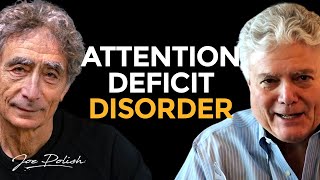
Gabor Maté argues ADHD is an adaptive response to early trauma, not primarily genetic. The panel links ADHD to addiction as self-medication and discusses psychedelics like psilocybin and MDMA as emerging treatments, alongside coaching and practical tools for managing symptoms.
Questions this video answers
About 400 between both rooms.
Between 2002 and 2013 (speaker gave this as an approximate 3x increase in U.S. ADD diagnoses).
Bill W. and Dr. Bob founded Alcoholics Anonymous in the 1930s (as stated by Joe Polish).
Score over 6 indicates a problem; average outpatient = 10; average inpatient = 14; clinicians sometimes see scores 17–19.
Chapters
Well, let's. I want to touch on ADD because I have been diagnosed with add. You have? How many people in the room would admit or think they have add, Right. And I've heard you, I mean, you talk about in your book Scattered, that ADD is a response to trauma.
Yes, it is.
What does that mean?
Well, first of all, let me make a point that occurred to me when you were talking about your marijuana use and your cocaine use. Those are typical self medications for addiction because the marijuana calms down the hyperactive mind. And if you get treated for add, what do they give you? They give you a stimulant which elevates dopamine levels in the brain. What do you think cocaine is? It's a stimulant. It elevates dopamine levels. So the point I'm making is that a lot of addictions are actually self medications for specific conditions, like in your case. Now, ADD. Again, the medical mantra around ADD, and I was diagnosed in my 50s and two of my children were diagnosed afterwards. The medical mantra is that it's a genetic brain disease. Well, it isn't genetic and it's not a brain disease. When you look at the tuning out, the absentmindedness of add, why do we have that capacity to tune out? Do you think nature gives us that capacity? We all have that capacity to dissociate, to tune out. Why? Well, it's very simple. If I were to threaten you right now, stress you, abuse you verbally, you would the number of options available to you. One would be to get up and leave, which is called flight. Or you could stand up and assert yourself and tell me to stop, which is called fight. And if you couldn't do either, given that. How many hundreds of people are here?
There's about 400 between both rooms.
Okay, so you have 400 people here. You could ask for help. Those would be the functional options. But what if you couldn't escape because you're too small and powerless? What if you couldn't fight back for the same reason? And what if there's nobody to ask for help? Then what would you do? Well, you wouldn't do anything. Your brain would go into an automatic dissociative mode to protect you from the distress. So what it is, it's actually, it's an adaptation to overwhelming stress. Now, if you put me back into my first year of life, and there are times in the first year of life when every second, like in this space of time, millions of connections are being made in the brain. What's happening in my first year of life, my mother is stressed. The day after the German army marches into Budapest, when I am two months of age, she calls the pediatrician to say, would you please come and see Gabor? Because he's crying all the time. And the pediatrician says, well, of course I'll come and see him, but I should tell you, all my Jewish babies are crying now. Why are Jewish babies crying? Well, not because I know anything about Hitler or genocide, but because I'm picking up on my mother's stress. There's a quote here from one of my teachers that I'd like to read to you if I can find it. And it says that the child is very open and can feel the pain and suffering going on in its immediate environment. The child is aware of its own body and can also feel the tension, rigidity, and pain in the body of the mother or of anyone else he's with. If the mother is suffering, the baby suffers too. The pain never gets discharged. So let's say, what do I do then? When my mother is depressed and stressed and terrorized? How do I deal with it? Can I fight back, escape and ask for help? From whom? I tune out. But then the tuning out becomes programmed into my brain. And then 55 years later or 50 years later, I'm diagnosed with ADHD, OED. Now, what I'm saying is that. And I wasn't abused, nobody abused me. I just had a depressed and fearful mother. And being a very sensitive, you know, the more sensitive you are, the more you pick up on that. So in those add, and if you look at, it's an adaptation, it begins an adaptation, which later on becomes a problem. So I'm not saying it's great. I'm saying that it begins as an adaptation which then becomes a problem. That's the nature. These early adaptations, which children employ not consciously to protect themselves from stress, actually become problems later on. Now, if you look at the question of why between 2002 and 2013, I'm being approximate here, the rate of ADD diagnosis in American kids has gone up threefold. What's going on? What's going on is that the parenting environment has become increasingly stressed for all kinds of reasons. And when the parenting environment is stressed, the kids are stressed. And how do they cope with it? They tune out when the brains are developing now they're getting diagnosed and medicated, and all this mental health crisis. And what we're not looking at is what is it about the environment that actually fosters or foments that response in children? And I'm only talking about add. We could talk about anxiety because people who are addicted often self negate anxiety. They self medicate it with work, with sex, with tv, with distractions, and of course with drugs. And the New York Times Magazine two weeks ago wrote an article about the burgeoning rate of anxiety in American teenagers. And apparently a third now of teenagers and adults in the United States suffer from anxiety. And why. But if it was genetic, it wouldn't be increasing because genes don't change in a population over 10 years or 20 years or even 100 years. What's happening is that the conditions in which children are growing up is getting more and more stressful. And that has to do with the stress on the parents. And that also has to do of course with the workaholism of the parents. Like in my case, you know, the world thought I was great, I was out there delivering babies and helping the dying, palliative care and everything else in between. But what of me did my children receive? Not very much because I was always trying to validate myself out there in the world. So then I pass on my trauma to them, but I passed it on, not genetically, but to the conditions that obtained in my home. And my kids were small.
So how does ADD and ADHD develop?
Yeah, so ADHD is said in medical terminology to be the most heritable mental health, illness, mental disease. Well, in this book I make the point that to say that ADD is the most heritable mental condition is like saying that quartz is the most chewable crystal because it's neither a disease nor is it inherited. So go back to your childhood, you being abused. Go back to my childhood, the wartime persecution, all the things as I said earlier. Could we have escaped? No. Could we have changed the situation? No. Could we have fought back? No. What does the mind do when it's under too much stress? One of the things it does is automatically tunes out. So the tuning out. But this is when the brain is developing. The human brain develops from really from in utero to adulthood and already stresses on the mother during pregnancy can affect the brain of the child. So if a mother is very stressed or depressed during pregnancy, that kid is already at risk for ADHD later on. It's got nothing to do with genetics or very little to do with genetics, let me put it that way.
You want a water?
Thank you. So the tuning out is simply one of these natural protections, one of these automatic wise dynamics on the part of your organism to protect yourself from stress. That's too much. Now what you have to Understand again is that the human brain biologically develops under the impact of the environment. And as an article from the Harvard center on the Developing Child, which is the world's most prestigious child child developmental organization, published in the journal Pediatrics, which is the official journal of the American pediatric academy in February 2012, pointed out, the human brain develops from in utero until adulthood. And the most important input into the physiological, healthy development of the human brain is the quality of adult child relationships. So we're relational creatures, which again is what Yuruka is all about. And our brain itself develops only the impact of our emotional interactions with our parents. Now if you look at why more and more kids are being diagnosed with this condition, it can't be genetics. Genes don't change in 10 or 20 or 15 years. Now that we're seeing ADHD in countries that never used to have it under the impact of corporate globalization, it's because parents are more and more stressed in this world. They're more and more isolated and parents are stressed and isolated. And by the way, we were never meant to be parented in nuclear families by a couple or perhaps a single parent. We evolved for millions of years and hundreds of thousands of years. And even in the existence of our own species, we've been here for about 150, 200,000 years. If our species existence can be measured in one hour, then until six minutes ago we lived in small band hunter gatherer groups where parents had support from other people, where the kids were with the parents the whole day, where kids developed in the context of adult relationships, that's our need. So in this society which is more and more stressed, and if you look at the triggers for stress, these are the research proven triggers for stress in people. It's uncertainty, lack of information, loss of control and conflict. Our society could not be better designed to stress people. So parents are stressed, not their own fault, not their own fault. They're stressed, the kids are stressed. When the parents are stressed, you can measure the kids stress hormone levels, they'll be elevated. Now how do kids deal with that stress? They tune out and now they're being diagnosed with the so called disease. It does have a biological template in the brain because the biology of the brain develops an interaction with the environment. So sometimes medications can help, but they're not the answer. The answer is to change the atmosphere so kids can develop in a healthier way, so they can feel safe. And when that happens, the brain will start developing in healthier ways. So ADHD is not this disease inherited. Otherwise it's actually a response to stressful circumstances in this culture, despite the best efforts of parents. And the way to really deal with it is not to medicate these millions of kids and to try and just control their behaviors, but to try to understand what's happening for them.
Very good.
Before I forget, I want to ask you about the link between ADD ADHD and addiction, because I know there's a high percentage of crossover people that have ADD ADHD also have addictions. People that have addictions have ADD adhd. What can you speak to on that area?
Well, part of it we've already mentioned, we know that they have some similar genetics. We know that that's there. Our friend Csikszentamahaly, he says that addiction is the ultimate attention deficit disorder. In other words, the brain. It puts order in things for the brain. It's a way that organizes the addict, organizes his life around this. And it's really hard. I think sometimes, like I think of people in your business, they'll kind of organize either their day or what cities they go to or what part of the city they're going to be around or when they're next going to be able to whatever and how much it takes for them to manage that. It's an ordering process. And so in many ways what happens is that the brain craves that order. And if there's attention deficit disorder, it's one of the things that an addiction kind of steps in the place to supply order. And we see that as an incredible part, one of the things that now I believe is going to happen.
Hey, I hope you're enjoying this video. And I want to let you know that I have a new book that's come out and if you'd like to get it absolutely free, there's a link below in the description. Or you can wait till the end of this video or you can Simply go to joesfreebook.com and you can get a copy.
There.
Is Dan Ammon, a good friend and a marvelous physician who've been on PBS and writes about this stuff, talks about the fact that he says that mental health is the only part of medicine that doesn't systematically look at the organ. It's treating the brain, and that's the brain. And the fact is that I don't care who you are, if you got a problem and you get a picture and you, you could, your, you know, your spouse is telling you, your kids are telling you, you know, your therapist is telling you, but you get a picture and you can say it's got these Holes of where your brain isn't operating like it should, man, it just stops people cold that they. That they can see it. And the same thing that's also true, Joe. And this is an important thing. If you take something that is an objective measure, like a test, like on sexhelp.com we have an instrument that works for men and women, gay men. It's the same thing, but it's really turning out to be a very effective way of showing where you are in relation to others. And so seeing something, you filled out.
Right.
And so what is that test called?
Because I would actually.
It's called the Sex Addiction Screening test.
And it's at Sexhel.
Sexhelp.com sexhelp1word.com they can take it. And over a score of 6, you got a problem. The average outpatient is 10. The average inpatient is 14. And sometimes people have to go and just stop their lives in order to get the traction they need. I mean, I see patients with scores 17, 18, 19 all the time. And it's very helpful for people to have objective measures. And now we have a very large instrument which is teaching us a lot about those maps we were talking about earlier.
Well, when we were having dinner last night, you said that you've learned more.
This is between the eel and the. What was the other thing you were.
Sushi.
Yeah.
And you were trying to get me to try.
I was trying to get you to start the yellow tail.
Oh, yeah.
Joe was saying, I have specialized my career in add. Essentially, that means I have been specializing in bringing psychological insight and assistance to entrepreneurs. I think we should rename ADD the Entrepreneurial Trait. And Dan Sullivan and I got together around this and have been making friends around this notion of. Dan has been working with entrepreneurs for 30 years. I've been working with ADD for 30 years, and we discovered we're working with the same people. And I thoroughly abhor the term attention deficit disorder. So I'd just soon throw that in the dustbin and rename it the Entrepreneurial trait. And because I'll bet you 90% of you have it, and it's really because of it that you're achieving in the remarkable and interesting ways that you are. But it also may be holding you back in certain ways. And what I thought I'd do is bring you into what I've learned about the mind of the entrepreneur, point out the way things ought to go, and then point out some of the most common ways that entrepreneurs sabotage themselves. And I want to begin with a story from Ancient Baghdad One day, a master sends his servant into the marketplace to get some provisions. And while the servant is there, he sees Death across the marketplace, and he's captivated by Death. And then Death turns his way and makes a menacing gesture which completely freaks the servant out. And he goes running home as fast as he can run home. And he falls to his knees in front of his master and says, master, please, you've got to let me take your horse. I've got to get out of this area. Let me take your horse. And I'm going to gallop as fast as I possibly can to Samarra, which is 75 miles away. I'm terrified that Death will find me otherwise. And the master says, well, by all means, you feel free to take my horse. You've been a good and loyal servant, of course. Take my horse and come back when Death has moved on. So the servant gallops off to Samara. But the master is curious, and so he goes to the marketplace to see what he can see. And he looks around, and sure enough, he sees Death. Well, he's brave, and he walks up to Death, says, I understand you saw my servant. And Death says, yes. And the master says, and I understand you made a menacing gesture toward my servant. Why did you do that? And Death said, oh, that was not a menacing gesture. It was simply a gesture of alarm and surprise. I didn't expect to see him here because I have an appointment with him tonight in Samarra. And it is amazing to me how many people I encounter in my life as well as my work, who are galloping as fast as they can in precisely the wrong direction, believing that they're heading toward their salvation, when in fact they're heading toward their destruction. One of the unique opportunities I get is to tell people that that's what they're doing. I often think I'm sort of like the fool in classical drama. You know, kings would hire fools to whisper in their ear the stuff they didn't want to hear. It was a dangerous job because sometimes they'd be put to death for their trouble or they'd be whipped. But I sort of think that's what a psychiatrist does. You know, we're paid to whisper insights that maybe someone doesn't want to hear, and then it is up to that person to reverse direction or not. The way the arc, what I call the arc of the entrepreneur, ought to go, if you're not galloping towards Samarra, usually begins with some kind of success. Now, it may have happened yesterday, or it may have happened when you were 10 years old on a paper route, or maybe as in Dan's case, when you were able to wangle the extra cookie out of your aunt and you felt that thrill of succeeding at bargaining, at selling, at getting a profit that you never thought you could get. And you feel that rush, that excitement, which is so much more than just the cookie or just the fee. The rush of I can make something grow, I can make something happen. And I did it by my wits, I didn't follow some instruction manual. And you get hooked. And then most entrepreneurs, from that success comes a dream. And they imagine a conglomerate, they imagine asteroids, they imagine they dream big. It's in entrepreneur's DNA. They dream very big. And then the next step, which is what separates them from the cynics and the realists, they take it seriously. They say, I'm gonna populate an asteroid, I'm going to develop a real estate agency for outer space. I'm going to do these things. They take it seriously, which again, as I say, separates you all from the realists and the cynics. And then they begin what I call the avid and faithful pursuit. Avid and faithful pursuit. Faithful faith is the assurance of, of things hoped for and the conviction of things unseen. You all have faith. You may not have religious faith, but I can promise you, you feel the assurance of things hoped for and the conviction of things unseen that also separates you from other people. You begin this avid and faithful pursuit of what many people think are crazy goals. Think of who colonized this country. Would you have wanted your son or daughter in 1600 to get on a boat and come over here? It's as crazy as Peter Diamandis wanting to colonize outer space. I have a sign in my office that says, don't wonder if your ideas are crazy. Wonder if they're crazy enough. And you all specialize in taking seriously and faithfully and avidly pursuing these crazy ideas. This country was colonized by people like you, separating themselves from the gene pool in England, from the conservative non risk takers to the wild eyed visionary, pioneering, swashbuckling, cowboying folks that became our ancestors, your ancestors. And it's why I love entrepreneurs. You have the assurance of things hoped for and the conviction of things unseen. And guess what? You make it happen. So the avid and faithful pursuit then leads almost always to disappointment. You don't get there right away. And once again, one of the key qualities the entrepreneur kicks in, which is grit. You don't have give up in your vocabulary. You don't have it in your DNA you don't do that. It's just unthinkable. It's just not an option. And it's not because you have some slogan, failure is not an option. It's because that's not who you are. You're just not built that way. You don't give up. So when you encounter disappointment, which you invariably do, nobody rides a bicycle without falling off first. When you encounter disappointment, you just say, well, no is the first step on the way to yes. And you keep at it and you try it again and you try something else. And almost always what happens is the next step, which I call intervention. Maybe it's divine intervention, or maybe it's something more practical, like you go to take Dan's strategic coach. Or maybe you come here and someone gives you the bright idea, like we were swimming in bright ideas. We've been swimming in bright ideas all morning. Or maybe you partner up with the right person. Maybe you meet someone at the table today, there's some kind of intervention that gets you past that stuck place, and then you're on your way to realization of the dream. And that's what I call the arc of the entrepreneur. And it's wonderful. It's magnificent. It is what makes life not only exciting, but productive and what makes being alive today such a colossally exciting opportunity. The world has never teamed with so much opportunity for so many people. Never. Never. And the obstacle now is psychological. Psychological. So what are the traps that I want to point out to you to help you avoid now? There are many, many traps, and I'm going to highlight five of them. But I want to underline that my message is by no means negative. I'm just cautioning you. My message is 1000% positive that now is the time to be alive. If ever there were a time for an entrepreneur to say, praise God for having me be born, now this is it. This is the time for us folks who have this kind of brain. By the way, I have the entrepreneurial brain. I have add. I also have dyslexia, too, and I wouldn't trade either one of them for the world. It's a terrible mistake to call these conditions disabilities. They're traits. They're traits. And if you manage them right, they become enormous assets in your life. I tell people I don't treat disabilities. I help people unwrap their gifts. And these conditions are markers of talent. People who have this kind of mind, they're markers of talent. My model is, you have a Ferrari engine for a brain with bicycle brakes. And I say, don't worry. I'm a brake specialist, you know, and when I strengthen your brakes, then you'll be able to win races. Now, if you don't strengthen your brakes, a Ferrari with no brakes is kind of dangerous. So, you know, and that's why you see the prison population full of people with undiagnosed, untreated add.
So the question is to give a couple definitions. I mean, there's a lot of different definitions. I've heard of addiction. The way that I think about addiction, it's a connection disorder. So what we're really talking about here is how to connect with others, how to connect with yourself. And there's mechanisms that people use to numb themselves because they're feeling disconnected.
A connection disorder. I mean, talk about piercing, symptomatic crap. Connection disorder. So what if addiction, maybe all addiction, maybe somebody. What if addiction is a symptom of us not being connected the way we need? Is that essentially what I'm hearing you say?
Absolutely. Absolutely. The opposite of addiction is connection. And so the thing. And there's other people that are saying this, like my dear friend Gabor Mate, who wrote a book called in the Realm of Hungry Ghost. He believes that addiction is a response to trauma. And I used to believe that addiction was a brain disease and needed to be cured. And I'd rather people refer to it as a brain disease than looking at people as moral degenerates that are just making bad choices. Because addiction is doing something you don't want to do, or maybe you do want to do it, and not being able to stop this thing that you're doing. Either the drugs, the chemicals, the behavior is compulsive. It's impulsive, and it has consequences that are bad. And so, you know, to have a craving that is far greater than your ability to stop it in people that don't have addictions. And they see the crazy making of addicts, like, why are you drinking and drugging and watching Internet porn and gambling the money away or the workaholism or the exercise addiction or the bulimic. You know, I mean, all addictions have elements of binging and purging, excess and deprivation. And there's a. You know the rock band Guns N Roses from back in the day, Their first, most popular album was called Appetite for Destruction. And that those three words really greatly describe what an addict is craving. They are craving destruction. Addicts crave. The addict mind craves chaos, not harmony. And for some reason, it's very difficult for people to comprehend that. For instance, you know, someone's not a smoker and hate smoking. As an example, my father died from lung cancer and he smoked most of his life. And people. And so I hate cigarettes. I can't stand cigarettes. I don't like the smell of them. But when I was a drug addict, I used to smoke cigarettes and I used to smoke cocaine. I used to free base cocaine, I used to snort crystal meth, I used to take take speed, I would take lsd, I would get high and smoke pot. I mean, like, you know, I drink constantly. I mean, when it was just like constant consumption and, you know, it would be real easy to say, well, that person's an idiot. And you could argue, well, you know. But I'll tell you, when I was in those moments, it was way more powerful than my ability to control that. And what I was really trying to do was just numb myself because I was in pain, I was depressed, I felt anxious, I felt fearful. And so if someone is depressed or having anxiety or incredibly lonely or fearful or just wants to jump out of their skin or is hating life, there's nothing wrong with wanting that pain to go away. If you just itch, there's nothing wrong with wanting the itching to stop. The challenge is the mechanisms we choose to scratch the itch. And so what happens with it? That addiction is that people are trying to numb themselves, but the way that they're going about trying to escape it is actually making it worse. So when I say I want to change the global conversation about how people view addicts, the question well, how are.
You going to do that?
Well, part of it is, quit looking at these individuals as moral degenerates. These are people that are traumatized and the things that they're doing, totally. I mean, if you look at people in jail like, you cannot punish pain of people. And we're putting these people in cages. Now, granted, addicts in their worst states lie, they cheat, they steal, they can do harm, they can drink and drive and kill people, they can rob stores. I mean, they can. They can do awful things. However, most addicts aren't doing those things. Most addicts are like just hurt individuals. And they're trying to escape this mental pain in anguish. And so what? The way that I am thinking about addiction right now, and by the way, everything that I'm saying, I am a student just as much as, you know, I'm an addict that's out searching for solutions, talking to some of the best people in the world. Because of who I am, I have an opportunity to use my business contacts and what I do in the world to actually get into places that many people cannot. So I'm really seeking this out. But I'm also beginner's mind. I try, like, I'm always open to have my paradigm shift, and I'm always open to say what don't I know. And unlearning is more important than learning. So as I'm on this journey, I'm looking at addiction as a solution, which sounds crazy to some people, but I started thinking, okay, if the world is flat and you think the world is flat, you're going to interact with the world as a flat world. But once you learn the world is round, changes everything about how you look at the world. Well, if you think addicts are moral degenerates and they're losers and they should be thrown in prison, then who's going to treat these people? The criminal justice system. Judges, wardens, police officers. And these people are not equipped, nor are they trained to treat people that are addicts, like, in a compassionate way. They need to get them off the street, they need to throw them in jail. They need to process them, lock them up. And most people that are in like 80 to 90% of crimes that are committed, people were under the influence, for one. And most of those crimes are not violent crimes. A lot of these people that are in jail, possession, you know, things like that. And the reality is, people, that you, again, you cannot punish the pain out of people, and you can't incarcerate them. And Gabor Mate said, if you wanted to create the perfect system that kept people as addicts, you would develop the exact prison system that we have in the United States.
Yeah. And the idea of the connection, the lack of connection, in my opinion, one of the most fundamental human needs, maybe the most fundamental human need that we all have. I don't care who you are, we all have it is the need for connection. What does it feel like to be disconnected? Living hell, in a sense. And so if people are acting out with addictive behaviors, with addictive chemicals because it's a symptom of them being disconnected, then when you look at, well, our system, the way it's set up, the prison system, none of that is offering connection.
Oh, no.
Connections that, you know, a matter of the heart. Not like, okay, there's a cement cage to connect to. Like, no. So I'm curious when. Because I love where you're going with this. I think insanity doing the same thing over and over again and expecting a different result. I think we as a society, we have so many Systems set up to treat the symptoms of addiction. And I think we've proven about 12,000 times in a row it doesn't work. It might temporarily patch things. It might keep people out of harm's way temporarily. But to get to the heart of the matter, I daresay we have to go to the heart. So when we look at the disconnection that is maybe the deepest form of human suffering with addicts, where does the disconnection come from?
Well, there's a lot of things. So let me give some commentary on that too. I want to say one more thing about the solution aspect of it is when I say addiction is a solution, it actually numbs you. If you're in pain, if you're feeling disconnected, you can artificially get high. You can, you know, you can act out sexually. You can gamble and get an adrenaline surge. You can look at Internet screens and you can get dopamine hits. I mean, there's all kinds of stimulation that will make you feel artificially connected and that will numb the pain. And that is a solution. The problem is this is a solution that will kill you in some cases. So if you can survive addiction, it might get you through some sort of painful moments. The challenge is it actually creates more. But I'll say the connection this way. Dr. Bob and Bill W. They're the ones that founded AA, Alcoholics Anonymous in the 1930s. And to this day, there are millions of people that rely on 12 step groups. Now, if you have never been to a 12 step group, or you like or dislike 12 step groups, or whatever perspective you have about it, I want you to know that if 12 step groups just stopped like tomorrow, and these are worldwide, the world would be a much different place. It would be screwed. Yes. We would literally probably go into war. I mean, there are so many people that go to 12 step groups now. Why do they go to 12 step groups? They're trying to connect with other addicts. Right. And hope heals. And so when you are able to walk into a room where you're so broken and so desperate that you have to really say, I need help. These groups are, you know, readily available for free, you know, and they operate through the voluntary contributions of their members. But this is not a sort of like, hey, let's endorse 12 step groups. Although I think they're incredibly valuable, there's many other things that I believe will help with addiction. And 12 steps are just one of them. And so Bill W. And Dr. Bob founded AA in the 30s. And there's a quote from Bill W. Where he said, as alcoholics, we're trying to drink God out of a bottle. And I always, and I always even say, you know, even if you're an atheist, if you just think of that statement like, okay, as an alcoholic, we're trying to drink God out of a bottle. I believe however someone wants to define spirituality and I can make fun of it just as much as like, I.
Don'T make fun of spirituality.
He was just doing it before.
I'd be offended if that ever happened.
And so, you know, if you think about that, he's like, okay, you know, we're trying to drink God out of a bottle. And addicts are actually the most spiritually potential people, I believe, because they're trying to connect with us. Something, you know, let's get high, let's, you know, I'm trying to drink my way to this, this void I'm feeling. I'm trying to, you know, if you're a sex addict, you're trying to, you know, have sex or look at porn, if you're gambling, you're just trying to connect with that, that feeling something so you can feel exhilarated, so you can feel better.
It's just strongly looking for connection where it's not exactly. It is the desire for connection at some level that drives the reaching to the addiction.
I think most forms of self destruction are looking for love in all the wrong places. But it's seducing, it's tempting, it's exhilarating, believe me. I mean a lot of my, you know, because my addictions have been drugs, alcohol, sex, work, exercise performance, addiction, image management. I mean all of the shit that goes into, you know, living a double life is exhausting. And you know, if you start looking at self destructive behavior and I'm sure everyone that is watching this or listening to this that is like connected with being a human. They have done things that they wish they would have done differently, that they regret. They, you know, procrastinate. They, you know, can't make their goals happen. They don't do New Year's resolutions. Maybe they lied, maybe they've cheated, maybe they stole, maybe they've done something that they're horribly ashamed about. Addiction is rooted in isolation, it's rooted in shame, it's rooted in guilt, it's rooted in self loathing, isolation. And so humans have experienced things. Different people respond to different things and have different sensitivity levels. But if you just sit and think about, like, did you have loving, wonderful parents that you felt really connected with? If you did, then you probably feel more connected as a human. But if you had a parent die, if you were molested. My mother died when I was 4 years old. My father never remarried. He was a totally broken person. He didn't know how to cope with it. I don't remember many aspects of my childhood that were very happy. Now, given the circumstances, even when people do awful shit, I believe most human beings when I'm thinking for my higher, higher, whatever that higher self is, and a lot of times I'm not. I believe most people, even when they're doing crazy shit, are doing the best they know how to do given the circumstances. And so my father, you know, tried to do the best he could do, but he was a really broken person. So therefore he didn't know quite how to instill a lot of confidence, a lot of self esteem, a lot of love. I was molested as a kid. I used to get paid money to not say anything about it. And it wired in my mind that sex is not an intimate act of love and oneness. It's something that you do just to get off. So I was never able to feel comfortable with sexuality. I was never able to feel comfortable with connection. And it's funny because now I'm known as this connector in business because I connect, you know, all kinds of, you know, great people off the charts.
And if I.
You.
You said so much and I want you to keep going.
No, no, please interrupt me at any point in time if there's, you know.
I already interrupted you.
He just did that.
Did you see that?
Yeah.
But so.
And I love your vulnerability. So your mother died when you were four. If that's not disconnection with a capital D, I don't know what would be. Your father couldn't cope with the loss of his wife. He became psychologically unavailable. That's disconnection with a capital D. And then you got a form of connection. Now, granted, none of us would say this was a great form of connection. It was shitty connection, but it was connection. You were molested.
Yeah, I was molested.
That was a sexual experience that you learn to associate. Ah, sexual stimulation equals connection. It especially equals way more connection that I'm getting with mom who's passed away. Way more connection that I'm getting with dad, who's maybe there physically but not there really psychologically. So that made an impression on you. You were a little boy who became desperate for connection. And life gave you an example, albeit really a crappy example from our standards today. But it gave you an example of what connection Was. And you ran with it.
Yeah, and what I did is there's not a day that's gone by in my adult life where I've not thought about that in the rumination, the preoccupation. And for years I had so much of my self worth tied into this shameful, violated piece of shit that I felt like after that happened because. And it didn't happen once, it happened multiple times. And I didn't know how to interpret it because I was between the ages of 8 and 10 years old. And you know, and so part of it is like it didn't make any sense. And I used to minimize it, you know, I never told anyone about it. I mean, now I publicly am talking about this shit, you know, like right now. But it took years before I could realize that you're as sick as your secrets. And if you have sickness and you feel shameful and you feel like you can't get ahead, I mean, there's probably something that is interfering with it. Meaning the sun is always there. There just may be clouds. And so my form of clouds were addiction, my form of clothes clouds were hiding it in denial and trying to, you know, escape it in any way that I could escape it. And I used to say, oh, but you know, I don't live in a third world country. I wasn't starving to death, I wasn't thrown in a concentration camp. And I've got people like Gabor Mate that said, you know, how does a four year old, you know, do you know any four year olds? He's like, how does a four year old respond to their mother died? I mean, you're for it. How would you. And I'd be like, you know, he's like, abandonment, you know, you know, how would. And so you were right though. Like, it is a form of connection. And what I've learned, part of the goal is to find the best forms of treatment that have efficacy, where people can go and find community sharing inspirational videos, talking with addicts and just putting that stuff, stuff out there in the world because I want to help connect people. Because I never felt that connection growing up. And so I initially found it through doing drugs and escapism. But the way that I defined myself, it took me years to really kind of make any sense about it. And what I would want people to actually think about. Who do you know, in your life that is struggling with addiction, if you yourself are struggling with addiction or behavior that it's kind of like there's a song lyric, I tell myself, I will not go Even as I drive there. And if you could imagine, I don't want to do this. I don't want to be in this relationship. This person hurts me, this person beats me, this person is abusive, this environment is abusive, but you keep walking through that door. What it did for me is it, it somehow created this template. So when you take sex addiction, which is. There's an interview I did with Pat Carnes years ago. Now people, if they just type in Joe Polish sex addiction into YouTube, you can watch the video and I'd watch the full length video if you're interested in this. About an hour and 45 minutes long. And we talk about arousal templates. And whenever someone is introduced to, to sexuality, they have an arousal template. So if you, like you were saying earlier with connection, what if you're introduced into sex by being raped or being molested or in some sort of dangerous way? What's weird is that there in many cases you can create a trauma bond where you actually bond with the trauma and then you live your life out being, pursuing things that kind of reenact some of the shit that was done to you. So when you see a woman that will be attracted to guys that beat her or are mean, that are abusive and you look back at, well, what happened in the life, it wasn't always being molested or assaulted. It could have been an alcoholic parent, it could have been some sort of abandonment, it could have been some sort of exposure to a disease. It could have been a horrible car accident, but there was some sort of trauma. You know, and people bond with traumas and then they seek out these sort of things and they're just trying to connect. I mean, it doesn't make sense to a lot of people.
It's not a logical issue. It's an emotional issue.
It's subconscious.
Don't work logically.
Exactly.
If Dr. Hallowell has a coaching program and I know we've run in, wouldn't that be super? Yeah, we've run a success with sanity program. And Robbie, as a Genius network member, I may be able to find that for you. And then there's.
We had Optimize and Capitalize.
We've done some stuff with you, Ned, but also what other coaching programs do you recommend especially for some of our Genius network members? I don't have a coaching program myself. I'd love to start one, but I just haven't. But you know who invented coaching? I did. I did. In Driven to Distraction. I said what you need rather than a therapist is you need a coach. Someone to help organize the nuts and bolts of your life. And then I laid out a four step method for coaching. And at the time, Joe Biederman, who's one of the big academic experts at Harvard Medical School on adhd, he laughed at me, said hallowell thinks you need a coach. I thought that was for baseball players. Well, now it's become a standard. Part of the treatment plan for everyone with ADD is get a coach. And it's become coach academies and coach certification and all that. And the reason I didn't pursue it, it's like Dean was saying, inventing the idea was fun, but implementing it was just tedious. And the actual act of coaching, I hate it. I would rather gouge my eyes out than coach someone. So it's just very tedious. And so that's why I left it to other people to take the idea and run with it. And they have really run with it. But I'd love to have a program because the value, like when Jen Bieber coaches you, your life will change for the better. And the thing about coaching is it's so practitioner dependent. It really depends upon who's doing it. Like, if you get Joe or Dean on your team, your life will change. But if you get, you know, some humdrum person who's reading from a cookbook, it's not going to do it, you know, so, so, you know, and then, and that's why, you know, it's very uneven but, but a good coach. My gosh, you almost don't need medication if you, if you've got a good enough coach.
Wow.
Any. We have. Andrew also asked about the history, like, was there any information out there on how these ADHD traits manifested in our hunter gatherer ancestors? Or, you know, oh, yeah, I mean, and Tom Hartman wrote a whole book about that called Hunters in a Farmer's World. You know, that there is a definite genetic advantage to being the way we are. You know, we're the innovators and the, you know, so, but, you know, that's sort of locating us in our genetics. Someone was just posting about ADHD for Smartass Woman. The woman who runs that, who, whose podcast that is Tracy Atsuka, is an absolute wonder of a person. And I am very proud to tell you I am the only man that she's invited onto her show and she interviewed me on her podcast, but it's called ADHD for Smartass Women. So any, any of you female women out want a great podcast? She's the one.
That's awesome.
I love it.
Question from a genius Network member John asked if there's any apps or software that you recommend and also maybe recommend for introspection or making those commitments to yourself. There aren't. That I know of. But you ask one another because I'm sure all of you have your favorites. And. And it's a wonderful way of. You know, like, there is a wonderful meditation app that everyone's heard of called Calm, and it's a. It's a great way to get your daily dose of meditation. And the world of apps is another world that's just. People make fun of it. It's wonderful. You know, there's an app for so many things now, and this is the playpen of the world we live in. It's just. It's just dazzling.
It really is. You know, when you think about. There's an app for that. There's an app for everything.
It's exactly. Exactly.
Things are possible to do. I've started even just freeing up for freeing up things. Like, I've been using an app for a long time called Get Magic. And just anything that I need to get done, if I need something researched or something bought or reservation made or booked or any kind of thing that would require me to, you know, go somewhere online and do anything if I can just text it to Get Magic and know that it's. Know that it's done. It's such a. It's such a great. Such a great time multiplier.
Yes.
Yeah.
So having those. That's.
Those.
I think what you're really bringing to my mind here is putting this, you know, putting a real premium on being able to organize things around my unique ability to get things done in my.
Way of doing it.
That's really.
It's a very important point. And too often people want to submit to someone else's solution. Now, there are times one fits.
All right.
Yeah.
Yeah, exactly. And the way you want to do it is the way you will do it, the way you will continue to do it, what's sustainable. And particularly if you set it up, you create it. And that's why the way Jen coaches is all about drawing out of you the way you want to do it, because that's what will work the best, your method. And you want to spend most of your time in what I call your sweet spot, your. Most of your professional time. It's the overlap of three circles. One is all the things you're really good at doing. The other is all the things you really love to do, and the third is the things someone will pay you to do where those three overlap, that's your sweet spot. And that's where you should spend as much of your work time as you possibly can. Now you can't spend all of your time in that spot, but you shouldn't be spending a lot of time doing things you don't like or doing things you're bad at or things that don't generate income.
I love that thought. It's such a great thing. The closer you can get, your, you know, what you do to be what you do is really the thing. What you do. Because you were mentioning something about what, what are you doing when you're not doing what you think you're supposed to be doing? That's where the clues are, is what, what are you naturally drawn to exactly that to be the thing. Exactly is the thing. So.
Exactly. I mean, Dave Pilkey, another guy who has big time ADD and dyslexia, created the Captain Underpants series that has sold over 80 million books. He's just doing what he did in school, you know, daydreaming and drawing cartoons. And in school he got punished for it. And now as an adult, he's incredibly best selling writer who is entertaining children all over the world.
You've done a lot of work in drug and addiction research. And what is your perspective on addiction and recovery and how can we best help families heal and recover? Since, you know, that's one of my main areas of focus.
I think addiction's a really tough problem. First of all, I think it's universal. I think all of us are addicted in one way or another to one thing or another. The only reason we don't see that is that some addictions are socially acceptable. Workaholism, workaholism, addiction to shopping, addiction to power, addiction to thinking, which is very prominent in intellectual circles. I mean, there's all sorts of things. How to deal with addictions I think is really tough. I mean, one strategy is to shift addictive behavior to things that are less harmful rather than more harmful. You know, it's better to be addicted to running than to cigarette smoking, for example. But it's still an addiction to try to get to the root of addictive behavior. I think that's really tough. I think that's, you know, I think the people that have it right are Buddhist psychologists who say that the root of addictive behavior is attachment. It's the illusion that satisfaction and completeness come from something external to you. And until you can practice realizing that you are complete as is, it's hard for you to be Free. I think the most encouraging thing that I see about addiction is that. And this is true of everything I looked at, whether it's cigarettes or heroin, if people progress, I mean, just go through life enough and don't get snuffed out in one way or another, one day, their motivation to drop it reaches a point at which it's easy. You see people that have tried to quit smoking again and again, and they talk about what a struggle it is and how hard, and they go back to it. And one day a person wakes up and maybe looking at stained fingers or looking at a dirty ashtray, and suddenly they don't want to do it anymore. And that time it's easy. The problem is you can't put motivation into another person. And that's the frustration of addiction treatment. All you can do is arrange circumstances and encourage people to try and keep trying. And one day the reservoir of motivation is full enough that it becomes easy.
Well, you know, now, this will always sound kind of weird when I bring up addiction stuff, but you are very knowledgeable in the area of shifting consciousness. And so, you know, I believe that addiction is a solution. It's not a very good solution. It could kill you. And I also believe that I'd like to see policy change because you can't punish the pain out of people. Of course, right now we have, you know, the criminal justice system treating addiction, and we need a more compassionate approach. And there's ways to really shift consciousness. And so I want to ask you about plant medicines and psychedelics, because I see MDMA coming down the pike. Psilocybin, you know, you have lots of experience with. You wrote a book called the Natural Mind in 1971. My first book, A Revolutionary Approach to the Drug Problem. And you thought this would totally shift, but what happened is this war on drugs happened. And I mean, I'd love to have you. I know this is not an easy question, but what is consciousness? I mean, looking at altering it and shifting it in ways so you live in the world in a better, happier, more connected space. Because I think the opposite of addiction is connection. And so anything you can speak to that.
Well, that's a big subject.
Yeah, it is. I know. I know.
I would say, you know, the argument that I get into with scientific materialists is over the nature of consciousness. They think that consciousness is a product of brain biochemistry or electrical activity in the brain. I think that consciousness is primary and that I think consciousness organizes matter into more and more complex forms. There's no way of proving one or the other it's just a different worldview. But I find that my worldview makes things much more interesting. And my experiences also are that by changing consciousness, by changing what's in your head, you can change the external world. And I have seen that again and again. Just as a mundane example, I've for a long time lived with dogs. And I've always had Rhodesian Ridgebacks. And I had a male I lived out in. I had a property that bordered on Saguaro national park, southeast of Tucson. And I had one big male who all he wanted to do was crawl in your lap and snuggle. And I came home one day and found he had backed a worker, someone who was working on the landscape against a wall. The guy was brandishing a rake, and the dog hackles were up, snarling. There was no way to convince the guy that it was his emotions that were producing this behavior in the dog. There was no way to convince him that this was not a vicious attack dog that I had there. And I see this kind of thing all the time in interactions with people, interactions with all sorts of things. I've also seen. I'll just tell you a few. I've told these stories before, but some of the potentials that I see in psychedelics, I had.
This is.
Goes way back in my early exploratory days. I must have been about 28, I suppose. I had a lifelong allergy to cats. If a cat licked me, if a cat came near me, my eyes would itch. If it licked me, I'd get hives. So I never let cats near me. And one day I took LSD with a group of friends outdoors. It was a beautiful day. I just. It was just. Everything was wonderful. In the midst of this, a cat jumped into my lap. And my immediate reaction was sort of this. And then I thought, this is really silly, you know, And I relaxed and I petted. The cat had no allergic reaction. I've never had one since. So instant disappearance of a lifelong allergy. Tell you what, around the same time, even more. First of all, I'd love to open Dr. Weil's allergy clinic. You know, maybe 10 sessions space the week apart. And the first one, you get a full dose of whatever, and then a kaleidoscope on your first, and then the dose reduces. And at some point you're taking a placebo and you don't know when that happens. Allergies are learned responses. You can unlearn them. So this one's a little trickier to explain. I also had grew up being Told that I could never get tan. I had four fair skin and my experience was when I was out in the sun, I would burn. I spent. We used to go down to the Jersey shore and this is in the days before sunscreen. Probably the things we put on us magnified the effect of the sun. But anyway, sheets of skin peeling off, bright red, horrible pain. And then I'd be as fair as ever. So I just took this that no, I couldn't get tan. So also around this time, also with LSD on a beautiful day I was in living in rural Virginia. I was running around with no clothes on and I was lying in the grass and looking up at the sun and I thought this is also really silly. And I just sort of relaxed and exposed myself to the sun and the next day I got tan. And I have ever since. Now that's a little trickier to explain. I mean that's not easy to.
Because the question is, what the hell's going on?
Well, what's going on? Probably your pigmentation is controlled by cells called melanocytes which are close to neurons and they are involved with the immune system. So again, this has to be a mind mediated effect that changes the way that those cells behave. But I think that that just hints at the kind of potential that's there. And same with the back pain stuff that there are ways that you can change external reality and physical reality by changing things in your head.
Oh, my belief, because of all the pain I used to tell have and having spent a lot of time in the addiction recovery world with my own recovery is I see addicts have a tremendous amount of back pain, knee pain, neck pain, shoulder pain, migraine headaches, skin problems, digestive issues. And I think the same things that manifest themselves as addictions in destructive ways are the same mechanism that manifests in pain. And I don't hear very many people, if anyone talking about it and linking the two together. But I think there's a huge thing, sleep problems, all kinds of stuff because I've been, you know and have you.
Do you have any experience with ibogaine or know people that have.
Oh, I'm the first person in the world to have before and after brain scans and serotonin and dopamine tests of doing ibogaine, I scanned my brain before, went and did it, came back and scanned it again. And I have hours of interviews with one of the top psychiatrists who specializes in using psychedelics and plant medicines for addiction treatment and ptsd. So yeah, I've.
So this is the African, this Is the African psychedelic and little known here and has a reputation now for treating addictive behavior sometimes very fast. It's not available here. There are clinics in Mexico.
That's where I went.
Right. But you know, you asked at the beginning what's happening. It is remarkable to me to see this new interest in psychedelics and our culture and, and a lot of research. In the old days, it was a lot of research looking for bad effects. And now there's a lot of researchers trying to document positive effects of psychedelics. Or has an initiative coming to legalize psilocybin. I think the potential for MDMA to treat ptsd, psilocybin for obsessive compulsive disorder and depression. I think these will eventually have these treatments drugs be available for therapeutic use.
Are you friends with Rick Doblin and sort of, yeah. I mean, Rick, he is just the guy. I mean, you got to really give him credit for the sheer amount of doors slammed in his face and the amount of resistance, but just wanting to go out there and find ways to help reduce human suffering.
So it's changing now. I mean, when I see characters on mainstream TV series microdosing, something is changing. Exactly.
You know, it's interesting because I sit and think about what you're saying here. And I think the what you get versus the how you get it are two different things. And I think the how one gets it is from an integrity standpoint, from a long term sustainable satisfaction standpoint is more important than the what. Because there are many ways to just go out and get money. And some people are extremely skilled at amassing tons of it while simultaneously leaving lots of destruction, a lot of shrapnel in people's asses, lots of reputation trade offs, lots of either never developed relationships or wrecked relationships. And it's real easy these days to just show pieces of that life and hide the dark parts too. You know, I mean, when I sit and look at Facebook, I mean, I sit and look at some of my friends whose, you know, that will do videos on culture or they'll do videos on, you know, anything that gives a piece of what life is like and how inaccurate a lot of it really is. I mean, I always say to people too, it's like, remember how people used to say, say the media is bullshit, but then we have this whole thing called social media. Does that mean, like, social media? It's amazing. I was doing yoga today at my house with Trent Shelton, who's a former NFL player and has millions of people that follow him online. And he started FaceTiming towards the end of us doing yoga. And, I mean, thousands of people. Last time I looked, it was like 54,000 people had watched the video a couple hours after we'd done it. And I said to him, I go, how amazing that we can just broadcast this to so many people and we could say cool things and we can inspire people. That's neat. And at the same time, you can broadcast things that you say you do, things that you say you are, that have no bearing on reality. And so it's not the tools, it's how the tools are used. It's a debate with others about marketing. People are like, marketing is bad. These marketers, these advertisers, the marketing industry. And I'm like, you know, I don't even think you could call marketing like an industry. It's like saying, oxygen is an industry. I mean, it's just everywhere. Marketing is used not only to sell products and services, but it's getting dates. It's used for influencing everything. And so it's just one of those things that you do business, and work is just one of those things. So the whole concept of work, I got a career, I've got a job, I've got to go to work. And different work produces different results. Some people love their work. They get up every day, they're excited about it. Others have their moments where it's enjoyable, but it's obsessive or it's difficult. And being an entrepreneur, some days, it's going to war. I mean, it's just. You don't know what the hell you're doing. And I've always liked the analogy. Some days it's like driving a car hurling down the freeway at 80 miles an hour, and you got to change the tire, and you just got to do it because you can't make. You just can't stop. You got payroll, especially if you. You build a much bigger company. So there's levels of responsibility. But the whole notion of work and what work produces for you, for your family, for your mind, for your body, for your bank account. How would you even define what work is? I mean, it sounds like a stupid, simple question, but a career, I've got a career. I've got this work. Because people that are producing anything are going to engage in work. And so to make work better, to make work. I mean, people come to guys like me and you because they want to do better in business. They want to be, you know, they want to make work better. But just how do you think about it? So if you have access to books or trainings or knowledge or techniques or strategies. Strategies or processes or all of the buzzwords that are used, best practices. And how do you interact with it. What is it?
I've got an idealistic vision for this.
Where.
I really feel like everyone should love what they do. Everyone should love the work that they do. And if they don't, well, I'm saying I realize that's idealistic, that's not perfectly realistic, but I just want to start at that end because I'm gonna go backwards just a little bit here. But I really, I feel like everyone should love what they do. And because of the Internet and because we don't live in a village somewhere and there's a hundred people that live there, and there are only a few things that we need to do there. And most people work in growing the food, you know, and then a few people work in, like, the blacksmiths, whatever. There's not many options. So if, like, your only choice is to, you know, I don't know, grow corn or work at the blacksmith, there's not as many options to love what you do. But now with the Internet and with all the different types of roles and the knowledge society we live in, and you can find the people that you can work for virtually around the world, I'm getting closer to believing, like, we're in a place where everyone could love what they do. So that's the end of it. But kind of going back to the other reality here, work used to be go find food. A million years ago, you wake up and you were hungry, you got to go find some food. And that was going and foraging or maybe hunting or trying to chase down an animal. And it was a different time. And so work had a more direct result. You'd go forage and you'd find a root and you'd eat it, or you'd go hunt an animal and you'd eat right there. And fast forward to today, and let's say that you have a business and you go to work at your business and you do whatever you do there, and you invest some money and some time, and maybe you run some ads and you get some people that come and they get on your list and then you follow up with them and then you go make some products. And, you know, it might be from when you do some work until you get the reward in terms of money, that might be three months or it might be six months or, you know, who knows, if you have a job, it might be two weeks or a month or if you're self employed, maybe a few months, that whole instant gratification, like I'm going to go out and work and then I'm going to get something back for it, which is intuitive for a human and for animals. That's kind of broken down. And so I think we've forgotten for one that work is about getting results that we want in life. We think more like, okay, I have to do something, and then that's to get money. And then we think money is the end. And then we kind of. Then we also know we can take some money and buy some things. So we've become very disconnected from this. And I think we've got to put it all back together and start thinking more from an idealistic design perspective of what is the life that I want, what do I want to be doing with my time, what energizes me, what am I good at, what are my gifts? What kind of personality was I born with? What kinds of things am I attracted? What's my talent? And I think we've got to go try a bunch of things out in our, our lives. And we have to try really diverse things. We have to try some things that are again, more like physical and practical and pragmatic or where we're building things or fixing things. And we've got to try things that are more emotional and social. We've got to try things that are more intellectual and find combinations of those until we kind of home in and go, oh, wow. There's this whole area of study where people are doing this little niche or this little vertical of something over here. And that's my calling. That's what I'm actually supposed to be doing. And then when we find that, we need to find a way to make that so that it also pays us back. Because a lot of people say, well, I'm made to be a dancer. That's what I was made to do. But it turns out that for every one dancer that makes enough money to support themselves in life, there are probably 275 that feel like it's their purpose to be a dancer. And so there's. We have to find something that's also pragmatic. But work is essentially expending energy in order to get a result that we want. And I think we've gotten confused. I think we've gotten really confused in that if we know ourselves better and we learn some skills and we find the right environment and we find the right kind of thing that we can do, so many more of us could love what we do.
So you said expending energy to get a result that we want and the more that we get to know ourselves. So let's just use that as a jumping off point. So I believe it was Socrates that said, an unexamined life is not worth living. And I've thought of the reverse. An unlived life is not worth examining. And you say, get to know yourself. Well, how in the hell does someone just get to know themselves? I mean, I constantly am thinking, who am I? What do I want? What matters? What makes sense? And the whole analysis. And I think a lot of time can be wasted in these mental games of trying to figure out some things that maybe just you figure them out when you quit trying to figure them out, when self help is no longer helping, when self help actually becomes a problem. And when I say self help, I talk about it in regards of being a seminar junkie, trying to read everything, trying to figure something out versus just living. Because you can. I can't imagine some of the dark sides of social media is how many people's lives they quit living because they're observing other people live life that isn't really the way they live. It's just what is projected, you know, and how it's interpreted.
So, yeah, it's tragic life that looks like it would be great to live, but actually isn't even that great to live. So they're like envying something that isn't even.
That it's not even real. Yeah. And I say this from like, this context is ever since I launched the Artist for Addicts platform and I've been, you know, having so many people reaching out to me, and it's just going to get more and more as the weeks go by. All of the people that are being reached with the stuff that I'm doing, just trying to put out what I think to be helpful, useful information about the causes of addiction. The treatment of addiction is people that are really out of control and really miserable. But then they are building up. I mean, they're addicted to this image management of portraying a life that they don't really live. And one of the things is saying, you got to just stop that shit, because the more you put that representation that really isn't you out there to the world. You know, Instagram posts, Snapchat things, Facebook, you know, all these different things to try to make your life look so cool. But you're doing drugs, you're acting out sexually in an obsessive way. You're gambling money away. You cannot stop. You Know, working because you're this compulsivity, you know, if you have to live up to this Persona and the Persona is imprisoning you, that's sort of a difficult thing. So one, it's about, you know.
To.
What ends does one go and what have you learned that has been an utter waste of time? And what have you done that has been really useful that you could legitimately and with confidence say, this is a way that I think about this, this is a way that I approach this. Because I know, I mean, you out of all people have done a tremendous amount of work expending energy to figure things out. And I think you've made some incredible insights.
Yeah, you asked a couple of things. So how do you get to know yourself? How do you figure these things out? We're also talking about kind of the social media. I went to a doctor's office recently and he had one of those security cameras, you know, the big industrial strength looking ones. And it was in the office, like pointing into the office and on the front it was holding a selfie stick and it had a cell phone on the front of it, like it was taking a picture of itself.
Oh, that's funny.
It was really nice. Okay. And I saw an article I read, I don't know, maybe six months ago or something about this woman who, she said she took one of the big super famous Instagram stars, one of the Jenner girls, and she followed her and she tried to follow this girl's life and do exactly what she did. So if she would color her hair all blue, she would go and get her hair colored blue. And if she had different outfits or was going, and she was just saying, okay, what does it look like to, to keep up with all these details? And she was exhausted by the end because the whole thing was a performance. It's kind of like, it's one thing to live your life, but it's another thing to like, let's say you're in Lion King or something, you're one of the performers there, you gotta go and get ready and get your costume on and do all this stuff in order to give the performance. And at the end of the day, unless you're one of the very, very, very few people that got lucky enough to, for whatever reason, be on the show, on the stage that we like to watch, that stuff's actually all counterproductive because it wastes so much of your time to try that, to get that extra little bit of I kind of look good. Another thing too is, I mean, the People that we see on TV and on Instagram and whatever, they tend to have personalities that are incredibly narcissistic. And I don't say that in a judgmental way. I say it in the sense of they tend to really enjoy getting a lot of attention and they like doing that extra little bit to get the extra bit of attention. That's kind of what they're good at, if that makes sense. They're good at doing that thing. And so if you're not. If you're not good at doing that extra stuff in order to get a lot of attention, then trying to copy someone who's really good at it is kind of like, you know, being a short person trying to play basketball against someone that's seven feet tall and who loves to play it. You're not gonna. You're never gonna win that game. So don't.
You know what I mean?
Don't fall.
And it's super exhausting along the way.
Totally. Exactly. So then back to how do you find what you are good at? Like, what, what is your talent? And I go back and forth with some of my friends, you know, is talent inborn? Are you talented when you're born? Or is it something that's developed? Is personality inborn? And, and I think that generally speaking, the kind of nature versus nurture, it's about 50, 50, about 50%. You're kind of born with whatever it is, and 50% is you learn it from your family and your culture and your peers and your social experiences. But both of them are extremely influential, Extremely influential. So we have to take both of them into account. And if you talk to parents who have kids, they. This is a pretty standard story. We had one child and we just thought, okay, this is the way kids are. And then we had another child and they were totally different. And so they get to see the difference in terms of inborn, innate personality kind of thing. And then of course, you can see two people go through a similar experience and come out the other side, and one of them goes to a concentration camp and says it was the worst experience. And then you get Viktor Frankl, who goes to a concentration camp. Concentration camp and comes out and he used it as this self development thing and invents a whole psychotherapy or psychology around it. So you got what you got in terms of your genes, you got what you got in terms of your personality, your inborn personality and your talents and so forth. I think the game is figuring out what are those things and then where would those be useful in reality? So That I can be myself more, or I can be my greatest self, or I can develop into more of what I already am, or reach my potential, actualize my potential. And in order to do that, I think you got to try a bunch of things. I think you have to go out into life and you have to have novel experiences with different types of people. And one of the challenges here is that cultures, cultures and subcultures, all the way down to a family, which is a little subculture, whether it be religious or whether it be a regional culture or whether it be a national culture or a whole, you know, culture of a whole hemisphere. Cultures tend to. Most cultures, they tend to be pretty exclusionist, even if they think that they're more open. If you really look into it, what they're trying to do is either keep you from going and experiencing other cultures or get other people to come be part of theirs. A culture can't survive by saying, leave our culture and go get other cultural influences. No culture would survive that way. And so this creates kind of xenophobia or like being afraid of other things. But you got to go try it, you know, you got to go try it out. Robert Anton Wilson, I mean, he's kind of extreme in this way, but, you know, he says, whoever you think is a wacko, whoever you think are the crazy people, go and go live their life. Go get into that reality for a second. Like, if you're a, you know, whatever, a super liberal, animal loving whatever, you know, like, go read hunting magazines and go hang out with some hunters. Or if you're a conservative religious person, you know, like, go hang out with some, you know, wacko ecology hippie cult that, you know, takes drugs or something like that. It's like, get out of your comfort zone and go see another way that people do things. Go to other countries, go to other businesses, get out a little bit and just go there and see what they're like. And for the most part, what you're gonna find if you go immerse yourself in it is you're gonna realize, oh, these are humans that have a different way, they've learned a different way of doing things to get different results. And they actually work really well for what they're up to. And yeah, they've got some wackiness. Maybe they're a little bit too extreme in some area. And I'm not saying to like, go join a terrorist organization or, you know what I'm saying? You don't want to go all the way, but you find, oh, these are people. And they have a different set of values or they have different personality types, but they're actually pretty cool. And they're up to their own thing here. And I think that's how you find this stuff. You get it reflected. You know, sometimes people say, like, Evan, do you believe in psychics? Who was. Somebody was just asking us that yesterday, the day before, someone was saying, like, evan, you got to go to my psychic. You know, okay, some people think psychics are wacky. You know, where could a psychic or. And some people are really into astrology and psychics and tarot cards and things like this. How could those things be useful? Well, they can be really useful because we can't see ourselves. Just like your eye can't come out and look at itself, we can't see ourselves. And one way that we see ourselves is in reflections. It's just like if you're a dancer, you need a mirror so you know what you look like and you practice so that when you come back out here and dance, you look good. And you know you look good because you looked at yourself in the mirror. Things like this, even things that are quote, unquote, wacky, like psychics and tarot cards and astrology, if you go and you're with someone that is intelligent and has a lot of different modalities, listening to them say things about you, even if 50% of them are right, half the time you're going to go, wow, yeah, that pattern is true about me or that particular mythological thing. And it'll give you insight just because you got a reflection. Now, I think there's better ways that you can go than this in a lot of cases. But go check out some personality systems. Go read about the Myers Briggs. Go take a couple of tests online. Take a Colby test. Go read about the way that personality is sliced and diced and try some of these things on and say, okay, what's my type? And talk to other people about theirs. Try a lot of things out and you'll find, wow, there's something out there that I never would have guessed where I can be myself. It kind of calls on my natural talents. It draws out the best in me. And there are other wackos like me there.
There are other crazy people. Okay, I hope you found that video awesome and useful. So if you want to get a free copy of my book, I want you to click here. And if you want to watch some more videos that will be useful and awesome, click here.
Go ahead, you're over here.
Do it now. Come on.
Thank you.
Watch them.
More from Joe

This FBI Trick Can Command Respect Without Saying a Word ft. JEFFERSON FISHER & CHRIS VOSS

How To Stand Out, Be Different, and Create Raving Fans, Customers, and Employees ft. Jesse Cole



90% Of Businesses Fail In Their First Year, Here's Why! ft. Dr. Benjamin Hard & Dr. Robert Cialdini

The 1 Piece of Business Advice I Got From Elon Musk That Changed Everything Ft. Kamal Ravikant

The 6 Traits You CAN'T Teach in Entrepreneurship ft. Richard Branson & Gino Wickman

The Leg Method: How to Make Your Book into a Million-Dollar Asset ft. Anna David


7 Millionaire Mindset Hacks for Daily Success and Wealth ft. Brian Tracy & Dan Sullivan
