Genius Network 5 Big Ideas Video
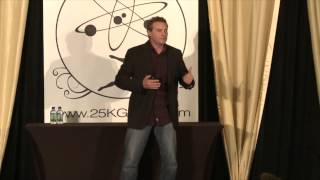
This YouTube compilation (Genius Network highlights) presents five short talks offering practical business and personal development frameworks: Brendon Burchard argues for integrated product suites delivered through automated campaign sequences and clearer, aspiration-focused messaging; Peter Diamandis outlines macro forces—dematerialization, demonetization and democratization—that rapidly reshape industries; Robin Robins urges businesses to remove customer irritants and prioritize relationships over transactional tactics; Mike Koenigs presents the "big lever" idea (identify a single high-impact focus) illustrated by his cancer experience and renewed productivity; Dan Sullivan recommends measuring progress against your start (not an unreachable ideal) to maintain positive momentum. Each segment is followed by host prompts for reflection and action.
Chapters
What you are about to see is a very special presentation from Joe Polish's Genius Network. This is going to give you a small taste of what Joe will be sharing on the upcoming live cast of highlights from our most recent sold out Genius Network event. Enjoy.
So here's what I like to do and I'll be brief about it and hopefully succinct and give you some takeaways. The questions often we get is how do you do all this? You know, you're 16 million a year now, five people, how does that work? Well, if you haven't seen the video from last year when I was here, please watch it. Two big ideas came out of that. One, you have to create an integrated product suite. If you don't have an integrated product suite, people don't. Your value isn't aligned with them. They don't know what to do. If you don't know what an integrated product suite is, watch that video. Okay, because I go into that. So you got to have multiple products at different layers that all kind of speak to the similar ambition line of your customer. Most people are randomly creating products based off their passions. That's the wrong way to do it. There's a reason that Apple releases the ipod, then the iPhone, then the iPad, then the Mac and specific sequencing. That's called an integrated product sequence. You should have an integrated product suite, right? Multiple products that speak to a higher ambition line of your customer, that escalate as we talk in. This is business, right? Second thing is automated campaigns. Automated campaigns. So when someone enters their name and email on your web pages, they go through a very specific sequence through all of those integrated product suites. It sounds really basic, but this is the thing that everybody seems to miss. They get the name and email. They do one or two, three promotions, not a campaign difference. Difference between a promotion and a campaign. Promotion is a one time touch point. A campaign is a strategic sequence of promotions that lead to a desired result. Your strategic sequences, the more intelligent and thoughtful they are, the more they hit on the right messaging, everything blows up. So the goal is how do you get more people into those types of things and how do you, once they're in there, have the right messaging that brings them along something. So I thought I'd just show you some things today about how I think about my online courses and why these online courses have such very low return rates but extremely high love rates by our customers. Extremely high. Then I'll talk about our events and how I think about what you have to accomplish at your events. Because how many of you do your own events already, how many want to do your own events? And then masterminds, high end masterminds. How do we think about those? How do you do the messaging in those? Because let's do some self diagnosis real fast. There's only three reasons you're probably not making more in this industry if you're in this room. And that is said with respect because everybody in this room is frigging on fire. I mean you have to be to pay to get in the door. And you guys know a lot. And again, I follow your work, I read your stuff, I've been to lots of your seminars. I mean I just look around the room like holy crap, it's amazing who's in here. But we can all self diagnose and and be honest in a room like this. One of the reasons you're not killing even more, if that's what your ambition is to be doing even more. I mean just very simple inarticulate messaging. Inarticulate messaging. You haven't dialed into what the customer really wants and you probably bought into the late 1980s copywriting style that really hurt our industry and limited more brands in this industry than anything I've ever seen. Which is this idea that you are marketing to pain. We're supposed to be problem solvers, right? Know the ultimate problem, speak to the ultimate problem. That's good marketing. Yes, in 1980 was pretty damn good early 90s and became irrelevant at the late 90s and early 2000. I'm not saying you do not have to speak to their pain points, but that's not why they buy.
Take a moment right now and write down the top takeaways from this excerpt. How might you focus on implementing an integrated product suite? Do you use one off promotions or have you built a very strategic campaign sequence? Think about your messaging. Are you marketing to your prospect's ultimate pain or are you going deeper and really focusing on why they buy is dematerialization.
What do I mean by dematerialization? There are lots of things we used to own that we don't own as things anymore. We own them as apps. My favorite image 20 years later. All of these things fit in your pocket and come free on your smartphone, right? I don't have a GPS anymore on my car shelf it's a GPS on my Android phone. I don't have libraries of books or music. It's on my phone. I don't have an HD video camera or an HD still camera. It's on my phone. All these physical Things are dematerializing as they become digitized. So if you're in the thing business, you have to be wondering which of your things that you sell could be dematerialized. Or if you're an entrepreneur, you may be looking at how do I dematerialize that thing? So Airbnb is dematerializing hotels. If you wanted to be in the hotel business before, what would you have to do? You'd have to buy real estate, you'd have to get a hotel designer, you'd have to invest tens, if not hundreds of millions of dollars. And I guarantee you, the hotel industry never thought that two guys in a garage could give them competition. But they are, aren't they? You've got companies dematerializing rental car industries. So when you start thinking about industries, what industries could you dematerialize? Not just physical things, but industries. So I'm studying this process, interviewing the companies and the people who dematerialize. And what did they think, how did they do it? Where are they going? Make sense. You with me still? Next one is demonetization. What do you mean by demonetization? Well, Craigslist demonetized the classifieds. It took the money out of the newspapers and put it into the consumers pockets. Skype demonetized long distance, itunes, the record store, Google research libraries, ebay, the local store, Amazon bookstores, it demonetized. So a lot of industries are becoming demonetized and scaring the shit out of a lot of companies. And so is your business going to become demonetized where the money, where it literally becomes free freeware? And then how does it change your business model or how can you demonetize an industry and take a small amount of that business, give 99% back to the consumer and take the 1%? And when these things become dematerialized and demonetized, they're literally freeware on the Internet. They become democratized, they go everywhere, right? The Maasai warrior in the middle of Africa on a smartphone has got democratization of an HD video camera, still camera, radios, books, all these things free on their smartphone. And this stuff has become democratized around the world. So those six Ds make sense. Powerful forces over these next now, right now, these next two, five, ten years are going to change the face of every industry because we're in rapid exponential growth for a whole series of technologies.
Please take a moment to reflect on this presentation. Write down what you think. The single most elegant idea Peter shared is now that you're aware of dematerialization and demonetization. What possible dangers do you see in your business? What opportunities or innovations do you see now for your industry? Take a moment and write those down.
You've got to remove irritants now, whether you're selling coaching or not, this is something you can take to the bank. Find out what is the single biggest irritant your customers have in doing business with you and fix it. Now, some of you think, oh well, we do such an awesome job. Maybe you don't know what it is. And if you don't know what it is, you're flying blind. There is something, there is something that irritates them either about you specifically or about your industry in general. Now here are some top irritants people have with those of us selling information products, nickel and diming them over everything. You go to an event, you pay money to be there, and then they charge you for the CDs if you want to have the CDs. Things like that irritate them. Giving away programs that you've previously sold for a lot of money to new clients is a bonus. So I've seen it where you have a $10,000 training, but hey, if you buy now, I'm going to give that to you for free. Well, guess what? It does. It pisses off all the people who paid $10,000 for that program. And seminars that are big pitch fests. So you go to the seminar and they just pitch you over and over and over and over again, overhyping everything. As marketers, everything is the best, the most awesome, the greatest. That's why I like Marie's comment on honesty. Maybe it isn't the greatest. Maybe it's just pretty good and it's okay to say that. Non existing customer service. Do you have a phone that is actually answered by a real person or do they have to put a ticket in an email and hope somebody gets back to them? Do you have real, true customer service? How many of the high performers in this room hate dealing with voicemail, Hate dealing with voice prompts, having to put tickets in? How many of you would just like to pick up a phone and speak to somebody who's competent and can help you in a moment? We all want that. Then why aren't we giving it to our customers, not promptly giving refunds? I'm sure nobody in here does that. But some people do. And lying. Just add now lying. Oh, we closed registration on Thursday, but our server crashed. So we're going to let five more people in, ten more people in. You know, that kind of thing. It's lying. Now here's the thing. All of this works. When you're marketing, you do these things, you will see a bump in sales. But just like a good pickup artist, a good pickup artist can pick up a woman for a one night stand. But they're not very good at keeping relationships. I'm in the relationship business again.
Take a moment to write down the best strategy Robin revealed to you. Are you aware of the irritants your clients might experience in your industry? Is there anything you might adjust in your business so you can focus more on the relationship with your clients versus just transactions?
I call it the big lever. And I love this saying and this is ultimately about unlocking your manifestation machine. And inside of this are some grand lessons that I experienced over the past year. But I love this quote. Give me a lever long enough and a fulcrum on which to place it and I shall move the world. This is from Archimedes in 287 BC. So a couple quick things about this 10 minute talk. First one, I'll talk to you a little bit about what is a big lever. And an example and a framework work to model what I consider the hyper successful. They're manifestation machines. The specific example I'm going to give to you today is going to take about half the presentation because Instead of packing 10 examples, I thought I'd do one that's really good that I thought you would learn from. And also a little worksheet on how to determine your own big leverage and inspire you to participate in a little project that I've been creating over the past few months. So first of all, the basic idea and the components of a big lever. If you look at it, a lever is one of the simplest machines been around a long time. You've got a beam, that's the big arm that gets under what it is you wish to move. And then the fulcrum is what enables it. It is the how. So the beam is the what and the fulcrum is the how. And my objective here is to try to create a recipe book filled with other people's big levers that help them manifest and change and create and make a difference and have a massive impact on the planet. So Joe already got into this. So the quick and dirty is. A little over a year ago, I was diagnosed with stage three, a colorectal cancer. It's a horrible, horrible disease. I had major surgery. They call it resectional surgery. It's unpleasant. Four months of chemotherapy, 33, 33 radiation treatments. For the first time in my life, I really got to experience what it's like to suddenly have what would be considered like an 85 year old's body that didn't function. There were days when I'd walk around with one eye open just to conserve energy and I realized my body was not me. And it is when you become and get closer to death that you actually become and get closer to life. And I was given the great gift from, from Janet of tm. So I studied TM and I also have been practicing Zazen with a master. And through meditation I experienced a great intense amount of compassion. I really realized what it was that motivated me and what drives me. And in an hour a day, that's about how much time I had. I got more done than I normally do in a regular day. And I managed to write a couple of books and produce a couple of products and had a couple of multimillion dollar launches. Despite all that, okay, I couldn't help myself, but I was driven by something different. It wasn't fear anymore and not being enough and not having enough. It was I really connected with what became my big lever. And I'll reveal that to you in a moment.
Please write down what you got out of Mike Koenig's share. Is there a difficulty or a situation in your business right now which if handled, might lead to exponential growth for you and be a really big lever for you?
What I've discovered is that if you can stay personally in a state that has four emotions to it, you have a high level of morale, you have a tremendous sense of momentum, there's a very, very high level of motivation, and you have a sense that you're creating multipliers. You're a very happy entrepreneur. And so what I strive to is to show individuals how they can just get themselves into a daily state that goes forward perpetually and that allows them to create a very exciting organization around them and allows them to do incredible work out in the world. And it just allows them to be very valuable individuals who at the end of their life have a tremendous of success, satisfaction and significance. Now it all comes down to how you measure. So what I've discovered is that all happiness comes down to a single factor and that's measurement. And that is that when you achieve something, how do you measure it? So on this little map in the upper left hand corner I have an eitheror. And what I want to show you is one way of measuring and that is that you visualize. You start, everybody starts and they have a picture of something they'd like to achieve. And I call that the ideal. You have an ideal and you visualize yourself in the ideal. And that ideal is not a goal. That ideal shines light on what could be your goals. And you have very specific goals, goals you go towards and you make progress towards it and you achieve it. And then you measure what it is that you've accomplished. And if you measure your goal against the ideal, it's like you haven't done anything. You're right back to square one. It's like the horizon line. No matter how you go towards the horizon line, you can't get it. That's a mechanism that we have to make sense, sense of space. But what the ideal is, is our way of making sense with time and serves the same purpose as the horizon line. And we can't get there. But if you measure always your achievement and progress against the ideal, you always feel a tremendous sense of loss that I feel that you're always in the gap and it puts you in something that I call the negative zone. And some people, literally high achievers, role models for everybody else, live their entire life in the negative zone simply because they're always measuring their progress and their achievement against the ideal. Okay, they can't win. It's a game that they just can't possibly win. The other way of doing it, it looks almost exactly the same, is that you start, you visualize, you get a picture. Because that's what the ideal does. It shines light on what the immediate actions are that you can take and the achievements that you can have. You move towards them, you make progress and you have the achievement. And then you measure, but you measure backwards from where you started. And it always feels good. No matter how much progress you had, it always feels good. And what I've discovered is kind of binary. That human beings will either be 1 or 0 on this. They'll either be. They measure against the ideal or they measure against the start. And it's like a switch in your brain. And it's either on the ideal side or it's on the start side. And if you do this for your whole life, then it becomes habitual. So what happens then with this is that the negative zone, if you measure, then you have a set of experiences which reinforce each other. Failure, frustration, disappointment, low self esteem, guilt, and a sense of depression about it. And these things are a downward cycle that tend to reinforce each other. And one of the things that people resort to is various kinds of addictions to give themselves a sense of momentary success that they would have had if they had actually achieved the ideal. And these can be very powerful, various kinds of addictions. And what happens is that they do get the feeling, but it's self destructive and the cost of it keeps getting greater. The other one is the positive zone. And by always measuring backwards, what you do is you get a sense of success, you get a sense of satisfaction. All the ones confidence, high self esteem, enjoyment. And there's a tremendous sense of optimism and it all has to do with which position the switch is on in your brain. So the question is, can you train yourself to move the switch over to the. How many of you would, you know, just would actually choose the positive zone to the negative zone just based on what I've said? Okay, but that's important because some people actually like the addictiveness that goes along with the left hand side. And of course they may be heavily addicted and they just can't get out of it. I mean they may have literally and Ned Hallowell, we've talked about this for hours and hours and hours is that they may literally have changed their brain circuitry and their chemistry in such a way that it's very, very difficult for them to get out of it.
What was the number one idea you got from Dan Song Sullivan? What actions will you take on that idea? What will the specific benefit be for you when you do take action? We hope you've enjoyed these presentations and found them very useful. Be sure to tune in to the livecast with Joe Polish where he will present the very best practices, the strategies and all the highlights from our most recent sold out Genius Network annual event. I'll see you there.
More from Joe

This FBI Trick Can Command Respect Without Saying a Word ft. JEFFERSON FISHER & CHRIS VOSS

How To Stand Out, Be Different, and Create Raving Fans, Customers, and Employees ft. Jesse Cole



90% Of Businesses Fail In Their First Year, Here's Why! ft. Dr. Benjamin Hard & Dr. Robert Cialdini

The 1 Piece of Business Advice I Got From Elon Musk That Changed Everything Ft. Kamal Ravikant

The 6 Traits You CAN'T Teach in Entrepreneurship ft. Richard Branson & Gino Wickman

The Leg Method: How to Make Your Book into a Million-Dollar Asset ft. Anna David


7 Millionaire Mindset Hacks for Daily Success and Wealth ft. Brian Tracy & Dan Sullivan
