Genius Network Presents | Shannon Waller: Cultivating an Entrepreneurial Attitude
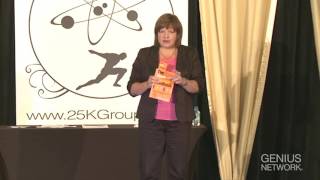
Shannon Waller explains how to build an entrepreneurial mindset in your team instead of a bureaucratic one. She outlines 12 characteristics of successful team members, from creating value to taking initiative, and offers a handbook and quiz at strategiccoach.com/teamsuccess to help you develop them.
Chapters
I want to introduce our next presenter. This is going to be really incredibly useful and awesome to all of you if you ever intend to have a company that gives you the ability to have lots of free time, if you choose to have free time and to just have a lot less stress and anxiety in your life. So our next presenter is the amazing, awesome Shannon Waller. For over 20 years, Shannon has played an integral part of the growth of Strategic Coach, first in sales and then in coaching and and design of many of the workshops. She does speeches, webinars, creates tools, and a lot of the sessions used by Strategic Coach. And so she's going to talk about something really important, which is about your team and cultivating an entrepreneurial attitude. So I want to give it up for Ms. Shannon Waller. Thank you.
Hi. This is awesome. Can I tell you how glad I am that there was a break between me and Brendan and I got to follow Joe's hair. That makes me feel good. So I am really excited to share with this. So you guys all just got handed out the Team Success Handbook because one of the things that I have learned after working with Strategic Coach clients and their teams and trying to bridge the chasm between you and between them. So I have been endeavoring for the last 22 years in different ways, shapes and forms of how to close that communication gap and get you on the same page. So to that end, I have written the first book, which is for your team. This book will tell them how to have what I call an entrepreneurial attitude. I'm going to tell you how it started. Then I'm going to talk about you and I'm going to talk about them. So one of the things I realized really early on after I came up with the idea for the team programs, which Babs actually, I actually did ask, and Bab said, actually I told her that this was originally a school project. I had gone back to school because I was excellent at sales, but not unique. I was making a very good living. But at some level, I was bored and I realized that I needed to do something more stimulating. So I went back, took a training and design program and came up with the idea of coaching team members on the concepts of Strategic Coach. And the reason I did that is because two things were happening. Either our clients would call in and say, could you please explain this to my team because I'm not doing a very good job. Or the team members would call in and say, what have you done to my entrepreneur? They're acting different. And they needed to know the formula. They needed to know what had changed. So I went back to school, came up with the idea for a one day workshop. They said, hey Babs, I got an A on my project. She said, great, let's do it. I'm like, huh? Anyway, with Dan's help, the next November we actually started that. And that was in 1995. So I started coaching team members, but I realized I was coaching them on unique ability and the time system and it was sinking in about this far. And I realized that the mindset that they were coming into the coaching with and how they were working with you was not entrepreneurial. They did not have an entrepreneurial attitude. They did not know what they needed to be, how they needed to be in order to be successful working with you. So this has been my passion. I love nothing more than strengthening the connection between you and your teams. I love you. I love them. I hate the gap, I hate the chasm, and I love creating those connections and the communication tools and the strategies to really strengthen it. And to my mind, this really is a $250,000 idea. Because when your team has non trail attitude, they create value, they leverage you, they free you up, they protect you from dangers you don't see. They create new products, new revenue, new speeches, new content, new webinars, lots of examples. Actually, a lot of people up here have talked about that. So there's way more than 250k available if your team has nodule attitude. So before I jump into what they're all about, I want to talk about you. Because part of the danger is you're a fish swimming in water and you don't know the water. It's just so natural. It's the air that you breathe. So there's a real big difference between organizational mindset. So an entrepreneurial mindset versus a bureaucratic one. It's really interesting. If there's one swear word in strategic coach, it's bureaucratic. That is just bad, wrong, evil, you name it. So entrepreneurial is the way that we go. So here I just want to draw these distinctions before I get into the different strategies. So entrepreneurial versus bureaucratic means learning by doing versus learning by researching. How many of you? Your only form of research is market research. You put it out there and you see what happens. That's how you do it. You don't research, you don't go to a book that's old. You go and make it happen right now. Unstructured versus structured. How many of you are allergic to structure? You intentionally bypass it as much as possible. Yes, you do. Fluid versus rigid. Rigid feels like death. It's like, ugh, that feels like constraint, handcuffs. Whatever analogy you want to use, that's not how you live. That's not how you think. Ambiguity versus certainty. How many of you just love not knowing what's going to happen next and then forcing it, or I'm going to say manipulating, but making it happen the way that you want it to go? That's powerful. By the way, this is all on page seven of the book. So for those of you taking pictures, you have it. The other thing that I really love and appreciate about entrepreneurs is the fact that they value emotion as well as reason. It's not just intellectual, it's your heart. I love what Dean said yesterday about passion. I'm like, yes, I sign up for that. I love the fact that your heart matters as much as your head and your guts. That's really what matters, not just the intellectual reasoning behind it. Contribution versus status. Brenda did a great job just talking about that. How are you creating value? How are you impacting the world that you actually your status comes from contribution, not just because you have a degree or you've been doing something for a million years. Who cares? You're as good as your last piece of value creation. Value driven versus time and effort. Time and effort's nice, but if it doesn't produce the result again, who cares? It's irrelevant. And then relationship focused versus transaction focused. Great conversation about that already today. And then change is a good thing versus stability. How many of you things stay the same for too long, you think something's really wrong and you have to go break it just so it feels comfortable again. But here's the deal. When you're engaging with team members, guess what world they're probably coming from. They're coming from the right hand side and you're coming from the left. So one of the things that I did when I sat down with our team and said, okay, some of us have figured out which environment we want to be in and how to be successful in that entrepreneurial one. So what are we doing right? And what are the best team members of our clients doing right? And that's where we came up with the 12 characteristics or the 12 strategies and attitudes of success. Successful entrepreneurial team members. Now, this is actually a quiz. It's available at strategiccoach.com teamsuccess it's in the back of the book. And occasionally I've handed out the quiz to people, to entrepreneurs, and the entrepreneurs have filled it out and they go, well, I scored really highly on each of these. I'm like, well, I hope so. You're an entrepreneur. It's actually not for you, it's for your team. But I want to help you cultivate an entrepreneurial attitude with your team members so you can bridge that gap. Because I have to tell you, when you have a team that is alive and contributing and shares your value system and in alignment with your results and passionate what they do, you're on fire. You're killing it even more than you are now. So this is amazing when you can engage people. And I don't care whether or not your team is outsourced in India or if they're in your office, it doesn't matter. But these characteristics, these are the people you want to attract. And I want to give you a lot of confidence about measuring people on these characteristics and helping them develop them. So I'm not going to go through, well, I'm going to go through all 12, but just talk about a couple. So create value. People aren't doing that. That doesn't matter. Taking initiative. This is a very big issue. A lot of people in more corporate structure are always waiting for permission. They're waiting to be told what to do. Well, you don't actually know what always needs to get done. So how are you going to tell them? That is the challenge. So one of the things we recommend to team members is to really say, okay, you know what, take initiative, take action, be in motion, learn from doing, be willing to experiment. If you see a problem, say something, because if they don't, you're gonna get caught with your pants down somewhere. There are dangers out there you don't see. Your team does, but they sometimes go, I'm not sure if it's my place, oh my Lord, get going, you know. So give them the assurances that it's okay to make small mistakes. Coach them on your thinking and on your standards. One of the most important, other than having an ownership attitude, is to be in alignment. I think a lot of times we assume that people share the very same value system that we do. One of the people I couple team I have the pleasure of working with is sitting at the back table. Hoetsi. They're all fabulous, just so you know. And one of the things that is absolutely mesmerizing about this team is how in alignment they are on their values. They have a lot of, they do this, they recite a five minute statement of values and purposes at the beginning of every single meeting and they have it all memorized. That's really powerful. So be a partner, take action, be open, communicate. So the interesting thing with communication is this is where entrepreneurs tend to score themselves low. Learning how to handle strong emotions because you feel things very powerfully, have patience and compassion, and finally, to not give up. Resilience is part of your DNA, and it needs to be part of your team's DNA. So I hope that this textbook, this roadmap, helps you help your team to cultivate an entrepreneurial attitude so that you can do less and make a lot more. Here's to your team's success. Thank you.
More from Joe

This FBI Trick Can Command Respect Without Saying a Word ft. JEFFERSON FISHER & CHRIS VOSS

How To Stand Out, Be Different, and Create Raving Fans, Customers, and Employees ft. Jesse Cole



90% Of Businesses Fail In Their First Year, Here's Why! ft. Dr. Benjamin Hard & Dr. Robert Cialdini

The 1 Piece of Business Advice I Got From Elon Musk That Changed Everything Ft. Kamal Ravikant

The 6 Traits You CAN'T Teach in Entrepreneurship ft. Richard Branson & Gino Wickman

The Leg Method: How to Make Your Book into a Million-Dollar Asset ft. Anna David


7 Millionaire Mindset Hacks for Daily Success and Wealth ft. Brian Tracy & Dan Sullivan
